Artwork
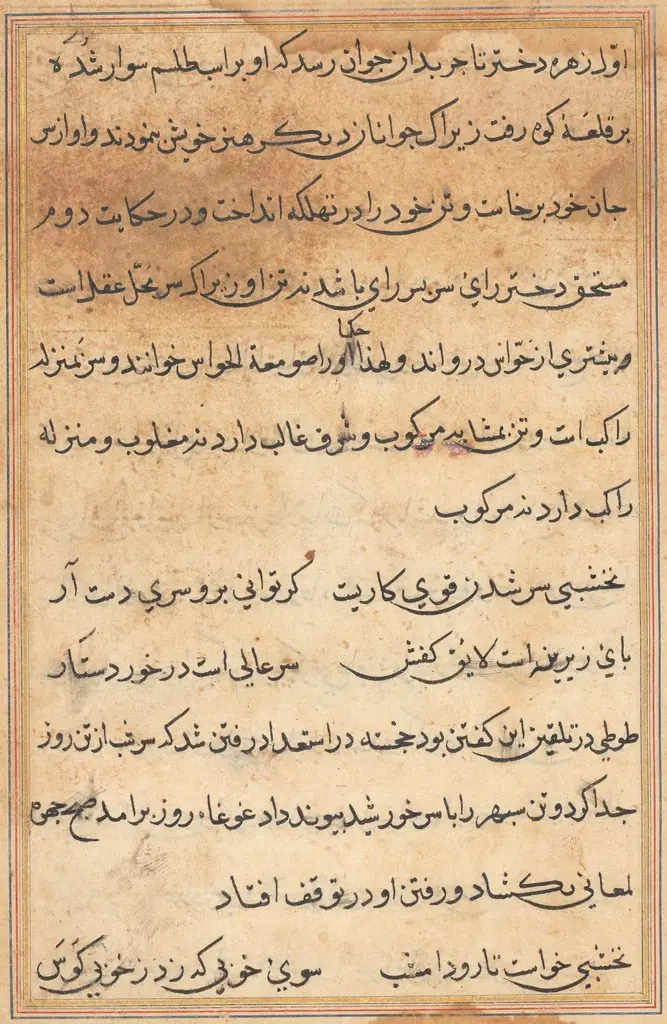
Page from Tales of a Parrot (Tuti-nama): text page
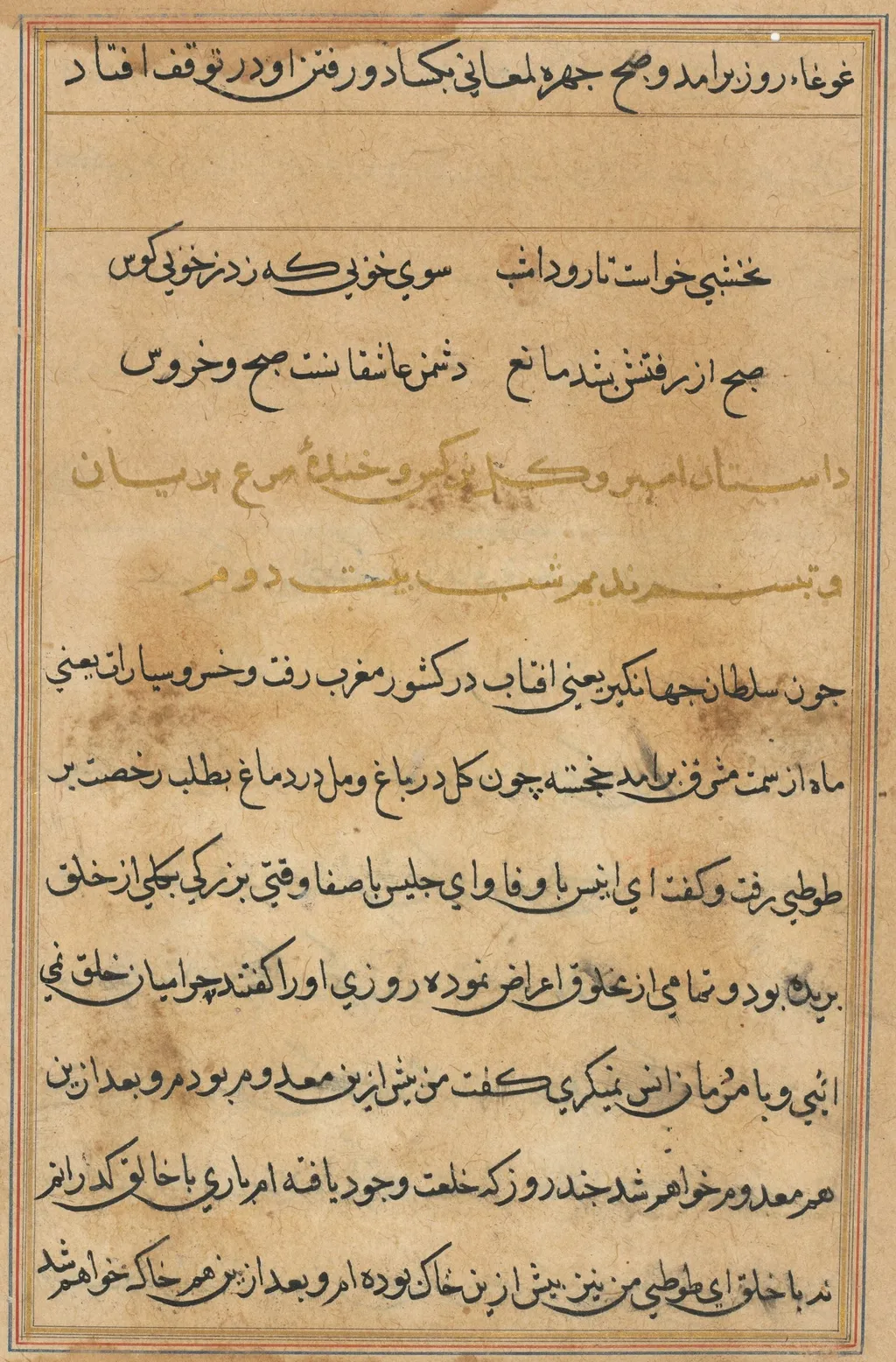
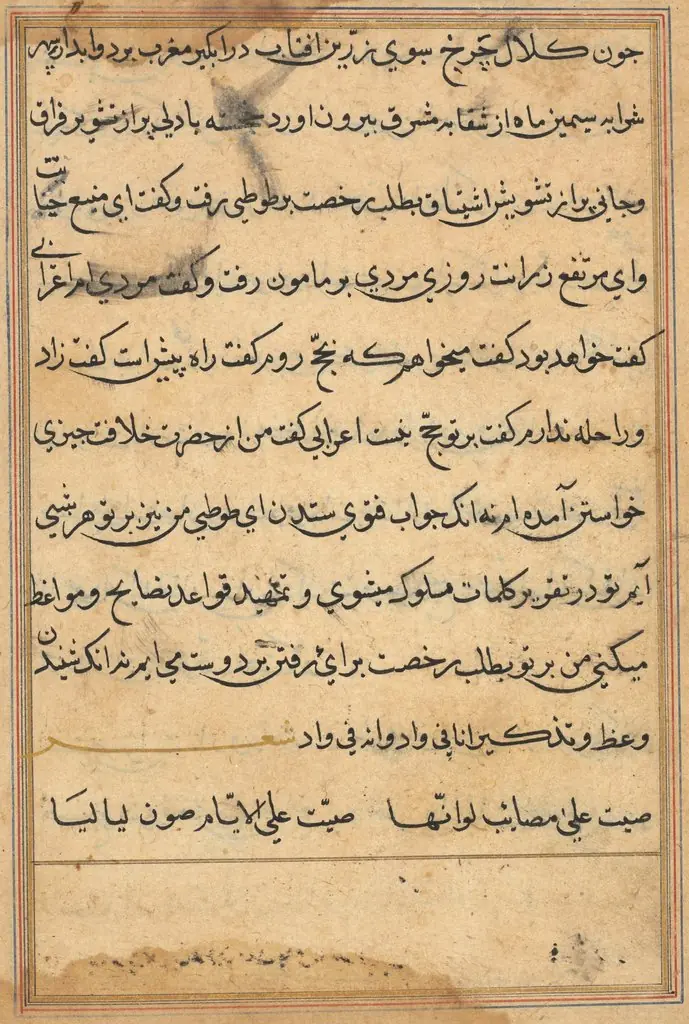
Page from Tales of a Parrot (Tuti-nama): text page is an unspecified painting. It dates from 1560 and is held in the collection of the Cleveland Museum of Art. This illuminated page originates from the manuscript Tales of a Parrot, a work commissioned for Prince Salim.
About this work
Subject & Meaning
The page illustrates a narrative from the Tuti-nama, a Persian tale of a talking parrot, rendered as a miniature painting from the Mughal period.
The page illustrates a narrative from the Tuti-nama, a Persian tale of a talking parrot, rendered as a miniature painting from the Mughal period. It features text written in Persian script, reflecting the storytelling tradition of the courtly literature popular in 16th-century India. The work belongs to the Cleveland Museum of Art's collection and was created in the Mughal Empire around 1560, representing a fusion of Persian literary themes with Indian artistic conventions.
The subject is drawn from a didactic story about a parrot's wisdom and moral teachings, emphasizing themes of fate and human folly. Iconographically, the miniature incorporates courtly figures and ornate settings typical of Mughal manuscript painting, symbolizing the transmission of ethical lessons through allegory.
History & Provenance
The page was created in 1560 within the Mughal Empire, as indicated by its inception date and place of production. It is classified as a painting and forms part of the illustrated manuscript tradition associated with the Tales of a Parrot (Tuti-nama).
The work is now held in the collection of the Cleveland Museum of Art, where it is catalogued under the accession number 1962.279.153.b. No earlier ownership history, commission details, or intermediate provenance prior to its acquisition by the museum is documented in the available sources.
Overview
This illuminated page originates from the manuscript Tales of a Parrot, a work commissioned for Prince Salim. Executed as a painted page, it now belongs to the collection of the Cleveland Museum of Art.
Technique & Style
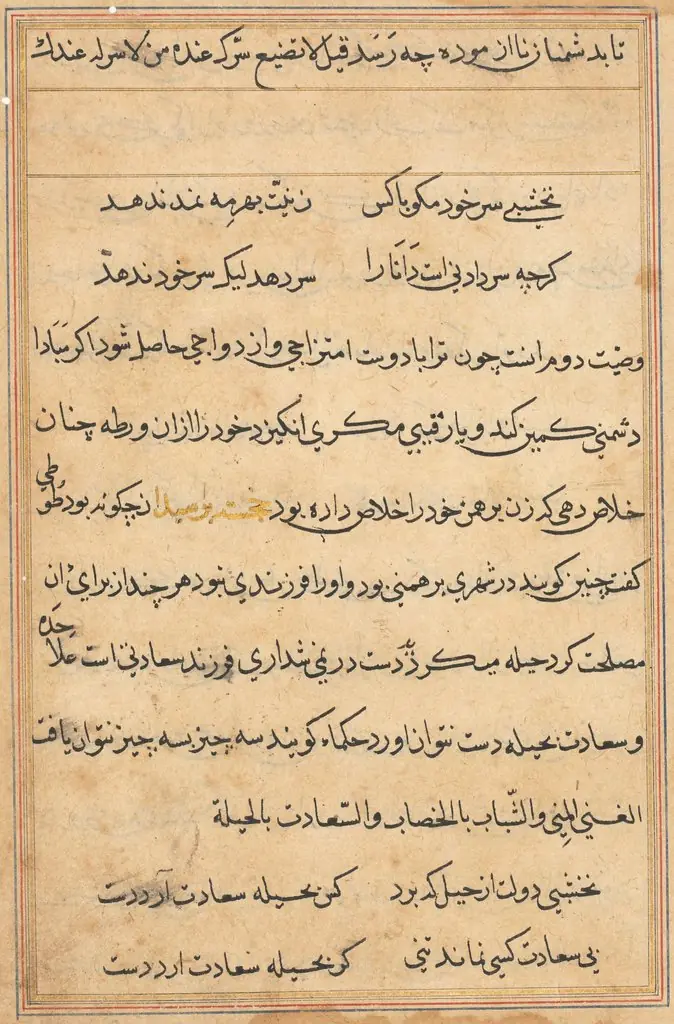
The script is rendered in black pigment on a light tan ground, framed by a thin border in red and blue. The variation in letter size and the careful hand of the scribe demonstrate a refined approach to decorative writing typical of courtly manuscripts.
Artist & collection

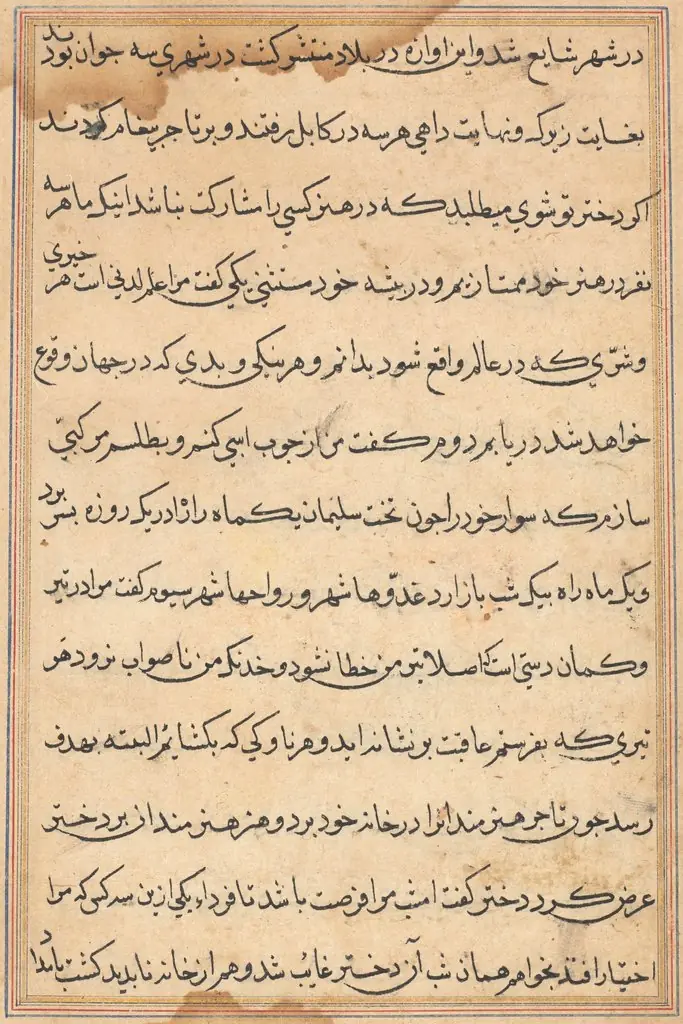 Page from Tales of a Parrot (Tuti-nama): text page
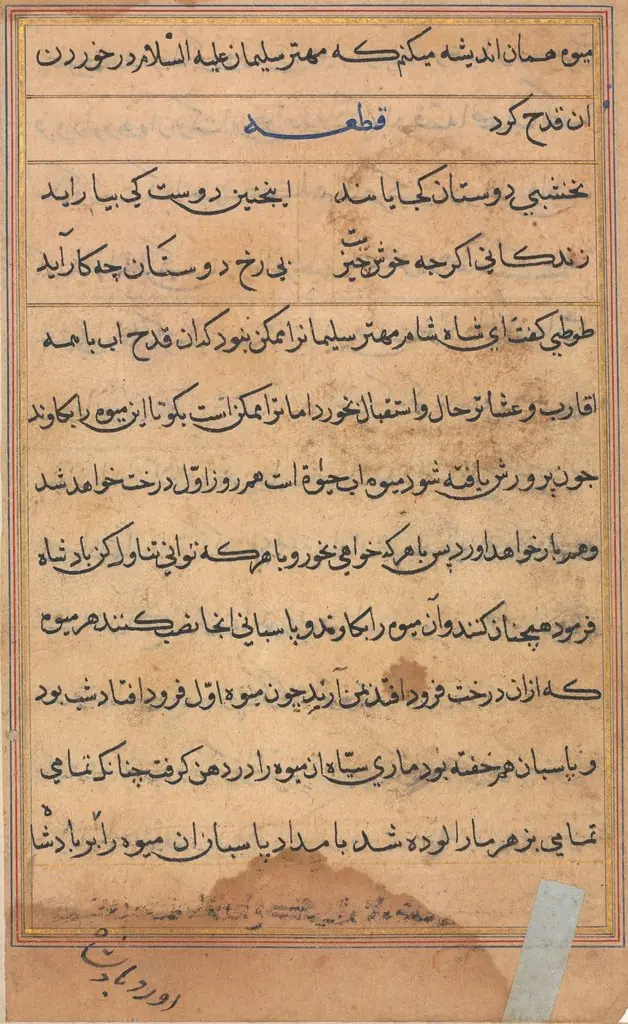 Page from Tales of a Parrot (Tuti-nama): text page
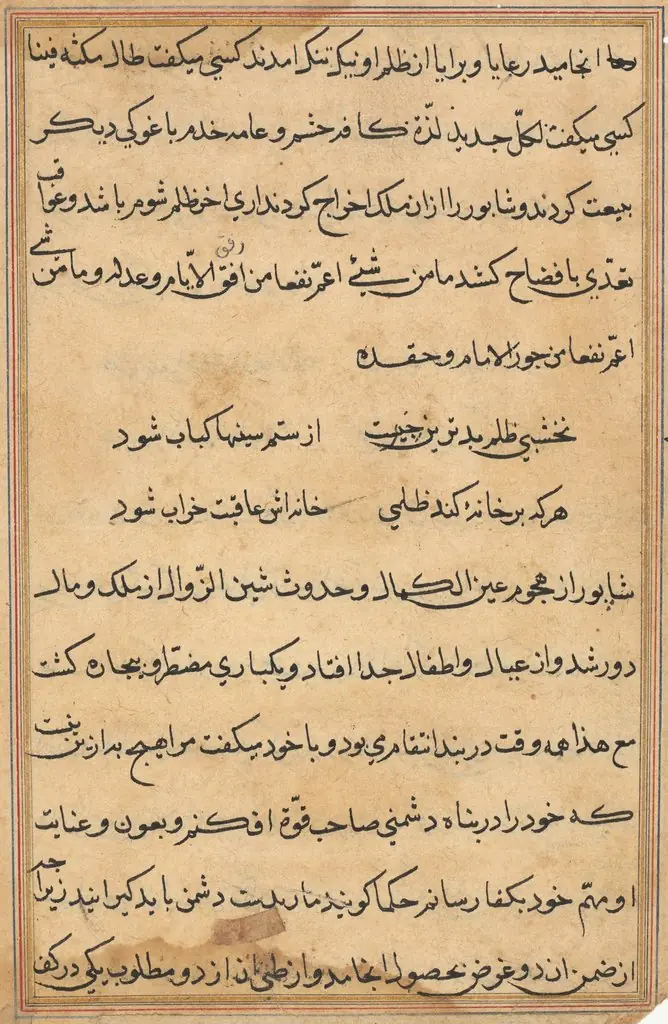 Page from Tales of a Parrot (Tuti-nama): text page
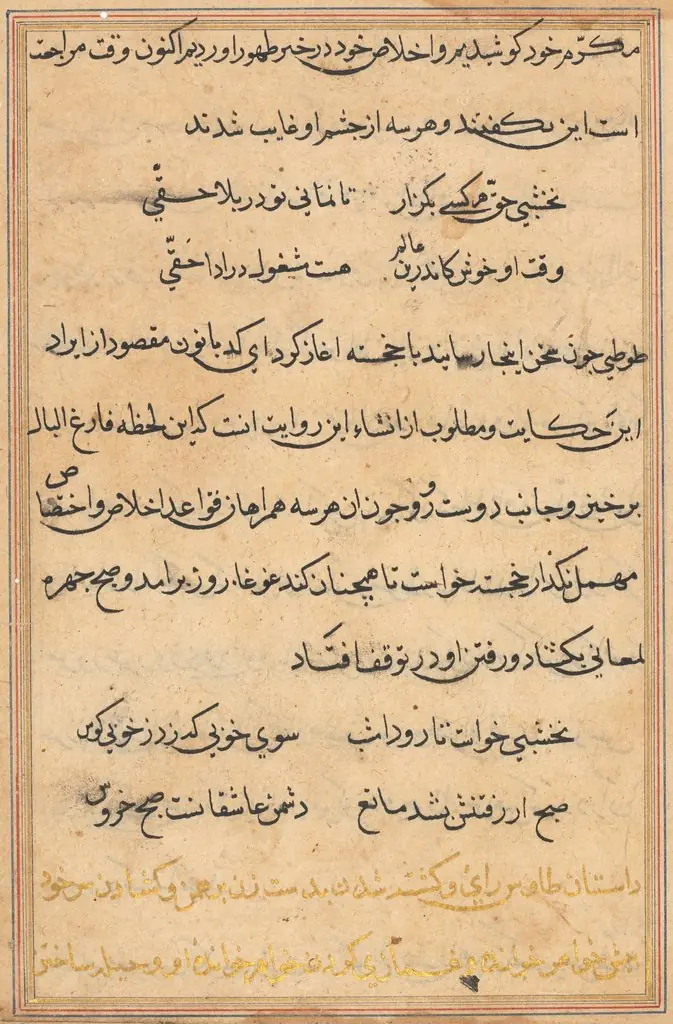 Page from Tales of a Parrot (Tuti-nama): text page
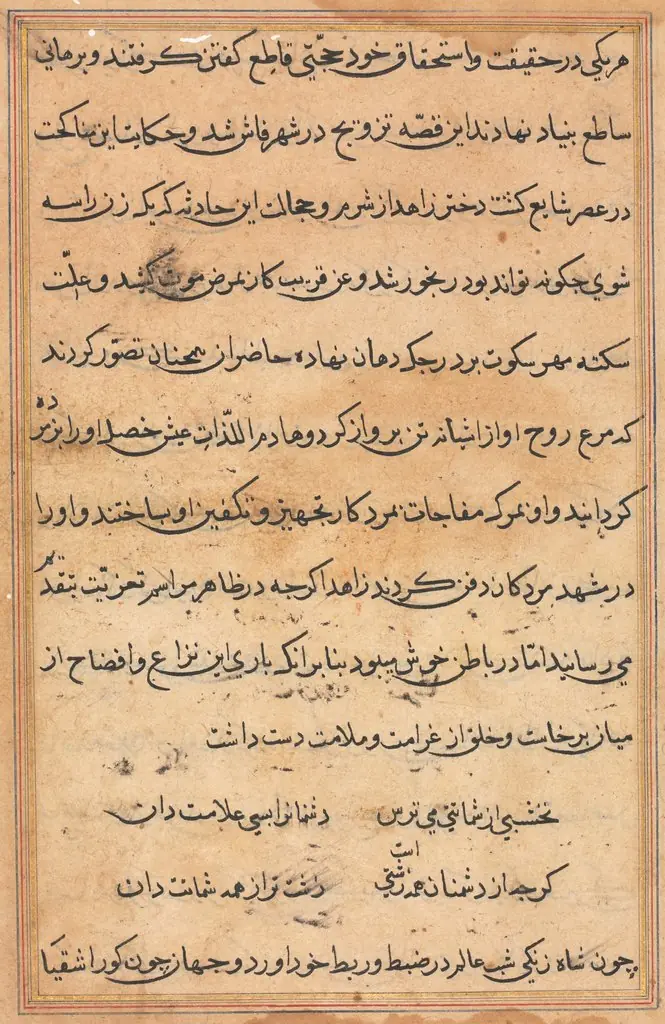 Page from Tales of a Parrot (Tuti-nama): text page
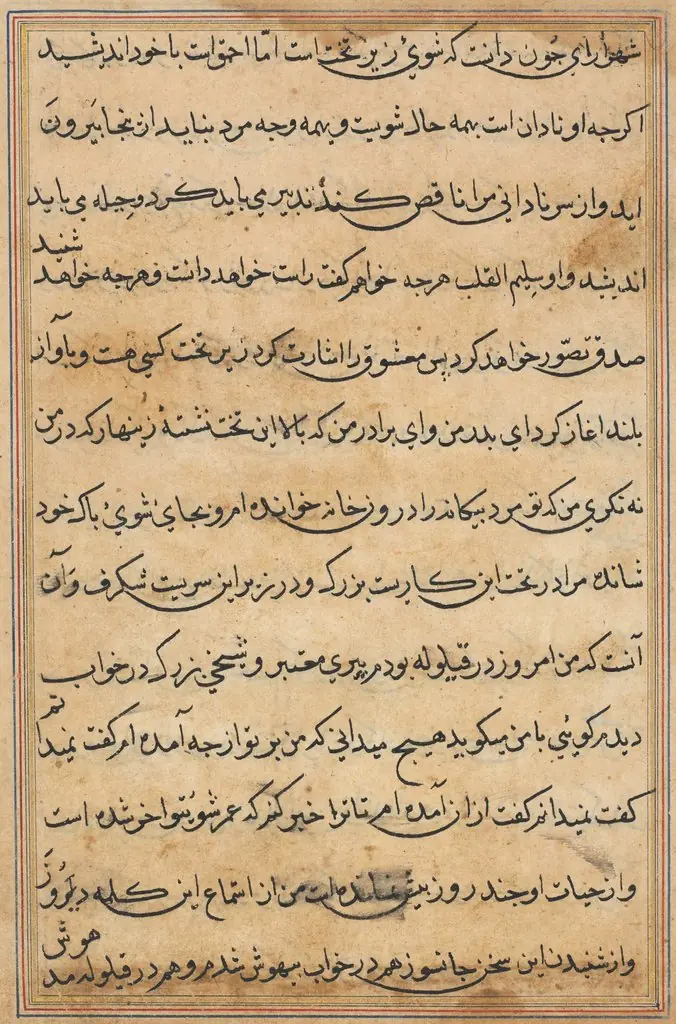 Page from Tales of a Parrot (Tuti-nama): text page
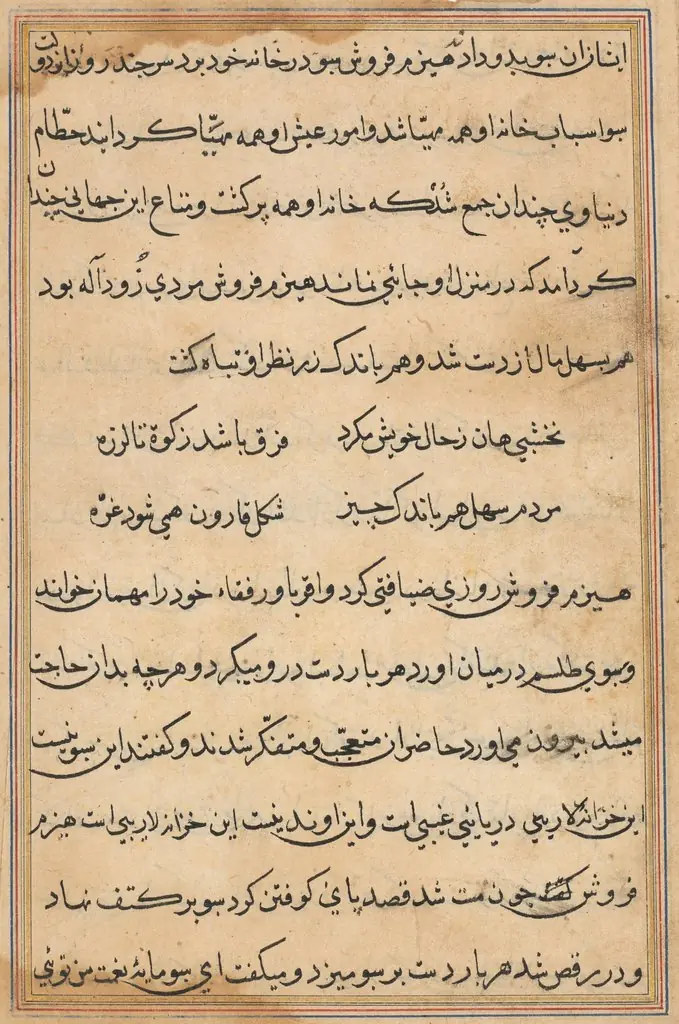 Page from Tales of a Parrot (Tuti-nama): text page
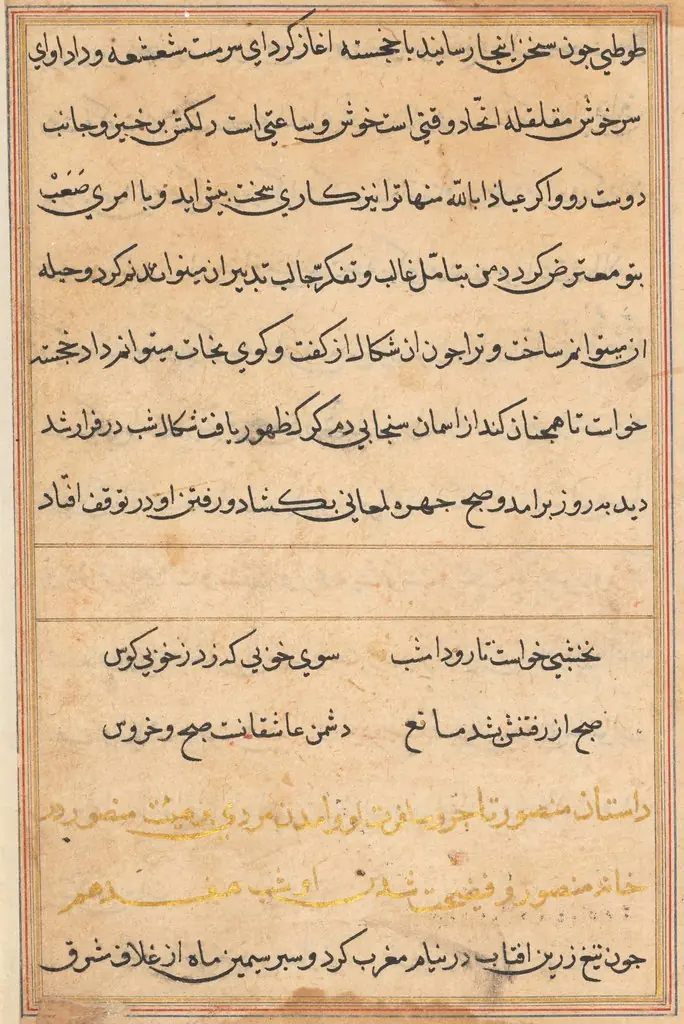 Page from Tales of a Parrot (Tuti-nama): text page
 Page from Tales of a Parrot (Tuti-nama): text page