Artwork
Page from Tales of a Parrot (Tuti-nama): text page
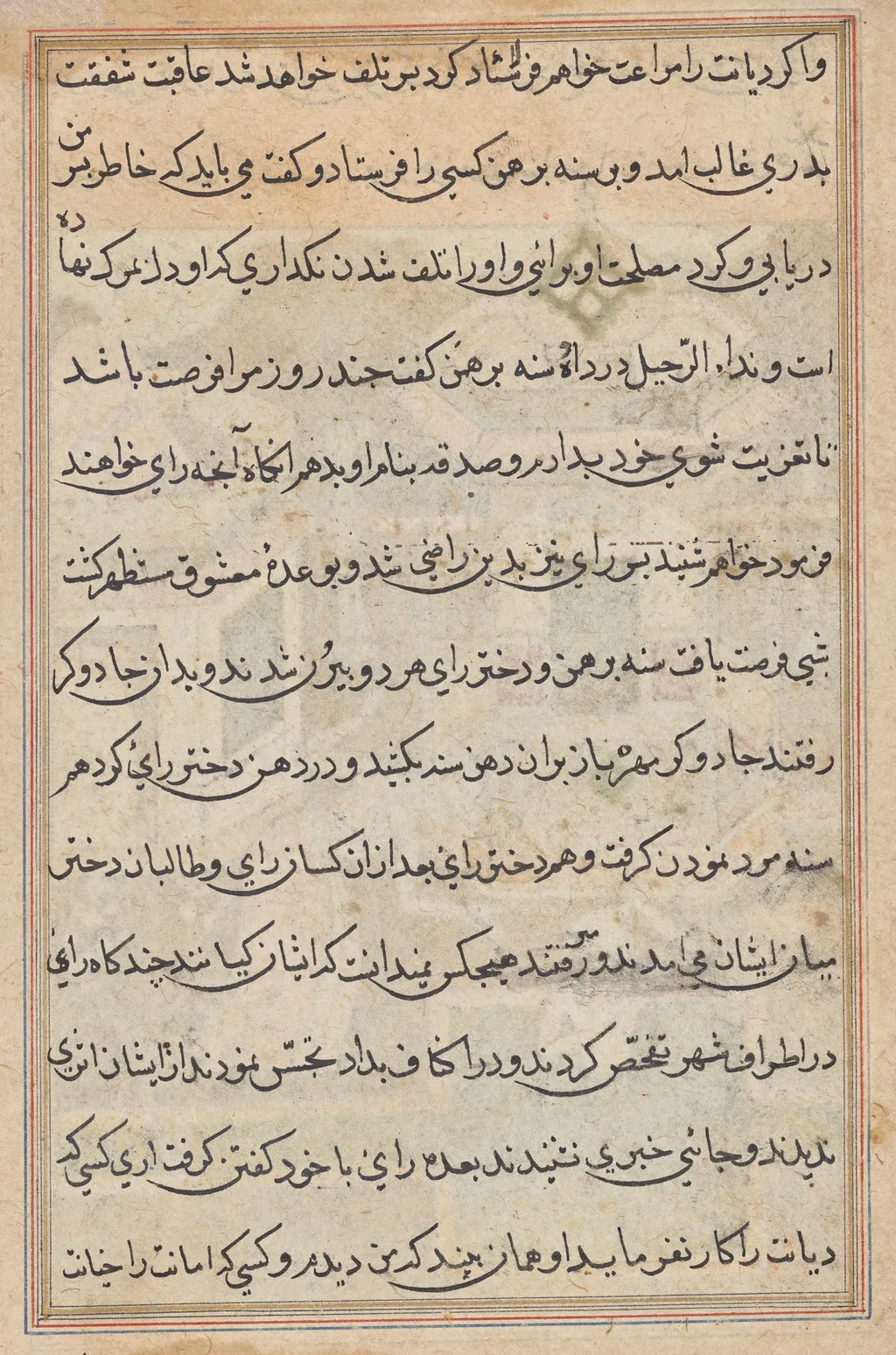
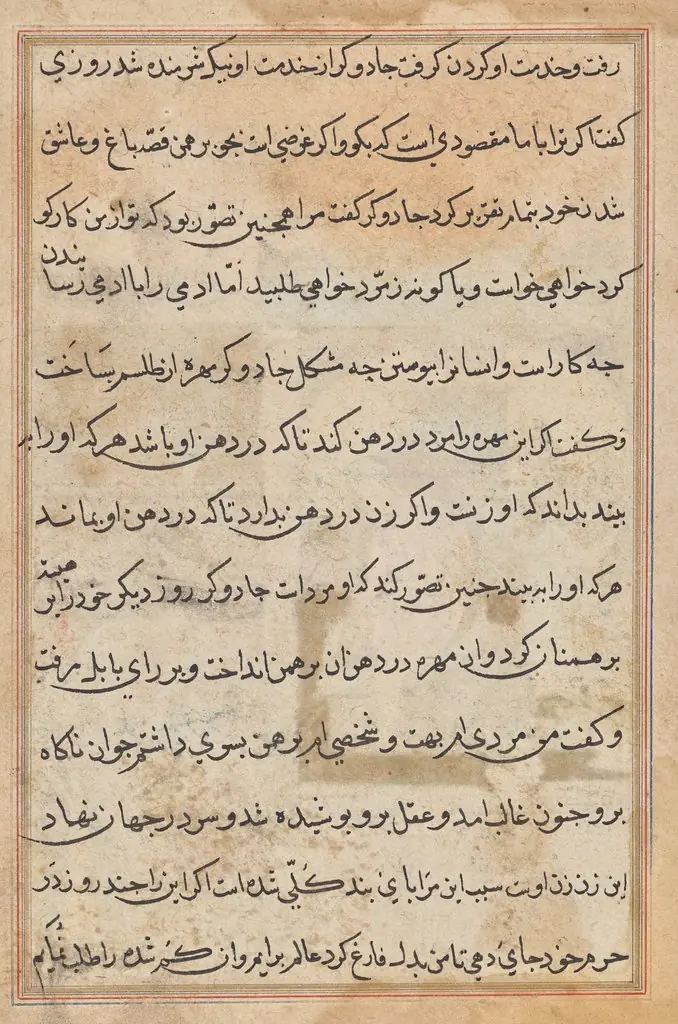
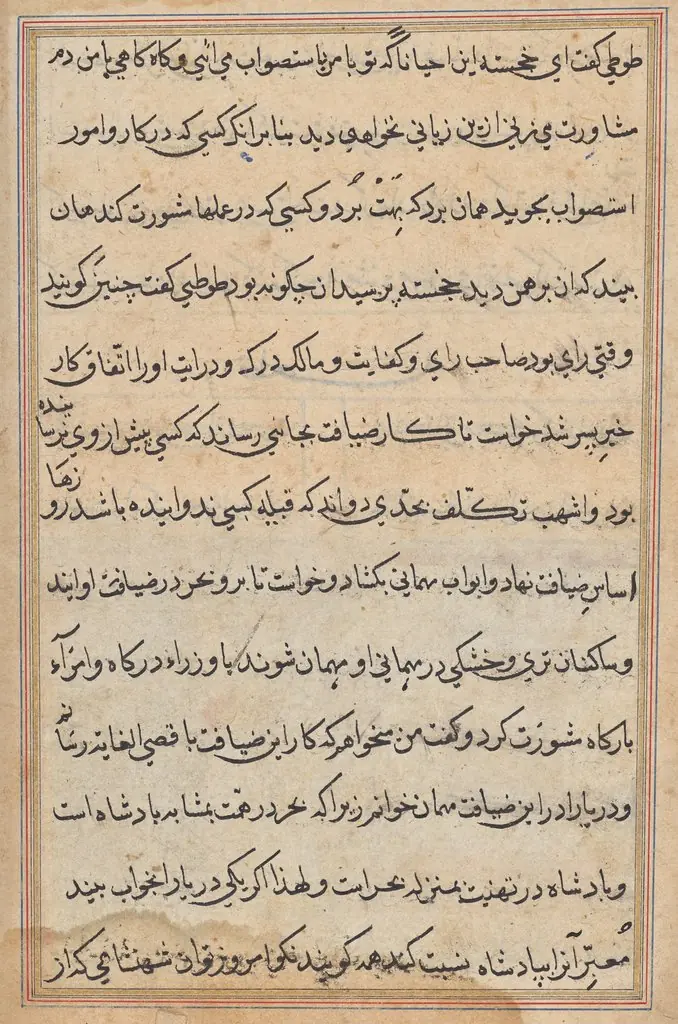
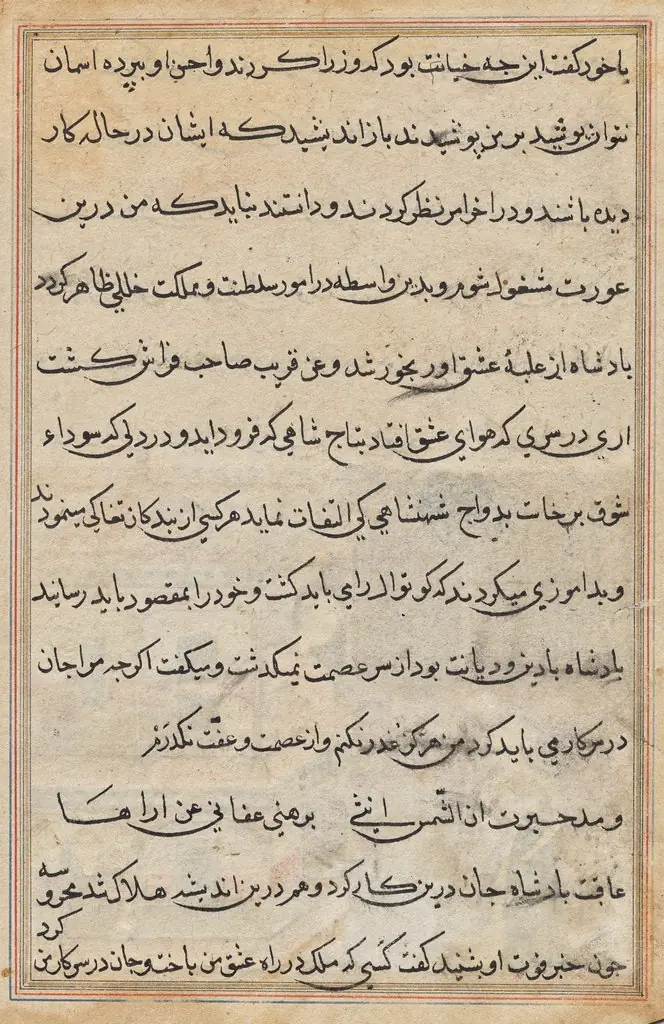
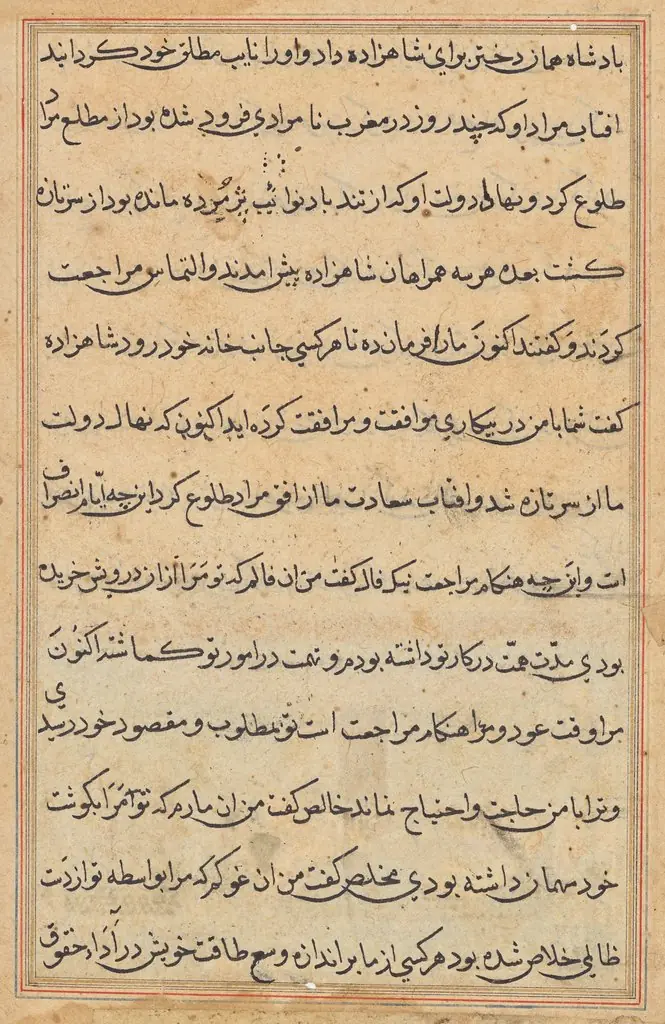
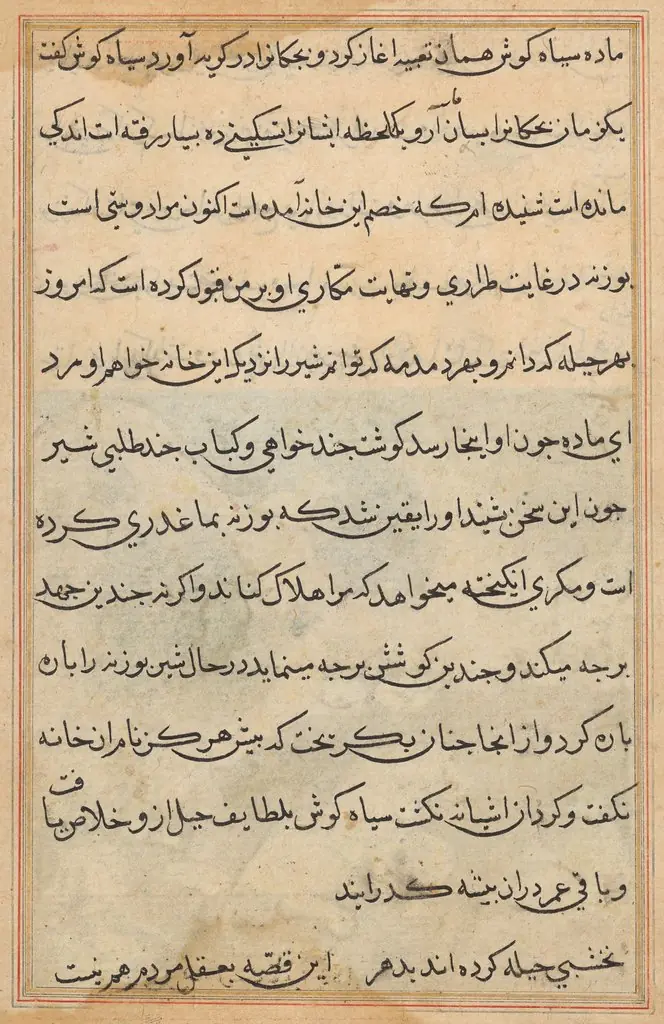
Page from Tales of a Parrot (Tuti-nama): text page is an unspecified painting. It dates from 1560 and is held in the collection of the Cleveland Museum of Art. The object is a single leaf from the illustrated manuscript known as Tuti‑nama (Tales of a Parrot).
About this work
Subject & Meaning
The text page illustrates a narrative scene from the Tuti-nama, a Persian didactic work, depicting a parrot recounting a moral tale.
The text page illustrates a narrative scene from the Tuti-nama, a Persian didactic work, depicting a parrot recounting a moral tale. The subject functions as an allegorical vehicle, using the bird’s speech to convey lessons on wisdom and conduct, reflecting the didactic purpose of the manuscript. This symbolic use of animal speech underscores didactic instruction within the Mughal artistic tradition.
The page originates from a 1560 manuscript produced in the Mughal Empire, exemplifying the cross-cultural transmission of Persian literary themes into Indian artistic practice.
History & Provenance
The Page from Tales of a Parrot (Tuti‑nama) is a Mughal Empire painting dated to 1560, created by an unknown artist. Its provenance before the twentieth century is not recorded in the sources; the work entered the Cleveland Museum of Art with accession number 1962.279.234.b, indicating acquisition in 1962, and remains in the museum’s collection. No information about a specific commission or earlier owners is provided in the available records.
Overview
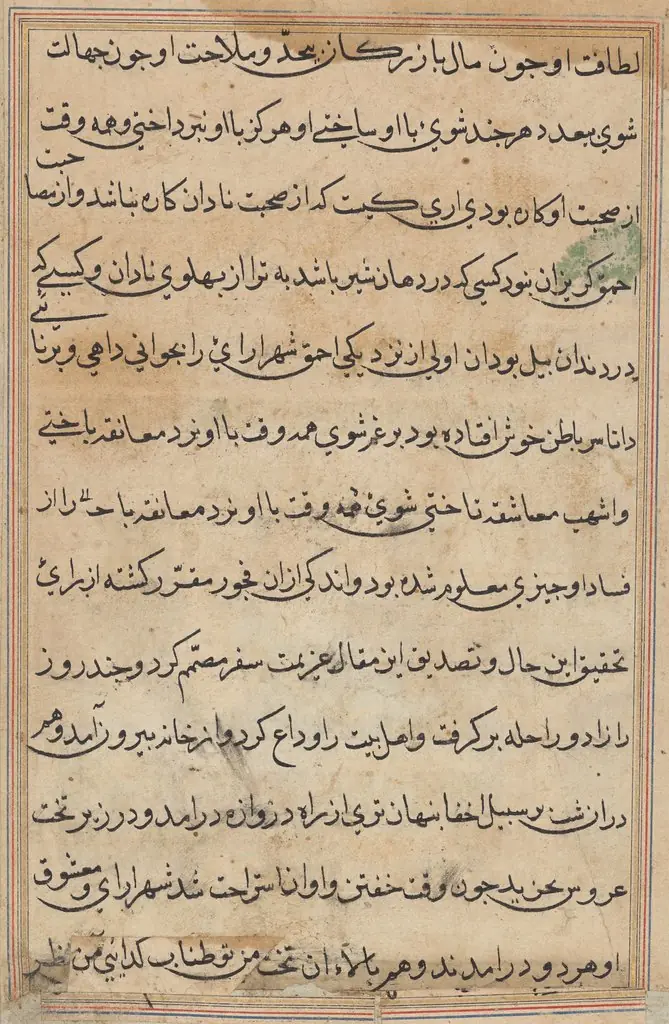
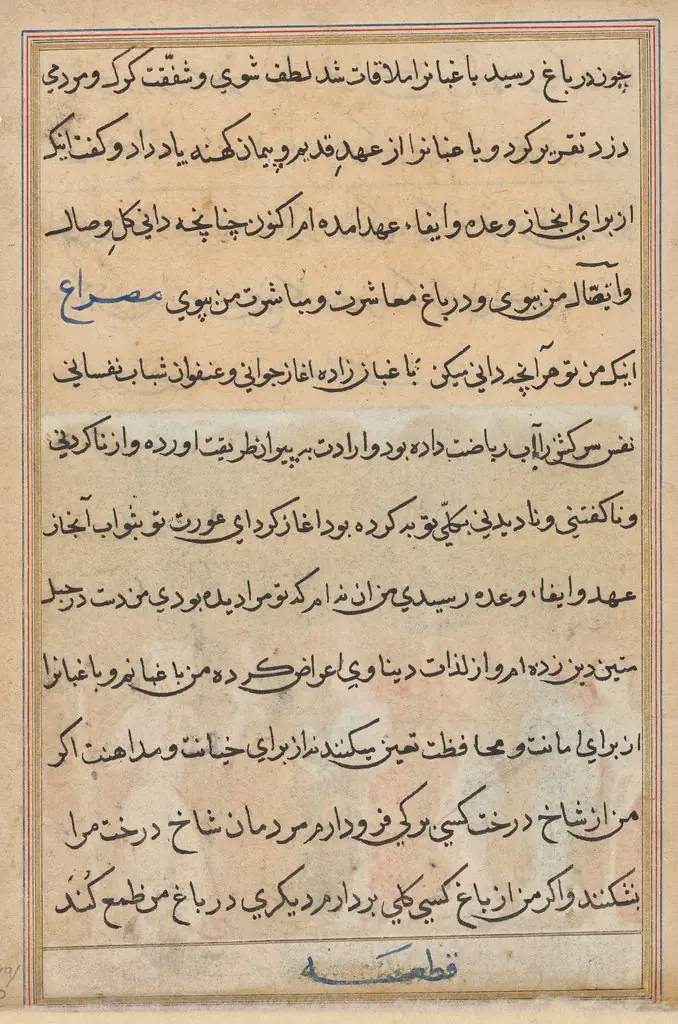
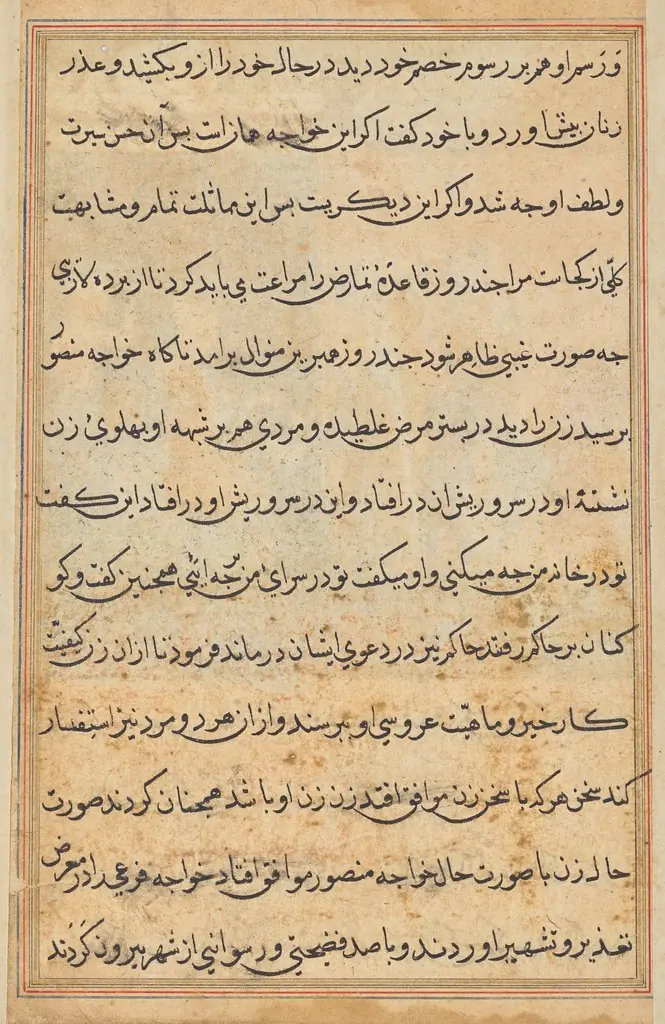
The object is a single leaf from the illustrated manuscript known as Tuti‑nama (Tales of a Parrot). Rendered on a tan‑colored folio, the page bears densely packed black script in a flowing cursive hand, framed by a thin outer margin and a slightly broader band surrounding the text block.
Technique & Style
The calligraphy displays intricate flourishes and occasional underlining, characteristic of Persian or Central Asian manuscript traditions. The ink is uniformly black, applied with a fine reed pen, while the decorative borders are modest, emphasizing the elegance of the script rather than lavish illumination.
Context
Tuti‑nama manuscripts were produced for elite patrons in the Islamic world between the 14th and 18th centuries, serving both as literary entertainment and moral instruction. The refined calligraphic style of this page reflects the high regard for literary arts in those cultural settings.
Artist & collection

- Page from Tales of a Parrot (Tuti-nama): text page
 Page from Tales of a Parrot (Tuti-nama): text page
 Page from Tales of a Parrot (Tuti-nama): text page
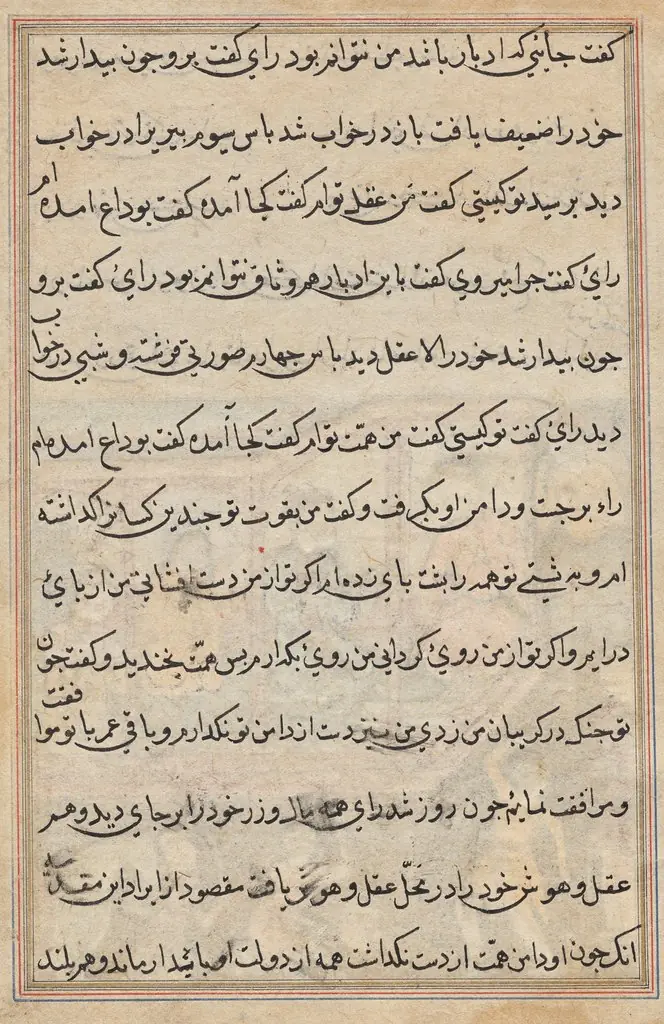 Page from Tales of a Parrot (Tuti-nama): text page
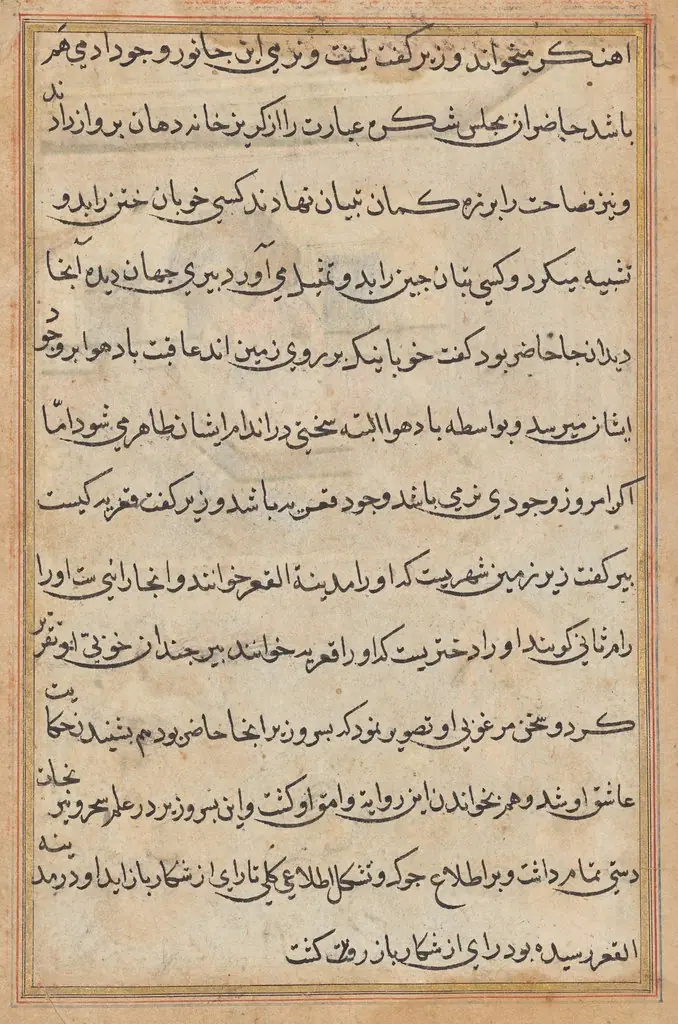 Page from Tales of a Parrot (Tuti-nama): text page
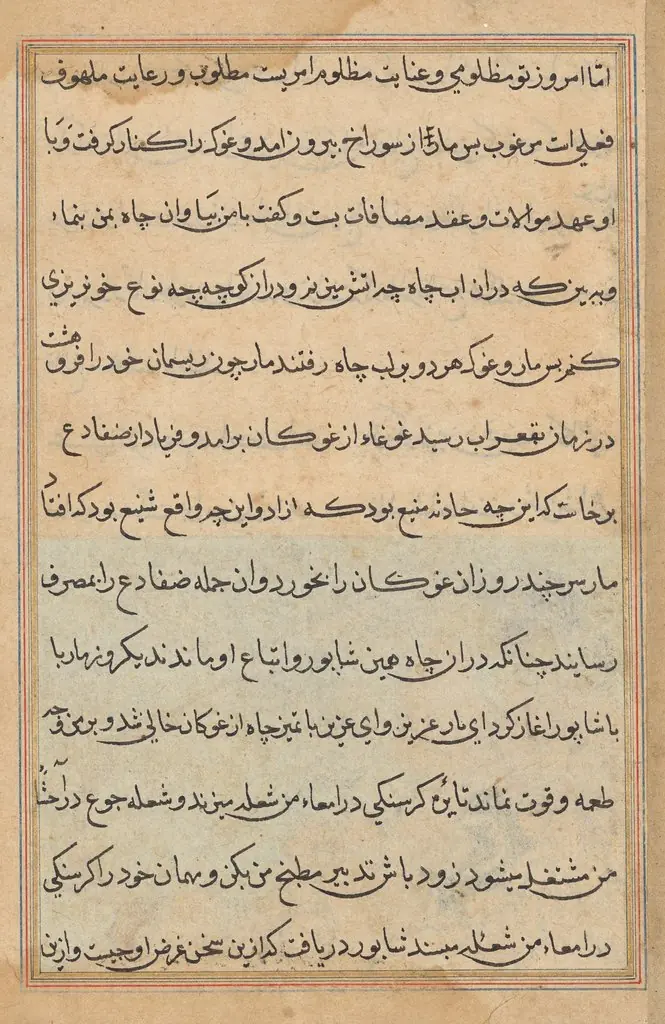 Page from Tales of a Parrot (Tuti-nama): text page
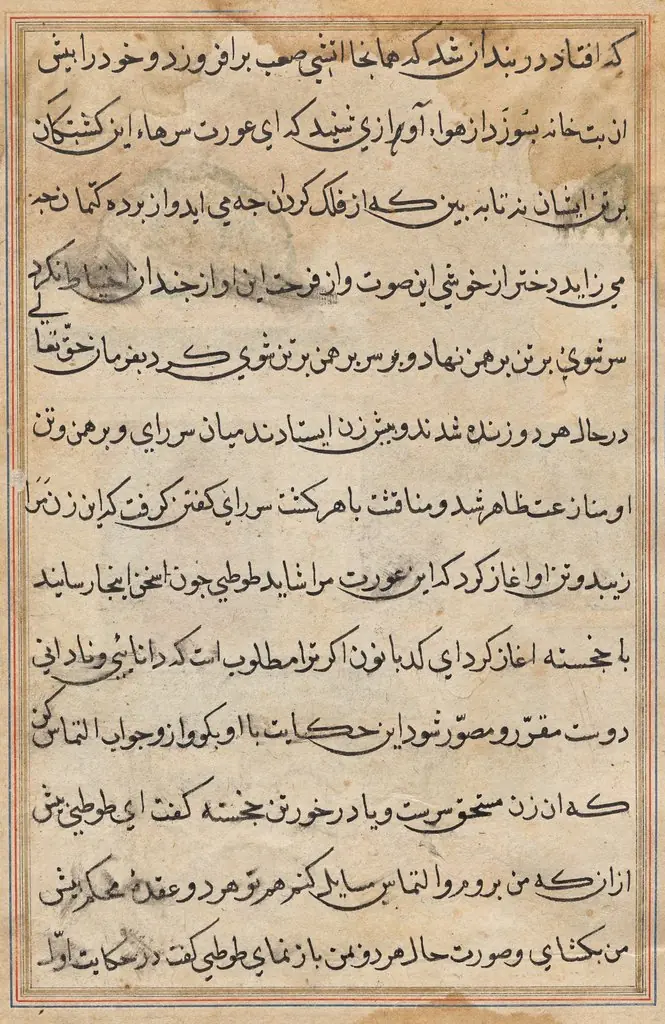 Page from Tales of a Parrot (Tuti-nama): text page
 Page from Tales of a Parrot (Tuti-nama): text page
 Page from Tales of a Parrot (Tuti-nama): text page
 Page from Tales of a Parrot (Tuti-nama): text page
 Page from Tales of a Parrot (Tuti-nama): text page
 Tuti-Nama (Tales of a Parrot)