Artwork
Page from Tales of a Parrot (Tuti-nama): text page (blank)
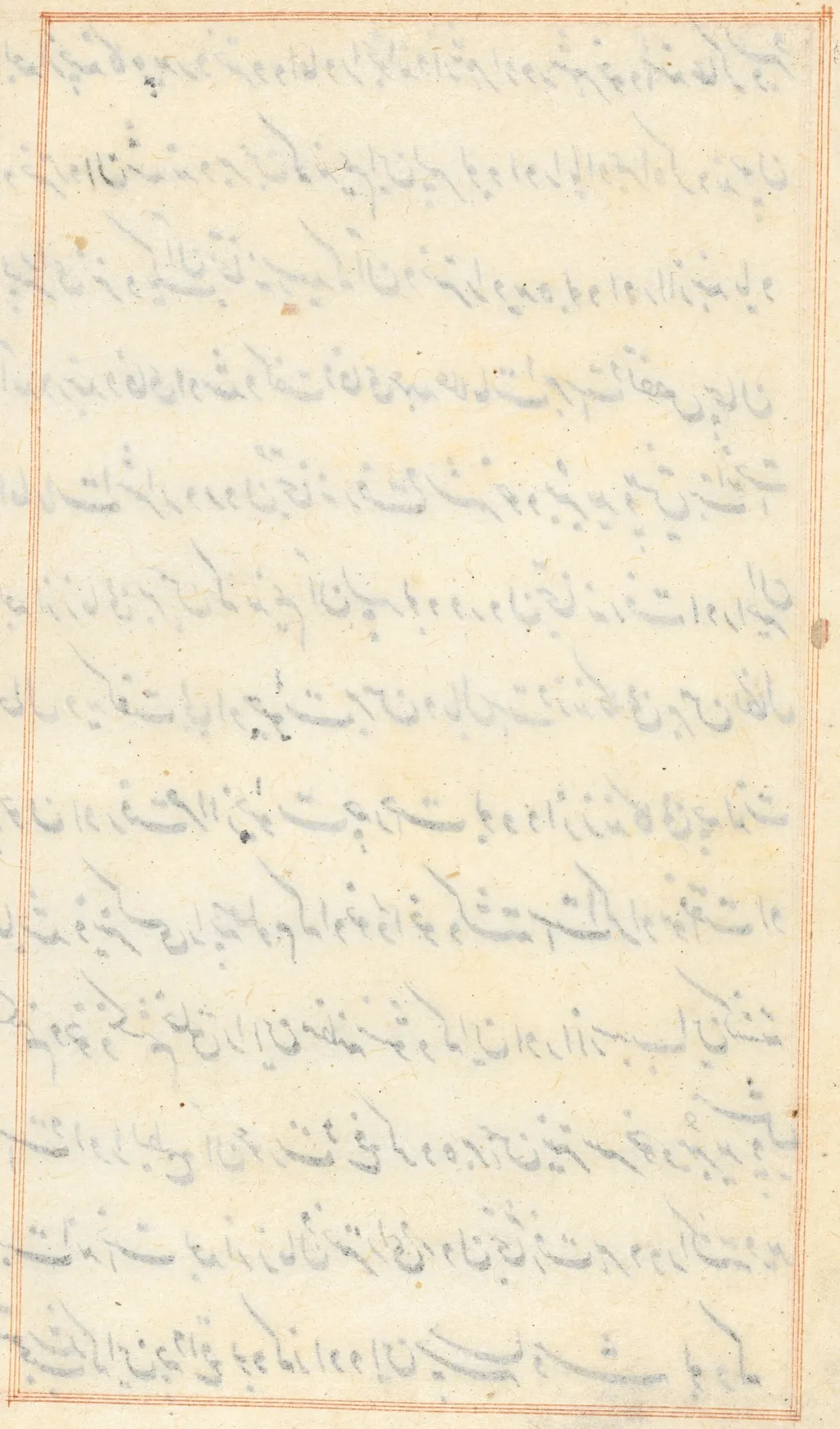
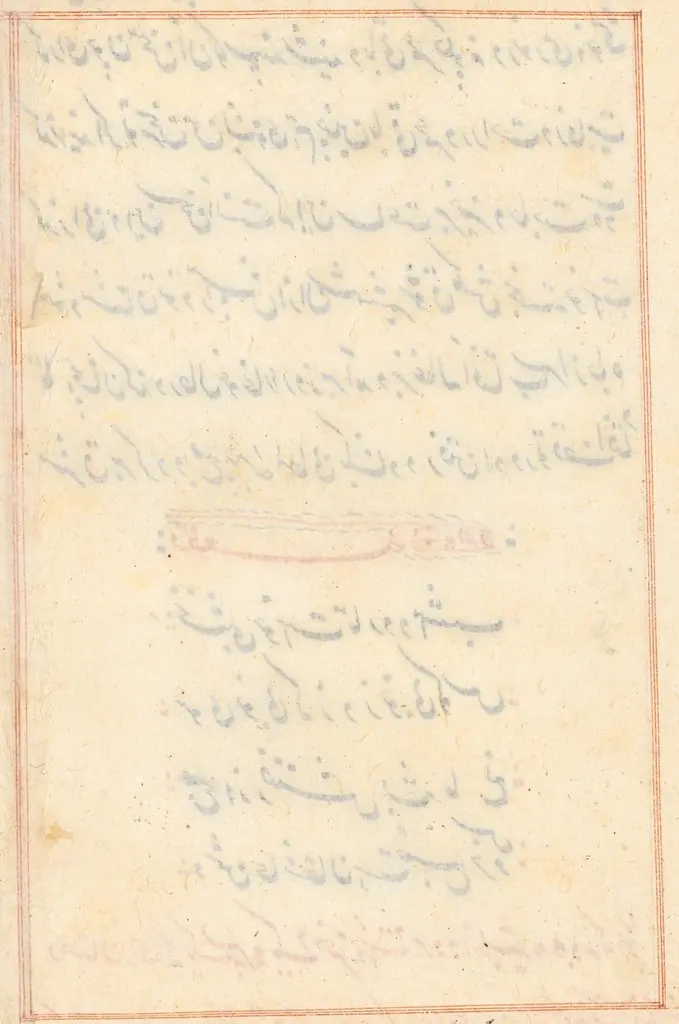
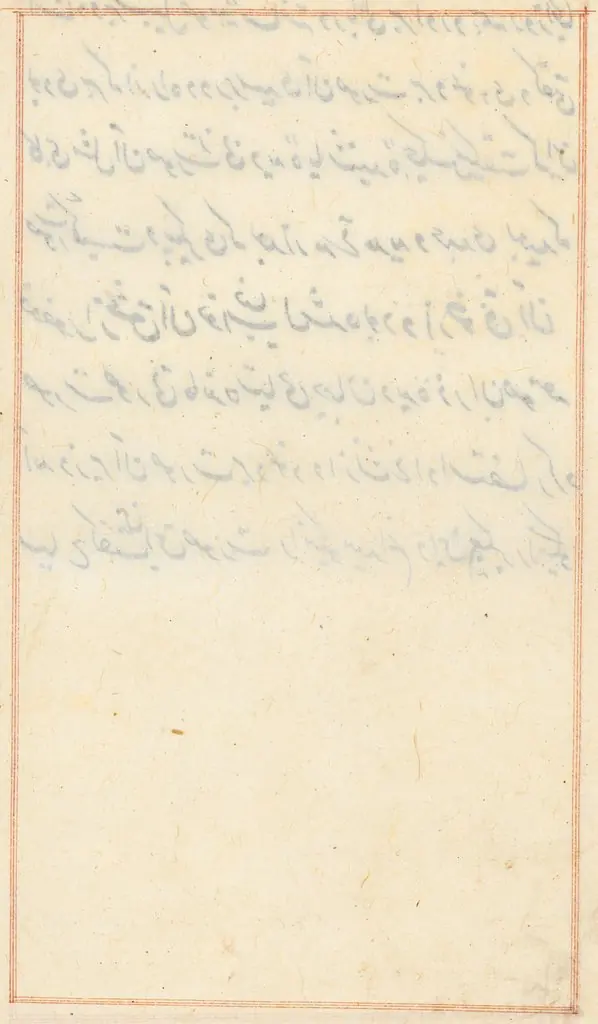
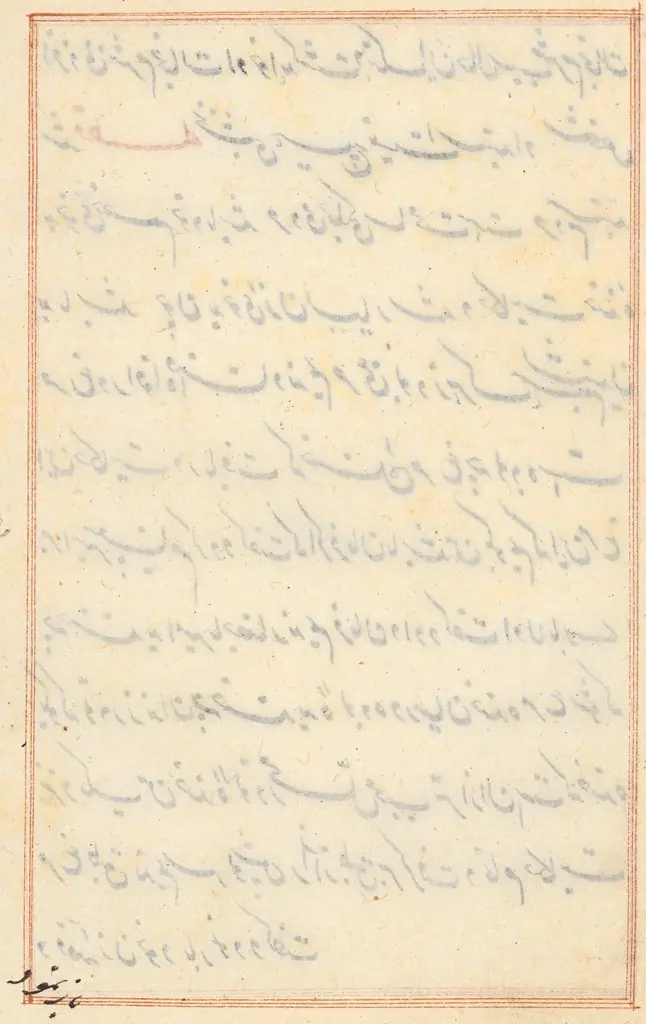
Page from Tales of a Parrot (Tuti-nama): text page (blank) is an unspecified painting. It dates from 1560 and is held in the collection of the Cleveland Museum of Art. The object is a single leaf from the Persian manuscript known as the Tales of a Parrot (Tuti‑nama).
About this work
Technique & Style
The page's material composition aligns with contemporary manuscript practices, where text pages served as carriers for illustrated stories.
The blank text page from the Tuti-nama originates in 1560 and was produced in the Mughal imperial context. It is classified as a painting and executed on paper support, reflecting the manuscript production techniques of the period. The work belongs to the Cleveland Museum of Art collection and exemplifies Mughal painting conventions through its textual function within an illustrated narrative framework.
The page's material composition aligns with contemporary manuscript practices, where text pages served as carriers for illustrated stories. Its formal qualities are defined by the absence of visual content, emphasizing the structural role of blank folios in organizing narrative sequences within the Tuti-nama manuscript tradition.
History & Provenance
A blank text page from the tale "Tales of a Parrot" (Tuti-nama) was created in 1560 during the Mughal period. It belongs to the Cleveland Museum of Art collection and is cataloged under accession number 1962.279.228.b. The work is classified as a painting.
The blank text page from the Tales of a Parrot (Tuti-nama), created in 1560 during the Mughal Empire, is held in the collection of the Cleveland Museum of Art in Cleveland. The work is identified by the accession number 1962.279.228.b within the museum's records. The provided sources do not contain information regarding specific exhibitions in which this page has been displayed.
Overview
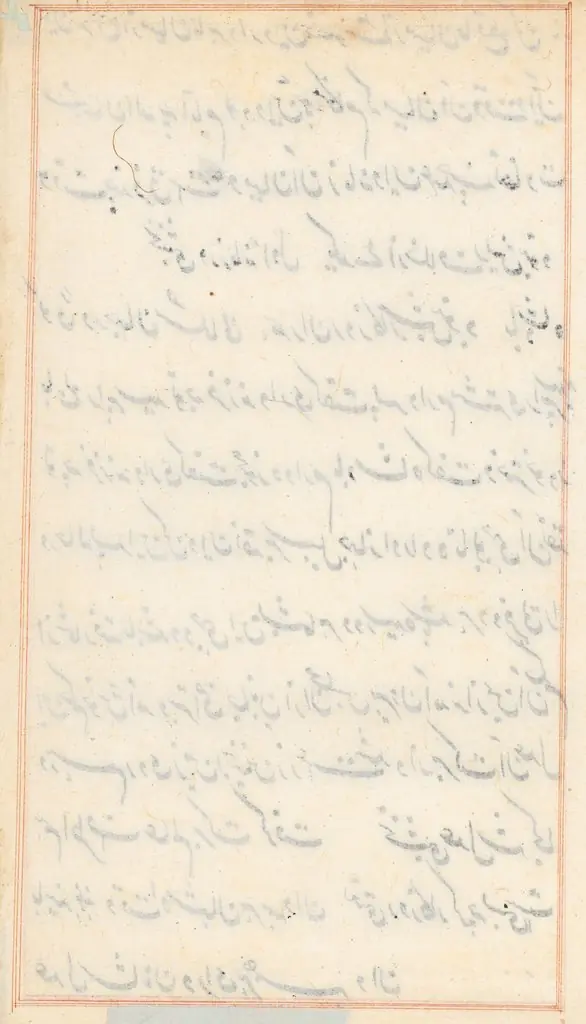
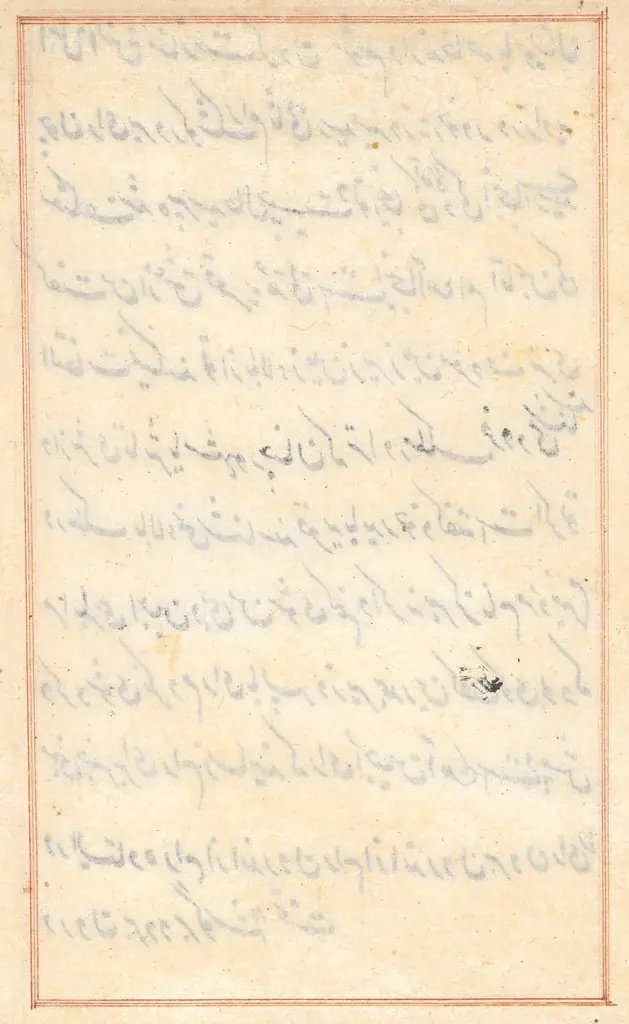
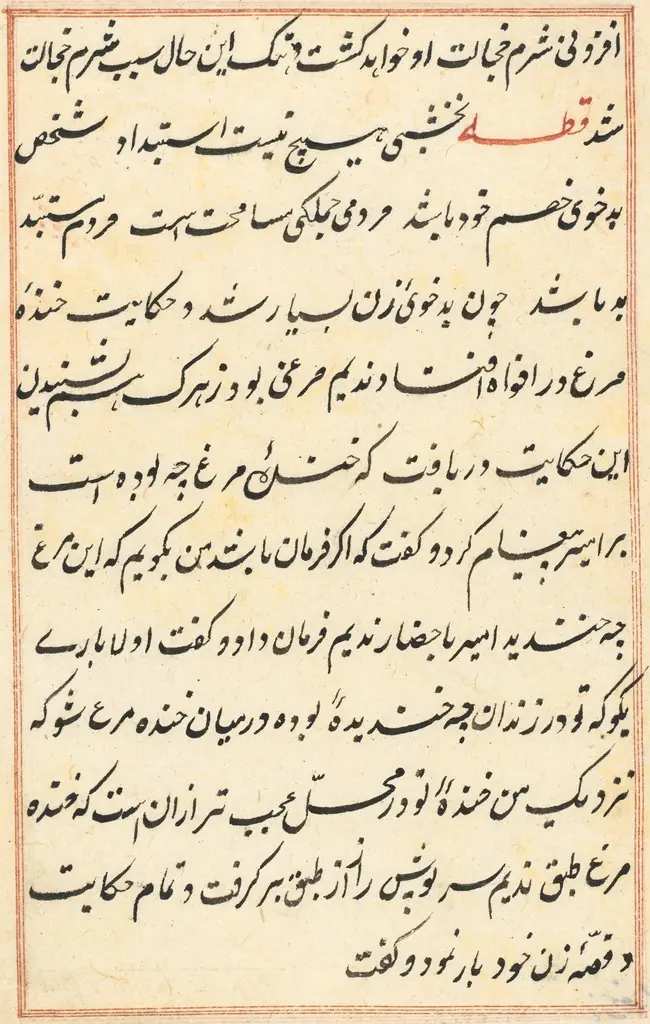
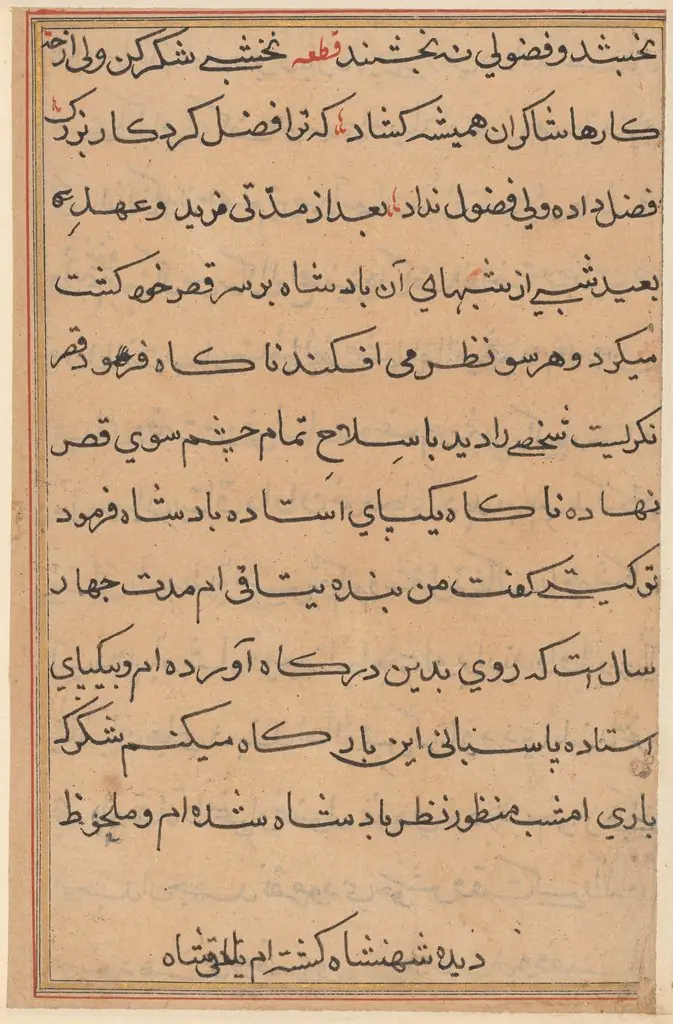
The object is a single leaf from the Persian manuscript known as the Tales of a Parrot (Tuti‑nama). It consists of a sheet of light‑coloured paper bearing a continuous line of blue calligraphy, framed by a narrow red border. The surface shows signs of age, with slight wear and discoloration, but the text remains legible and uniformly executed.
Subject & Meaning
The blue script records a narrative passage from the Tuti‑nama, a collection of moral and didactic stories traditionally illustrated for courtly audiences. Although this particular leaf contains no accompanying miniatures, the text itself conveys the tale’s ethical lesson, reflecting the manuscript’s role as both literary entertainment and instructional guide in its original cultural context.
Context
The Tuti‑nama belongs to a broader tradition of illustrated moral compendia that flourished in the Islamic world from the 14th to 17th centuries. While many copies feature elaborate miniature paintings, some versions, like this one, prioritize textual presentation, highlighting the importance of the narrative itself within the literary culture of the period.
Artist & collection

 Page from Tales of a Parrot (Tuti-nama): text page
 Page from Tales of a Parrot (Tuti-nama): text page
 Page from Tales of a Parrot (Tuti-nama): text page
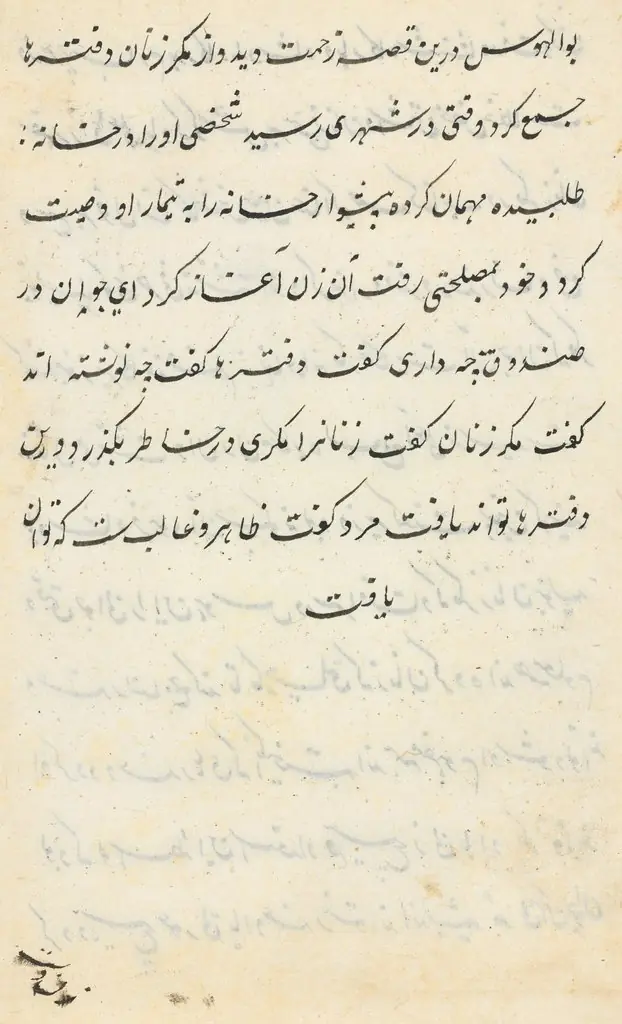 Page from Tales of a Parrot (Tuti-nama): text page
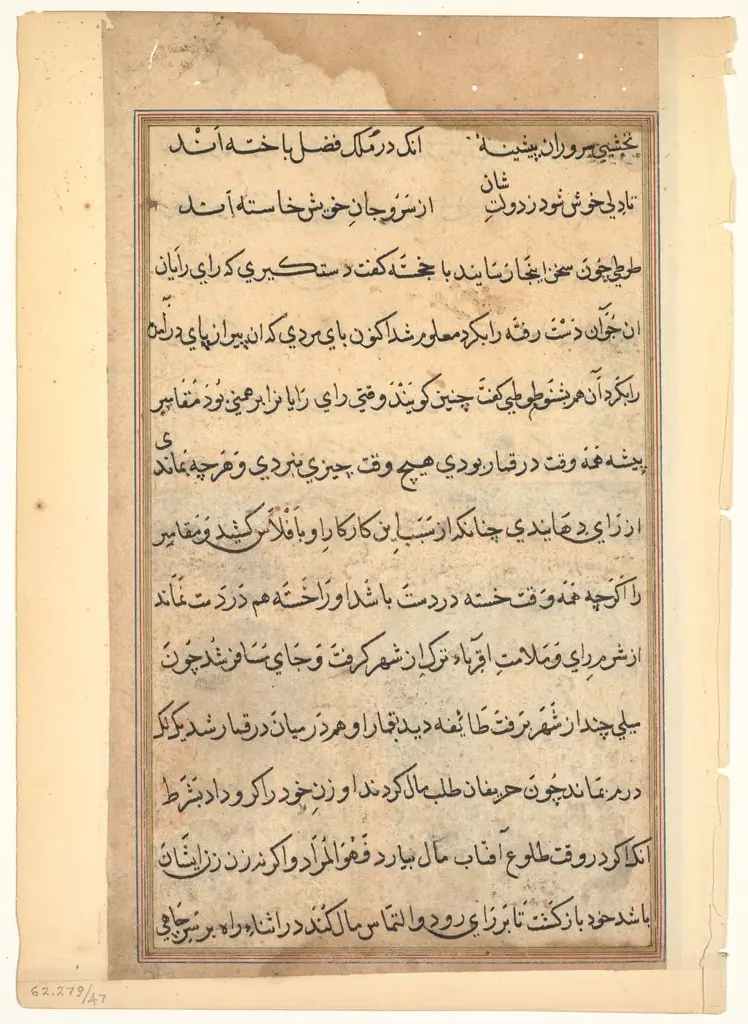 Page from Tales of a Parrot (Tuti-nama): text page
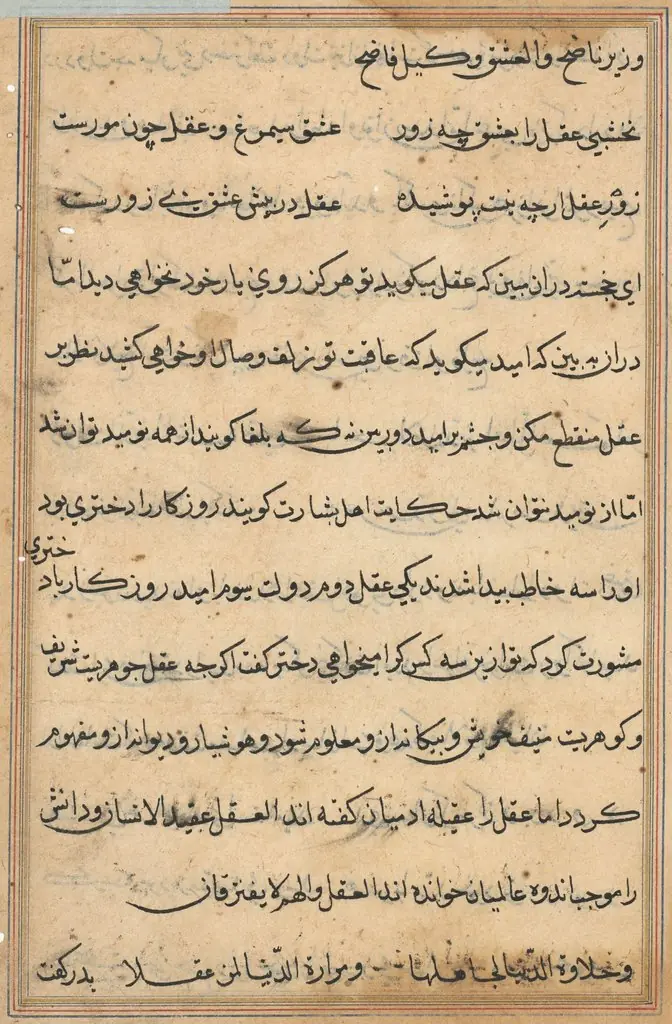 Page from Tales of a Parrot (Tuti-nama): text page
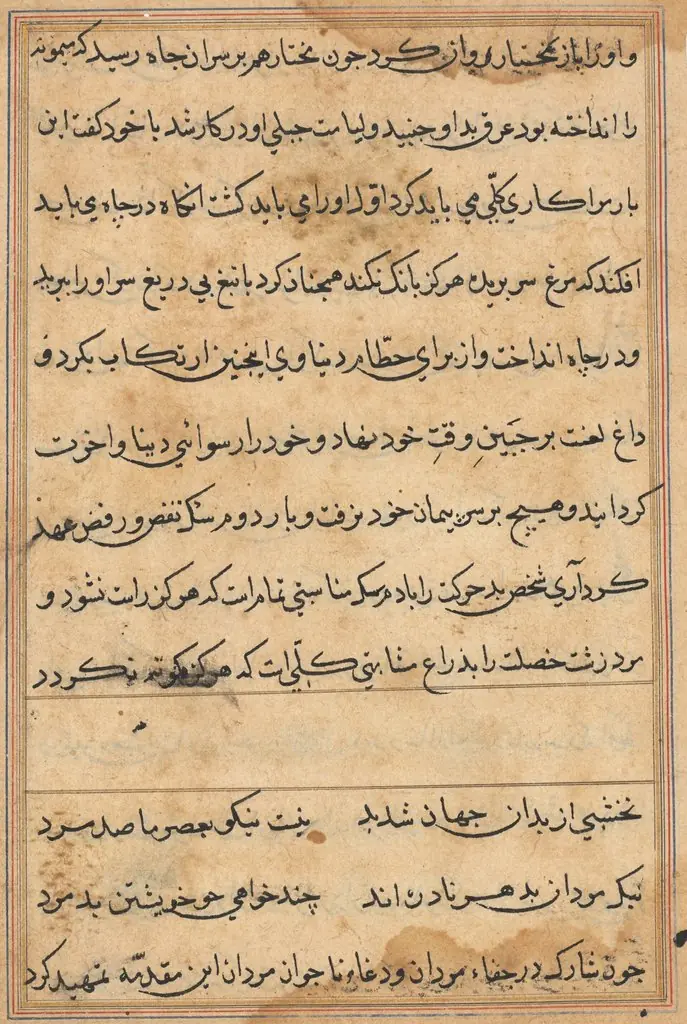 Page from Tales of a Parrot (Tuti-nama): text page
 Page from Tales of a Parrot (Tuti-nama): text page