Artwork
Page from Tales of a Parrot (Tuti-nama): text page
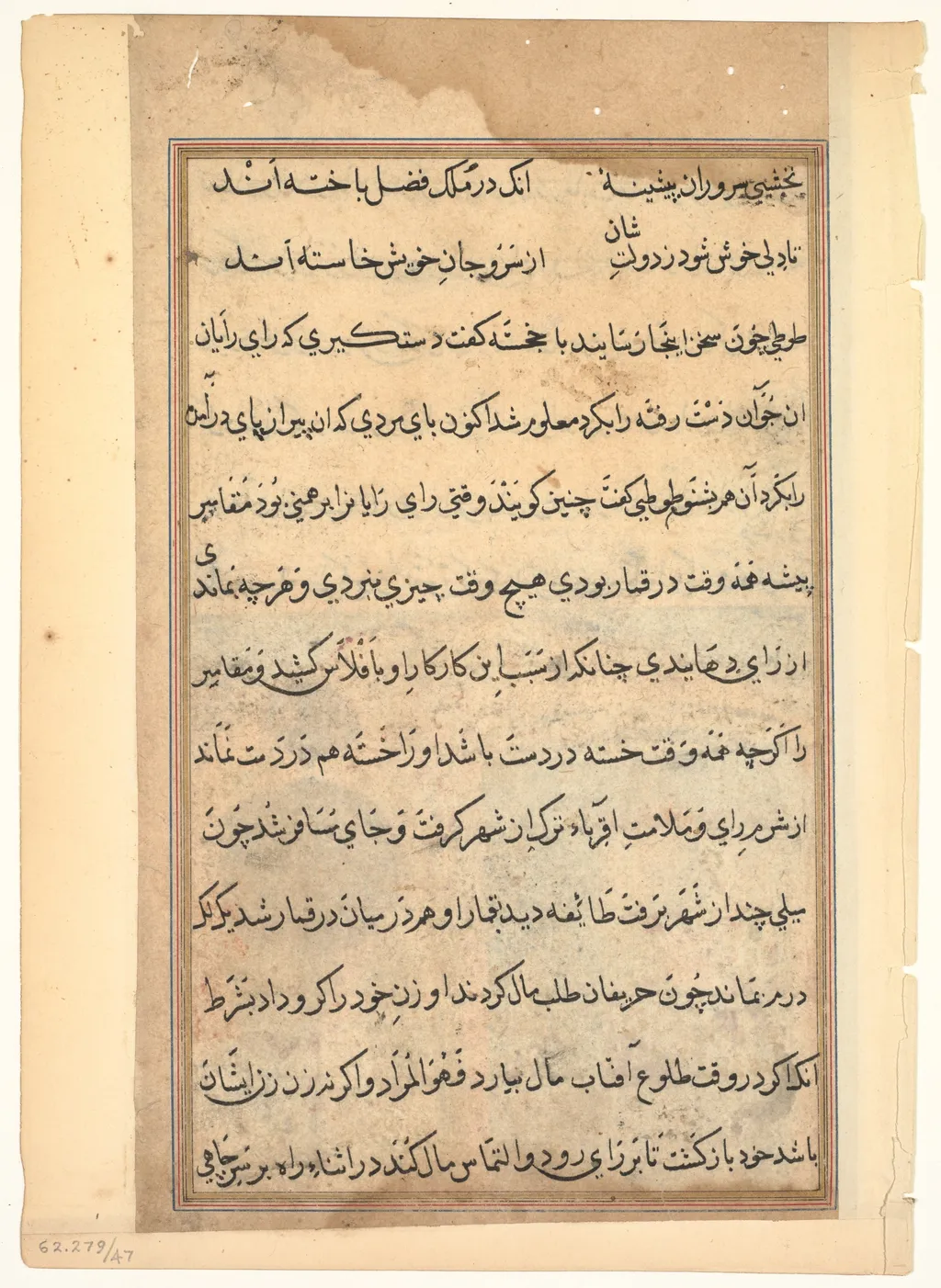
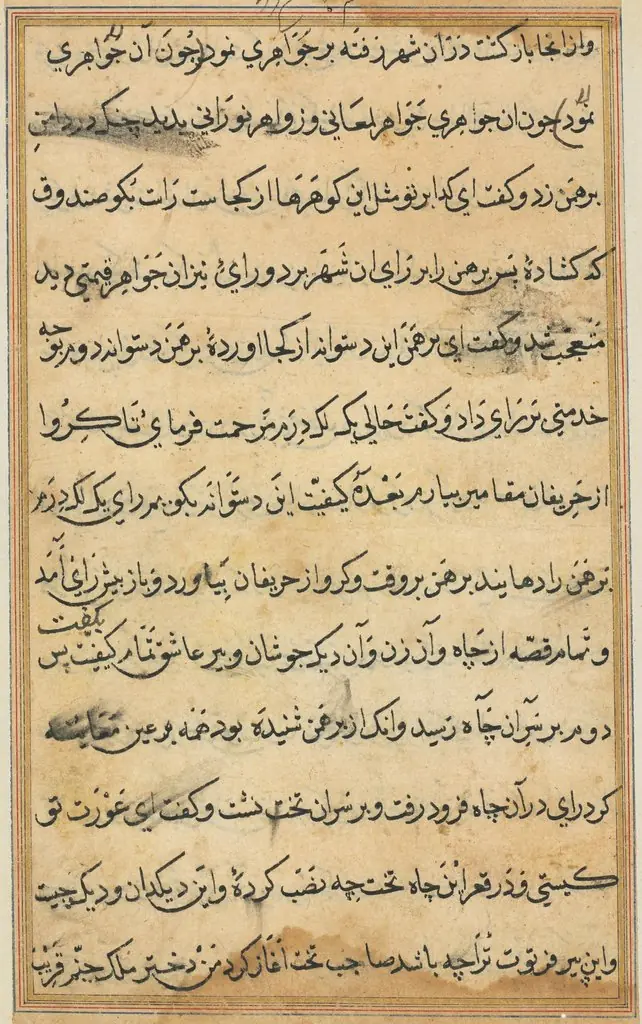
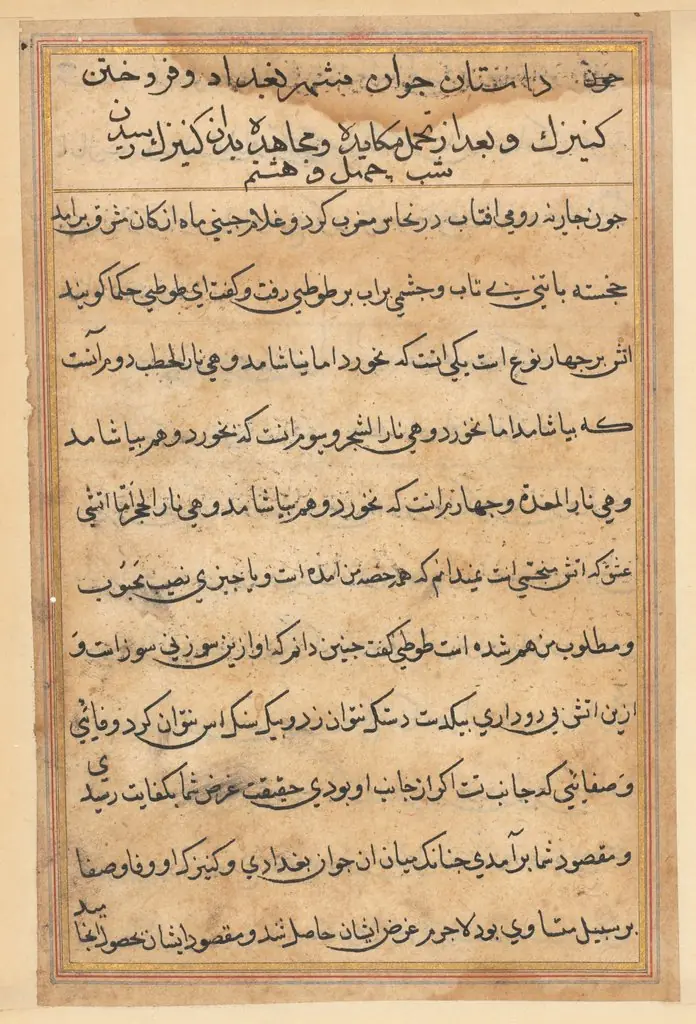
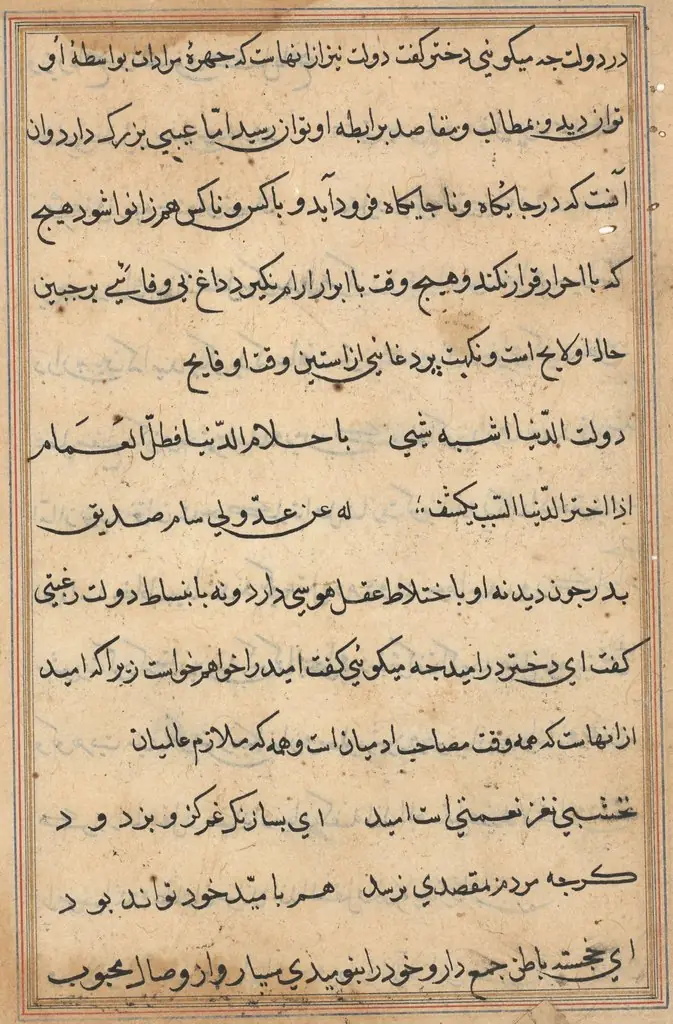
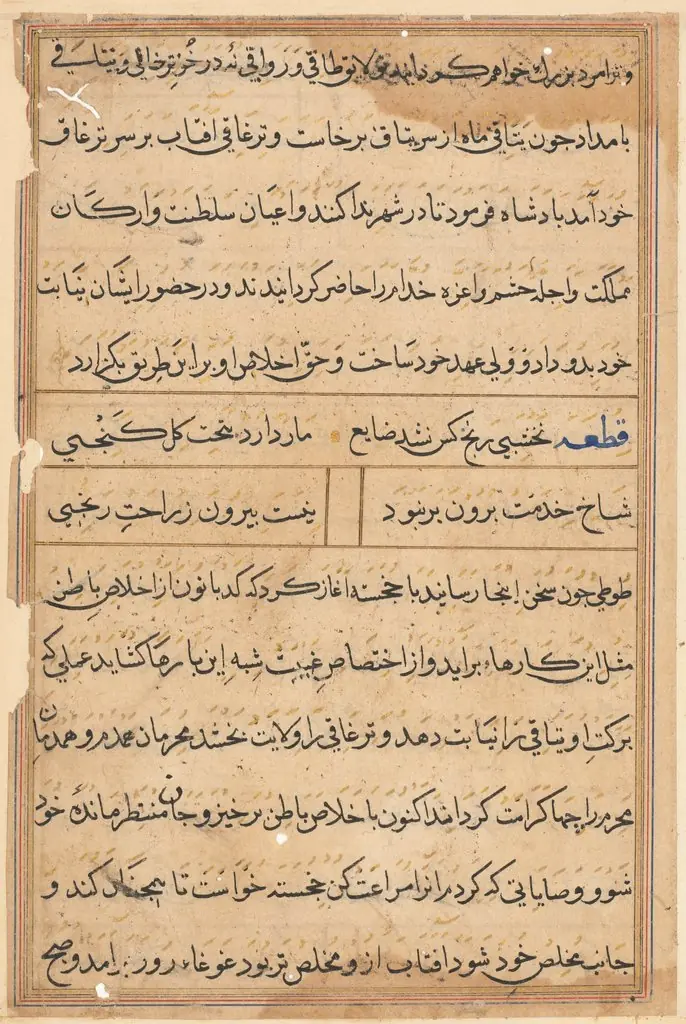
Page from Tales of a Parrot (Tuti-nama): text page is an unspecified painting. It dates from 1560 and is held in the collection of the Cleveland Museum of Art. The object is a single folio from the Persian manuscript known as Tuti‑nama (Tales of a Parrot).
About this work
Subject & Meaning
The page reflects the cultural milieu of the Mughal court, where Persian literary traditions were integrated into the production of illustrated books.
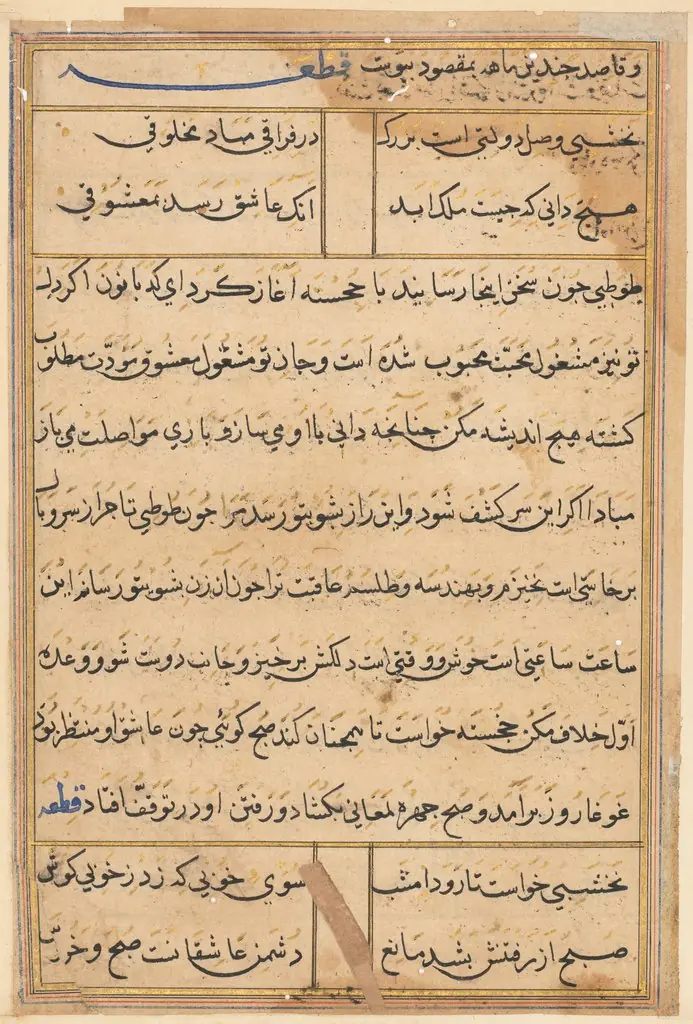
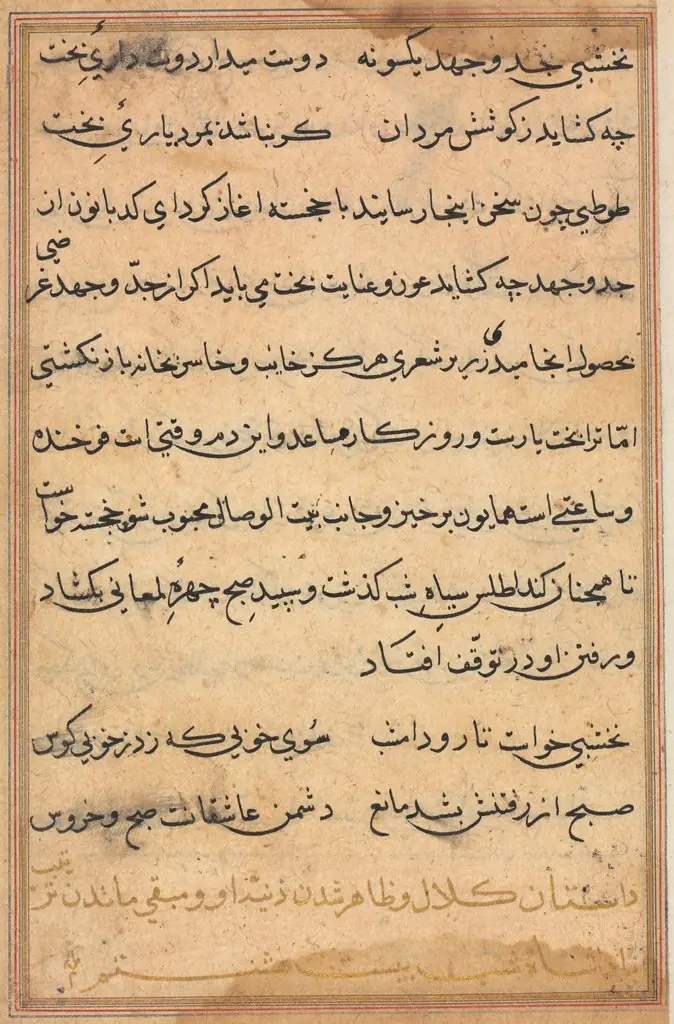
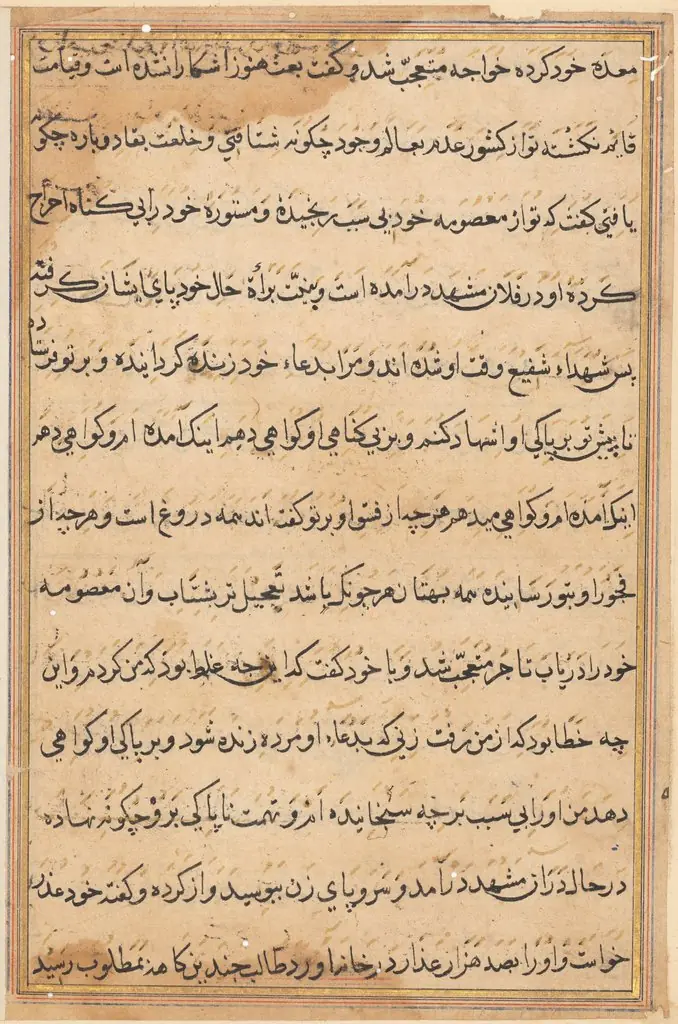
The page presents a passage of Persian text from the Tuti-nama, a collection of animal fables, set within an illuminated frame typical of Mughal manuscript production in the mid-sixteenth century. The text belongs to the moralistic narrative of the work, in which a parrot recounts didactic tales. As a text page, it functions within the larger storytelling structure of the manuscript, where the parrot serves as a symbolic conduit for moral instruction, aligning with the didactic purpose of the Tuti-nama genre.
The page reflects the cultural milieu of the Mughal court, where Persian literary traditions were integrated into the production of illustrated books.
History & Provenance
The page is dated 1560 and was produced within the Mughal Empire, during the early Mughal period. It is classified as a painting and is held in the collection of the Cleveland Museum of Art, where it is catalogued under accession number 1962.279.47.a as a component of the Tales of a Parrot (Tuti-nama) manuscript. The available sources do not document the original commission, the chain of ownership prior to acquisition, or any specific exhibition history for this text page.
Overview
The object is a single folio from the Persian manuscript known as Tuti‑nama (Tales of a Parrot). It consists of a handwritten page of narrative text, rendered in a compact, flowing script on light‑brown paper. The ink appears dark brown to black, and the text occupies the entire surface, bounded by a thin blue decorative border. A cataloguing number, 62.279/47, is noted in the lower corner.
Technique & Style
The calligraphy is executed in a neat, cursive hand characteristic of 16th‑century Persian manuscript production, with diacritical marks, small dots and lines, added above or below letters to clarify pronunciation. The use of a thin blue border reflects a decorative practice that frames the text without overwhelming the script, while the paper’s warm tone suggests a high‑quality rag stock.
Context
Tuti‑nama belongs to a tradition of Persian illustrated books that blend poetic prose with moral instruction. Although this page contains only text, it would have originally been accompanied by miniature paintings that visualized the parrot’s dialogues, situating the manuscript within the broader cultural practice of didactic storytelling in early modern Iran.
Artist & collection

- Page from Tales of a Parrot (Tuti-nama): text page
 Page from Tales of a Parrot (Tuti-nama): text page
 Page from Tales of a Parrot (Tuti-nama): text page
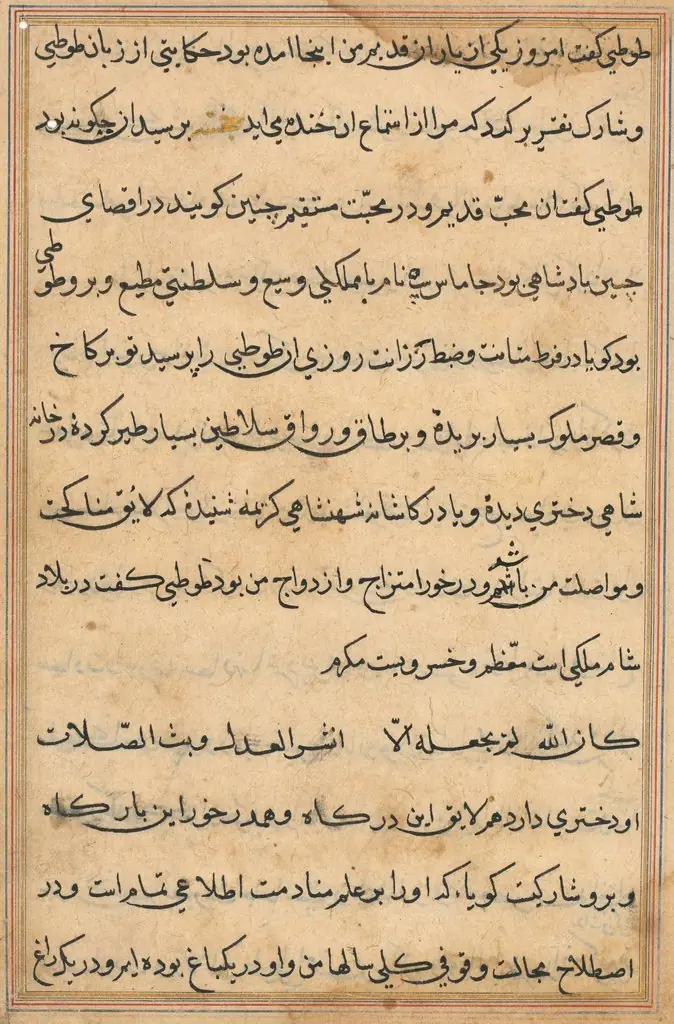 Page from Tales of a Parrot (Tuti-nama): text page
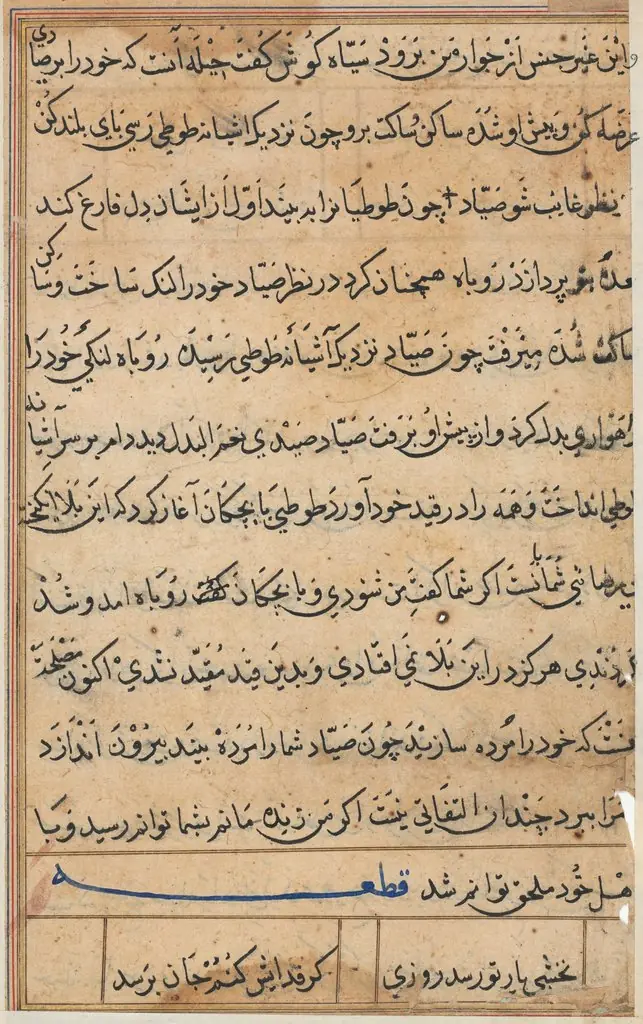 Page from Tales of a Parrot (Tuti-nama): text page
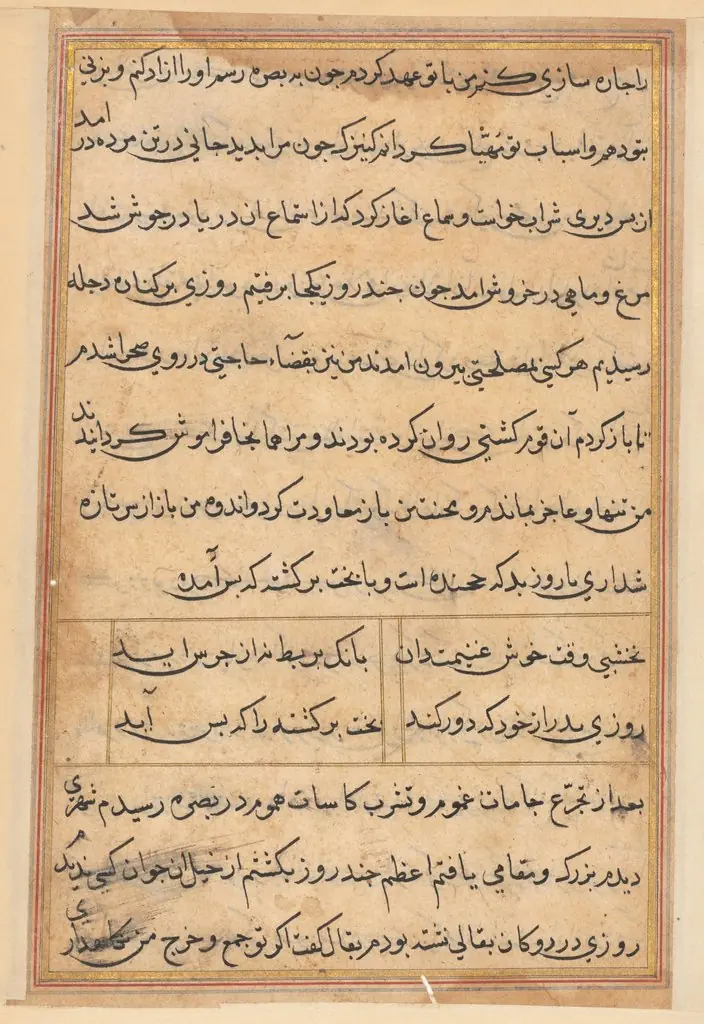 Page from Tales of a Parrot (Tuti-nama): text page
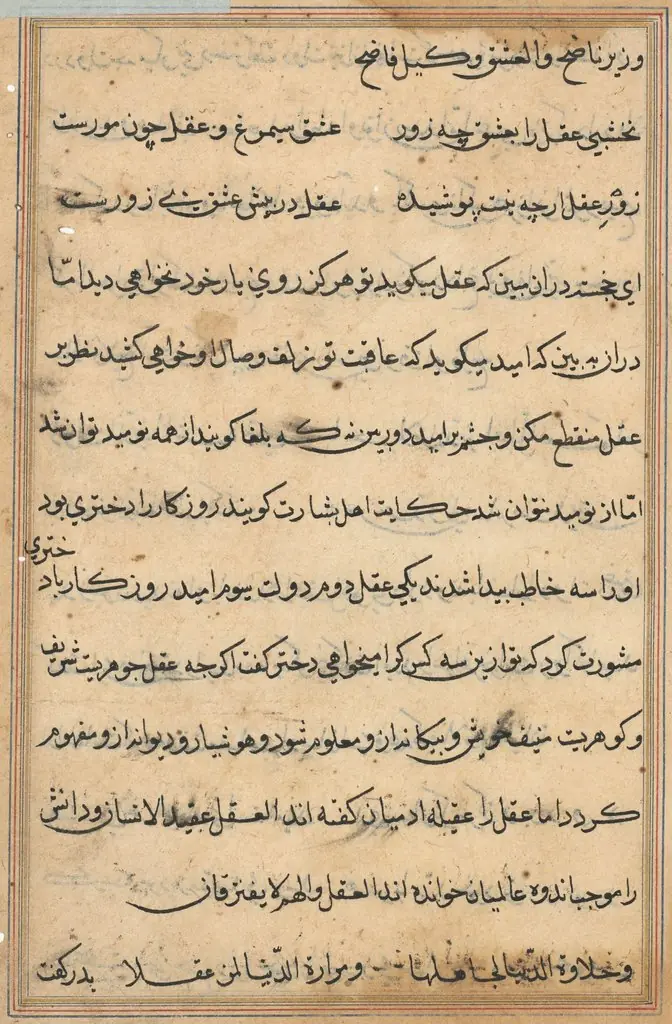 Page from Tales of a Parrot (Tuti-nama): text page
 Page from Tales of a Parrot (Tuti-nama): text page
 Page from Tales of a Parrot (Tuti-nama): text page
 Page from Tales of a Parrot (Tuti-nama): text page
 Page from Tales of a Parrot (Tuti-nama): text page
 Page from Tales of a Parrot (Tuti-nama): text page