Artwork
Page from Tales of a Parrot (Tuti-nama): text page
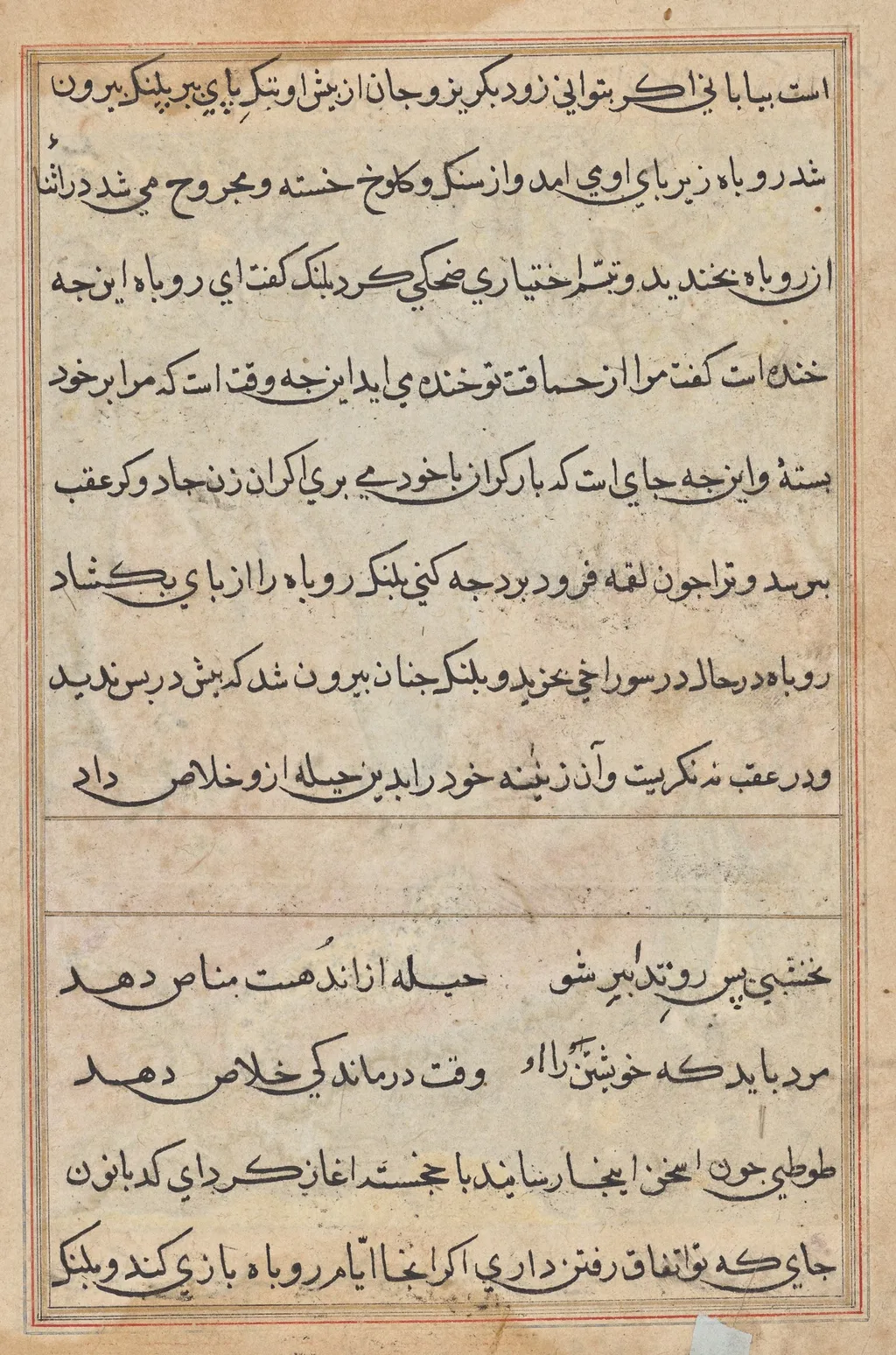
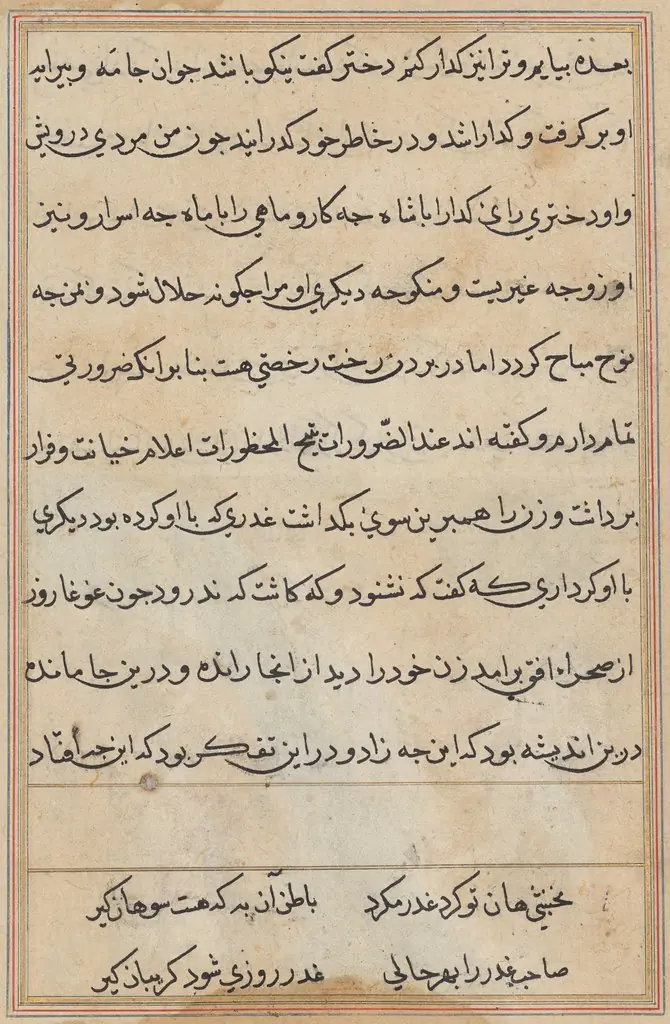
Page from Tales of a Parrot (Tuti-nama): text page is an unspecified painting. It dates from 1560 and is held in the collection of the Cleveland Museum of Art. This artifact is a single page from the illustrated manuscript known as Tales of a Parrot (Tuti‑nama).
About this work
Technique & Style
This is a text page from a dispersed copy of the Tuti-nama (Tales of a Parrot), executed in ink and pigment on paper. As a folio of written text, its decoration is largely confined to fine line work and the ruled borders characteristic of Mughal manuscript production. The page was produced in the Mughal Empire around 1560 and is housed in the Cleveland Museum of Art.
History & Provenance
This folio is a text page from the Tuti-nama, an illustrated manuscript of animal fables produced around 1560 in the imperial workshop of the Mughal Empire. The specific patron of this page is not recorded. The sheet entered the collection of the Cleveland Museum of Art, where it is accessioned under the number 1962.279.202.b, among the museum's dispersed pages from the manuscript.
Overview
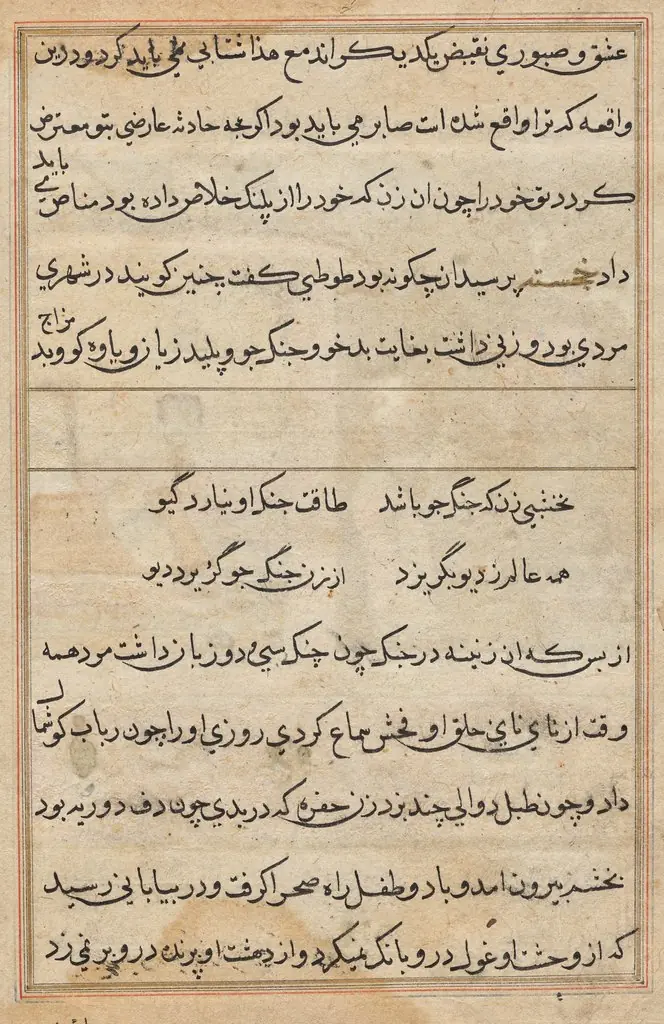
This artifact is a single page from the illustrated manuscript known as Tales of a Parrot (Tuti‑nama). The sheet is composed of warm‑toned paper, slightly yellowed with age, and is bordered by a thin red strip. The entire surface is filled with densely arranged black calligraphic script, organized in neat rows that suggest careful, deliberate composition.
Subject & Meaning
The inscribed verses are poetic in nature, likely recounting a narrative centered on a parrot, a common motif in Persian literary tradition. Though the text is not a direct dedication, the page was produced for Prince Salim, indicating a patronage context and suggesting the work was intended for private enjoyment or recitation.
Context
Tales of a Parrot belongs to a genre of Persian storytelling that blends moral instruction with entertainment, often employing animal protagonists. The manuscript’s elaborate presentation aligns with the aesthetic values of its time, where visual elegance complemented literary content.
Artist & collection

- Page from Tales of a Parrot (Tuti-nama): text page
 Page from Tales of a Parrot (Tuti-nama): text page
 Page from Tales of a Parrot (Tuti-nama): text page
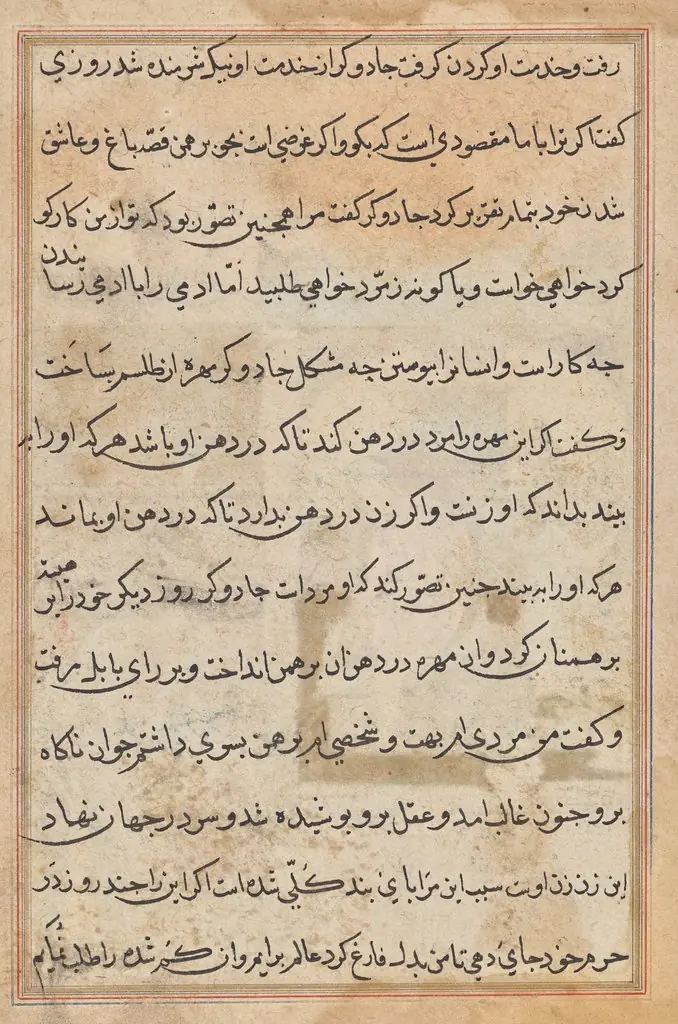 Page from Tales of a Parrot (Tuti-nama): text page
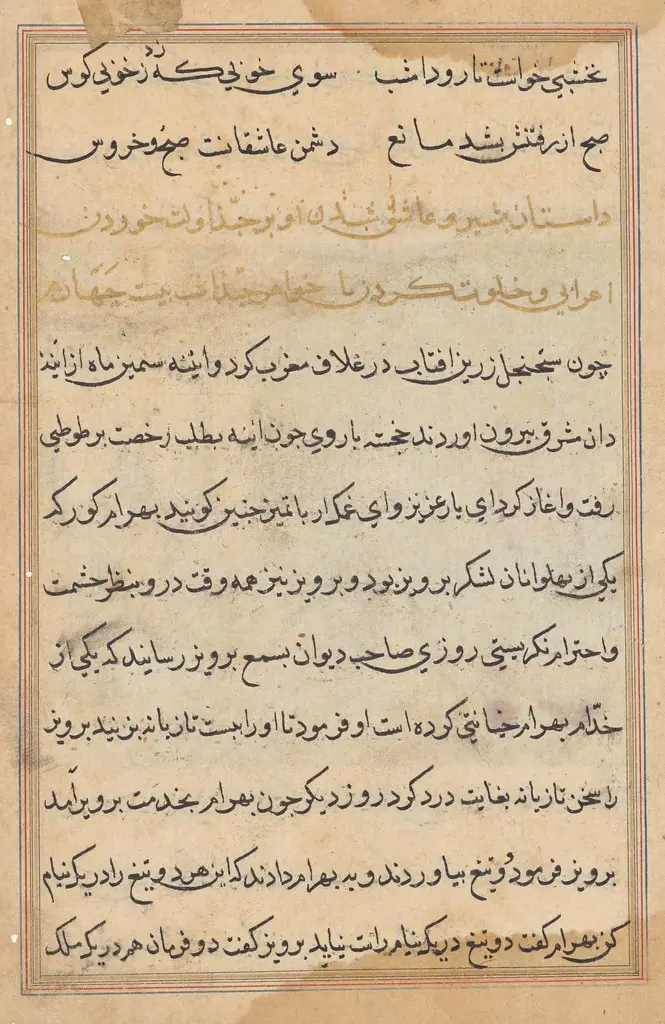 Page from Tales of a Parrot (Tuti-nama): text page
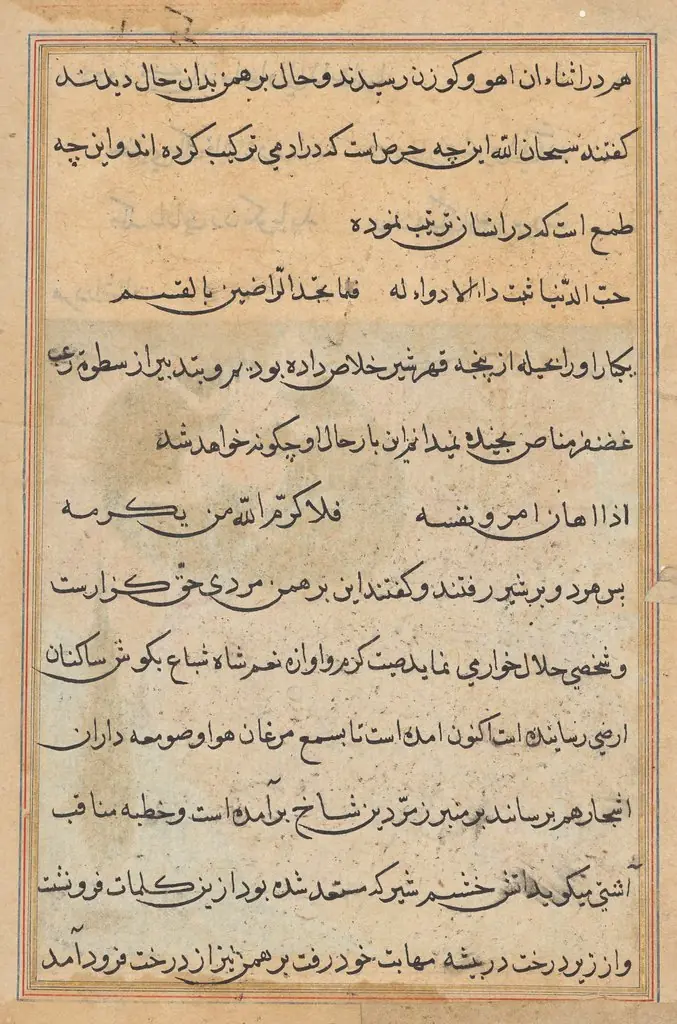 Page from Tales of a Parrot (Tuti-nama): text page
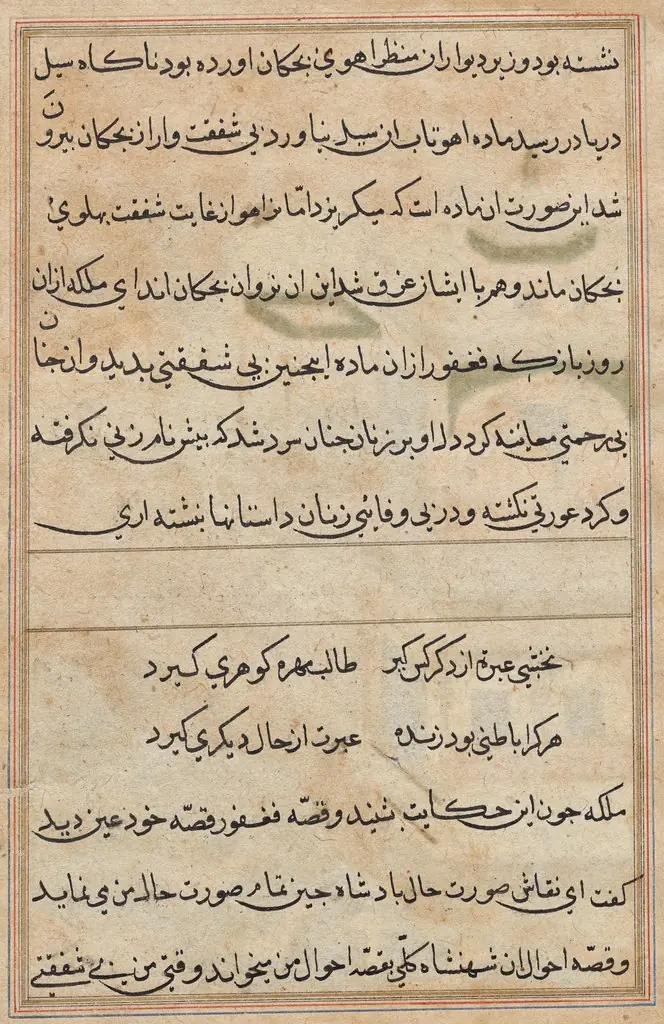 Page from Tales of a Parrot (Tuti-nama): text page
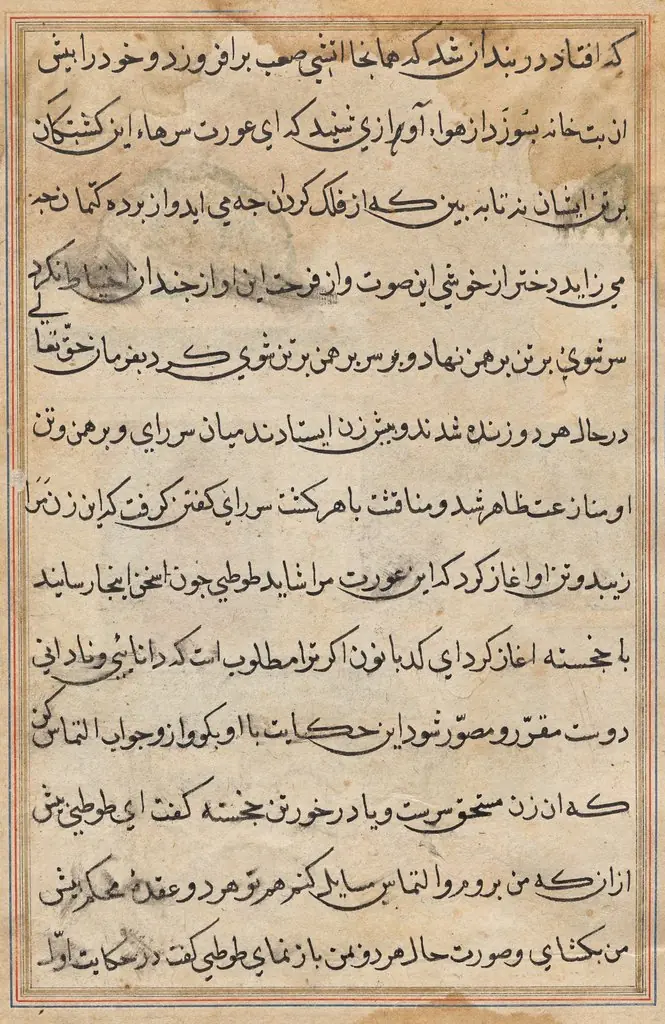 Page from Tales of a Parrot (Tuti-nama): text page
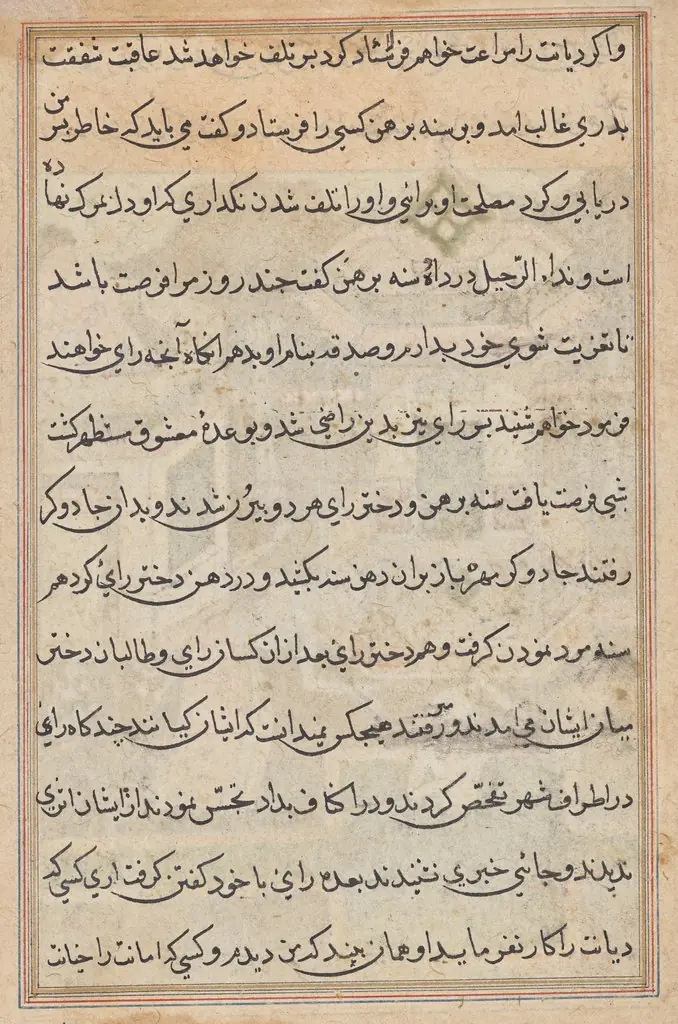 Page from Tales of a Parrot (Tuti-nama): text page
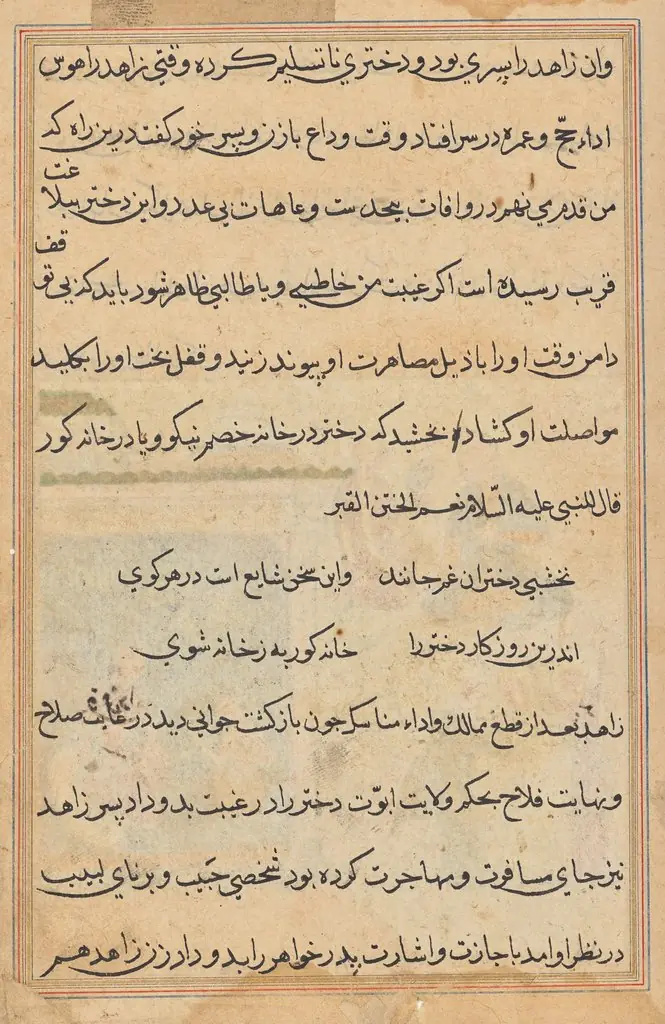 Page from Tales of a Parrot (Tuti-nama): text page
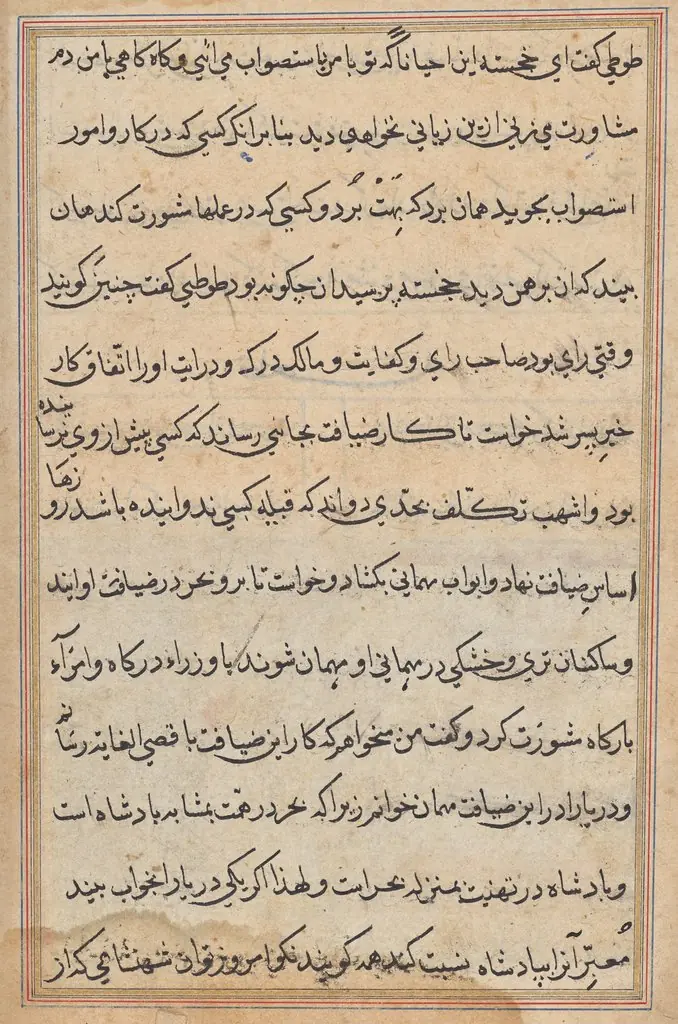 Page from Tales of a Parrot (Tuti-nama): text page
 Page from Tales of a Parrot (Tuti-nama): text page