Artwork
Page from Tales of a Parrot (Tuti-nama): text page
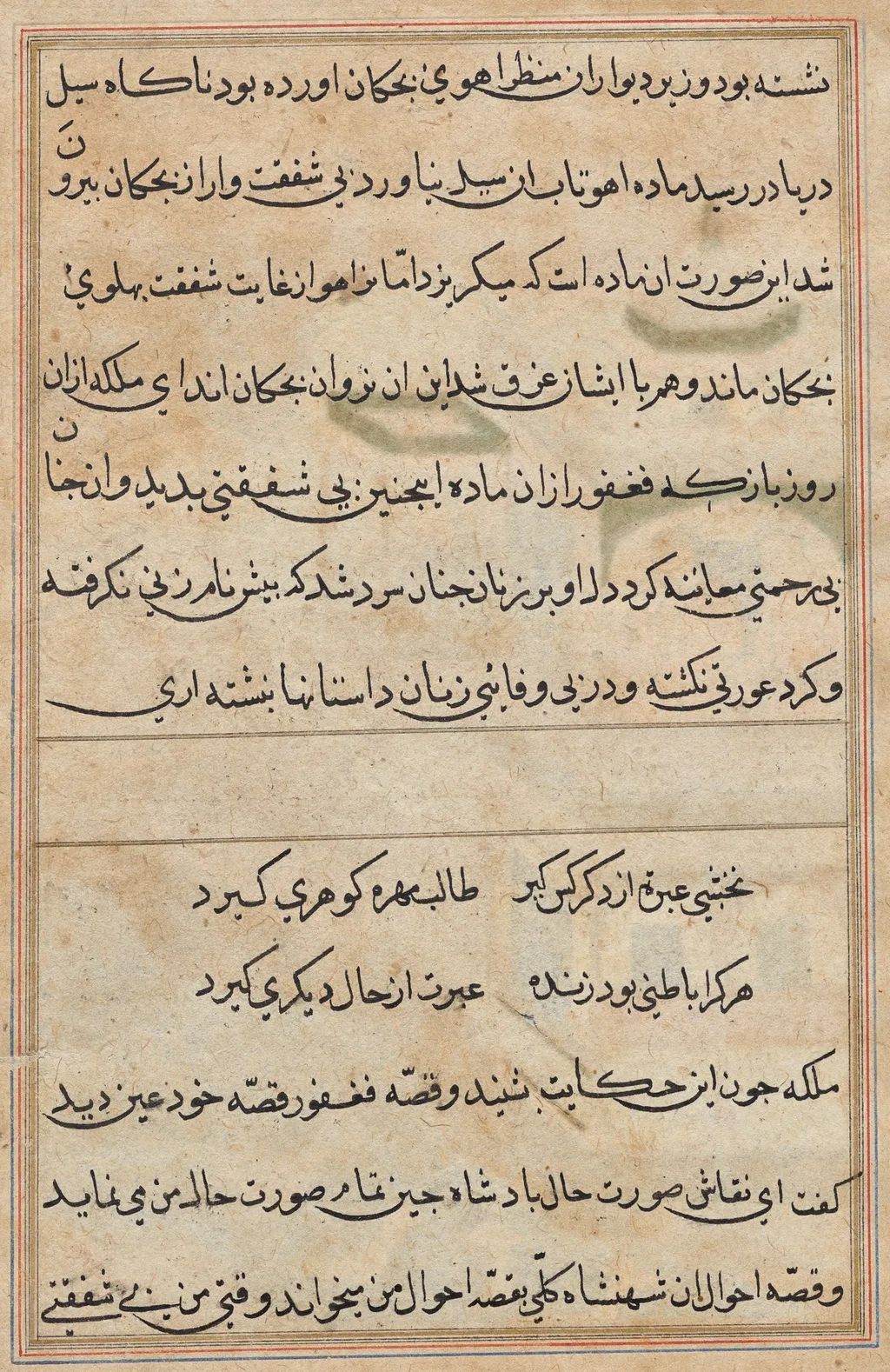
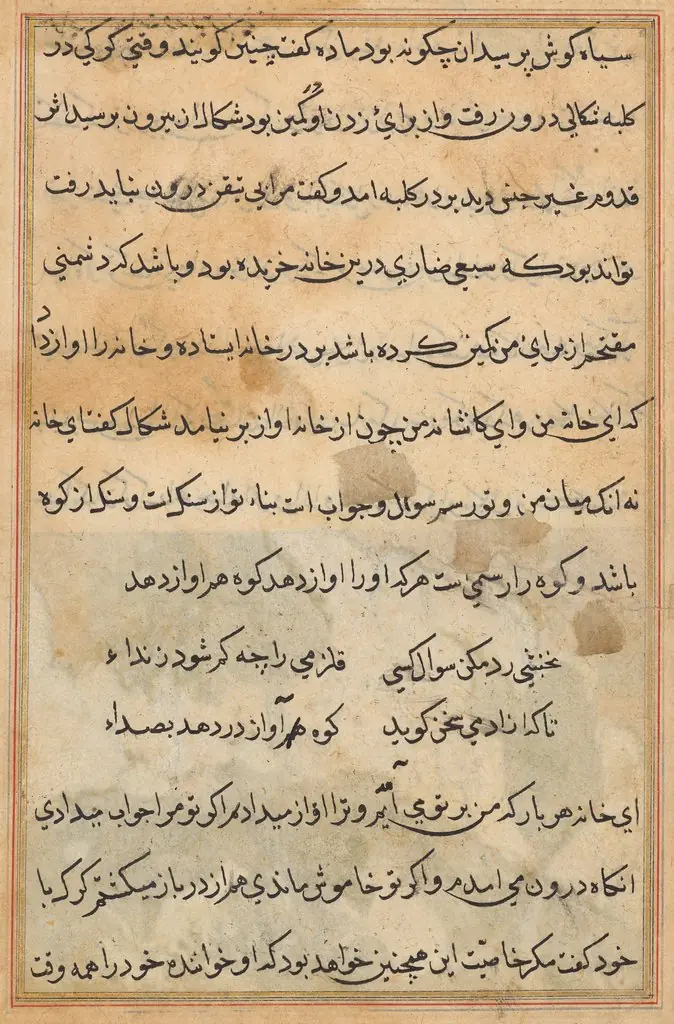
Page from Tales of a Parrot (Tuti-nama): text page is an unspecified painting. It dates from 1560 and is held in the collection of the Cleveland Museum of Art. The object is a single folio from the Persian manuscript known as Tuti‑nama (Tales of a Parrot).
About this work
Technique & Style
This page from the Tales of a Parrot (Tuti-nama) is a painting executed in the Mughal Empire in 1560. As a text page from a manuscript, it would typically combine calligraphy with painted decoration, consistent with Mughal court production of the period. The work is held in the collection of the Cleveland Museum of Art.
History & Provenance
However, the artifact's inception is firmly dated to the year 1560, marking its production during the early period of Mughal manuscript illumination.
This text page from the Tales of a Parrot (Tuti-nama) was created in 1560 within the Mughal Empire. The work is attributed to an unknown artist and is classified as a painting. It currently resides in the collection of the Cleveland Museum of Art, where it is cataloged under the accession number 1962.279.256.a.
The specific commissioning details and the full chain of ownership prior to its arrival at the museum are not detailed in the provided records. However, the artifact's inception is firmly dated to the year 1560, marking its production during the early period of Mughal manuscript illumination.
Overview
The object is a single folio from the Persian manuscript known as Tuti‑nama (Tales of a Parrot). It consists of a page of paper bearing black ink calligraphy set against a light‑brown, slightly yellowed surface. A fine horizontal rule separates the page into two textual zones, the upper containing a denser block of script than the lower.
Subject & Meaning
The manuscript compiles a collection of moral and didactic stories, traditionally narrated by a parrot to a king. The particular passage on this leaf likely conveys one of these allegorical tales, employing the parrot’s voice as a vehicle for ethical instruction, a common motif in medieval Persian literature.
Context
Tuti‑nama belongs to a broader tradition of illustrated moral compendia that flourished under Timurid and Safavid patronage. Such works combined literary content with elaborate calligraphy, reflecting the high status of the written word in Persian court culture and the emphasis on didactic storytelling as a means of moral education.
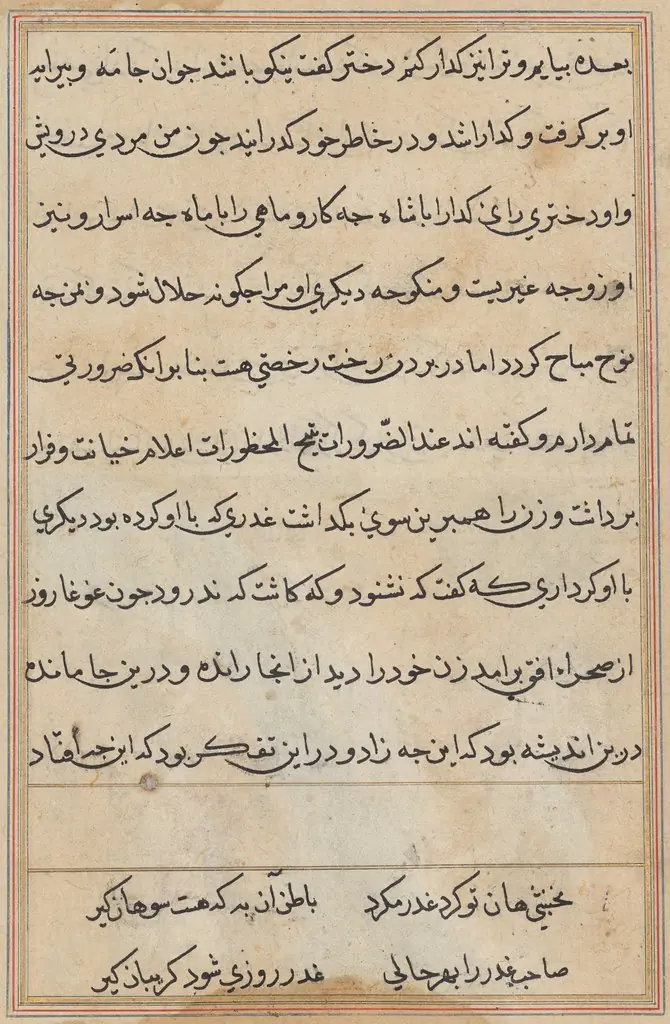
Artist & collection

- Page from Tales of a Parrot (Tuti-nama): text page
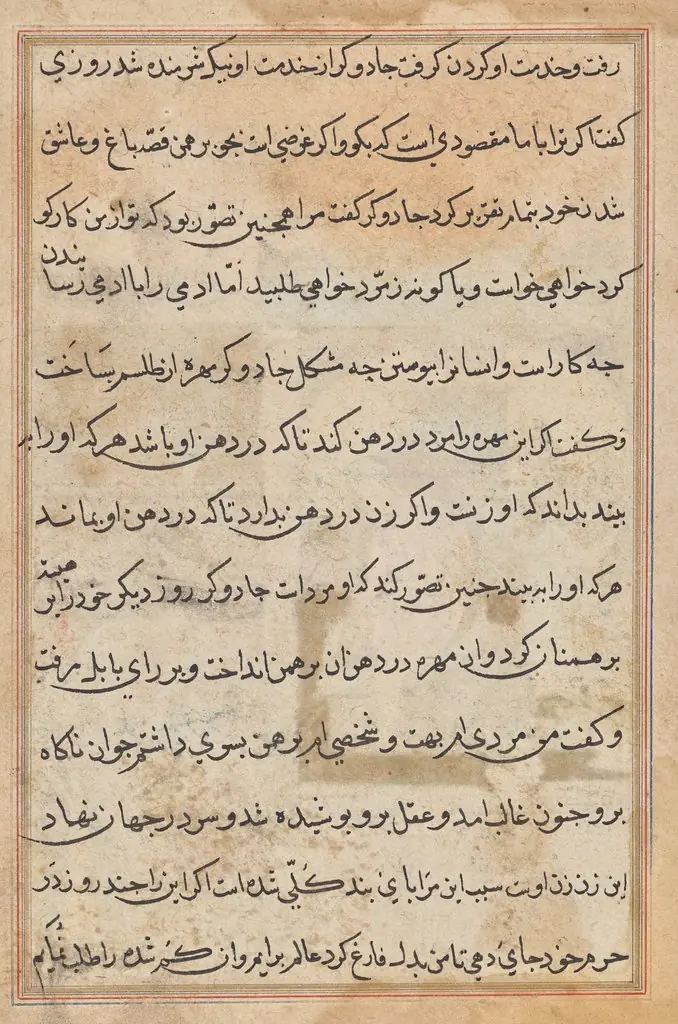 Page from Tales of a Parrot (Tuti-nama): text page
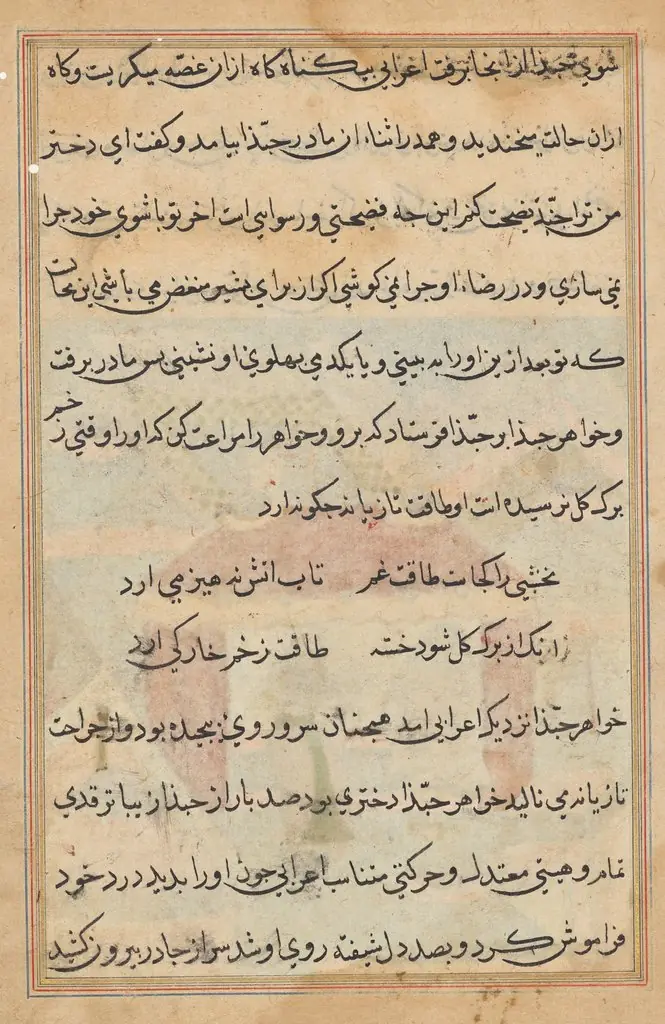 Page from Tales of a Parrot (Tuti-nama): text page
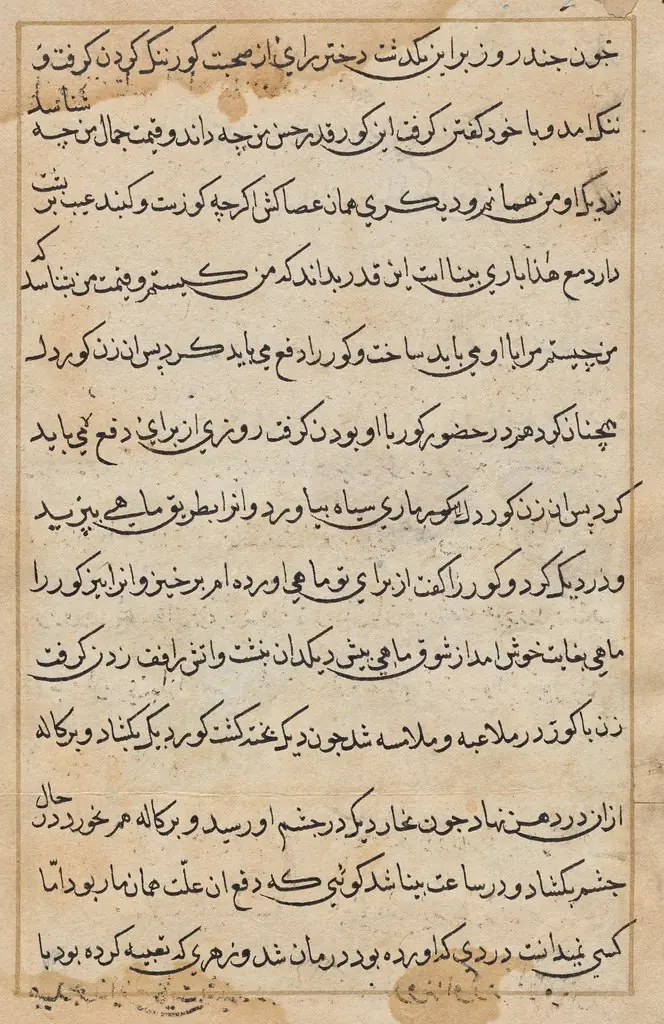 Page from Tales of a Parrot (Tuti-nama): text page
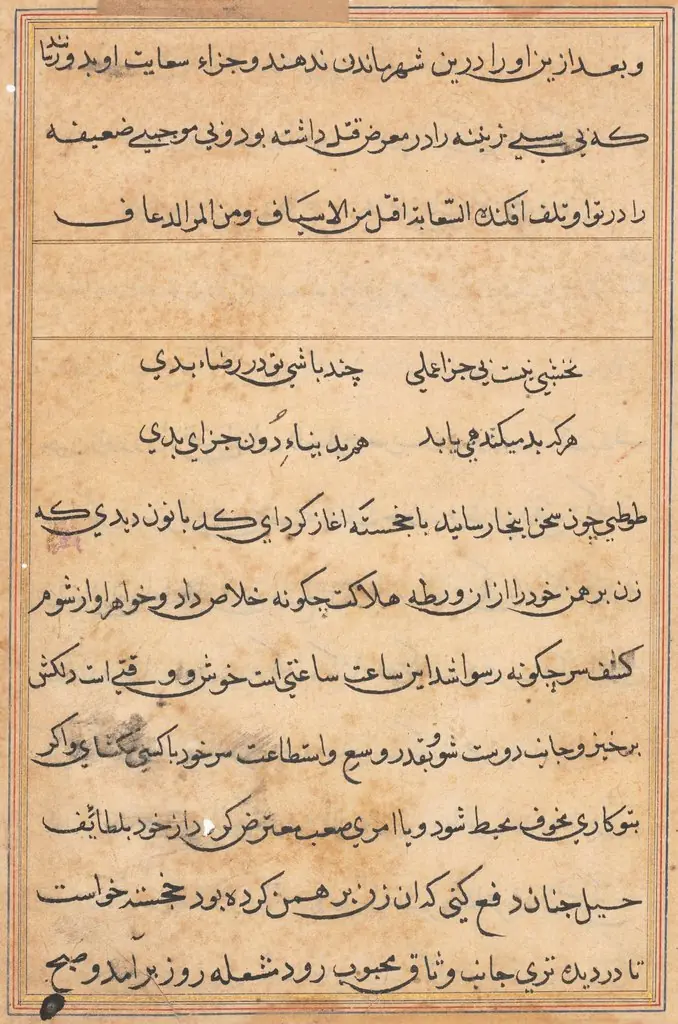 Page from Tales of a Parrot (Tuti-nama): text page
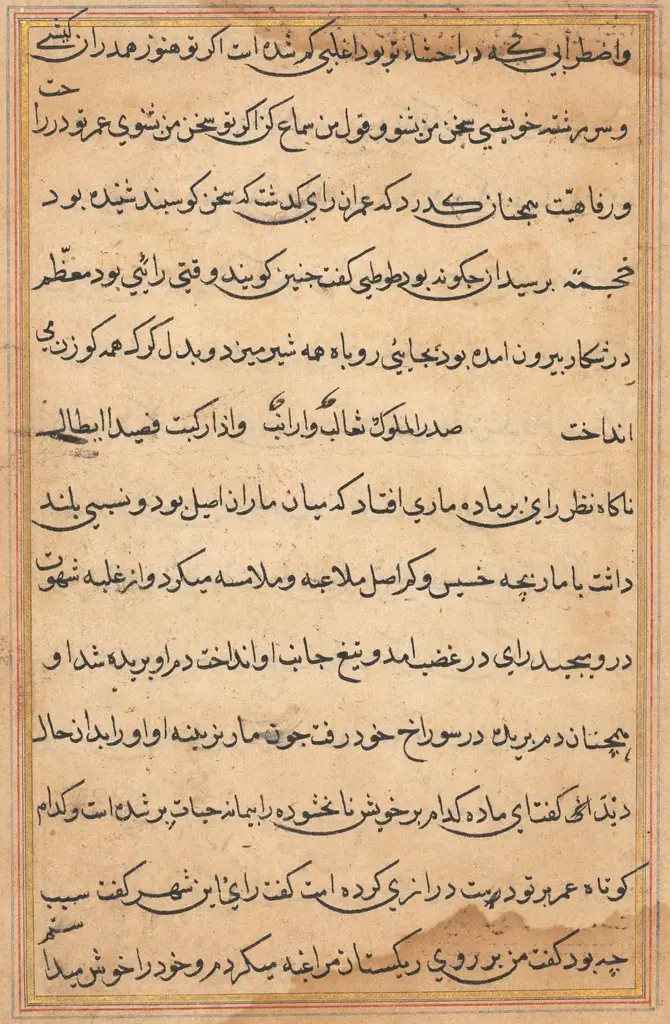 Page from Tales of a Parrot (Tuti-nama): text page
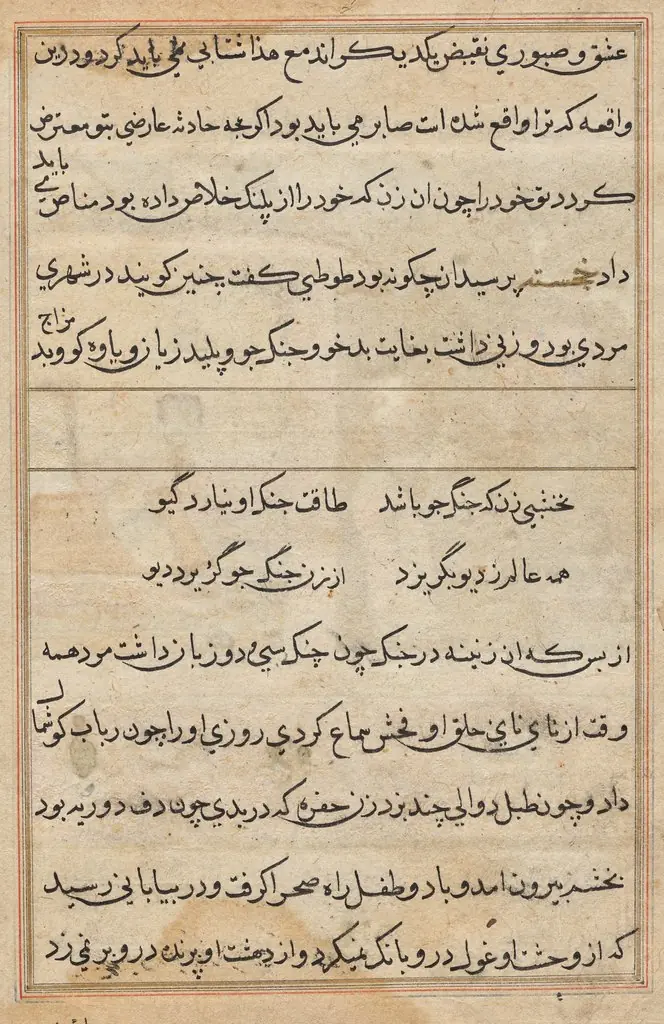 Page from Tales of a Parrot (Tuti-nama): text page
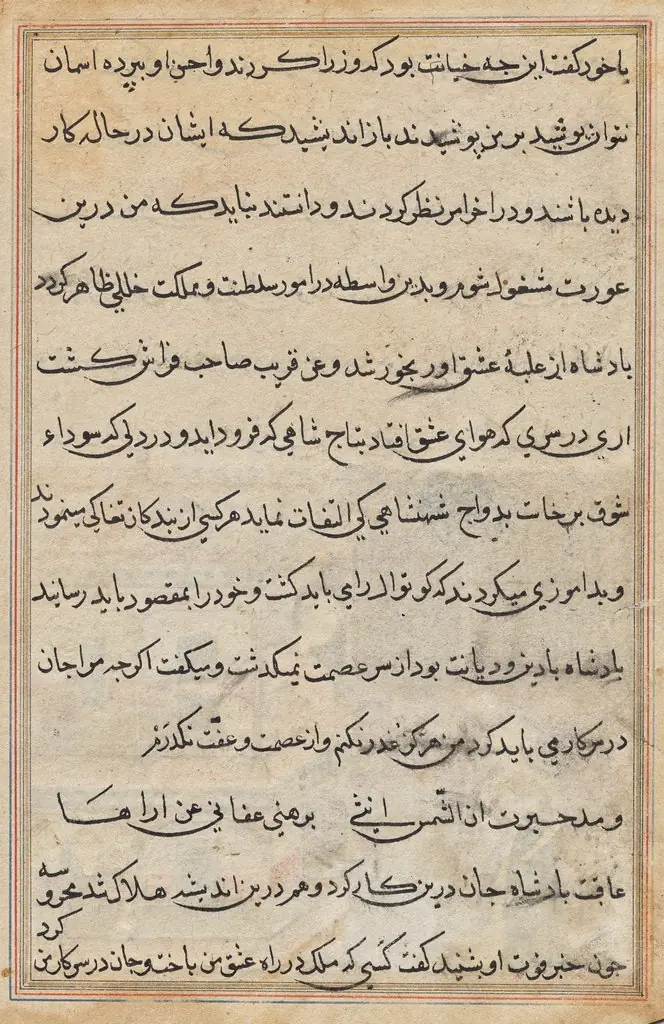 Page from Tales of a Parrot (Tuti-nama): text page
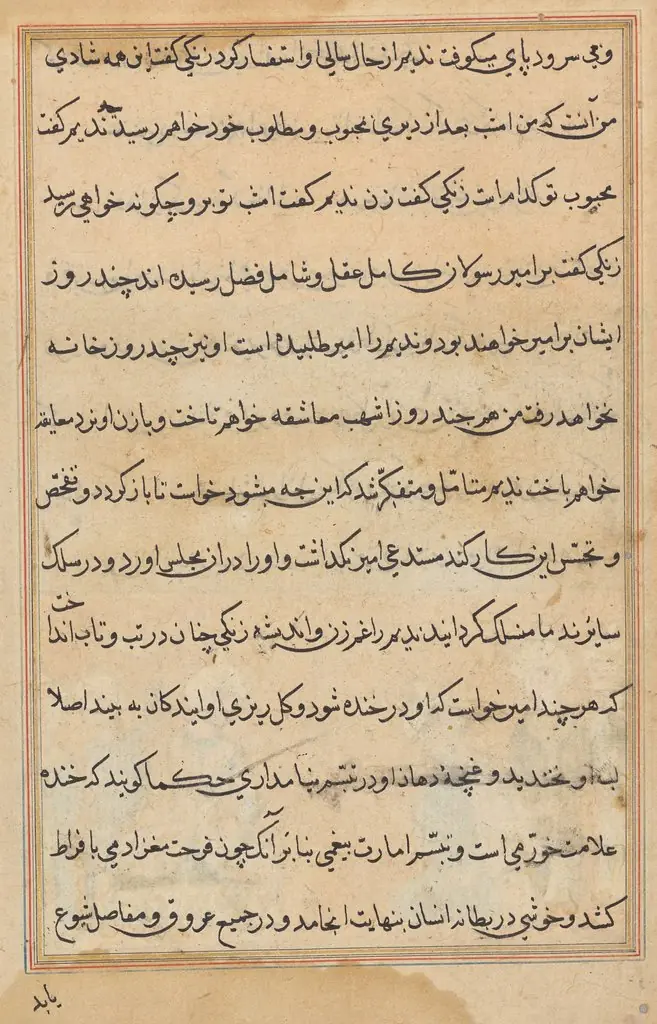 Page from Tales of a Parrot (Tuti-nama): text page
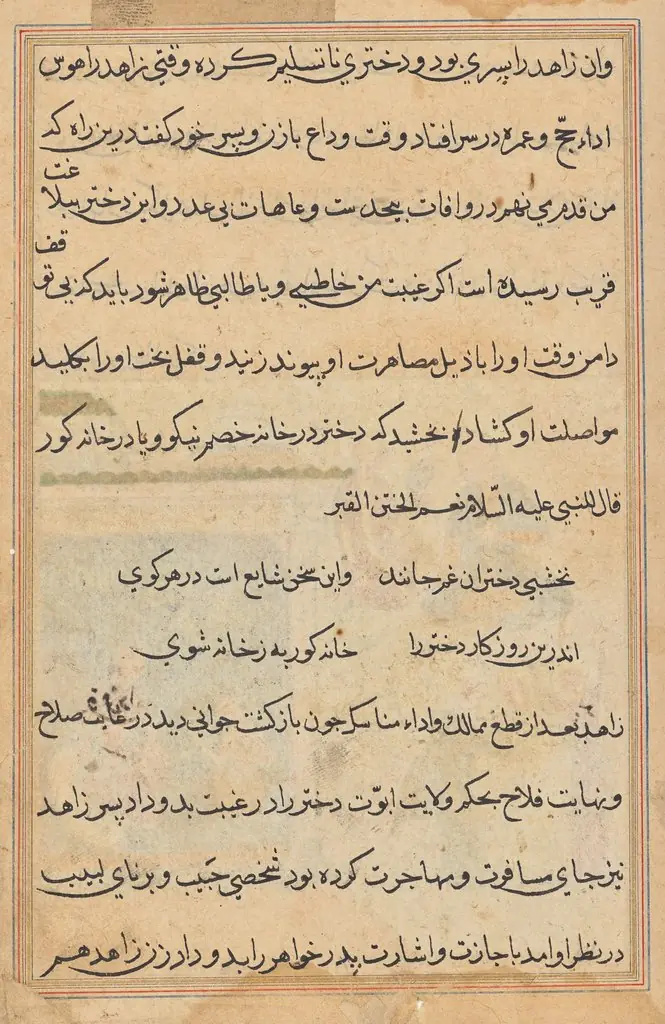 Page from Tales of a Parrot (Tuti-nama): text page
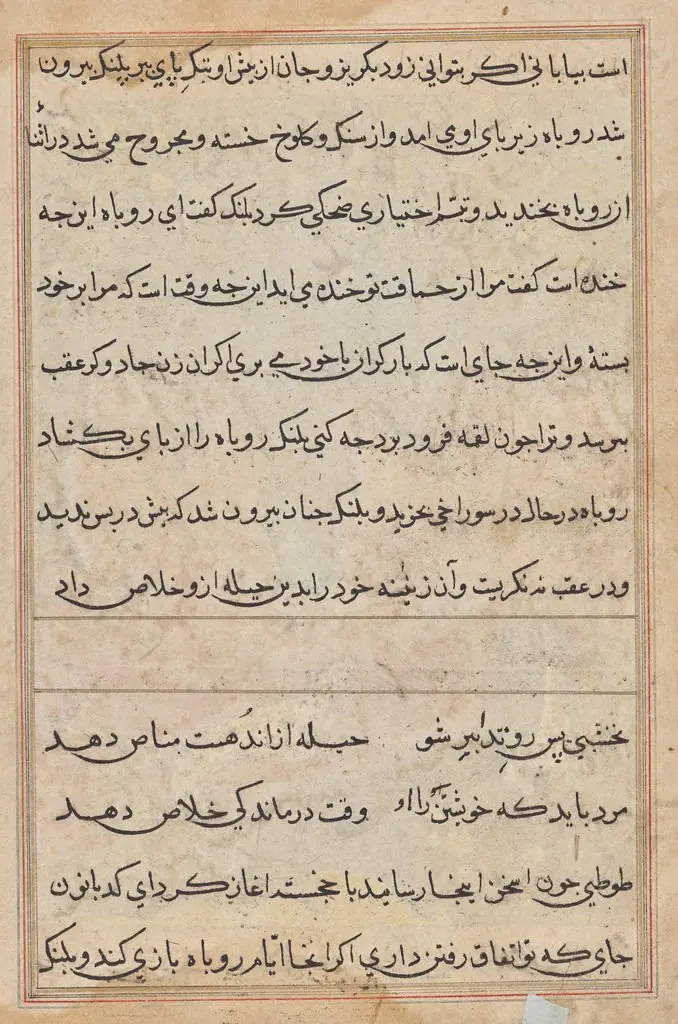 Page from Tales of a Parrot (Tuti-nama): text page
 Tuti-Nama (Tales of a Parrot)