Artwork
Page from Tales of a Parrot (Tuti-nama): text page
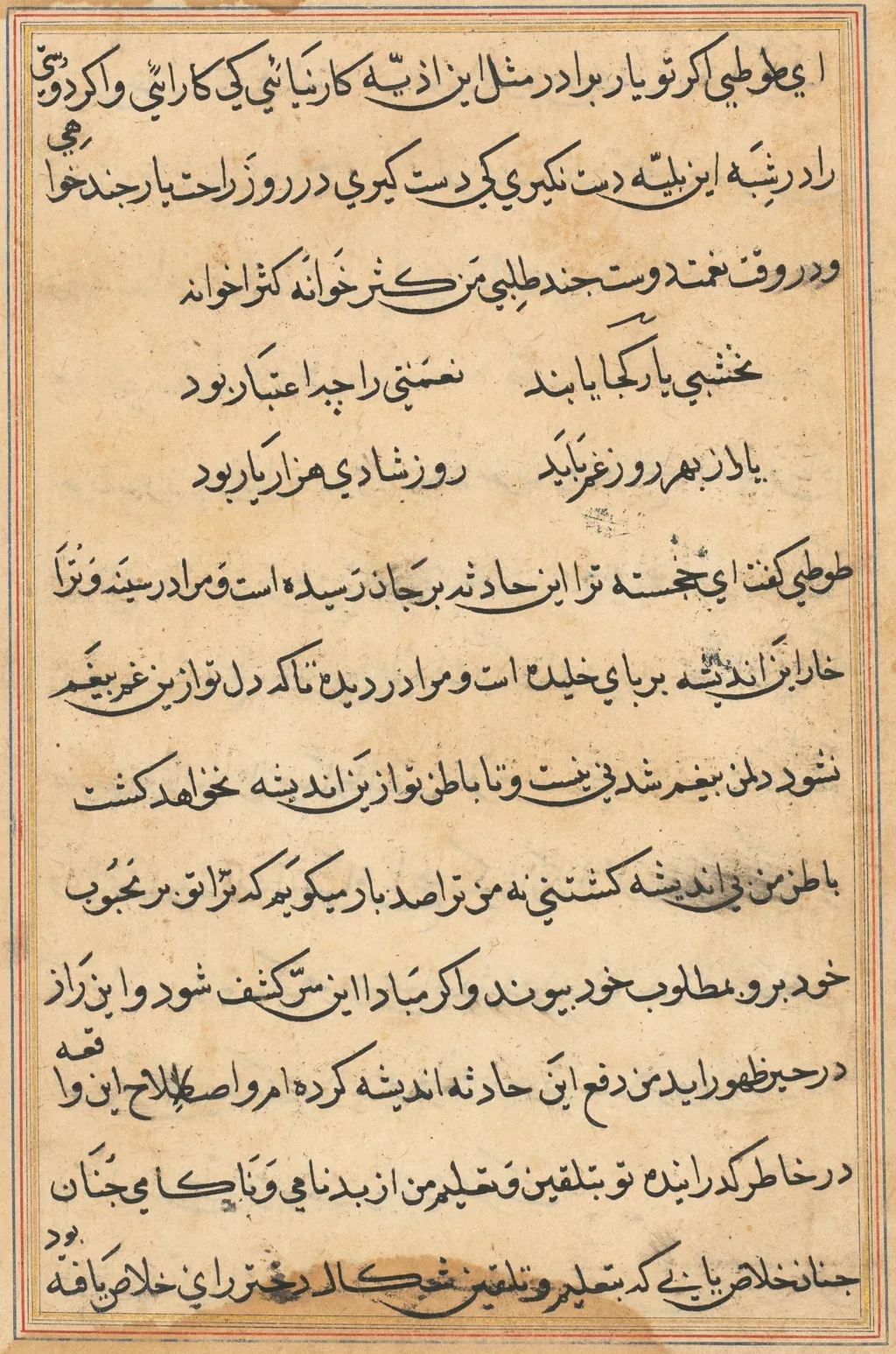
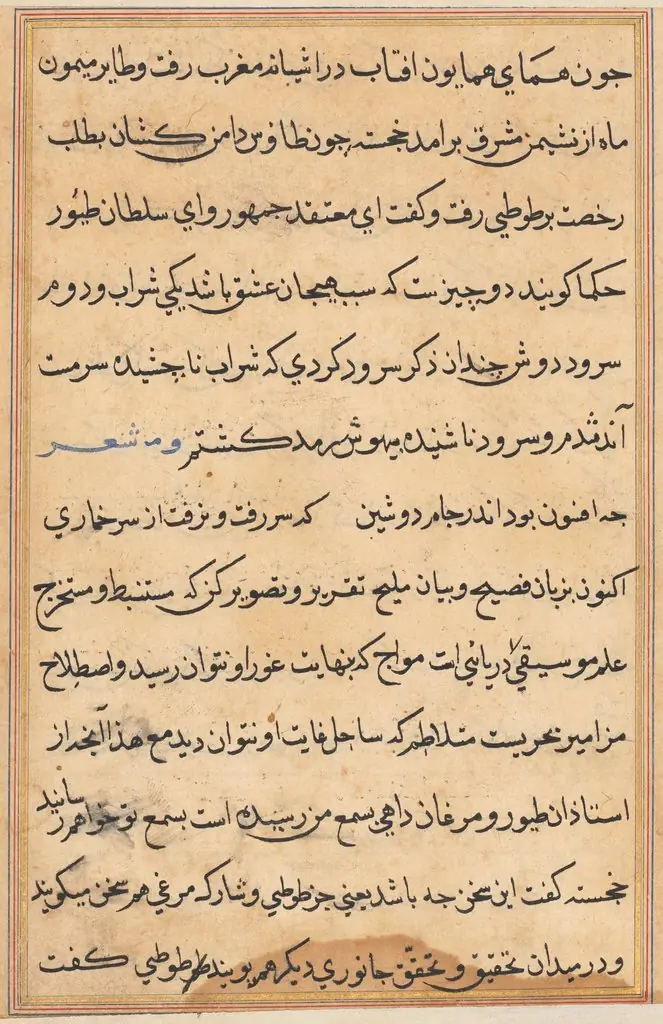
Page from Tales of a Parrot (Tuti-nama): text page is an unspecified painting. It dates from 1560 and is held in the collection of the Cleveland Museum of Art. This illuminated page belongs to the manuscript Tales of a Parrot (Tuti‑nama), a narrative work produced for a patron named Prince Salim.
About this work
History & Provenance
Classified as a painting, it is held in the collection of the Cleveland Museum of Art, where it is catalogued under accession number 1962.
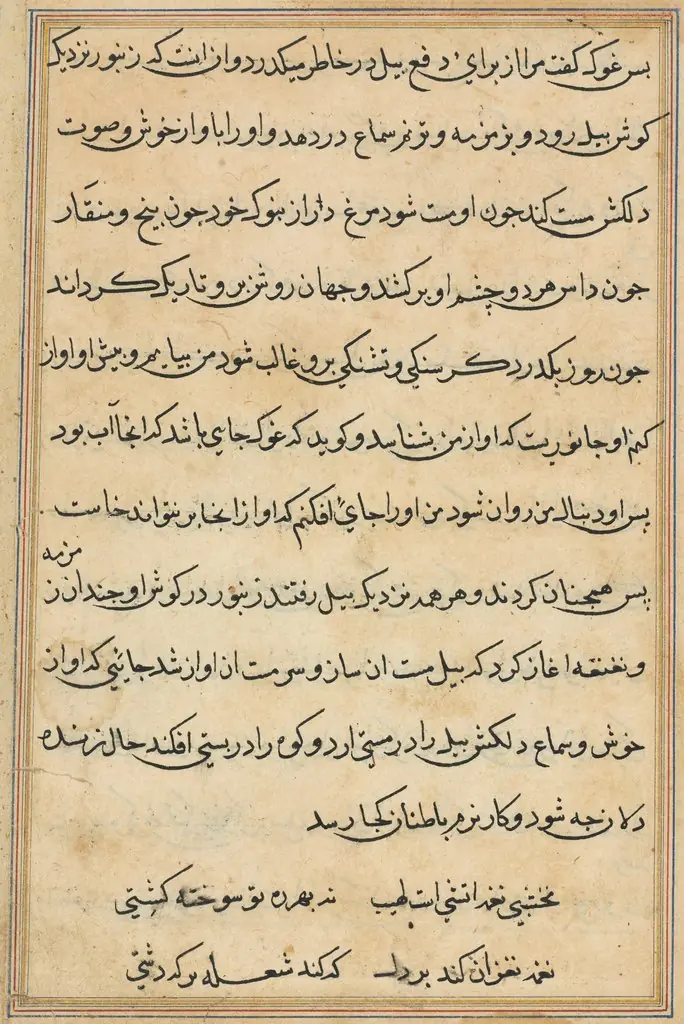
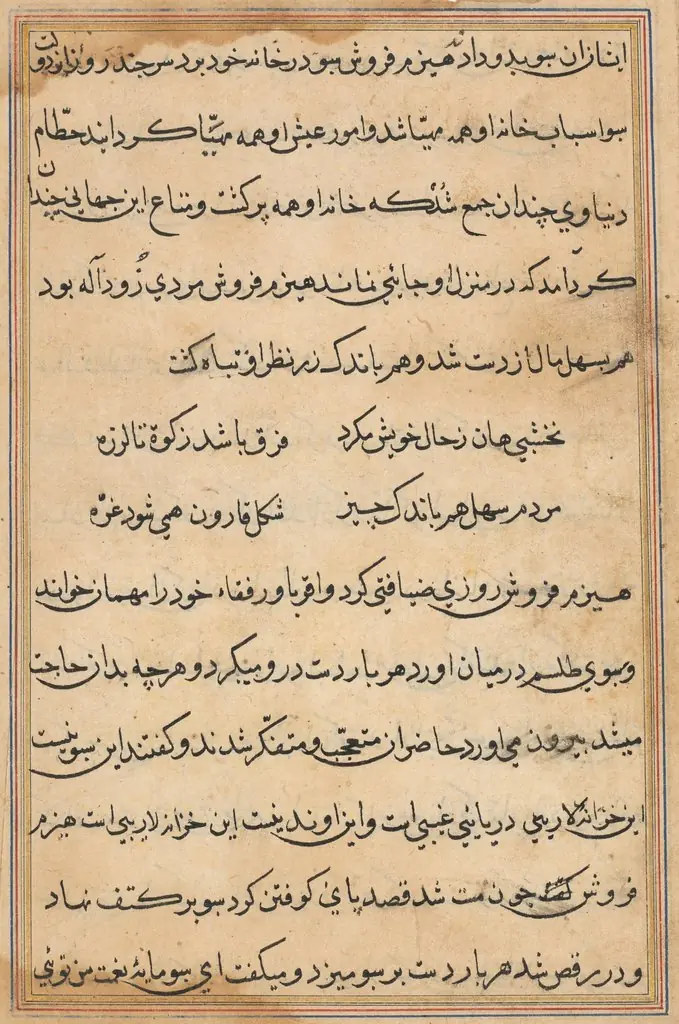
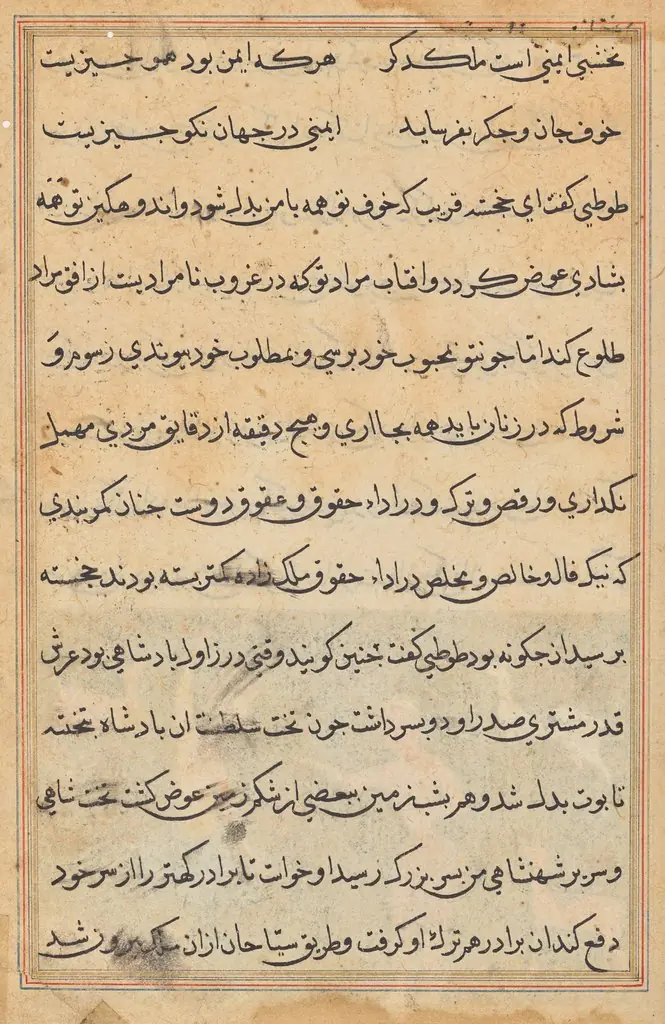
This text page from a Tales of a Parrot (Tuti-nama) manuscript was created around 1560 in the Mughal Empire by an unknown artist. Classified as a painting, it is held in the collection of the Cleveland Museum of Art, where it is catalogued under accession number 1962.279.117.b. No details of its commission or ownership prior to the museum, and no exhibition history, are recorded in the available sources.
Overview
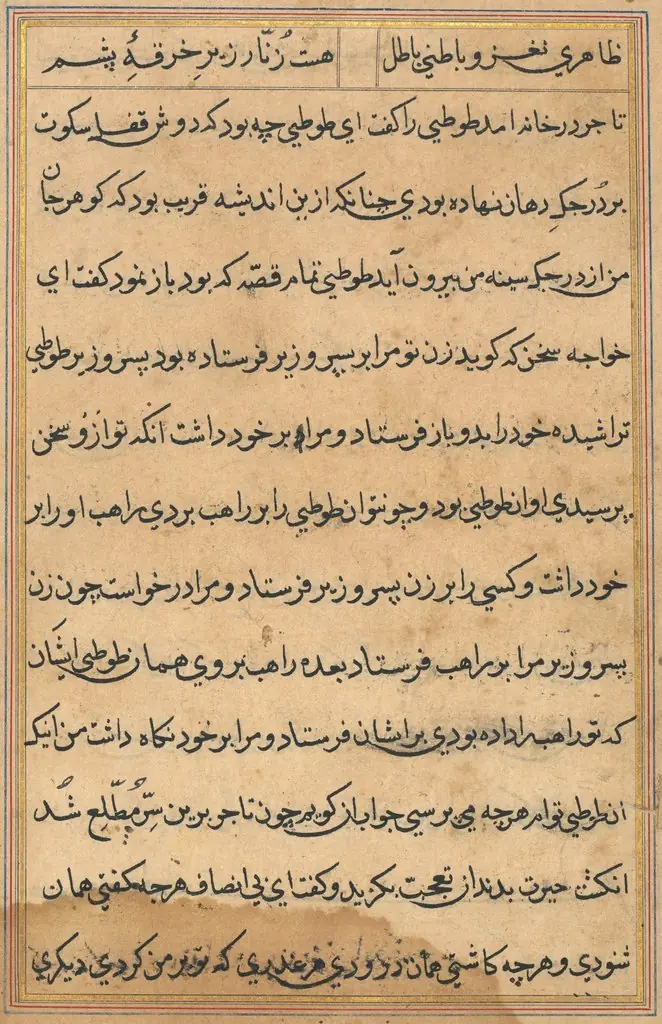
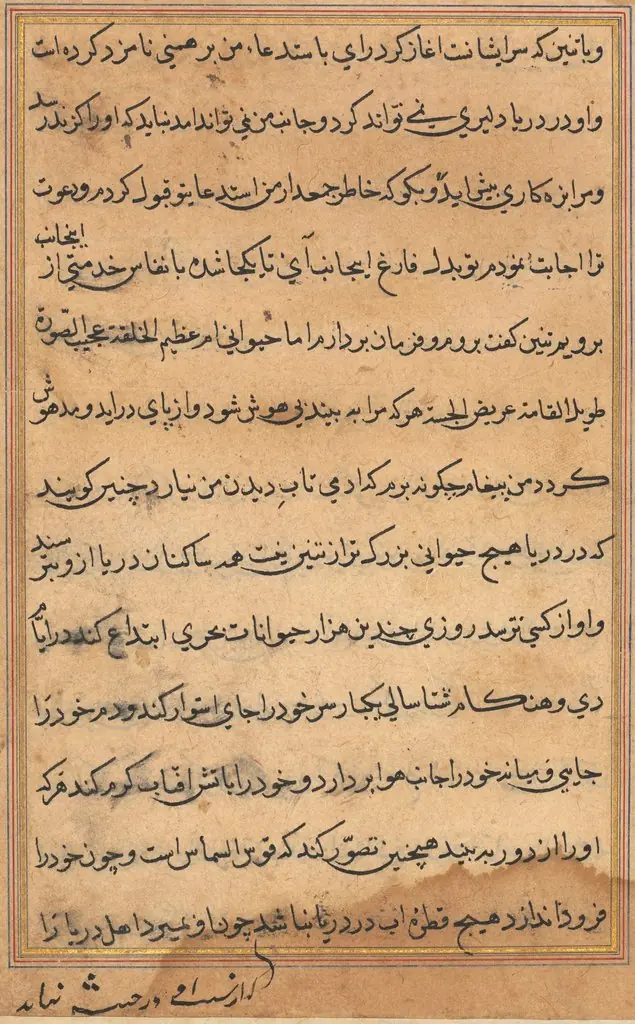
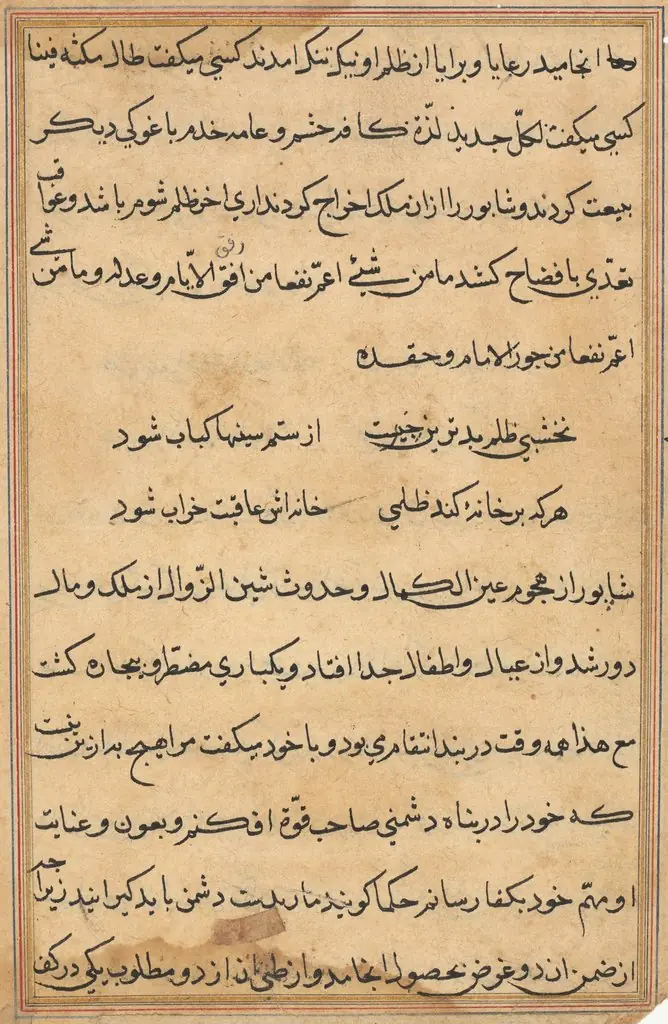
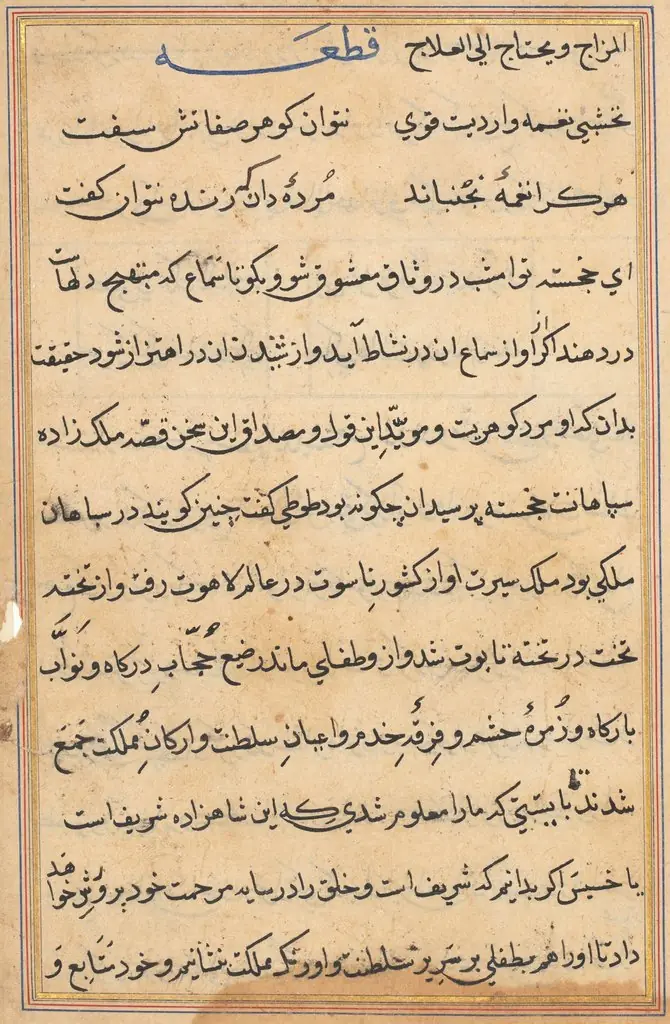
This illuminated page belongs to the manuscript Tales of a Parrot (Tuti‑nama), a narrative work produced for a patron named Prince Salim. Executed as a painted sheet, it features dense Arabic calligraphy rendered in black ink upon a light‑toned paper, framed by a narrow decorative border of red and blue pigment.
Subject & Meaning
The text consists of a continuous narrative written in a flowing, curved script, reflecting the literary genre of courtly storytelling. The careful arrangement of the lines, with varying lengths, emphasizes the elegance of the language and the intended audience’s appreciation for refined literary presentation.
Technique & Style
The calligrapher employed a single‑brush technique to produce smooth, sinuous strokes, achieving a high degree of legibility and visual grace. The surrounding border, applied in thin bands of red and blue, provides a subtle visual counterpoint to the monochrome text, while a small stain near the lower edge indicates minor paper damage over time.
Context
Produced during a period when Arabic calligraphy was celebrated as both an artistic and devotional practice, the page reflects broader aesthetic values of the Islamic world, where the visual beauty of script was considered integral to the text’s meaning.
Artist & collection

- Page from Tales of a Parrot (Tuti-nama): text page
 Page from Tales of a Parrot (Tuti-nama): text page
 Page from Tales of a Parrot (Tuti-nama): text page
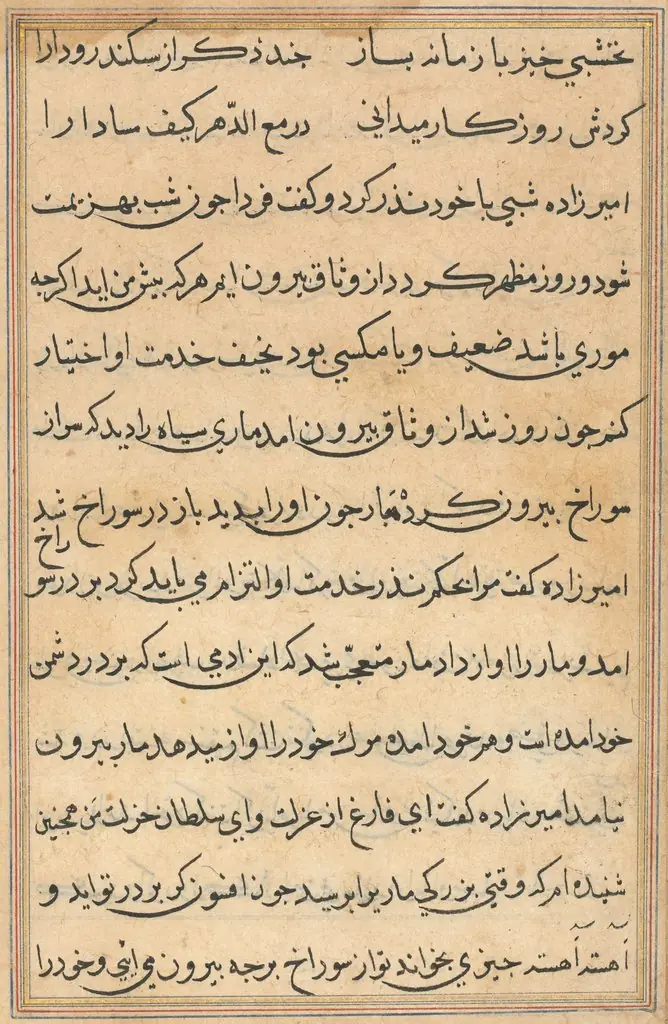 Page from Tales of a Parrot (Tuti-nama): text page
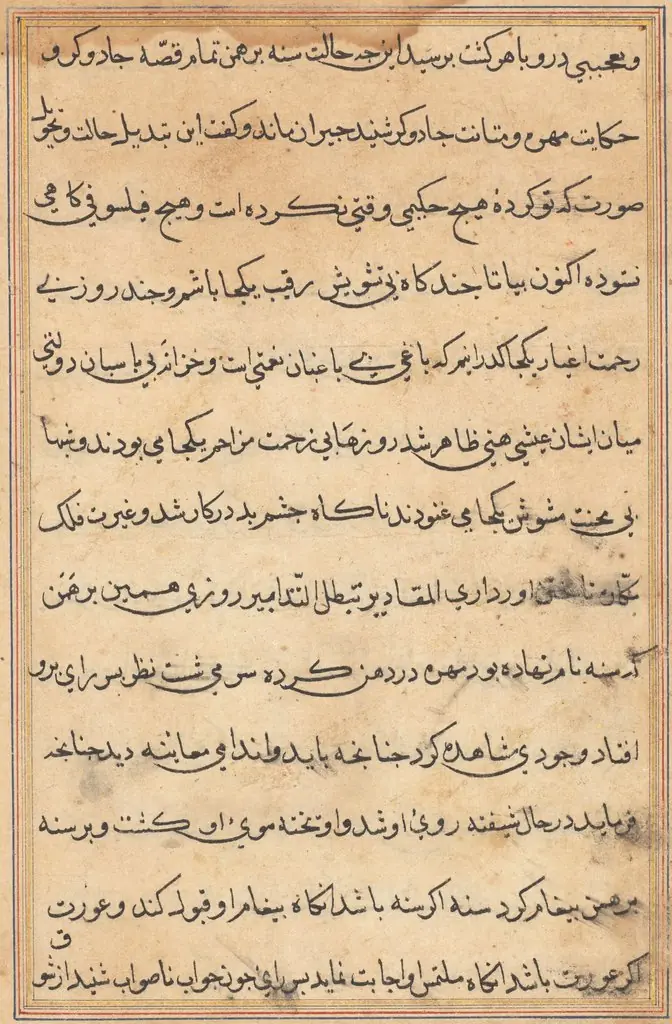 Page from Tales of a Parrot (Tuti-nama): text page
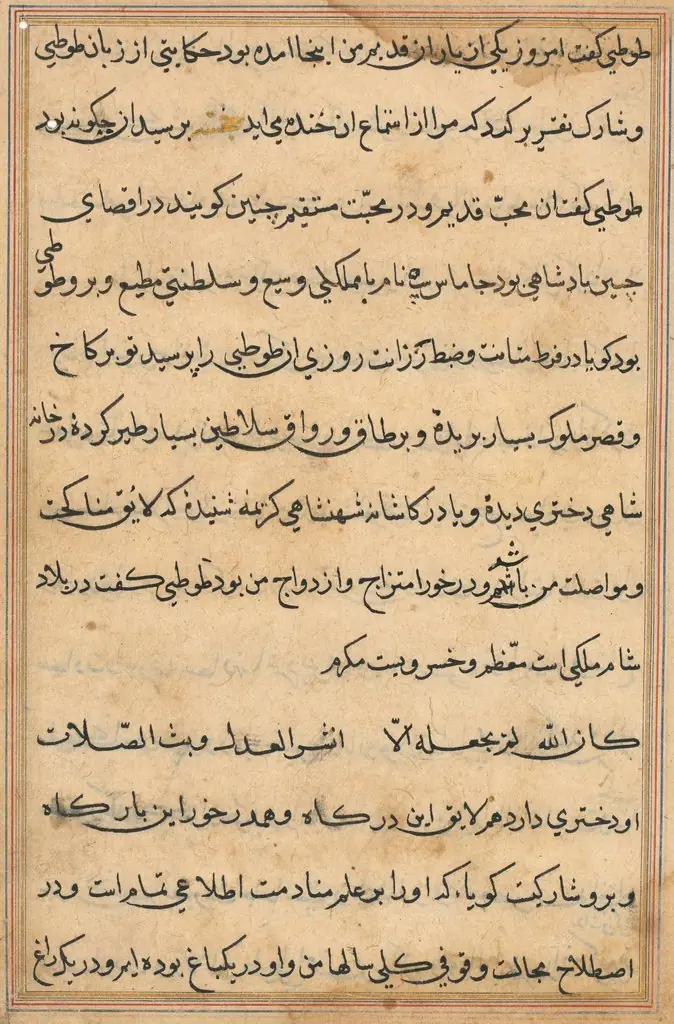 Page from Tales of a Parrot (Tuti-nama): text page
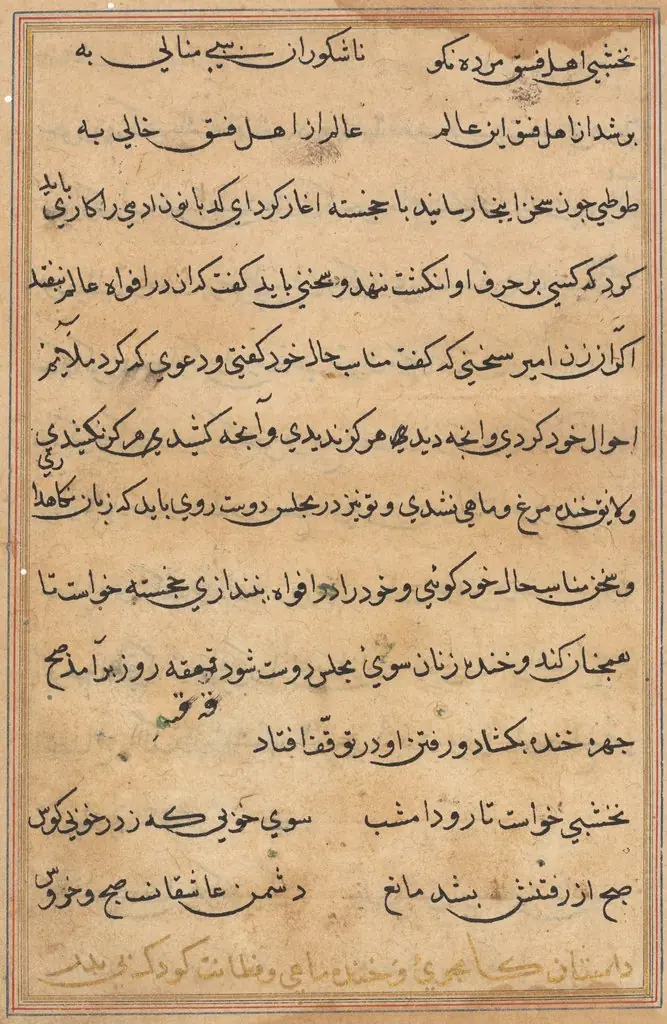 Page from Tales of a Parrot (Tuti-nama): text page
 Page from Tales of a Parrot (Tuti-nama): text page
 Page from Tales of a Parrot (Tuti-nama): text page
 Page from Tales of a Parrot (Tuti-nama): text page
 Page from Tales of a Parrot (Tuti-nama): text page
 Page from Tales of a Parrot (Tuti-nama): text page