Artwork
Page from Tales of a Parrot (Tuti-nama): text page
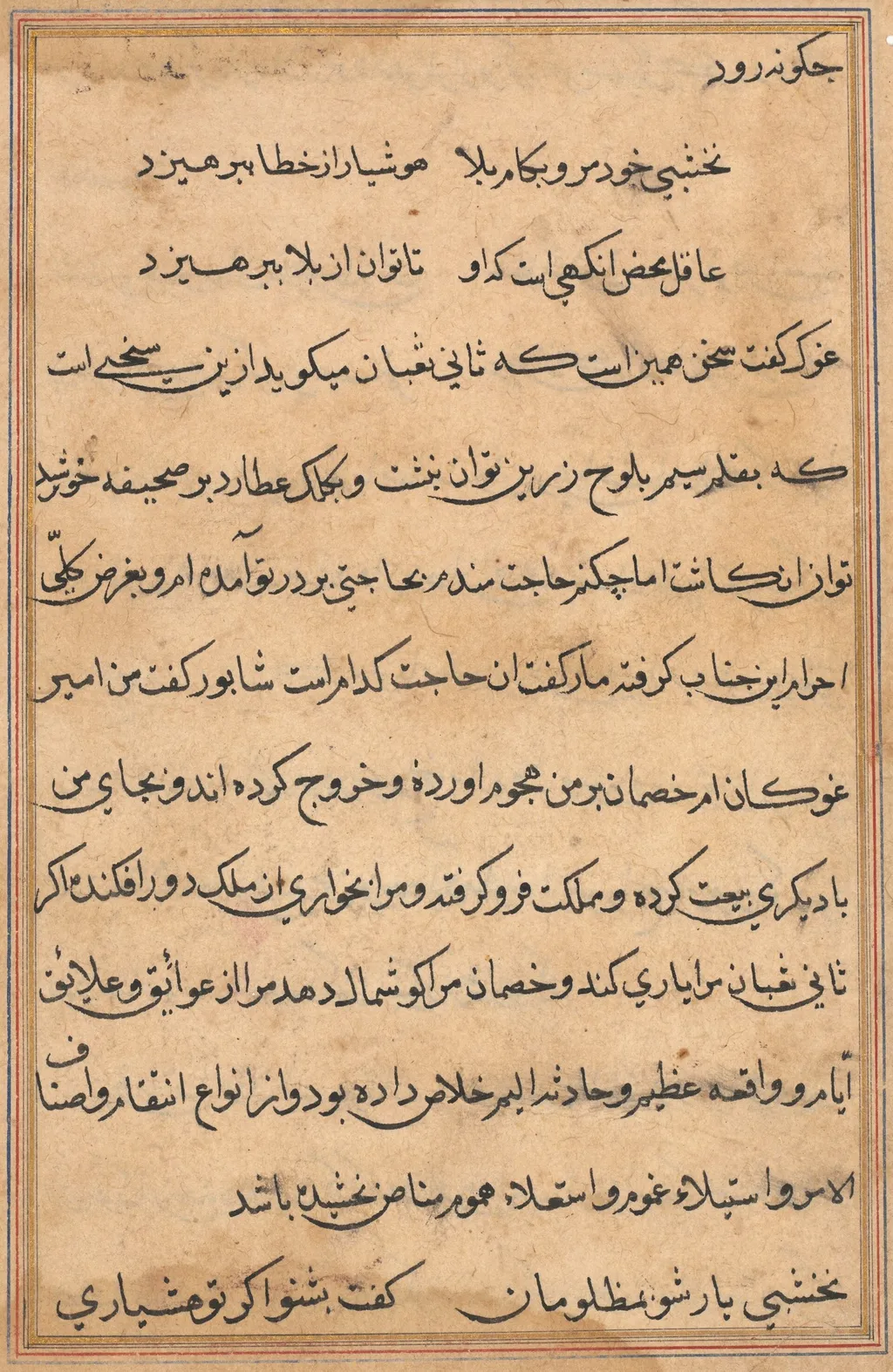
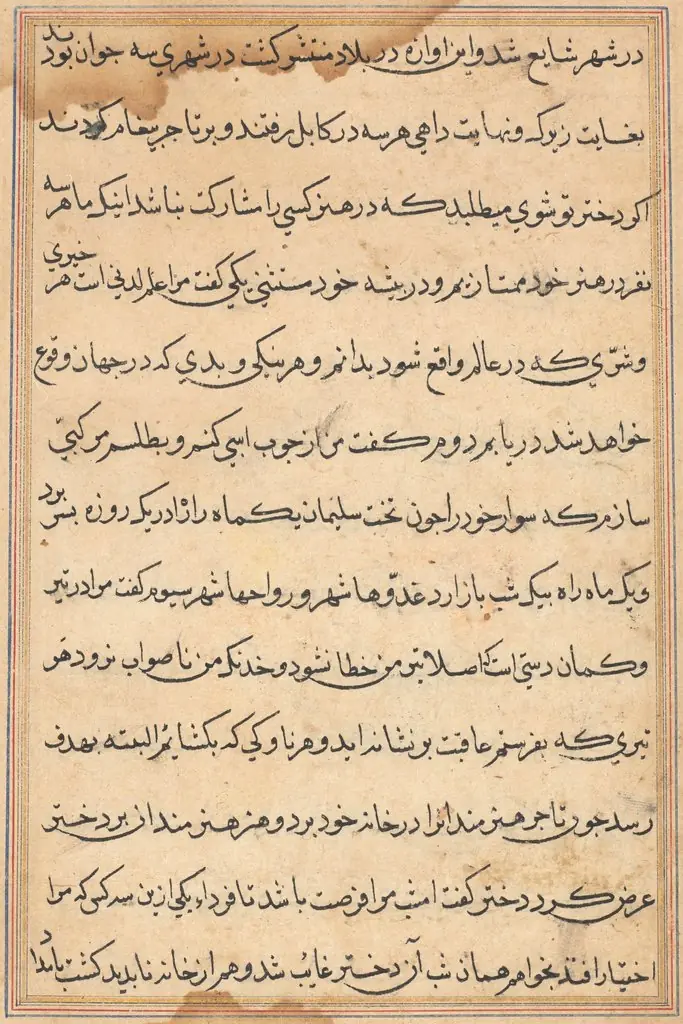
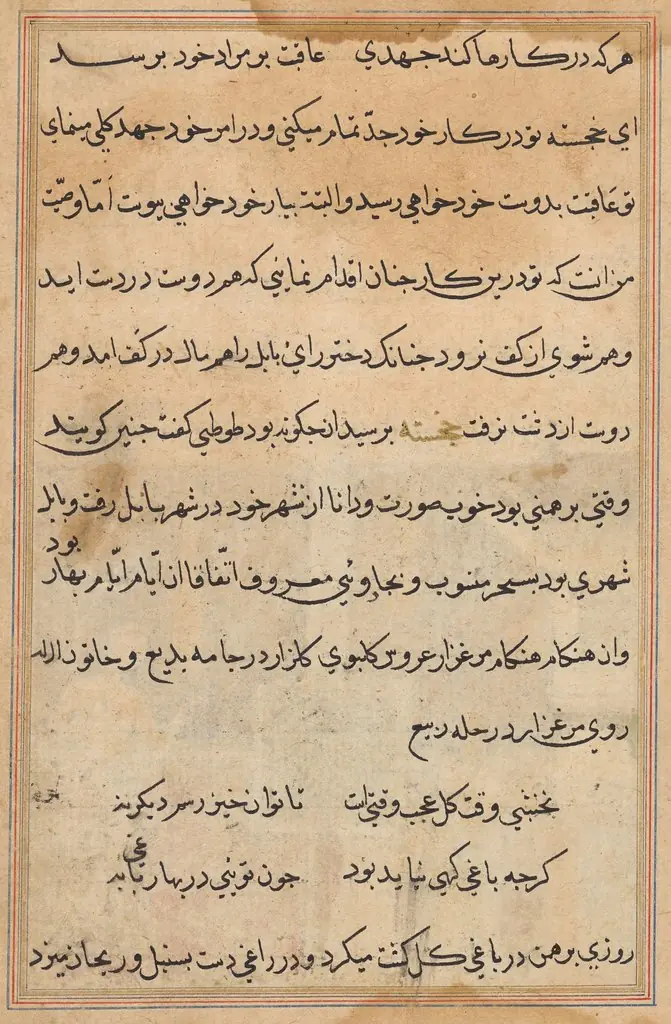
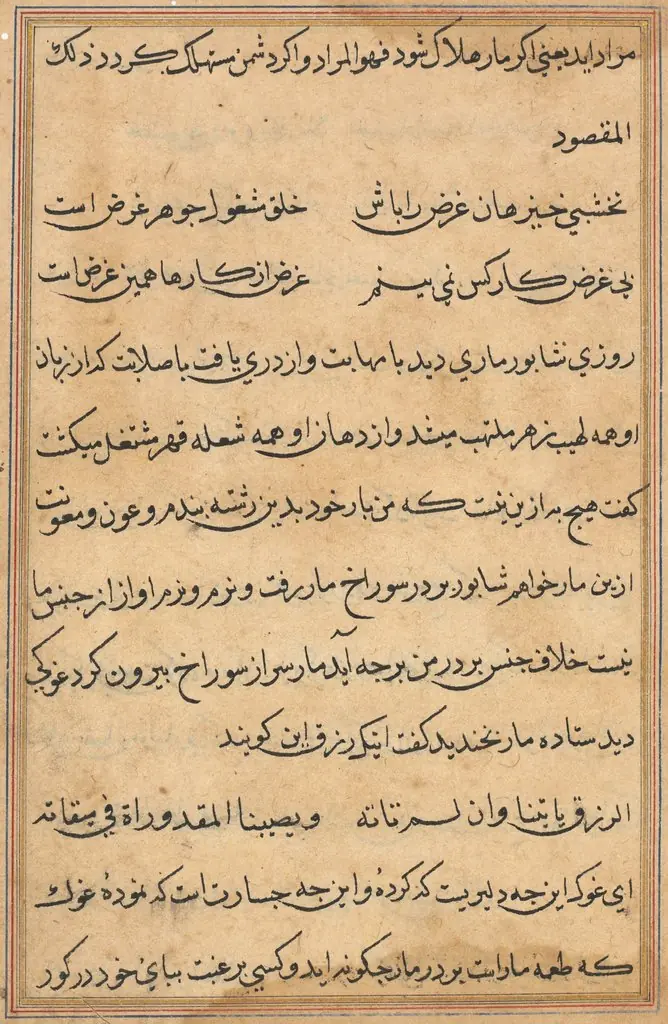
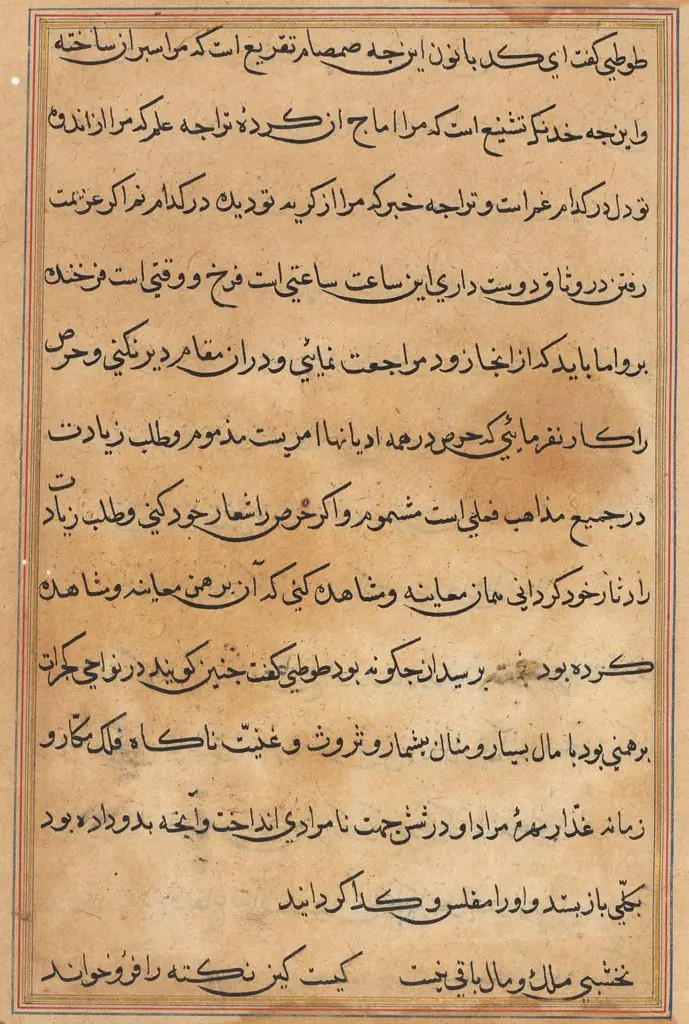
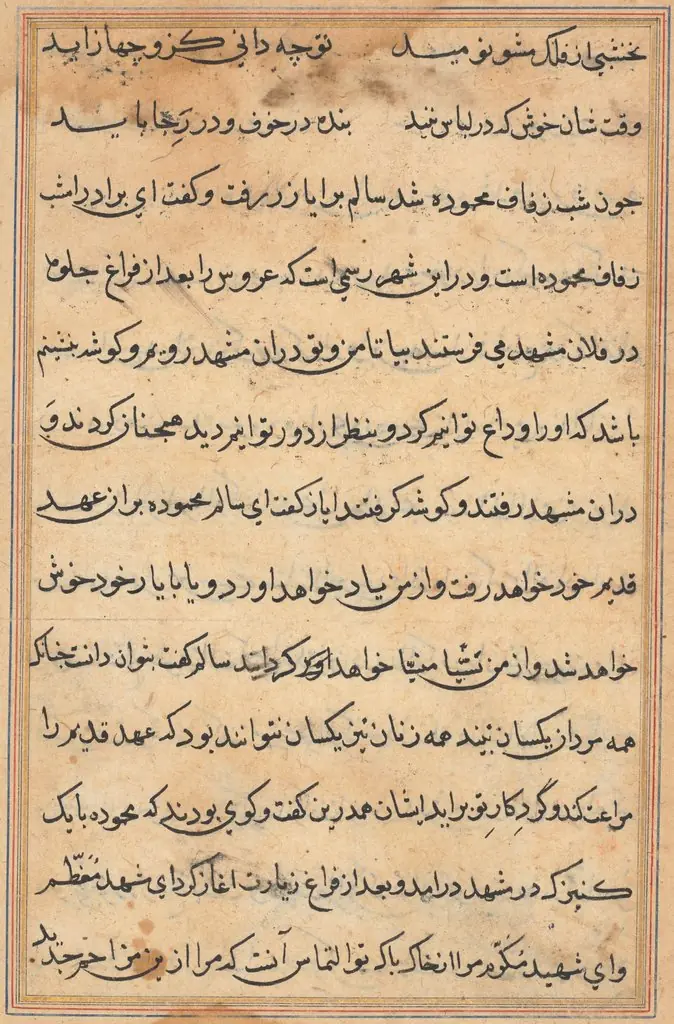
Page from Tales of a Parrot (Tuti-nama): text page is an unspecified painting. It dates from 1560 and is held in the collection of the Cleveland Museum of Art. This object is a painted page taken from the Persian manuscript known as the Tales of a Parrot, or Tuti‑nama.
About this work
Subject & Meaning
The imagery conveys themes of wisdom and moral instruction through the parrot’s role as a messenger, reflecting the manuscript’s didactic purpose.
The page originates from the Tuti-nama, a 16th‑century Persian illustrated manuscript produced in the Mughal court. It depicts a narrative scene drawn from the text, featuring a parrot and associated symbolic motifs common in Sufi allegory. The imagery conveys themes of wisdom and moral instruction through the parrot’s role as a messenger, reflecting the manuscript’s didactic purpose.
The work is attributed to an anonymous artist active in the Mughal Empire around 1560 and is housed in the Cleveland Museum of Art.
Symbolically, the parrot functions as a conduit for divine counsel, while the surrounding text underscores the moral lessons embedded in the illustrated narrative, illustrating the fusion of literary and visual storytelling in Mughal manuscript culture.
History & Provenance
The folio is a text page from the Tuti-nama (Tales of a Parrot) produced in the Mughal Empire circa 1560 by an unidentified artist. It entered the collection of the Cleveland Museum of Art, where it is catalogued under accession number 1962.279.181.b. No earlier owners or intermediate custodians are recorded in the available sources, so the known provenance begins with its acquisition by the museum in the twentieth century.
Overview
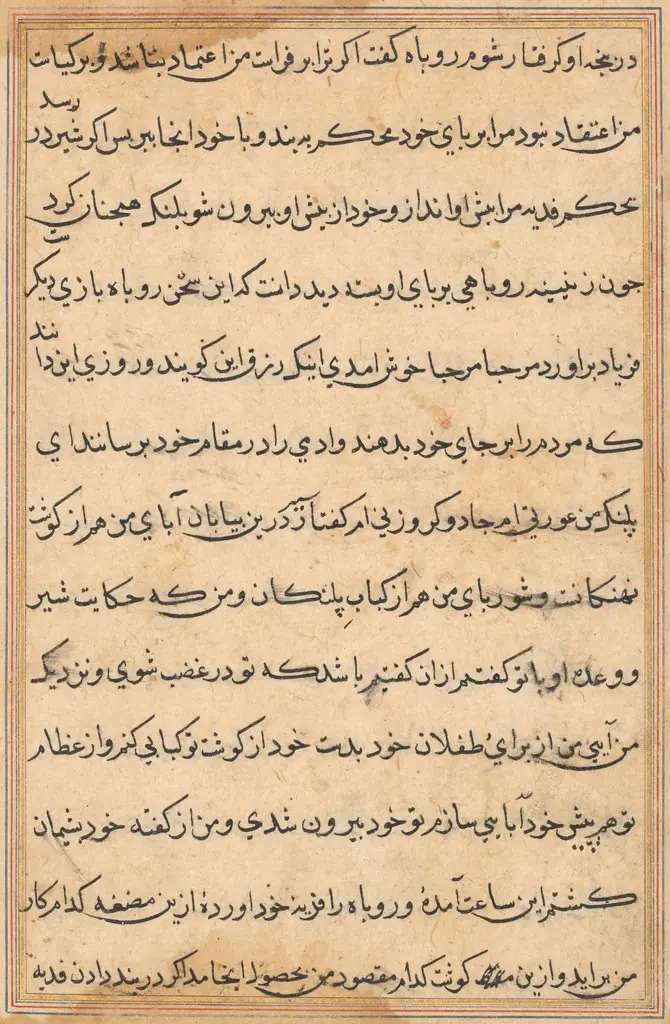
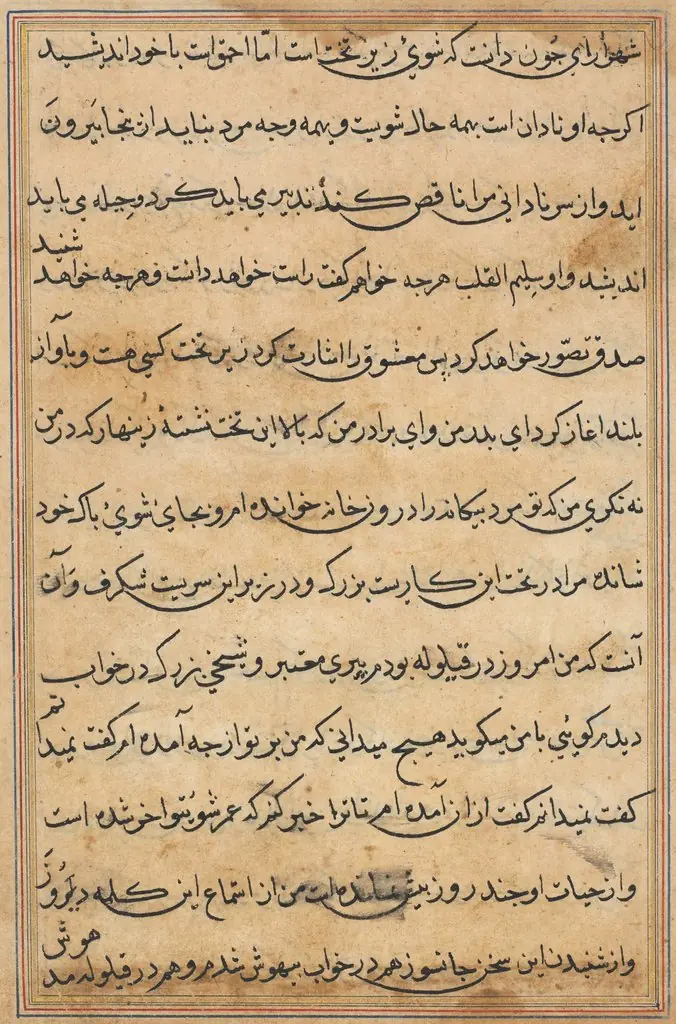
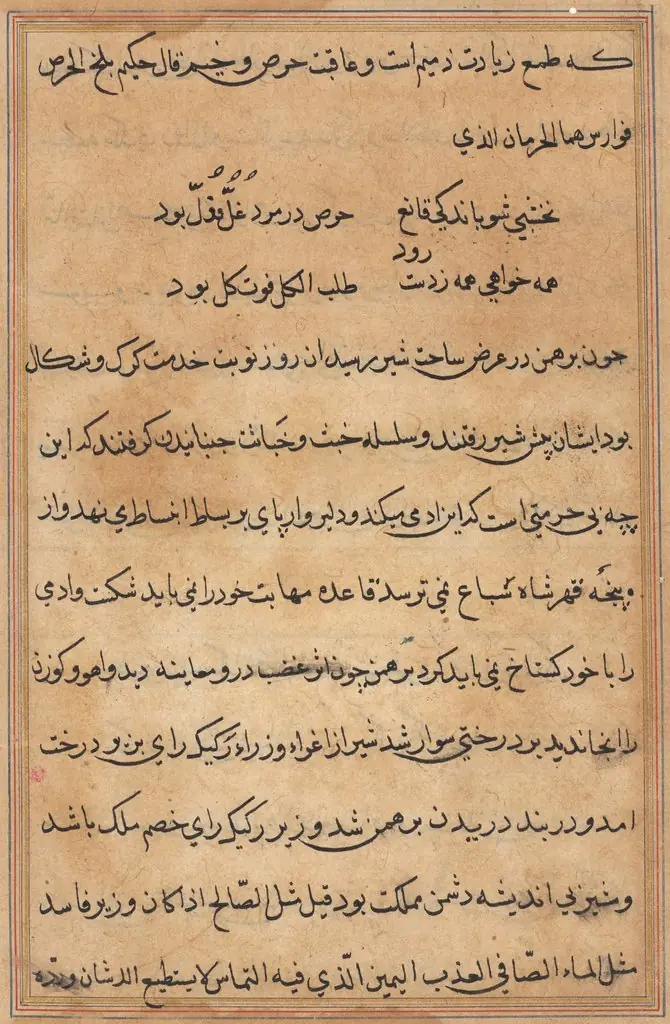
This object is a painted page taken from the Persian manuscript known as the Tales of a Parrot, or Tuti‑nama. The sheet consists primarily of black calligraphic script set against a light, slightly yellowed surface, framed by a narrow red border. The dense arrangement of words in orderly rows suggests a purpose of careful, deliberate reading.
Technique & Style
Executed in ink on a painted paper, the calligraphy displays a flowing, cursive hand characteristic of Persian manuscript tradition. The use of a subtle red margin and the decorative connective marks reflects a refined aesthetic that balances legibility with ornamental elegance.
Context
During the Mughal era, illustrated books such as the Tuti‑nama served both educational and diplomatic functions, showcasing the empire’s artistic sophistication while reinforcing courtly values. The manuscript’s production aligns with a broader tradition of Persian literary culture flourishing under imperial patronage.
Artist & collection

- Page from Tales of a Parrot (Tuti-nama): text page
 Page from Tales of a Parrot (Tuti-nama): text page
 Page from Tales of a Parrot (Tuti-nama): text page
 Page from Tales of a Parrot (Tuti-nama): text page
 Page from Tales of a Parrot (Tuti-nama): text page
 Page from Tales of a Parrot (Tuti-nama): text page
 Page from Tales of a Parrot (Tuti-nama): text page
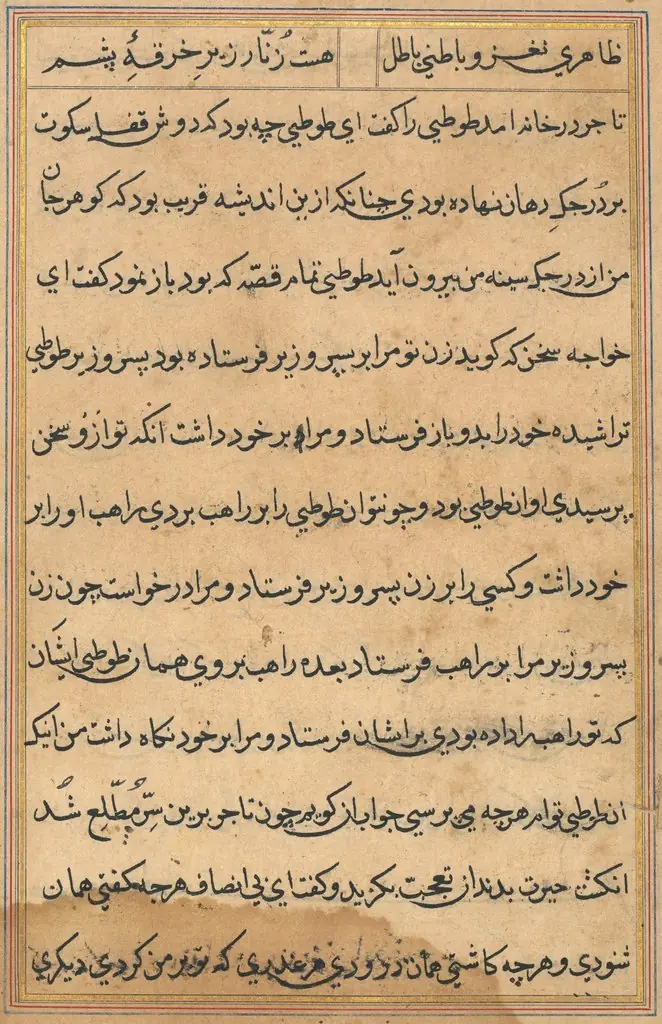 Page from Tales of a Parrot (Tuti-nama): text page
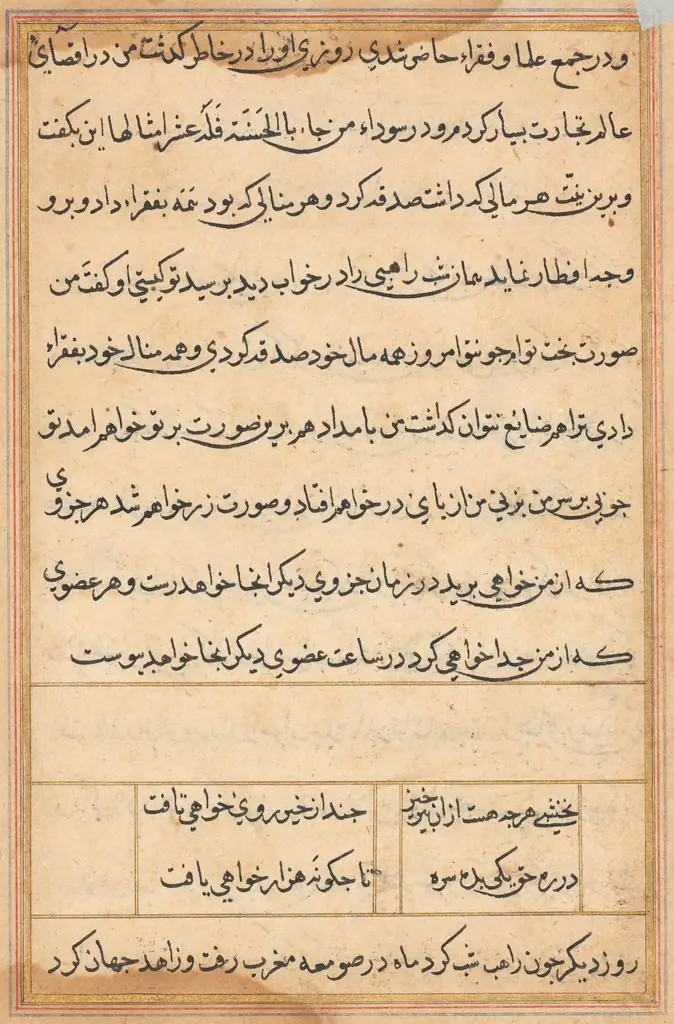 Page from Tales of a Parrot (Tuti-nama): text page
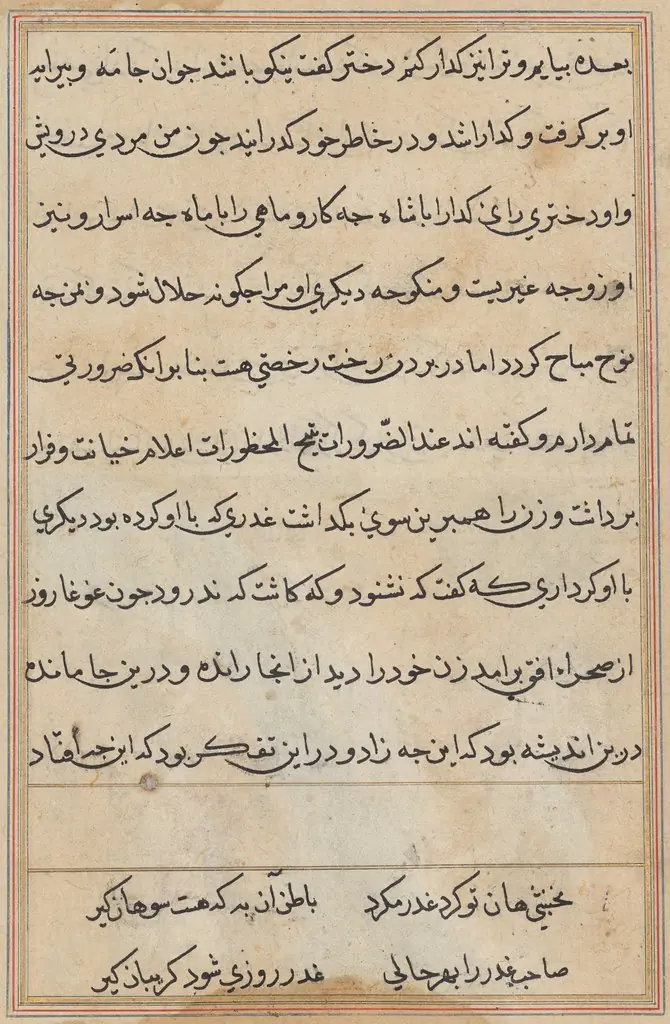 Page from Tales of a Parrot (Tuti-nama): text page
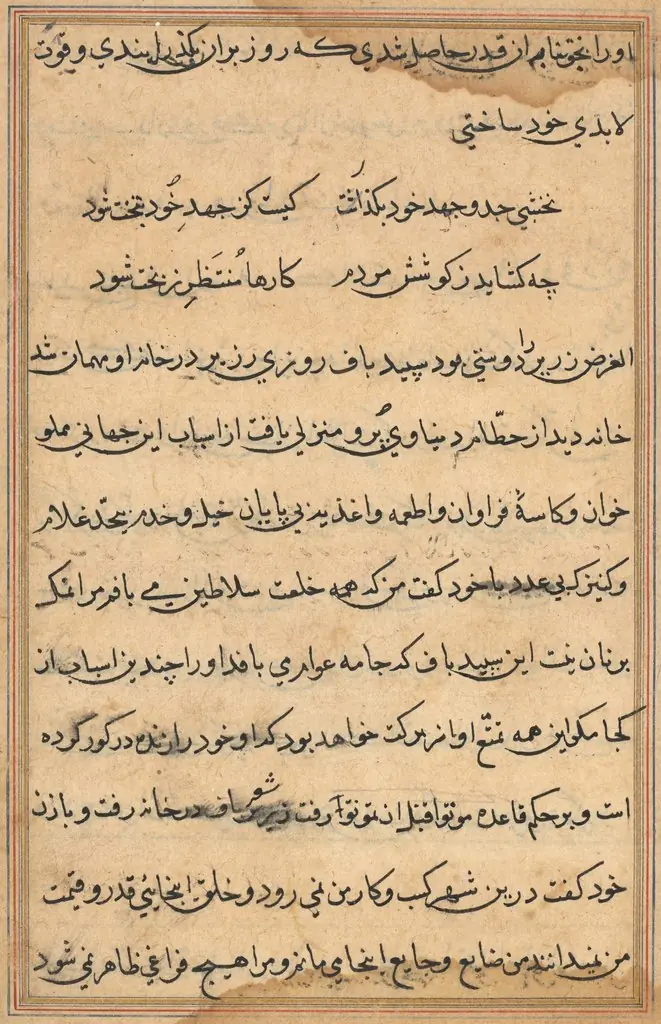 Page from Tales of a Parrot (Tuti-nama): text page
 Page from Tales of a Parrot (Tuti-nama): text page