Artwork
Page from Tales of a Parrot (Tuti-nama): text page
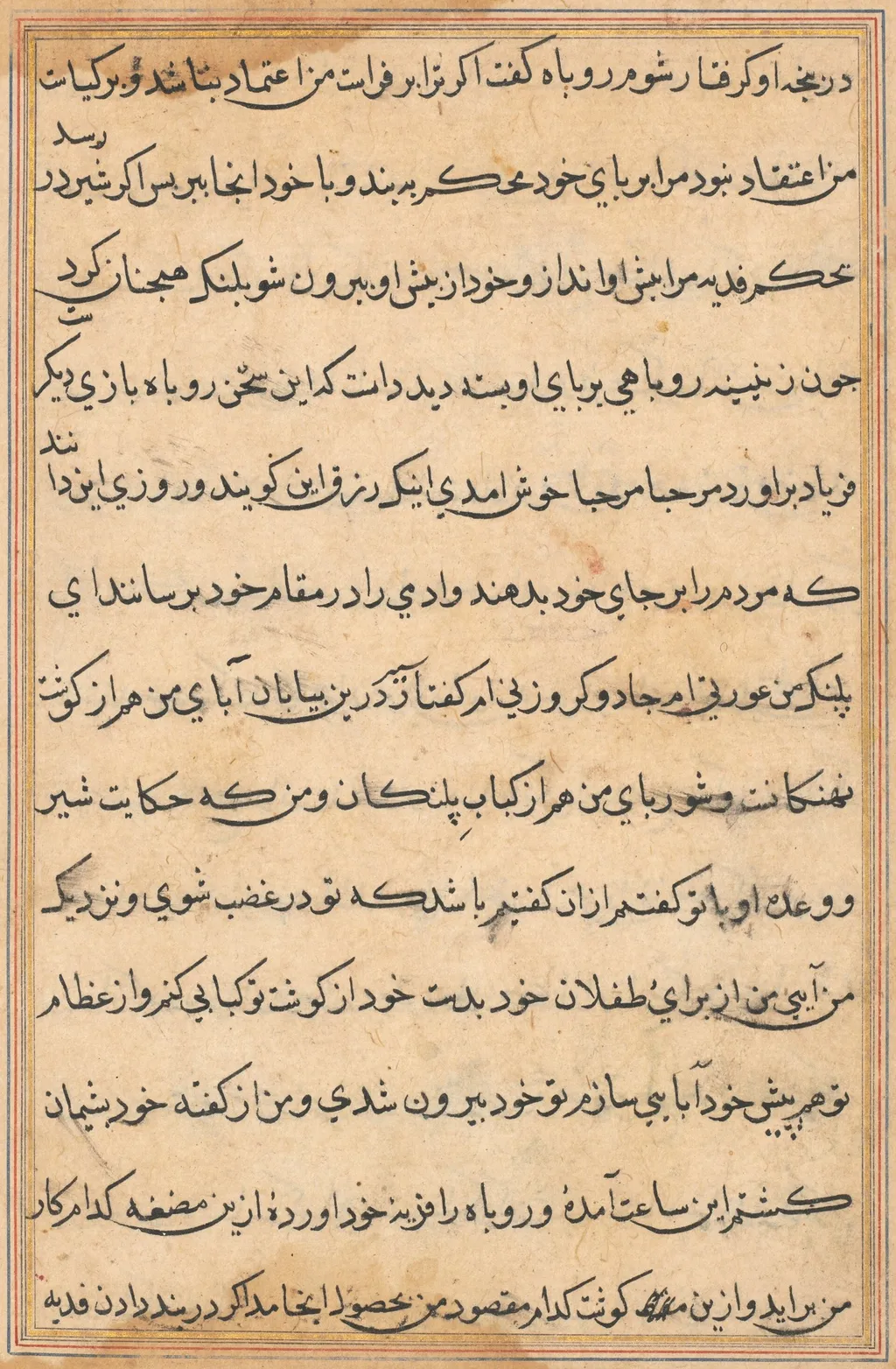
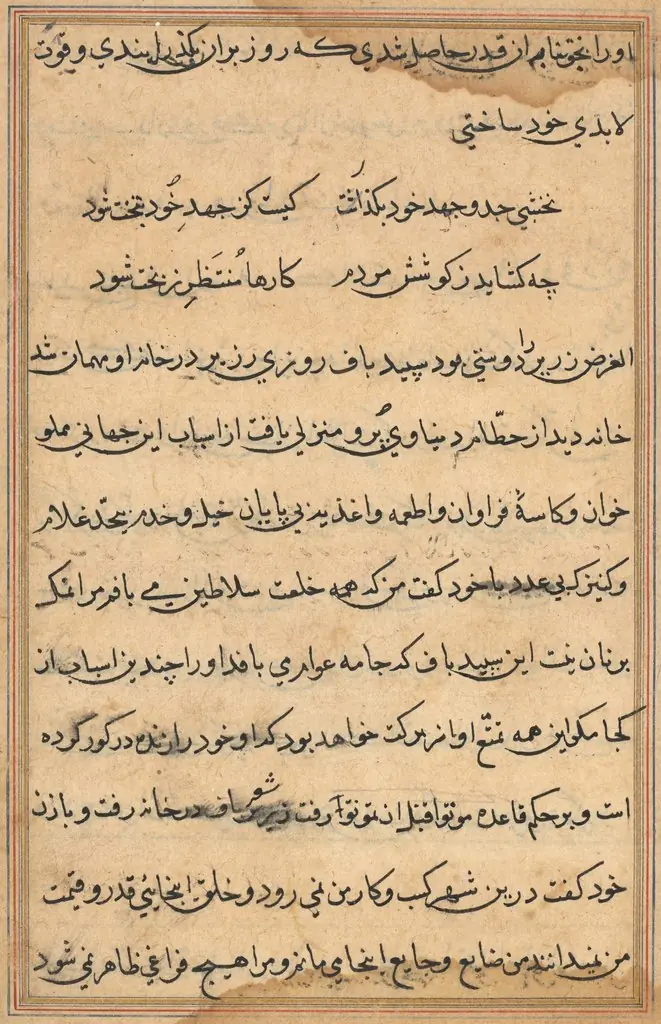
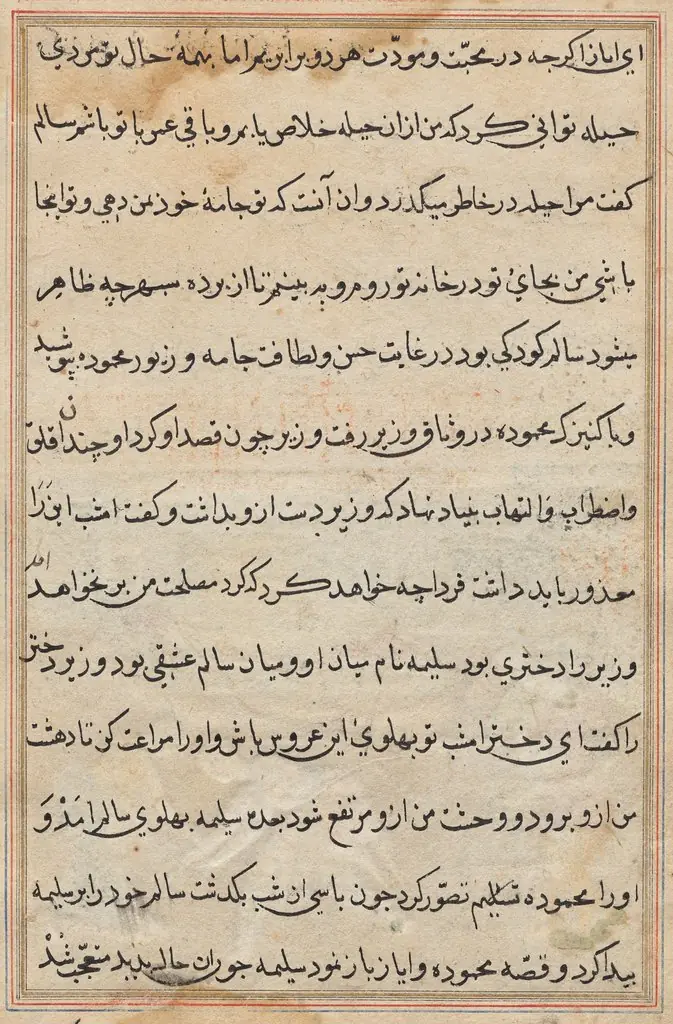
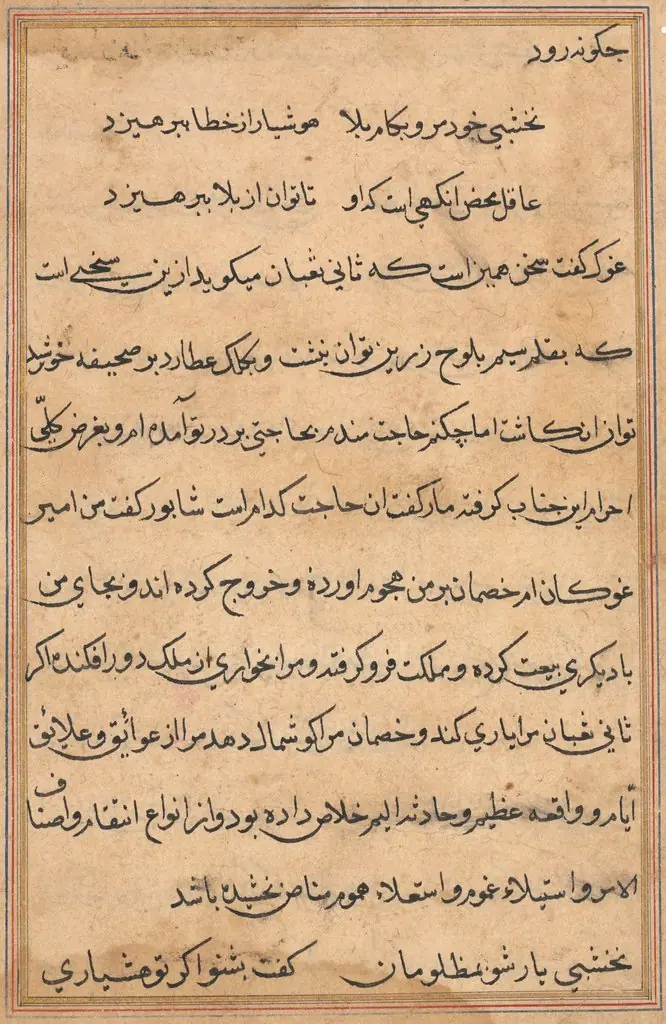
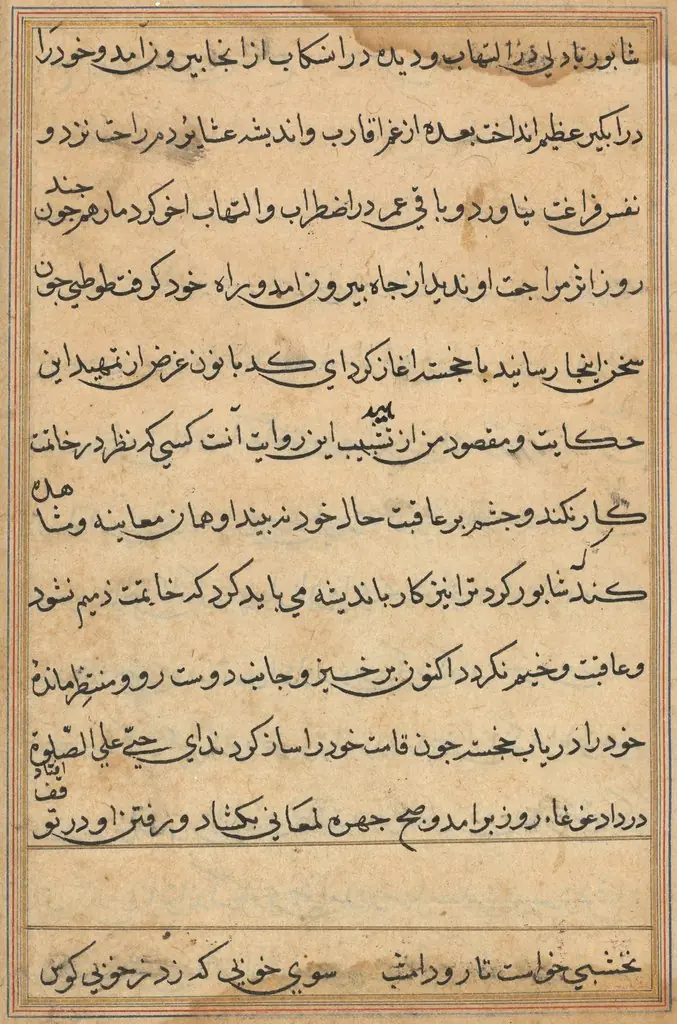
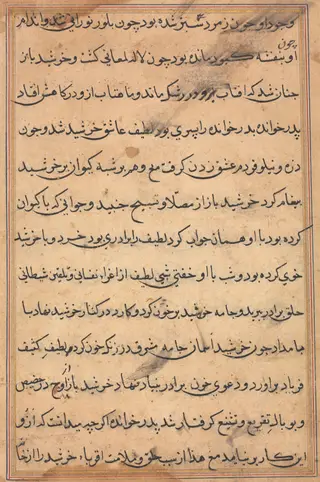
Page from Tales of a Parrot (Tuti-nama): text page is an unspecified painting. It dates from 1560 and is held in the collection of the Cleveland Museum of Art. The object is a single folio from the illustrated manuscript known as Tuti‑nama (Tales of a Parrot).
About this work
Subject & Meaning
In Mughal manuscript practice, parrots symbolize eloquent speech and the transmission of wisdom, reinforcing the didactic purpose of the Tuti-nama.
The text page shows a parrot narrator recounting moral tales, a visual motif that links the illustrated story to didactic instruction. In Mughal manuscript practice, parrots symbolize eloquent speech and the transmission of wisdom, reinforcing the didactic purpose of the Tuti-nama. The page therefore represents a didactic narrative device that conveys moral lessons through its avian messenger.
The manuscript was produced in the Mughal Empire around 1560 and now resides in the Cleveland Museum of Art.
The parrot functions as an allegorical figure that carries didactic content, embodying the role of a wise teacher within the story.
History & Provenance
This text page from the Tales of a Parrot (Tuti-nama) was created in 1560 within the Mughal Empire. The work is attributed to an unknown artist and functions as a manuscript page containing text. It is currently held in the collection of the Cleveland Museum of Art, where it is cataloged under the accession number 1962.279.201.b. While the specific commission details and the full chain of ownership prior to its arrival at the museum are not detailed in the available records, the artifact's origin is firmly established in the mid-16th century Mughal context.
Legacy
The miniature from the Tuti-nama manuscript, produced during the mid-sixteenth century in the Mughal Empire, has been recognized for its role in shaping Persianate narrative illustration and influencing later Indian miniature traditions, a legacy highlighted by its inclusion in the Cleveland Museum of Art’s collection and scholarly assessments of its stylistic impact.
Overview
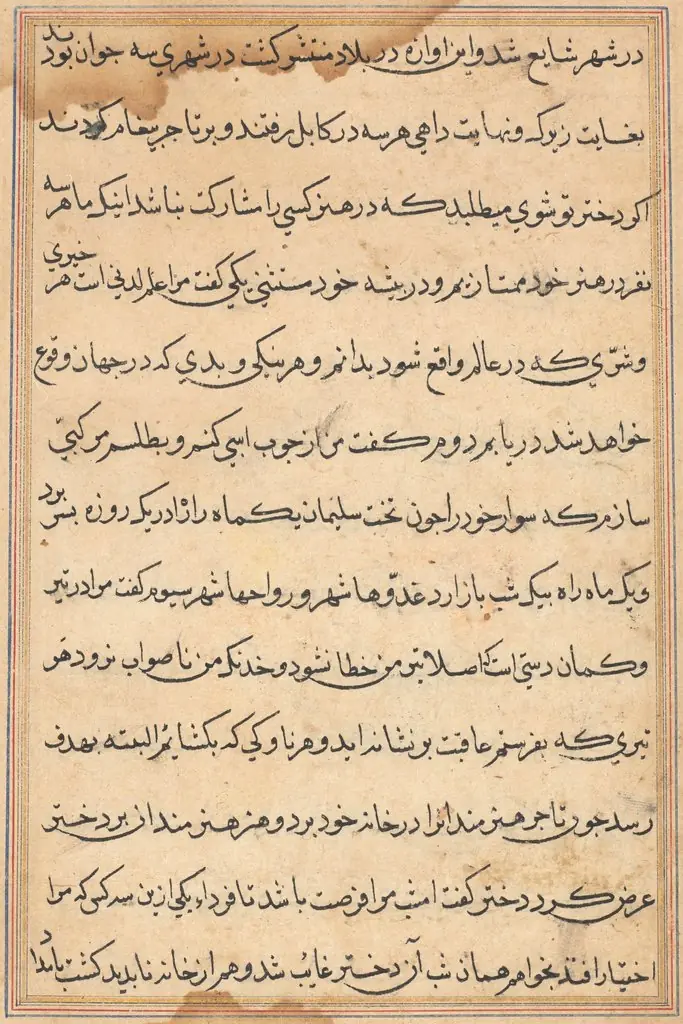
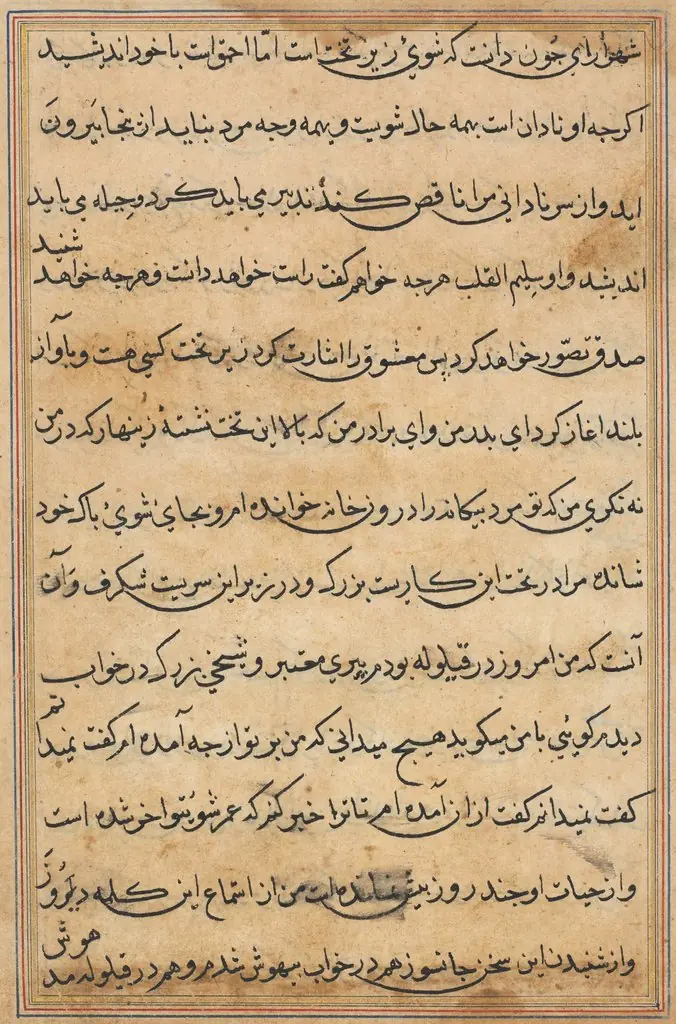
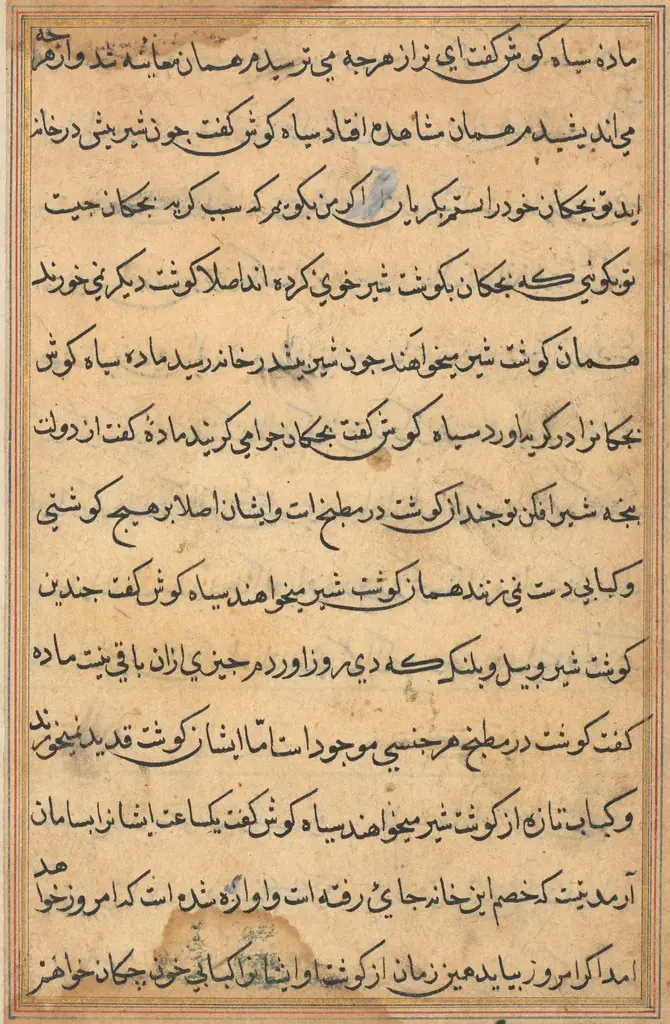
The object is a single folio from the illustrated manuscript known as Tuti‑nama (Tales of a Parrot). It consists solely of handwritten Persian text, arranged in tight, orderly lines across the page. The sheet is bordered by a narrow red line and rests on a slightly yellowed, aged paper that shows signs of wear.
Technique & Style
The calligraphy employs a flowing black script typical of Persian storybooks, executed with a fine brush or pen that yields uniform strokes. The red border, applied with a thin line of pigment, frames the text without decorative illustration, emphasizing the textual content over visual ornamentation.
Context
Tuti‑nama belongs to a genre of didactic literature that used animal protagonists to convey ethical lessons. The use of Persian script and the absence of accompanying miniatures align with a tradition of text‑focused manuscripts intended for private reading rather than public display.
Artist & collection

- Page from Tales of a Parrot (Tuti-nama): text page
 Page from Tales of a Parrot (Tuti-nama): text page
 Page from Tales of a Parrot (Tuti-nama): text page
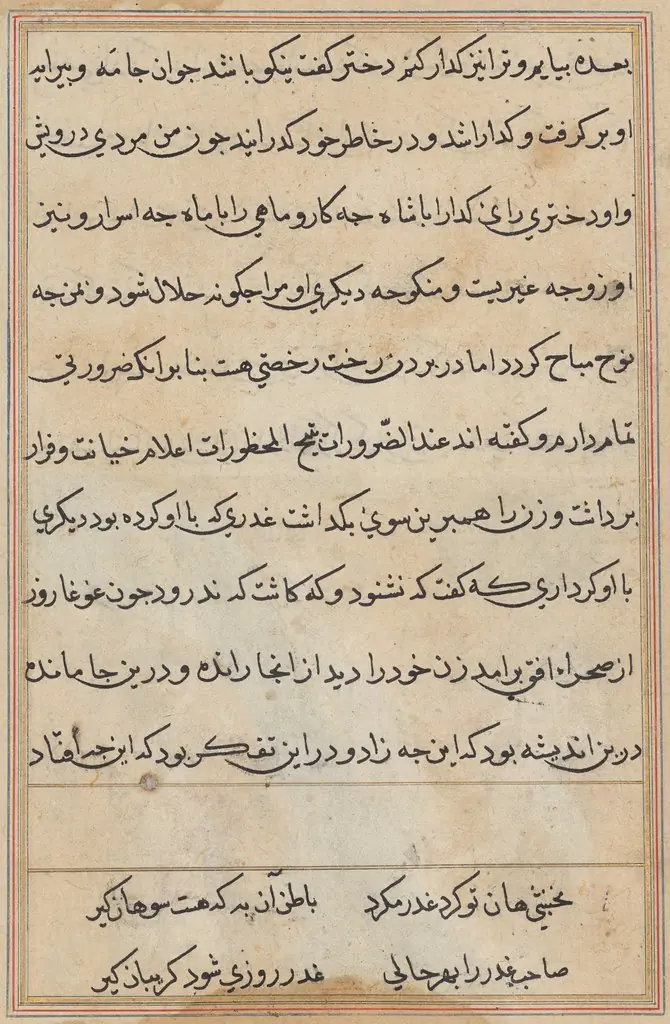 Page from Tales of a Parrot (Tuti-nama): text page
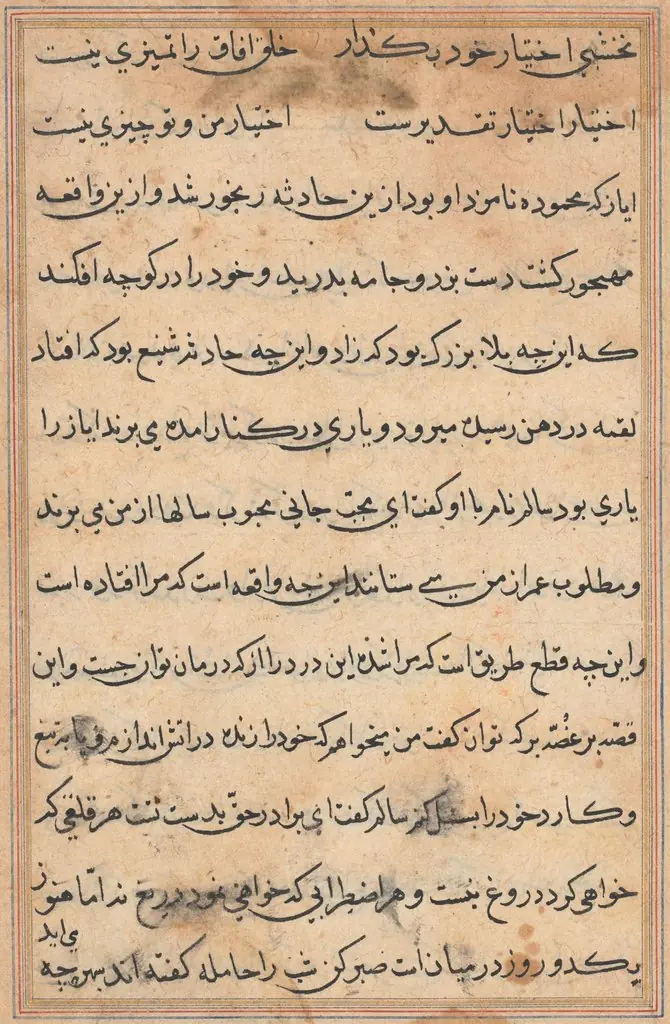 Page from Tales of a Parrot (Tuti-nama): text page
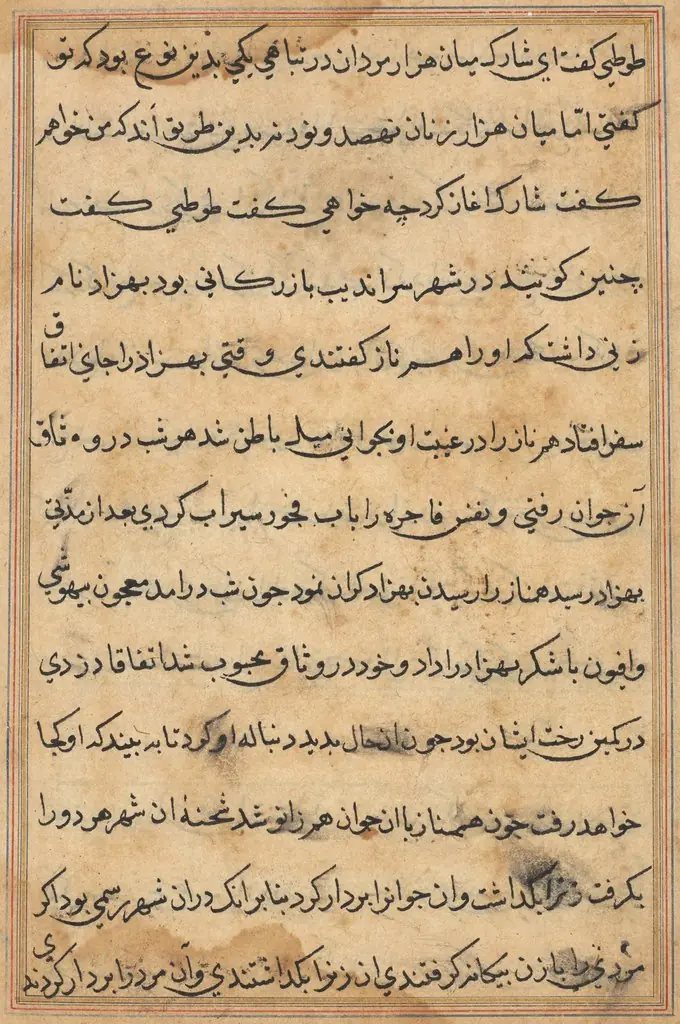 Page from Tales of a Parrot (Tuti-nama): text page
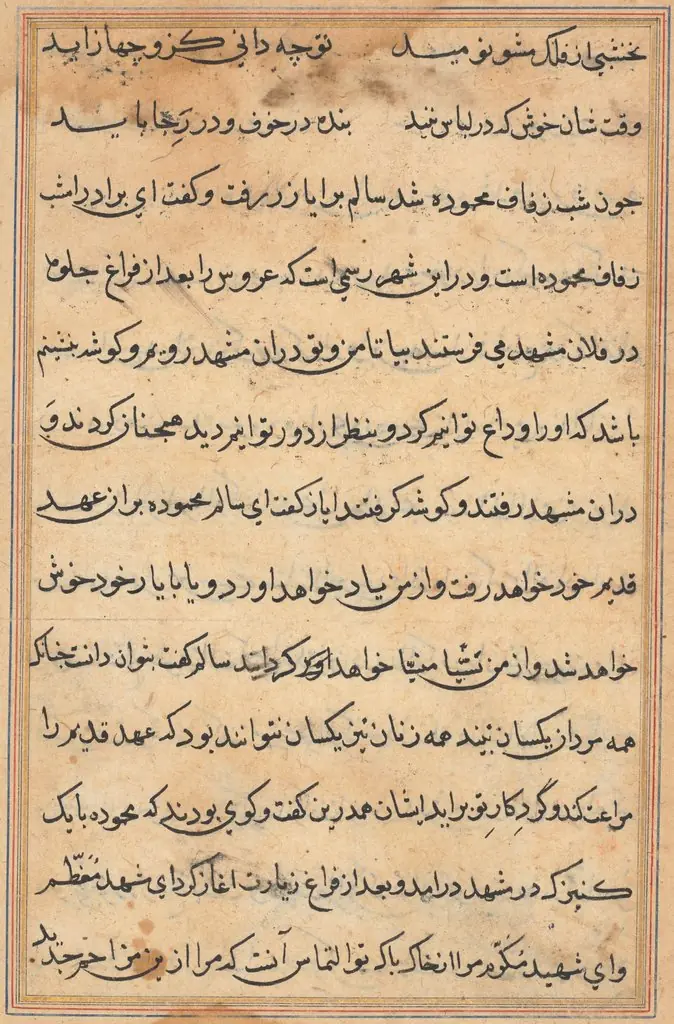 Page from Tales of a Parrot (Tuti-nama): text page
 Page from Tales of a Parrot (Tuti-nama): text page
 Page from Tales of a Parrot (Tuti-nama): text page
 Page from Tales of a Parrot (Tuti-nama): text page
 Page from Tales of a Parrot (Tuti-nama): text page
 Page from Tales of a Parrot (Tuti-nama): text page