Artwork
Painting of One Hundred Themes
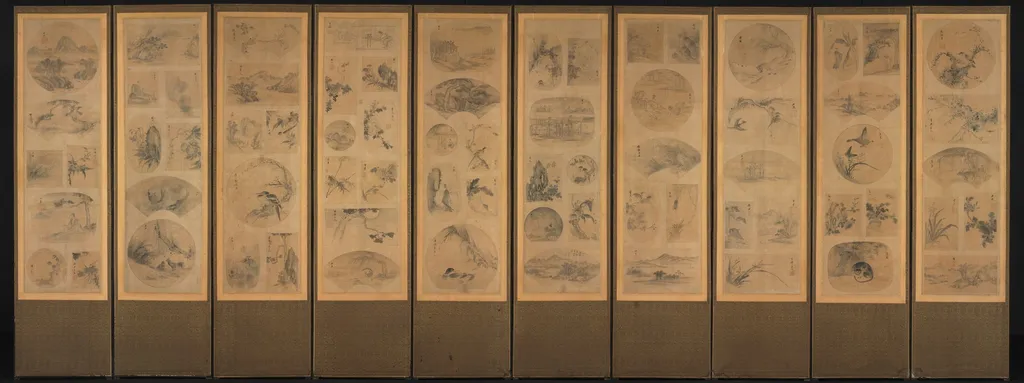
Painting of One Hundred Themes is an unspecified painting. It dates from 1892 and is held in the collection of the Cleveland Museum of Art. The work consists of a long, narrow scroll assembled from eight panels.
About this work
History & Provenance
It is currently held in the collection of the Cleveland Museum of Art, where it is cataloged under the accession number 1998.
Painting of One Hundred Themes was created in 1884 in Korea. The work is attributed to an unknown artist, with the specific creation year established as 1884. It is currently held in the collection of the Cleveland Museum of Art, where it is cataloged under the accession number 1998.286. The painting represents a Korean artistic production from the late nineteenth century.
Painting of One Hundred Themes is held by the Cleveland Museum of Art, where it is catalogued under inventory number 1998.286. The work, dated 1884 and made in Korea, entered the museum's collection as a painting by an unknown artist. No exhibition history beyond its accession at the Cleveland Museum of Art is documented in the available sources.
Legacy
The work's later influence, reputation, and legacy are tied to its inclusion in the Cleveland Museum of Art collection and its attribution to an unknown Korean artist active in 1884. As documented in the Cleveland Museum of Art's records, the painting was acquired and preserved as part of their holdings, ensuring its continued visibility within the institution's collection. While specific exhibition histories or critical receptions post-creation are not detailed in the available sources, its presence in a major museum collection has contributed to scholarly attention on Korean art of the period.
The work remains subject to ongoing research regarding its authorship and cultural context, reflecting its role in broader narratives of 19th-century Korean artistic production.
Overview
The work consists of a long, narrow scroll assembled from eight panels. Each panel is filled with a series of small, round or oval vignettes that depict natural subjects such as birds, flowers, mountains and trees. The overall composition is densely packed, with little separation between the individual images.
Subject & Meaning
The miniature scenes present a variety of flora and fauna, suggesting an encyclopedic interest in the natural world. The inclusion of brief, barely legible inscriptions hints at an explanatory or cataloguing intent, though the precise meanings of the texts remain obscure.
Technique & Style
Rendered primarily in ink on a light brown‑gray ground, the images are executed with swift, economical lines that give the impression of rapid sketches. The limited palette and the repetitive, compact format emphasize the decorative rather than the narrative.
Context
Such scrolls were traditionally used in East Asian art to compile illustrative surveys of natural subjects, often serving educational or contemplative purposes. The format of multiple small scenes within a continuous band reflects a long‑standing convention for presenting a series of related motifs.
Artist & collection

 Painting of One Hundred Themes
 Painting of One Hundred Themes (obverse)
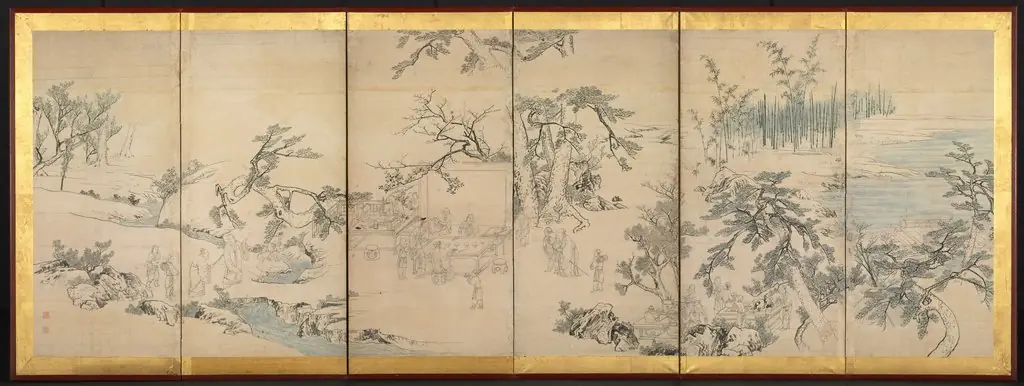 Literary Gathering in the Orchid Pavilion
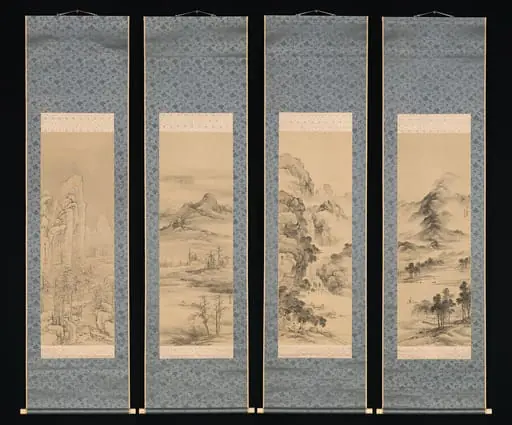 山本梅逸筆 四季山水図|Landscapes of the Four Seasons
 Literary Gathering in the Orchid Pavilion
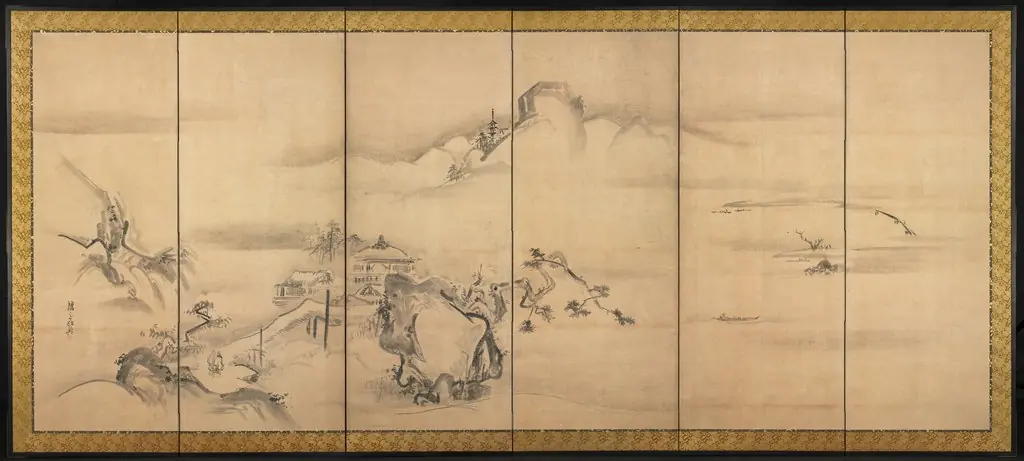 Eight Views of the Xiao and Xiang Rivers
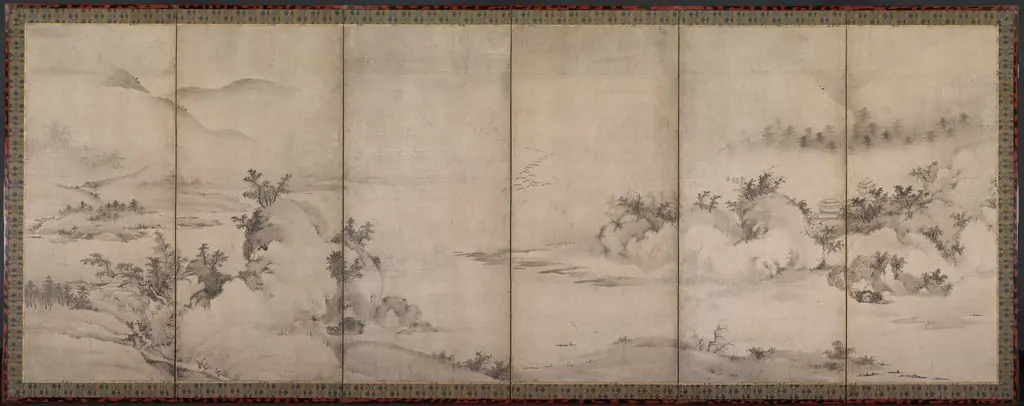 Landscape with Motifs from the Eight Views of Xiao-Xiang
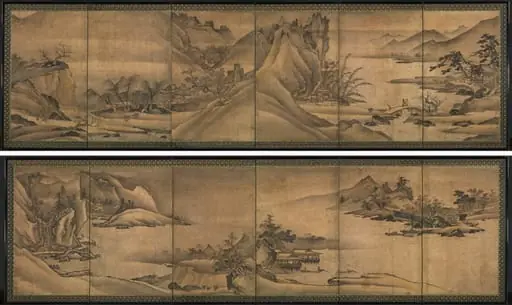 Landscape of the Four Seasons
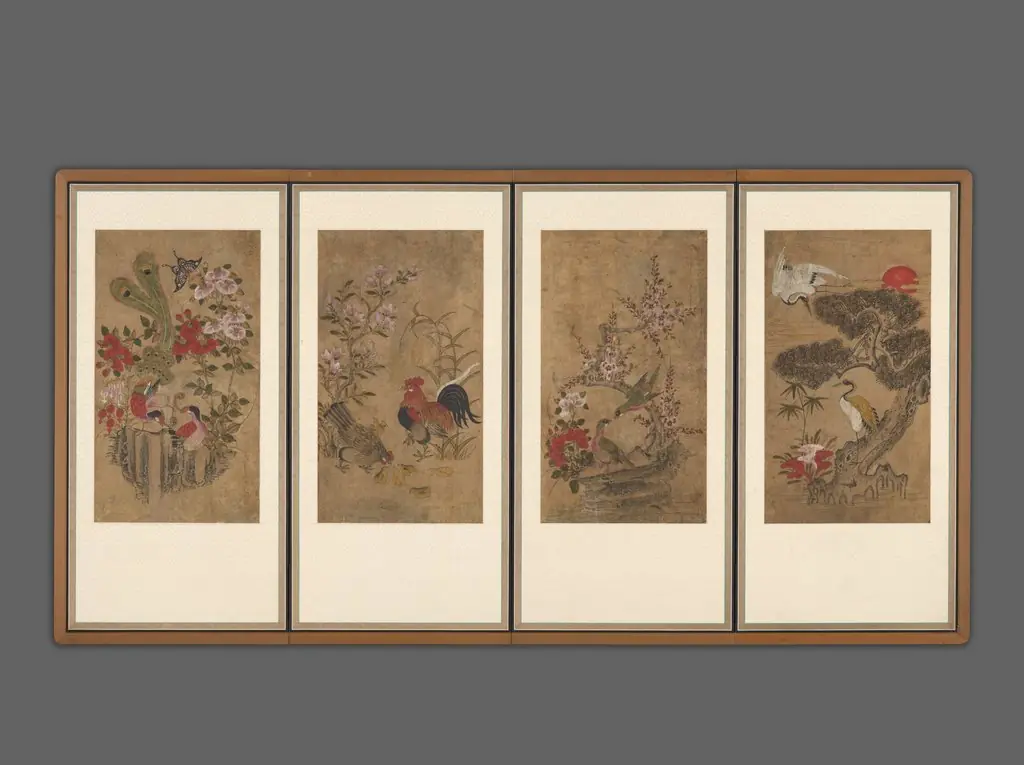 Birds and Flowers
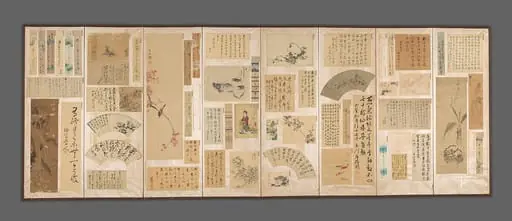 伊賀上野文人達の貼り混ぜ屏風|Paintings and Calligraphy by Literati of Iga Ueno
 Dragon and Tiger
- Painting of One Hundred Themes (obverse)