Artwork
Painting of One Hundred Themes
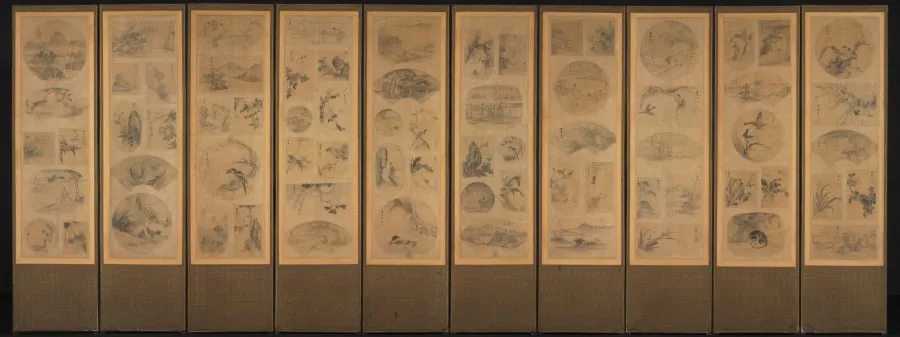
Painting of One Hundred Themes is an unspecified painting by the Impressionist artist Unknown. It dates from 1804 and is held in the collection of the Cleveland Museum of Art.
- Accession no.
- 1998.286
- Credit line
- Bequest of Gordon K. Mott
About this work
It feels like a quiet conversation between daily life and old verses, meant to stand in the corner of a room and surprise anyone who walks around it.
This folding screen is covered with tiny scenes, birds on branches, misty mountains, people carrying bundles, all in soft ink and pale washes. Flip it over and you’ll find lines of poetry about spring blossoms and autumn leaves.
Most Korean screens show only one side, but this one paints stories on both. It feels like a quiet conversation between daily life and old verses, meant to stand in the corner of a room and surprise anyone who walks around it.
Look up screens from korea, joseon dynasty (1392–1910) to see how artists turned furniture into poetry.
Overview
This folding screen, titled “Painting of One Hundred Themes,” presents a densely packed visual narrative on both its front and back. The obverse displays a series of modest ink drawings, birds perched on branches, floral motifs, landscape vistas, and scenes of ordinary activity, rendered in muted tones. The reverse side is inscribed with classical verses that reflect on the transitory beauty of the four seasons.
Subject & Meaning
The front panels juxtapose natural and human elements, suggesting a harmonious coexistence between the environment and daily routines. By pairing these images with poetry that contemplates seasonal change, the work invites viewers to contemplate the fleeting nature of life and the continuity of tradition, creating a dialogue between visual and literary expressions.
Technique & Style
The artist employs monochrome ink brushwork complemented by delicate washes of pale colour, achieving a soft, atmospheric quality. The compositions are rendered in a miniature scale, allowing numerous vignettes to occupy the surface without crowding. Calligraphic script on the reverse is executed in a restrained, elegant hand, echoing the understated aesthetic of late‑Joseon court painting.
History & Provenance
While most Korean folding screens of the Joseon period featured decoration on only one side, this piece is double‑sided, a practice that gained popularity in the 19th and early 20th centuries. The shift likely reflects influence from Japanese two‑sided screens, which were used as room dividers, and indicates a period of cross‑cultural exchange in decorative arts.
Context
Produced during the late Joseon dynasty (1392–1910), the screen exemplifies how Korean artisans transformed functional furniture into carriers of cultural and poetic meaning. By integrating everyday scenes with classical verse, the work embodies the Confucian ideal of moral instruction through art, while also serving a practical role as a room partition or decorative backdrop.
Artist & collection









 Painting of One Hundred Themes (obverse)
 Painting of One Hundred Themes
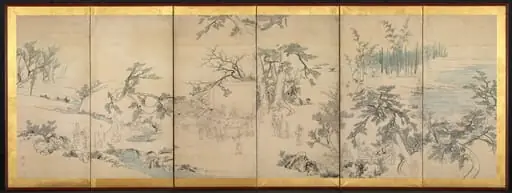 Literary Gathering in the Orchid Pavilion
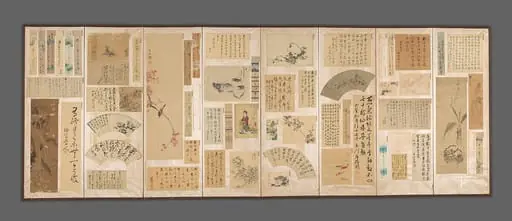 伊賀上野文人達の貼り混ぜ屏風|Paintings and Calligraphy by Literati of Iga Ueno
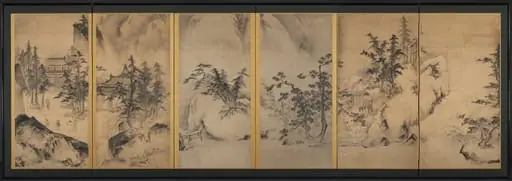 Winter and Spring Landscape
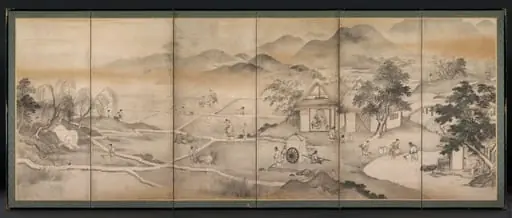 Emperor Yao Visiting Yu Chonghua
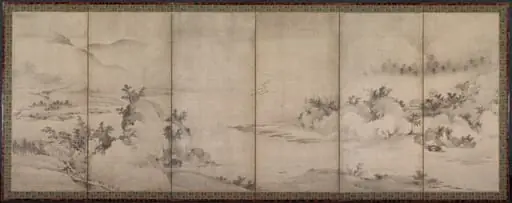 Landscape with Motifs from the Eight Views of Xiao-Xiang
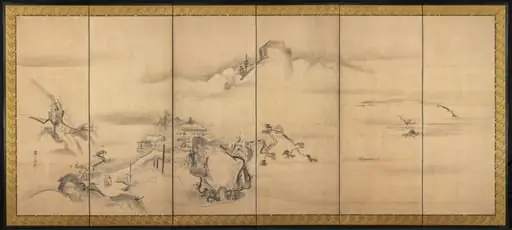 Eight Views of the Xiao and Xiang Rivers
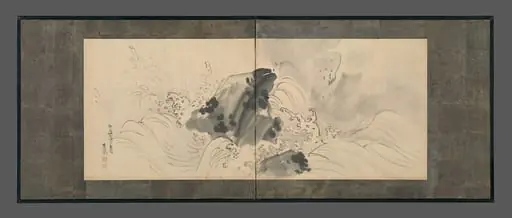 Untitled
- Painting of One Hundred Themes (obverse)