Artwork
Pleurants
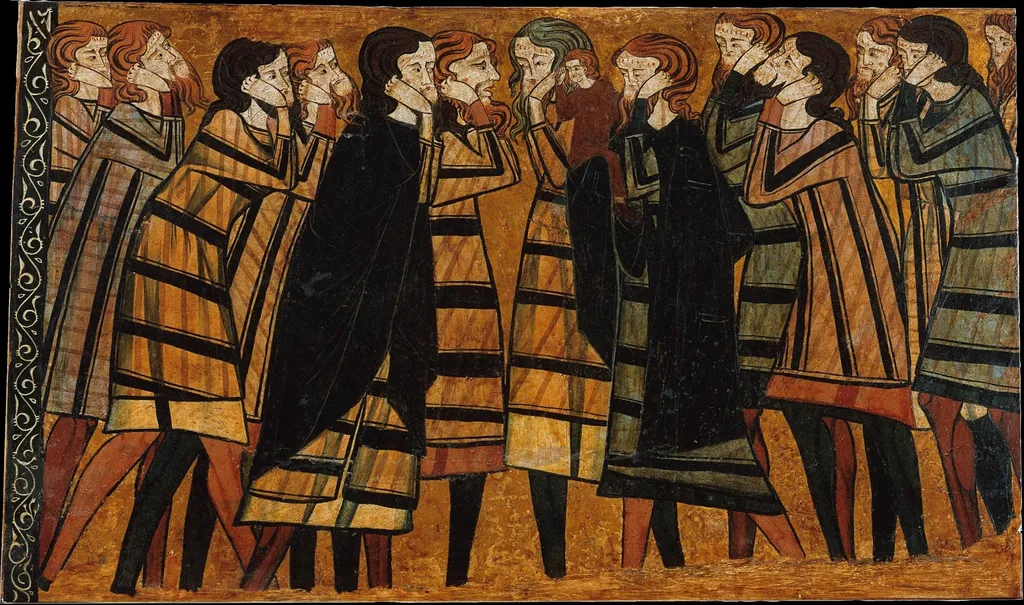
Pleurants is an unspecified painting by the Gothic painting artist Unknown. It dates from 1298 and is held in the collection of the Museu Nacional d'Art de Catalunya.
About this work
Overview
Pleurants is a painted work depicting a compact group of figures clad in long, striped robes of brown, black and orange. The composition is set against a warm, golden background, and each figure touches its own face, conveying a collective expression of sorrow. The painting is part of the collection of the Museu Nacional d'Art de Catalunya.
Subject & Meaning
The scene presents mourners in flowing garments, their gestures of hand‑to‑face suggesting grief or lamentation. The title, Pleurants, which translates to “weepers,” reinforces the interpretation of the figures as participants in a ritual of mourning, likely reflecting a cultural or religious practice of communal sorrow.
Technique & Style
Rendered in a muted palette, the work employs broad, horizontal brushstrokes to define the striped robes, while the golden ground provides a luminous contrast. The figures are stylised rather than fully naturalistic, emphasizing the emotional tone through simplified forms and a restrained color scheme.
History & Provenance
The painting is currently housed in the Museu Nacional d'Art de Catalunya, though details of its creation date, artist, and earlier ownership are not recorded in the available information. Its presence in the museum’s collection indicates recognition of its relevance to the institution’s focus on regional art history.
Context
Within the broader tradition of mourning imagery, Pleurants aligns with medieval and early modern depictions of professional mourners, often employed at funerary ceremonies. The use of collective gestures and uniform attire reflects a codified visual language that communicates communal loss across different cultural contexts.
Artist & collection









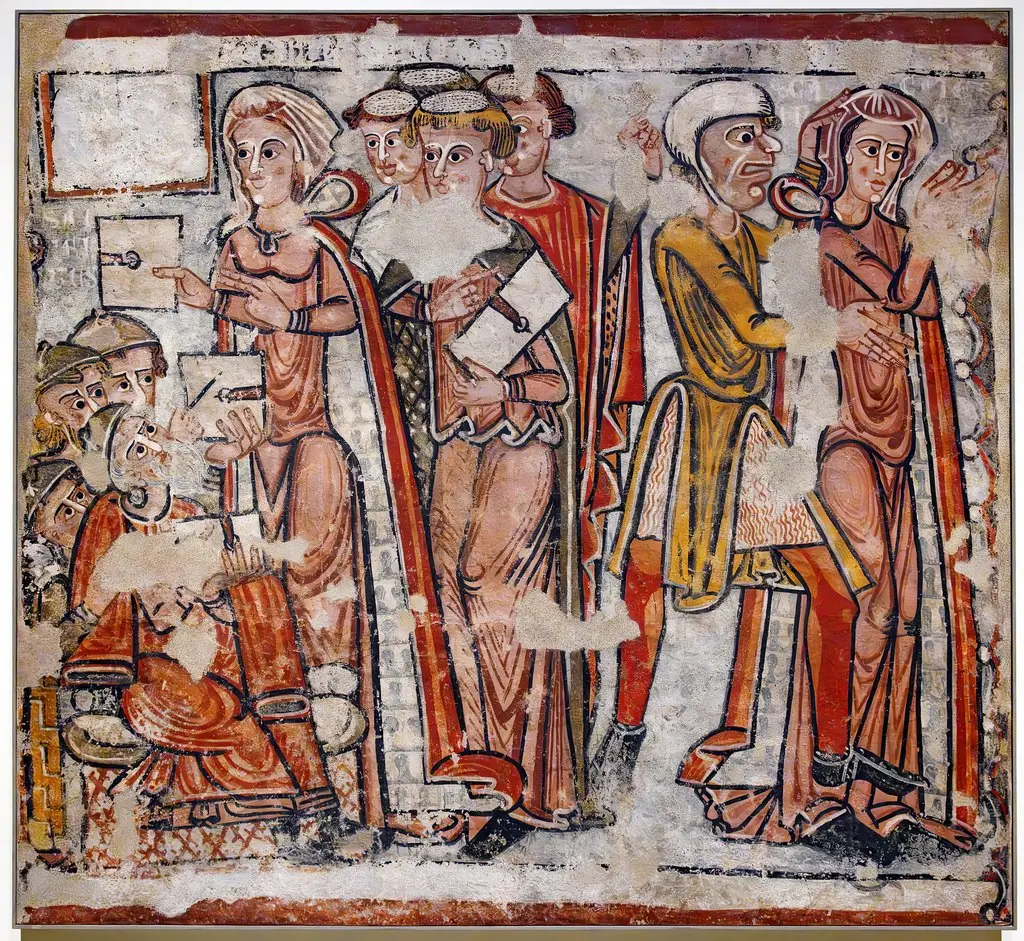 Dispute and Arrest of Saint Catherine, from the cathedral of La Seu d'Urgell
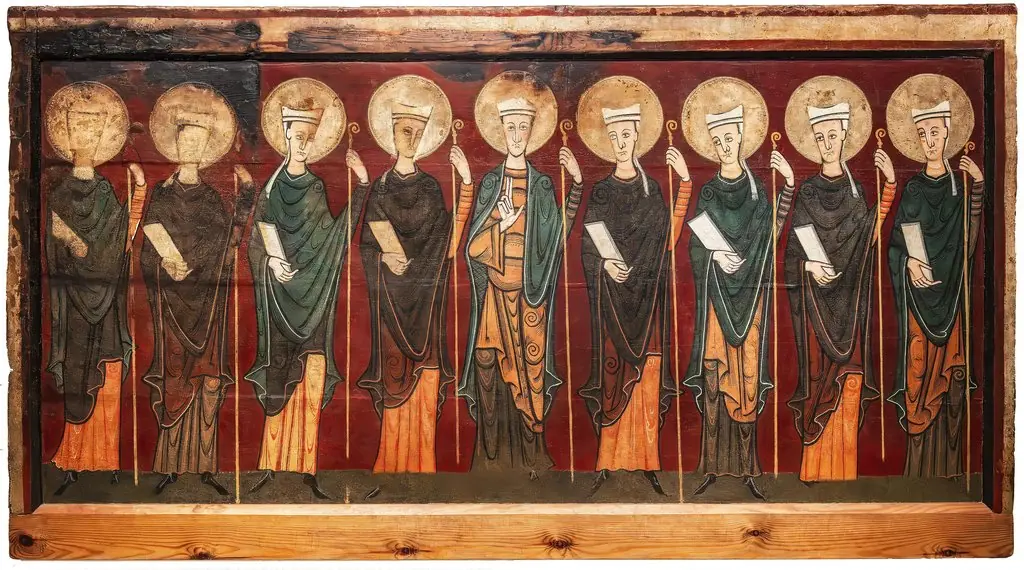 Altar frontal from Tavèrnoles
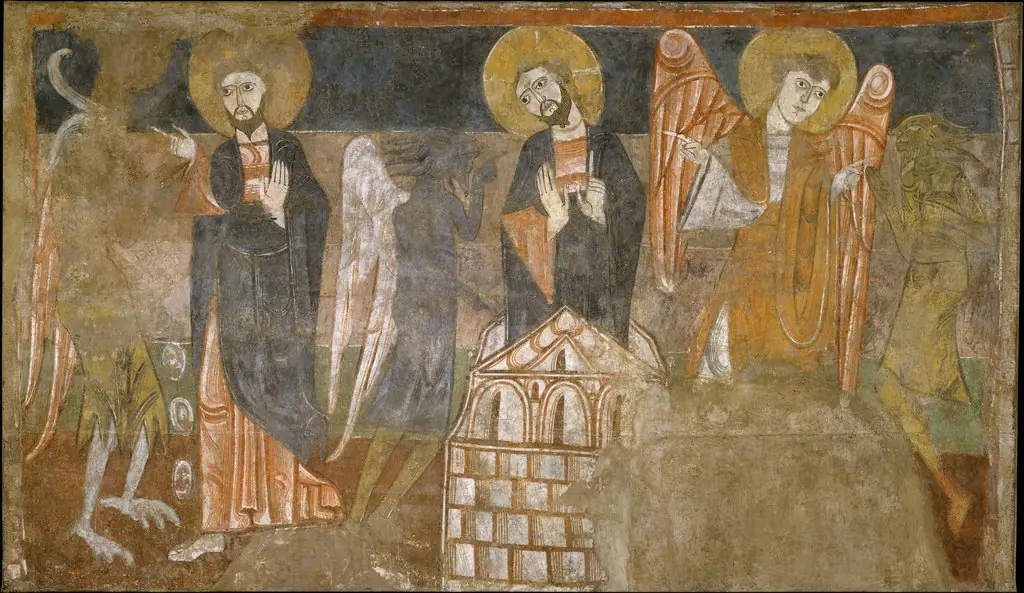 The Temptation of Christ by the Devil
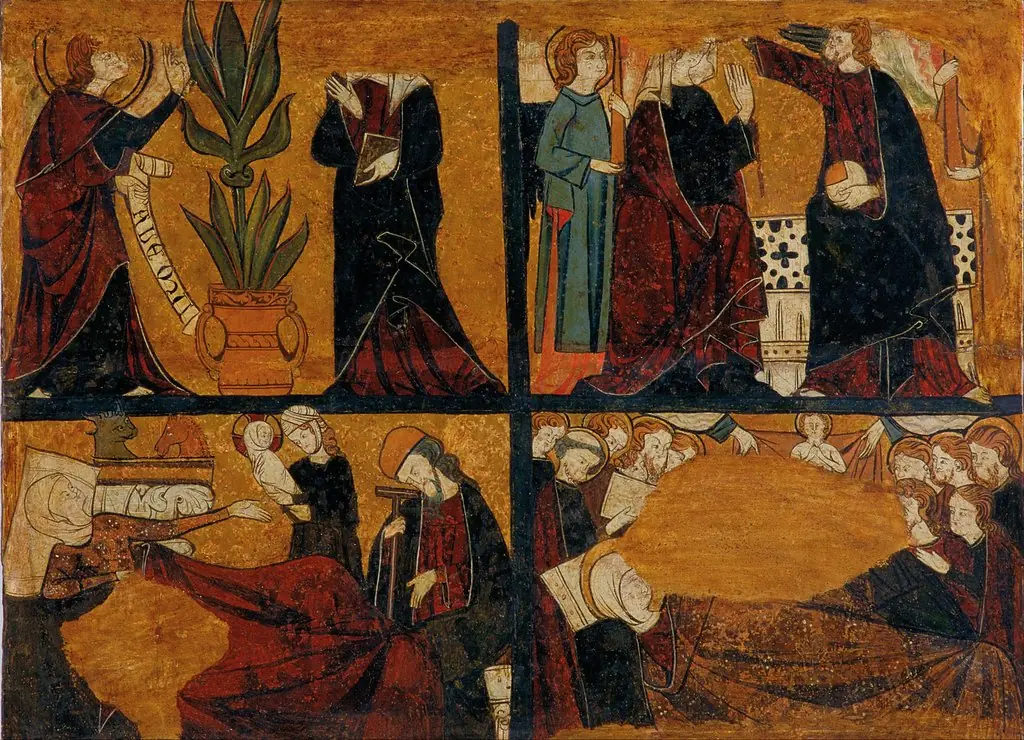 Annunciation, Nativity, Dormition and Coronation of the Virgin
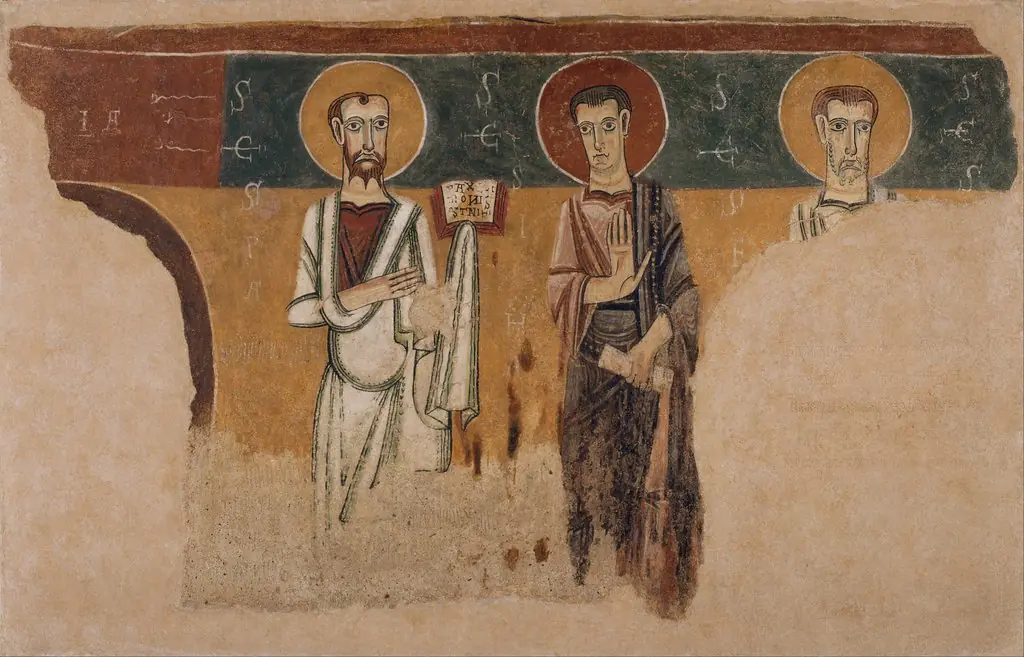 The Apostles of Argolell
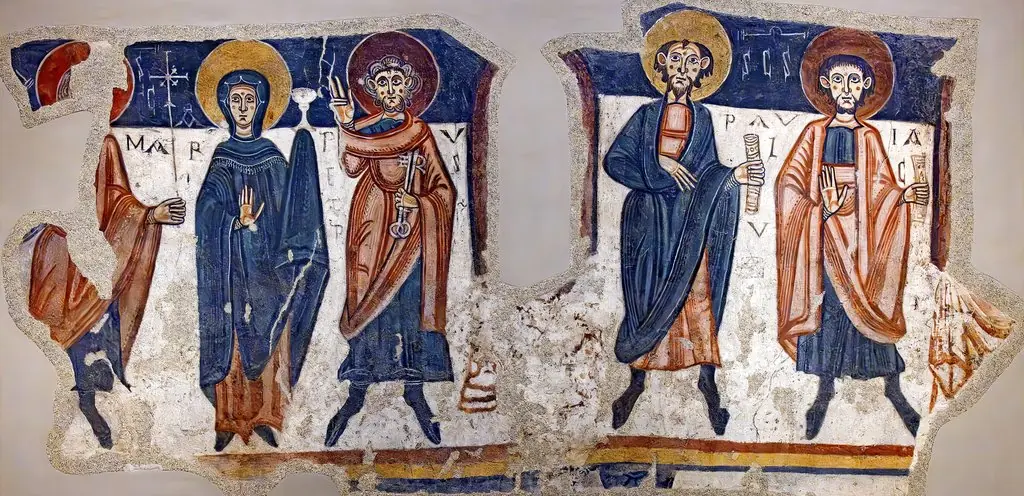 Apostles from Sant Romà de les Bons
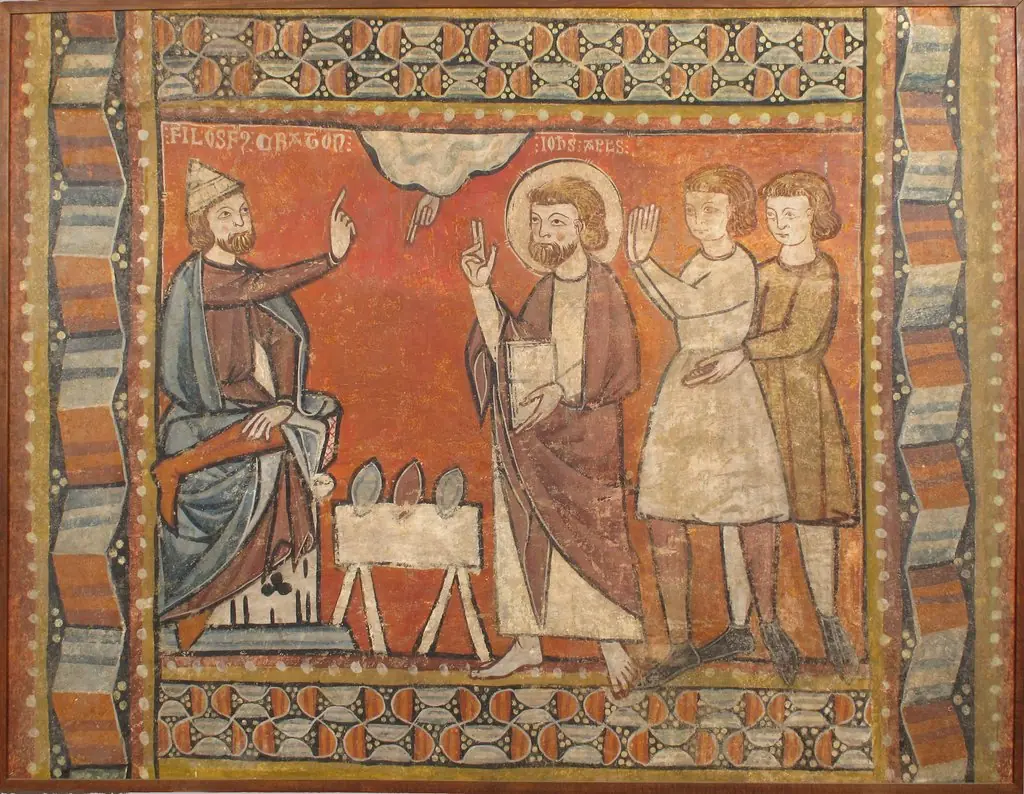 Fresco with Miracle of the Jewels
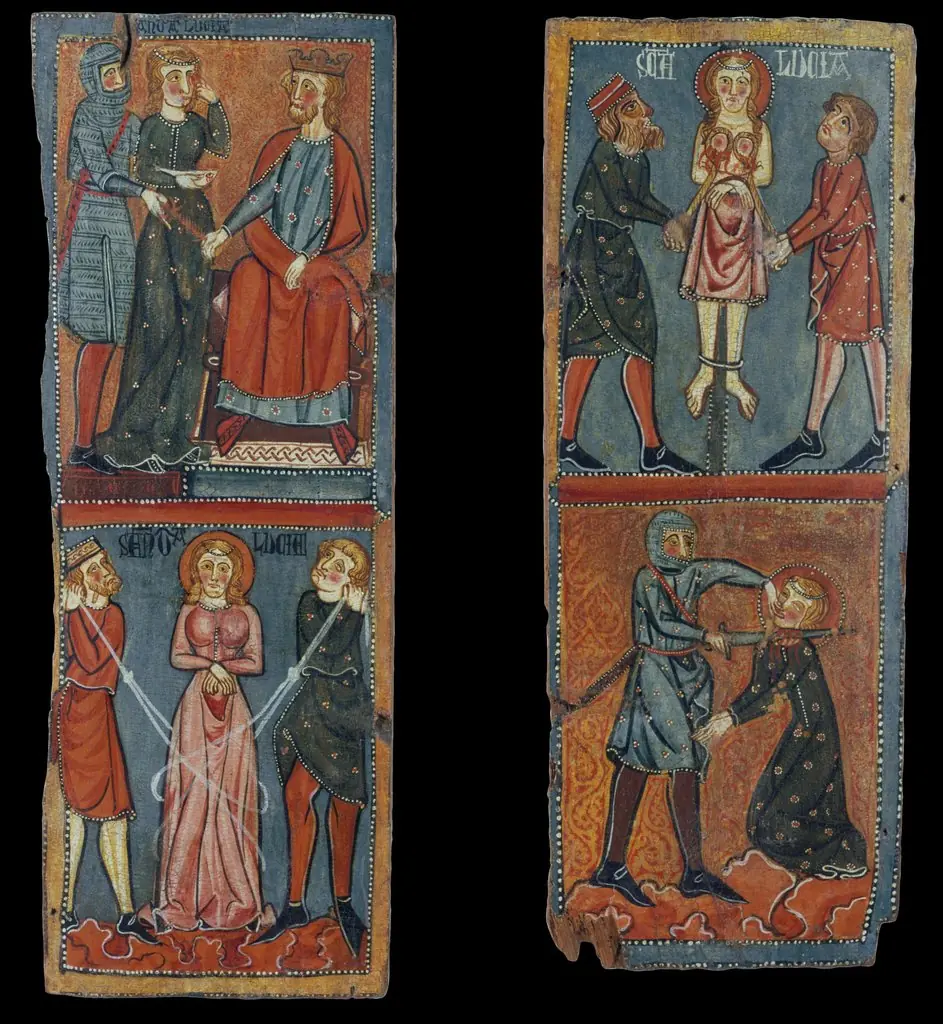 Panels with scenes of the Martyrdom of Saint Lucy
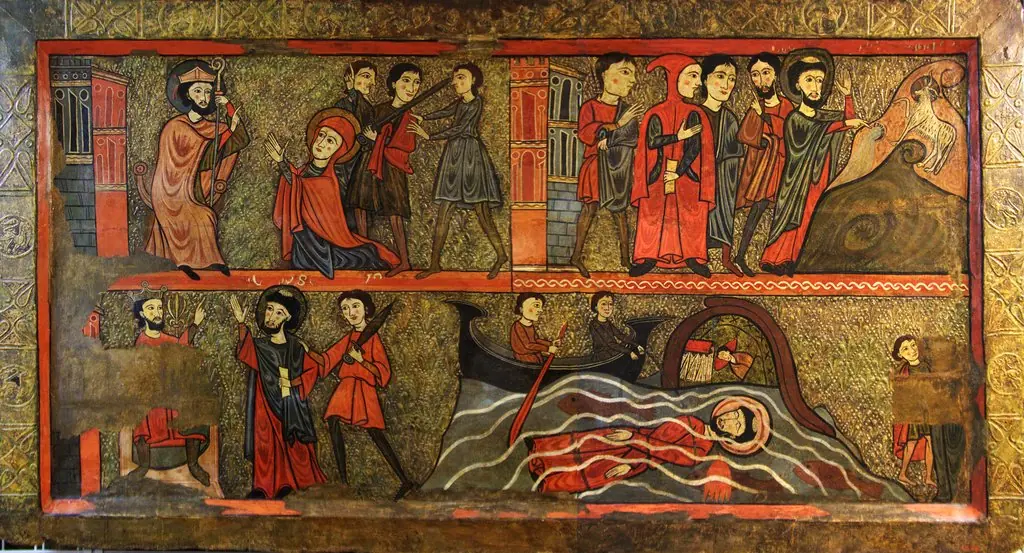 Altar frontal from Sant Climent de Taüll