Artwork
Portrait of a Woman in 18th-century Clothing
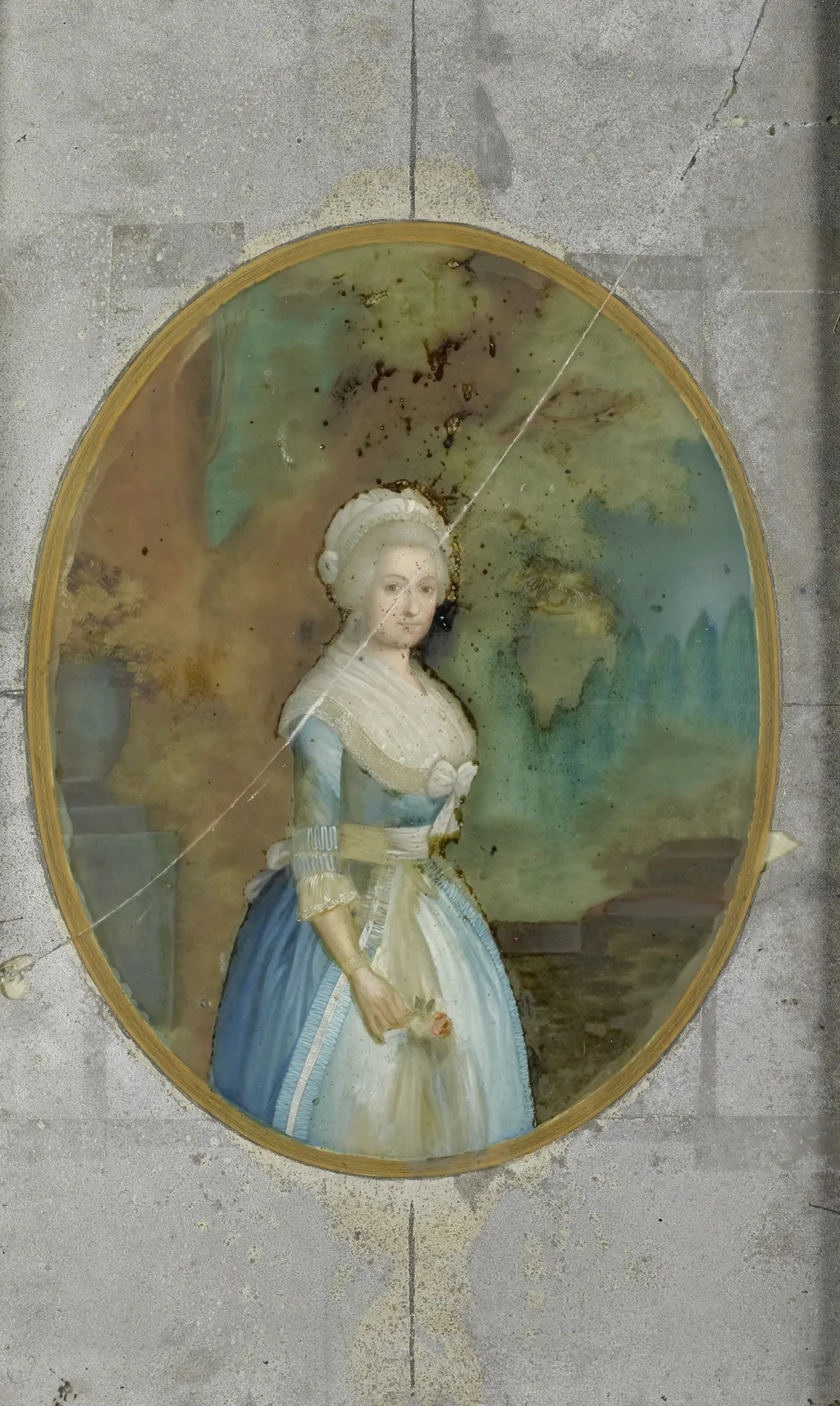
Portrait of a Woman in 18th-century Clothing is an unspecified painting. It dates from 1750 and is held in the collection of the Rijksmuseum.
About this work
Technique & Style
Classified as a painting, it takes the form of a portrait of a woman depicted in eighteenth-century dress, consistent with its 1750 date of execution.
The work is executed in verre églomisé, a technique in which the design is painted on the reverse of a sheet of glass and backed with metal leaf, producing a luminous, mirror-like surface. Classified as a painting, it takes the form of a portrait of a woman depicted in eighteenth-century dress, consistent with its 1750 date of execution. The support is glass, with the image rendered through reverse glass painting combined with metallic leafing.
The portrait measures 77 cm in height by 47 cm in width, giving it a vertical, elongated format suited to a half- or three-quarter-length figure. Stylistically, the medium lends the sitter a glowing, jewel-like quality, with the metallic backing reflecting light through the painted layers to enhance the richness of the costume and facial modelling. The work is held in the Rijksmuseum collection.
Context
The portrait depicts an anonymous woman in 18th-century attire, rendered in verre églomisé technique. It belongs to the Northern Low Countries tradition of portrait painting and is part of the Rijksmuseum's collection, reflecting the region's artistic output around 1750.
Scholarship identifies this work as representative of 18th-century portraiture, emphasizing its material specificity and stylistic context within Northern European art. The attribution to an anonymous hand aligns with historical practices of unsigned portraiture in the period, situating it within broader discussions of artistic anonymity and regional genre conventions.
Overview
The work presents a seated woman dressed in a soft‑blue gown edged with white lace, a modest white cap covering her hair, and a modest bouquet clasped in her hand. Behind her, a muted landscape recedes, hinting at a distant building and scattered trees. The piece bears signs of age, with edge discoloration and a simple gilt frame that underscores its historic character.
Subject & Meaning
The figure’s attire and accessories locate her within an eighteenth‑century domestic setting, suggesting a portrait of a lady of modest means rather than aristocratic stature. The gentle pose and the small floral arrangement convey a sense of quiet refinement and personal virtue, typical of portraiture that aimed to reflect the sitter’s moral qualities as much as her appearance.
History & Provenance
The painting’s current condition, faded edges and minor surface wear, indicates considerable age and handling over time. Although specific ownership records are lacking, the use of verre églomisé and the fashion depicted align the work with late eighteenth‑century French decorative practices, suggesting it may have originated in a domestic or modestly affluent setting before entering a museum collection.
Artist & collection

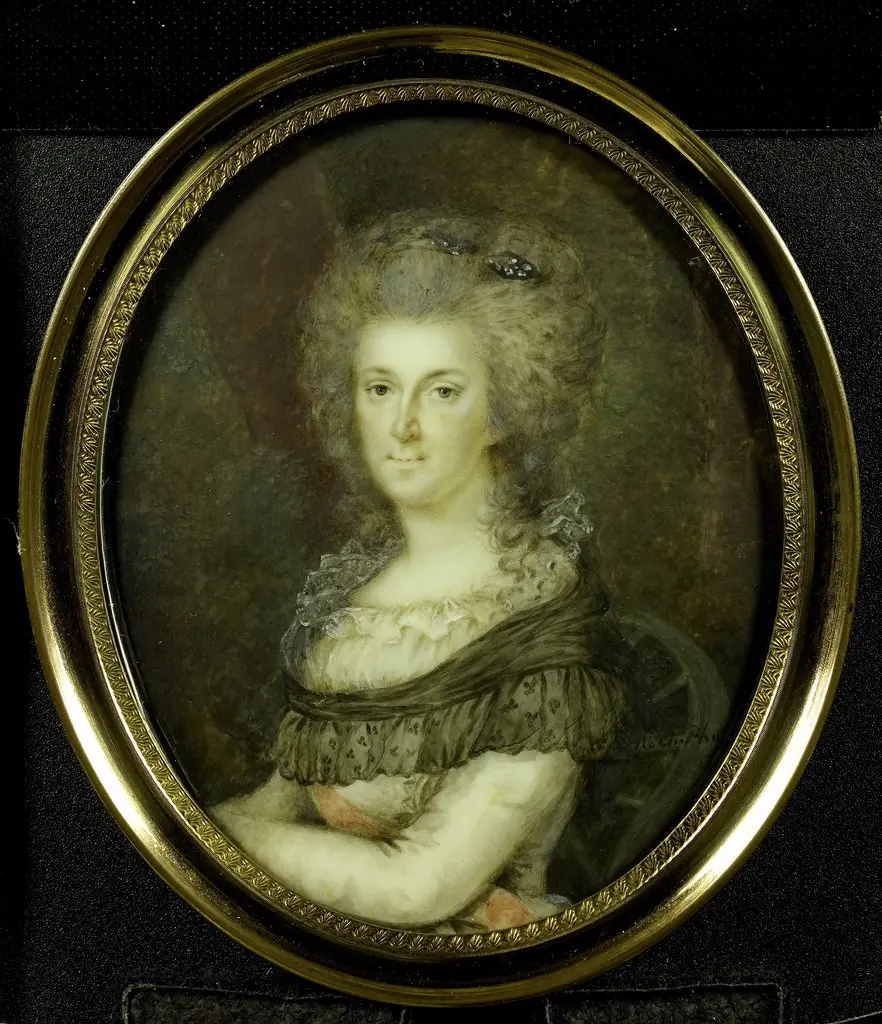
- Portrait of Wilhelmina van Pruisen (1751-1820)
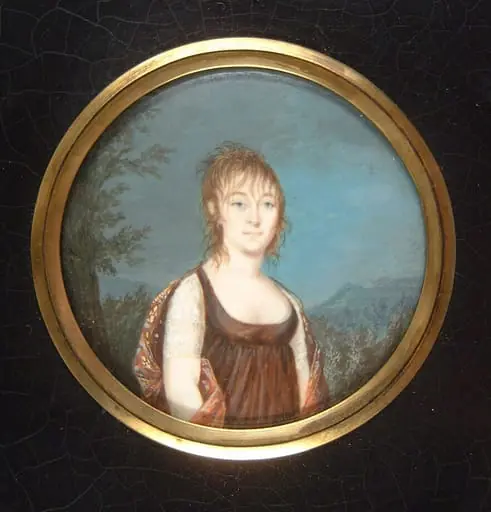 Portrait of a Lady
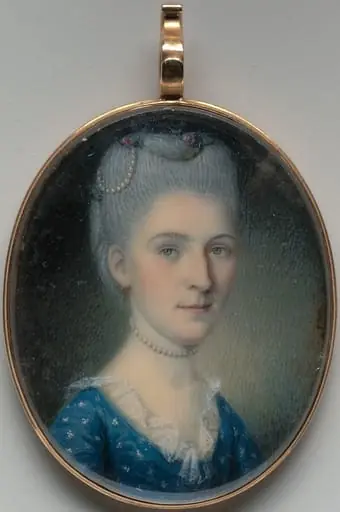 Mrs. Joseph Donaldson (Frances Johnston)
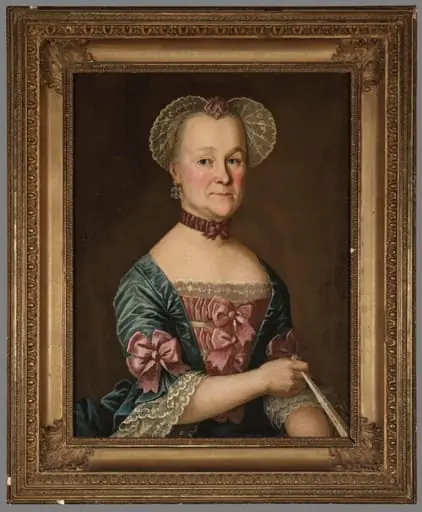 Ulrika Bock s. Kostfeldt (1721-1782)
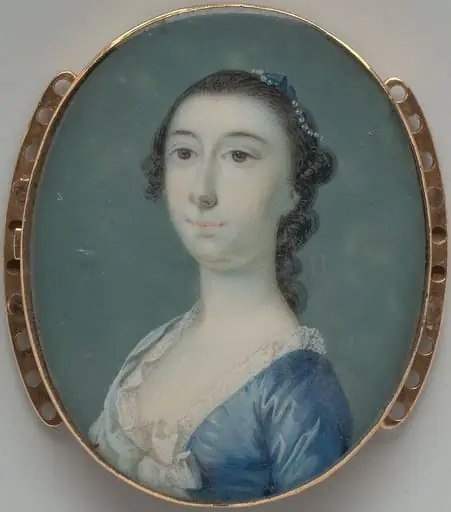 Mrs. Jacob Motte (Rebecca Brewton)
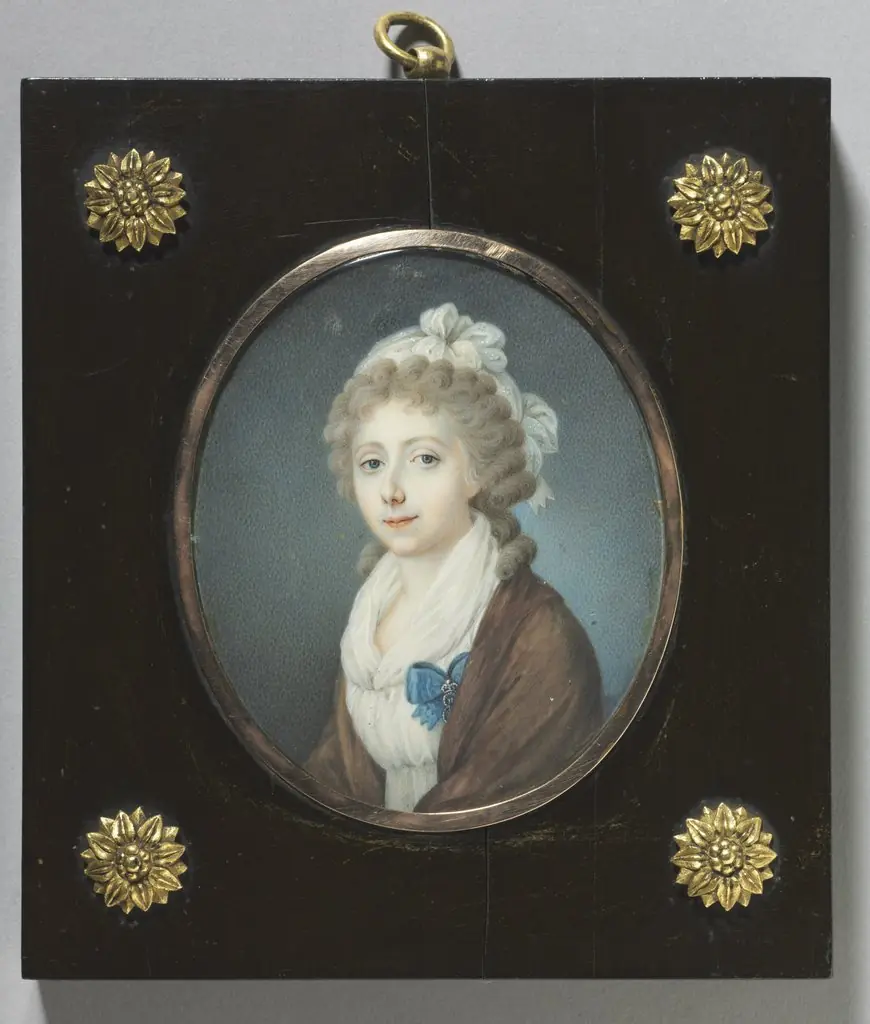 Portrait of a Noblewoman
 Portret van een vrouw
 Portrait of waarschijnlijk Wilhelmina van Pruisen (1751-1820)
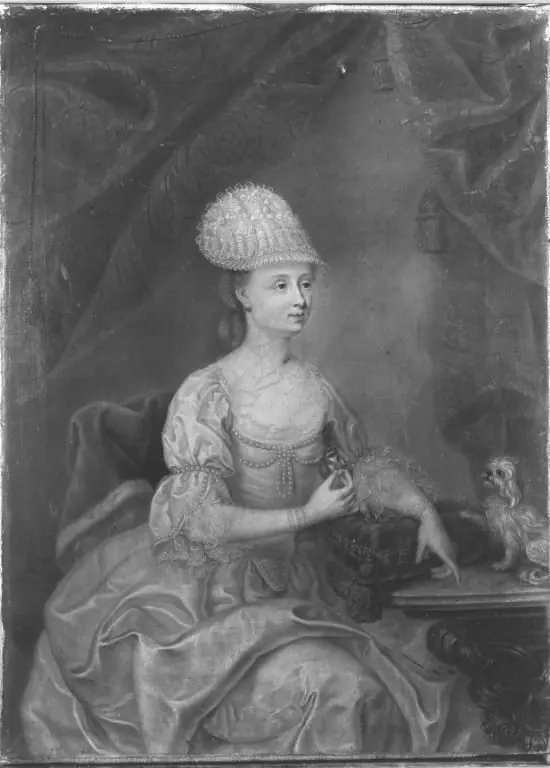 Maria Anna von Zweibrücken-Birkenfeld
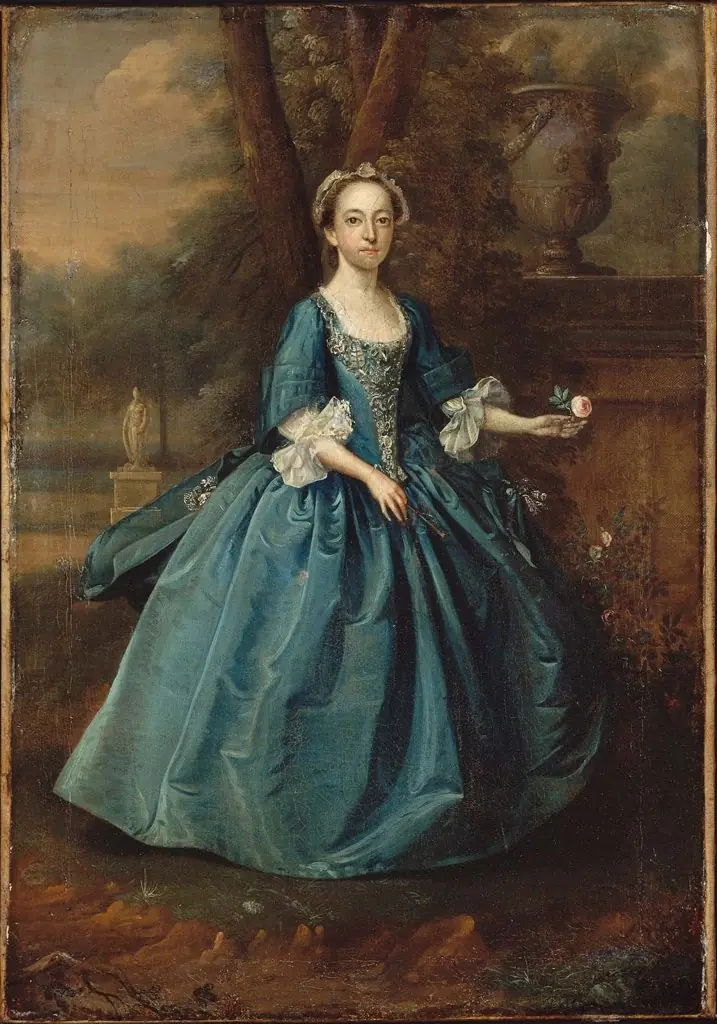 Portrait of a Woman Standing in a Garden
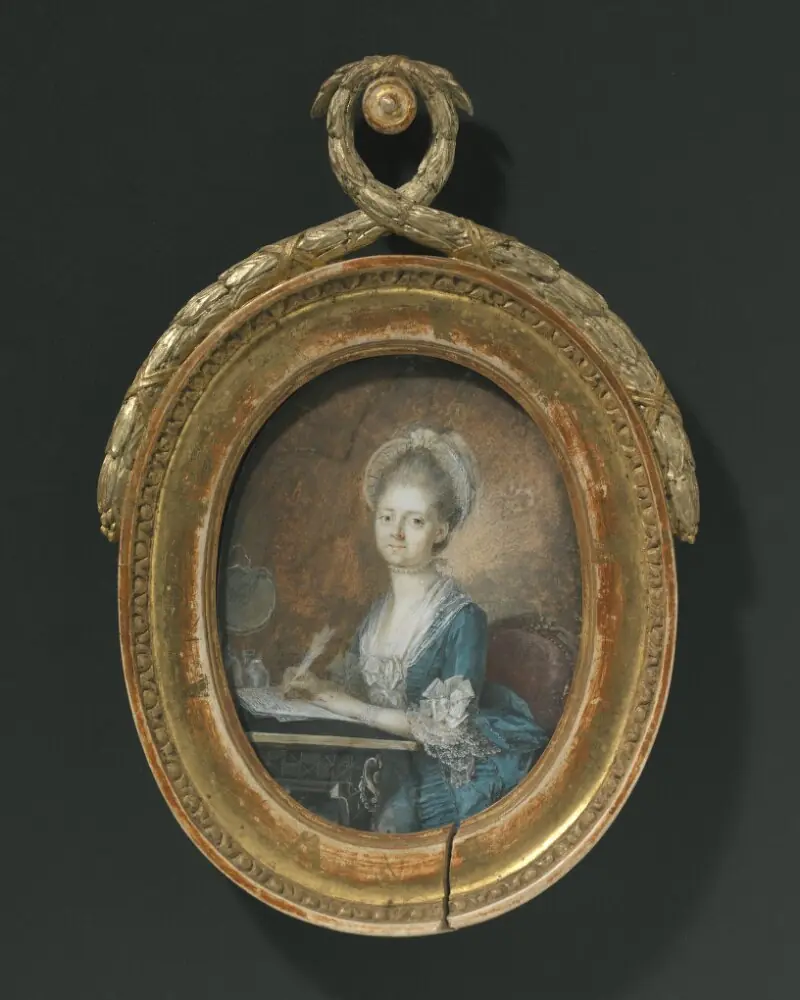 Fredrika Carleson (1743-1794), gift med 1. Carl Erik Wadenstierna, 2. Fredrik von Post
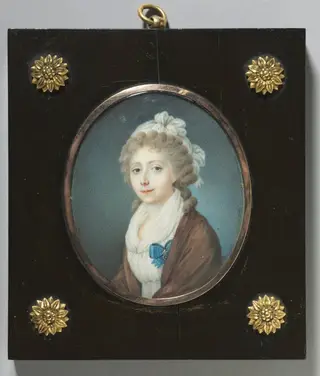 Portrait of a Noblewoman