Artwork
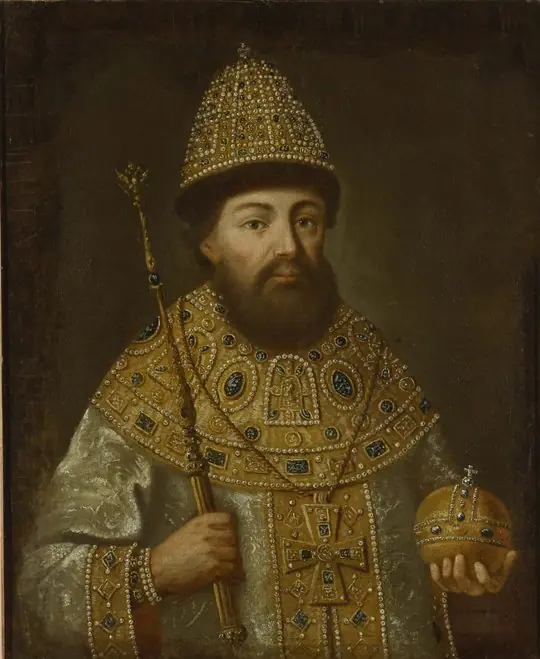
Portrait of Alexei Mikhailovich Romanov
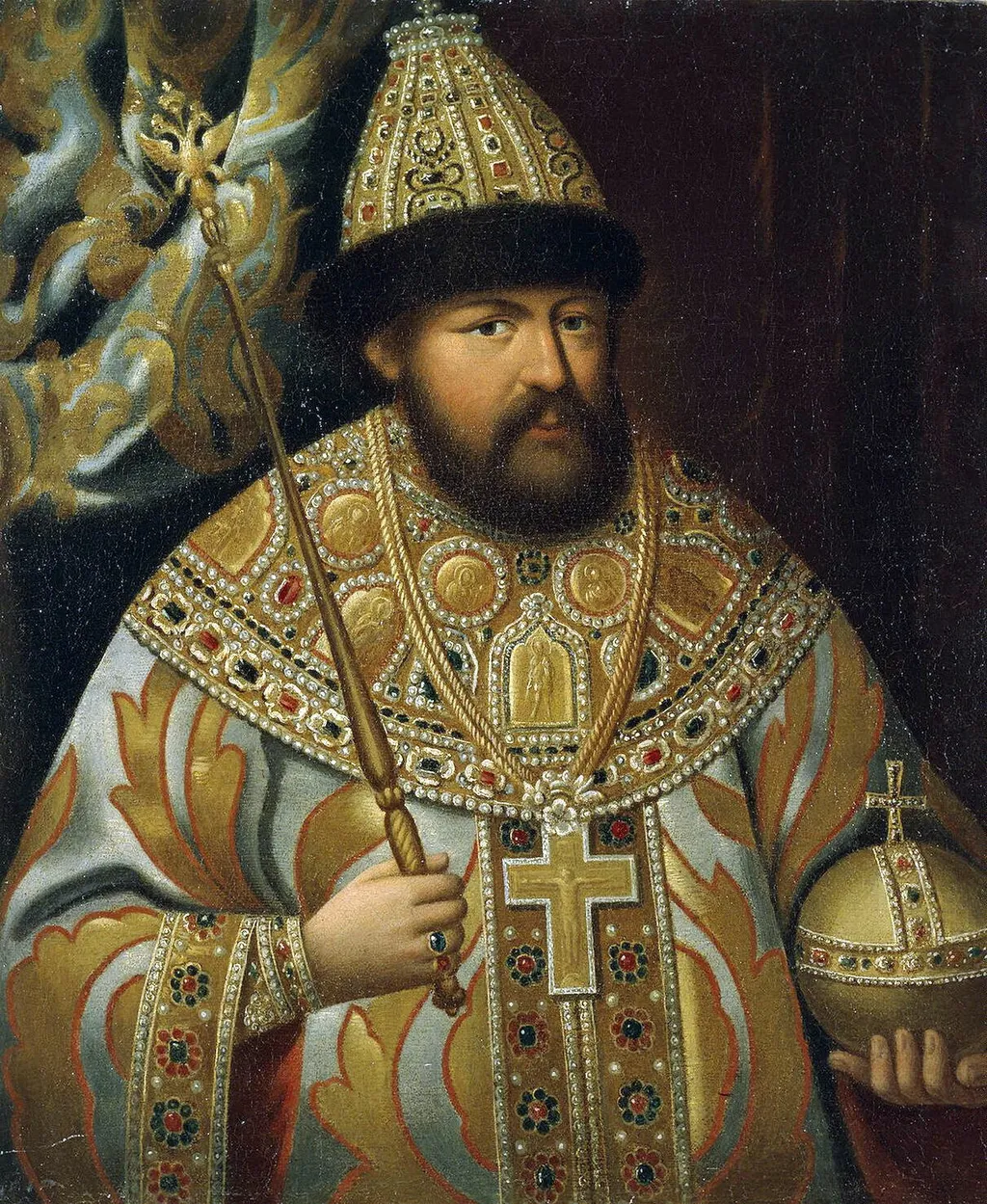
Portrait of Alexei Mikhailovich Romanov is an oil painting by the Neoclassicist artist Unknown. It dates from 1800 and is held in the collection of the Hermitage Museum.
About this work
Overview
Its presence in the Hermitage, Russia's premier museum of fine arts, underscores its importance as both an artistic object and a historical artifact.
The Portrait of Alexei Mikhailovich Romanov is an oil-on-canvas painting depicting the second Romanov tsar of Russia, held in the collection of the Hermitage Museum in Saint Petersburg. The work measures 81 by 68 centimeters and is attributed to an anonymous painter, with a traditional dating to around 1800, though scholarly opinion places its actual execution in the late seventeenth century, likely the 1680s. The portrait belongs to the genre of formal Russian royal portraiture and serves as a significant document of early Romanov visual culture, representing one of the earliest attempts to establish a standardized imperial image for the young dynasty. Its presence in the Hermitage, Russia's premier museum of fine arts, underscores its importance as both an artistic object and a historical artifact.
Subject & Meaning
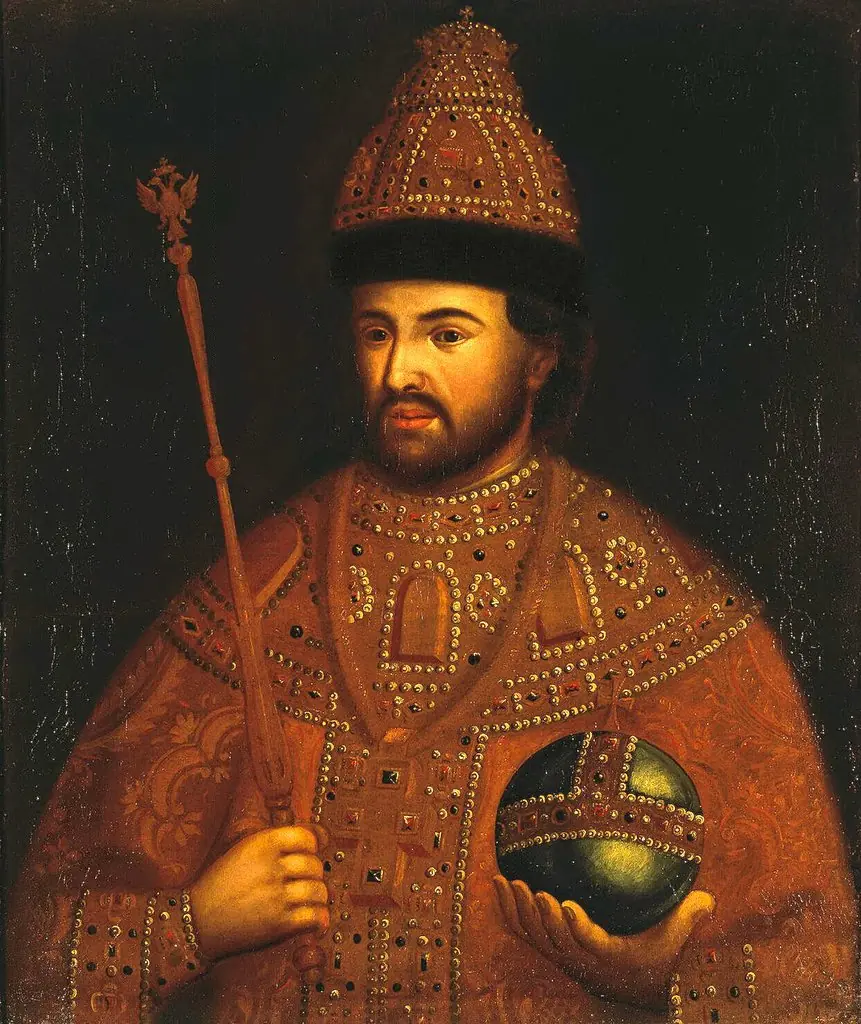
The painting depicts Alexei Mikhailovich Romanov (1629-1676), the second tsar of the Romanov dynasty, who ruled from 1645 until his death. The portrait presents him as a mature, bearded man, his face turned slightly right while his gaze looks left, creating a sense of contemplative authority. His iconography follows the established tradition of Muscovite sovereign portraiture: he wears the tall, jewel-encrusted Monomakh's Cap with its dark fur band, and holds the two principal insignia of Russian autocracy in his hands, a tall scepter topped with a double-headed eagle in his right hand and a golden orb surmounted by a cross in his left. The elaborate costume features a wide, ornate collar and a long golden vestment adorned with circular medallions, a large cross at the chest, and floral patterns in red, blue, and white, with a light blue undergarment showing golden leaf motifs edged in red. These elements collectively assert his dual authority as secular ruler and defender of Orthodox Christianity. The solemn, somewhat melancholic expression, noted in descriptions of the work, may suggest the burdens of leadership or reflect the personal losses Alexei experienced, including the death of his first wife Maria Miloslavskaya in 1669. The direct frontal pose establishes immediate visual contact with the viewer, demanding respect and obedience while the dark, undefined background isolates the figure to emphasize his elevated status.
Technique & Style
The portrait is executed in oil on canvas, measuring 81 by 68 centimeters according to museum records. The brushwork is smooth and highly finished, with meticulous attention to the texture of fur, fabric, and gleaming ornament. Light falls strongly from the left, illuminating the face, hands, and the reflective surfaces of metalwork and jewels, creating a sense of depth and material opulence. The palette is dominated by gold, deep blue, black, and touches of red, with warm tones contributing to an overall impression of grandeur. The paint surface shows fine age cracking throughout, consistent with its seventeenth-century origin. The technique is closely related to that found in companion portraits of Michael I Feodorovich and Tsaritsa Marfa Matveyevna, suggesting a shared workshop or artistic tradition. The handling of the ceremonial regalia and the careful rendering of textiles and precious stones indicate a painter trained in the conventions of European court portraiture, yet working within specifically Russian iconographic requirements for the representation of sacred kingship.
History & Provenance
The portrait's creation history is complex and has been subject to scholarly revision. While internal museum records date the work to 1800, art historians have argued for a much earlier origin in the late seventeenth century, specifically the 1680s. This revised dating is based on technical characteristics and stylistic analysis that place it at the end of the reign of Tsar Fyodor III Alexeyevich or during the regency of Tsarevna Sophia (1682-1689). The painting is believed to derive from a portrait in the 1672 Titulyarnik, a manuscript containing titles, coats of arms, and portraits of Russian and foreign rulers. An alternative proposed source is an engraving by Cornelis Meyssens (1646, ?), made for the book Historia di Leopoldo Cesare published in Vienna in 1670, though an inscription on the portrait in the past tense suggests it was executed after the tsar's death in 1676. The portrait was received by the Hermitage Museum in 1931 from the Society of Lovers of the Ancient Literature and Arts in Leningrad, entering the collection as a significant example of early Russian painting.
Context
The portrait emerges from a critical period in the consolidation of Romanov rule. When Alexei Mikhailovich acceded to the throne in 1645 at age sixteen, the dynasty remained fragile, only the second generation after the near-collapse of the state during the Time of Troubles. His reign saw major achievements including the Sobornoye Ulozheniye of 1649, Russia's most systematic legal codification since 1550, and the incorporation of Ukraine under Russian rule through the Pereyaslav Agreement of 1654. The portrait belongs to a broader project of dynastic image-making that sought to establish visual legitimacy for the Romanovs, whose claim to the throne ran through Mikhail Romanov's great-aunt Anastasia, first wife of Ivan IV. The earliest formal portrait of the dynasty's founder, Mikhail, has been described as modest and deliberate, lacking the imperial theatricality of later Romanov portraiture. By contrast, Alexei's portrait represents a step toward greater formalization of the imperial image. The work has received limited individual attention in Western scholarship, with critical discussion tending to treat it as part of the broader corpus of seventeenth-century Russian royal portraiture rather than as an independent masterpiece. Its scholarly significance lies primarily in its documentary value for understanding the evolution of Russian visual culture and the transmission of European portrait conventions into a specifically Muscovite context.
Legacy
The Portrait of Alexei Mikhailovich Romanov occupies an important if modest place in the history of Russian art as a transitional work between the tentative image-making of the early Romanov period and the more confident imperial iconography that would develop under Peter the Great and his successors. As the portrait of the father of Peter the Great, it represents a direct visual link to the ruler who transformed Russia into a major European power. The painting's companion piece, a portrait of Michael I Feodorovich, and its relationship to the Titulyarnik manuscript illustrate the systematic nature of early Romanov dynastic portraiture. The work's continued residence in the Hermitage Museum ensures its accessibility to scholars and同意 and the public, though it has not achieved the iconic status of later Russian royal portraits. Its cultural afterlife is inseparable from the broader historiography of Alexei Mikhailovich's reign, which has emphasized his legislative achievements and territorial expansion while acknowledging the human costs of policies such as the formalization of serfdom in 1649. The portrait thus serves as a visual anchor for understanding a pivotal moment when the Romanov dynasty moved from precarious survival toward established autocracy, setting the patterns of governance and representation that would define the Russian Empire for centuries.
Artist & collection