Artwork
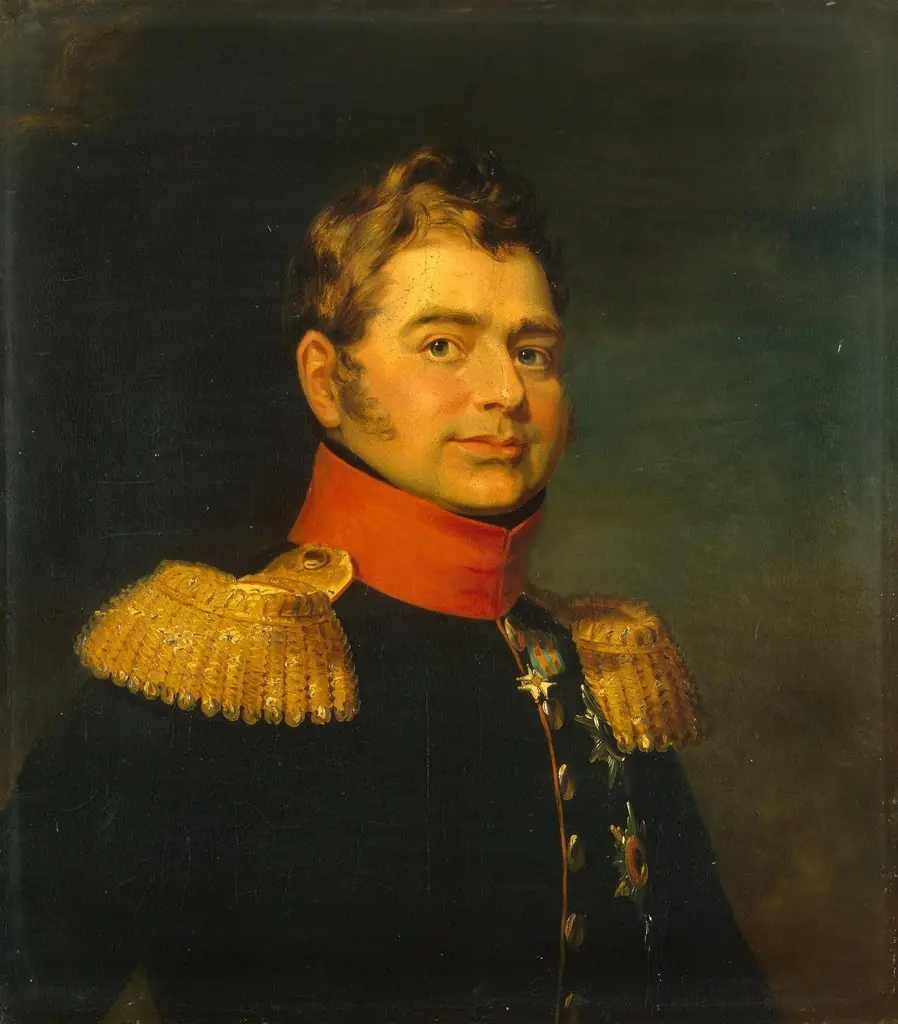
Portrait of Andrey P. Turchaninov (1779 -1830) (2nd)
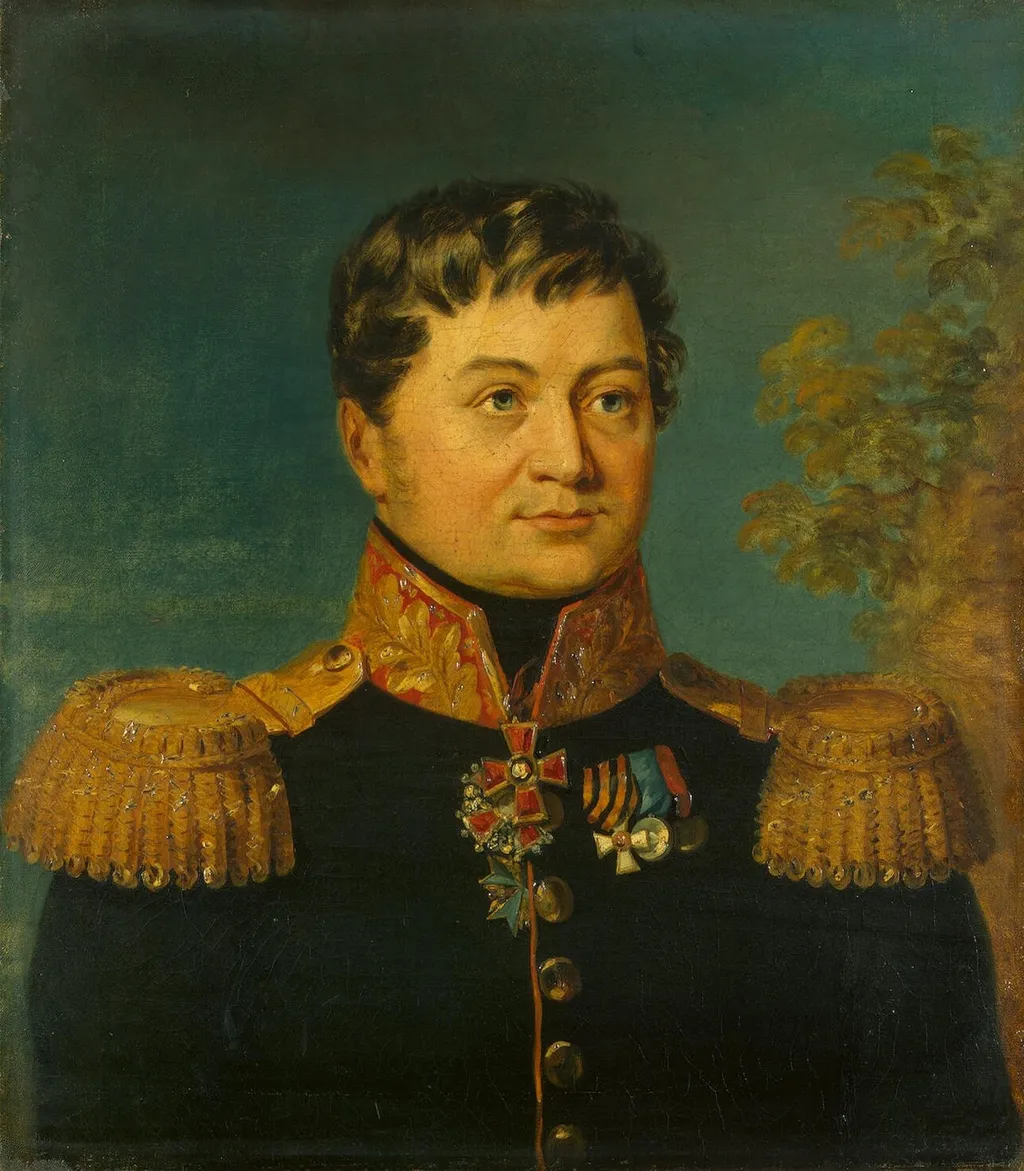
Portrait of Andrey P. Turchaninov (1779 -1830) (2nd) is an oil painting by the Realist artist Unknown. It dates from 1824 and is held in the collection of the Hermitage Museum. This oil painting is a portrait of Andrey P.
About this work
Overview
Turchaninov (1779 to 1830) (2nd) is an oil on canvas painting executed in 1824 by George Dawe and his workshop.
Portrait of Andrey P. Turchaninov (1779 to 1830) (2nd) is an oil on canvas painting executed in 1824 by George Dawe and his workshop. Measuring 70 by 62.5 centimeters, the artwork is a bust-length military portrait of General Andrey Petrovich Turchaninov. It forms part of the Military Gallery of the Winter Palace in the State Hermitage Museum, St. Petersburg, where it is held under inventory number GE-8045. The painting is historically significant as one of the commissioned portraits of Russian generals who distinguished themselves during the Patriotic War of 1812 and the subsequent foreign campaigns.
Subject & Meaning
The subject is Andrey Petrovich Turchaninov, a general major who served as a colonel commanding the 3rd Jaeger Regiment during the Patriotic War of 1812. He fought under General F. F. Steinheil against Marshal MacDonald's corps near Riga and was concussed in battle at Chashniki. Promoted to general major for his distinction during the siege of Danzig in 1813 and 1814, he is depicted wearing the infantry general uniform introduced on May 7, 1817. His decorations signify his service: the crosses of the Order of St. Anna 2nd class with diamonds and the Order of St. Vladimir 3rd class at his neck, the Prussian Order Pour le Merite along his coat edge, and the Order of St. George 4th class, the silver medal In Memory of the Patriotic War of 1812 on the St. Andrew ribbon, and the bronze noble medal In Memory of the Patriotic War of 1812 on the St. Vladimir ribbon on his chest. The portrait conveys dignified restraint, communicating rank and burdened experience rather than boastfulness.
Technique & Style
Dawe and his workshop rendered the general against a muted, deep teal blue green background, with loosely brushed brownish green foliage at the right edge suggesting an outdoor setting. The composition centers on the heavily detailed dark military coat with a standing collar trimmed in red and gold embroidery, large gold epaulettes with heavy fringe, and small precisely rendered gold buttons. Brushwork is smooth and refined on the face, modeling subtle light across the fair complexion and faint lines, while handling becomes textured and meticulous for the gold elements and medals. The palette contrasts deep blacks and golds against the cool background. Fine craquelure is visible across the paint surface. An inscription on the reverse reads Tourtchaninoff 2e, and the frame bears the label A. P. Turchaninov 2nd, General Major.
History & Provenance
The Committee of the Main Staff included Turchaninov in the list of generals deserving portraits on August 7, 1820. Emperor Alexander I ordered the portrait on November 11, 1821, while Turchaninov commanded a brigade in the 20th Infantry Division in Taurida. On November 12, 1821, the Inspectorate Department informed him to meet with Dawe if he came to St. Petersburg, though it remains unknown whether the general sat for the artist in person or sent a prototype portrait. Despite Dawe's fee being paid on January 15, 1828, the finished painting entered the Hermitage much earlier, on September 7, 1825. Hermitage curator E. P. Renne notes potential dating confusion in documents between this portrait and that of General Major Pavel Petrovich Turchaninov, as records often omitted initials.
Context
The painting belongs to the broader project of the Military Gallery of the Winter Palace, initiated by Alexander I to commemorate the commanders of the wars against Napoleon. George Dawe, an English portrait painter who worked in St. Petersburg from 1818 to 1828, was the principal artist for this massive commission, relying heavily on his workshop to complete the hundreds of required canvases. The portrait of Turchaninov reflects the standard iconography of the gallery, prioritizing accurate depiction of uniforms and honors to document the military elite of the Russian Empire. The attribution to Dawe and workshop acknowledges the collaborative nature of the studio production necessary for the gallery's execution.
Artist & collection









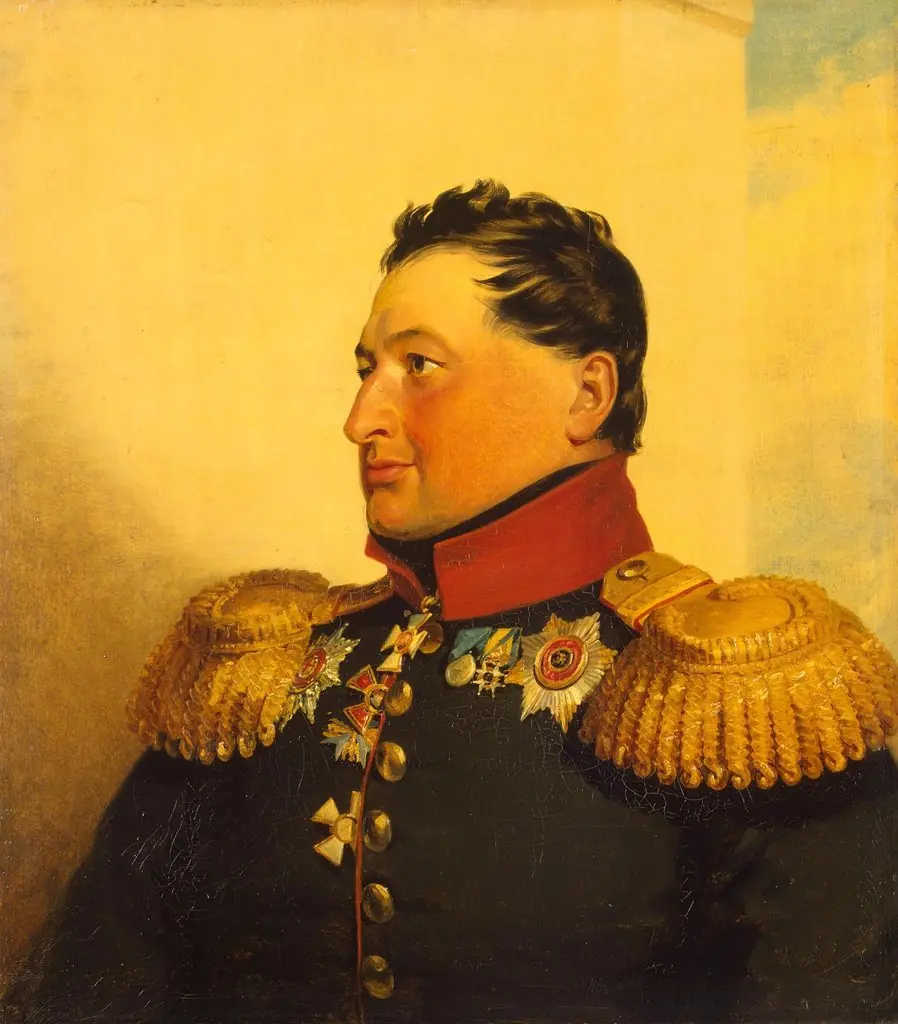
- Portrait of Pavel P. Turchaninov (1776-1839) (1st)
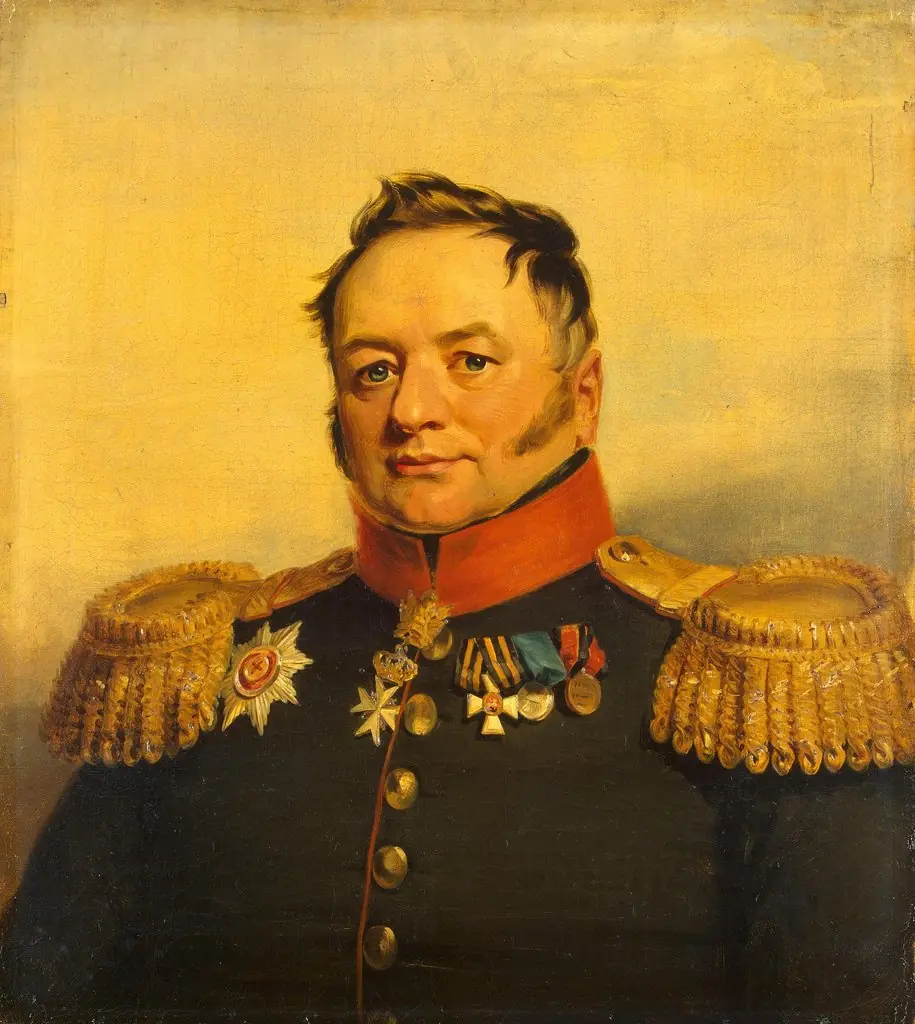 Portrait of Pavel A. Tuchkov (1775/76-1858) (3rd)
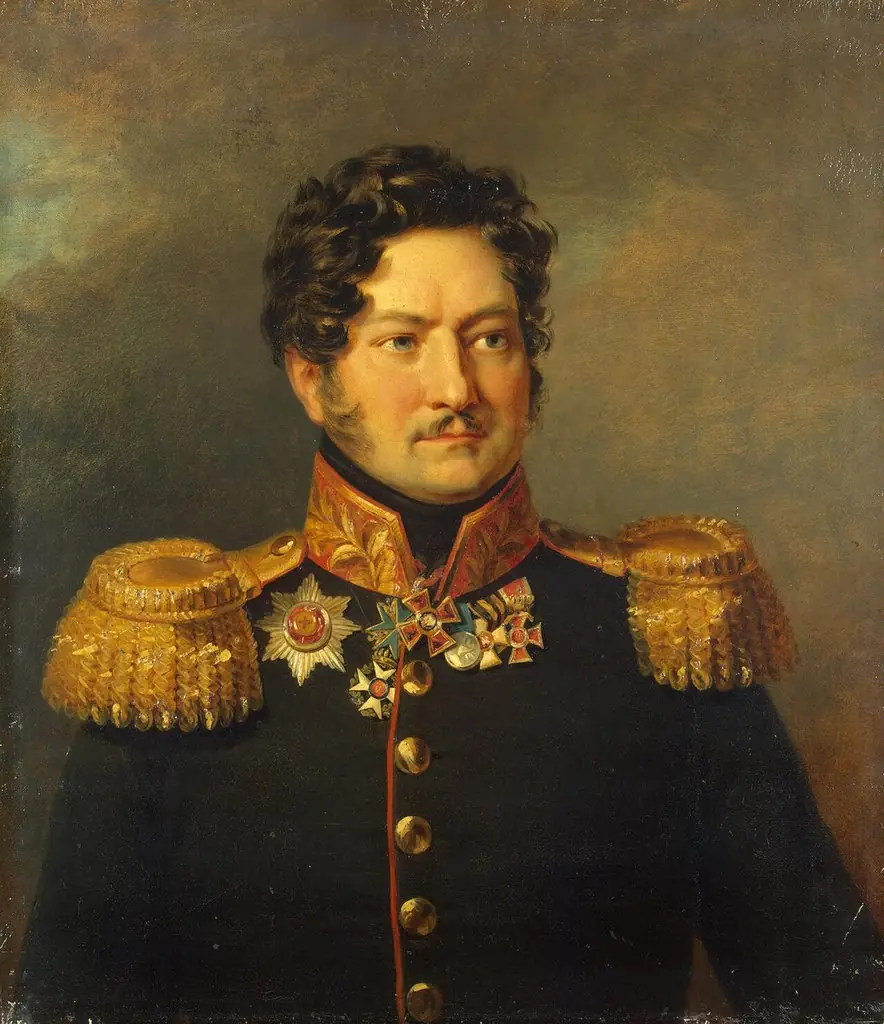 Portrait of Dmitry L. Ignatyev (1771-1833)
 Portrait of Andrey A. Zass (1776-1830) (2nd)
 Portrait of Sergey N. Ushakov (1776-1814) (2nd)
 Portrait of Nikolai D. Olsufyev (1779-1817) (3rd)
 Portrait of Dmitry P. Lyapunov (1775-1821)
 Portrait of Sergey Ya. Repninsky (1775-1818) (2nd)
 Portrait of Pyotr V. Denisyev (1766-1849)