Artwork
Portrait of Pavel P. Turchaninov (1776-1839) (1st)
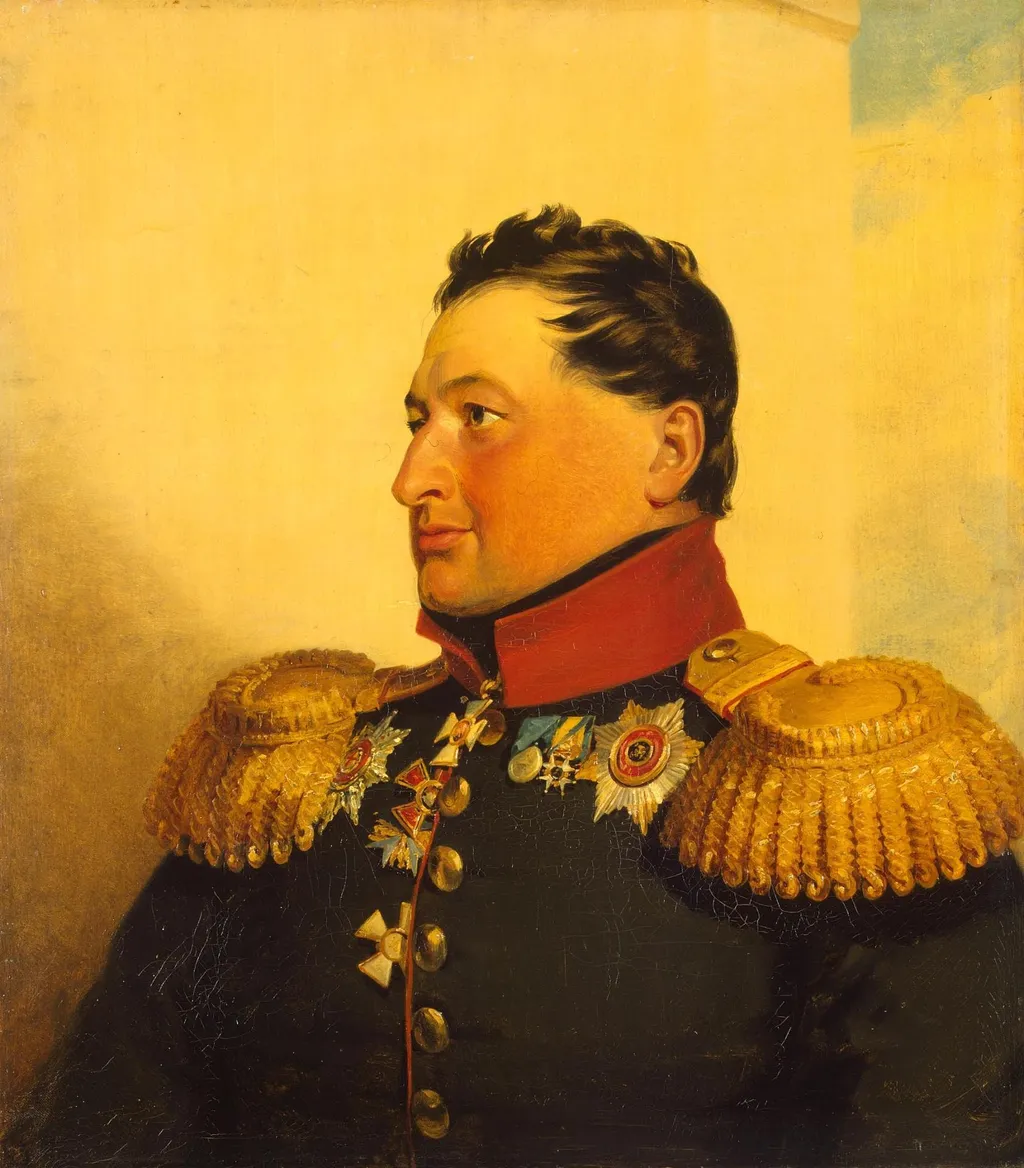
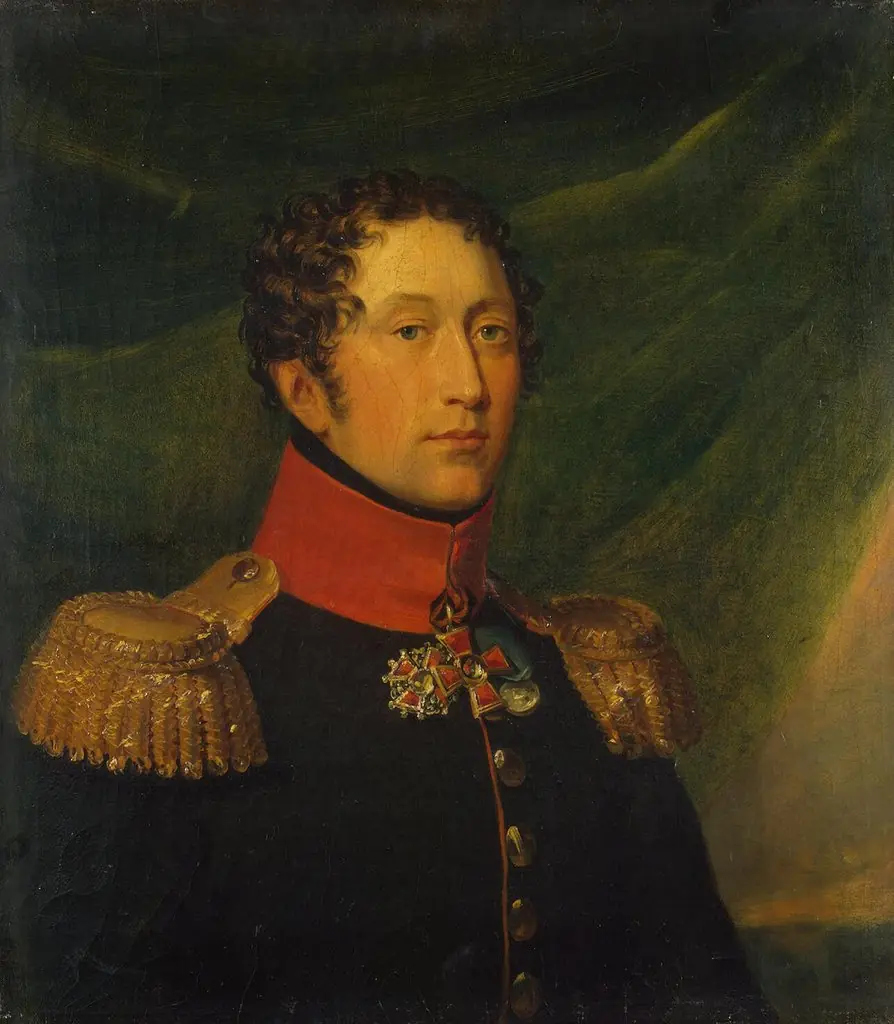
Portrait of Pavel P. Turchaninov (1776-1839) (1st) is an oil painting by the Russian Icon artist Unknown. It dates from 1824 and is held in the collection of the Hermitage Museum. The work is an oil painting that depicts a man in a military uniform, shown from the chest upward and turned toward the left.
About this work
Overview
The work is currently held by the State Hermitage Museum in St.
The Portrait of Pavel P. Turchaninov (1776-1839) (1st) is an oil-on-canvas painting created in 1824 by the Workshop of George Dawe, an English portraitist who worked extensively in Russia. Measuring 70 by 62.5 centimeters, this bust-length military portrait depicts a Russian general in profile and belongs to the celebrated Military Gallery of the Winter Palace series. The work is currently held by the State Hermitage Museum in St. Petersburg. As part of a programmatic commission to commemorate the heroes of the Napoleonic Wars, the portrait occupies a significant place in early nineteenth-century Russian official art and in Dawe's prolific output for the Russian imperial court.
Subject & Meaning
The painting depicts Pavel Petrovich Turchaninov (1776-1839), a Russian military commander who served during the Napoleonic era. The portrait presents him in strict left-facing profile, a format that evokes classical precedents and confers an air of timeless authority. His dark military coat with a high red collar, large ornate gold epaulettes with fringed edges, and array of medals and decorations, including star-shaped badges, crosses, and ribbons in red, blue, and white, signal his rank and distinguished service. The absence of any environmental setting, replaced by a warm, muted background that transitions from yellow tones on the left to blue-gray hues on the right, focuses attention entirely on the subject's military persona. This iconography of honor and status aligns with the broader purpose of the Military Gallery: to construct a visual pantheon of Russian martial achievement following the Patriotic War of 1812 and the campaigns of 1813-1814.
Technique & Style
Executed in oil on canvas, the painting exhibits the polished finish and formal conventions of official portraiture. Light falls from the left, illuminating the subject's face and the metallic elements of his uniform while allowing shadows to define the right side of his face and body. The brushwork varies across the surface: smooth and refined on the face, with more textured, impasto application on the epaulettes and medals to suggest their material weight and gleam. The palette is dominated by golds, deep reds, blacks, and warm yellows. Fine craquelure is visible across the dark surface of the coat, consistent with the painting's age and materials. The profile format, while restrictive, permits a clear silhouette against the neutral background and facilitates recognition, a practical consideration given the gallery's function as a commemorative space. The handling reflects the workshop production methods necessitated by Dawe's enormous commission, which required the completion of hundreds of portraits in a relatively brief period.
History & Provenance
The portrait was created no later than 1828 as part of the Military Gallery of the Winter Palace, a grand decorative scheme initiated by Emperor Alexander I to honor the commanders of the Napoleonic Wars. George Dawe, who had arrived in Russia in 1819, received this extensive commission and produced the bulk of the gallery's portraits, often with workshop assistance, before his departure in 1828 and subsequent death in 1829. The painting entered the collection of the State Hermitage Museum in St. Petersburg, where it remains today. The work has been dated to 1824 by corpus records, though some sources indicate a broader range of 1820-1828. Its place within the Winter Palace's Military Gallery has ensured continuous institutional preservation and public display.
Legacy
As a constituent element of the Military Gallery of the Winter Palace, the Portrait of Pavel P. Turchaninov participates in one of the most significant ensembles of early nineteenth-century European portraiture. The gallery itself has remained a fixture of the State Hermitage Museum's public spaces, preserving the memory of the 1812 generation for successive audiences. While individual portraits from the series have rarely received sustained independent critical attention, their cumulative effect and the institutional framework that sustains them have ensured their persistent visibility in Russian cultural life. The work's reproduction and circulation through museum databases, print services, and educational materials has extended its reach beyond the physical gallery. The attribution to the Workshop of George Dawe, rather than to Dawe's own hand alone, reflects evolving scholarly attention to questions of authorship and production in nineteenth-century studio practice, an area of increasing interest in art historical research.
Artist & collection









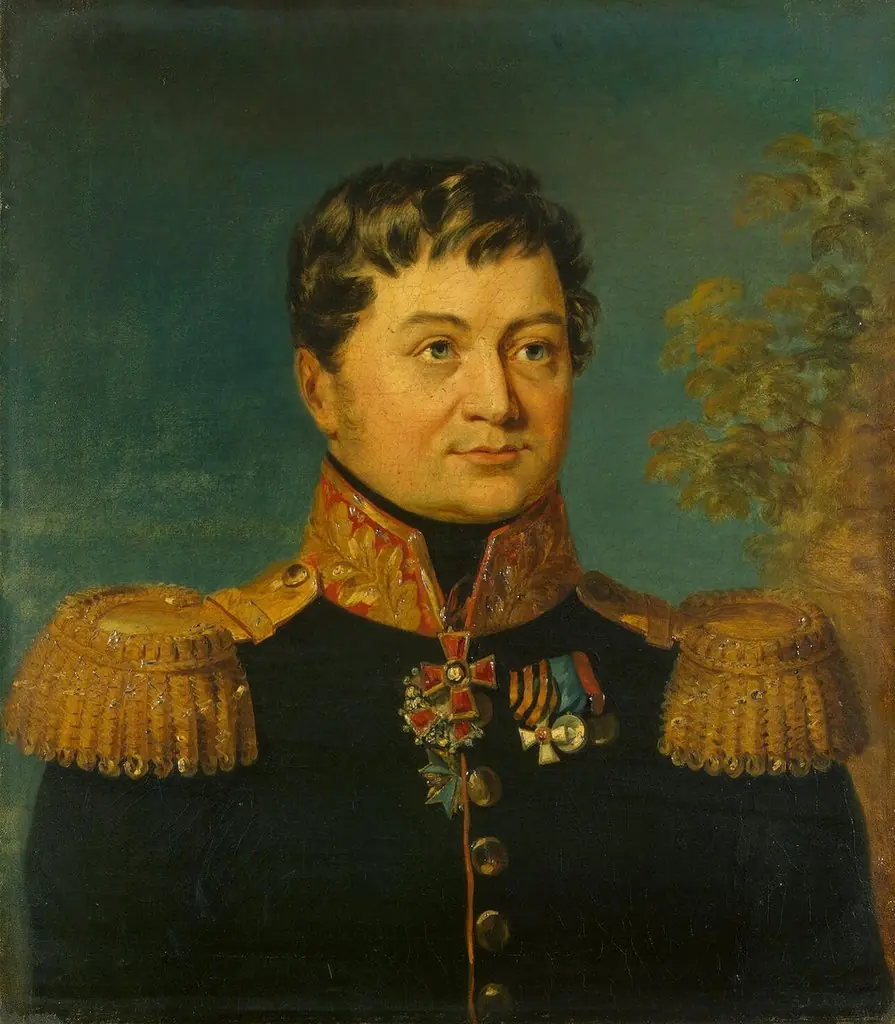
- Portrait of Andrey P. Turchaninov (1779 -1830) (2nd)
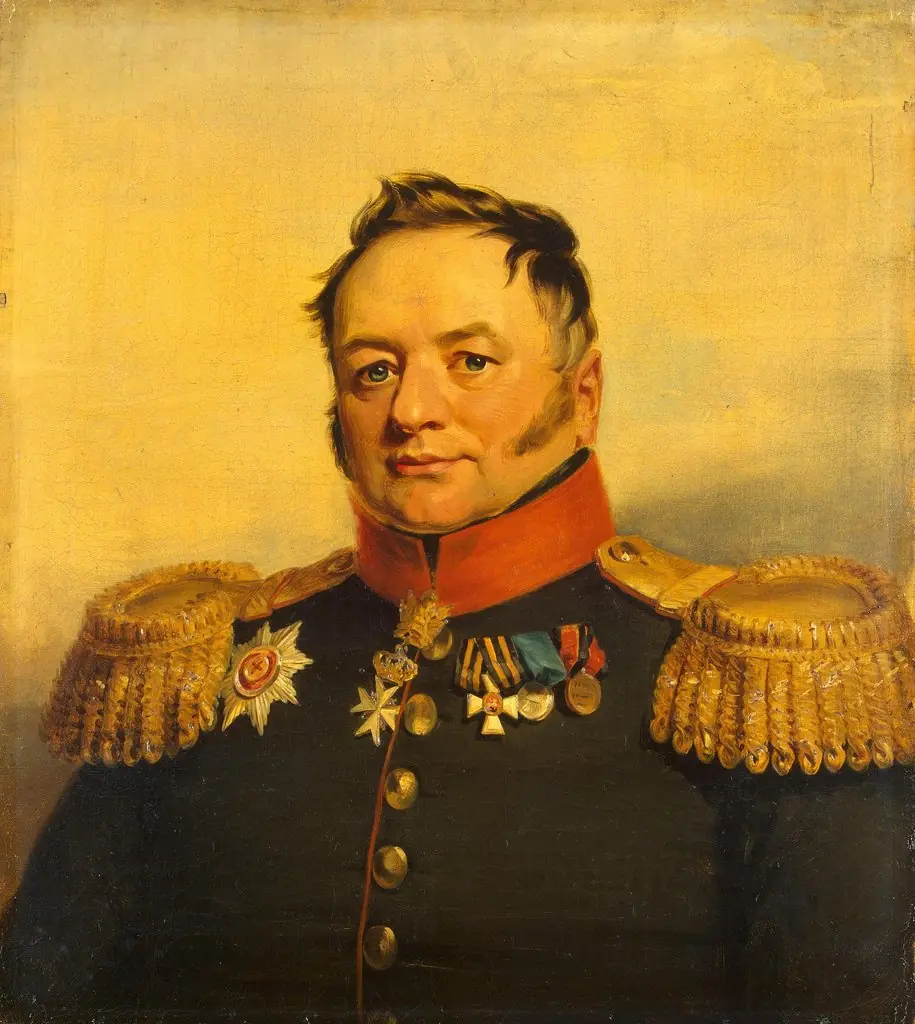 Portrait of Pavel A. Tuchkov (1775/76-1858) (3rd)
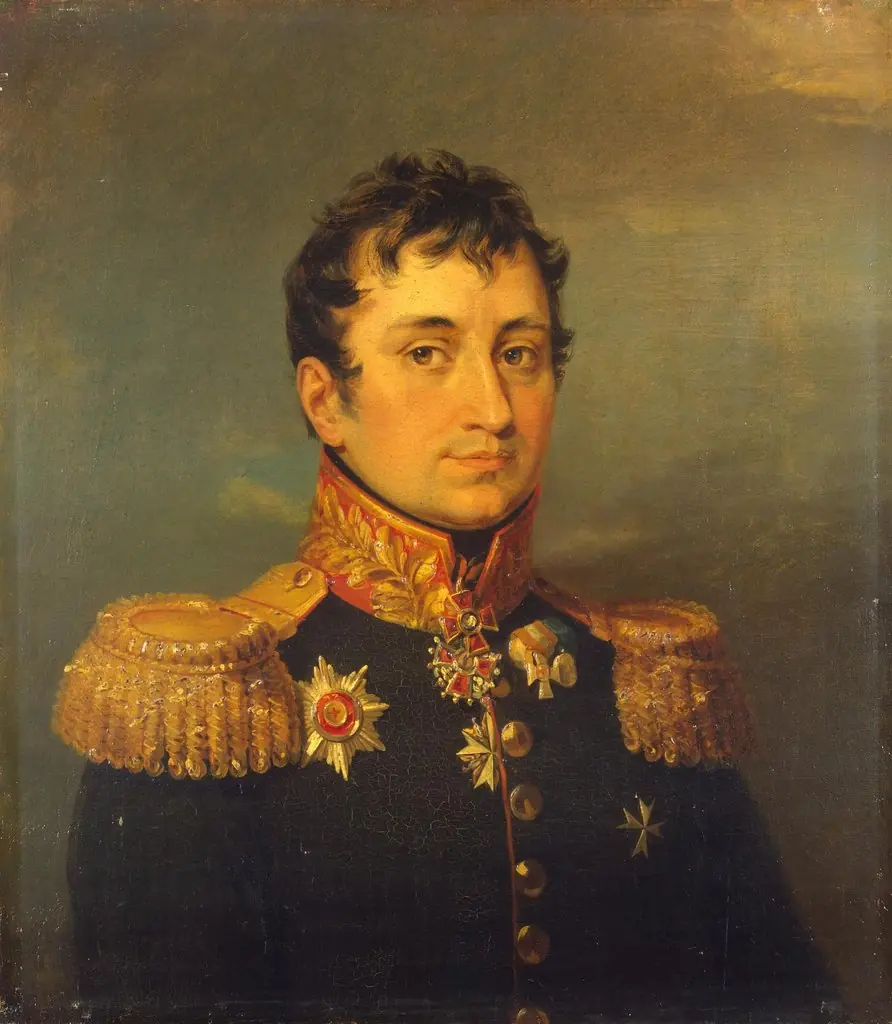 Portrait of Pavel A. Filisov (1769-1821)
 Portrait of Mikhail M. Volkov (1776-1820)
 Portrait of Paisy S. Kaisarov (1783-1844)
 Portrait of Alexander E. Pyker (1776-1834)
 Portrait of Andrey A. Zass (1776-1830) (2nd)
 Portrait of Alexey S. Kologrivov (1776-1818)