Artwork
Portrait of Emperor Charles V in armour
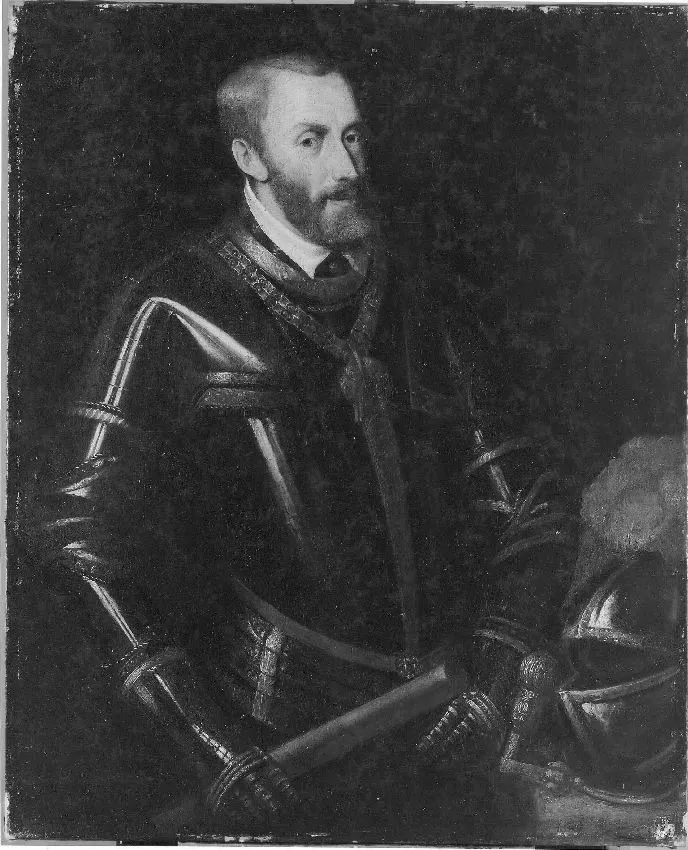
Portrait of Emperor Charles V in armour is an oil painting by Unknown. It dates from 2000 and is held in the collection of the Royal Museums of Fine Arts of Belgium. This oil painting portrays Emperor Charles V in full armor, standing with a helmet held in his left hand.
About this work
Overview
This oil painting portrays Emperor Charles V in full armor, standing with a helmet held in his left hand. The dark background isolates the figure, drawing focus to his precise attire and composed demeanor. The work emphasizes formality and restraint, reflecting the emperor’s public persona through controlled composition and muted tones.
Subject & Meaning
Charles V is depicted not as a conqueror in action, but as a sovereign in repose, his armor symbolizing authority rather than imminent conflict. The helmet, held but not worn, suggests readiness tempered by deliberation. His serious expression conveys gravitas, aligning with the imperial role as both military leader and political figurehead.
Technique & Style
The artist rendered the armor with meticulous attention to surface texture, capturing the play of light on metal straps, buckles, and engraved details. The dark, unmodulated background enhances the three-dimensionality of the figure. Brushwork is precise yet unobtrusive, prioritizing clarity and realism over dramatic flourish.
History & Provenance
Painted during Charles V’s reign, the portrait likely served as a diplomatic or ceremonial image, circulated among courts to affirm imperial presence. It was commissioned by or for the emperor himself, possibly during a period of political consolidation. Its early ownership traces to Habsburg collections, later entering state holdings.
Context
In mid-16th century Europe, portraits of rulers often blended realism with symbolic weight. Charles V’s image in armor reflected the era’s fusion of chivalric tradition and emerging state power. Unlike earlier medieval depictions, this portrait avoids overt religious or allegorical elements, focusing instead on the individual as embodiment of authority.
Legacy
The portrait established a visual template for later imperial imagery, influencing how rulers were represented in armor across Europe. Its restrained dignity became a model for state portraiture, distinguishing Habsburg representation from more flamboyant styles. It remains a key reference for understanding the visual language of early modern sovereignty.
Artist & collection

Museum
Royal Museums of Fine Arts of Belgium
Continue through works from the same source collection.








 Philippe de Montmorency
 Ein geharnischter Ritter
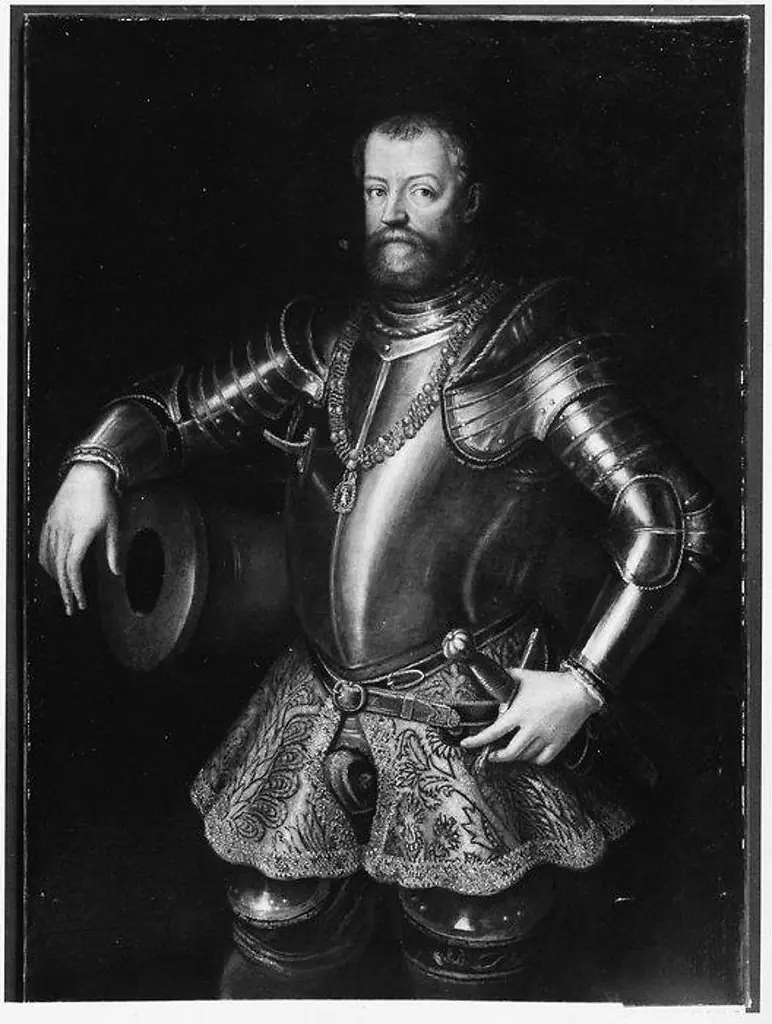 Alfonso I d'Este (1476–1534), Duke of Ferrara
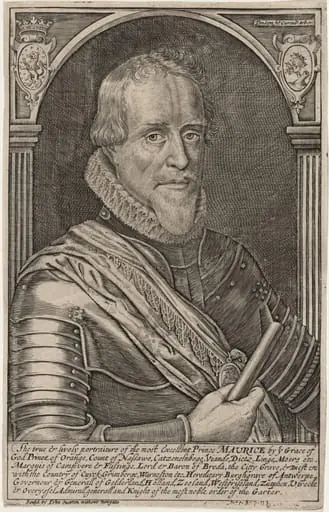 Maurice, Prince of Orange
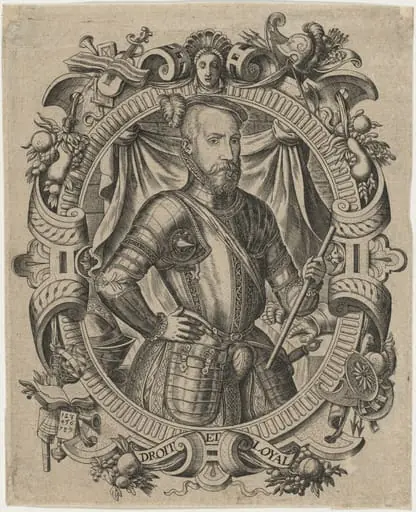 Robert Dudley, Earl of Leicester
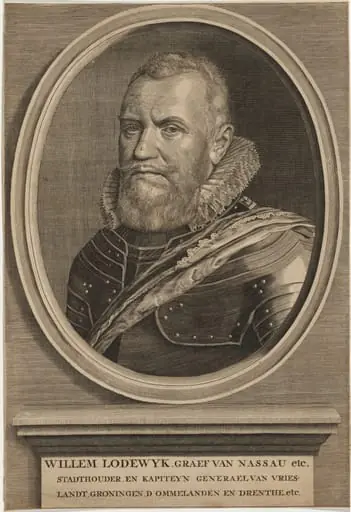 Willem Lodewyk, Count of Nassau
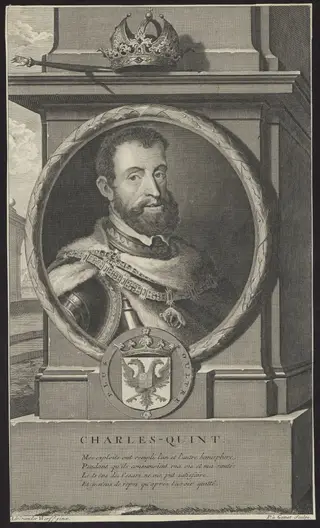 Portrait of the emperor Charles V
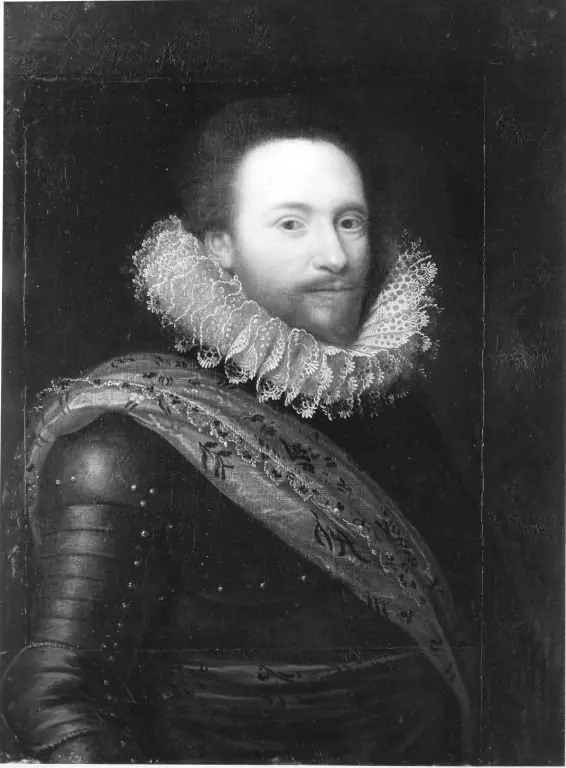 Männliches Bildnis (zugeschrieben)
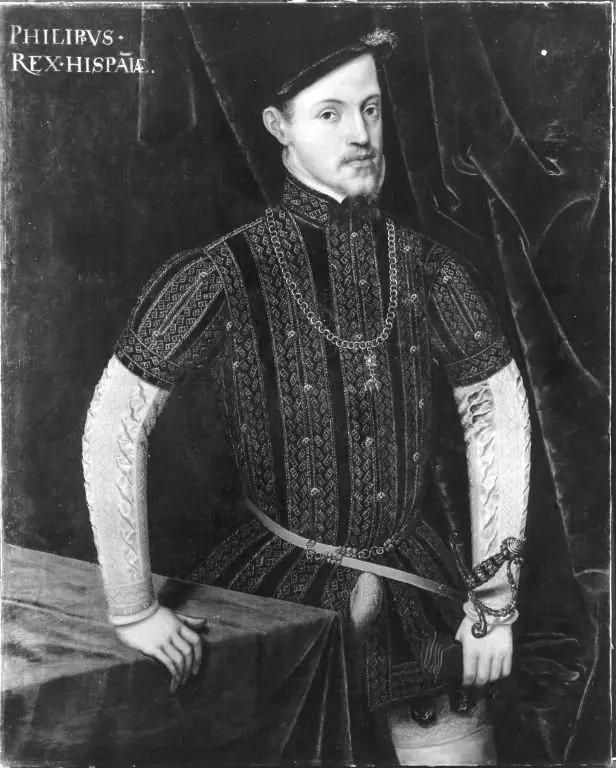 Philipp II of Spain
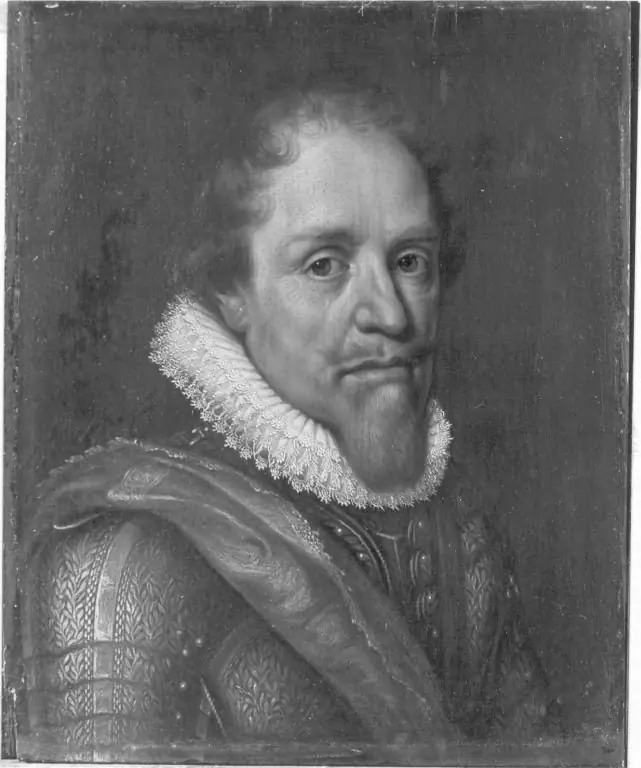 Bildnis des Maurits, Prins van Oranje (1567-1625)