Artwork
Portrait of Grand Duke Alexander Pavlovich as a Child
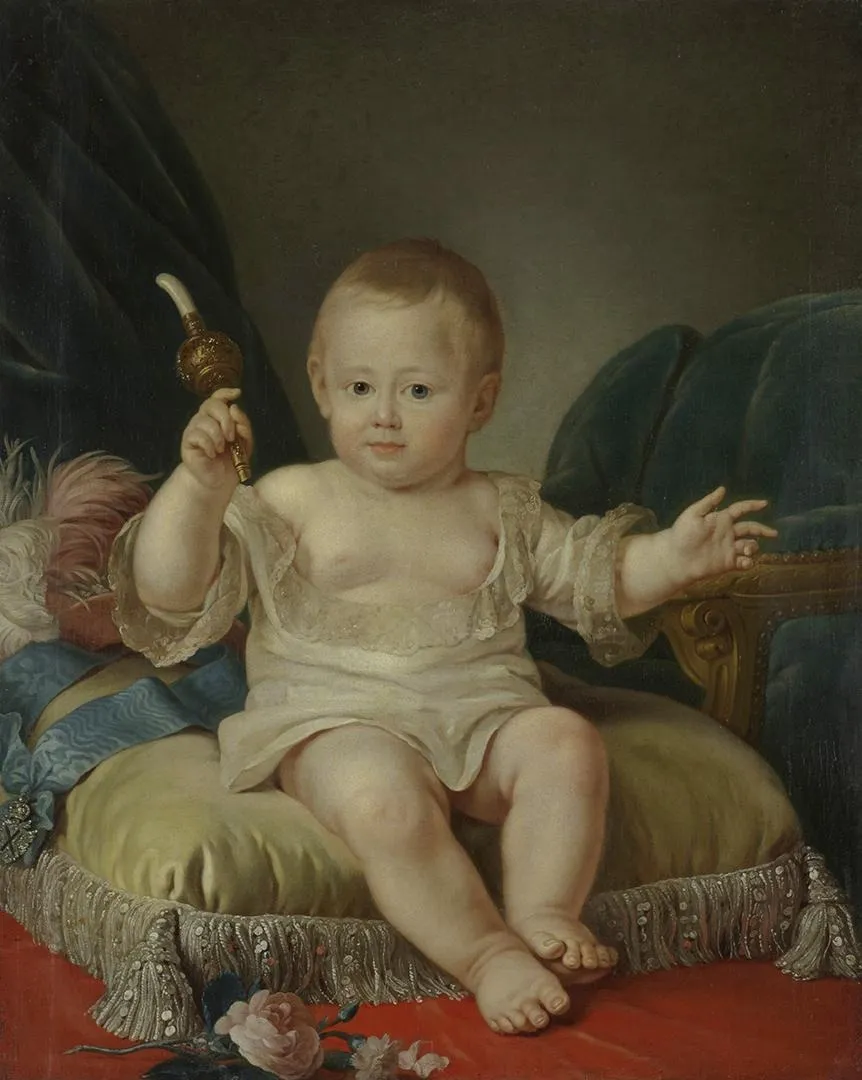
Portrait of Grand Duke Alexander Pavlovich as a Child is an oil painting by Unknown. It dates from 1800 and is held in the collection of the Hermitage Museum.
About this work
Overview
Portrait of Grand Duke Alexander Pavlovich as a Child is an oil on canvas painting depicting the future Emperor Alexander I of Russia as an infant.
Portrait of Grand Duke Alexander Pavlovich as a Child is an oil on canvas painting depicting the future Emperor Alexander I of Russia as an infant. Created circa 1800 by an unknown artist in Russia, the artwork measures 81 by 65.5 centimeters. The painting is part of the collection of the State Hermitage Museum, accessioned under the number ERZh-618. It is a significant historical document of Russian royal portraiture, capturing the young grand duke in a traditional infant garment while clutching a rattle, and is noted for its connection to earlier depictions of the future tsar.
Subject & Meaning
The painting portrays Alexander Pavlovich, the eldest son of Grand Duke Pavel Pavlovich and Maria Fyodorovna and grandson of Catherine the Great, who ruled as Emperor Alexander I from 1801 to 1825. The child is seated on a large yellow-green cushion adorned with silver fringe and tassels, wearing a loose white garment with lace trim, a standard dress for both boys and girls in the eighteenth century. Resting on the cushion near his bare feet are a pink rose and smaller white flowers. A blue ribbon and the cross of St Andrew, the highest Russian decoration bestowed on male royal family members at baptism, are visible behind his left shoulder. In his right hand, he grips an ornate gold rattle with a white handle, described as his first musical instrument, presaging his later interest in music and public violin playing.
Technique & Style
Executed in oil on canvas, the composition is vertically oriented and features a palette of soft creams, muted reds, deep teals, and warm golds. The infant sits centrally on a red surface, flanked by dark teal drapery cascading to the left and a teal upholstered chair with carved gilt wood detailing to the right. The background transitions from warm gray at the center to darker tones at the edges. Light falls evenly across the child's skin and clothing, generating gentle shadows beneath the chin and limbs. The paint surface is smooth, featuring blended brushwork in the flesh tones and fabrics that yields a polished finish. The work has been associated with Neoclassicism.
History & Provenance
The painting was created in Russia around 1800 and is based on an earlier Portrait of Alexander I of Russia as a Child. At one point, the work was owned by Grand Duke Michael Nikolaevich of Russia. It entered the State Hermitage Museum in 1946, transferred from the Museum of Ethnography of the Peoples of the USSR. The Hermitage accession number is ERZh-618. The painting was included in the exhibition Jewels! The Glitter of the Russian Court.
Context
The painting exists within a broader context of Russian imperial portraiture, a genre that frequently documented the Romanov dynasty from childhood. While the Hermitage Museum attributes the work to an unknown artist, external catalogues have sometimes attributed it to established eighteenth-century portraitists such as Dmitri Grigorievich Levitsky or Fyodor Rokotov. A related work, the Portrait of Grand Duke Alexander Pavlovich in Childhood, is attributed to Rokotov and measures 55 by 65.5 centimeters, suggesting the Hermitage canvas may be a later copy or variant of an established composition circulating in the Russian court.
Artist & collection









 Taiteilijan poika Isak Edvard Wacklin
 Infantin Maria Theresa von Neapel (1772-1807)
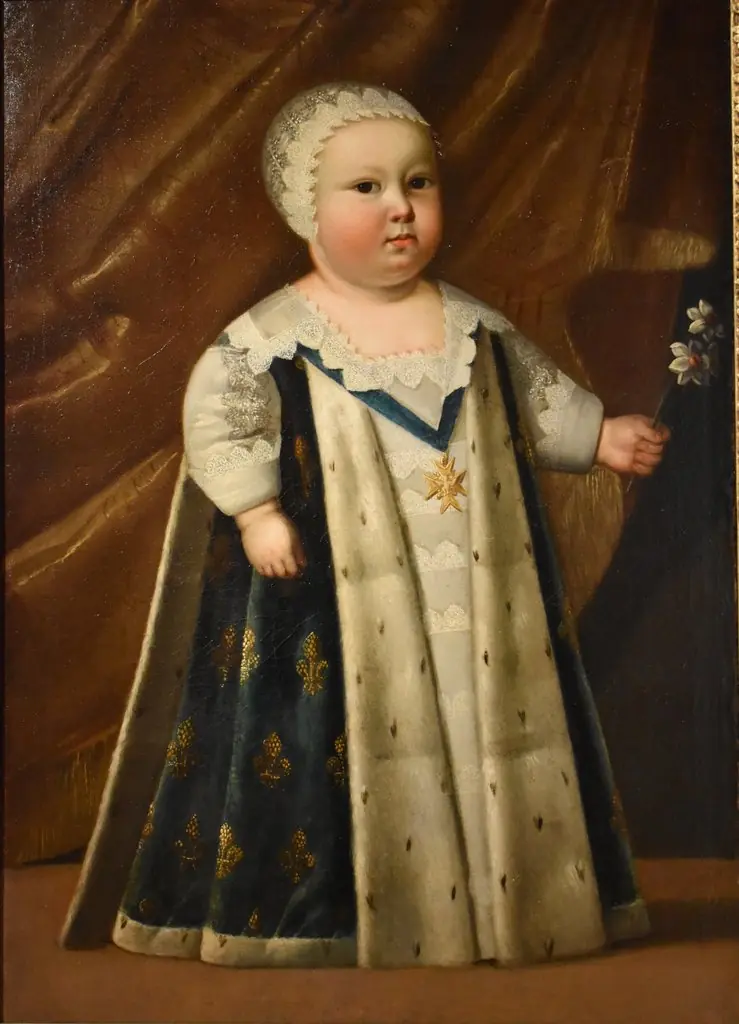 Louis XIV, King of France (1638-1715)
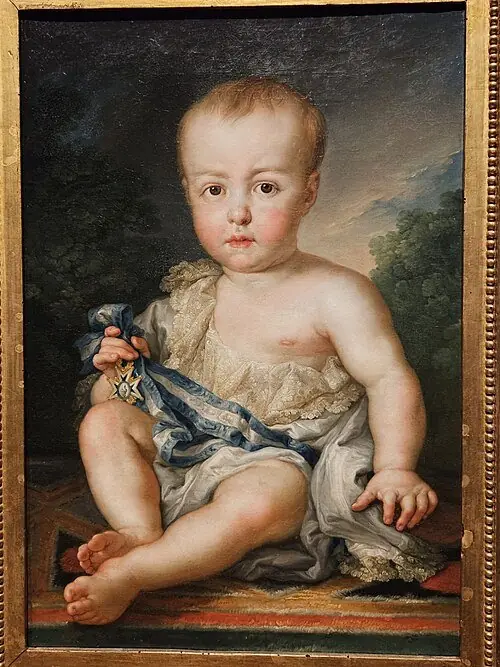 Retrato de um Infante da Casa Bourbon
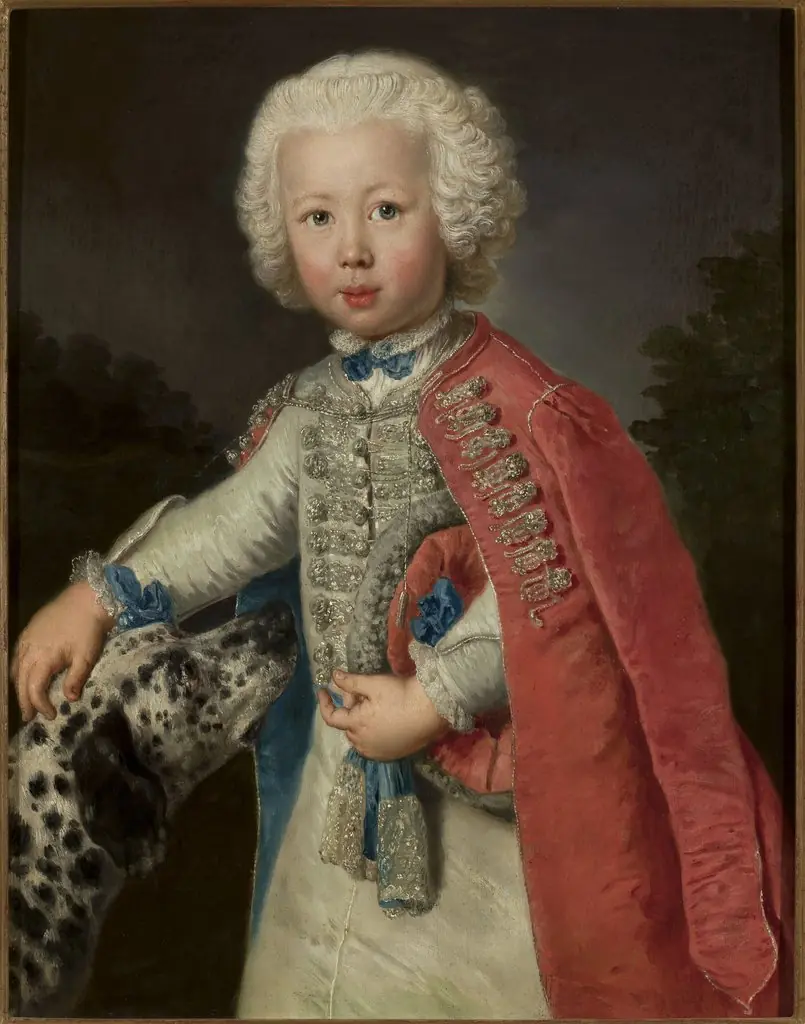 Portrait of a boy
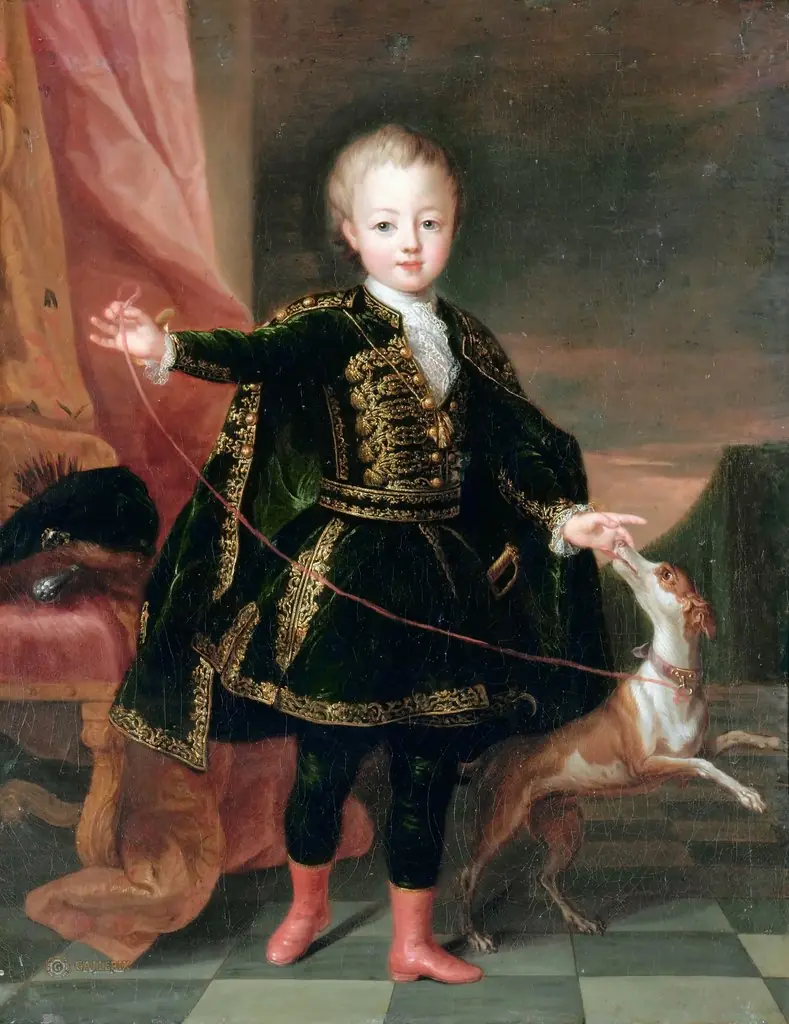 Portrait of Léopold Clément de Lorraine, Hereditary Prince of Lorraine (1707-1723)
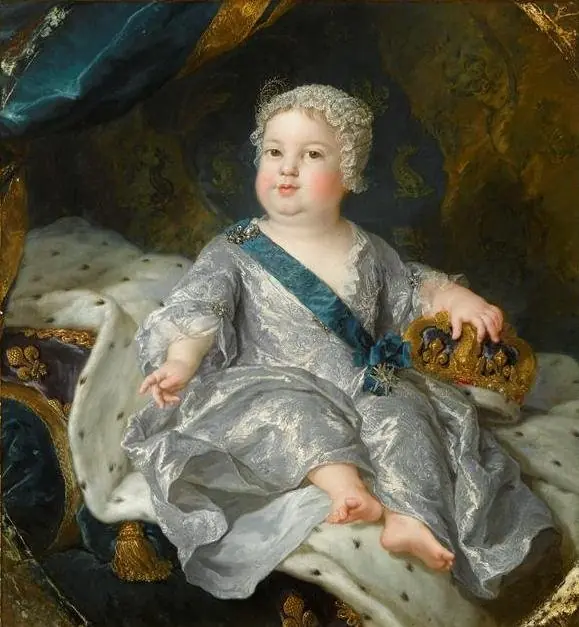 Louis, Dauphin of France (1729-1765) as a newborn
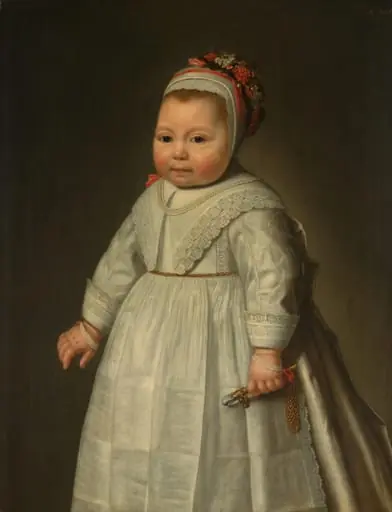 Portrait of Jacoba Bontemantel (1643-?)
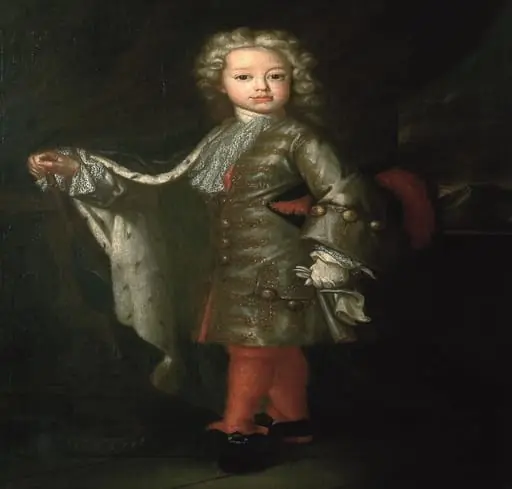 Portretul Împăratului Carol Albert, copil
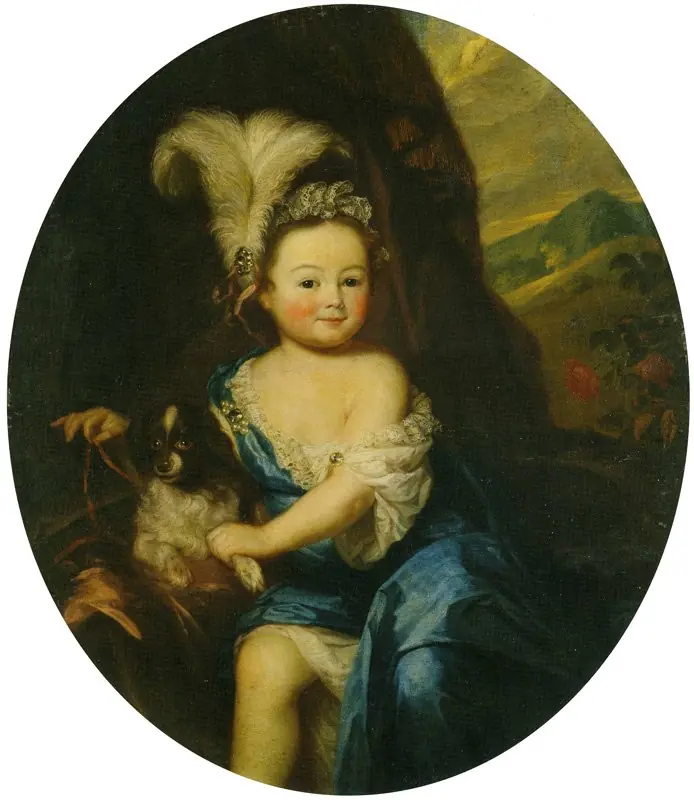 Portrait of Countess Natalya Andreevna Matveeva as a Child
 Carlos Manuel Víctor duque de Aosta
- Portrait of Tsarevich Piotr Petrovich as a Child