Artwork
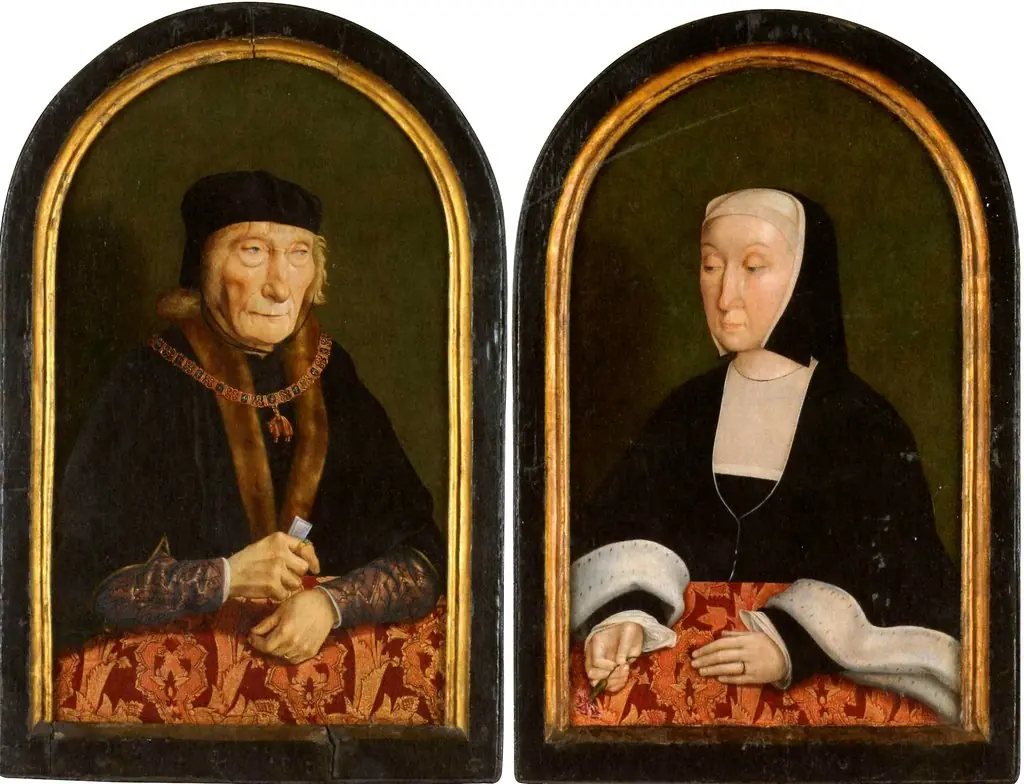
Portrait of Jan van Egmond (1438-1516), Count of Egmond
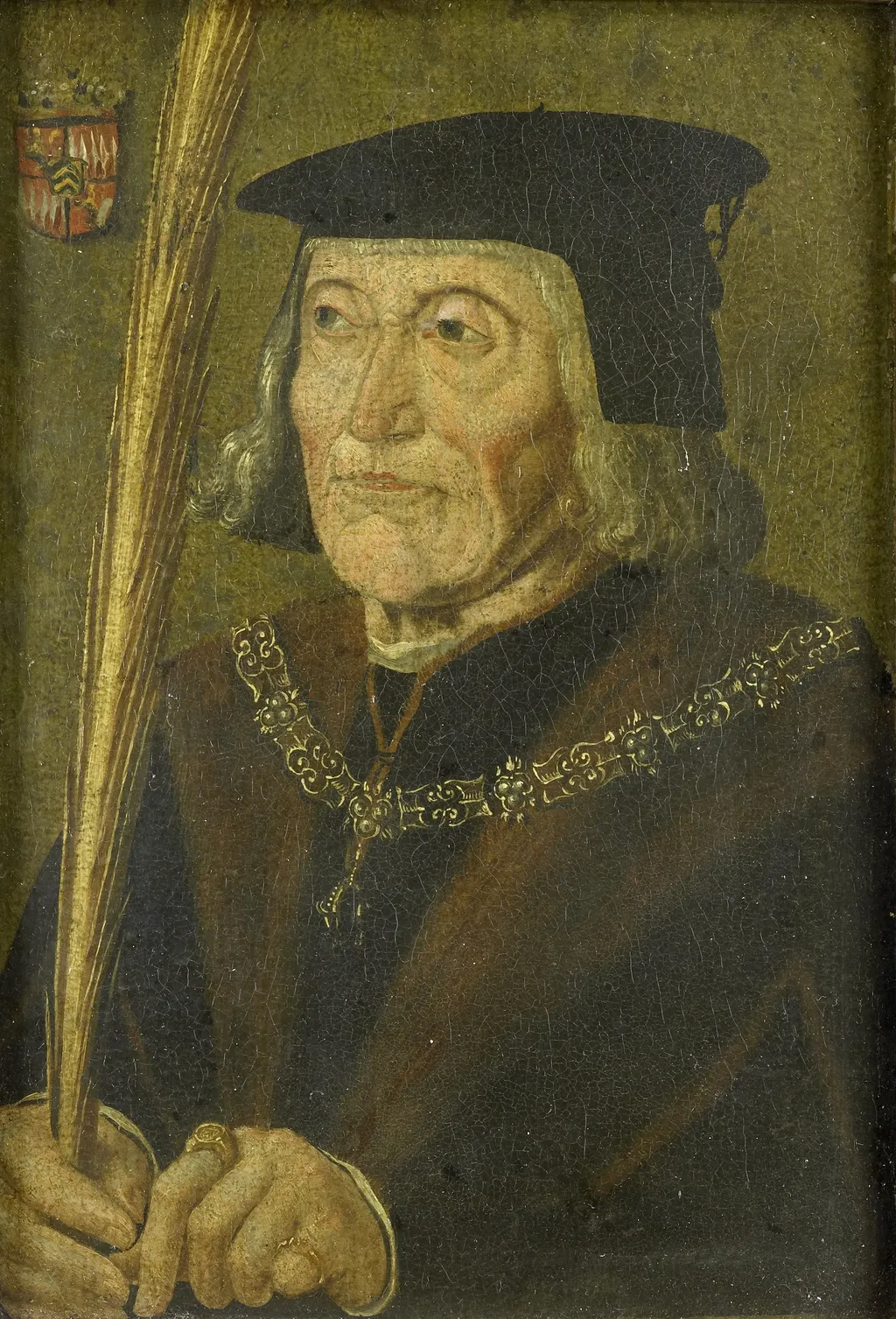
Portrait of Jan van Egmond (1438-1516), Count of Egmond is an oil painting. It dates from 1510 and is held in the collection of the Rijksmuseum. The portrait depicts Jan van Egmond, Count of Egmond (1438‑1516), rendered in oil on canvas.
About this work
Technique & Style
The handling is typical of early 16th-century Netherlandish portraiture, with fine brushwork and careful attention to the sitter’s features.
The portrait is executed in oil paint on a panel support. The small format (19.5 × 13.5 cm) suggests an intimate, possibly portable work. The handling is typical of early 16th-century Netherlandish portraiture, with fine brushwork and careful attention to the sitter’s features.
The surface likely retains its original planar character, though no condition reports are available in the sources. Stylistically, the anonymous artist employs a restrained palette and a direct, three-quarter pose, emphasizing the count’s status through sober attire and a neutral background.
History & Provenance
The portrait was painted in 1510 in the Northern Low Countries. It depicts Jan van Egmond (1438–1516), Count of Egmond, also known as John III of Egmont. The work was once owned by Victor de Stuers before entering the collection of the Rijksmuseum, where it remains. The painting is attributed to an anonymous artist.
The painting is held in the collection of the Rijksmuseum. It was previously owned by Victor de Stuers. The work has an inventory or accession number that is not specified in the sources, and its exhibition history is not documented in the provided sources.
Legacy
The portrait of Jan van Egmond, Count of Egmond, painted in 1510 by an anonymous artist in the Northern Low Countries, has been recognized for its historical significance as a representation of Dutch aristocracy. Its inclusion in the Rijksmuseum collection since being owned by Victor de Stuers has contributed to its reputation as an important example of early Netherlandish portraiture. The work’s dimensions of 19.5 by 13.5 centimeters and its depiction of John III of Egmont have been cited in scholarly discussions of 16th-century Dutch nobility imagery.
Overview
The portrait depicts Jan van Egmond, Count of Egmond (1438‑1516), rendered in oil on canvas. He appears as an elderly nobleman, dressed in a dark hat and a fur‑trimmed robe, his face marked by wrinkles and a restrained smile. A gold chain bearing a cross rests around his neck, and he holds a long staff in his right hand, set against an unadorned dark backdrop.
Subject & Meaning
The sitter’s attire and insignia emphasize his aristocratic rank and piety, typical of late‑medieval portraiture that sought to convey both status and moral virtue. The solemn expression, combined with the subtle smile, suggests a measured self‑presentation, balancing authority with a hint of personal humanity.
Context
Created during the transition from early Netherlandish to Northern Renaissance painting, the portrait reflects contemporary trends toward individualized representation of the nobility. The use of oil and controlled lighting aligns with practices of artists working in the Low Countries in the late 15th and early 16th centuries.
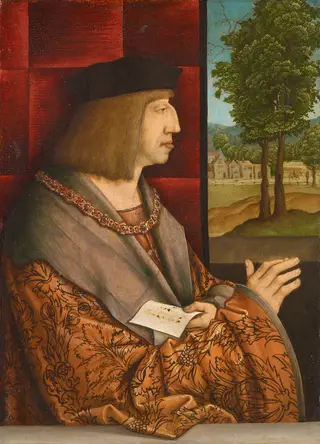
Artist & collection

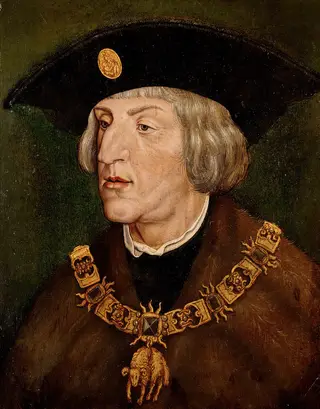 Maximilian I. (1459-1519), Brustbild
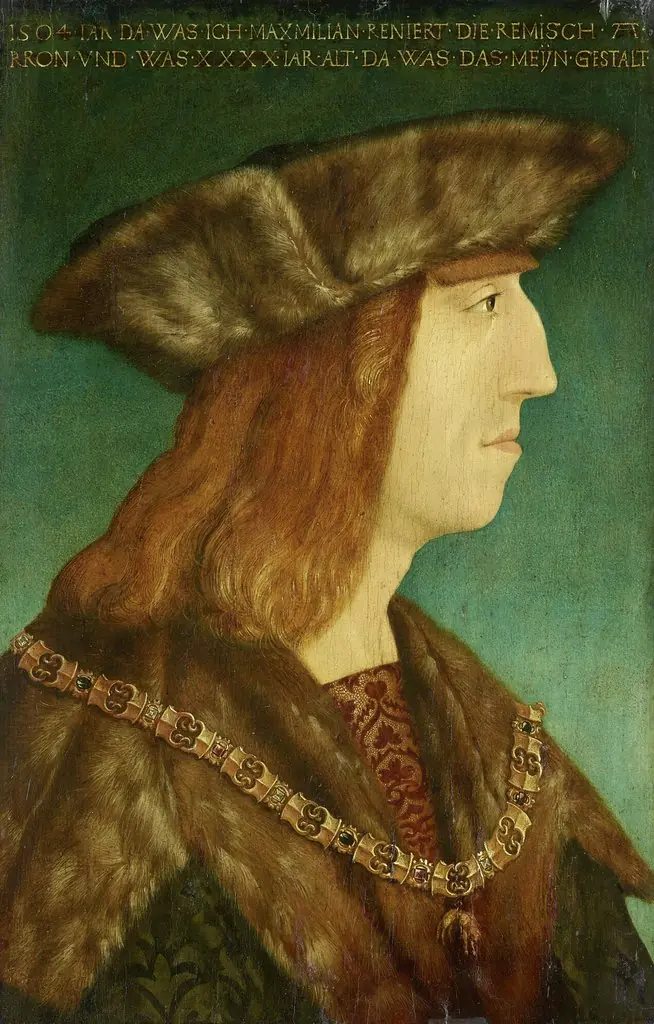 Emperor Maximilan I. (1459-1519)
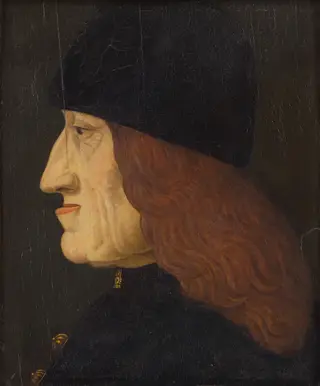 Kaiser Friedrich III. (1415-1493), Profilbildnis
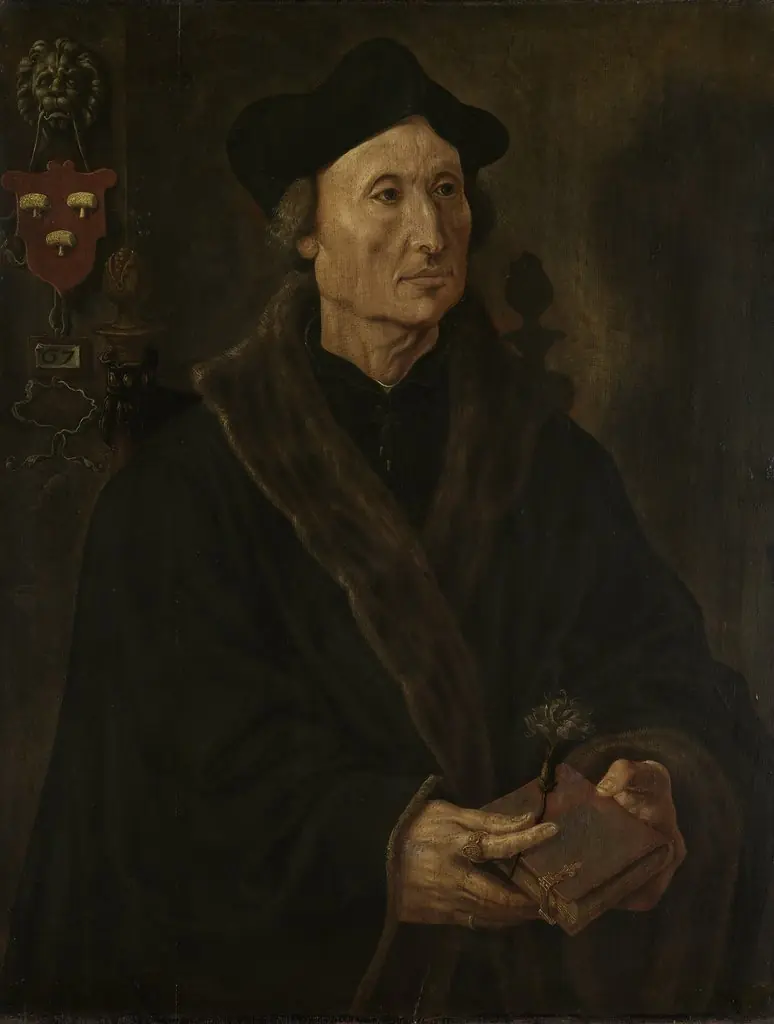 Portrait of Johannes Colmannus (1471-1538)
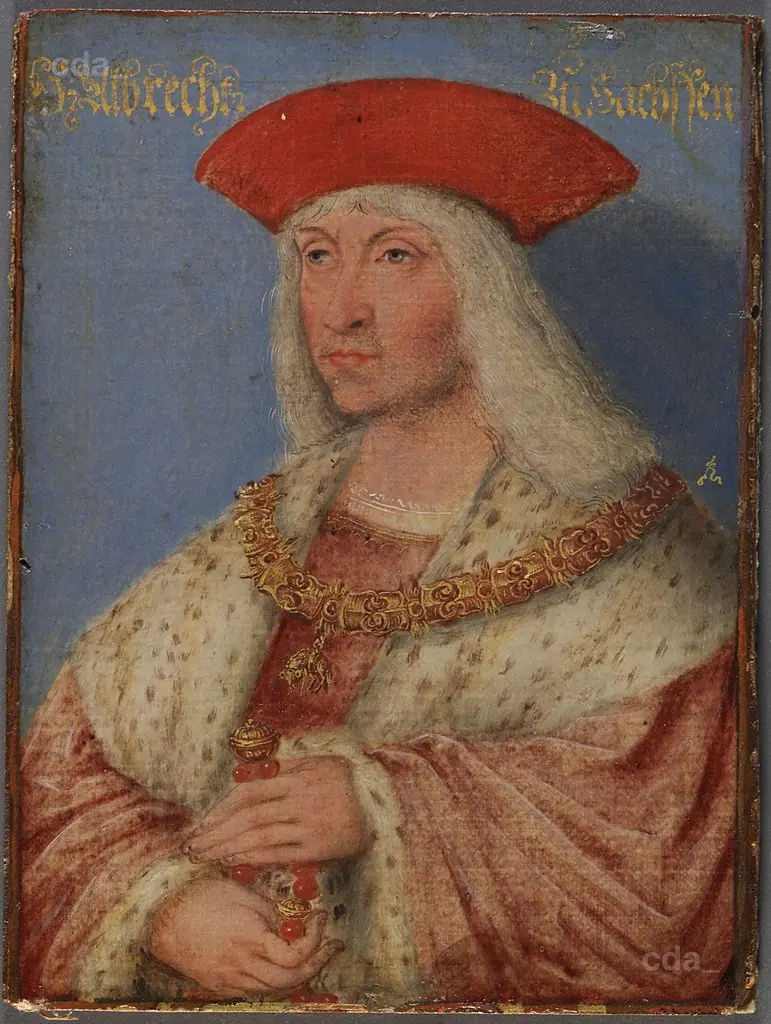 Albrecht the Bold, son of Friedrich II., died 1500
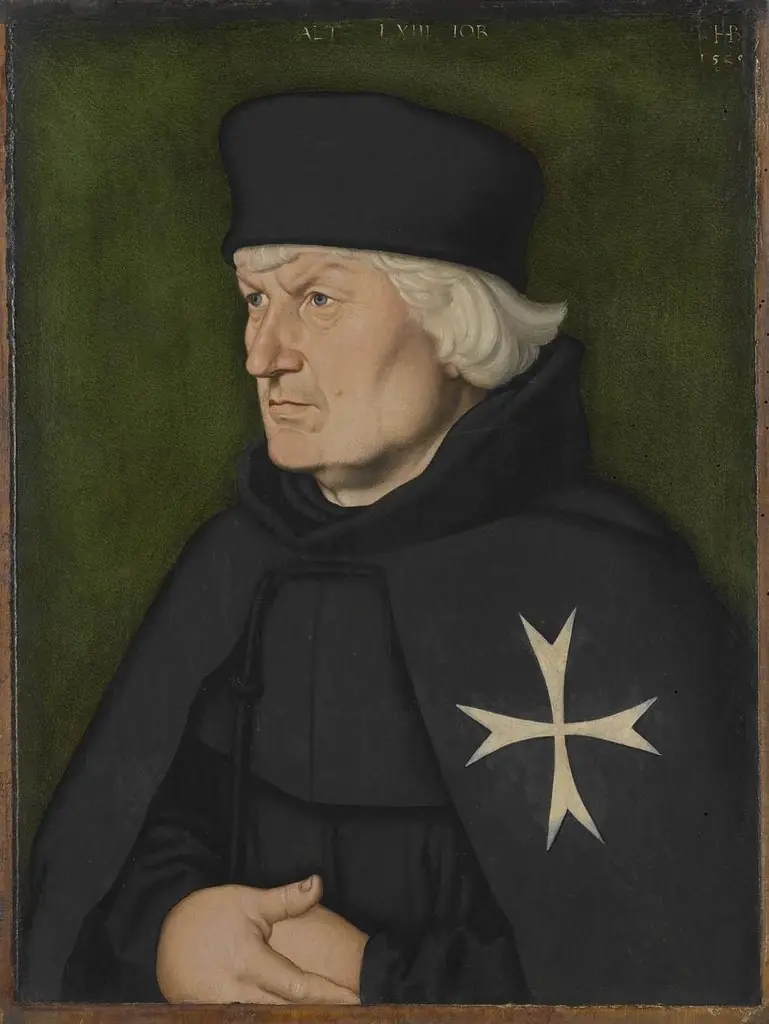 Bildnis des Straßburger Johanniterkomturs Balthasar Gerhardi
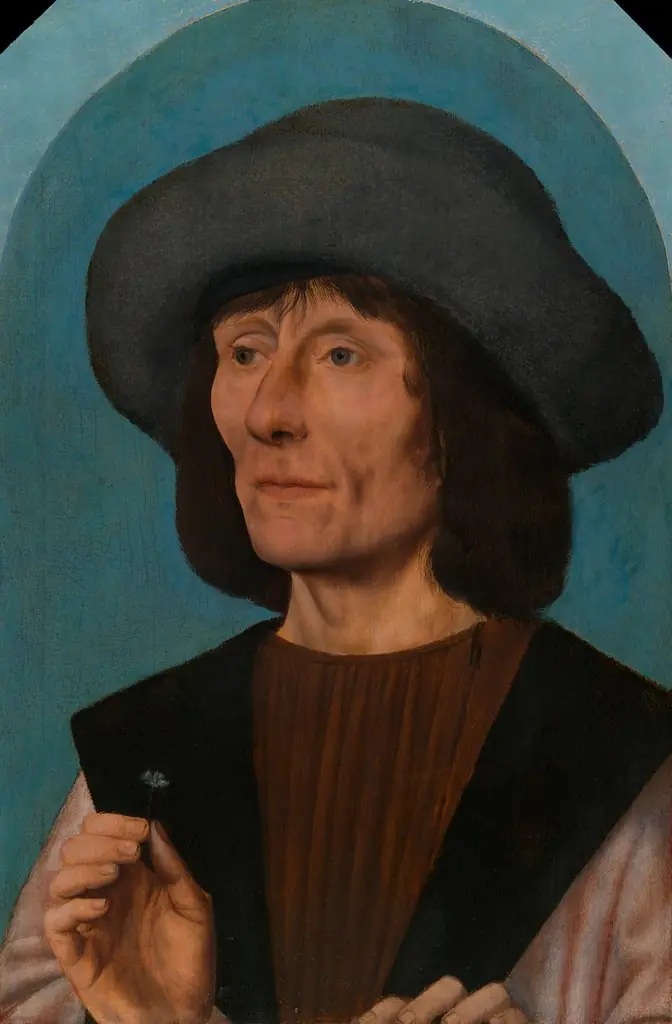 Portrait of a Man with a Pink Carnation
- Portrait of Maximilian I (1459-1519)
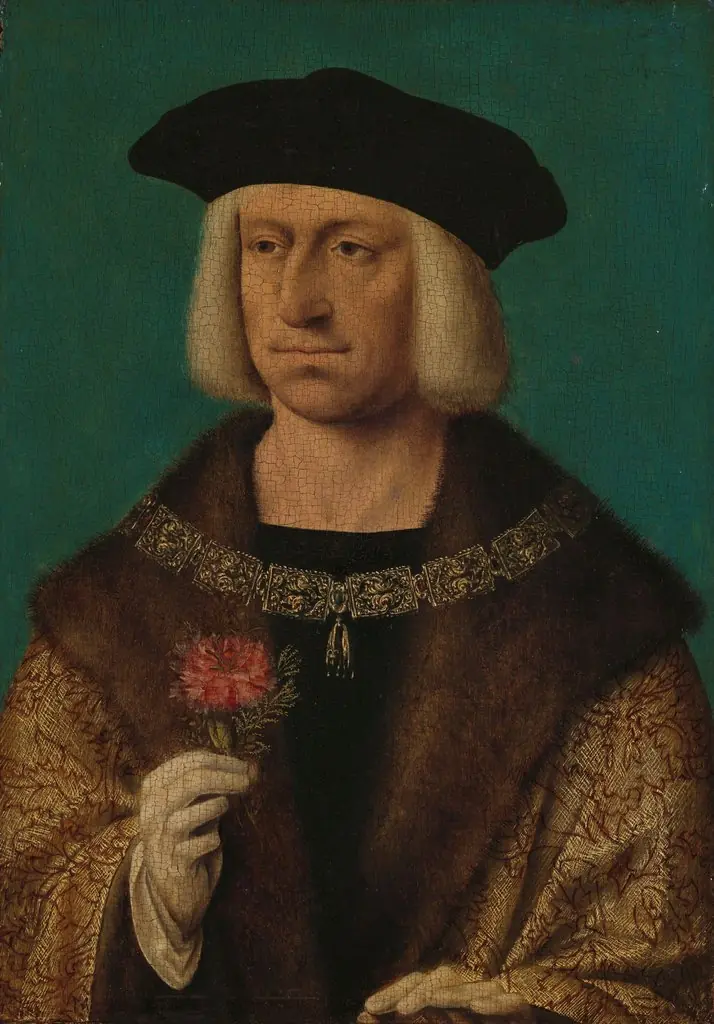 Portrait of Maximilian I (1459-1519)
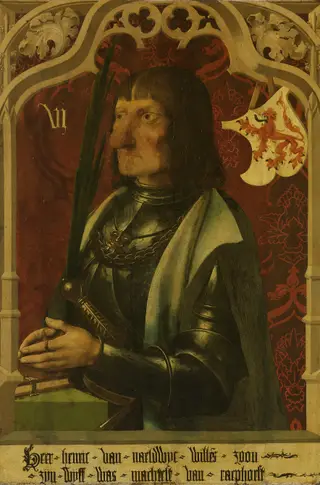 Portrait of Hendrik IV van Naaldwijk (c. 1430-96)
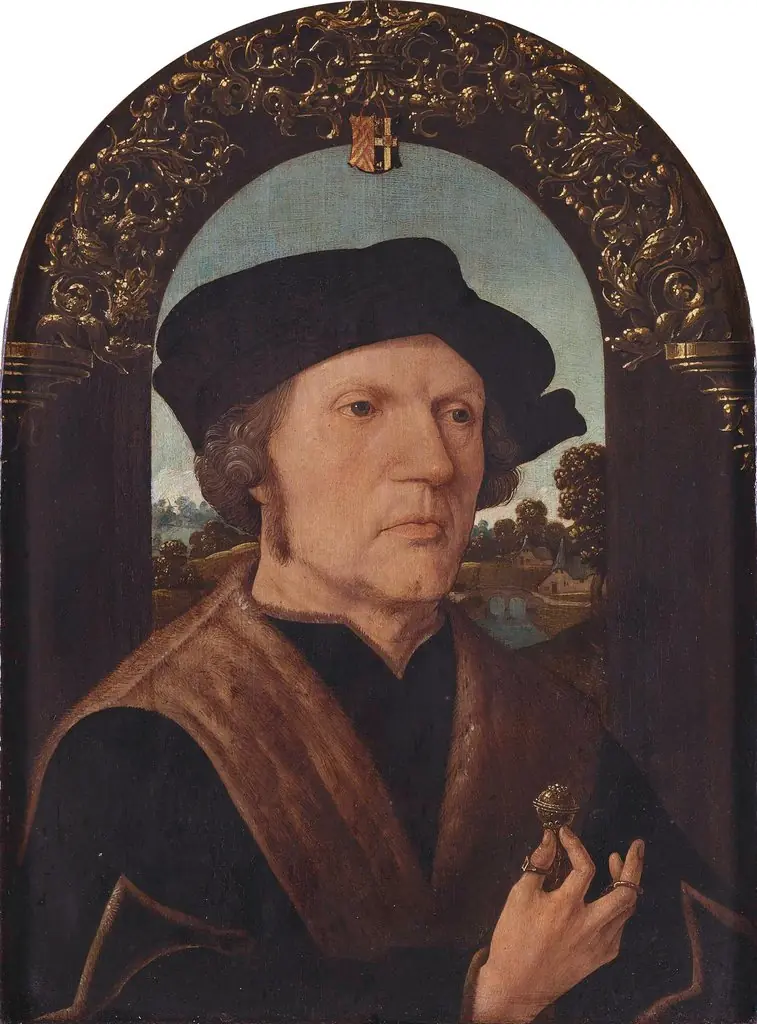 Portrait of Jan Gerritsz van Egmond van de Nijenburg (?-1523)
 Portrait of Jan III, First Count of Egmond (1438–1516) and his wife Magdalena van Werdenburg, Countess of Egmond (1464–1538)