Artwork
Portrait of Otto F. von Knorring (1759-1812)
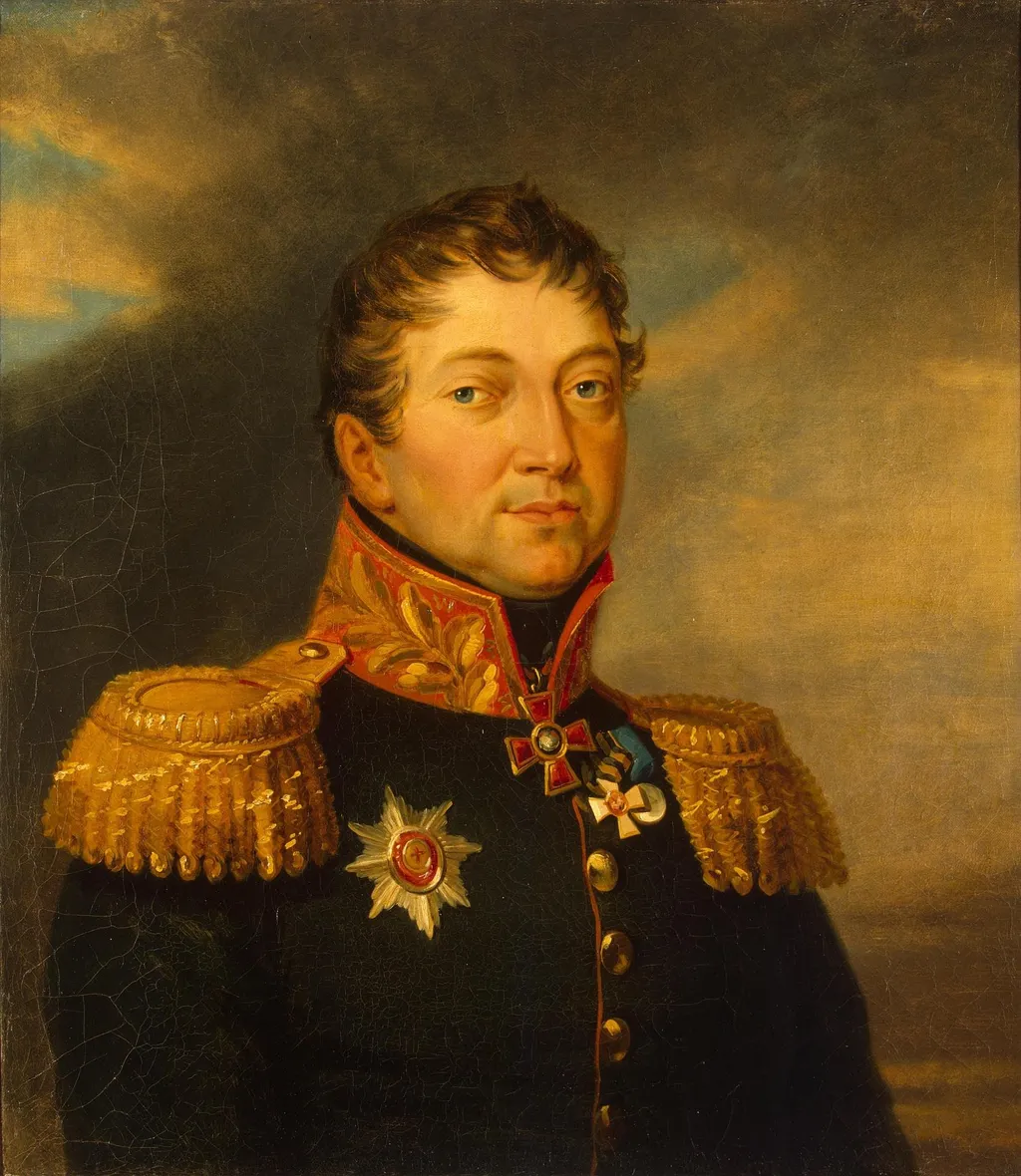
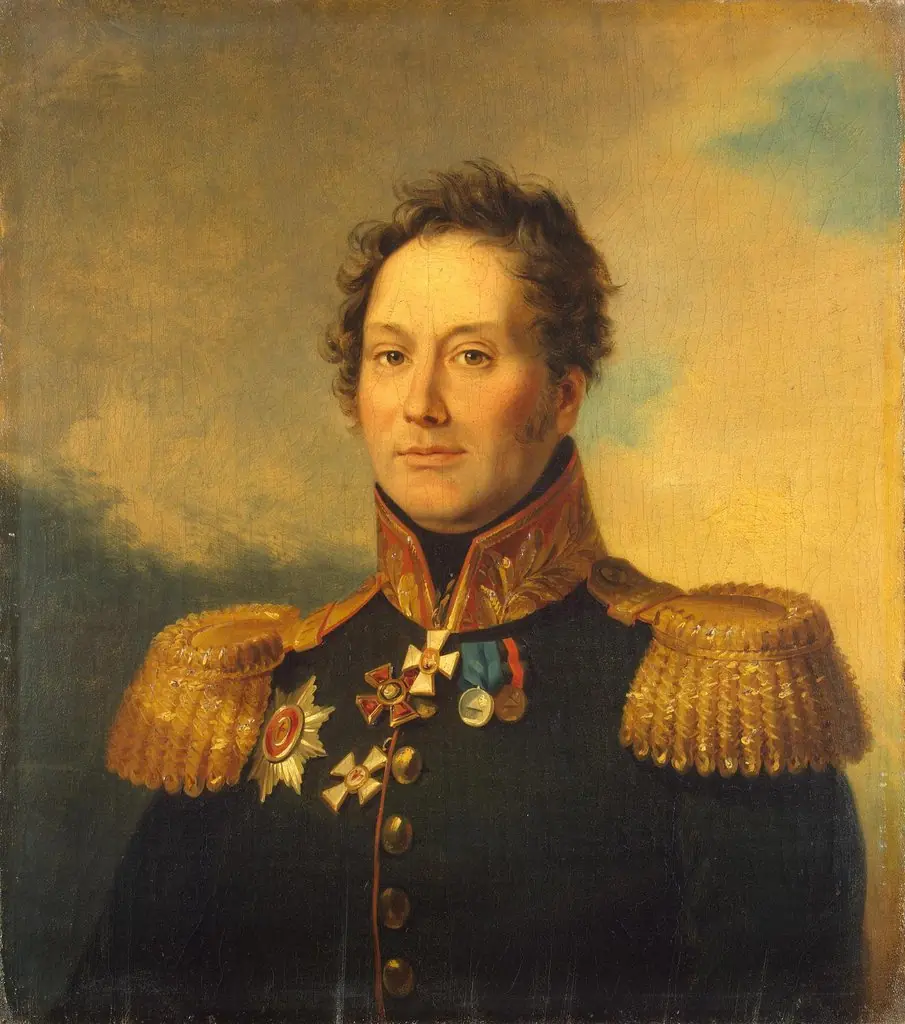
Portrait of Otto F. von Knorring (1759-1812) is an oil painting by the Biedermeier artist Unknown. It dates from 1822 and is held in the collection of the Hermitage Museum. This portrait depicts Otto F.
About this work
Overview
The portrait forms part of the celebrated Military Gallery of the Winter Palace, a series of portraits commemorating Russian commanders of the Napoleonic Wars.
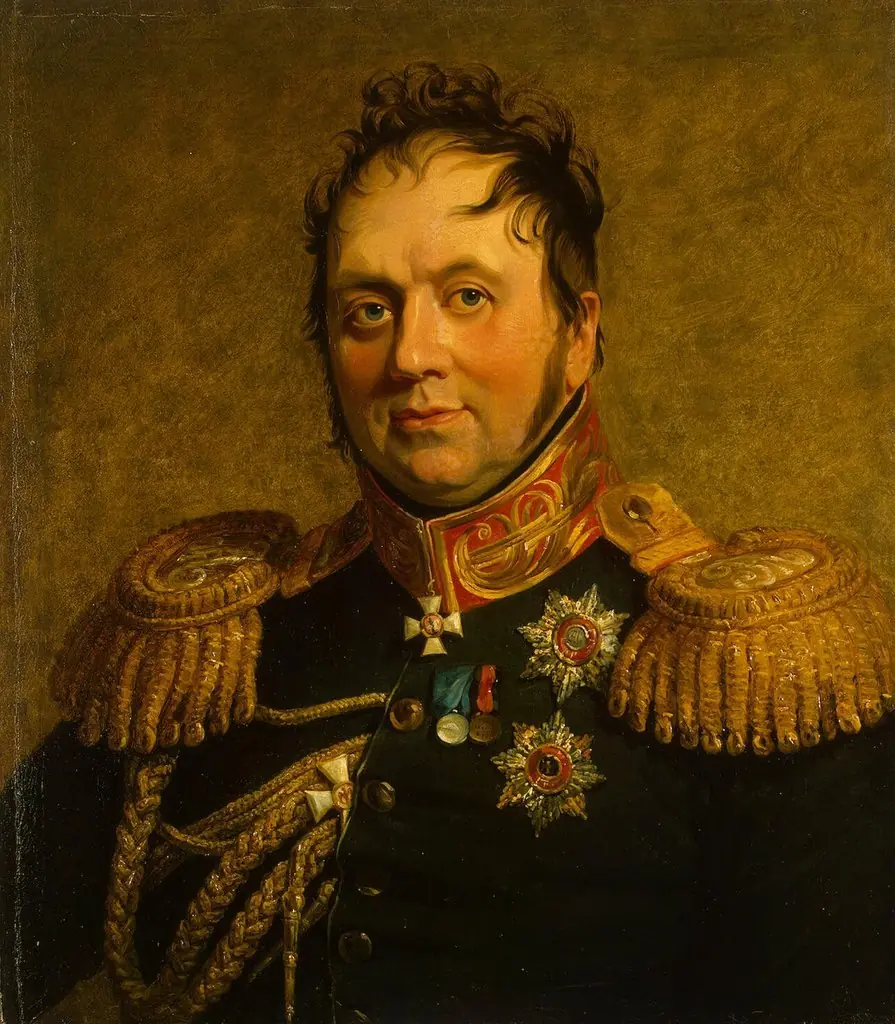
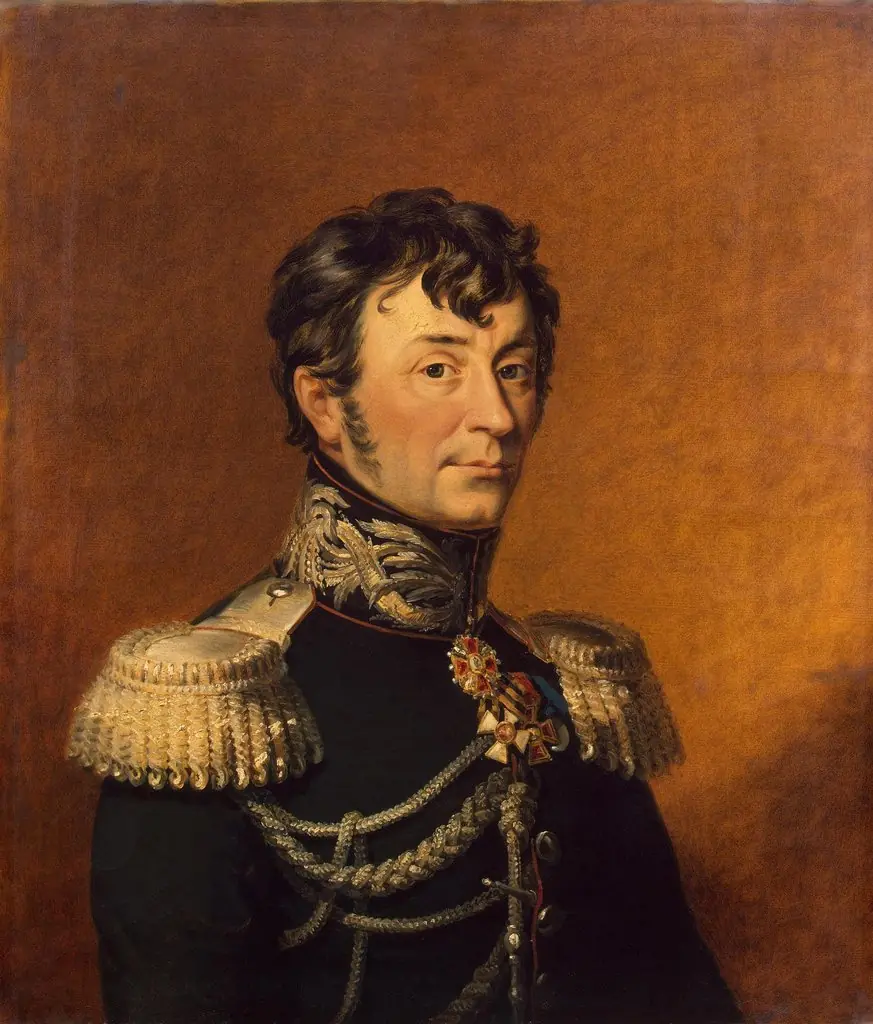
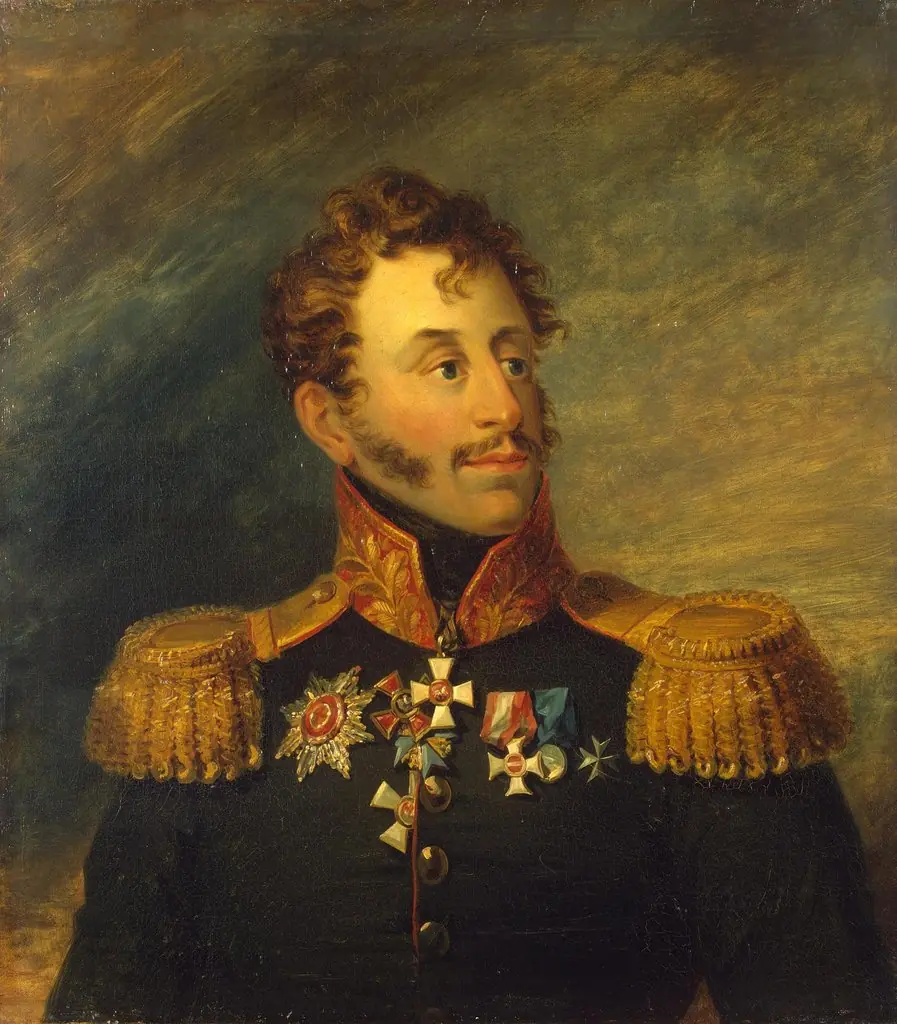
The Portrait of Otto F. von Knorring (1759-1812) is an oil-on-canvas portrait painted in 1822, currently held in the collection of the State Hermitage Museum in Saint Petersburg. Measuring 70 by 62.5 centimetres, the work depicts a Baltic German military officer in bust-length format against an atmospheric background. While some sources attribute the painting to George Dawe and his workshop, the artist remains officially recorded as unknown. The portrait forms part of the celebrated Military Gallery of the Winter Palace, a series of portraits commemorating Russian commanders of the Napoleonic Wars. Its significance lies in its role within this grand commemorative project and its value as a document of early nineteenth-century military portraiture in Russia.
Subject & Meaning
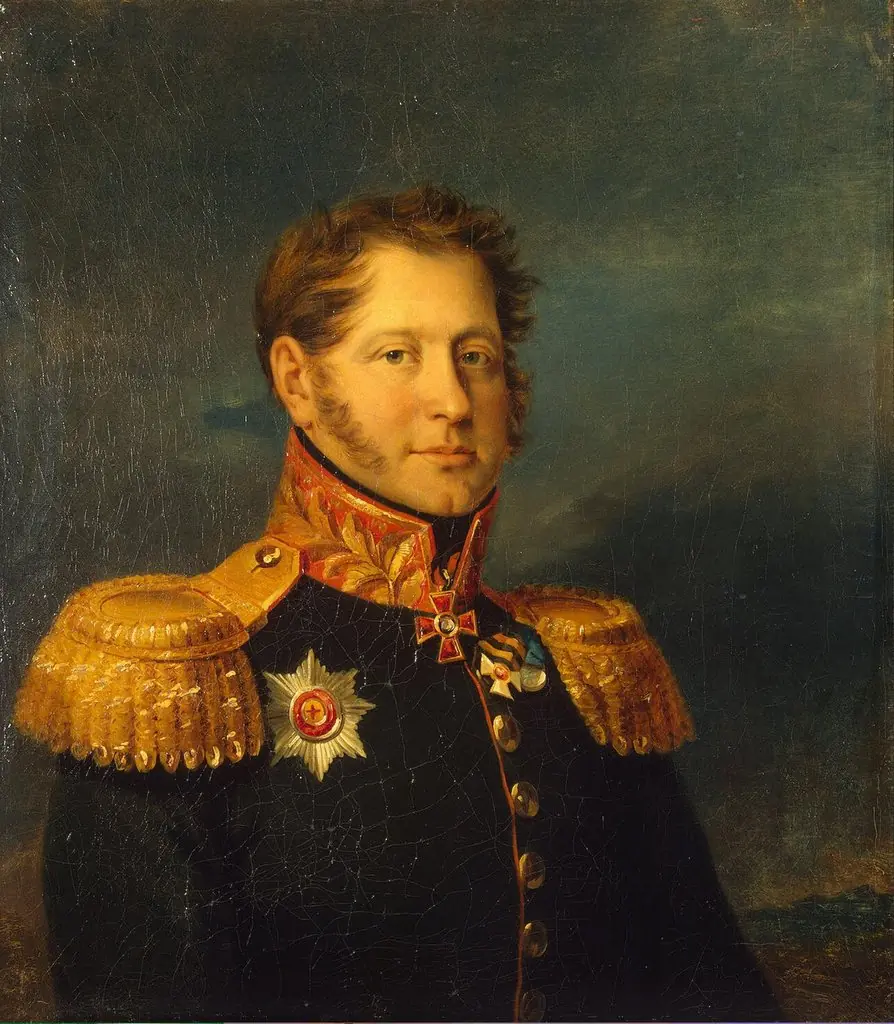
The subject, Otto Fjodorovič Knorring, was a Baltic German military officer who lived from 1759 to 1813. In the portrait, he is presented as a decorated commander, his status conveyed through meticulous attention to his military regalia. He wears a dark military coat with a high collar trimmed in red and gold embroidery, heavy gold epaulettes with fringe on both shoulders, and several visible decorations including a red enamel cross at his throat, a star-shaped badge on his chest, and additional medals pinned to his left breast. The gold buttons down the front of his coat further emphasise his rank. The three-quarter pose, with light falling strongly from the left to illuminate his face and the gold elements while casting the right side into softer shadow, follows conventions of dignified military portraiture. The hazy, atmospheric background of swirling brown, gold, and muted blue tones suggests clouds or sky, perhaps alluding to the theatre of war or the elevated status of the sitter as a national hero. The overall effect is one of sober authority and commemorative dignity, appropriate for a portrait intended for the Military Gallery of the Winter Palace.
Technique & Style
The portrait is executed in oil paint on canvas, measuring 70 by 62.5 centimetres. The handling of paint varies across the surface: the face and background are rendered with smooth, blended brushwork that creates a soft, atmospheric effect, while the gold braid and metallic details of the uniform are treated with more textured, impasto application that catches the light and conveys the material richness of the decorations. Light falls strongly from the left, a dramatic device that models the facial features and makes the gold elements gleam against the darker coat. The paint surface shows a network of fine craquelure throughout, particularly noticeable in the darker areas, consistent with the age and medium of the work. The style has been characterised as Neoclassical, reflecting the formal clarity, balanced composition, and idealised presentation typical of early nineteenth-century portraiture in Russia. The bust-length format, slightly off-centre positioning, and atmospheric background are all conventions of the period, while the precise rendering of military insignia demonstrates the artist's attention to documentary accuracy alongside aesthetic concerns.
History & Provenance
The portrait was painted in 1822, with some sources suggesting a slightly broader dating of circa 1820 to 1825 or no later than 1825. It was created for the Military Gallery of the Winter Palace, a vast commemorative project initiated by Tsar Alexander I to honour the generals who had served in the Patriotic War of 1812 against Napoleon. The painting has remained in the collection of the State Hermitage Museum in Saint Petersburg, where it is still located. Its accession details and precise provenance chain prior to or within the museum are not recorded in the available sources. The work has been exhibited as part of the Military Gallery installation, though specific exhibition history beyond its permanent display is not documented in the provided materials. One commercial source attributes the work to George Dawe and his workshop, though this attribution is not universally accepted and the artist is officially listed as unknown.
Context
The portrait occupies a specific place within the context of early nineteenth-century Russian art and the broader European tradition of military commemoration. The Military Gallery of the Winter Palace, for which it was painted, comprised over 300 portraits of Russian commanders and represented one of the most ambitious portrait projects of its era. George Dawe, if indeed connected to this work, was a British painter who spent significant time in Saint Petersburg executing portraits for this gallery, though the official anonymity of the artist suggests possible workshop participation or alternative attribution. The portrait reflects the intersection of Baltic German and Russian military culture, as Knorring belonged to the prominent Baltic German nobility that supplied many officers to the Russian imperial army. Scholarly attention to this specific portrait appears limited in the available sources, with most information deriving from museum records and commercial image databases rather than extensive art-historical analysis. Its classification as Neoclassical aligns it with the dominant aesthetic of state-sponsored Russian portraiture during the reign of Alexander I, when clarity, order, and heroic dignity were prized qualities.
Legacy
The legacy of the Portrait of Otto F. von Knorring is inseparable from that of the Military Gallery of the Winter Palace as a whole. The gallery itself remains one of the most visited and celebrated spaces in the Hermitage Museum, preserving the memory of the 1812 campaign through visual means. As a component of this installation, the portrait continues to serve its original commemorative function, ensuring that Knorring's contribution to Russian military history is remembered. The work's presence in digital databases and commercial image libraries, including those offering reproductions and posters, indicates its ongoing circulation beyond the museum walls. However, the uncertain attribution to George Dawe or an anonymous painter, combined with the limited scholarly literature specifically devoted to this canvas, suggests that its individual reputation remains modest compared to the gallery's collective fame. The portrait stands as a representative example of how early nineteenth-century state patronage harnessed portraiture to construct and perpetuate national narratives of heroism and sacrifice.
Artist & collection