Artwork
Portrait of the Boy Eutyches
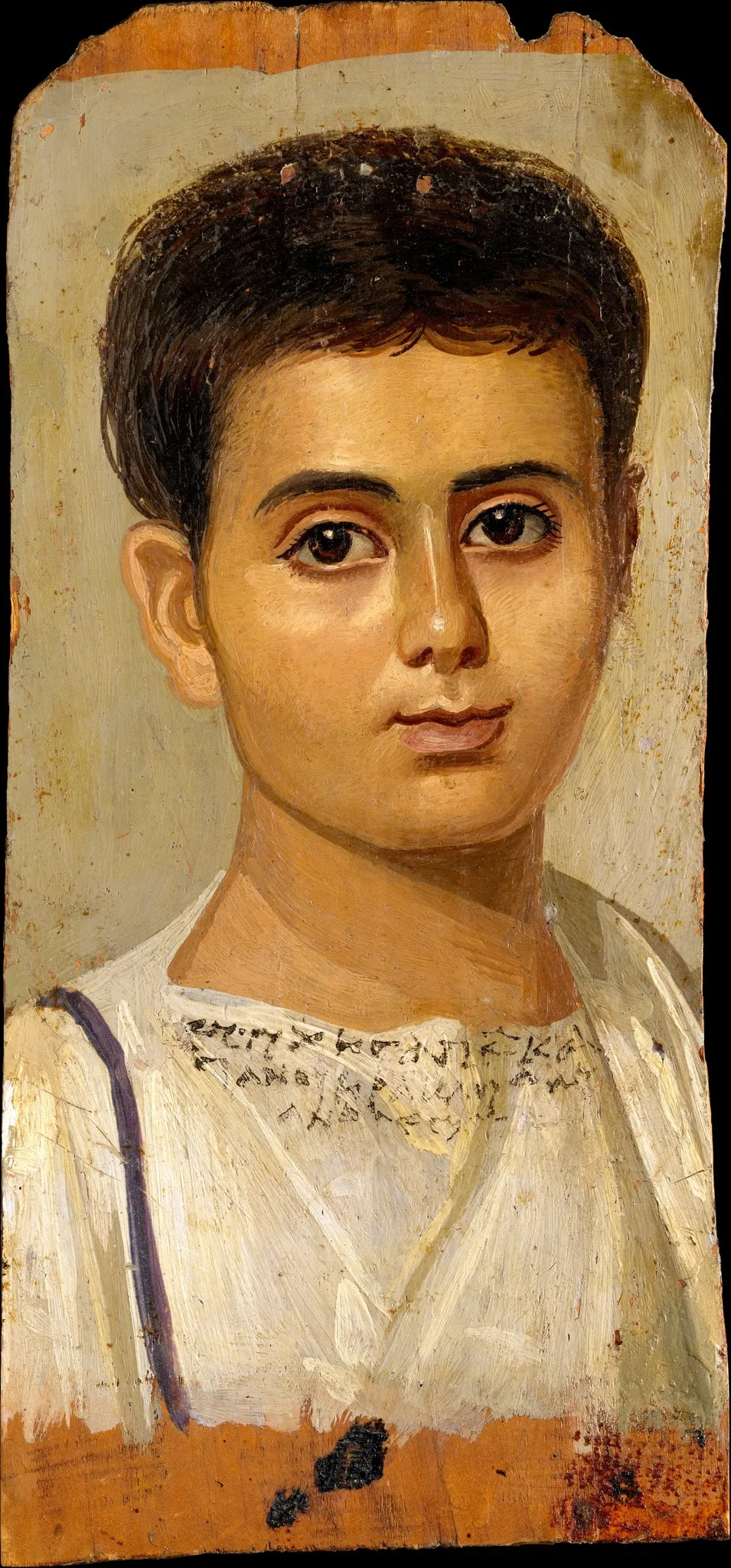
Portrait of the Boy Eutyches is a paint painting. It dates from 125 and is held in the collection of the Metropolitan Museum of Art.
About this work
Subject & Meaning
The portrait depicts a young boy of roughly ten or eleven years of age, identified by a Greek inscription in dark purple pigment below the neckline of his tunic as "Eutyches, freedman of Kasanios," with scholars debating whether additional names refer to "son of Herakleides Evandros" or "Herakleides, son of Evandros." Produced after the boy's death, the panel belongs to the Fayum mummy portrait tradition, in which such images were placed over the face of the mummified deceased. The work embodies the cultural fusion of Roman Egypt, combining Greco-Roman naturalistic painting methods and Roman dress, a white tunic with a narrow purple band, with the ancient Egyptian practice of preserving the likeness of the dead for the afterlife.
Light and shadow, broad brushstrokes, and an olive background model the boy's face and dark hair, while reflections in his eyes suggest an intra-painting light source from his right, reinforcing the illusion of a living presence attached to the burial.
Technique & Style
Pigment layers combine bright and dark tones with broad brushstrokes that model the boy’s face, while an olive‑toned background heightens three‑dimensionality.
The Portrait of the Boy Eutyches is executed in encaustic paint on a wooden panel, a technique typical of the Fayum mummy portraits of Roman Egypt. The work’s support is a thin wood board, prepared for attachment to a mummy’s face after burial. Pigment layers combine bright and dark tones with broad brushstrokes that model the boy’s face, while an olive‑toned background heightens three‑dimensionality.
Light appears to strike the figure from the right, reflected in the eyes, and the subject wears a white tunic with a thin purple band indicated by pigment. The painting blends Classical Greek portrait conventions, Roman dress, and Egyptian mortuary practice, resulting in a naturalistic, Greco‑Roman style distinct from native Egyptian art.
History & Provenance
Created by an anonymous artist in Roman Egypt between approximately 100 and 150 AD, the Portrait of the Boy Eutyches dates specifically to the mid-second century. Executed in encaustic paint on a wood panel, the work was commissioned posthumously to serve as a mortuary portrait, intended to be affixed to the mummified remains of the subject. The boy is identified by a Greek inscription as "Eutyches, freedman of Kasanios."
This artifact belongs to the tradition of Fayum mummy portraits, which flourished under Roman rule amidst a blend of Greek, Roman, and Egyptian cultural influences. The painting entered the modern provenance chain when it was donated to the Metropolitan Museum of Art in New York by Edward Harkness in 1918, where it remains part of the permanent collection.
Portrait of the Boy Eutyches is held by the Metropolitan Museum of Art in New York. The portrait entered the museum’s collection in 1918 through a donation from Edward Harkness; its specific accession number is not recorded in the consulted sources. Since acquisition, the work has been part of the museum’s permanent display and is regularly shown in the Greek and Roman galleries, where it is featured in exhibitions focusing on Fayum mummy portraits.
Context
Scholars classify the Portrait of the Boy Eutyches as a quintessential example of Fayum mummy portraits, representing a unique artistic synthesis within Roman Egypt. The work exemplifies the fusion of Classical Greek naturalistic painting techniques, specifically the use of light and shadow to model form, with Roman material culture and traditional Egyptian mortuary practices. Unlike earlier local styles, this piece is heavily influenced by Greco-Roman traditions, reflecting the dominance of an ethnic Greek upper class during the imperial period.
Art historians note its specific technical attributes, such as encaustic application on wood and the depiction of an internal light source, as evidence of this multicultural society. The portrait serves as a historical document of the blending of Roman, Greek, and Egyptian elements that defined the province's art in the first and second centuries AD.
Legacy
Portrait of the Boy Eutyches is regarded as a representative example of the Fayum mummy portrait tradition, an art form that emerged from the blending of Roman, Greek, and Egyptian cultures in Roman Egypt during the first and second centuries AD. The work exemplifies the Greco-Roman stylistic influence that distinguishes later Fayum portraits from earlier, more purely Egyptian funerary panels. Its encaustic technique on wood, naturalistic modeling through light and shadow, and use of broad brushstrokes reflect Classical Greek painting methods adapted to a Roman-Egyptian funerary context.
The portrait has been cited in scholarly literature on the genre, including Nicola Hoesch's entry "Mumienporträts" in Der Neue Pauly (Vol. 8, 2000). Since its 1918 donation to the Metropolitan Museum of Art by Edward Harkness, the painting has remained in the museum's collection and is typically on public display, contributing to the institution's holdings of Roman-Egyptian portraiture.
Overview
The "Portrait of the Boy Eutyches" is an ancient painting on wood, created by an unknown artist in Roman Egypt between 100 and 150 AD. This work is a notable example of a Fayum mummy portrait, intended for funerary purposes. It depicts a young boy, identified by an inscription, and is presently housed in the Metropolitan Museum of Art in New York. The portrait offers insight into the artistic practices of its era.
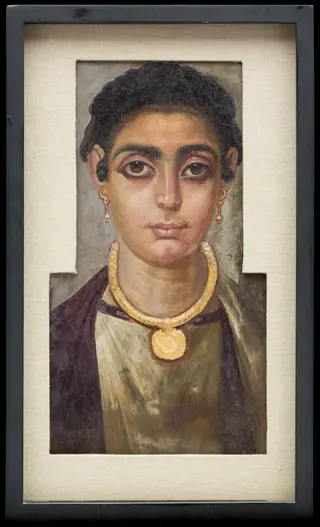
Artist & collection

- Head of a Woman
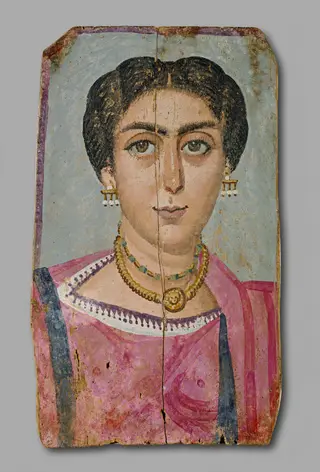 Mummy Portrait - Woman with Necklace
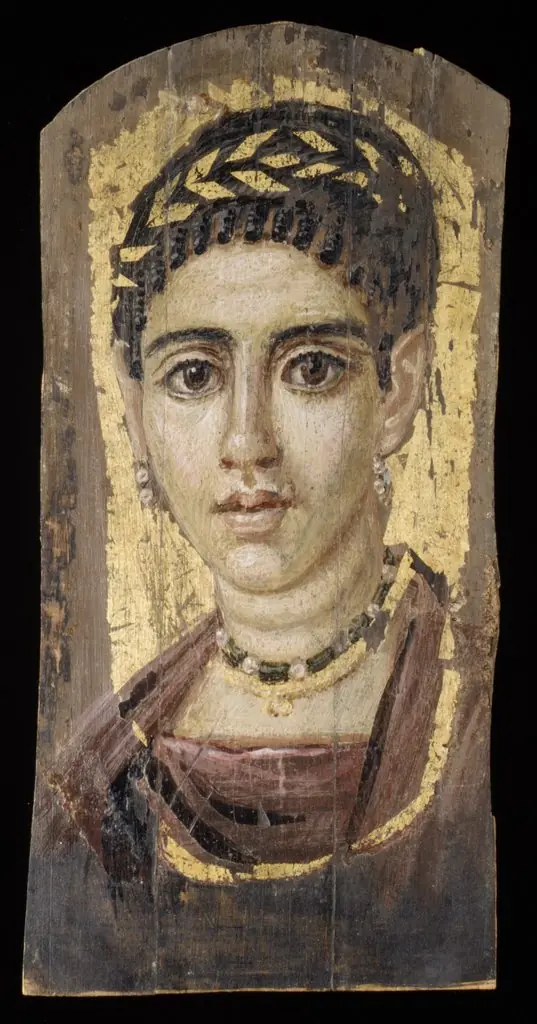 Portrait of a young woman with a gilded wreath
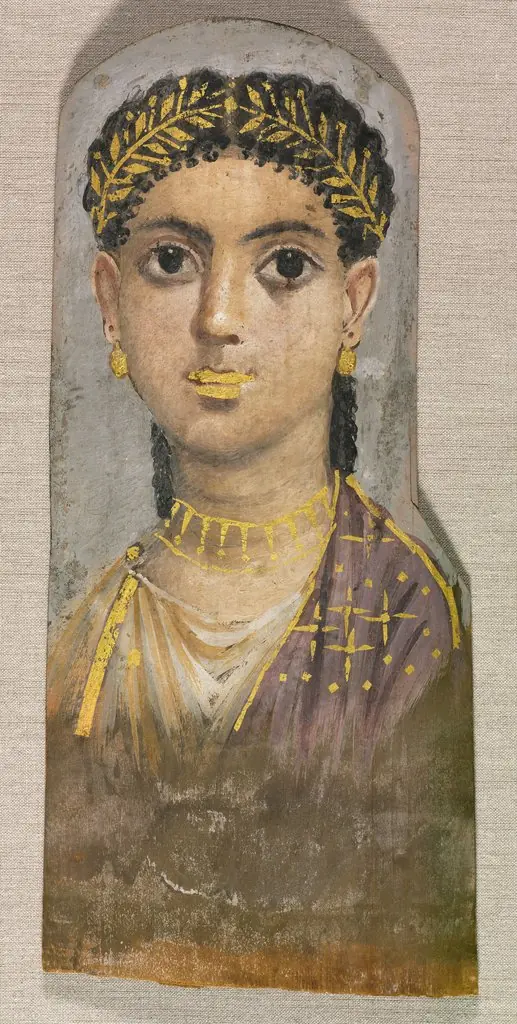 Funerary Portrait of a Young Girl
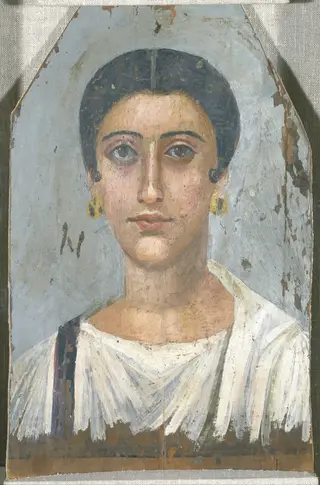 Portrait of a Noblewoman
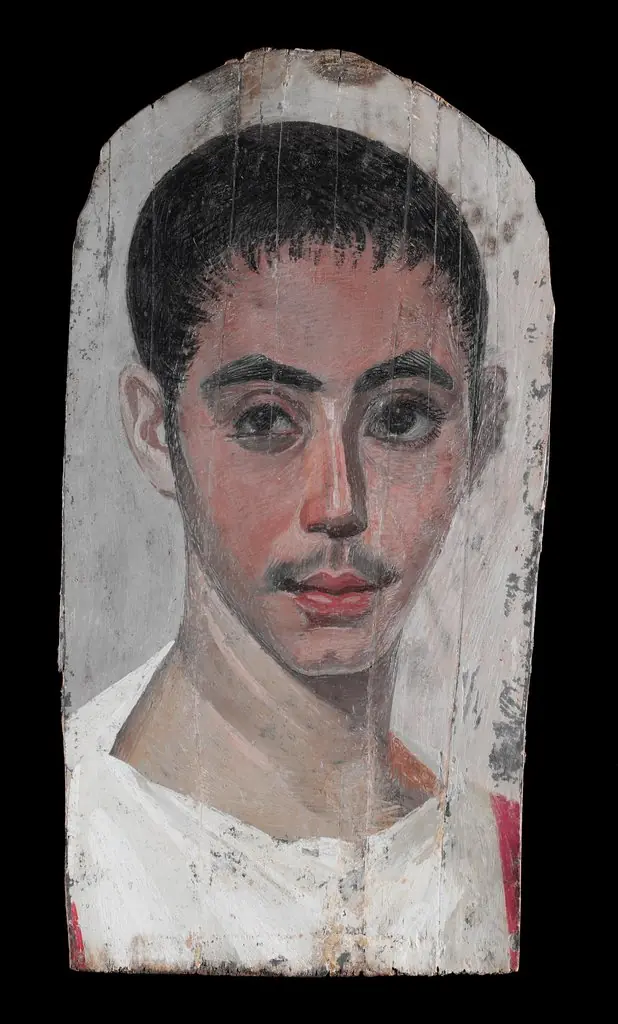 Portrait of a Youth with a Surgical Cut in one Eye
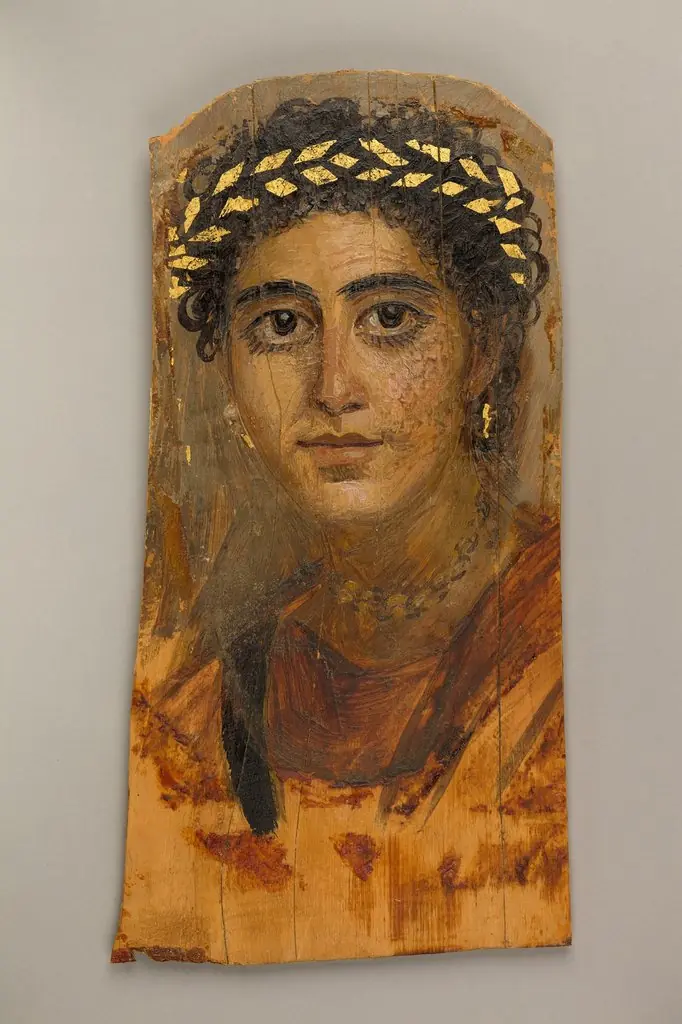 Portrait of a young woman in red
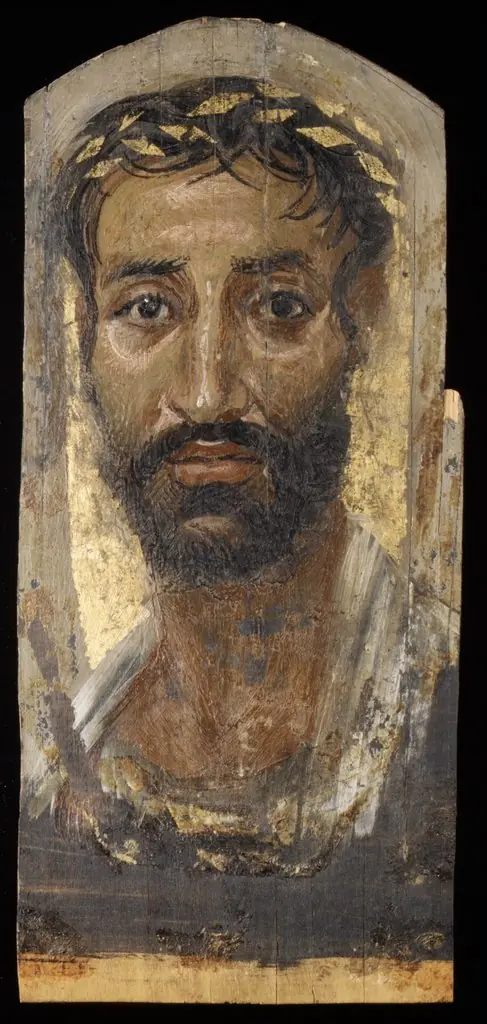 Portrait of a thin-faced man
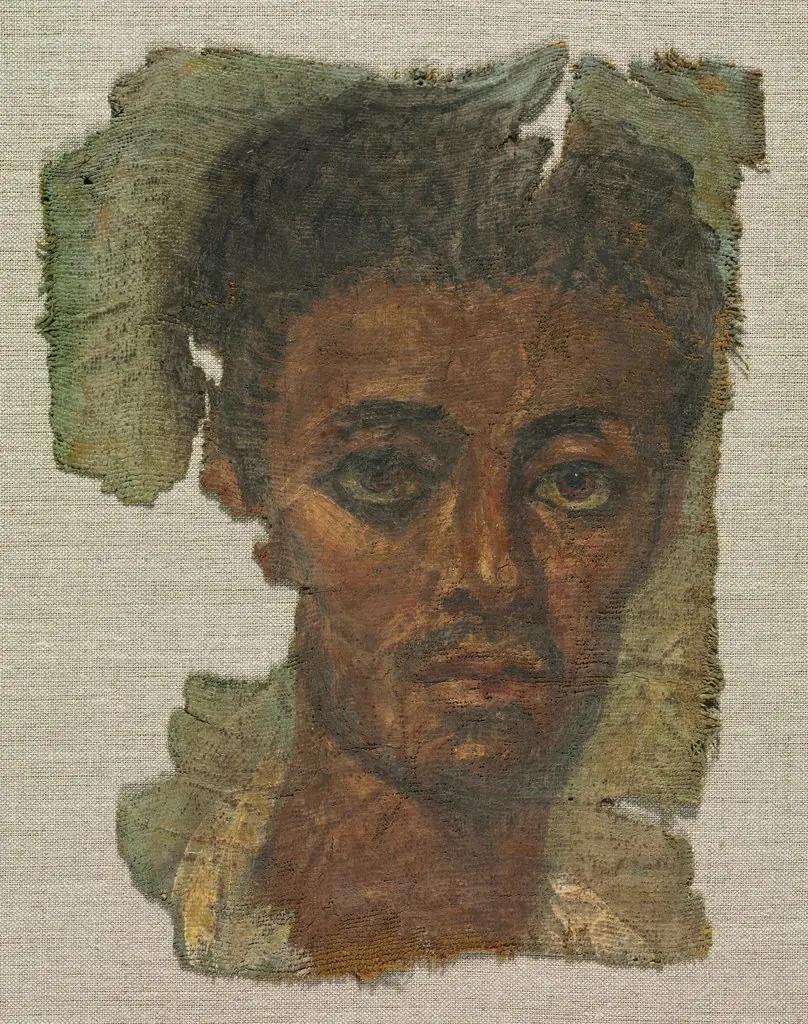 Funerary Panel of a Man
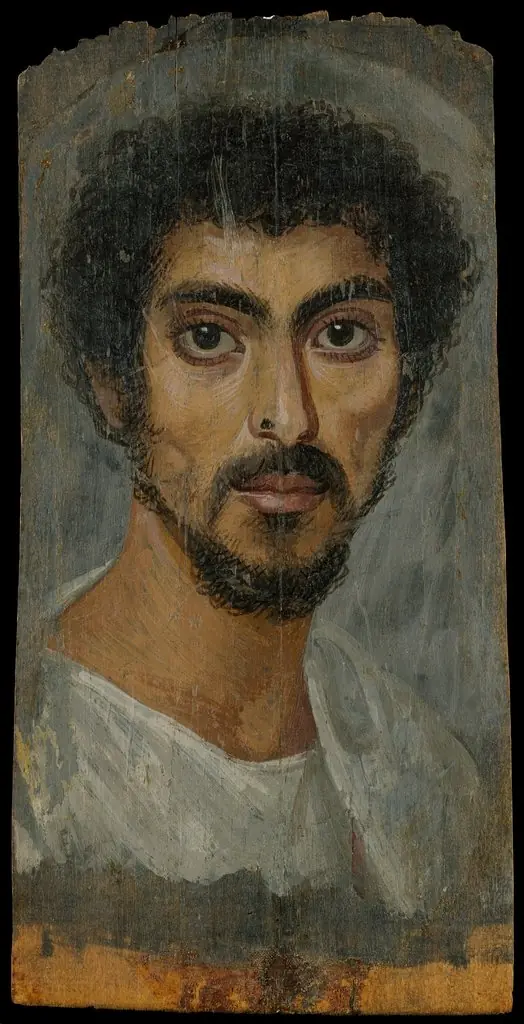 Portrait of a man with a mole on his nose
 Sarcophagus of Ammonios
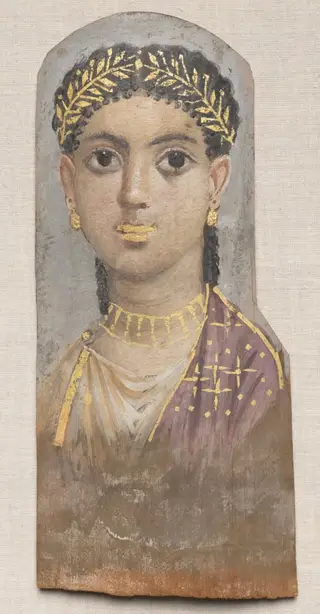 Funerary Portrait of a Young Girl