Artwork
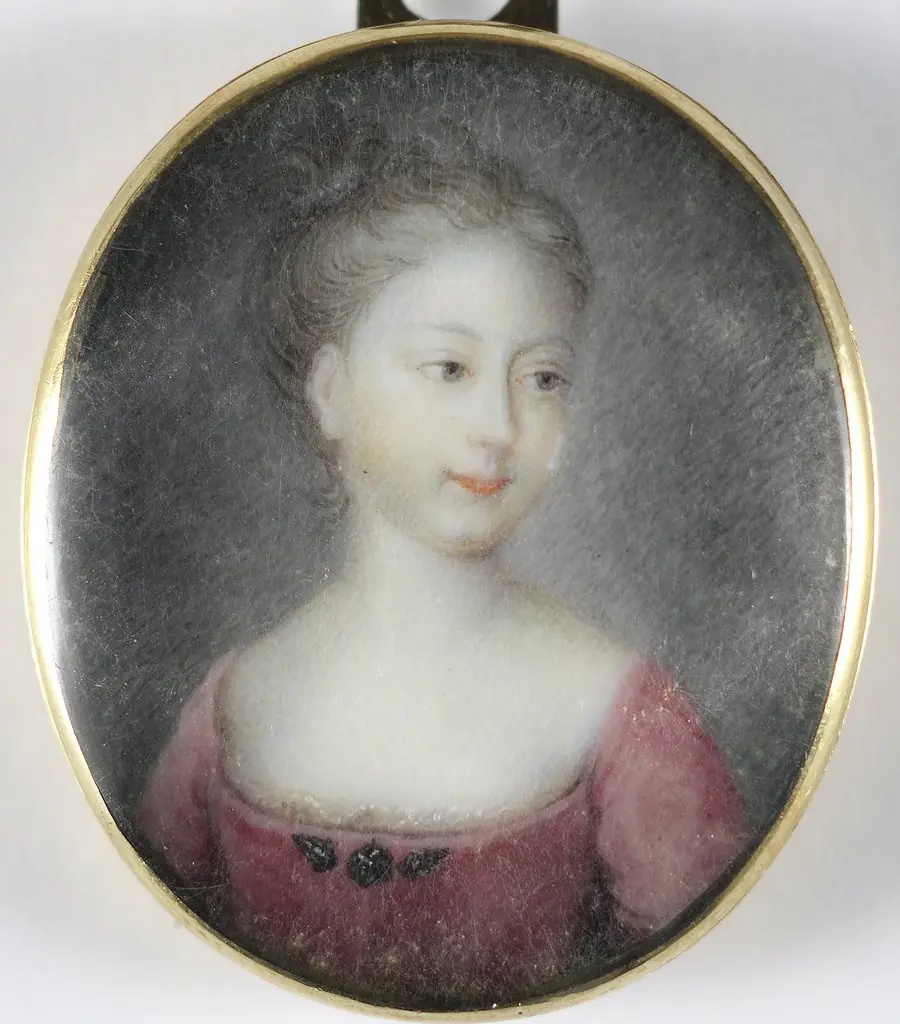
Portret van een meisje, vermoedelijk een dochter van George II, koning van Engeland
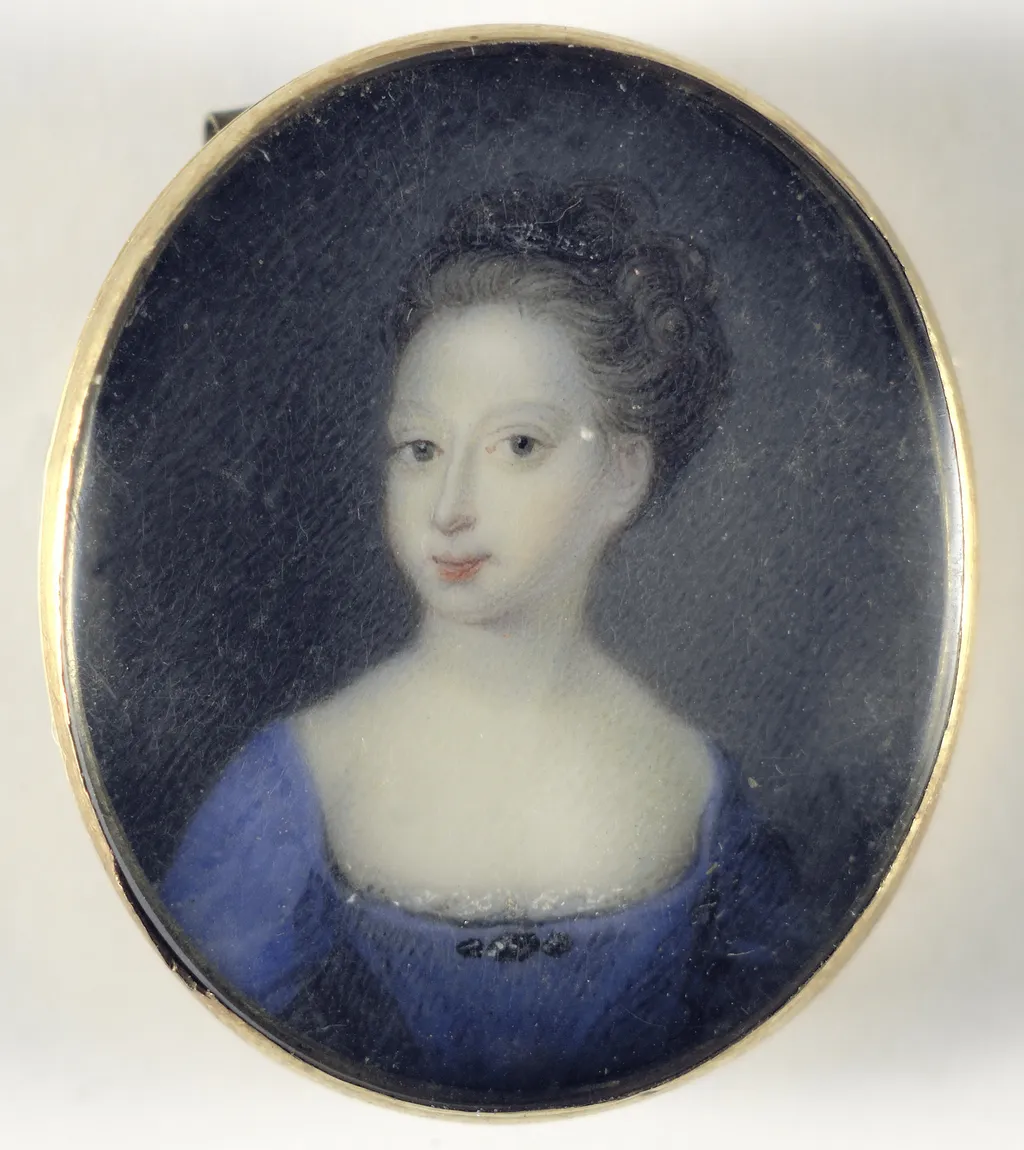
Portret van een meisje, vermoedelijk een dochter van George II, koning van Engeland is an ivory painting. It dates from 1720 and is held in the collection of the Rijksmuseum. This diminutive, circular portrait is executed in carved ivory, presenting a young woman turned directly toward the viewer.
About this work
Subject & Meaning
The painting shows a young girl, likely a daughter of George II of England, rendered on ivory panel.
The painting shows a young girl, likely a daughter of George II of England, rendered on ivory panel. Its iconography centers on the sitter’s delicate features and modest attire, typical of early 18th‑century British portraiture that emphasizes lineage and genteel virtue. The work is interpreted as a representation of aristocratic identity and the sitter’s place within the royal family, reflecting contemporary notions of inheritance and status.
Technique & Style
The work is an anonymous portrait painted on ivory support in 1720, depicting a girl.
The painting measures 2.4 centimeters in height and 2 centimeters in width.
It belongs to the portrait genre and is part of the Rijksmuseum collection.
The artist is identified as a descendant of George II, King of Great Britain.
History & Provenance
The painting is an ivory portrait attributed to an anonymous artist, likely depicting a daughter of George II of Great Britain. It was created in 1720 and is part of the Rijksmuseum collection in Amsterdam, where it remains on display. The work entered the museum's holdings as part of its acquisition of Dutch and Flemish artworks, though specific transaction details are not provided in the source.
Its attribution to the royal lineage is based on stylistic and contextual analysis rather than documented commission records. The painting's dimensions measure 2.4 cm in height and 2 cm in width, consistent with its classification as a small-format portrait on ivory.
The miniature is held in the collection of the Rijksmuseum in Amsterdam. According to the Wikidata record, its location is listed as the Rijksmuseum, and the work forms part of that institution's holdings as an anonymous ivory portrait dating to 1720.
No specific inventory or accession number is recorded in the available sources.
No exhibition history is documented in the available sources.
Context
The painting is recognized as a portrait created circa 1720 in England, depicting a young girl on ivory support measuring 2.4 by 2 units. It is held in the Rijksmuseum collection and attributed to an anonymous artist, though stylistic analysis suggests possible connections to early Georgian portraiture traditions. The work's classification within the portrait genre reflects 18th-century British artistic practice, particularly the emphasis on aristocratic representation through intimate, material-specific formats like ivory painting.
Scholarly attention focuses on its potential link to George II's descendants, with researchers examining how such works contributed to contemporary visual narratives of royal lineage and gender roles.
Overview
This diminutive, circular portrait is executed in carved ivory, presenting a young woman turned directly toward the viewer. Her complexion is light, her hair curls, and she is set against a dark backdrop that isolates the figure. The work measures only a few inches across, emphasizing its intimate scale.
Artist & collection

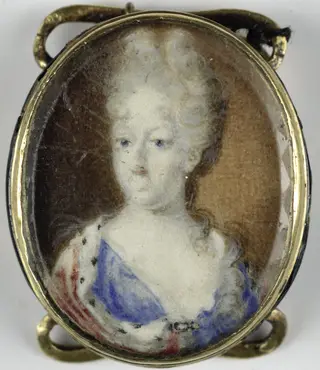 Portret van een vrouw
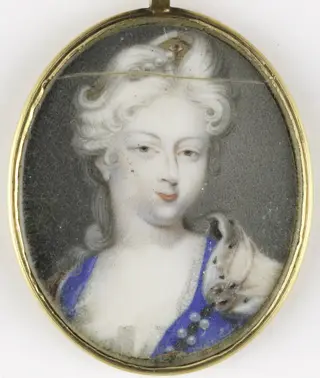 Portret van een vrouw, vermoedelijk Christiane Charlotte van Württemberg (1694-1729)
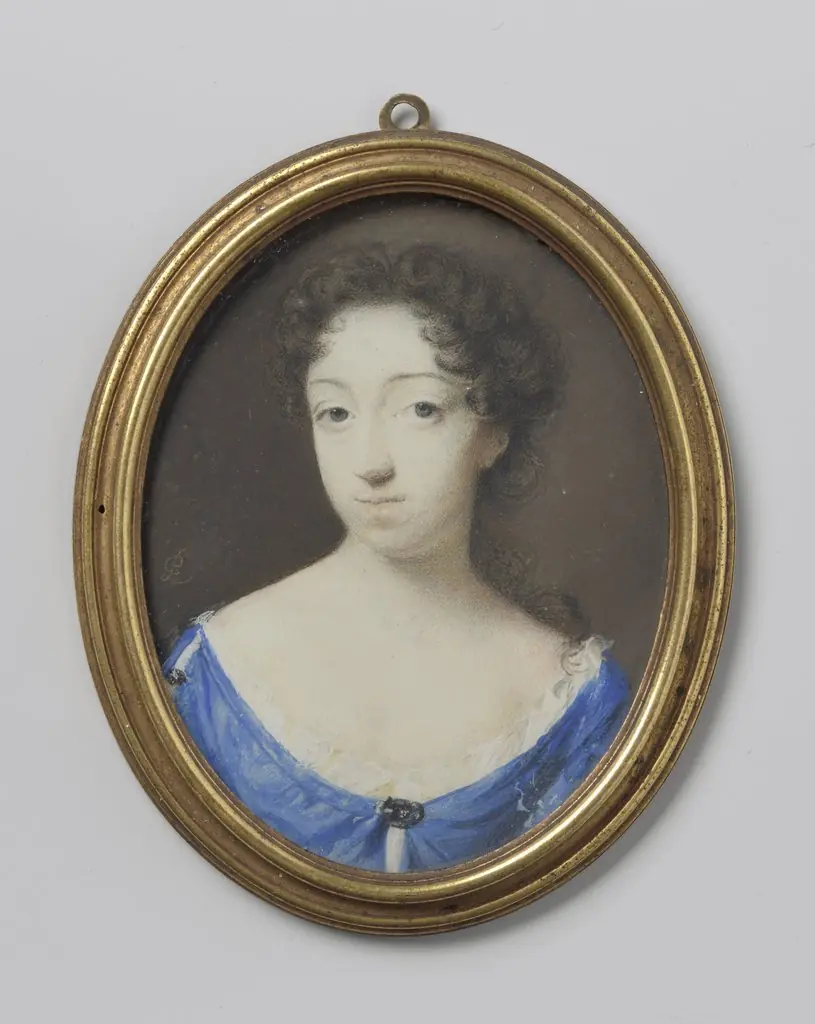 Portrait of a woman
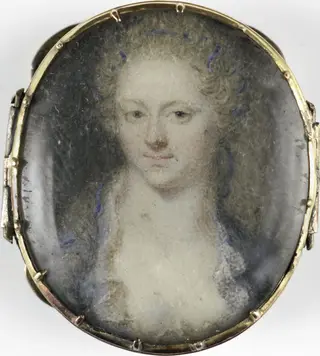 Portret van een vrouw
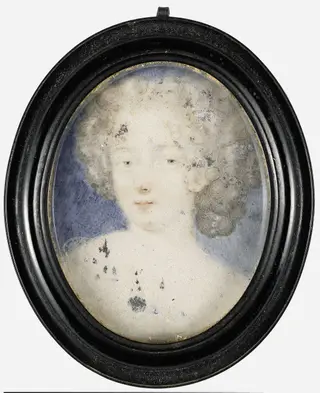 Hortense Mancini (1639-1715), hertogin van Mazarin
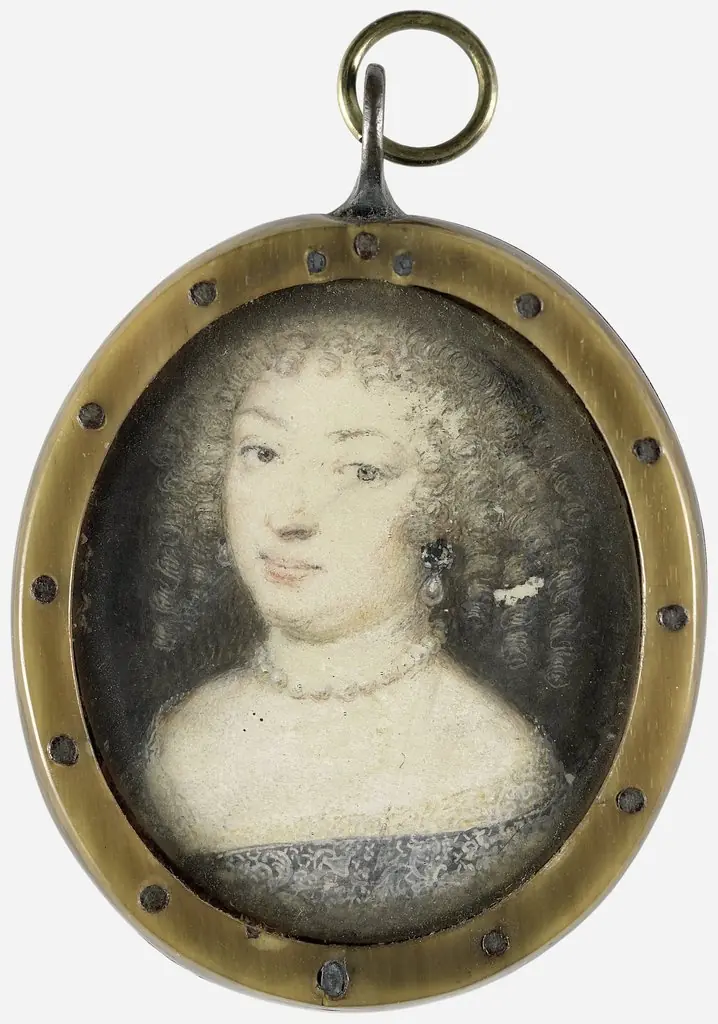 Marie, markiezin van Sévigné (1626-96)
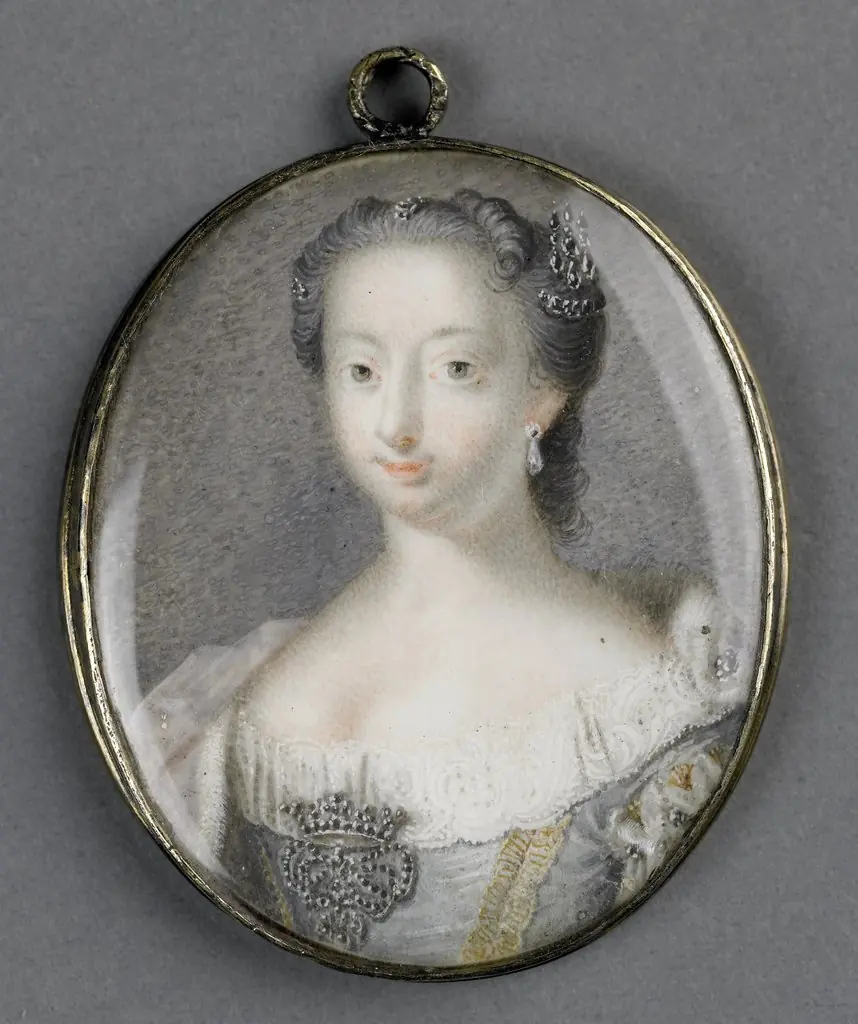 Anna Hanover (1709-59). Wife of Prince William IV
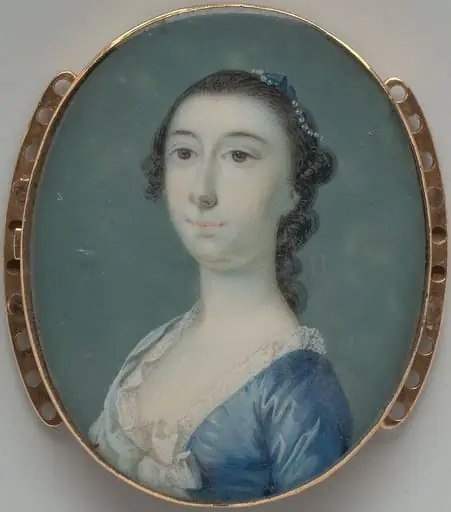 Mrs. Jacob Motte (Rebecca Brewton)
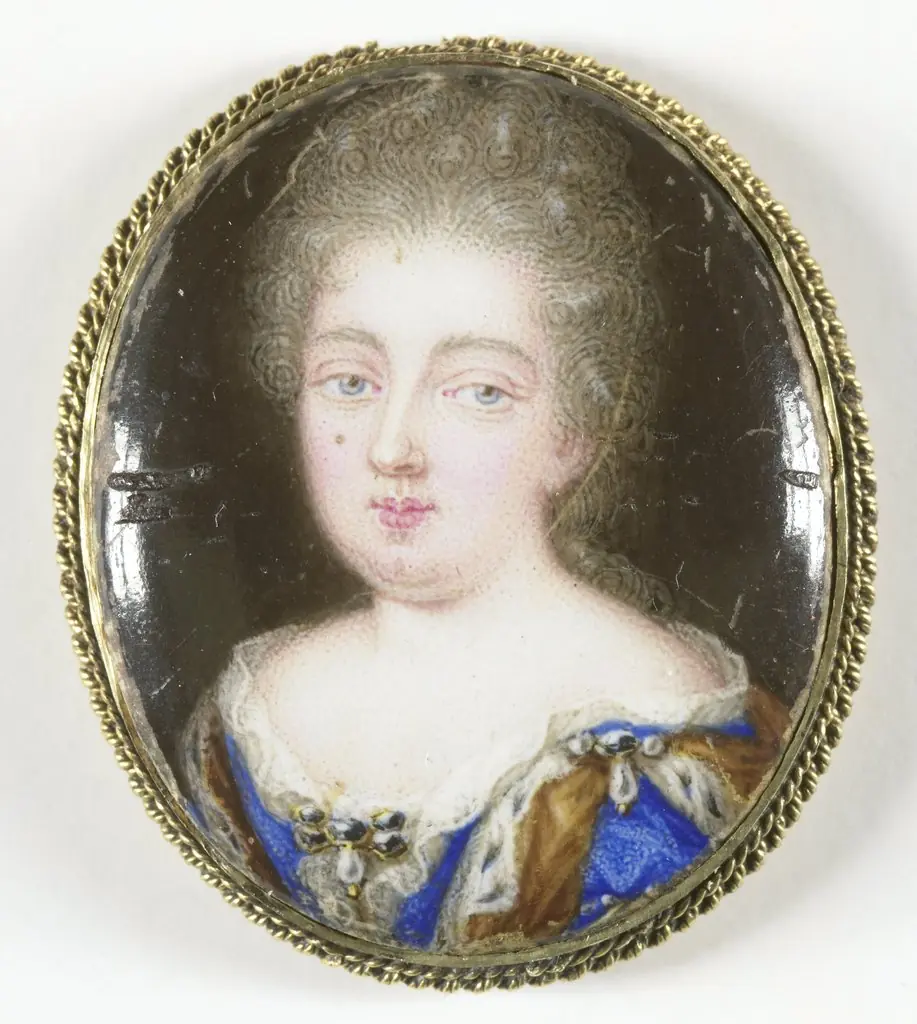 Portrait of an unknown woman
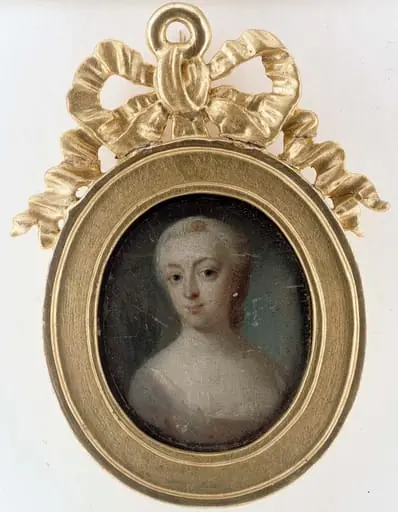 Rouva Eva Ekeblad