Subject
Crucifix
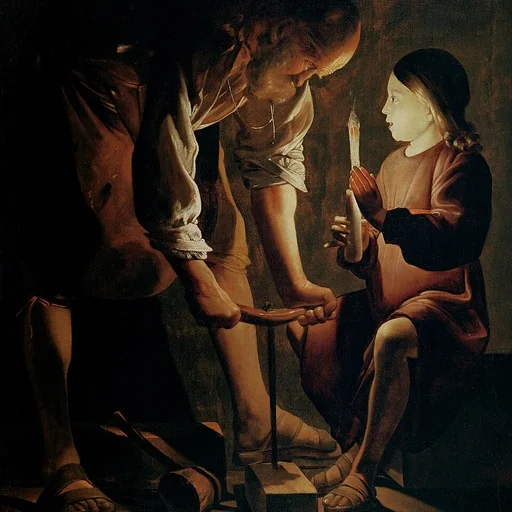
Crucifix is a subject in art. The gallery holds 86 works in this subject in art, including works by Titian, Paolo Veronese and Georges de La Tour.
A crucifix (from the Latin *cruci fixus*, '(one) fixed to a cross') is a cross bearing an image of Jesus Christ — the figure itself being called the *corpus*, 'body' — as distinct from a bare or empty cross. As a devotional image it stands among the central motifs of Christian art, yet it was a comparatively late arrival. For the first three centuries the faithful largely avoided the subject, the cross being an instrument of degrading Roman execution; the earliest surviving representation is in fact a hostile one, the *Alexamenos graffito* of around 200 AD on the Palatine in Rome, which mocks a Christian worshipping a crucified, donkey-headed god. Reverent images entered the mainstream only in the fifth century, as on the carved wooden doors of Santa Sabina in Rome, and in the late-sixth-century Syriac *Rabbula Gospels*.
From these beginnings two great iconographic types emerged. The earlier *Christus triumphans* shows Christ erect, eyes open, victorious over death even upon the cross; the later *Christus patiens* depicts the suffering Christ, body sagging, head fallen, eyes closed. A pivotal monument in this shift is the *Gero Crucifix* in Cologne Cathedral (c. 965–970), commissioned by Archbishop Gero — at 187 cm the oldest large sculpture of the crucified Christ north of the Alps, and one of the first to dwell on his mortal pain.
In Italy the *Christus patiens* was popularised through Franciscan piety. It appears in the painted crosses of Giunta Pisano, gains expressive force and chiaroscuro modelling in Cimabue, and reaches a new naturalism in Giotto's crucifix for Santa Maria Novella, Florence. North of the Alps the type culminated in Matthias Grünewald's harrowing *Isenheim Altarpiece* (c. 1512–1516), painted for a hospital order and showing Christ's body pitted with plague-like sores to console the dying.
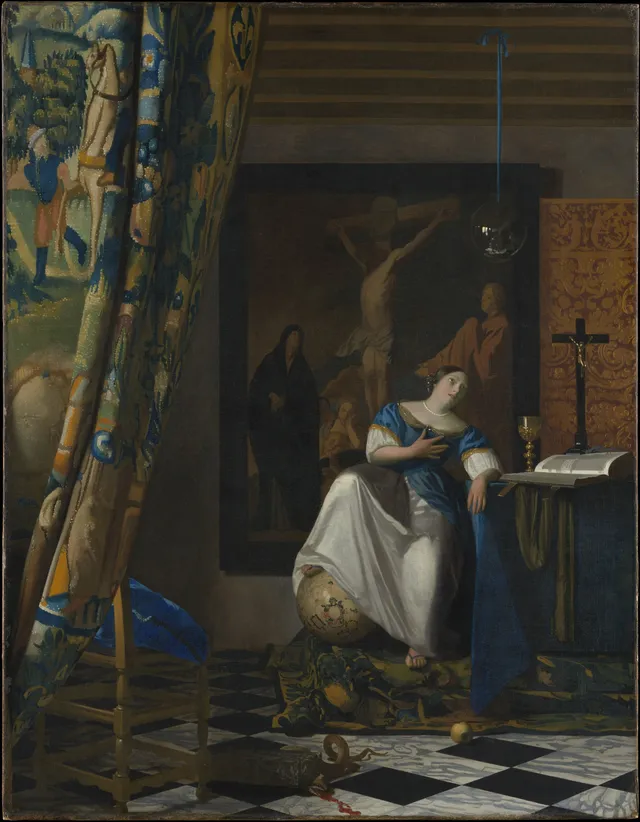
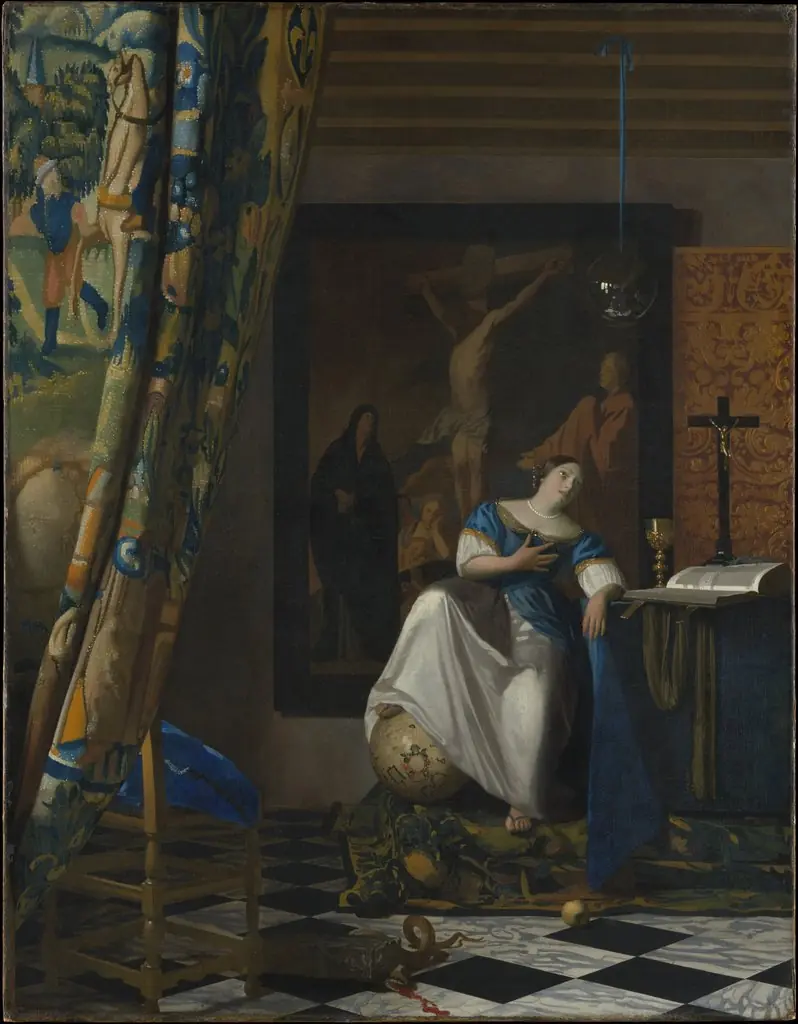
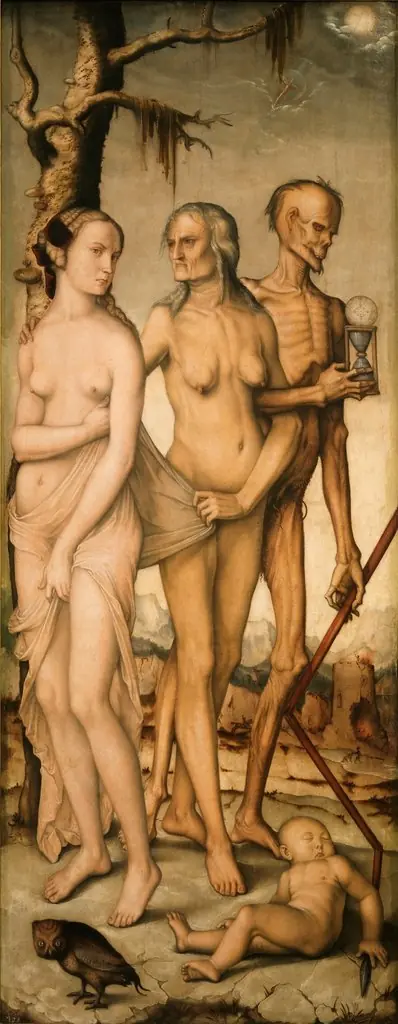
The motif endured through the Baroque, where Spanish masters such as Bartolomé Esteban Murillo — represented here by *The Crucifixion* — set a luminous, limp Christ against a darkened sky for meditative devotion. The crucifix also recurs as an attribute within larger compositions, as in Johannes Vermeer's *Allegory of the Catholic Faith* and Hans Baldung Grien's *The Ages and Death*. From Romanesque sculpture to Renaissance panel and Counter-Reformation canvas, it remains the most enduring image of Christian sacrifice in Western art.
Key artists
Overview
A crucifix is a cross bearing an image of Jesus Christ, distinct from a bare cross. The term derives from the Latin cruci fixus, meaning '(one) fixed to a cross,' and the representation of Jesus himself is called the corpus (Latin for 'body'). As one of the most common forms of the Crucifixion in the arts, the crucifix emphasizes Jesus' sacrificial death and its role in the redemption of mankind. It serves as a principal symbol for Catholics, Lutherans, Anglicans, Eastern Orthodox, and most Oriental Orthodox Christians, though it is less common in many Protestant denominations and in the Assyrian Church of the East and Armenian Apostolic Church, which prefer crosses without the corpus. The crucifix appears across diverse media, from monumental church installations to small personal devotional objects, and has been depicted in at least 107 works in the collection under discussion.
Iconography & meaning
The iconography of the crucifix carries layered theological and symbolic meanings. The standard Latin crucifix consists of an upright post (stipes) and a crosspiece, sometimes bearing the inscription INRI (Greek: INBI), abbreviating 'Jesus of Nazareth, King of the Jews.' Western crucifixes typically feature a three-dimensional corpus, while Eastern Orthodox examples normally present Jesus as a two-dimensional or low-relief icon, his face peaceful and somber, emphasizing triumph over sin and death rather than suffering. Eastern crucifixes also show Jesus' feet nailed side by side, rather than crossed one above the other as in Western examples since around the 13th century, and generally omit the crown of thorns. The S-shaped slumping body, a Byzantine innovation of the late 10th century, spread to the West and became associated with the suffering Christ (Christus patiens), particularly through Franciscan influence in Italy. Alternative symbolic depictions include the Christus triumphans, showing a robed, victorious Christ with raised arms, sometimes encircled by light. The skull and crossbones occasionally appearing beneath the corpus reference Golgotha, 'the place of the skull,' and medieval tradition identifying it as Adam's burial place.
Across movements & periods
The treatment of the crucifix evolved significantly across artistic movements and cultural contexts. Early Christian art rarely depicted the Crucifixion, preferring the triumphant risen Christ; the earliest Western church images date to the 5th century, such as the wooden doors of Santa Sabina in Rome (c. 430 CE). Byzantine iconography developed the S-shaped, dead Christ, which influenced Western art through Italian channels. The 13th century marked a decisive shift toward the suffering Christ (Christus patiens) in the West, driven by Franciscan spirituality and artists such as Giunta Pisano and Cimabue. The Renaissance moderated the S-curve in favor of more balanced, anatomically studied forms, as seen in Raphael's early Mond Crucifixion (1502-1503). Baroque artists intensified emotional and physical realism, with Caravaggio's tenebrist Crucifixion of Saint Peter (1601) and Rubens's dramatic Elevation of the Cross (1610-1611) exemplifying the period's theatrical pathos. Modern and contemporary artists have radically reinterpreted the form: Salvador Dalí's Corpus Hypercubus (1954) replaced the traditional cross with a hypercube, while Francis Bacon's grotesque triptychs used the Crucifixion as what he called a 'magnificent armature' for existential suffering.
Notable depictions
Canonical crucifixes and Crucifixion images punctuate art history. The Gero Cross in Cologne (c. 970), an early Ottonian carved oak, presents an unusually suffering Christ for its period. Giotto's Berlin Crucifixion (1320) and Scrovegni Chapel fresco introduced emotional gravity and spatial depth. Raphael's Mond Crucifixion or Gavari Altarpiece (1502-1503), now at the National Gallery, London, exemplifies High Renaissance harmony. Michelangelo's final fresco, The Crucifixion of Saint Peter (1546-1550) in the Vatican's Cappella Paolina, monumentalizes martyrdom with muscular tension. Titian's Crucifixion (1558) for San Domenico, Ancona, and Tintoretto's vast wall painting (1565) for the Scuola Grande di San Rocco demonstrate Venetian monumental scale. Velázquez's Christ Crucified (1632) at the Museo del Prado strips the scene to essential contemplative focus. In modern times, Dalí's Christ of Saint John of the Cross (1951) and Corpus Hypercubus (1954) offer surrealist, celestial perspectives, while Gauguin's Yellow Christ (1889) transposes the motif into a symbolic Breton landscape.
Legacy
The crucifix has maintained profound cultural resonance while generating ongoing debate about representation and devotion. Its role in Christian liturgy remains central: Roman Catholic Mass requires a cross with Christ's figure near the altar, and the Good Friday veneration of the crucifix persists as a solemn ritual. The symbol's absence in many Reformed and evangelical traditions underscores enduring denominational distinctions about imagery. In popular culture, the crucifix has been appropriated for shock, critique, or universalized suffering, sometimes divorced from its theological origins. Museums and collections worldwide preserve crucifixes as historical artifacts and artworks, from the International Museum of Crosses displaying global variations to the Smithsonian's ethnographic holdings. The motif's adaptability, from 17-meter triumphal crosses to pocket-sized rosary pendants, attests to its sustained capacity to mediate sacred narrative across scales, materials, and viewing contexts.
Works
 Allegory of the Catholic Faith
 The Ages and Death
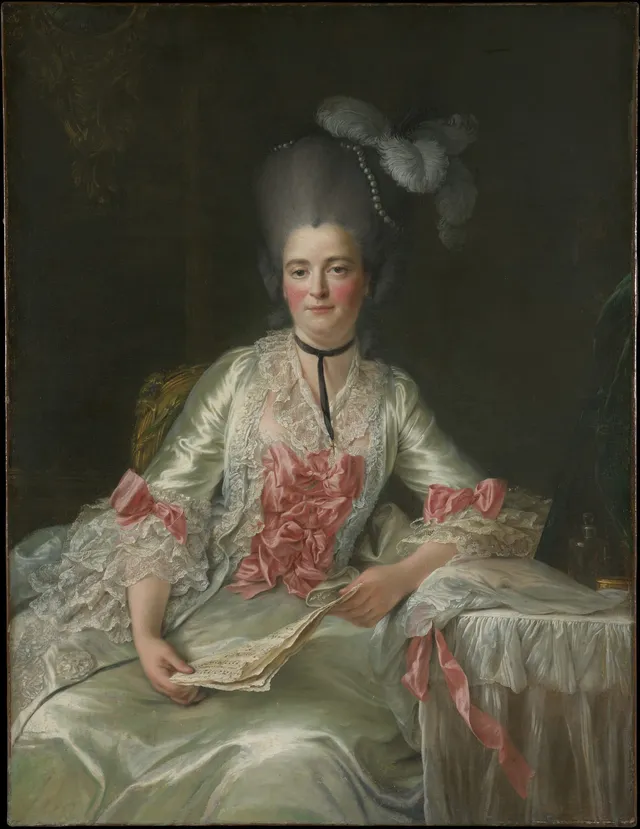
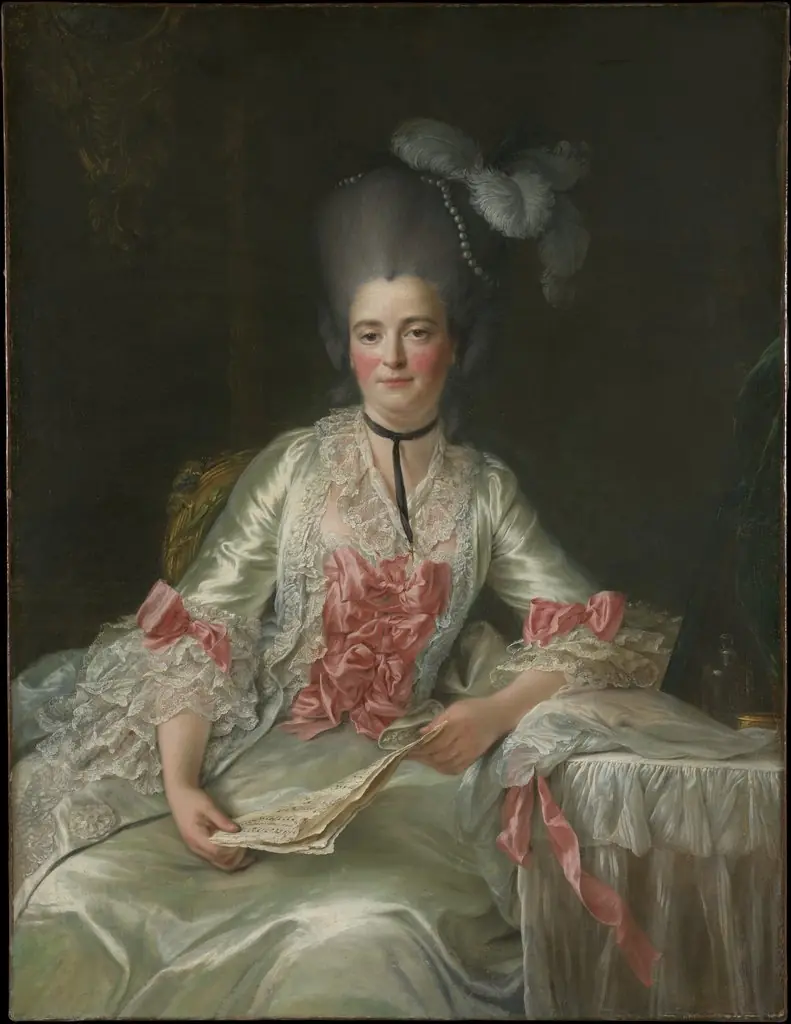 Marie Rinteau, called Mademoiselle de Verrières
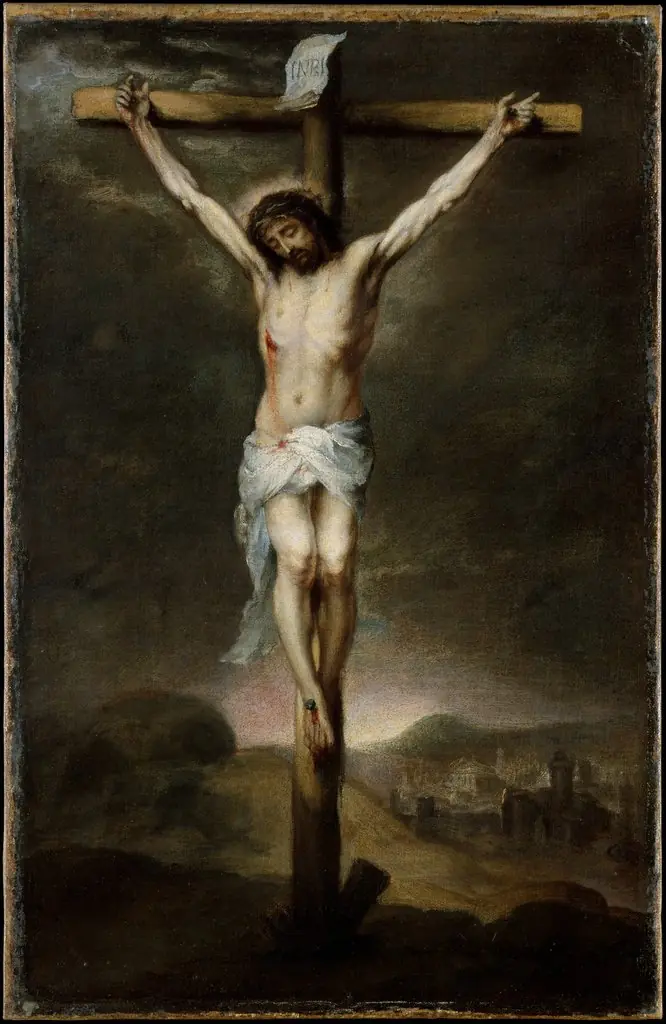 The Crucifixion
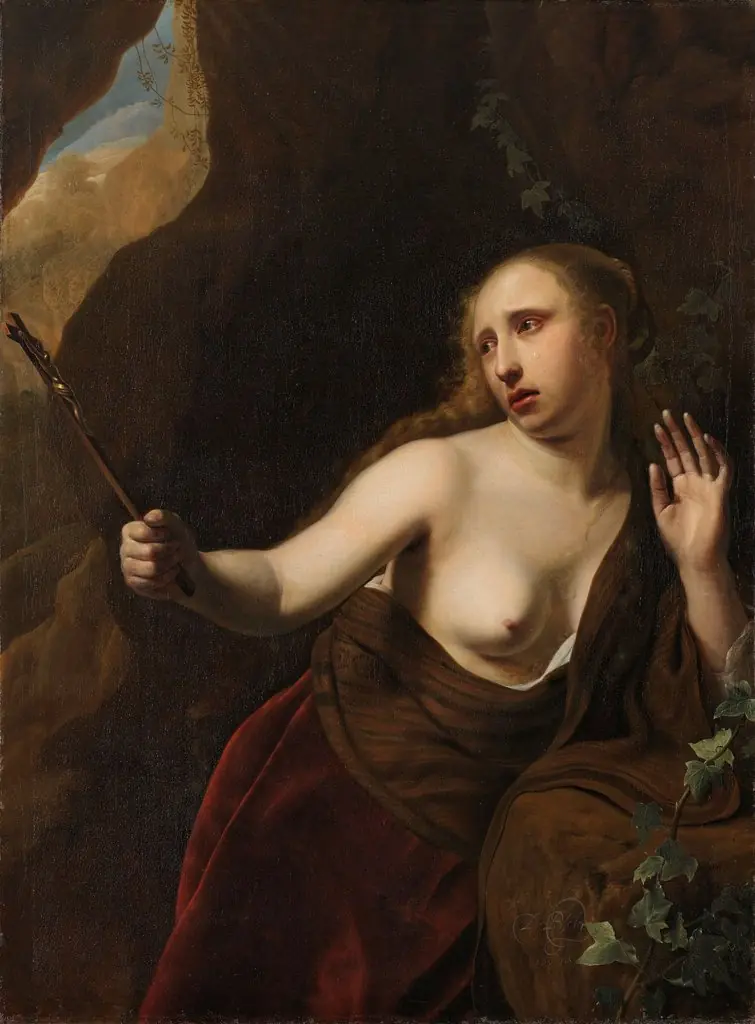 The penitent Mary Magdalene
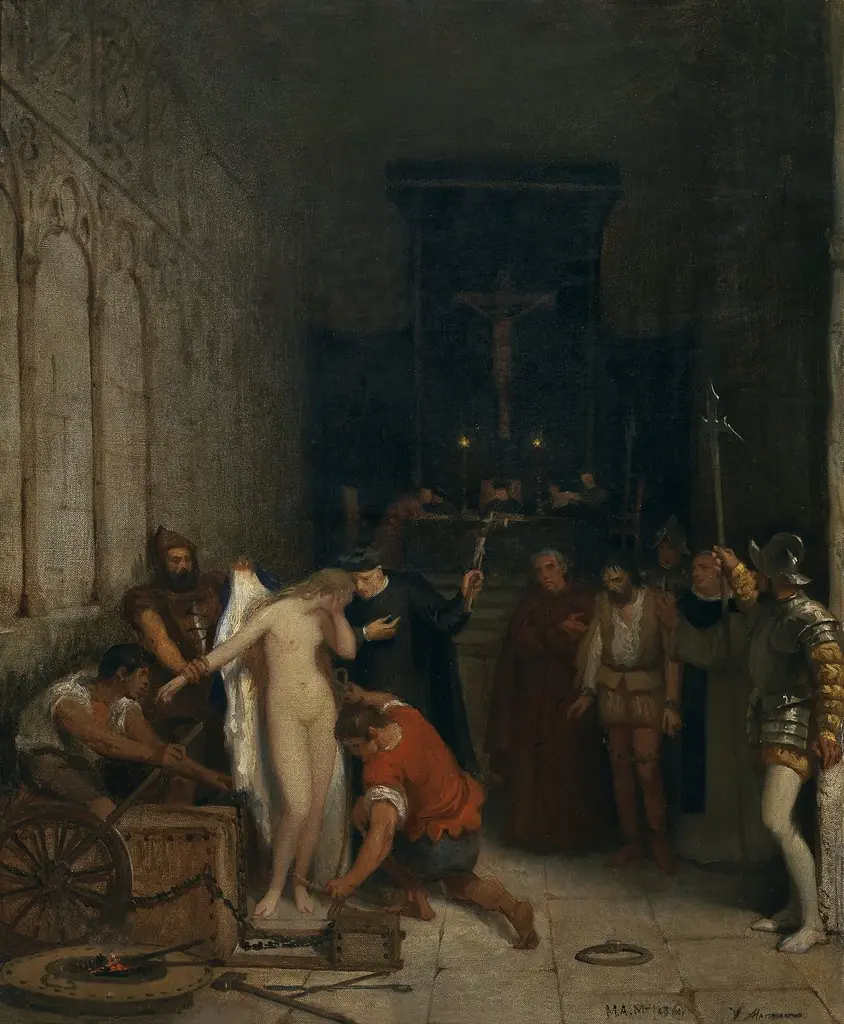 Una escena de la Inquisición
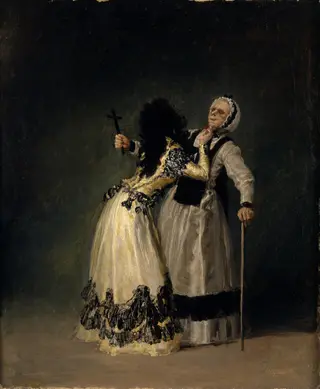 The Duchess of Alba and la Beata
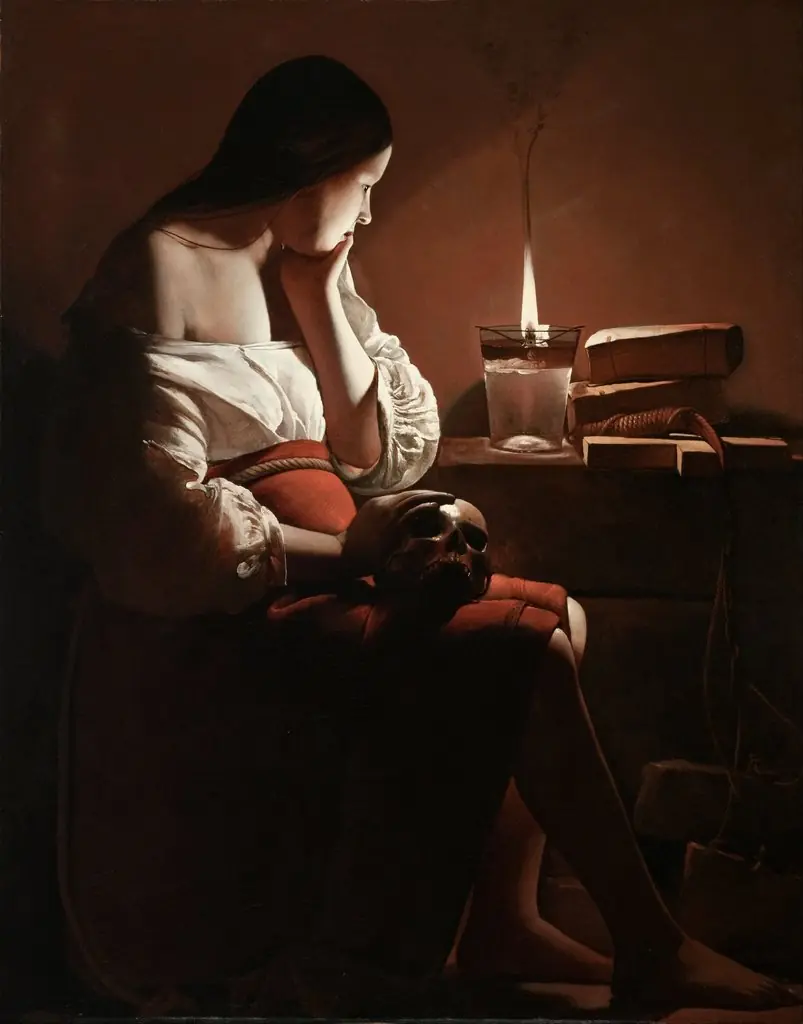 Magdalen with the Smoking Flame
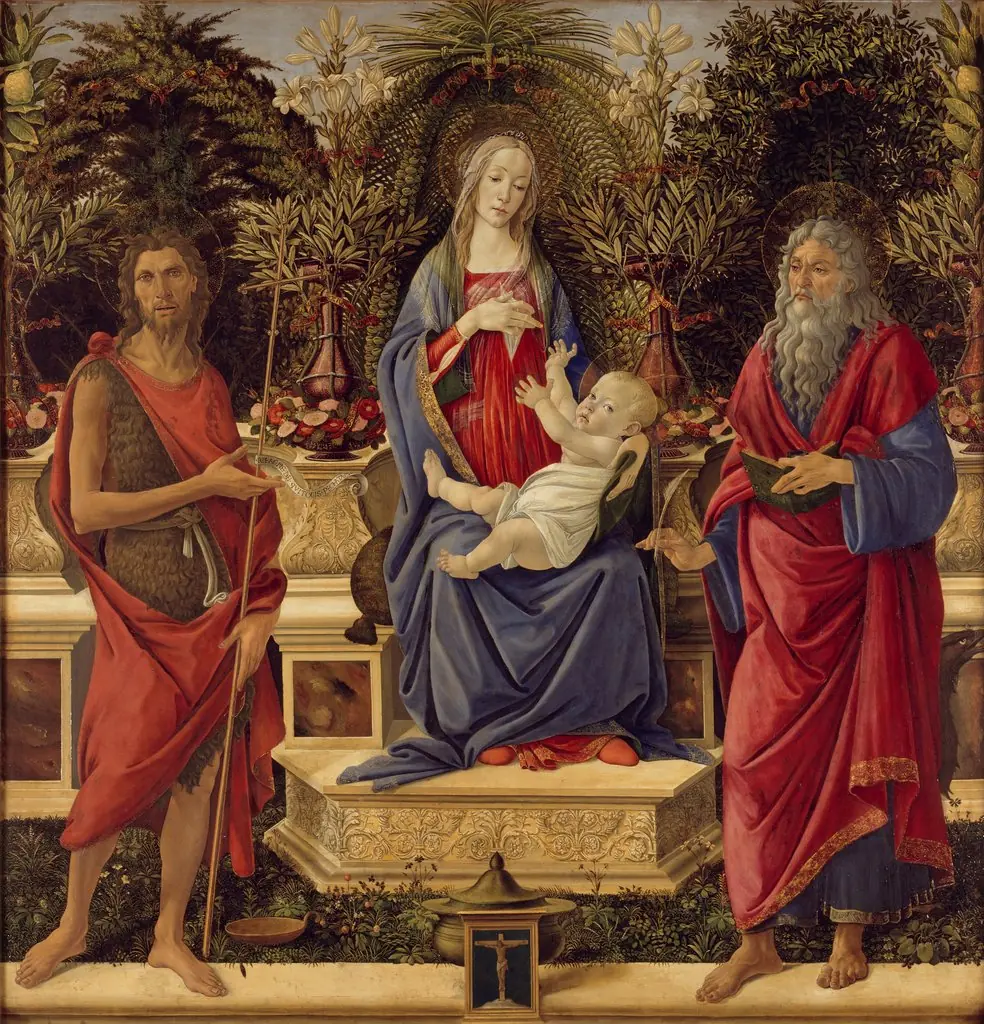 Madonna Bardi
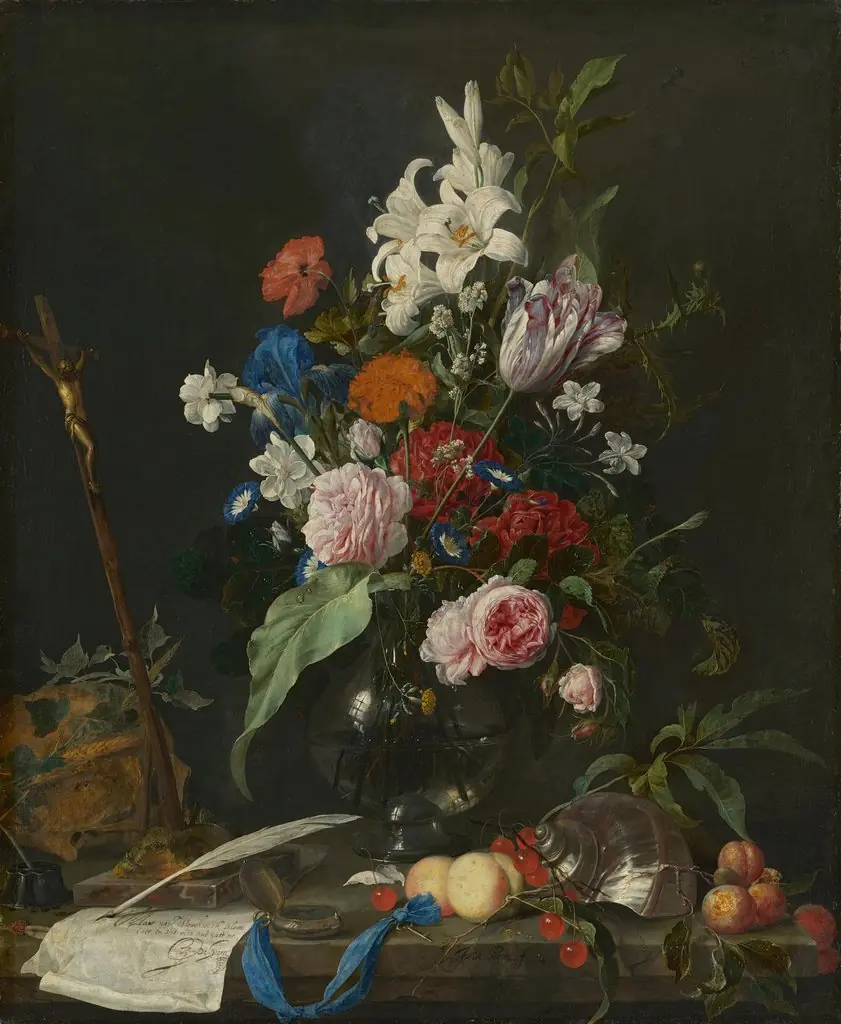 Flower still-life with a skull and crucifix
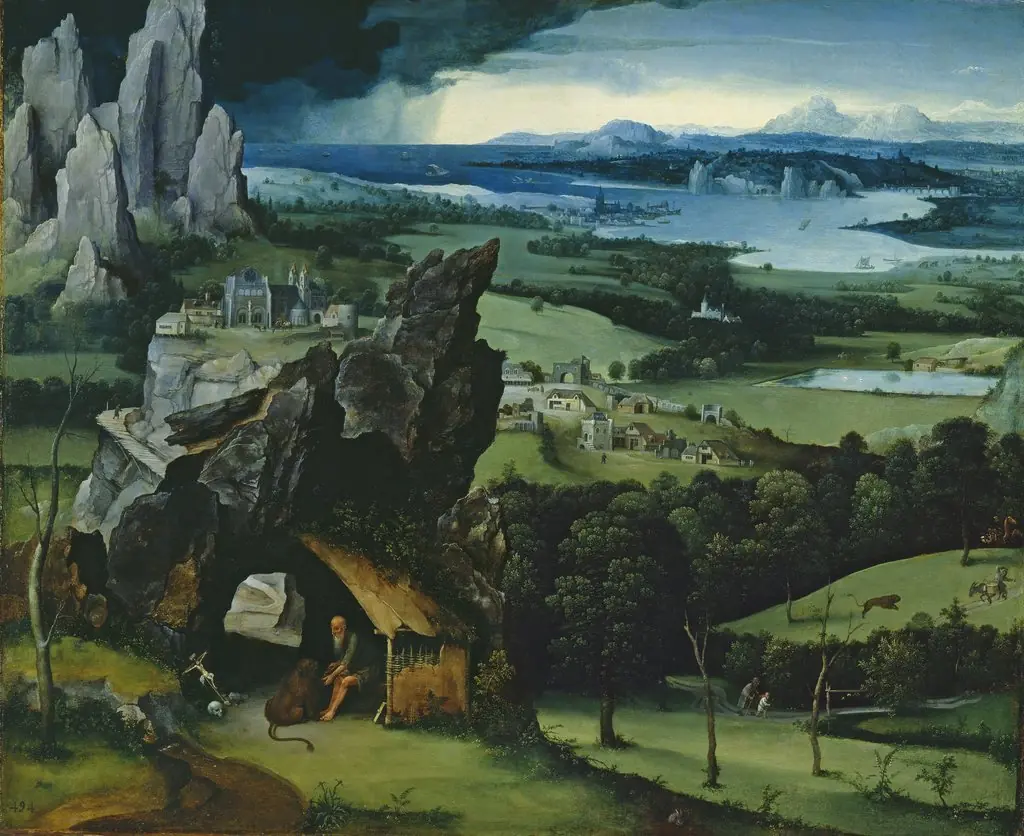 Landscape with St Jerome
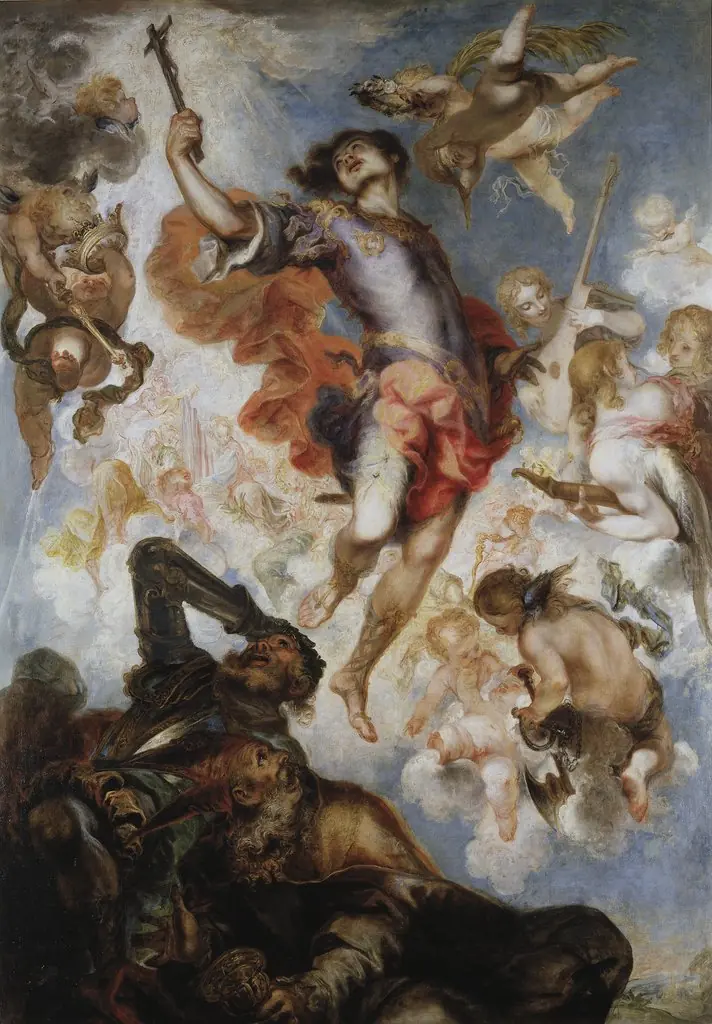 The Triumph of Saint Hermenegildo
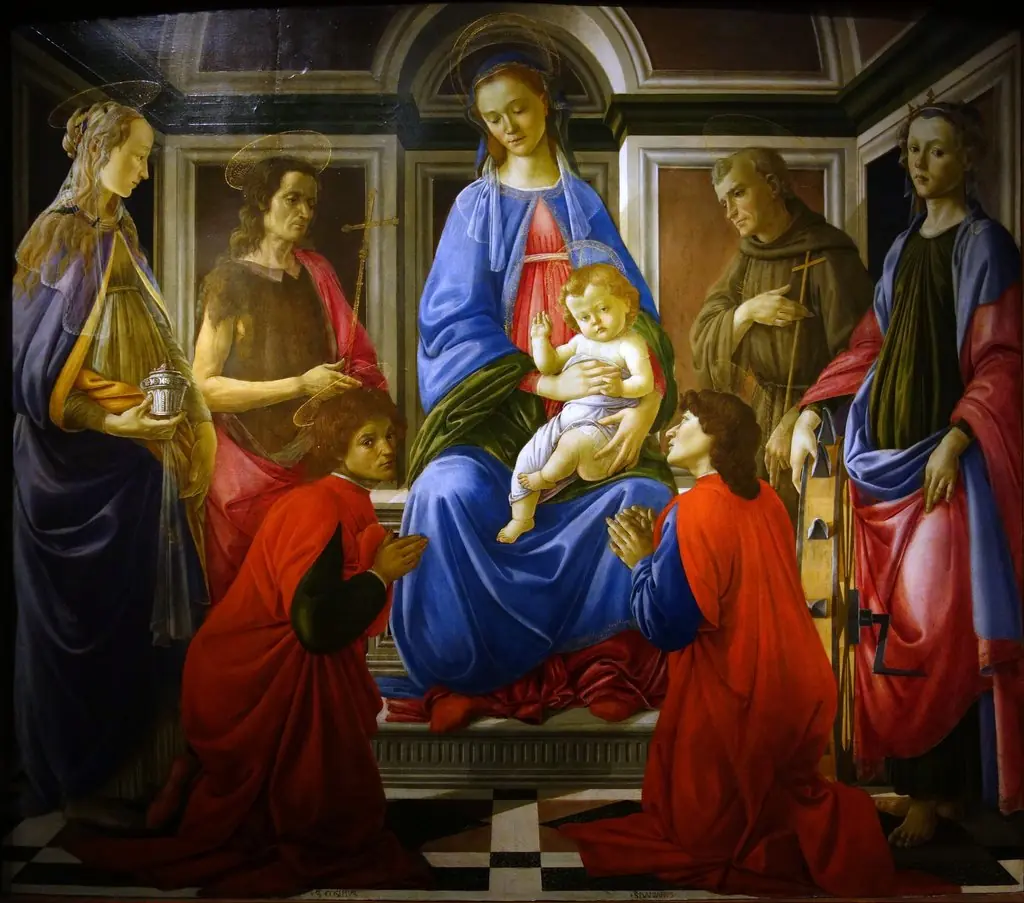 Sant'Ambrogio Altarpiece
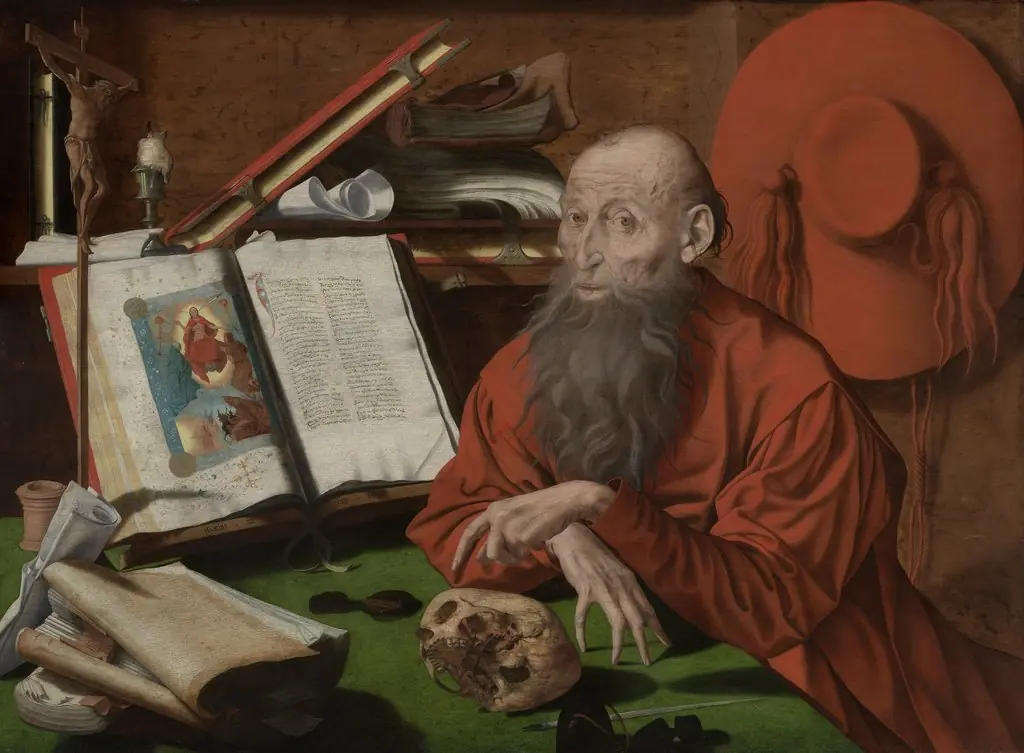 Saint Jerome in His Study
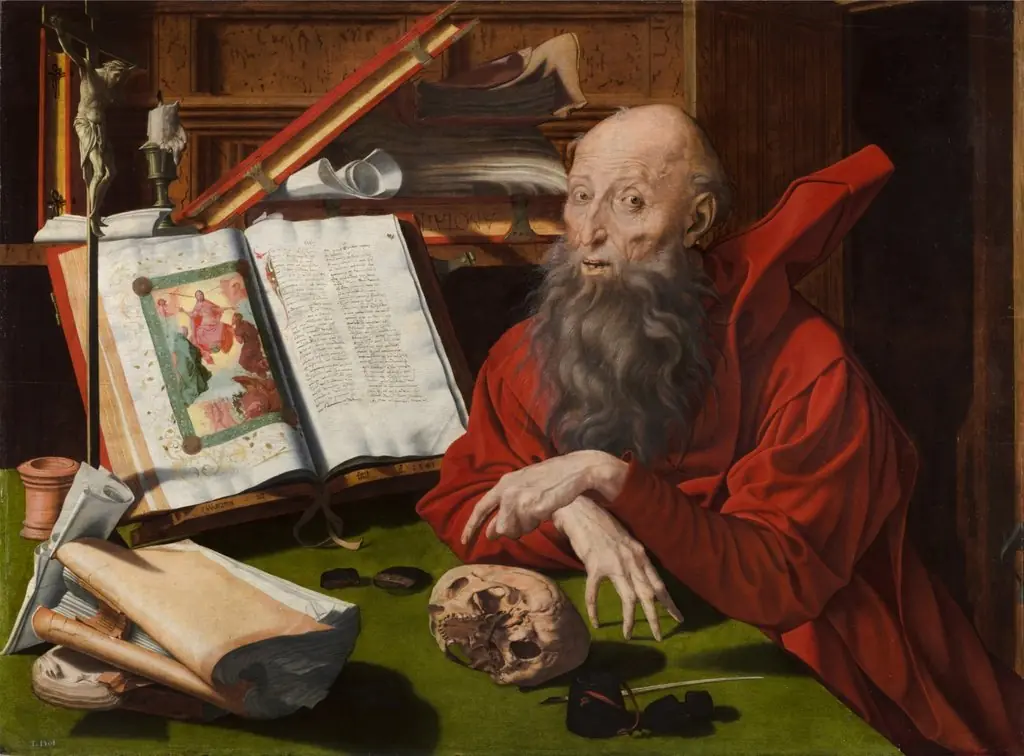 Saint Jerome in his study
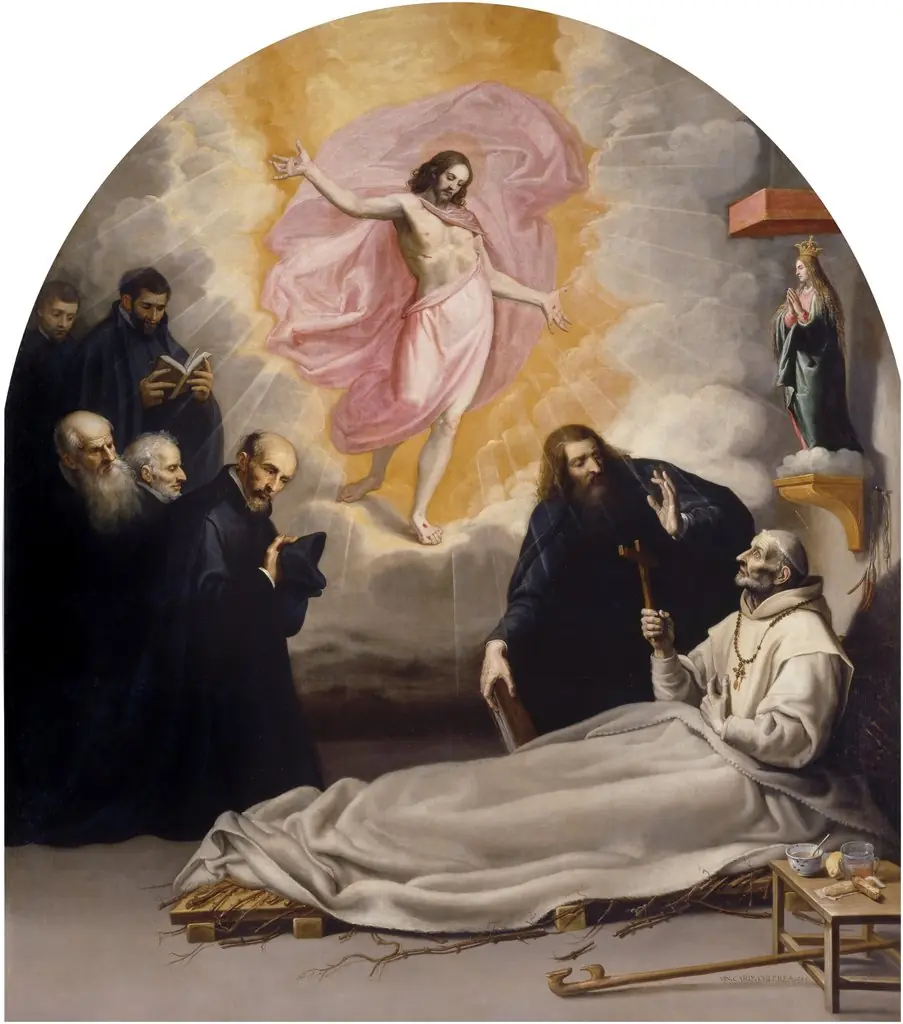 The Death of the Venerable Odón de Novara
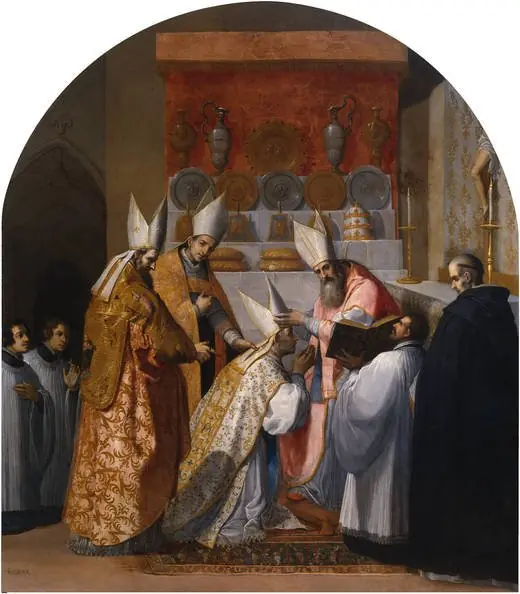 Pope Alexander III Consecrates Anthelm of Chignin as Bishop of Belley
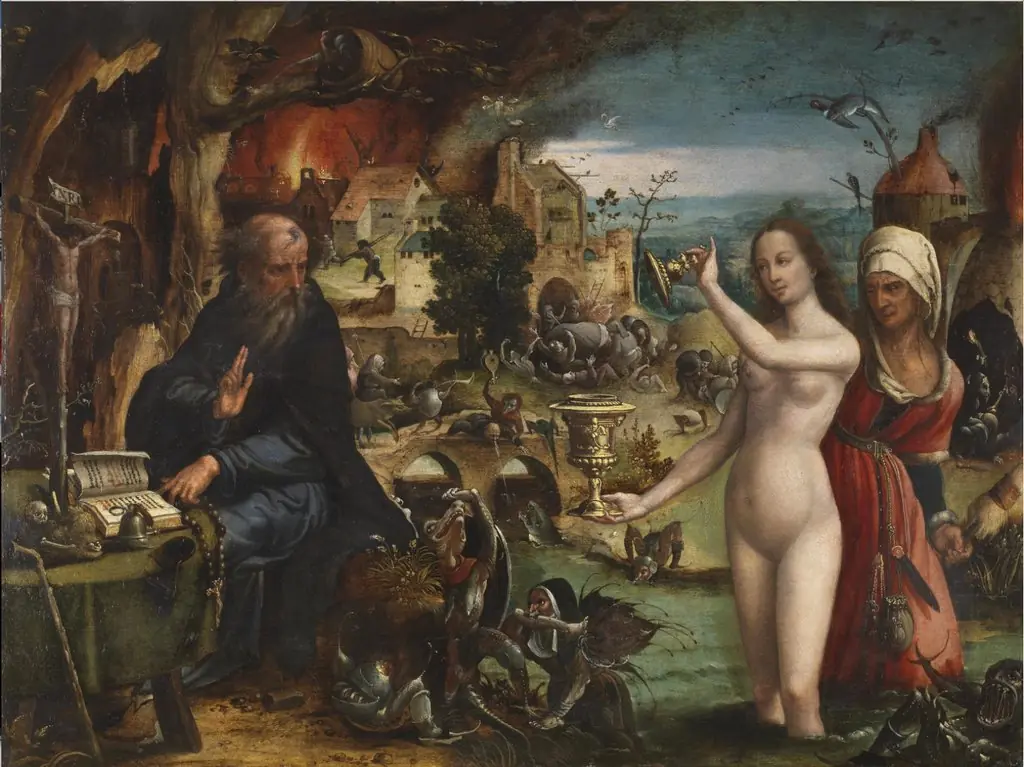 The Temptations of Saint Anthony Abbot
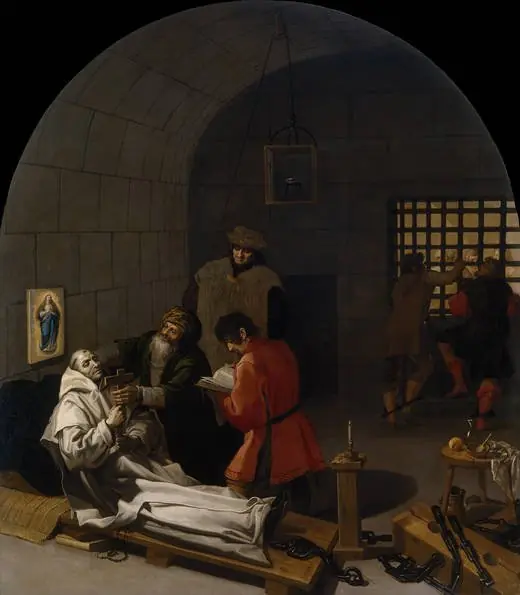 Landuino Dies in Jail
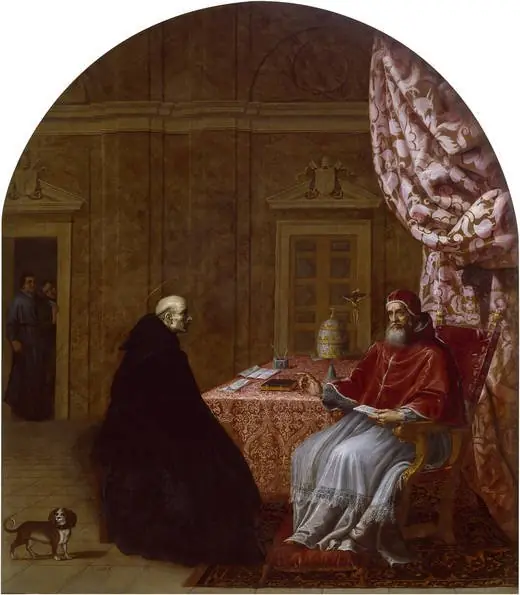 Urban II Deliberates with Saint Bruno
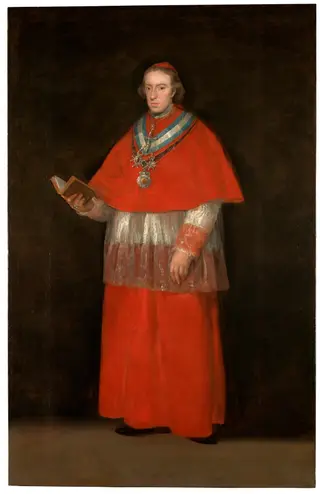 Cardinal Luis María de Borbón y Vallabriga
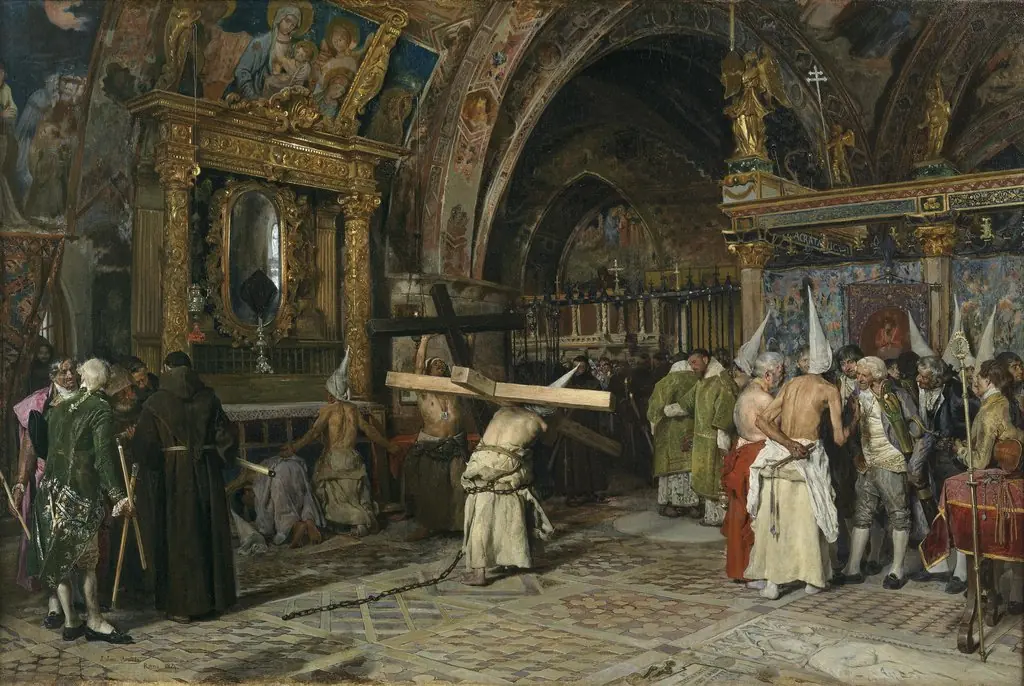 Penitents in the Lower Basilica of Assisi
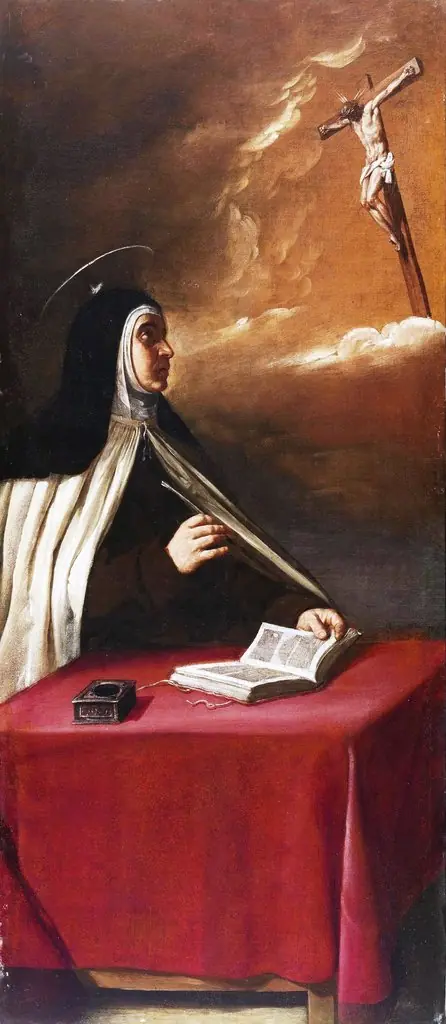 The crucified Christ appears to Saint Teresa of Avila
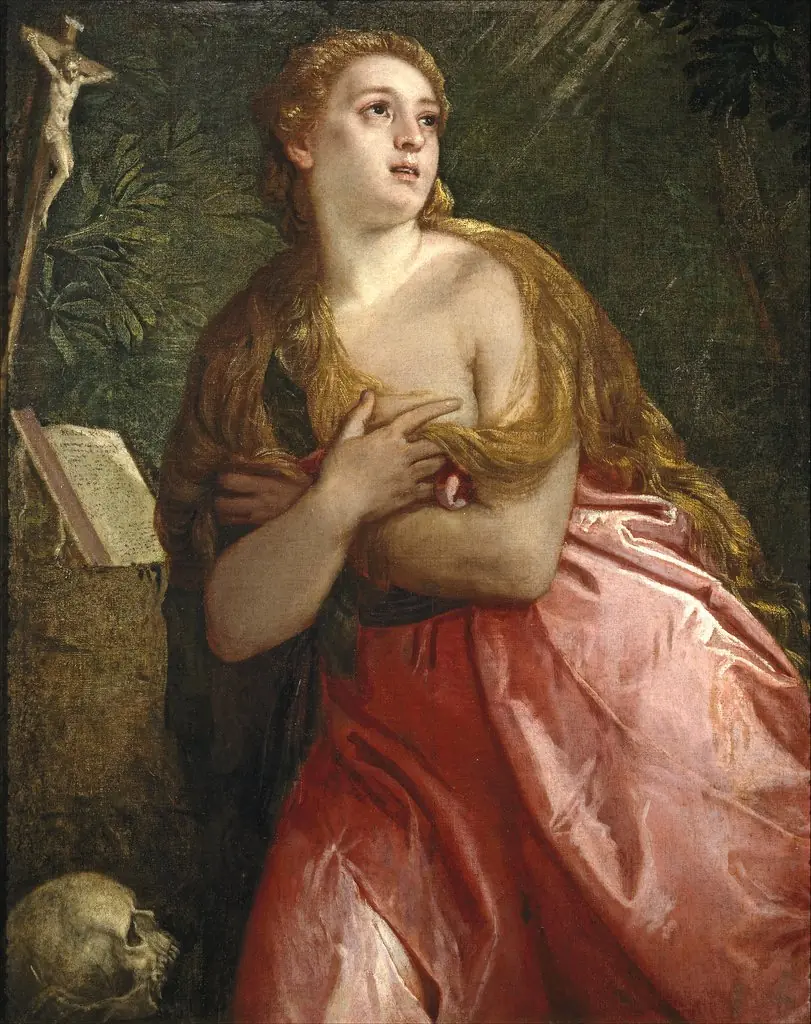 The Penitent Magdalen
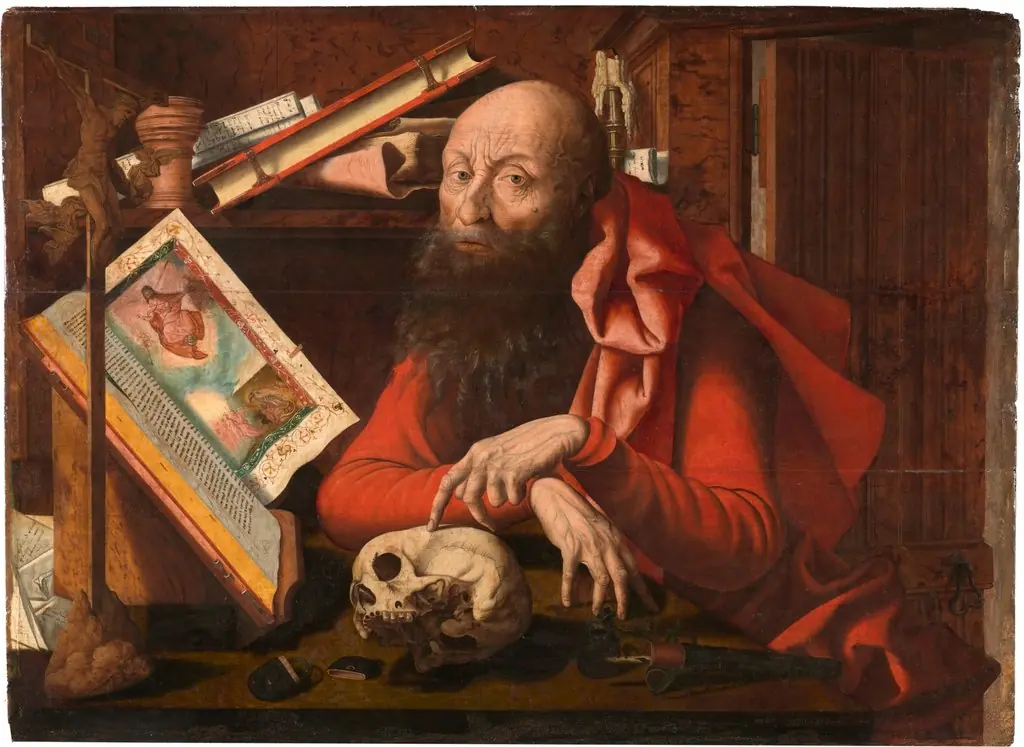 Saint Jerome in his Study
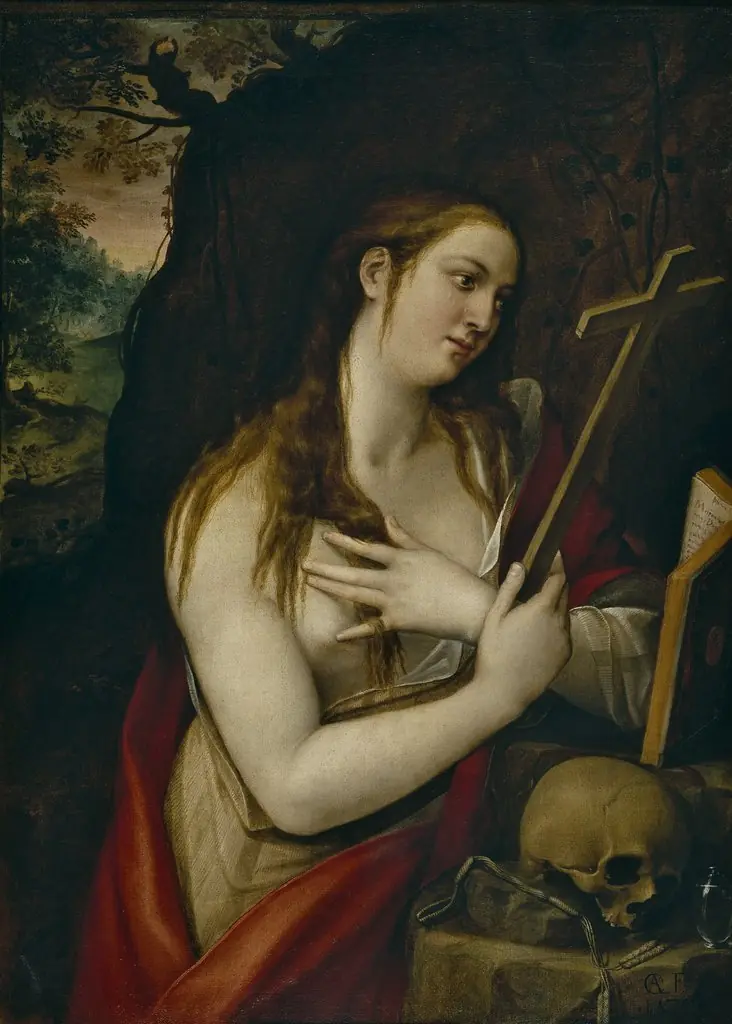 The Penitent Magdalen
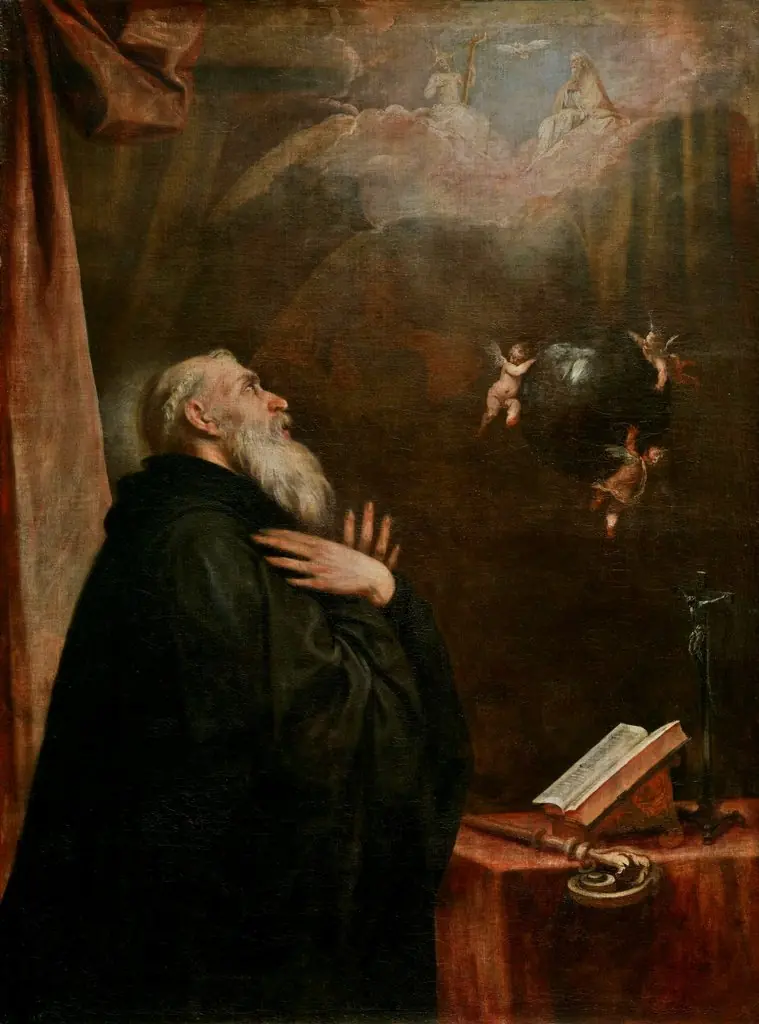 Saint Benedict's Vision of the Globe and the three Angels
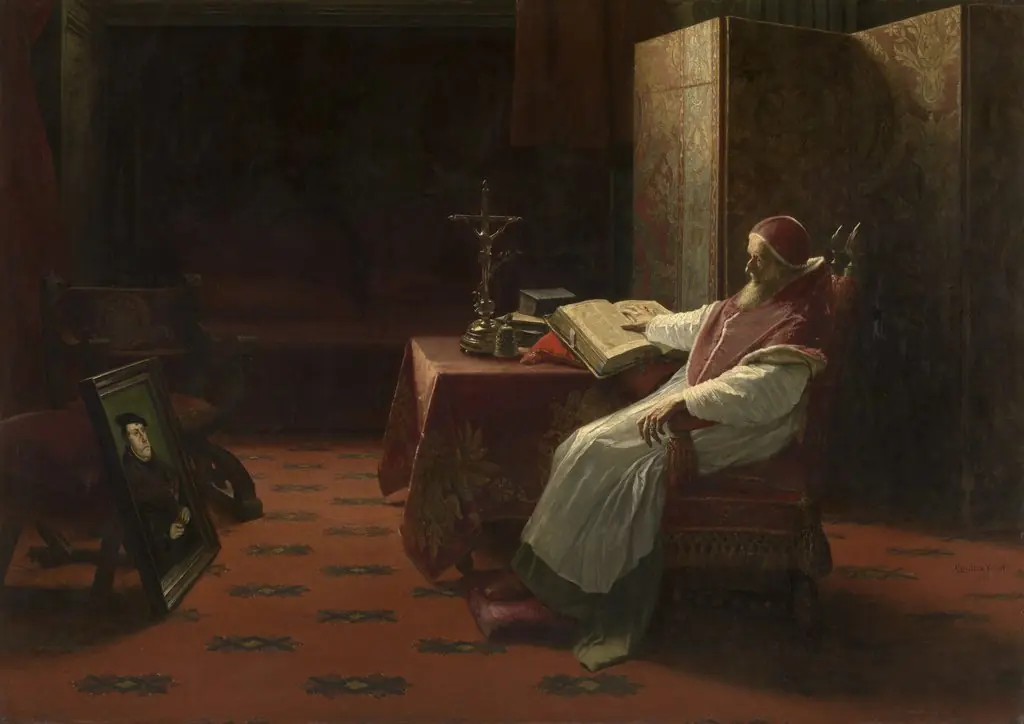 Pope Paul III in front of the Portrait of Luther
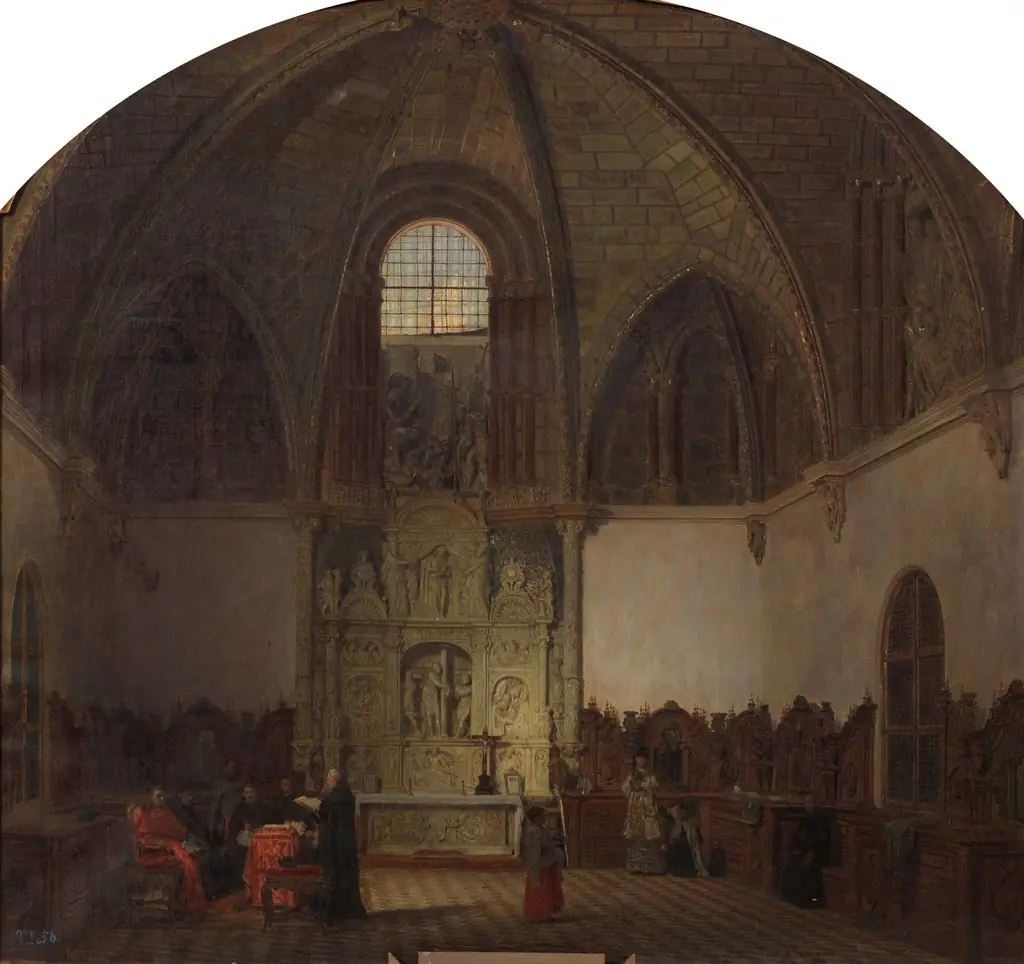 Interior de la capilla de San Bernardo donde se juramentaron los comuneros de Castilla (hoy sacristía mayor de la catedral de Ávila) en ocasión de celebrarse una conferencia por su obispo y cabildo
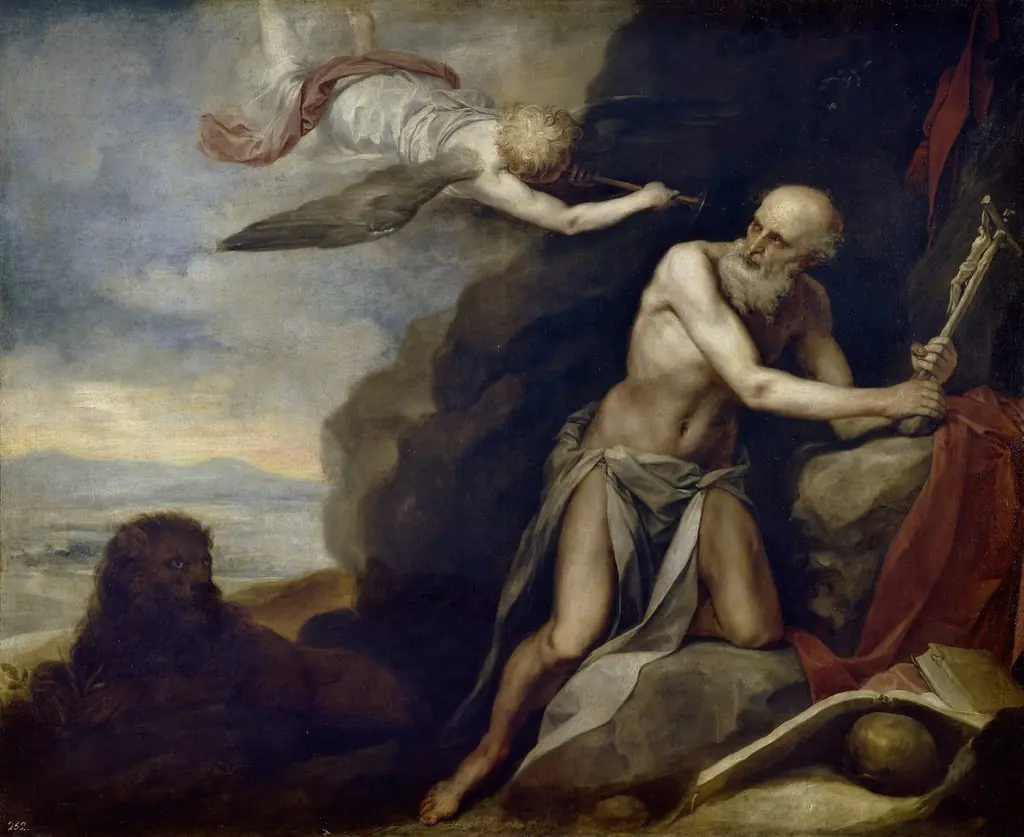 The penitent Saint Jerome
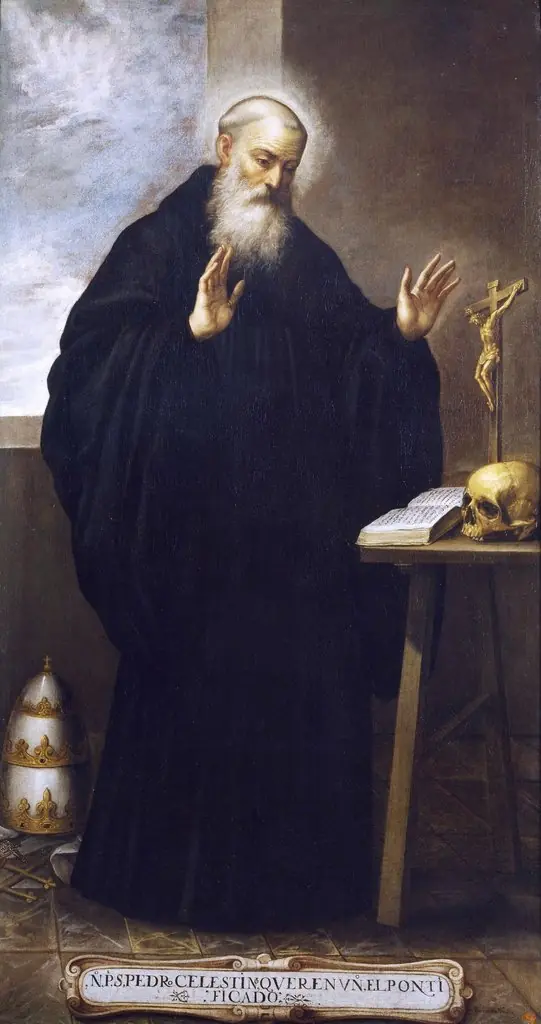 San Pedro Celestino papa
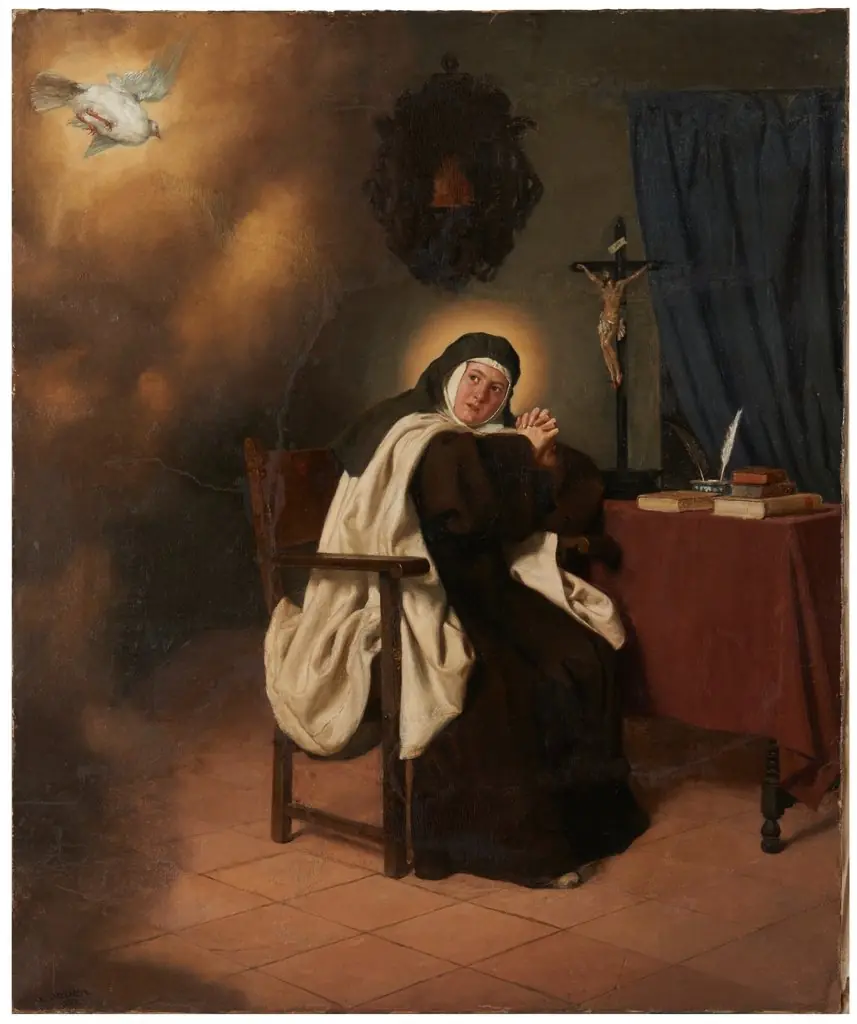 Santa Teresa de Jesús
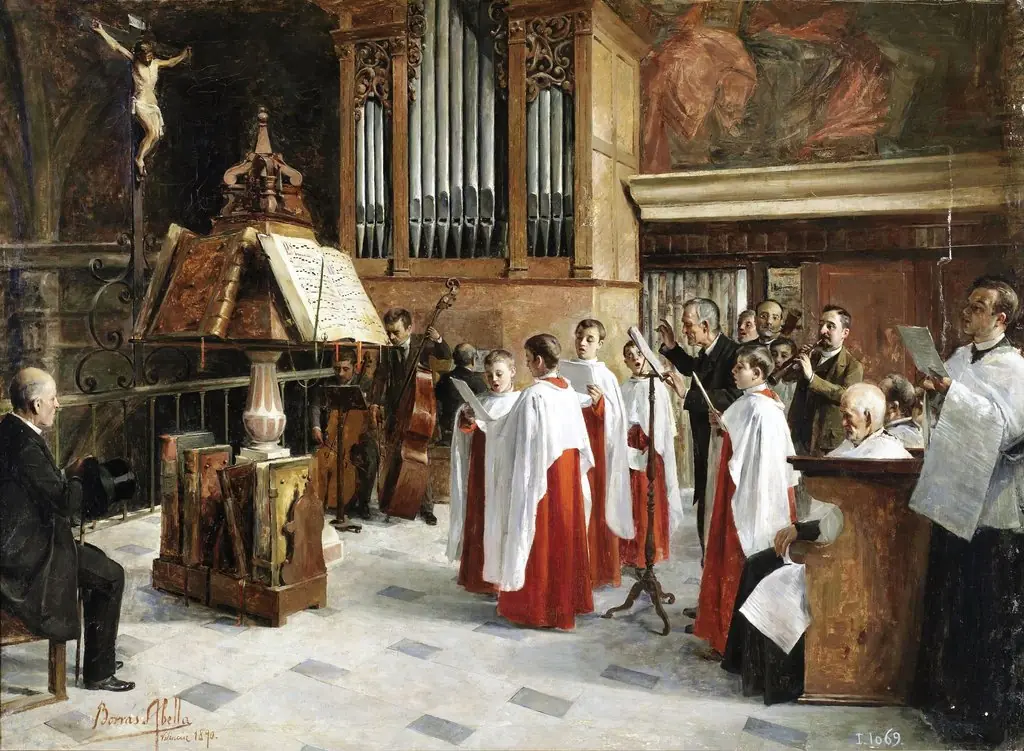 En el coro
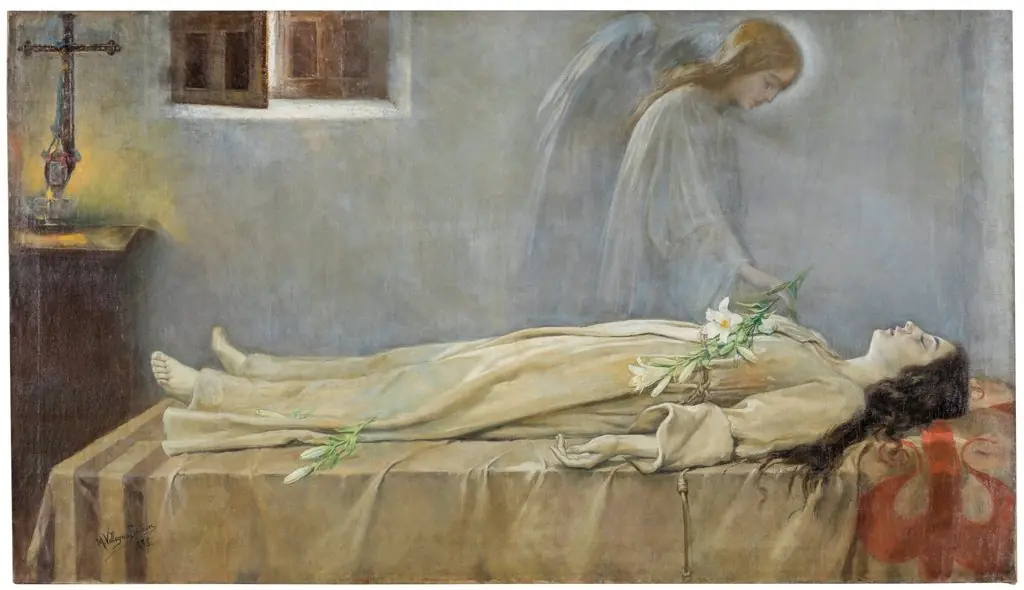 Último sueño de una virgen
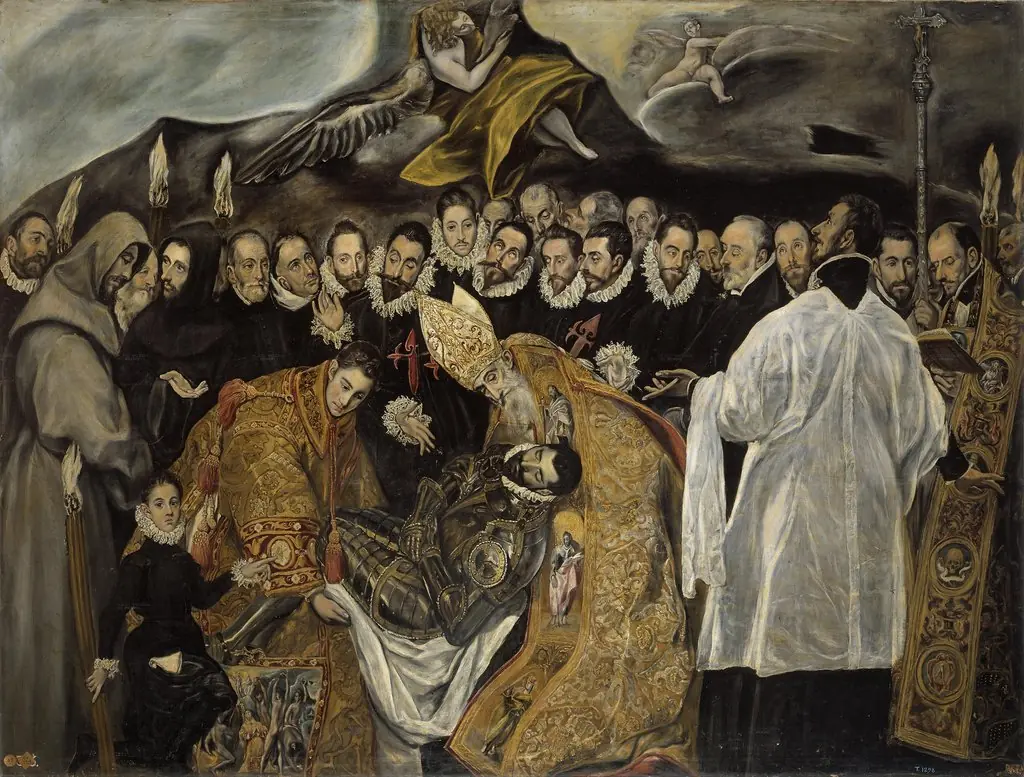 The Burial of the Count of Orgaz
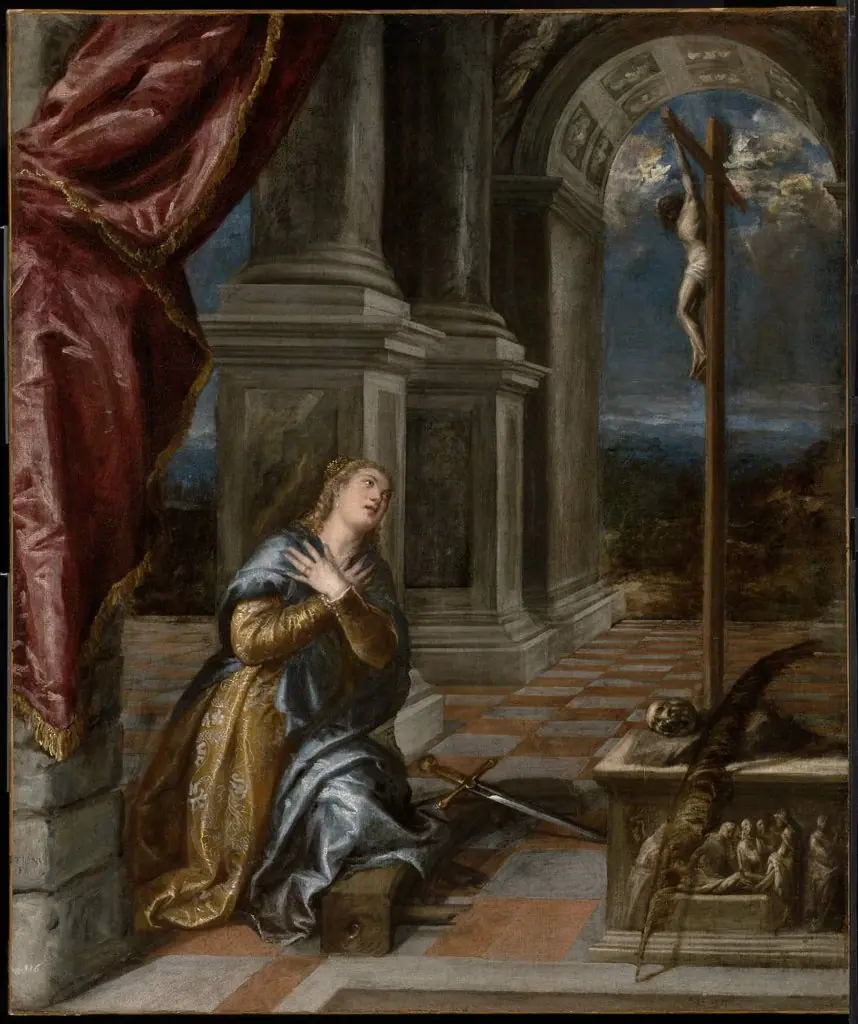 Saint Catherine of Alexandria at Prayer
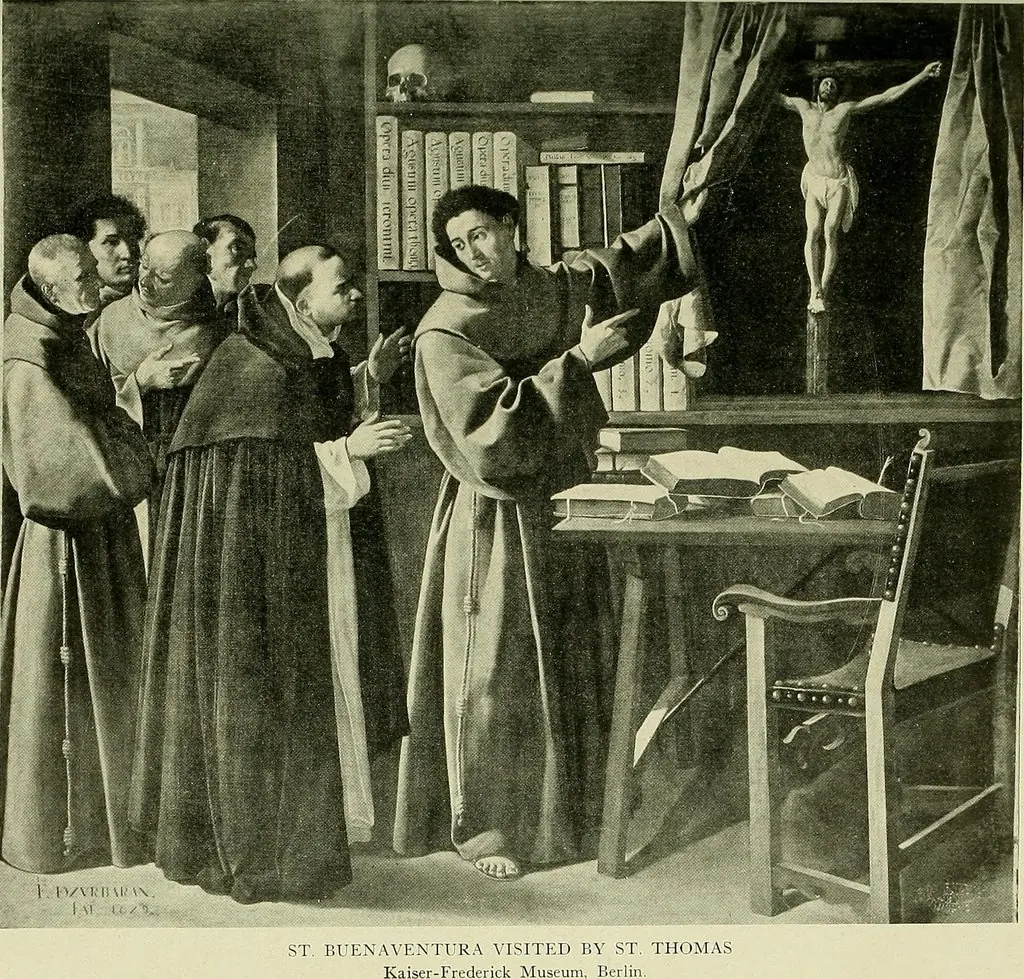 Saint Bonaventure and Saint Thomas Aquinas in Front of the Crucifix
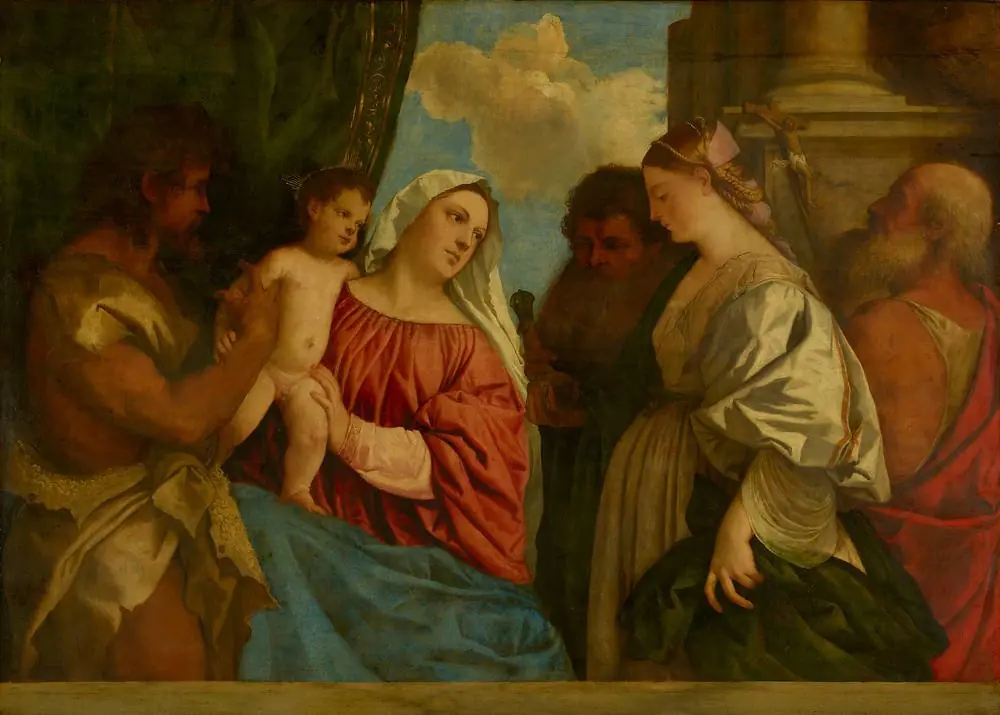 Madonna and Child with Four Saints
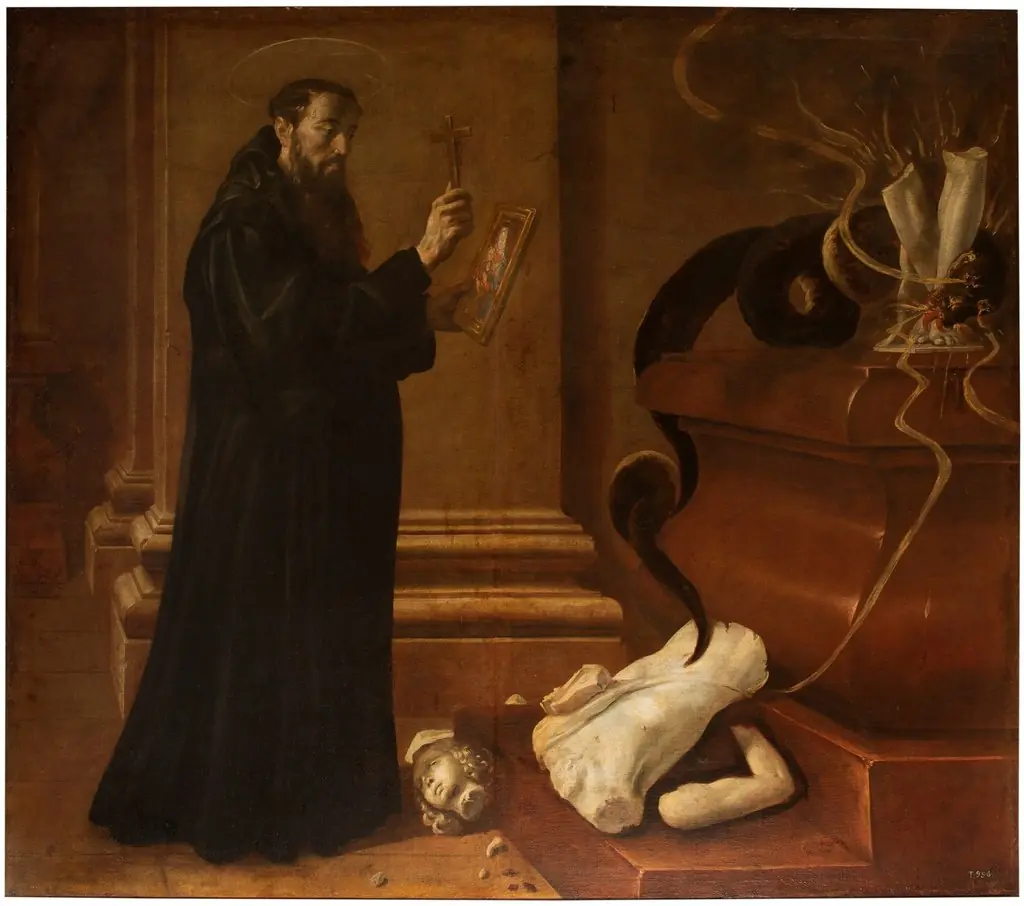 Saint Benedict destroying Idols
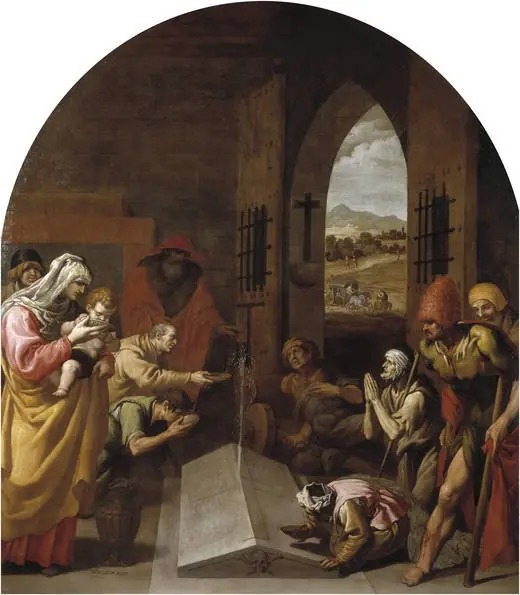 The Miraculous Spring at Saint Bruno’s Tomb
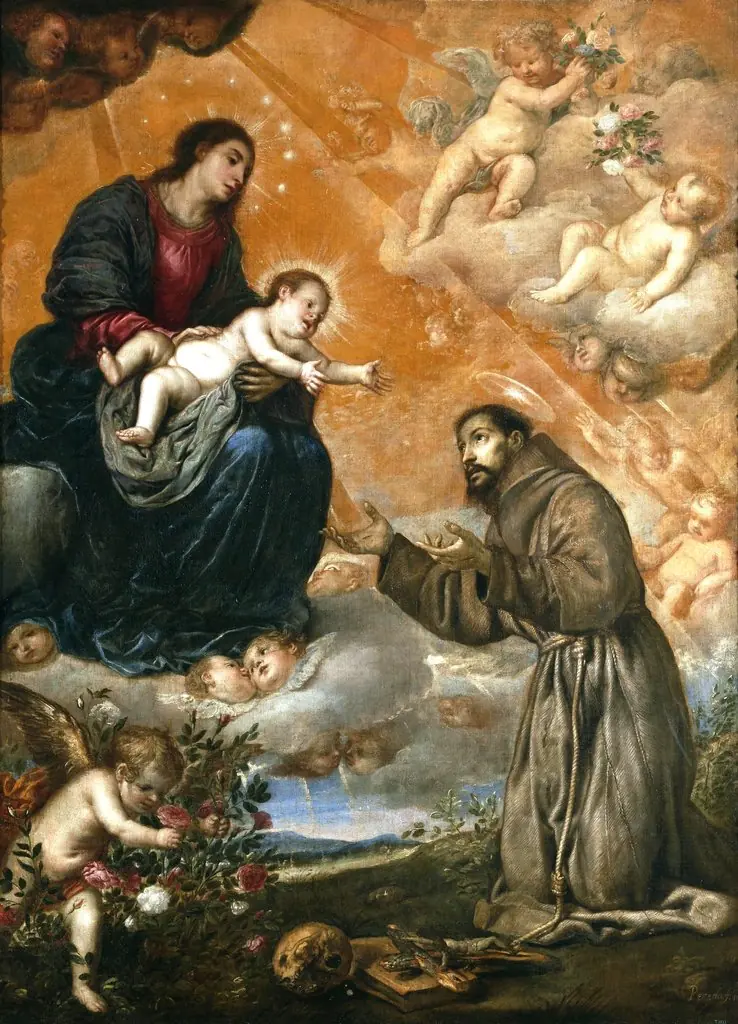 Saint Francis of Assisi in the Portiuncula
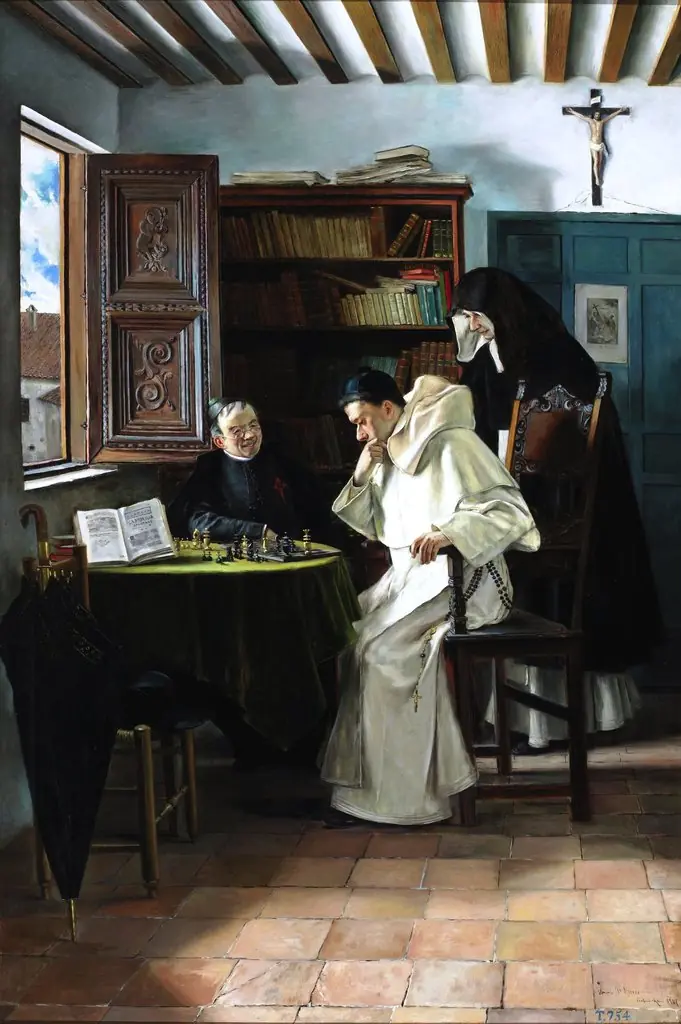 Jaque mate
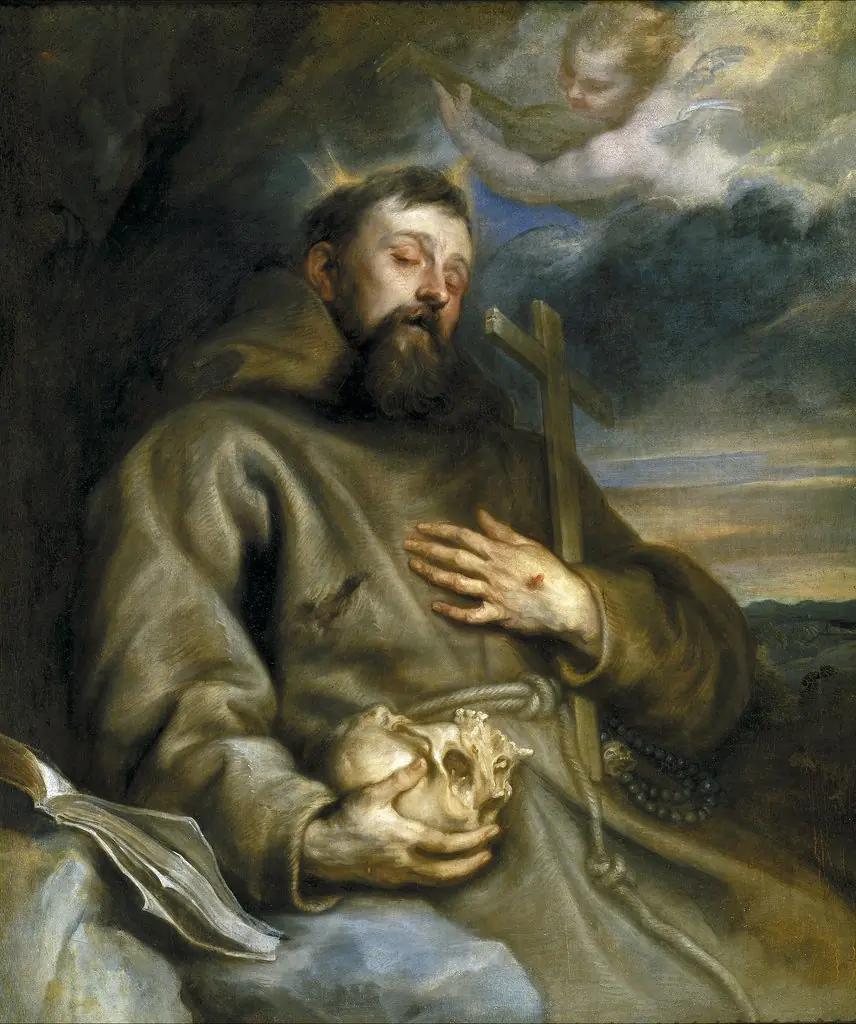 Saint Francis of Assisi in Ecstasy
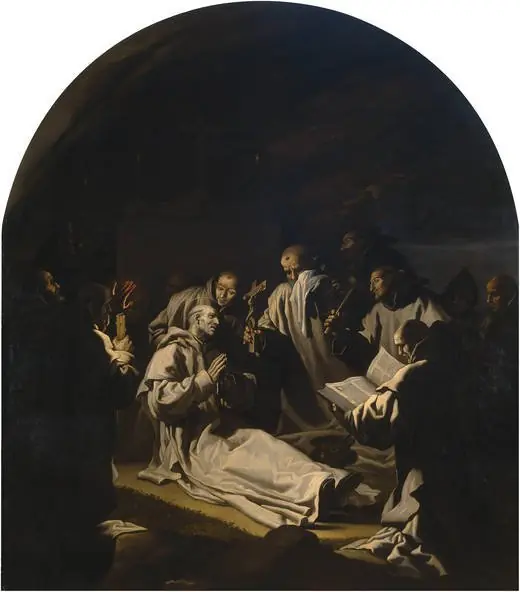 The Death of Saint Bruno
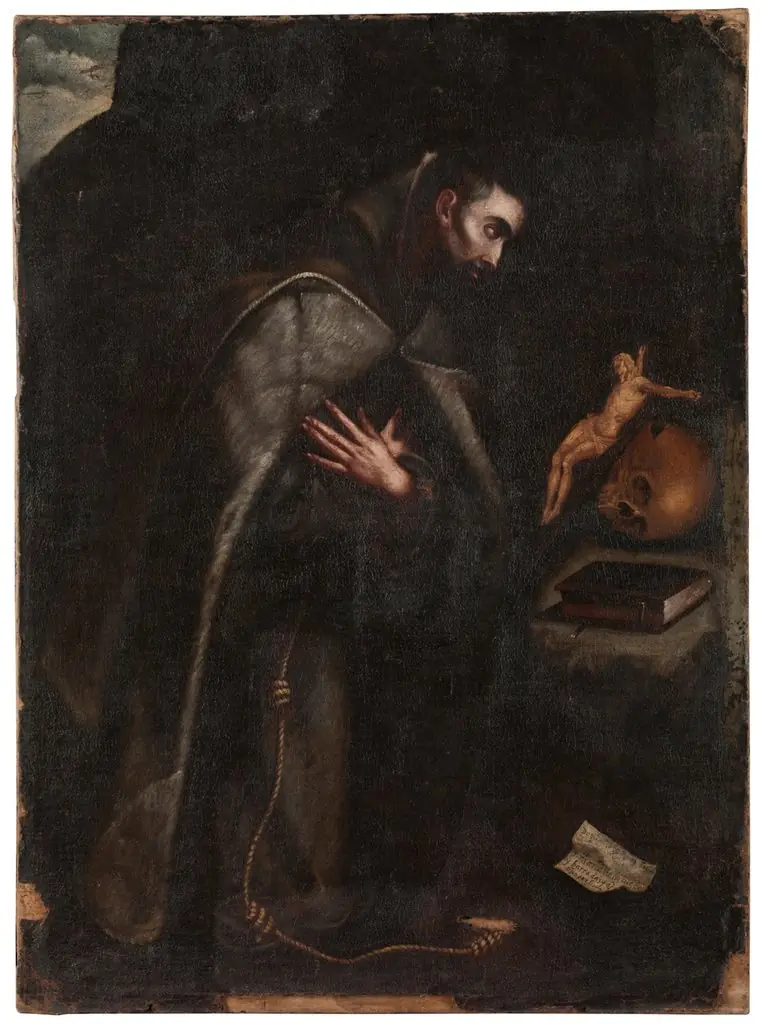 Saint Francis of Assisi kneeling in meditation
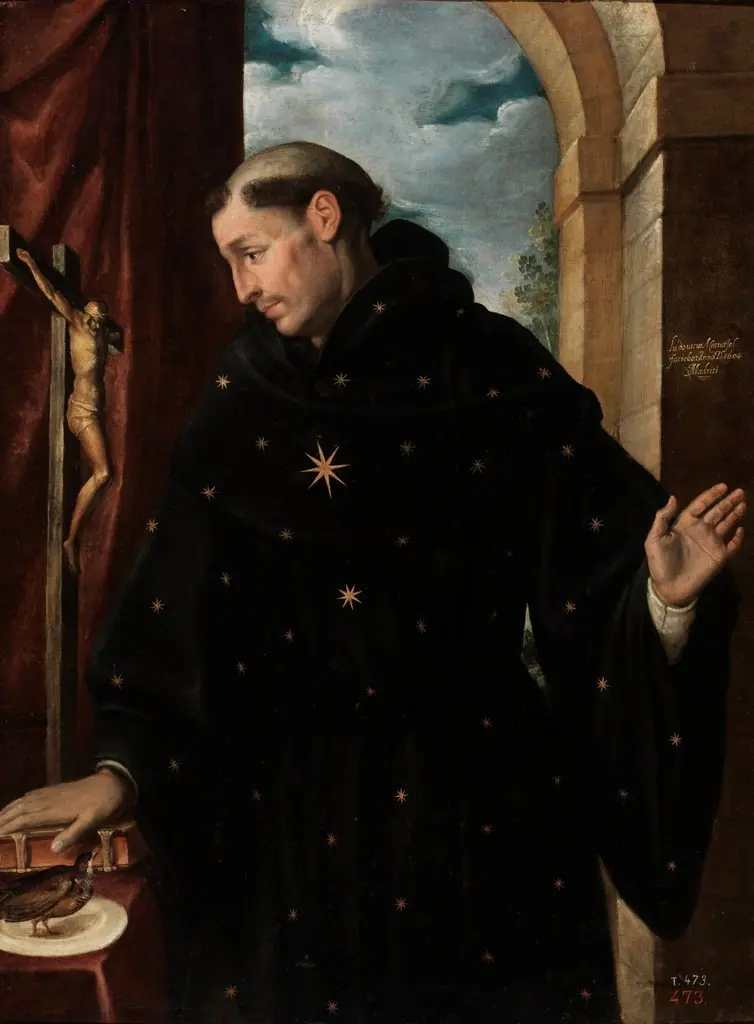 Saint Nicholas of Tolentino
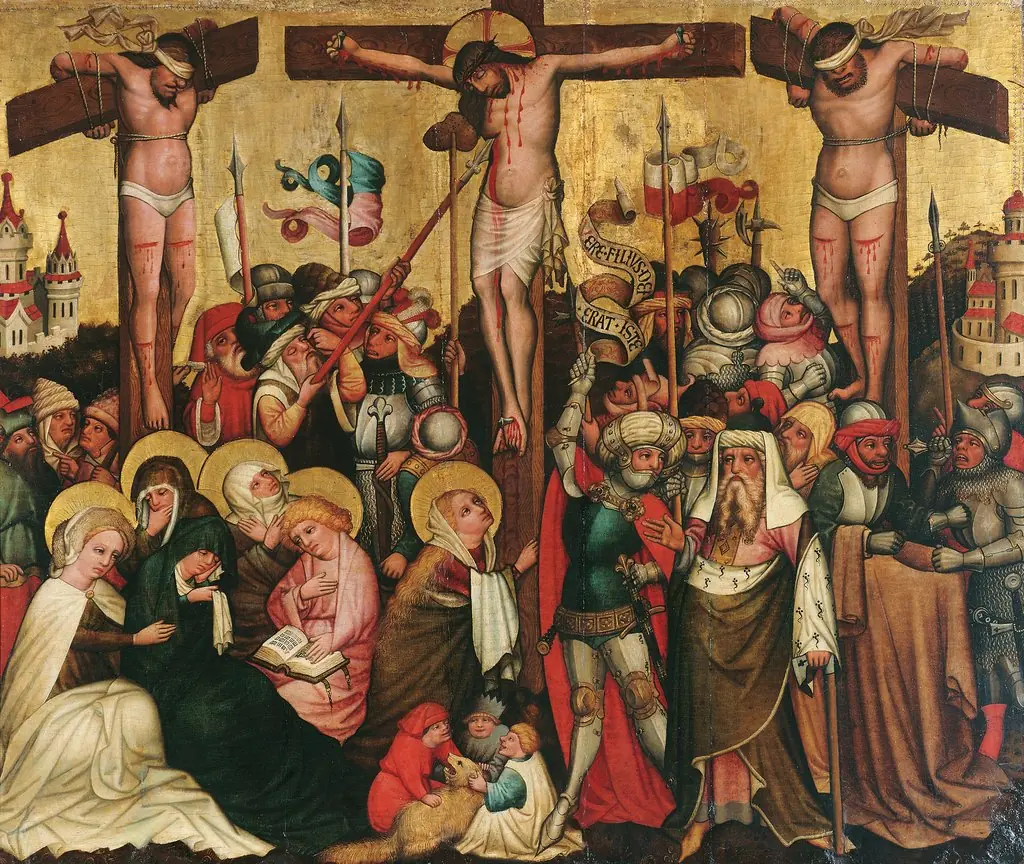 The crucifixion
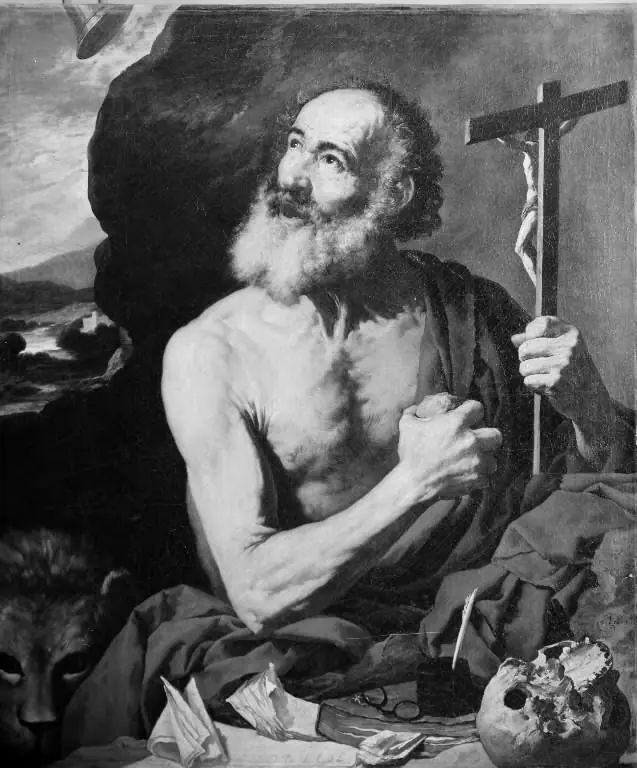 The Penitent St. Jerome
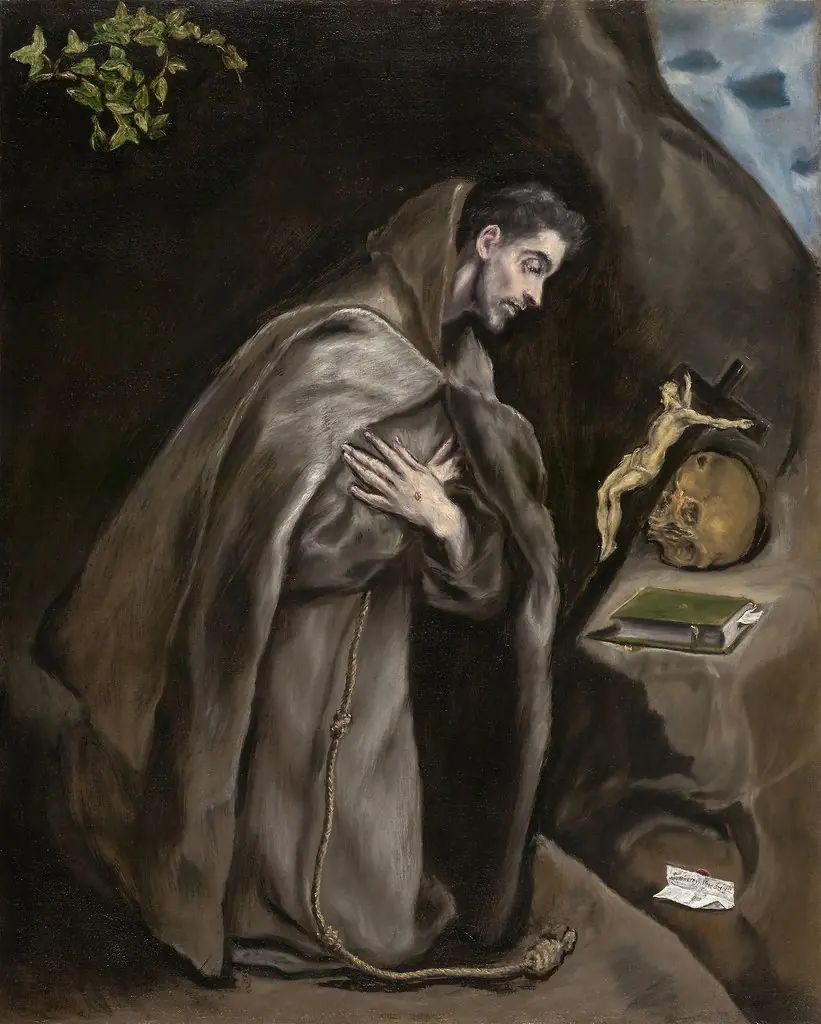 Saint Francis Kneeling in Meditation
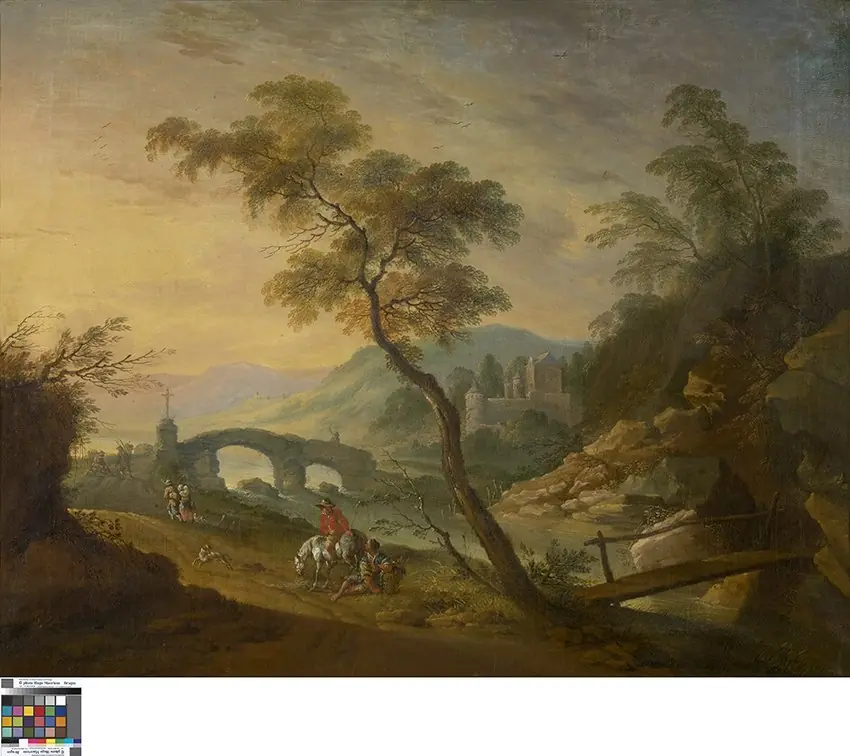 Landscape
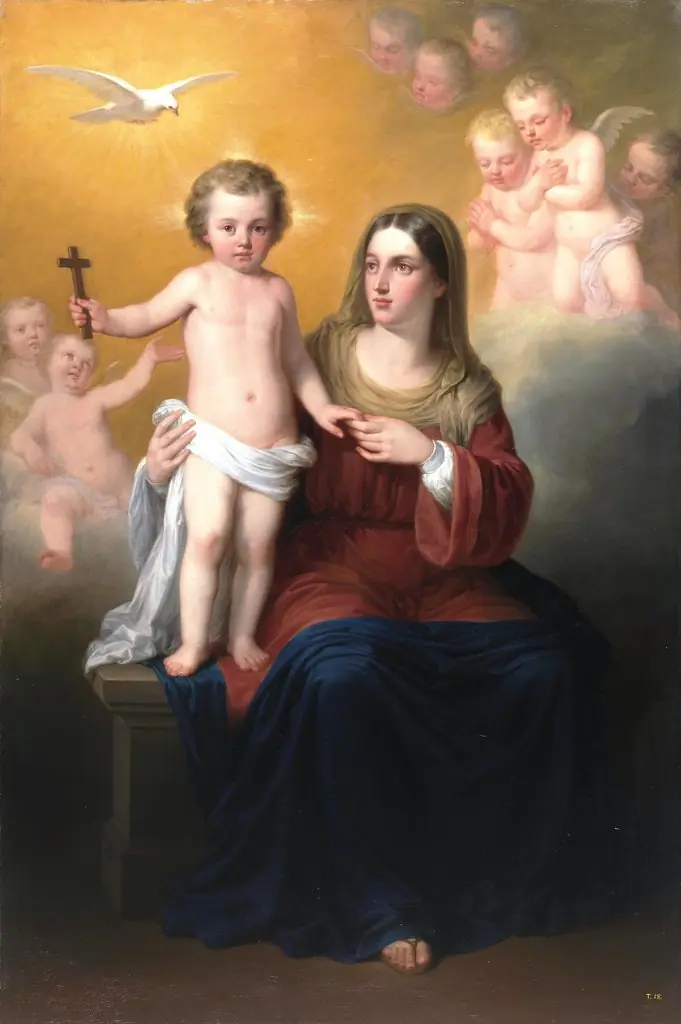 The Virgin and Child
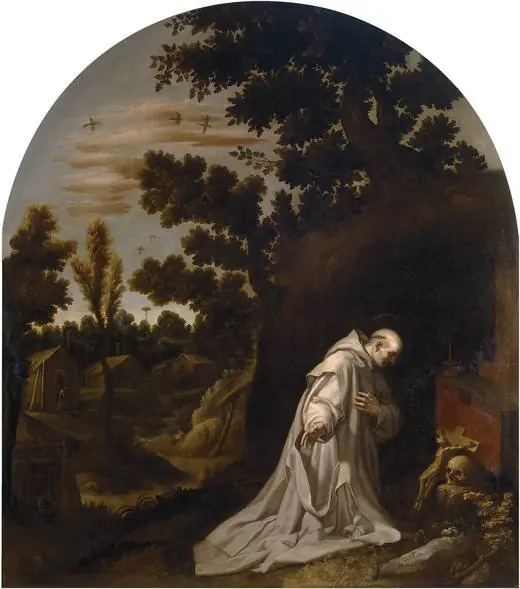 Saint Bruno Prays in La Torre Calabria
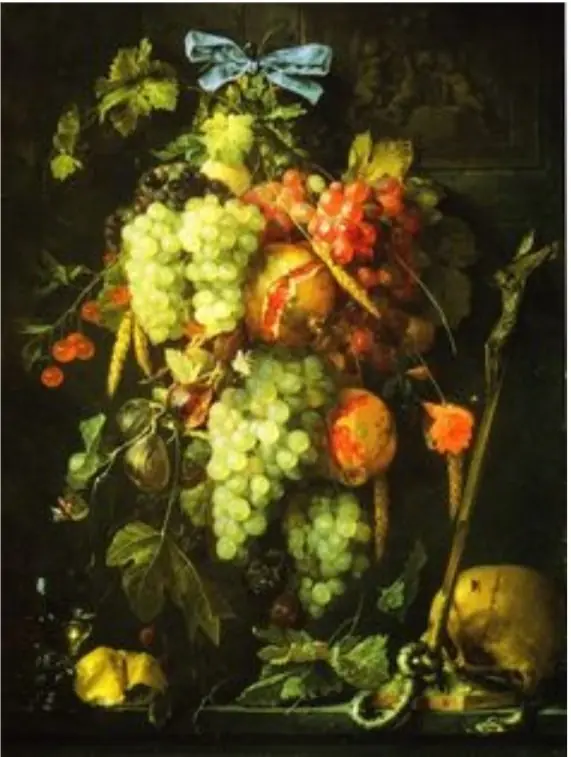 A Vanitas Still Life
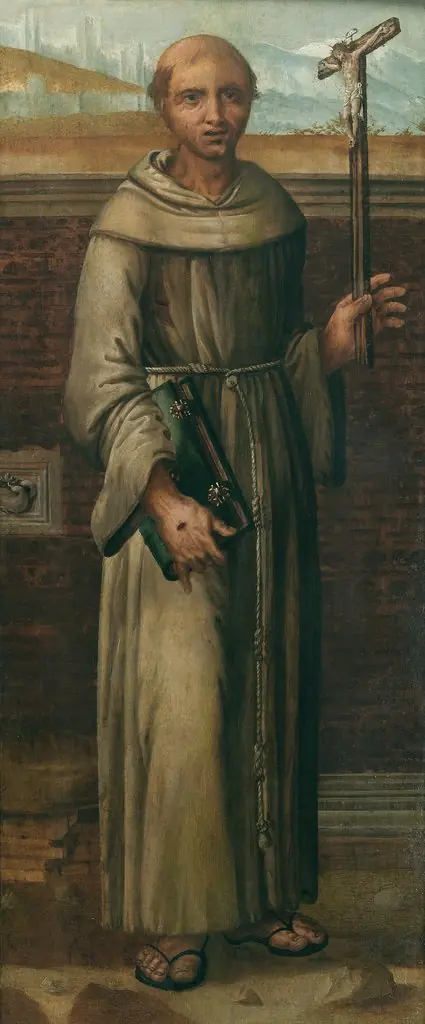 Saint Francis of Assisi
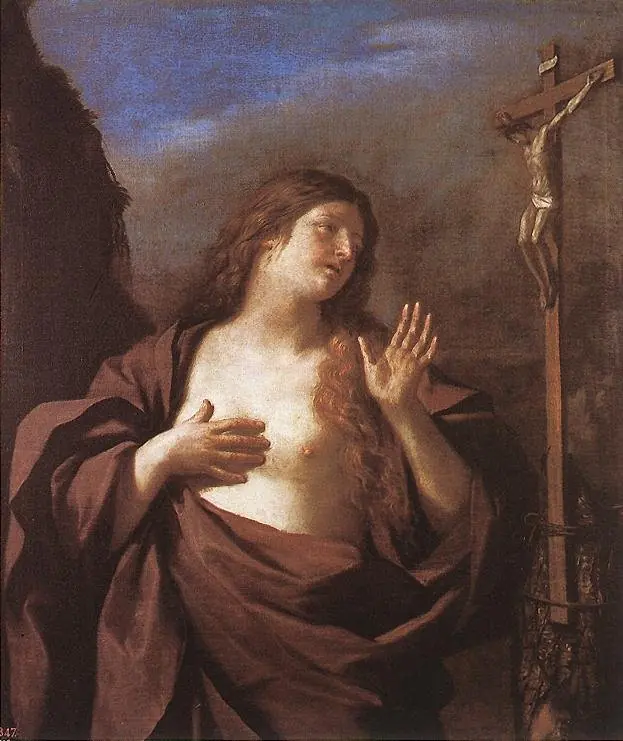 The Penitent Magdalen
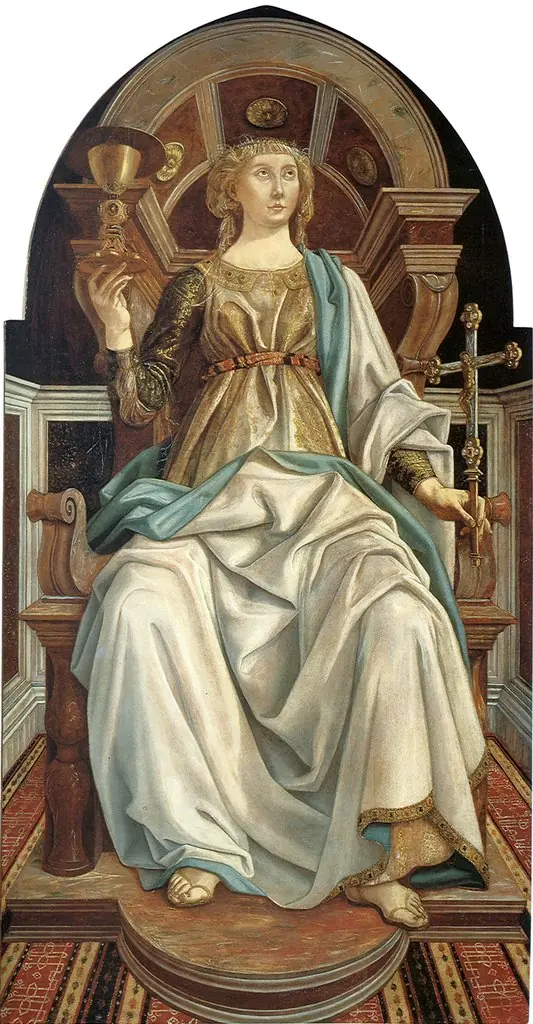 Faith
Faith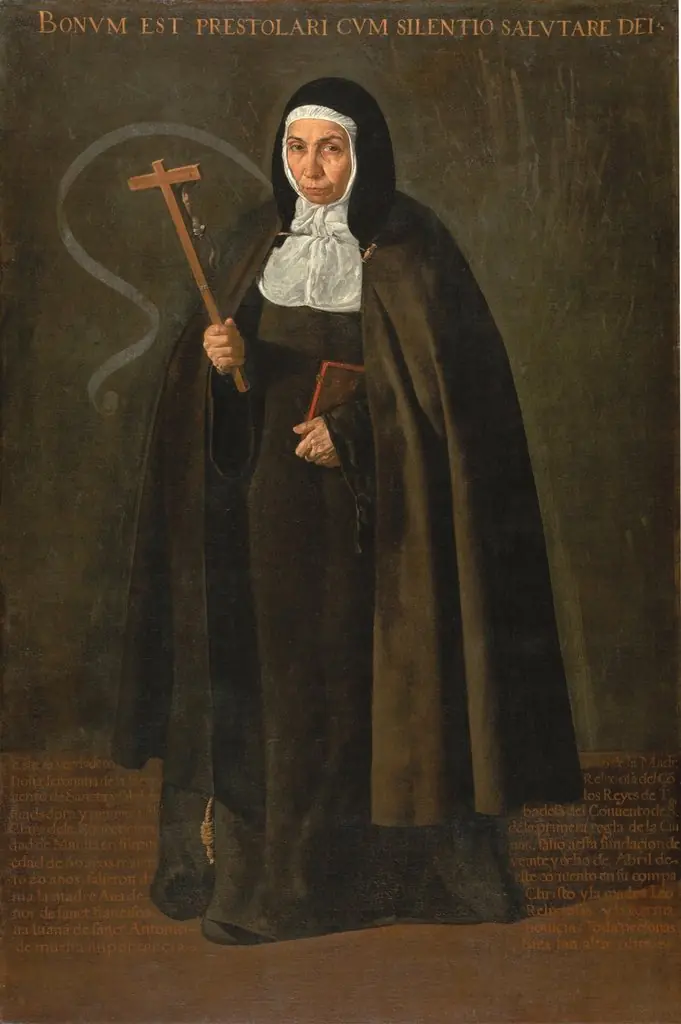 The Nun Jerónima de la Fuente
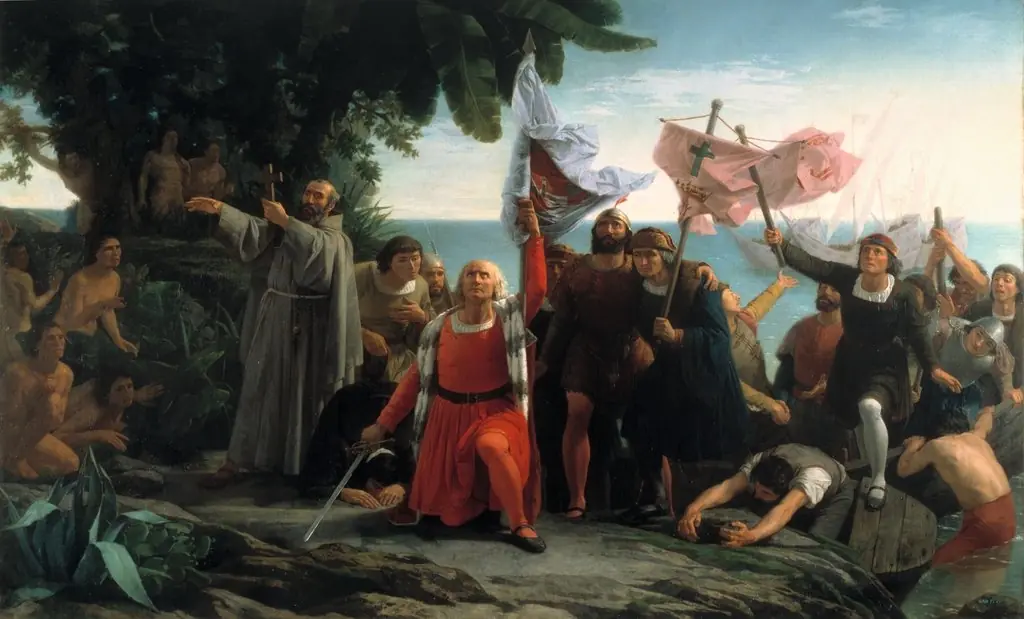 Primer desembarco de Cristóbal Colón en América
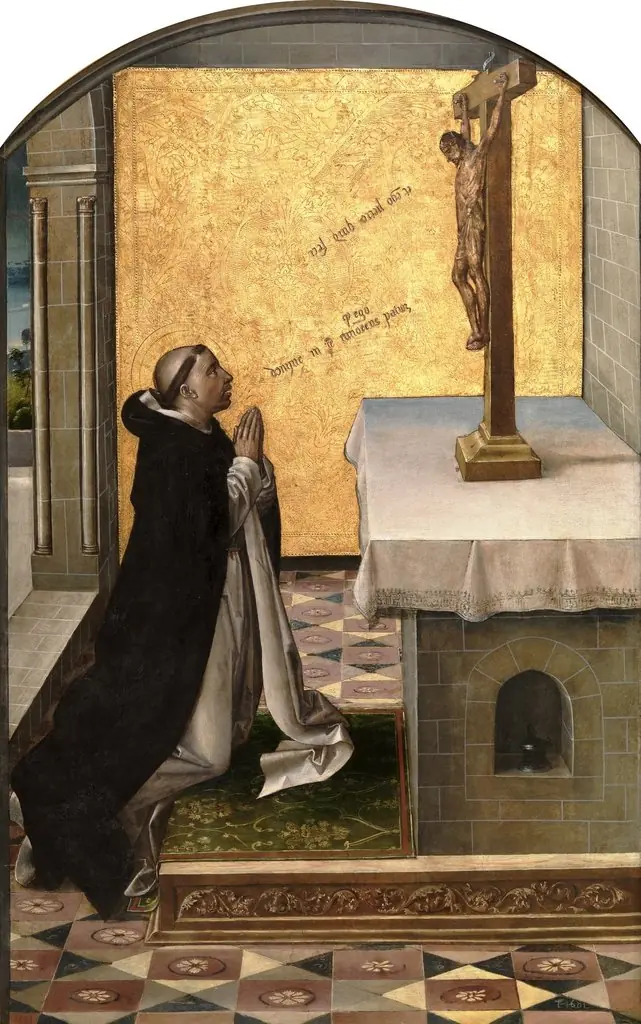 Saint Peter the Martyr praying
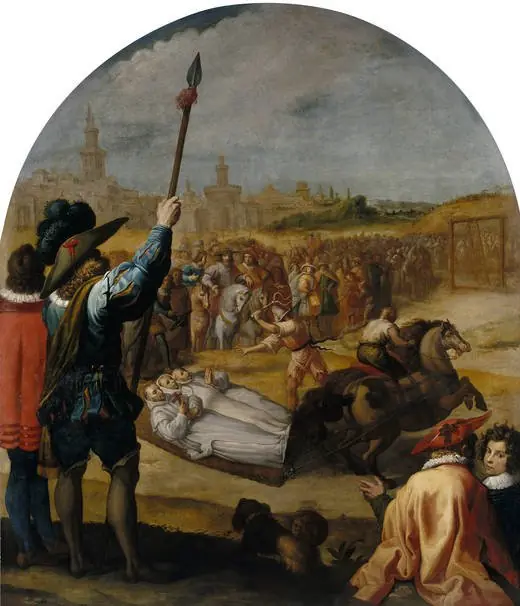 The Martydom of Three Carthusians at the London Charterhouse
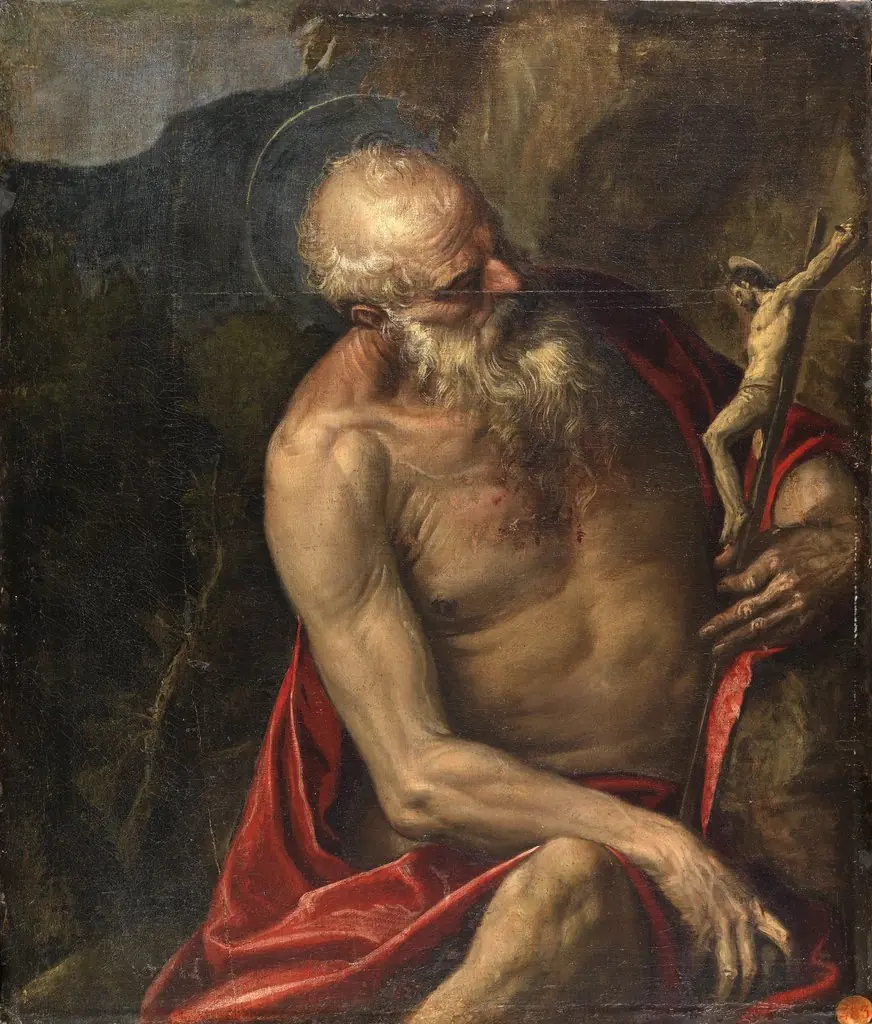 Saint Jerome meditating
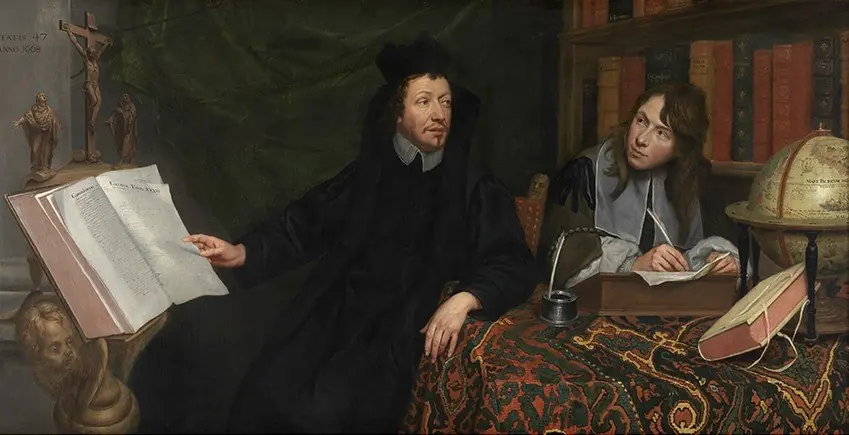 Portrait of a Theologue and his Secretary
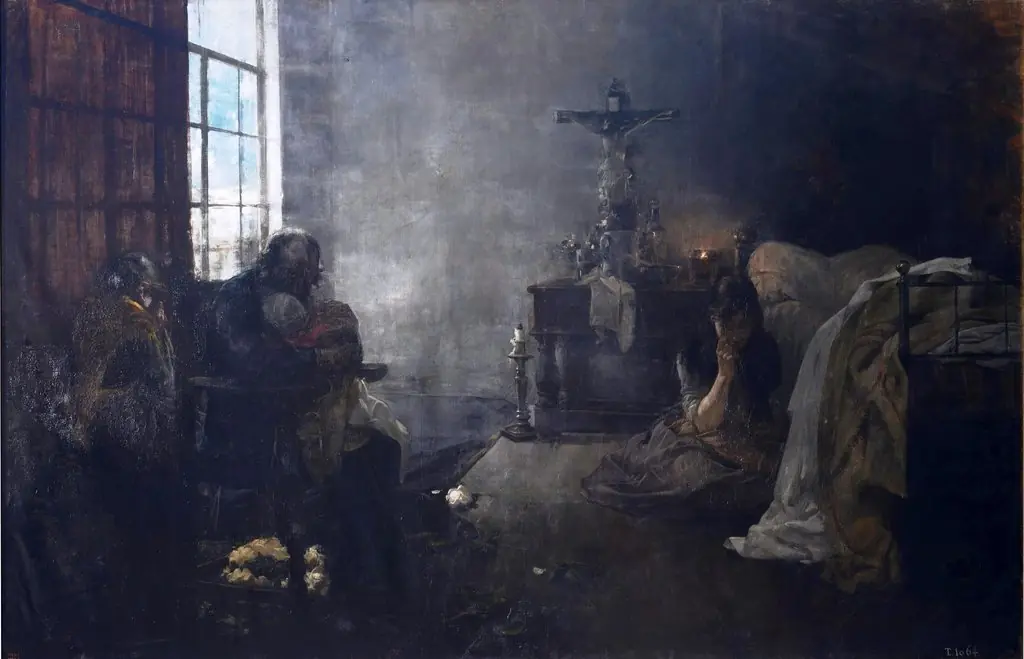 Huérfanos
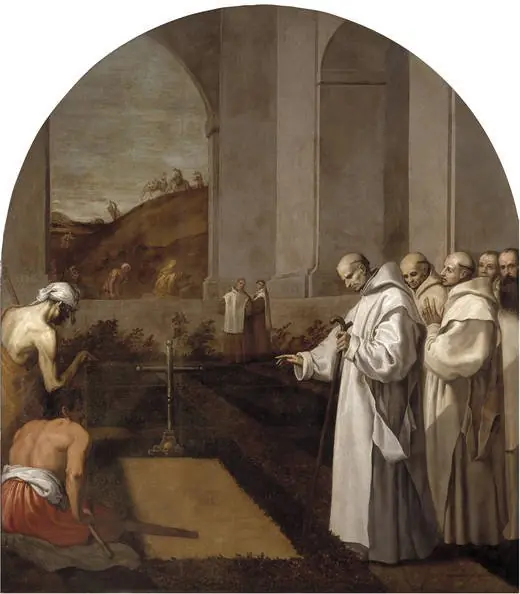 Carthusian Worship Beyond Death
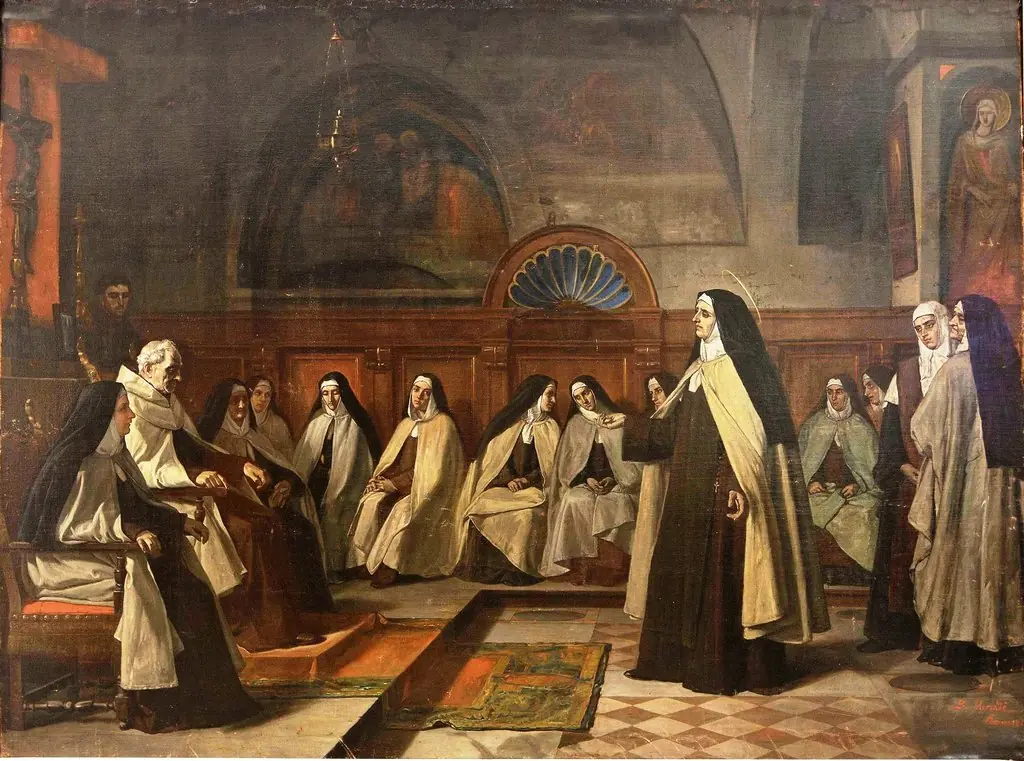 Santa Teresa de Jesús
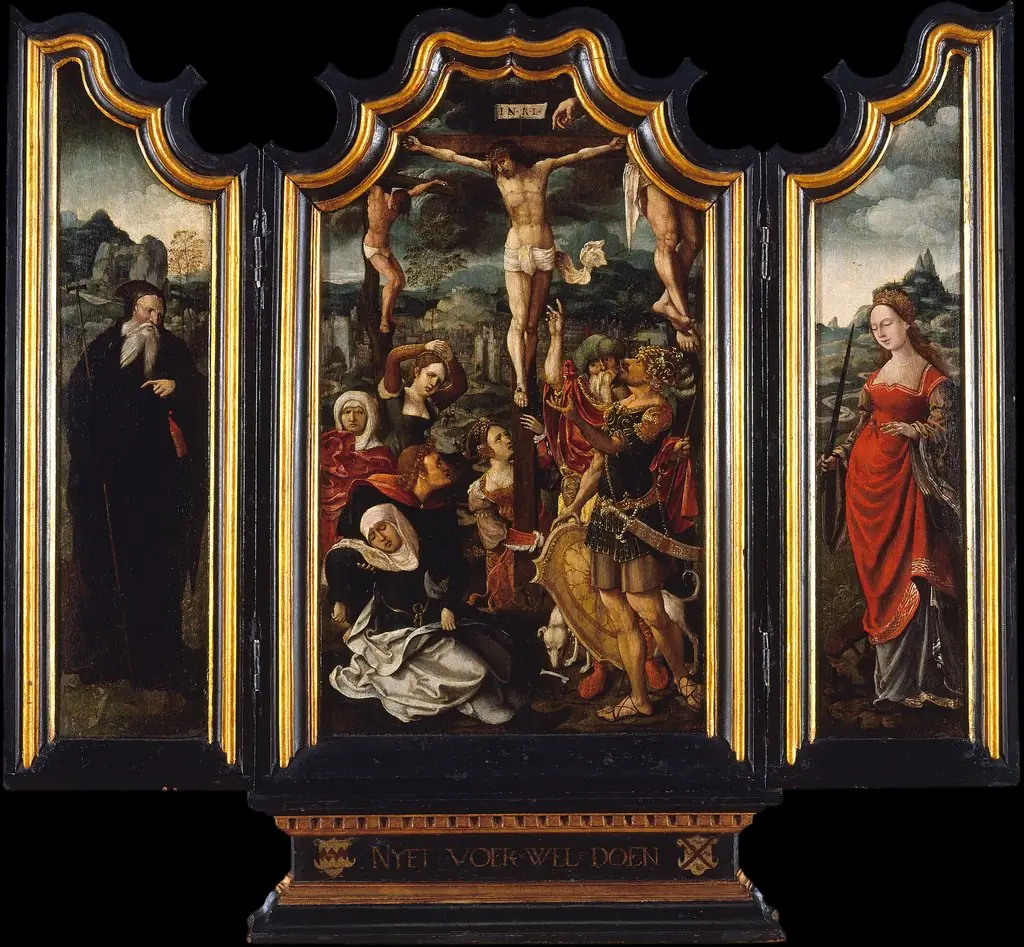 Triptych with Calvary, Saint Anthony the Abbot and Saint Catherine
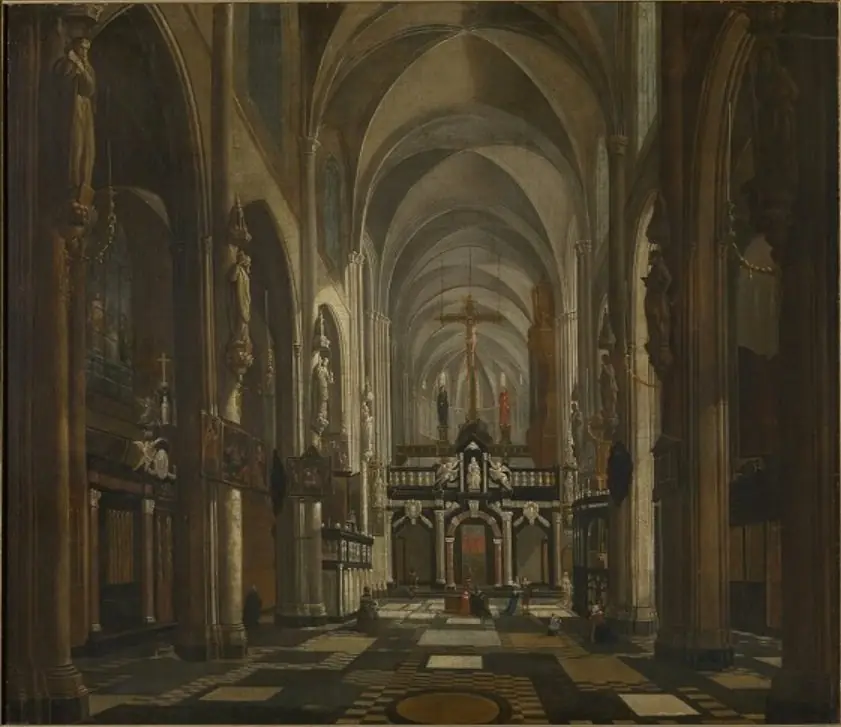 Interior of the former Saint Donatus Church in Bruges
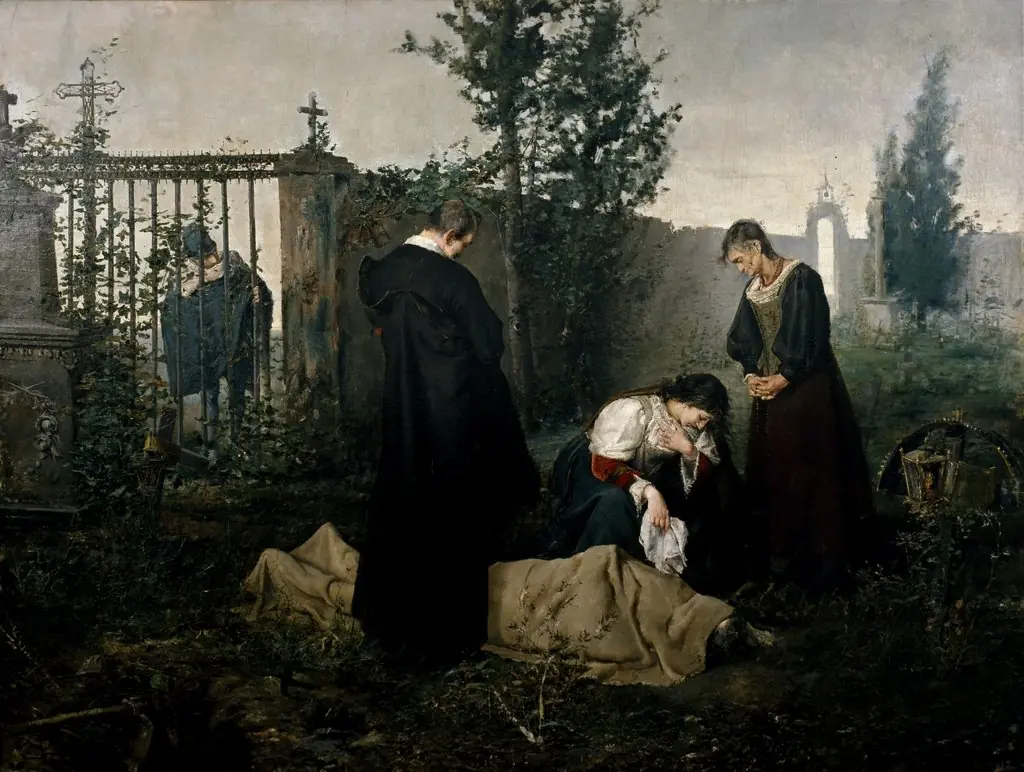 Lope de Vega en el cementerio
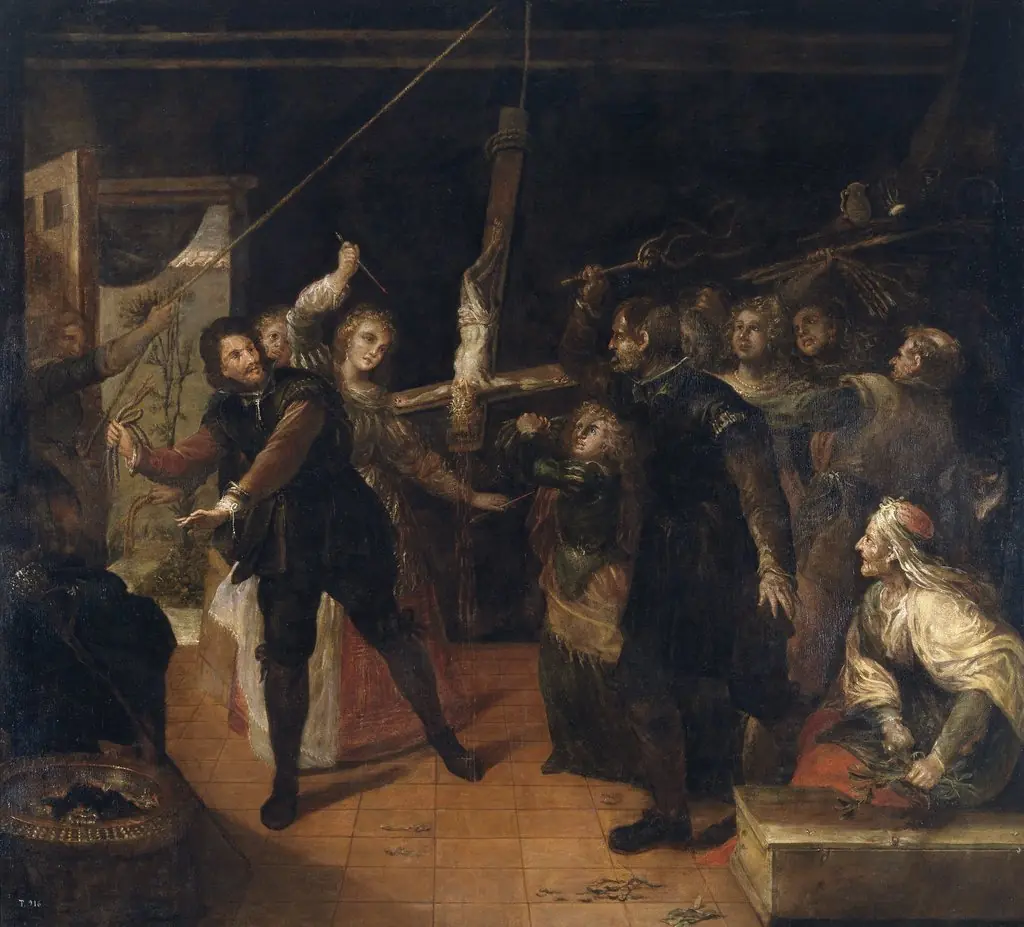 Profanación de un crucifijo (Familia de herejes azotando un crucifijo)
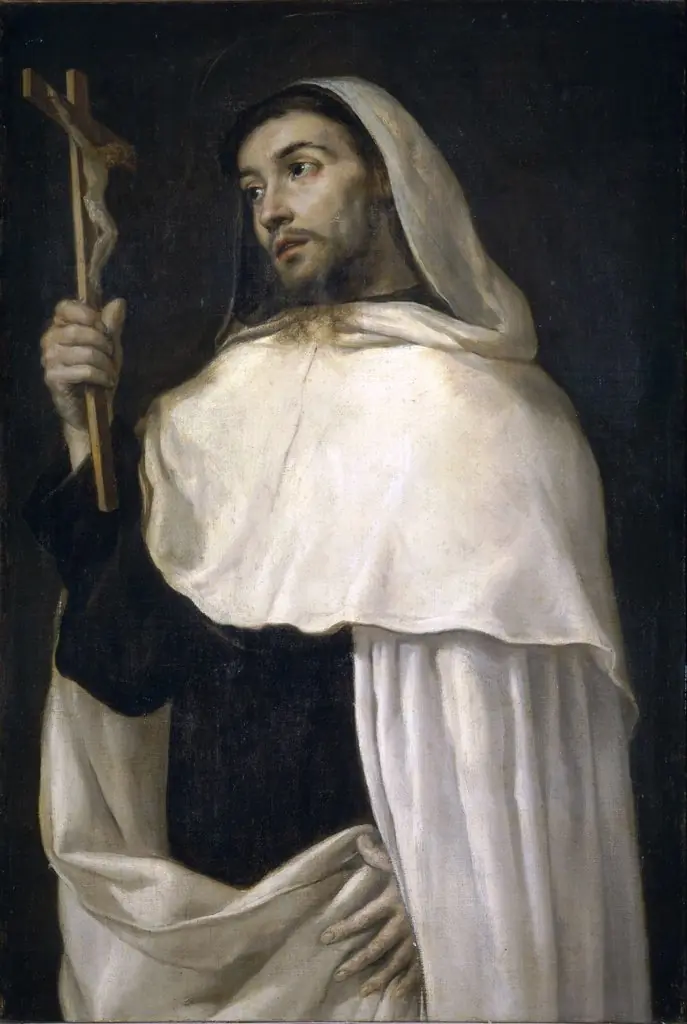 San Alberto de Sicilia
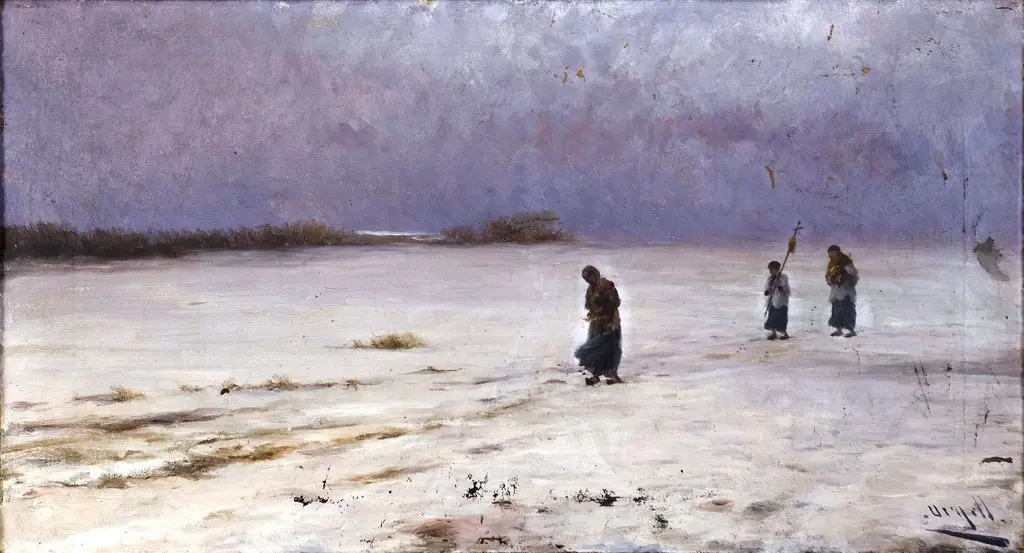 La vuelta del entierro
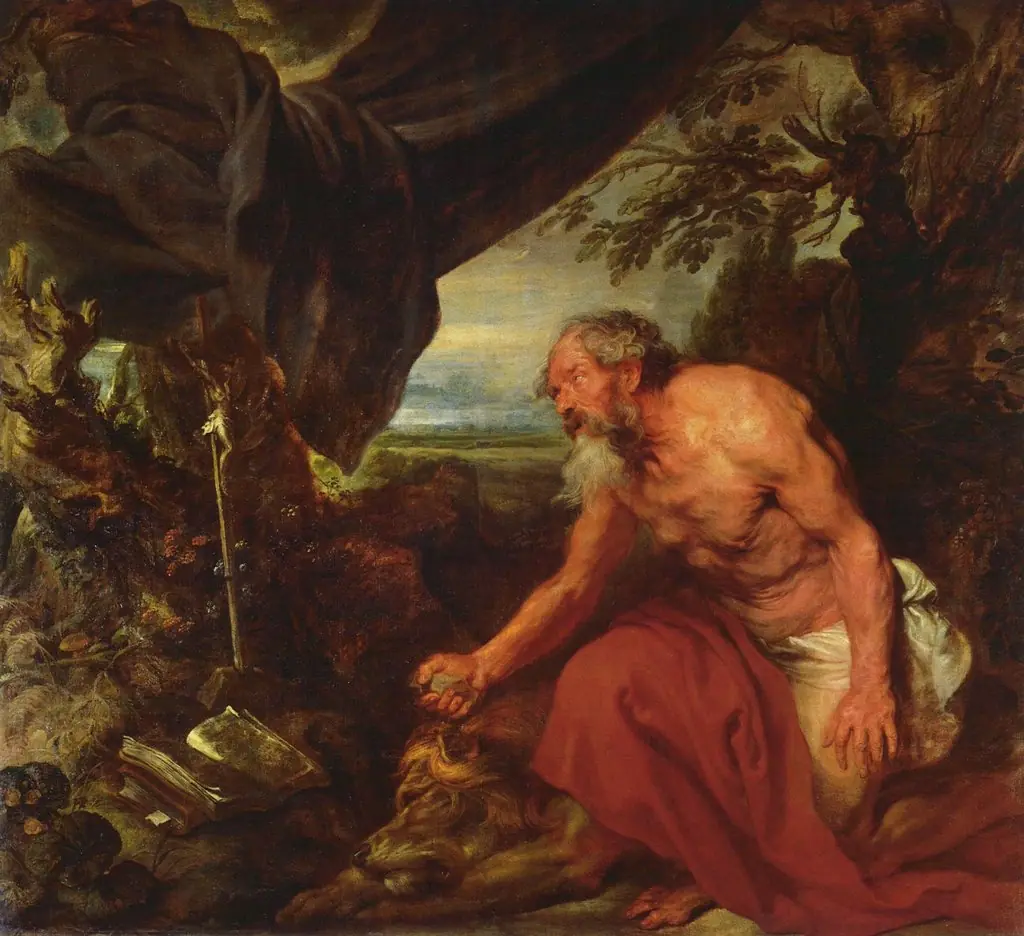 Saint Jerome
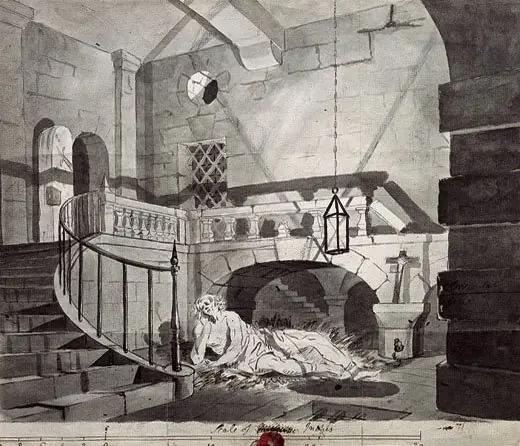 The Captive King
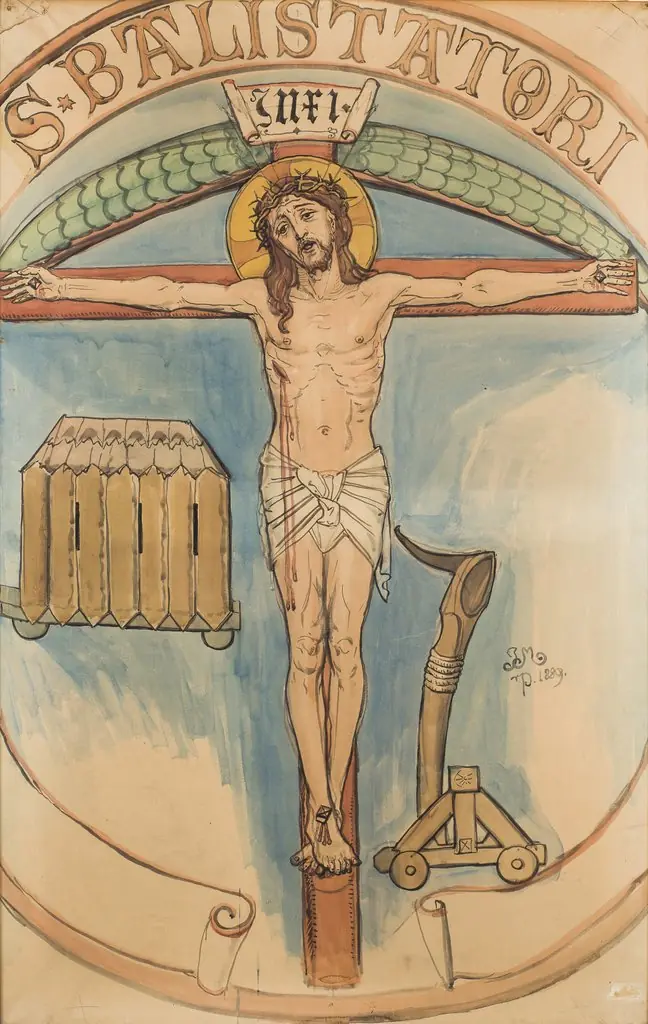 Karton do polichromii Kościoła Mariackiego - Godło łuczników
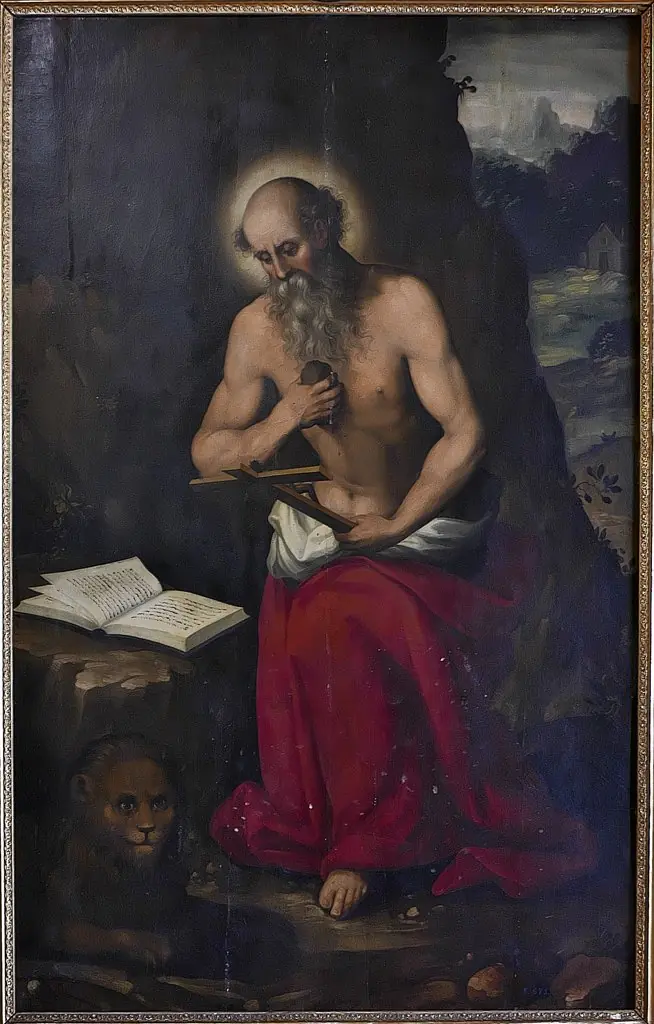 Saint Jerome
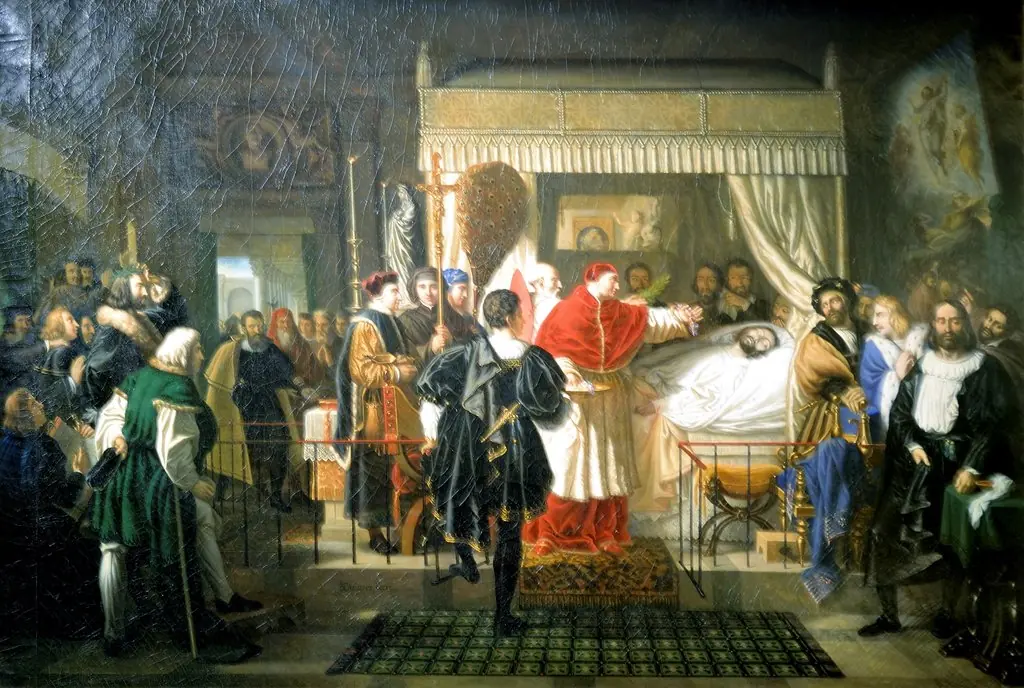 Honors Rendered to Raphael on His Deathbed
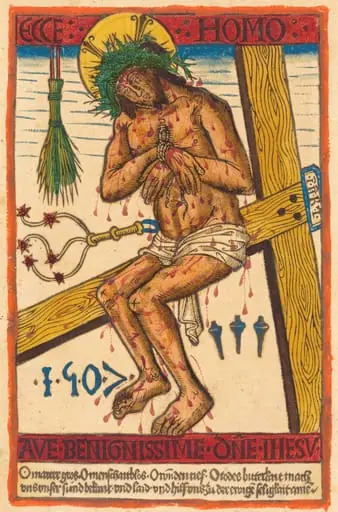 Christ as the Man of Sorrows
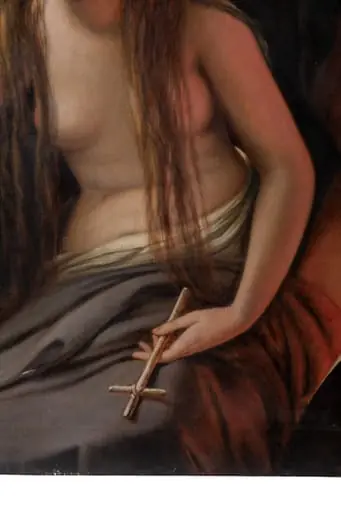 Magdalena în peșteră (copie după N. Schiavoni)
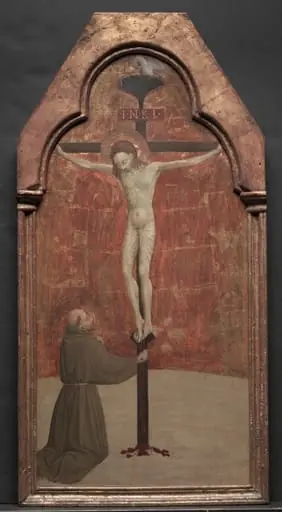 St. Francis Kneeling before Christ on the Cross
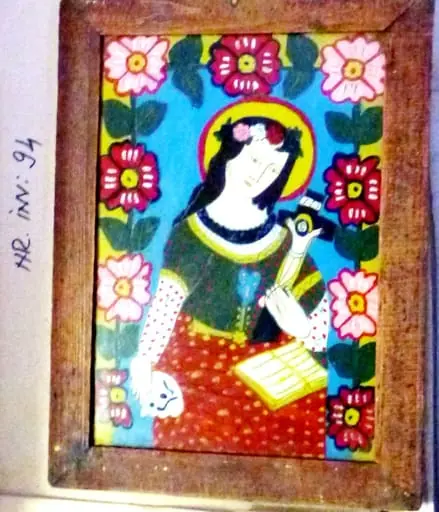 Sfânta Rita
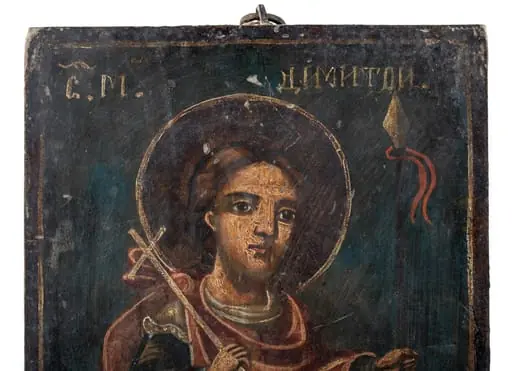 Sfântul Mucenic Dimitrie
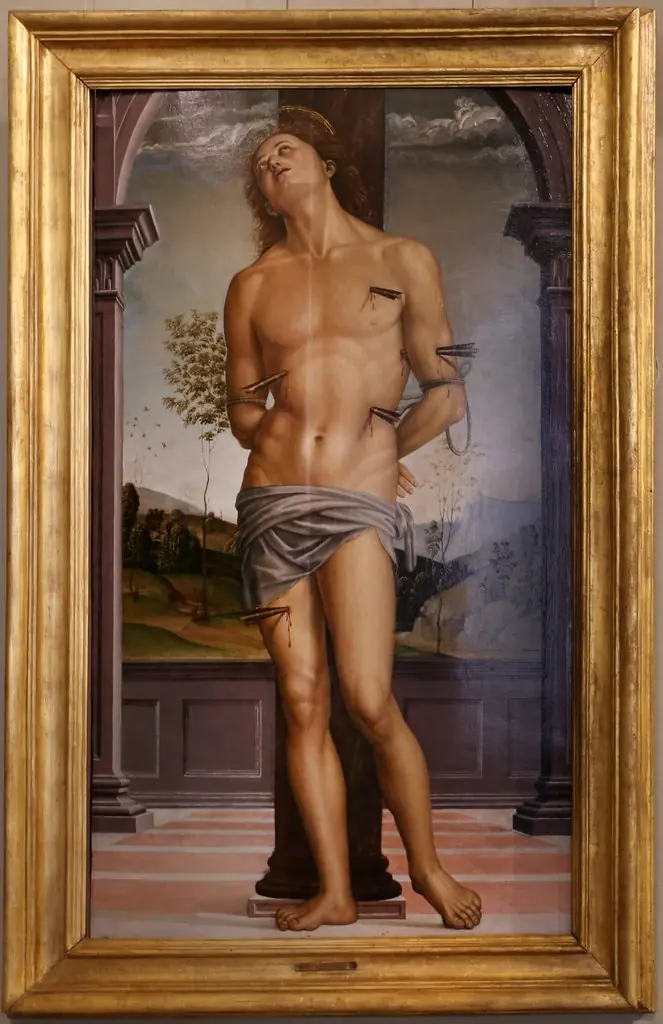 Saint Sebastian
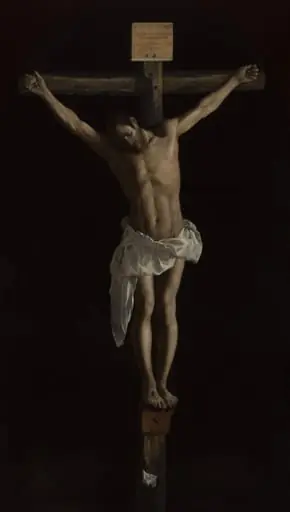 The Crucifixion
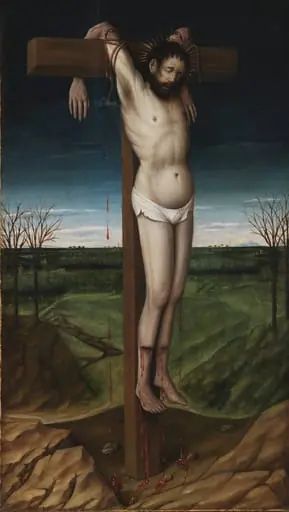 The Good Thief (Saint Dismas)
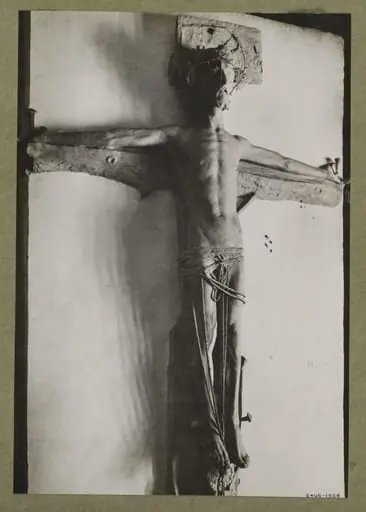 Untitled
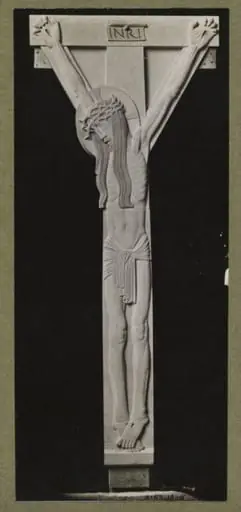 Untitled
Frequently asked questions
What is Crucifix?
Crucifix is a subject in art. A crucifix (from the Latin cruci fixus meaning '(one) fixed to a cross') is a cross with an image of Jesus on it, as distinct from a bare cross.
How many Crucifix works does Artifact World Gallery have?
Artifact World Gallery holds 86 public-domain Crucifix works, all free to view and download.
Who are the key Crucifix artists?
Key Crucifix artists in the collection include Titian, Paolo Veronese and Georges de La Tour.
Where can I see Crucifix works?
Crucifix works in the collection are held by Museo del Prado, Groeningemuseum and Metropolitan Museum of Art.