Artwork
Queen Charlotte Amalie (1650-1714)
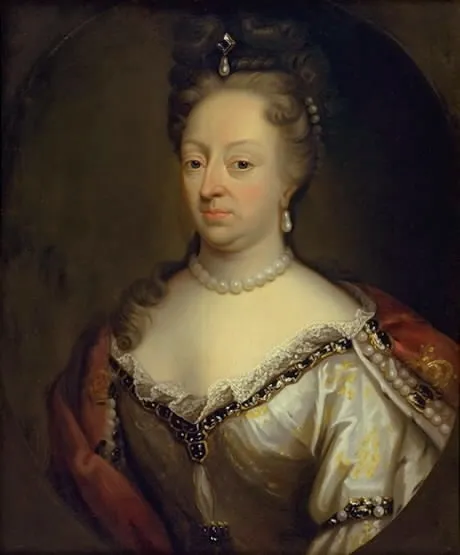
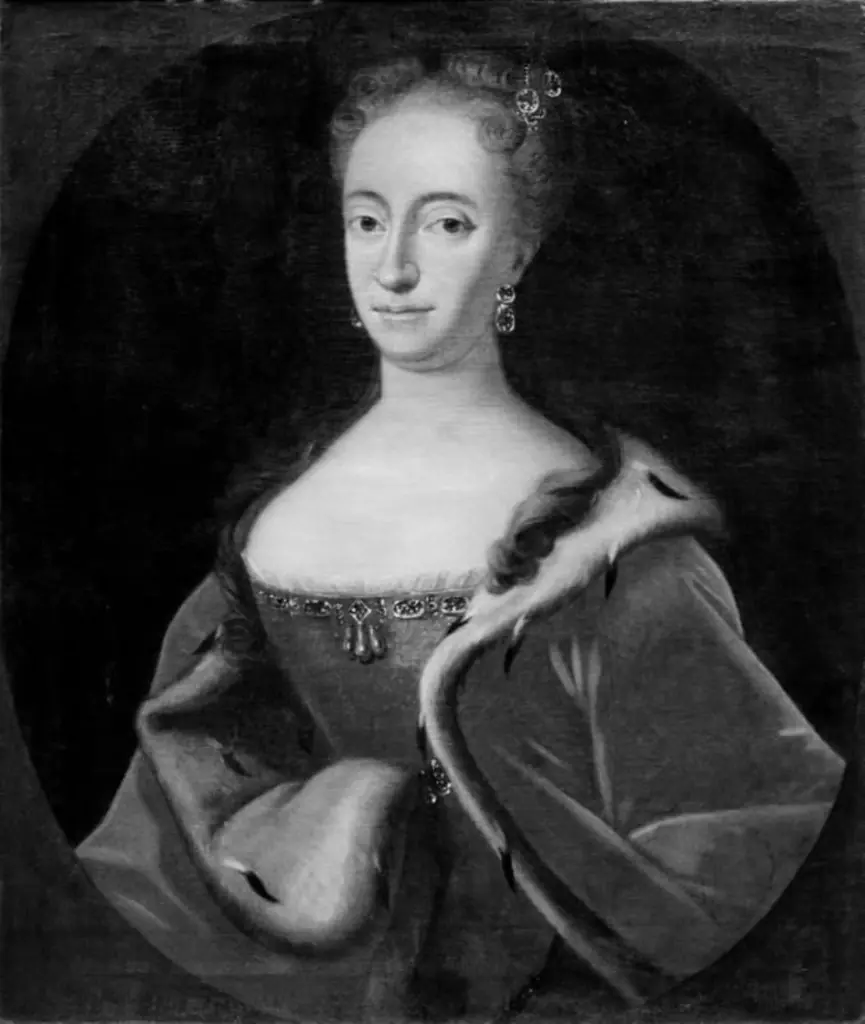
Queen Charlotte Amalie (1650-1714) is an oil painting by Unknown. It dates from 1800 and is held in the collection of the Statens Museum for Kunst.
About this work
Subject & Meaning
Created around 1800, the piece serves as a visual record of the monarch, who lived from 1650 to 1714, despite being painted nearly a century after her death.
This oil painting on canvas depicts Charlotte Amalie of Hesse-Kassel, the Queen Consort of Denmark and Norway. The work functions as a formal portrait, identifying the sitter through her likeness and the inclusion of a pearl, a detail explicitly noted in the artwork's description. Created around 1800, the piece serves as a visual record of the monarch, who lived from 1650 to 1714, despite being painted nearly a century after her death.
The composition focuses entirely on the royal figure, utilizing the medium of oil paint to capture her status and features for the collection of the Statens Museum for Kunst.
Technique & Style
The portrait of Queen Charlotte Amalie is executed in oil paint on a canvas support. Created around the year 1800, the work measures 75 cm in height and 62 cm in width. As a formal portrait, the composition centers on the depiction of Charlotte Amalie of Hesse-Kassel, incorporating specific details such as pearls as part of the subject's attire or adornment.
History & Provenance
The oil-on-canvas portrait of Queen Charlotte Amalie, depicting her with a pearl, was executed circa 1800 by an unidentified artist recorded as KMS 1611 Ubekendt. Measuring 75 cm in height and 62 cm in width, the work is classified as a portrait painting and has been part of the Statens Museum for Kunst’s collection in Copenhagen since at least its registration, with no earlier ownership information provided in the sources. The museum records its inception date as 1800-00-00, confirming the early‑19th‑century timeframe.
Overview
This oil painting depicts Queen Charlotte Amalie (1650-1714) in a formal, ornate attire, set against a dark background that accentuates her figure. Prominent details include a white lace collar over a red dress, high-piled hair secured with pins, and luminous pearl earrings and necklace.
Context
Created in a time when material wealth was openly displayed through attire and accessories, the painting reflects the societal values of the late 17th century, where such portraits served as testaments to the subject's rank and prosperity.
Artist & collection









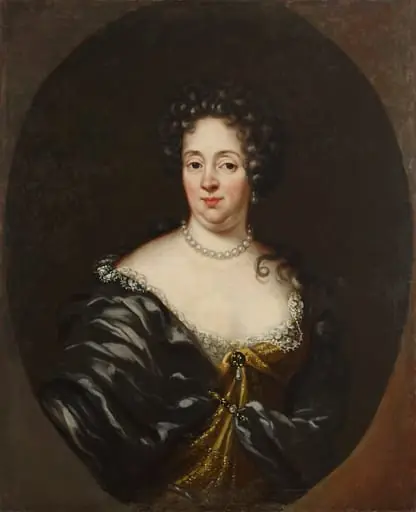 Jennings-suvun jäsen
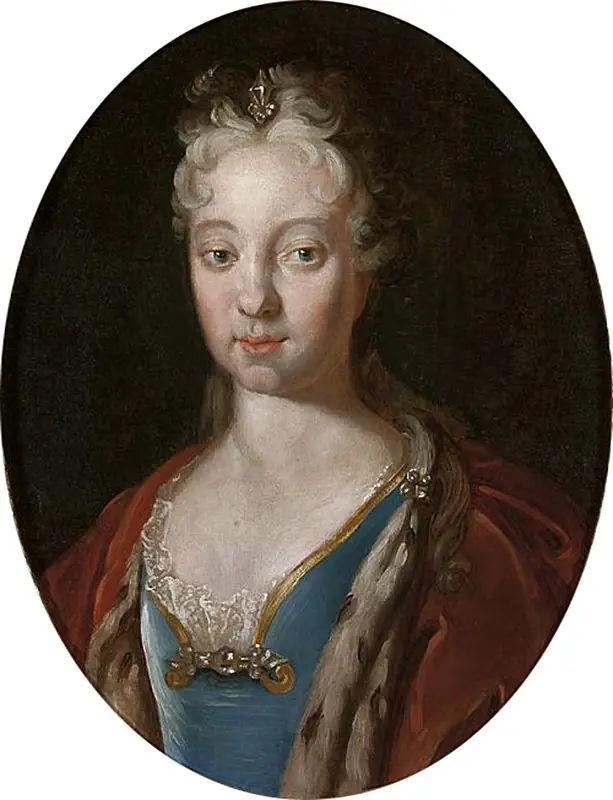 Portrait of Anna Ogińska née Wiśniowiecka (1700–1732), wife of Józef, voivode of Trakai
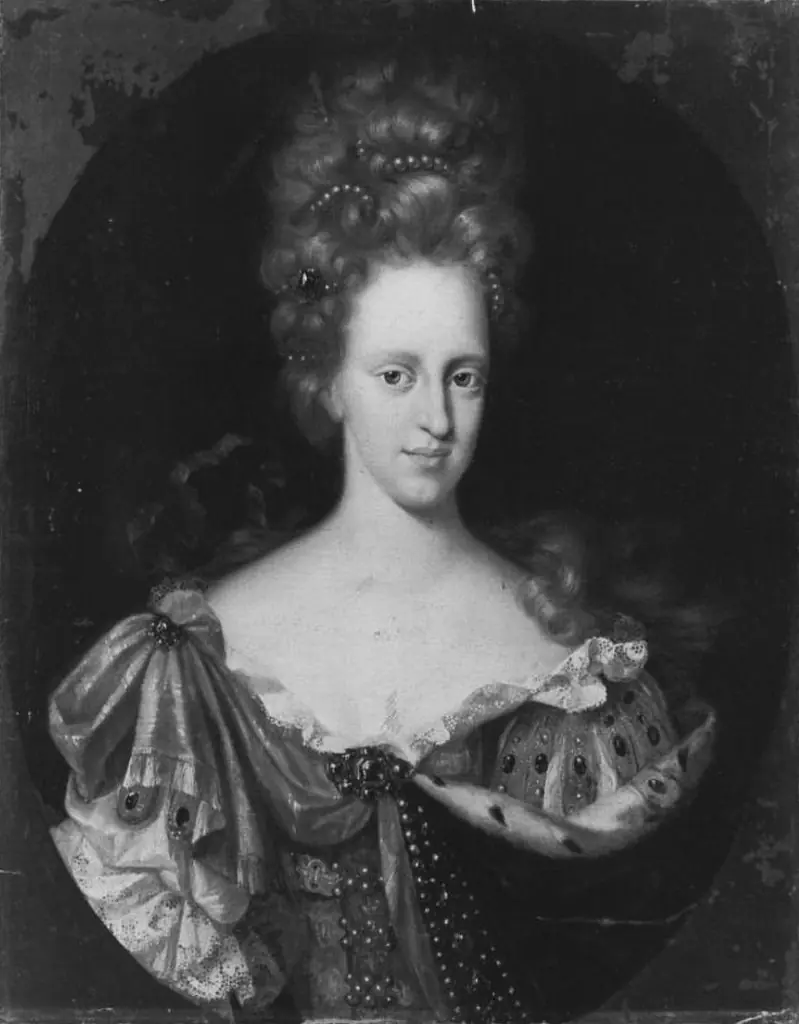 Prinzessin Hedwig Elisabeth Amalie
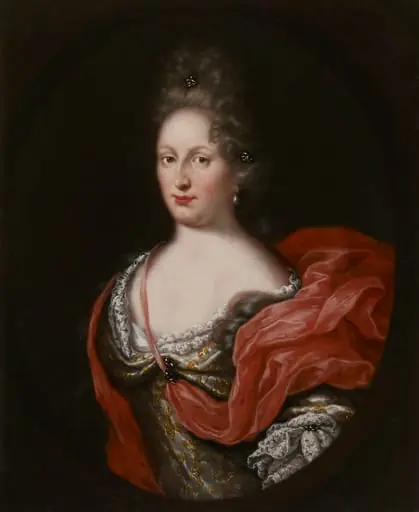 Kreivitär Ingeborg Posse
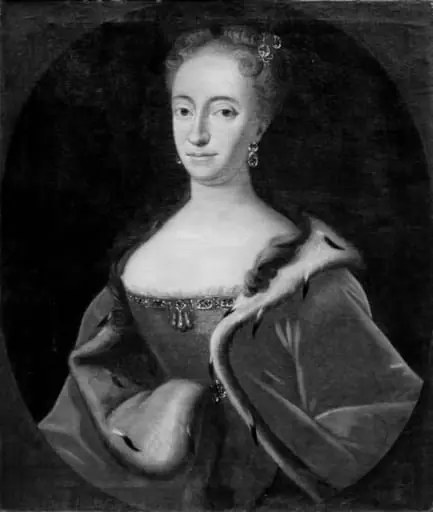 Prinsesse Sofie Hedevig ?
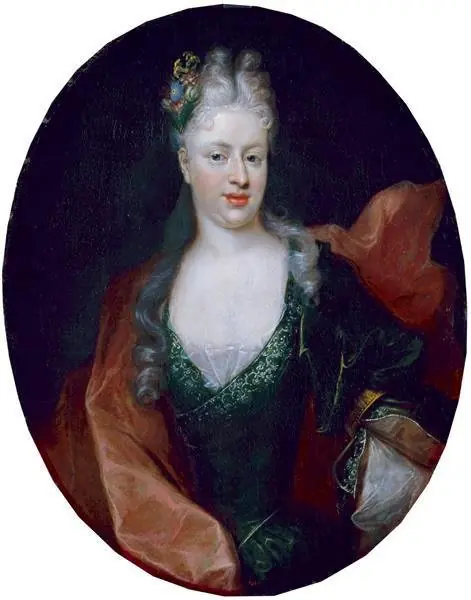 Baronesse Katarzyna de Besenval, geb. Gräfin Bielinska
 Prinsesse Sofie Hedevig ?
 Juliane Marie, Frederik V's anden dronning