Artwork
Rama and Sushena
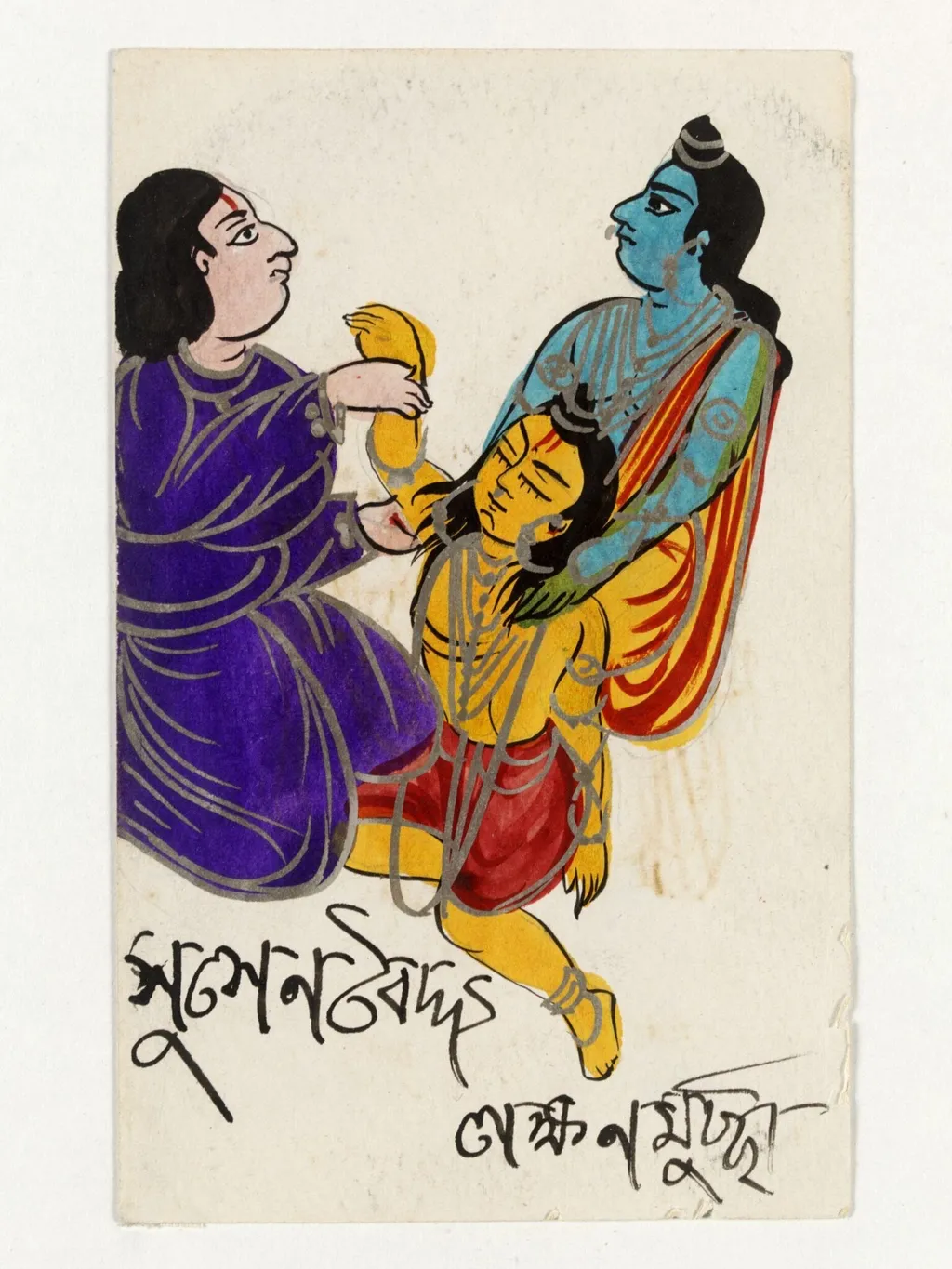
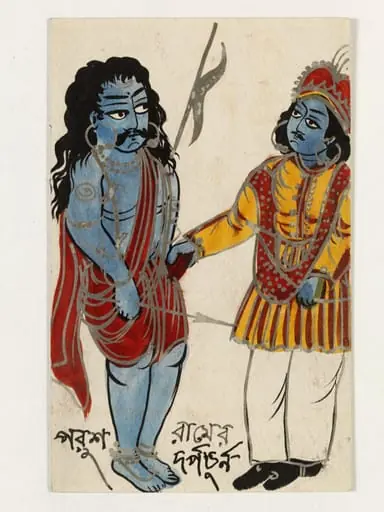
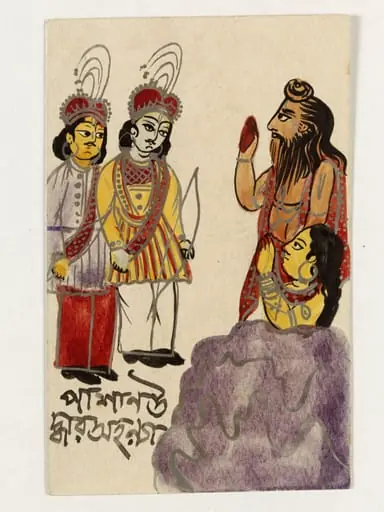
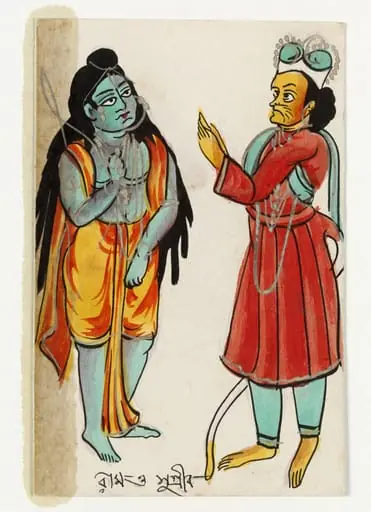
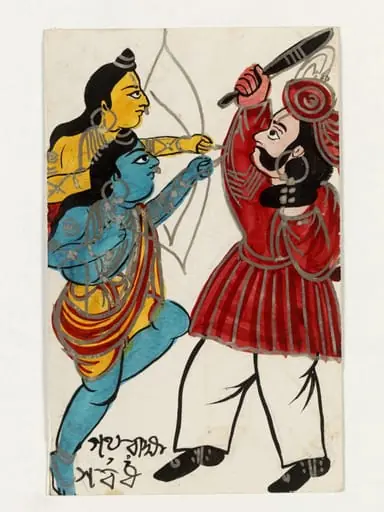
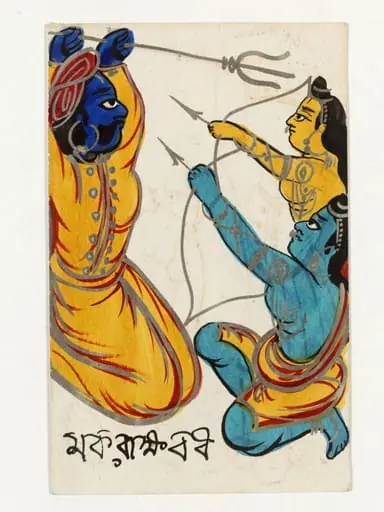
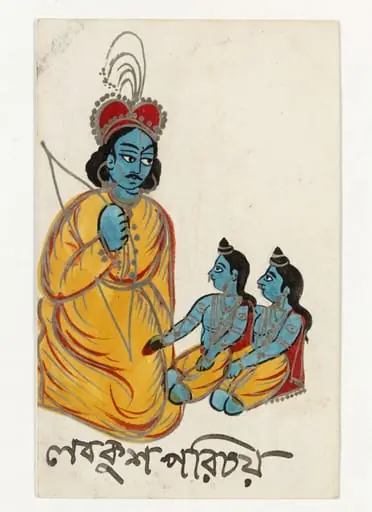
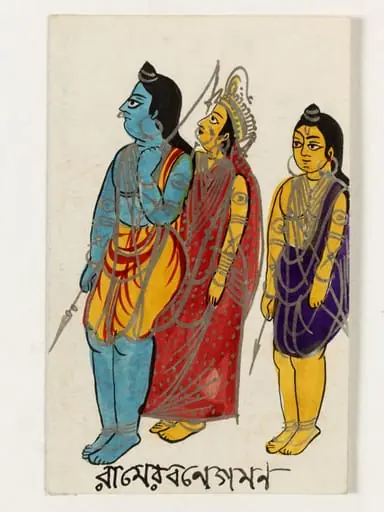
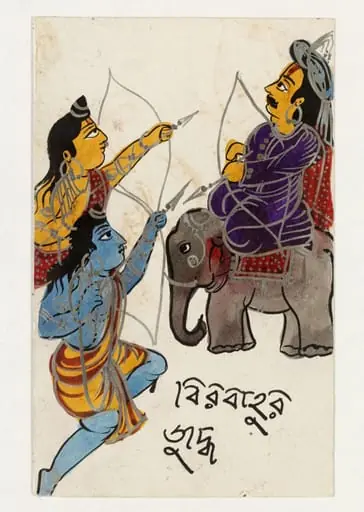
Rama and Sushena is a paint painting by the Impressionist artist Unknown. It dates from 1890 and is held in the collection of the Victoria and Albert Museum. This work is a watercolor and tin‑alloy painting on paper that portrays a moment from the Hindu epic Ramayana.
About this work
Overview
This work is a watercolor and tin‑alloy painting on paper that portrays a moment from the Hindu epic Ramayana. In the scene Rama cradles his wounded brother Lakshmana while the physician Sushida attends to the injury. The composition features three figures rendered in bright, expressive colors characteristic of a particular 19th‑century Indian genre.
Subject & Meaning
The narrative captures a pivotal episode in which Rama seeks medical aid for Lakshmana after battle. By emphasizing the compassionate act of holding the injured brother and the presence of the healer, the image underscores themes of duty, fraternal loyalty, and the restorative power of knowledge within the epic’s moral framework.
Technique & Style
Executed in the Kalighat tradition, the painting employs rapid brushwork, bold outlines, and a limited yet vivid palette. The use of watercolor combined with tin‑alloy pigments yields luminous hues, while the simplified forms and flattened perspective reflect the folk‑art origins of the style that emerged among Bengal’s itinerant painters.
History & Provenance
Kalighat paintings arose in the 1800s in Calcutta, then the capital of British India, as artists from rural Bengal catered to a growing urban market.
Kalighat paintings arose in the 1800s in Calcutta, then the capital of British India, as artists from rural Bengal catered to a growing urban market. This piece exemplifies that period’s hybrid aesthetic, blending indigenous storytelling with the city’s cosmopolitan influences. Its precise ownership record is not documented, but it remains representative of the genre’s production during the colonial era.
Context
The work belongs to a broader visual culture that responded to the social changes of 19th‑century Calcutta, where traditional devotional art intersected with new commercial demands. Kalighat artists often depicted mythological scenes for a diverse clientele, making religious narratives accessible to a rapidly expanding urban audience.
Artist & collection