Artwork
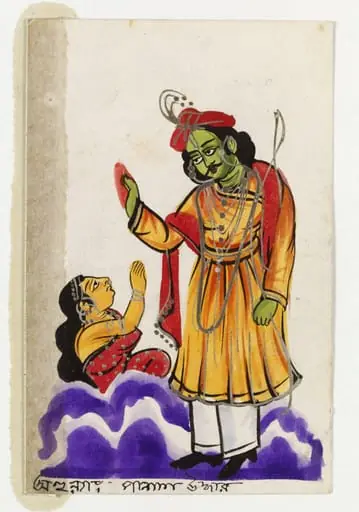
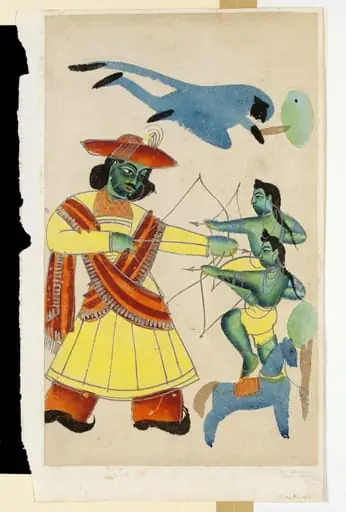
Rama, Kusha and Lava
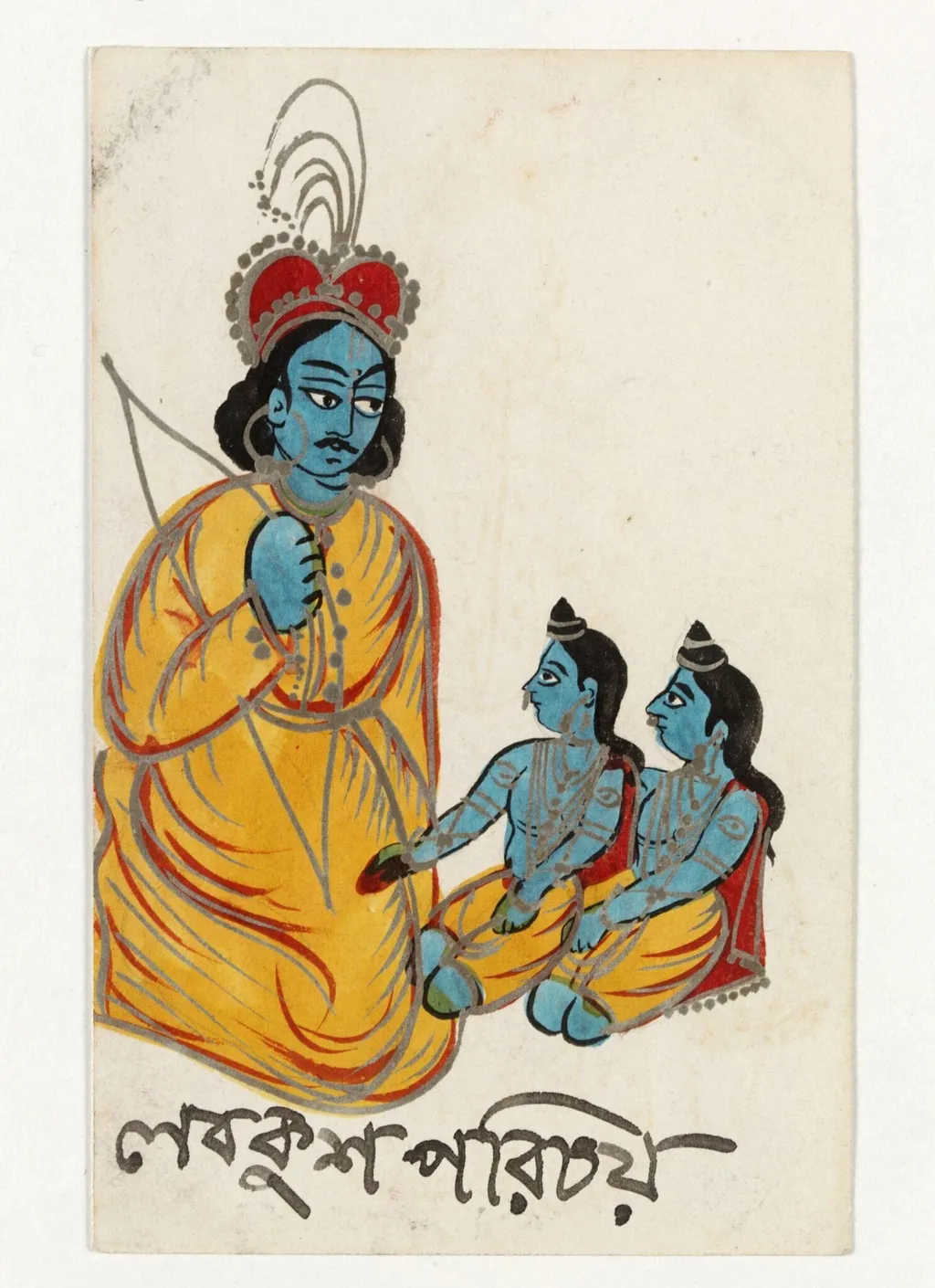
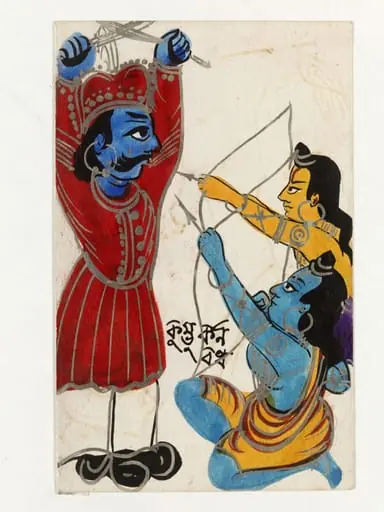
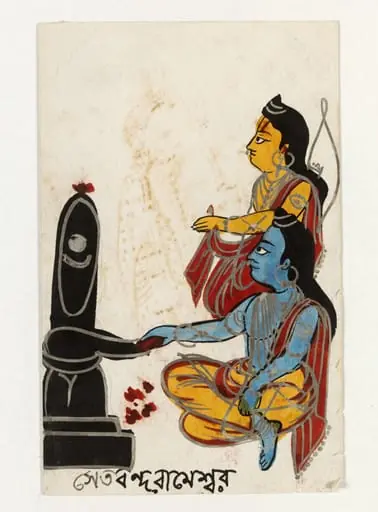
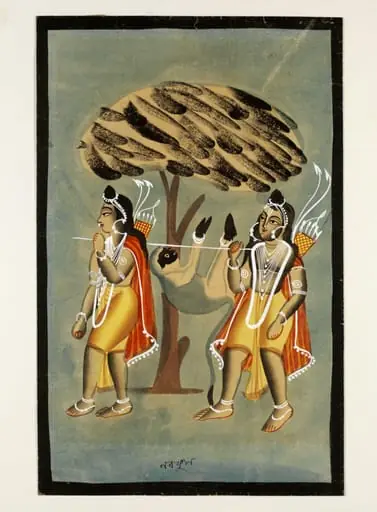
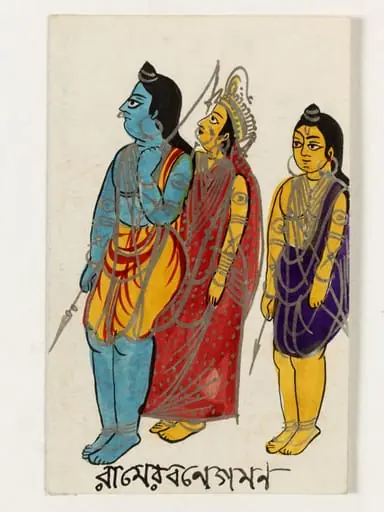
Rama, Kusha and Lava is a paint painting by the Impressionist artist Unknown. It dates from 1890 and is held in the collection of the Victoria and Albert Museum. This 1890 painting on paper combines watercolour and tin alloy to depict a scene from Hindu mythology.
About this work
Overview
This 1890 painting on paper combines watercolour and tin alloy to depict a scene from Hindu mythology.
Subject & Meaning
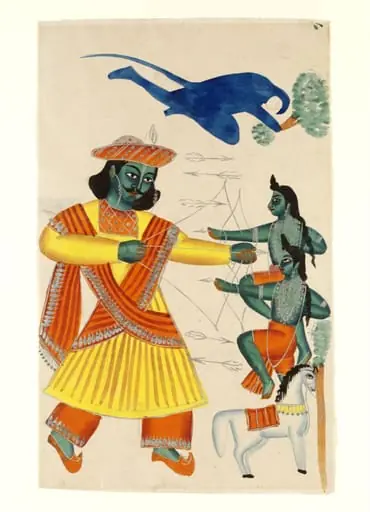
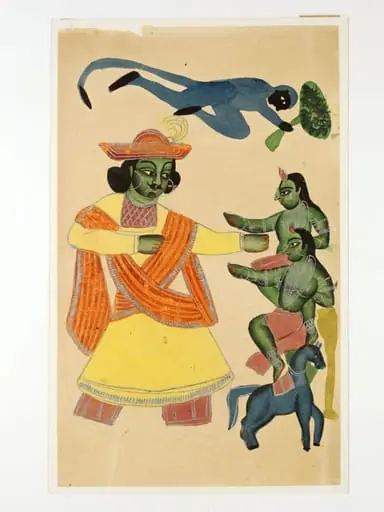
The artwork shows Rama, identifiable by his blue skin and red crown, reunited with his sons Kusha and Lava, also blue-skinned and similarly dressed. Rama holds a bow and appears to be addressing his sons, who sit before him.
Technique & Style
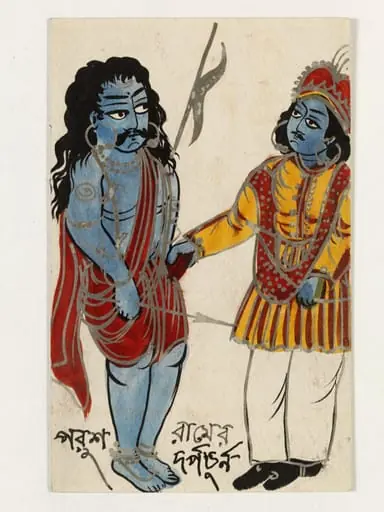
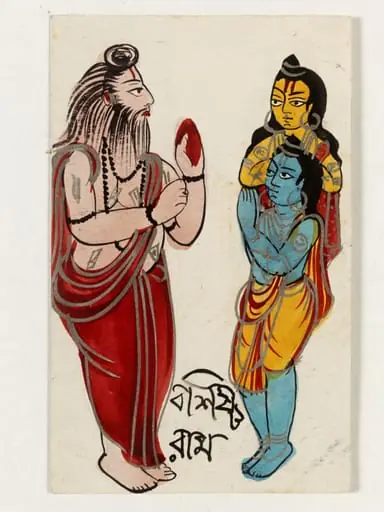
The painting features bold colours and simplified forms, characteristic of the Kalighat style, which emerged among artists in 19th-century Bengal. The use of vivid colours and rapid brushwork creates a sense of immediacy and intimacy.
Context
Produced in Calcutta during its time as the capital of British India, the painting reflects the blending of local mythology and cultural narratives with distinctive visual techniques, influenced by artists migrating from rural areas.
Artist & collection