Artwork
Rape of Europa
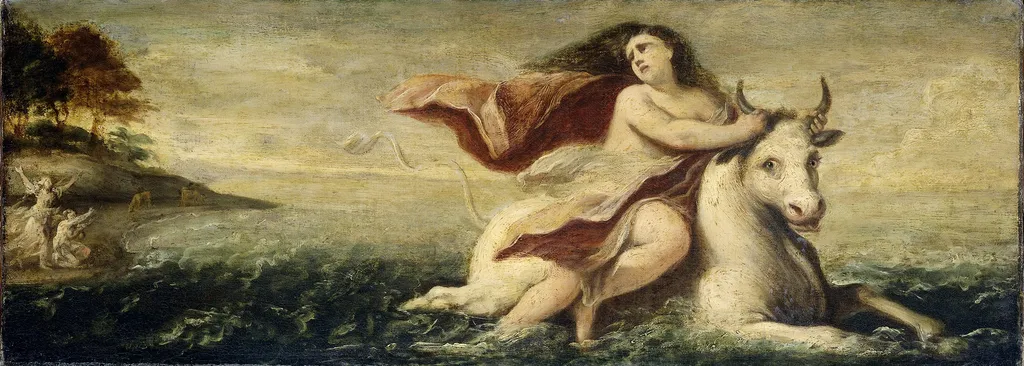
Rape of Europa is an oil painting. It dates from 1550 and is held in the collection of the Rijksmuseum. The work is an oil painting that portrays the mythological episode of Europa’s abduction.
About this work
Subject & Meaning
This narrative reflects contemporary Venetian interpretations of mythological subjects, blending eroticism with allegorical commentary on power and conquest.
The painting portrays the mythological scene of Europa's abduction by a bull, a recurring theme in Renaissance art symbolizing divine seduction and imperial expansion. The composition captures Europa's startled reaction as she clings to the bull's horns, emphasizing vulnerability and transformation. This narrative reflects contemporary Venetian interpretations of mythological subjects, blending eroticism with allegorical commentary on power and conquest.
Technique & Style
The painting is executed in oil on canvas, a standard support for large-scale mythological works of the period. The composition centers on Europa's abduction by a bull, rendered with richly layered pigments that emphasize the fleshly texture of the figures and the turbulent sea behind them. Brushwork combines delicate modeling of skin tones with broader, expressive strokes in the sky and water, creating a dynamic interplay of light and movement.
The canvas dimensions measure 31 cm in height by 84 cm in width, reflecting the work's imposing scale.
History & Provenance
The painting titled Rape of Europa was created in 1550 in Venice. It is an anonymous oil-on-canvas work depicting the mythological abduction of Europa by a bull. The piece is currently held in the collection of the Rijksmuseum.
While the specific commission details and original ownership chain are not detailed in the available records, the work dates to the mid-sixteenth century and remains attributed to an unknown artist.
Overview
The work is an oil painting that portrays the mythological episode of Europa’s abduction. A white bull with brown horns carries the figure of Europa, who is wrapped in a red cloth, her dark hair streaming behind her as she clutches the animal’s horns. The scene unfolds against a cloudy sky, with trees and water visible in the distance, creating a sense of movement and unrest.
Context
The subject derives from classical mythology, a frequent source for European art. By depicting the moment of Europa’s forced passage, the work aligns with a tradition of visualizing mythic narratives to explore themes of power, transformation, and the intersection of the divine with the mortal.
Artist & collection