Artwork
Roundel with Christ Healing the Blind Man
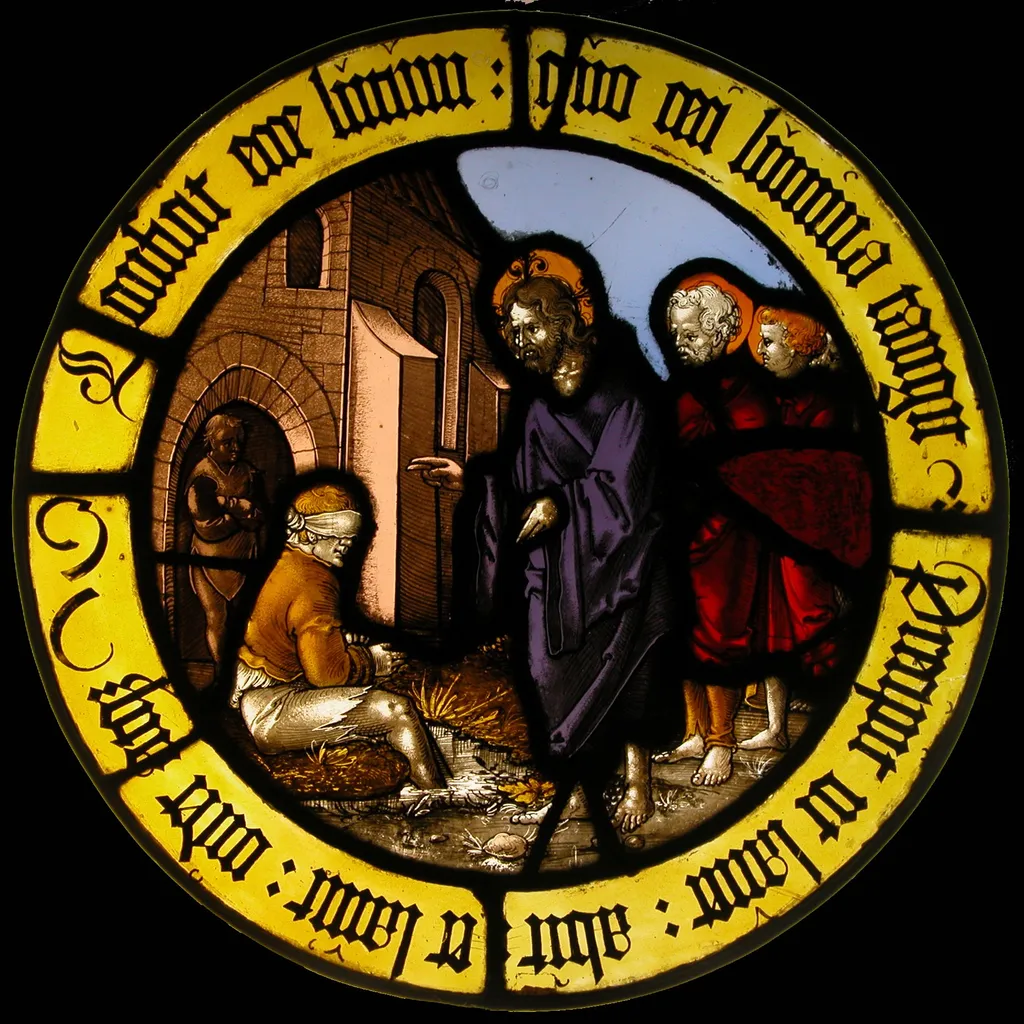
Roundel with Christ Healing the Blind Man is an unspecified painting. It dates from 1522 and is held in the collection of the Metropolitan Museum of Art. This circular painting, known as a roundel, depicts a pivotal moment from the New Testament.
About this work
Technique & Style
As a work of religious art from the early sixteenth century, it adheres to the stylistic conventions of the period's workshop production.
Created in 1522 by the Hirschvogel Workshop, this religious artwork is classified as a painting depicting Christ healing a blind man. The piece is executed on a circular support, consistent with the roundel format, and measures 30.7 units in height with a recorded width of 0.6 units. As a work of religious art from the early sixteenth century, it adheres to the stylistic conventions of the period's workshop production.
The object is currently held within the collection of the Metropolitan Museum of Art, where its physical dimensions and classification as a painting are documented. The formal presentation focuses on the narrative interaction between the figures of Christ and the man, rendered within the confined circular space typical of roundel compositions from this era.
History & Provenance
Roundel with Christ Healing the Blind Man is a religious painting dated 1522, executed by the Hirschvogel Workshop. The work was created as part of the workshop’s output in the early sixteenth century and subsequently entered the collection of the Metropolitan Museum of Art, where it remains on display. Its provenance traces from the workshop’s studio to the museum’s holdings, reflecting a continuous ownership record from creation to present custodianship. The composition depicts Christ restoring sight to a blind man, aligning with contemporary devotional themes.
The Roundel with Christ Healing the Blind Man, dated to 1522, is currently held in the collection of the Metropolitan Museum of Art. Created by the Hirschvogel Workshop, this religious painting depicts Christ and a man. While the specific inventory or accession number is not detailed in the provided records, the work is cataloged within the museum's holdings with recorded dimensions of 30.7 cm in height.
The sources confirm its location at the Metropolitan Museum of Art but do not provide a detailed list of past exhibitions or specific accession dates beyond the creation year of 1522.
Context
The roundel titled Roundel with Christ Healing the Blind Man, dated 1522, exemplifies early sixteenth‑century devotional painting in the German Renaissance. It is attributed to the Hirschvogel Workshop, a collective known for intricate religious imagery, and measures approximately 30.7 cm in height by 0.6 m in width. The work depicts a biblical scene of Christ restoring sight to a blind man, underscoring themes of miracles and faith.
Currently housed in the Metropolitan Museum of Art, the piece is part of the museum’s collection of religious art, reflecting the institution’s focus on Northern European painting of the period.
Legacy
The roundel, painted in 1522 by the Hirschvogel Workshop, entered the collection of the Metropolitan Museum of Art, where it is displayed as a representative example of Northern Renaissance religious imagery. Its attribution to a recognized workshop and the detailed iconography of Christ healing the blind man have made it a point of reference for studies of Reformation‑era visual theology. Scholars cite the work when examining the transmission of devotional motifs in early modern art, and its presence in a major public museum underscores a sustained appreciation of the piece as both an artistic and historical document.
Overview
This circular painting, known as a roundel, depicts a pivotal moment from the New Testament. It shows a figure in a purple garment, presumably Christ, performing a miraculous act of healing on a kneeling man. The composition is set against a blue sky and architectural elements, framed by an inscribed border. This format and subject matter were common in devotional art of the period.
Subject & Meaning
The central narrative focuses on the act of restoring sight. The figure identified as Christ gently touches the eyes of a man who kneels, holding a basket, signifying his former state of blindness and perhaps his humble circumstances. In the upper right, three smaller faces emerge from the clouds, possibly representing divine witnesses or angels, emphasizing the spiritual significance of the miracle.
Artist & collection

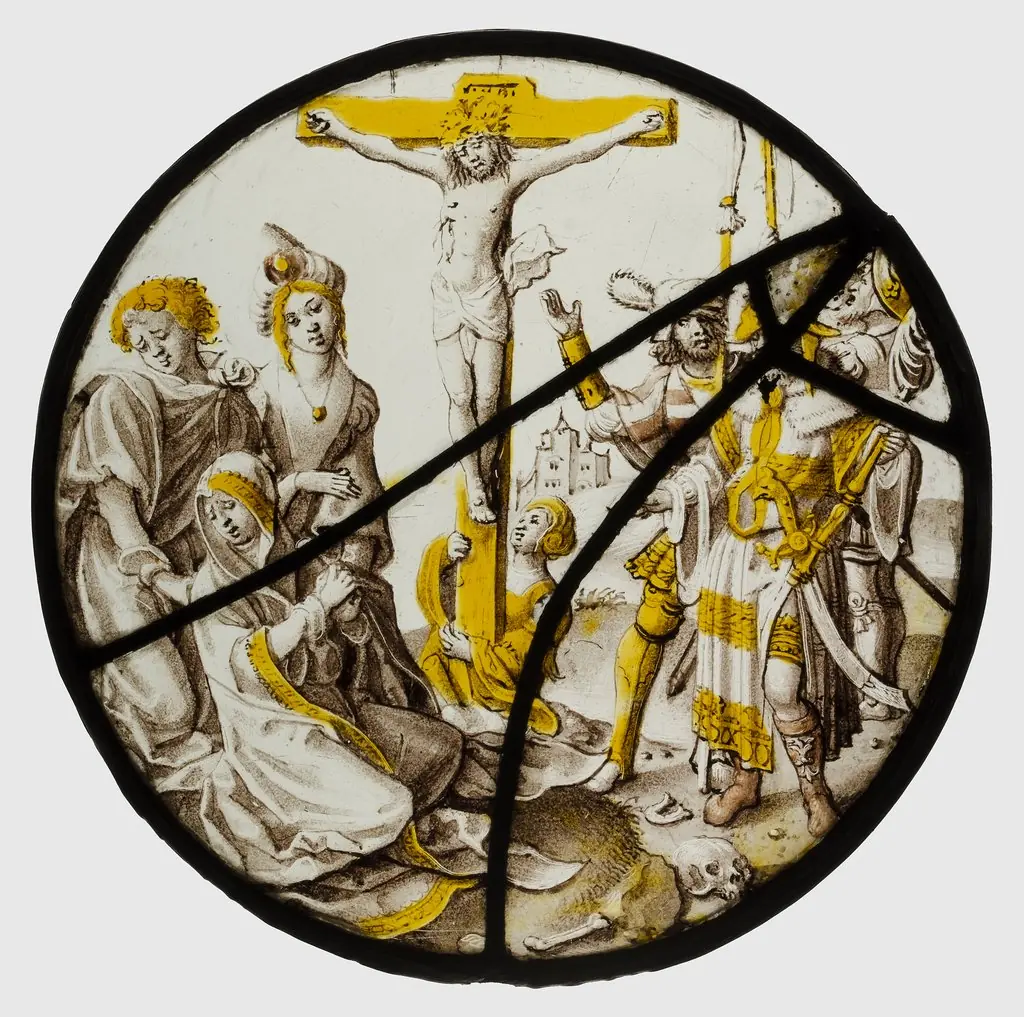
- Roundel with the Crucifixion
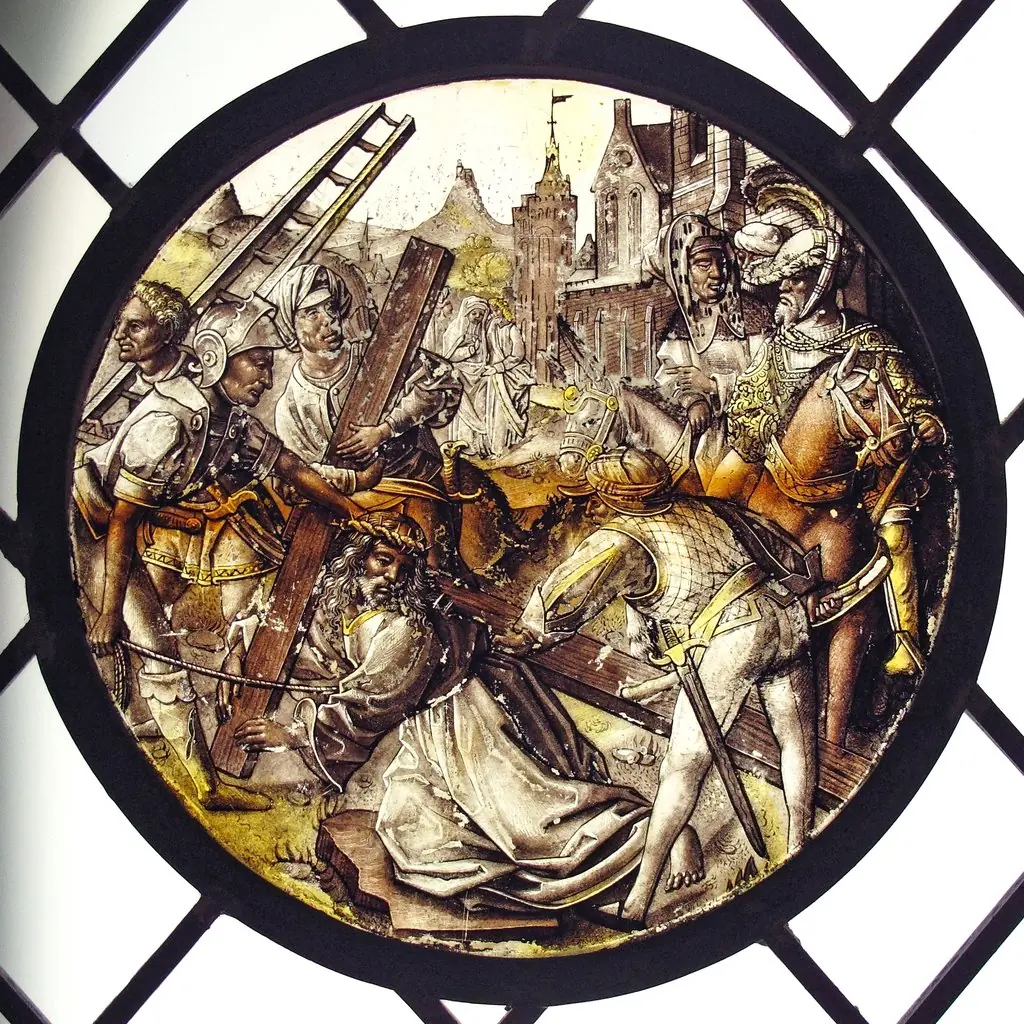 Roundel with Christ Bearing the Cross
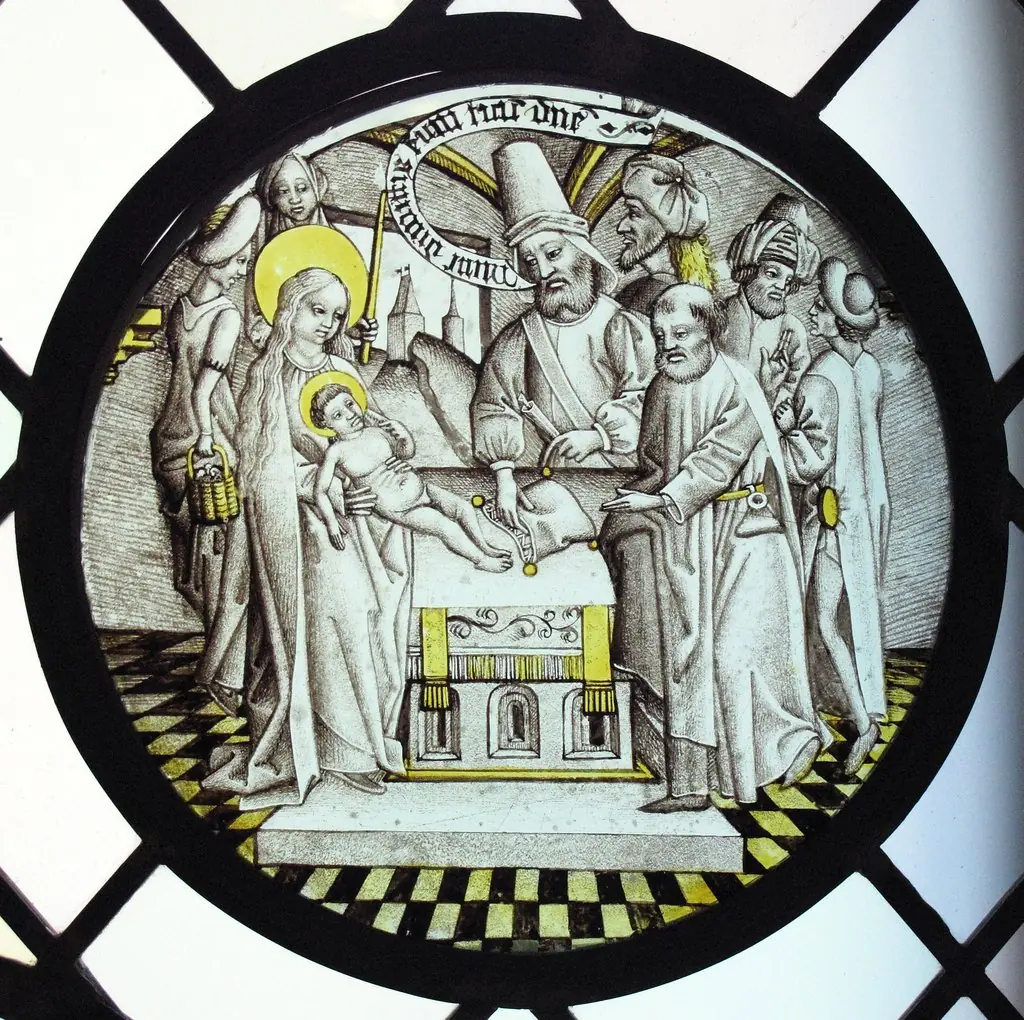 Roundel with the Circumcision
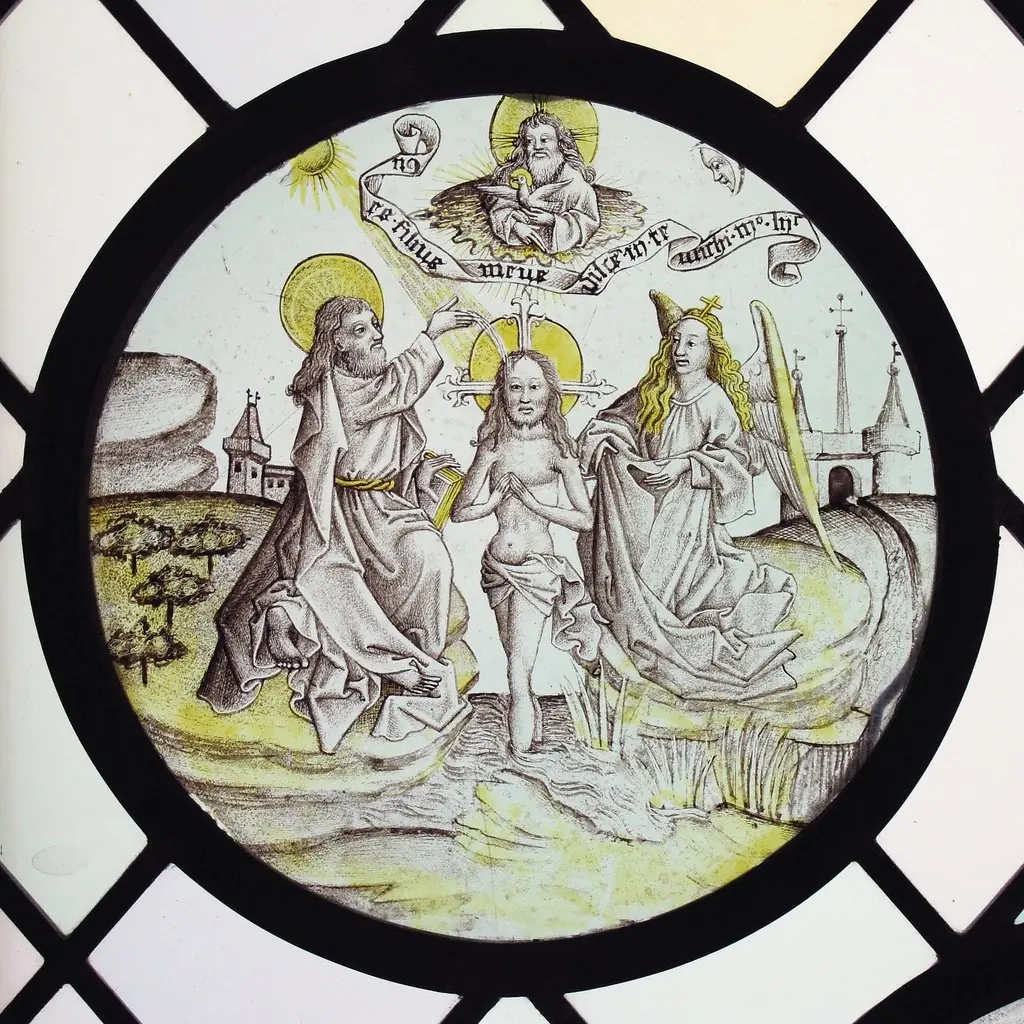 Roundel with the Baptism of Christ
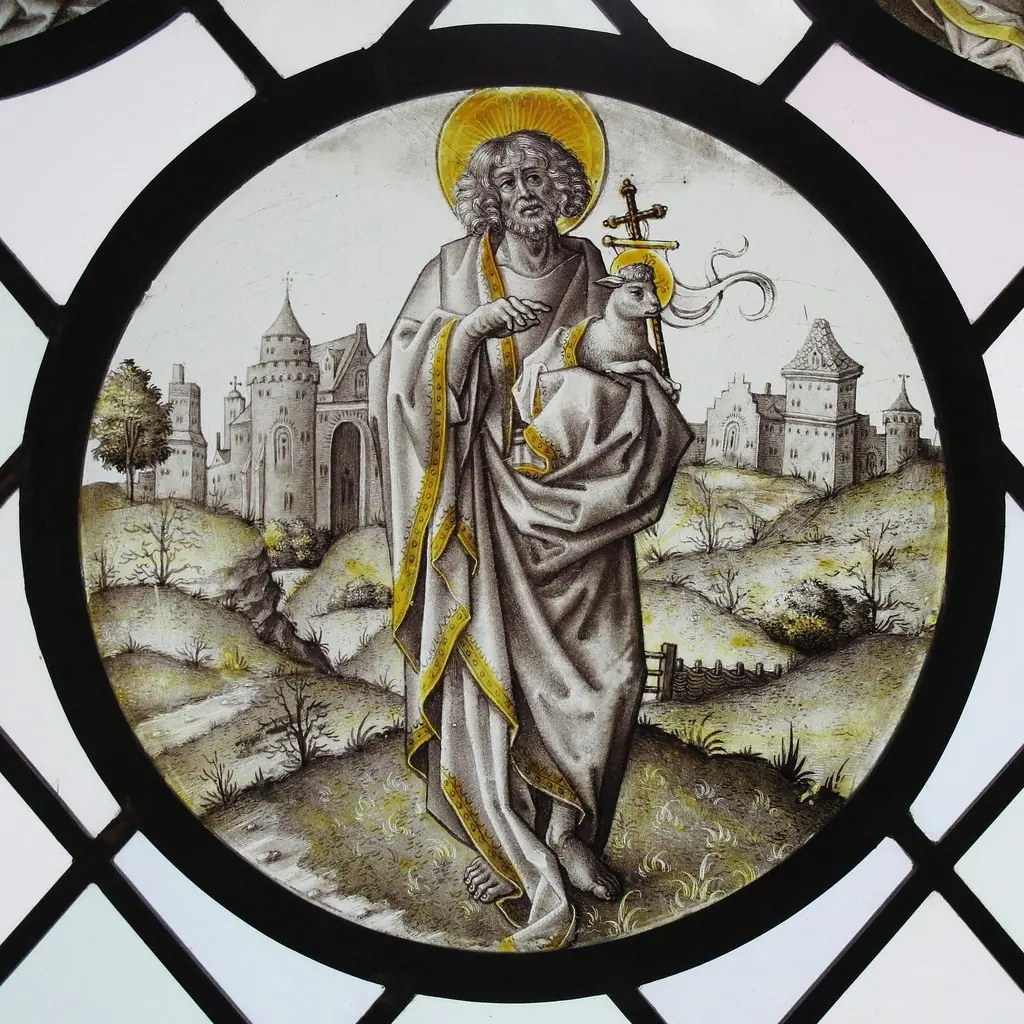 Roundel with Saint John The Baptist
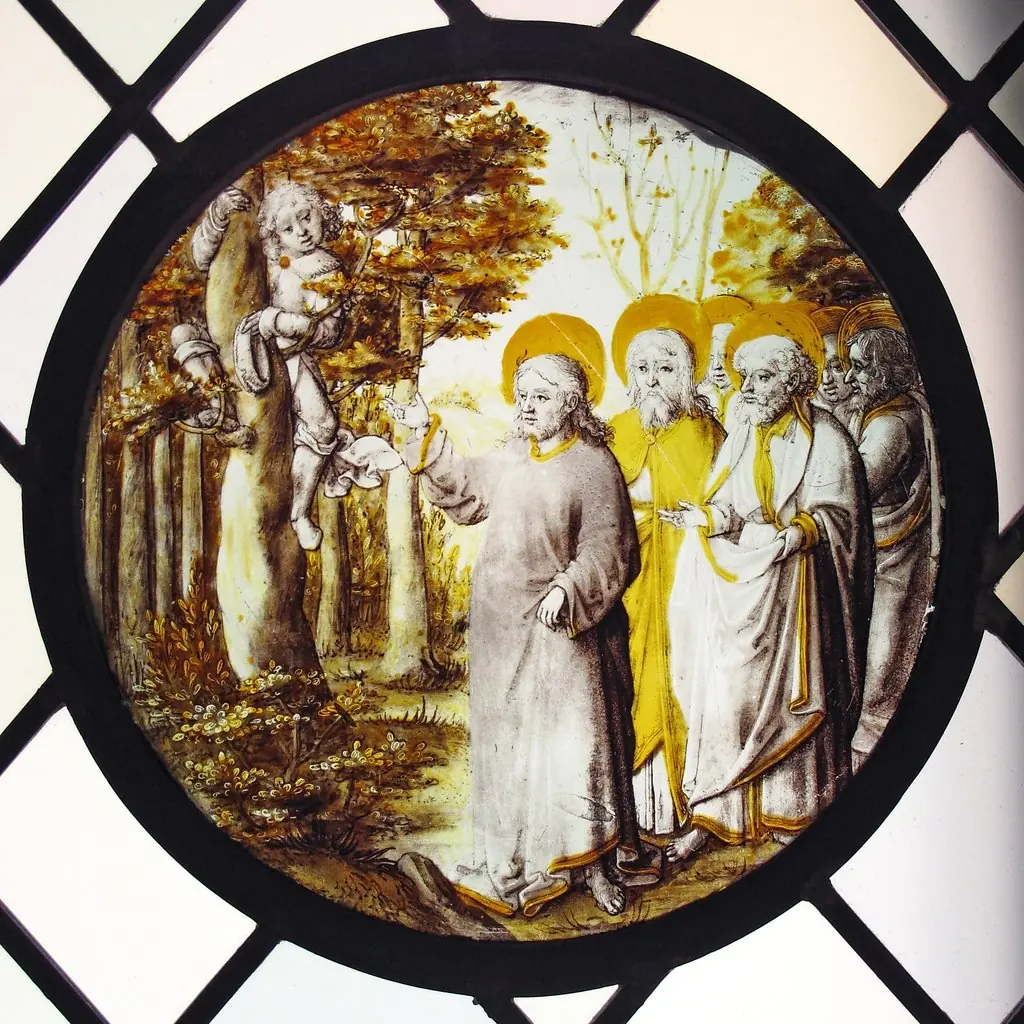 Roundel with Christ and Zacchaeus
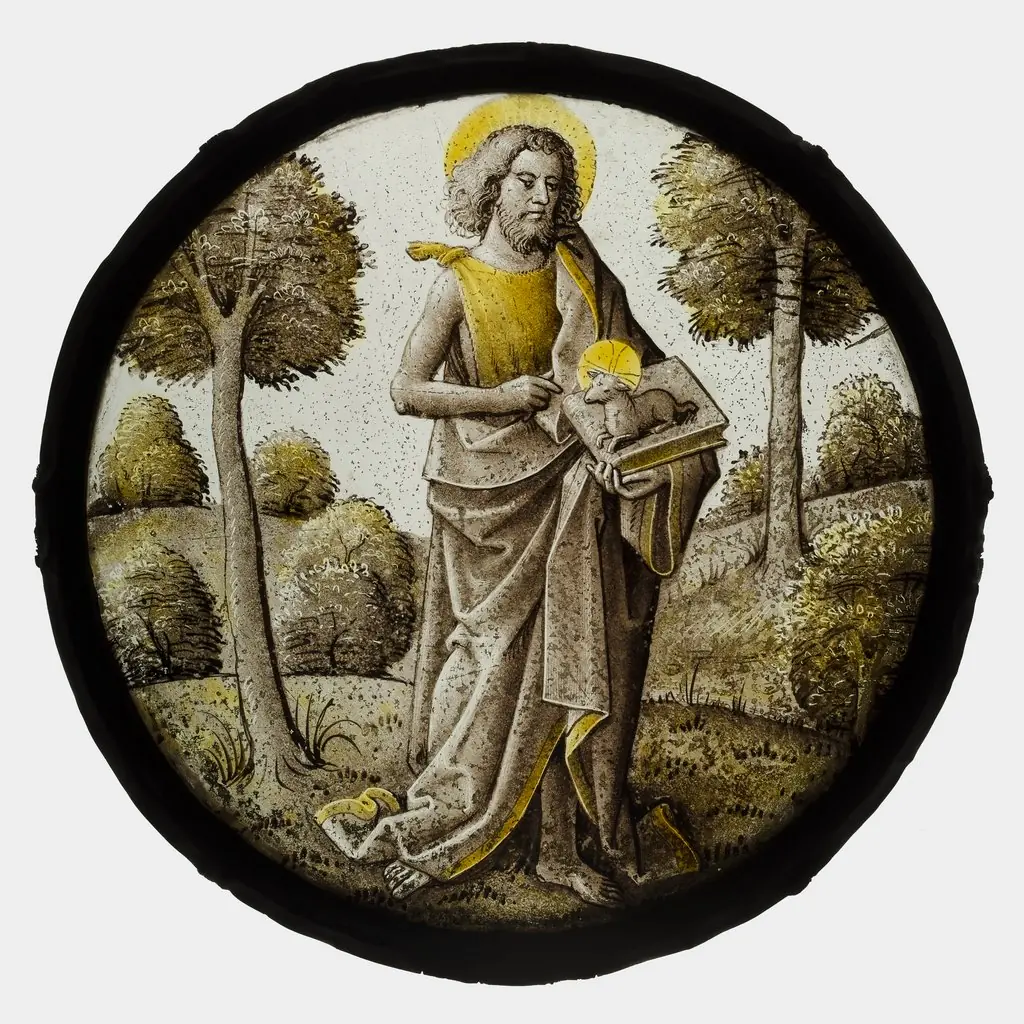 Roundel with Saint John the Baptist
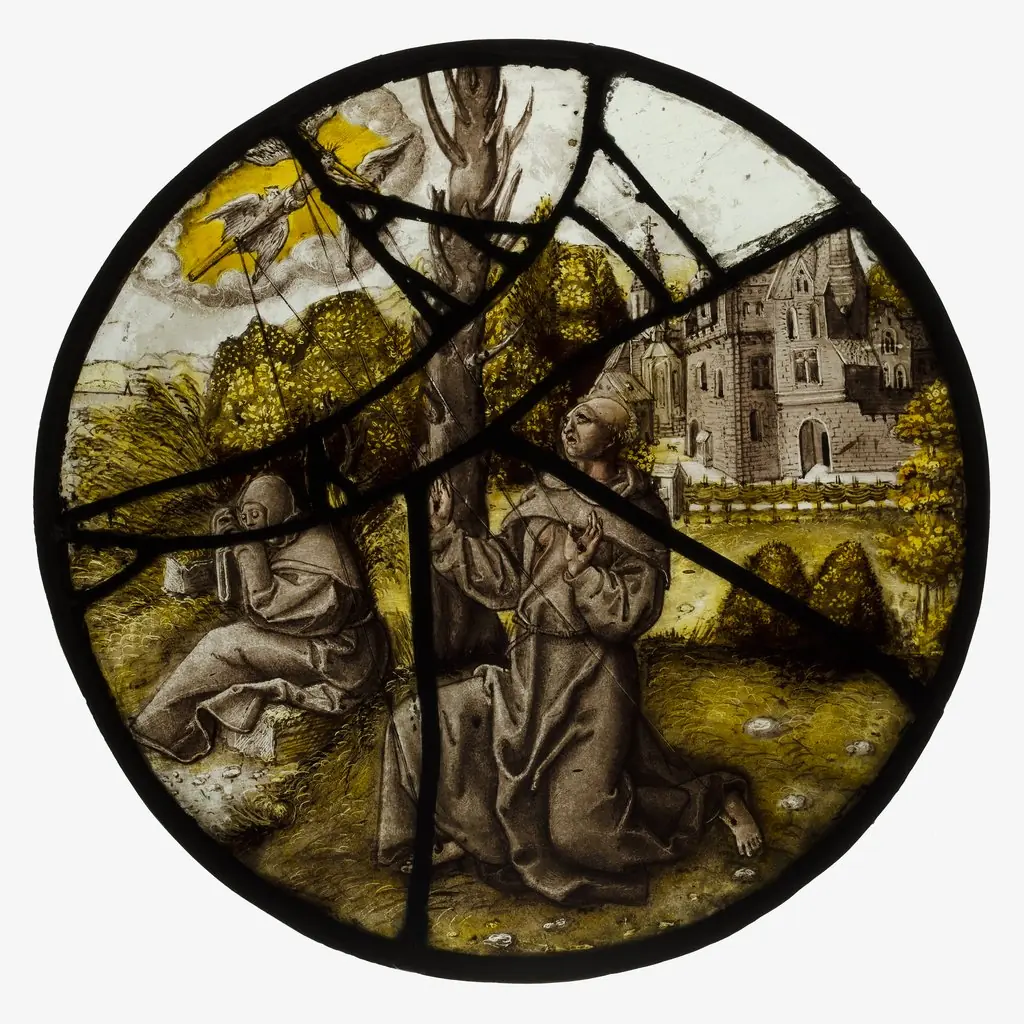 Roundel with Saint Francis Receiving the Stigmata
 Roundel with the Resurrection