Artwork
Saint Lucy
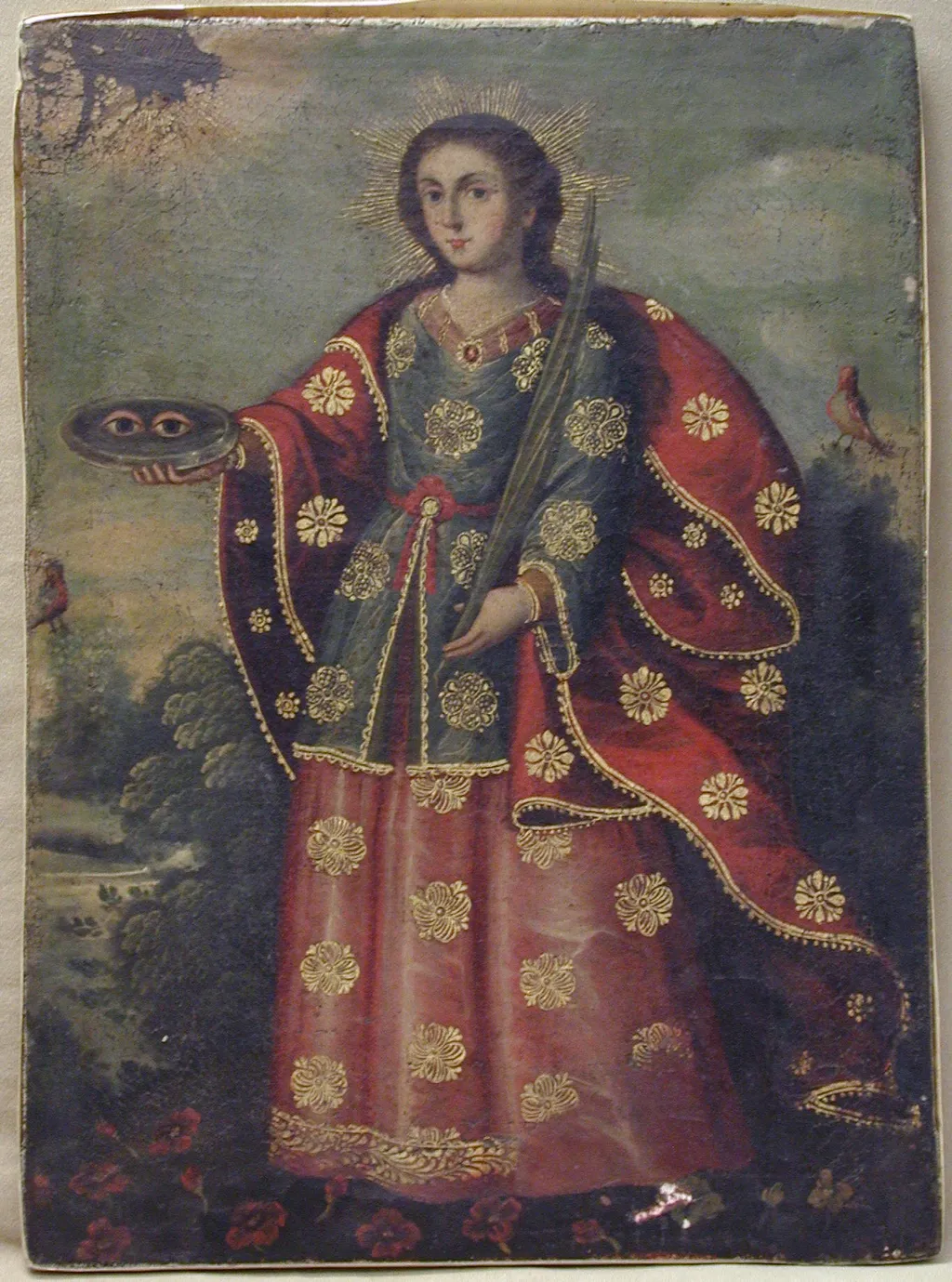
Saint Lucy is an unspecified painting. It dates from 1749 and is held in the collection of the Metropolitan Museum of Art.
About this work
Subject & Meaning
The combination of the female saint and the eye motif conveys both her identity and the spiritual protection the image was intended to offer to the faithful.
The painting portrays Saint Lucy, a female Christian saint, as its principal subject. According to the source records, the work belongs to the religious genre and explicitly depicts a woman identified as a saint. The iconographic elements include an eye, a traditional attribute associated with Saint Lucy in Christian art, where the saint is venerated as the patroness of vision and the blind and is commonly shown holding or accompanied by eyes on a plate or in her hand.
Produced in 1749 in Cusco, the painting reflects the colonial Andean tradition of devotional imagery in which European saints were rendered for local veneration, with Saint Lucy's attribute signaling her role as intercessor for eyesight and her martyrdom narrative. The combination of the female saint and the eye motif conveys both her identity and the spiritual protection the image was intended to offer to the faithful.
Overview
The painting titled "Saint Lucy" presents a female figure, likely the saint herself, adorned with traditional attributes. The artwork features a woman in elaborate robes, distinguished by a radiant halo and specific objects in her hands, set against a muted background. Its style suggests an origin within the devotional art traditions of the eighteenth century, reflecting the period's approach to religious portraiture.
Technique & Style
The painting exhibits characteristics common to religious art of the 18th century. The rendering of the figure's drapery, with its rich red robe and gold embellishments over a blue undergarment, reflects the period's aesthetic for devotional imagery. The muted gray background, subtly broken by a tree branch with birds, provides a restrained setting that emphasizes the saint without distracting from her iconic presence.
History & Provenance
This painting, titled "Saint Lucy," is part of the permanent collection at The Metropolitan Museum of Art. Its inclusion contributes to the museum's holdings of religious art, providing an example of devotional imagery from the eighteenth century. The artwork's presence in such a prominent institution ensures its preservation and accessibility for study and public viewing, representing a facet of art history.

Artist & collection