Artwork
Saint Martin Offering the Wine Cup to the Priest
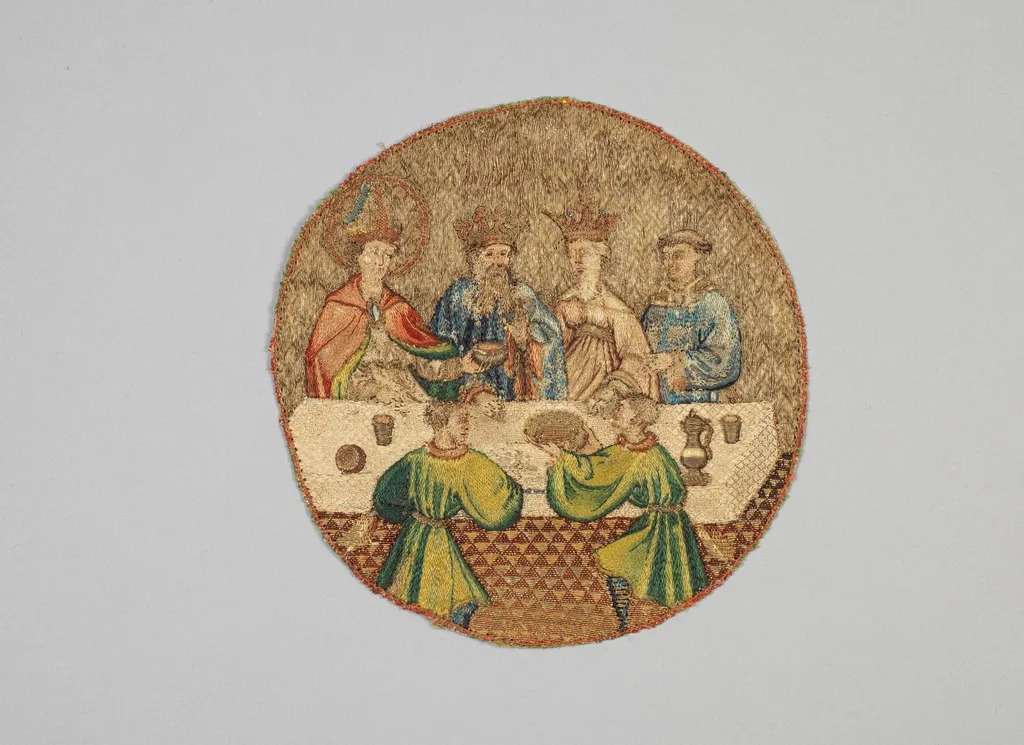
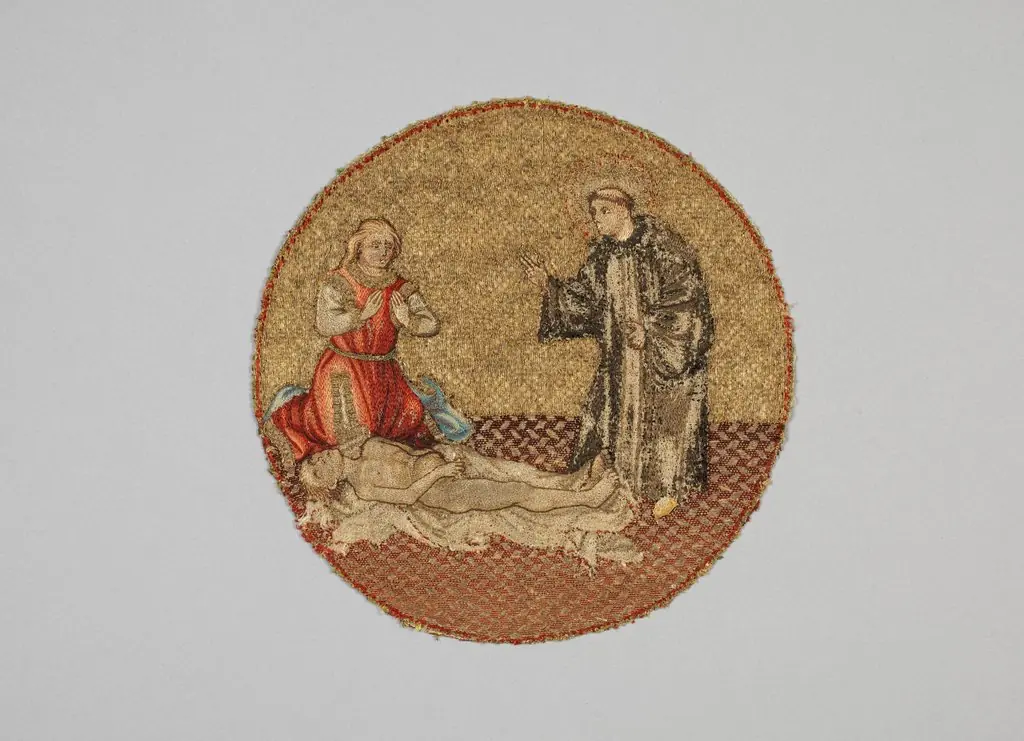
Saint Martin Offering the Wine Cup to the Priest is an unspecified painting. It dates from 1430 and is held in the collection of the Metropolitan Museum of Art. This circular painting depicts an outdoor gathering, possibly a meal, where several figures are assembled around a table.
About this work
Subject & Meaning
The painting titled Saint Martin Offering the Wine Cup to the Priest portrays a male figure identified as Saint Martin extending a wine cup toward a cleric.
The painting titled Saint Martin Offering the Wine Cup to the Priest portrays a male figure identified as Saint Martin extending a wine cup toward a cleric. As a work of religious art from around 1430, it belongs to the genre of devotional imagery in which such gestures symbolize charitable exchange and liturgical reference. The composition reflects medieval iconographic conventions that associate the offering of wine with themes of communion and generosity, situating the scene within broader Christian narratives of hospitality.
The work is housed in the Metropolitan Museum of Art as part of the Robert Lehman Collection, and is recorded as an anonymous piece.
History & Provenance
The panel Saint Martin Offering the Wine Cup to the Priest is dated to circa 1430, a work of the early fifteenth century. Recorded as anonymous, it entered the collection of the Metropolitan Museum of Art in New York as part of the Robert Lehman Collection. It has been shown at the museum within the Robert Lehman Collection displays, which opened to the public in 1975.
Overview
This circular painting depicts an outdoor gathering, possibly a meal, where several figures are assembled around a table. The central action shows one individual extending a cup to another. The scene unfolds against a verdant, hilly landscape, with the participants attired in period robes and headwear.
The overall palette features muted earth tones, complemented by vibrant accents of red and gold in the drapery.
Technique & Style
The painting's distinctive round format, known as a tondo, frames the composition. Figures are strategically placed in a circular formation, fostering a sense of unity and engagement within the scene. The artist employs a color scheme dominated by natural greens, browns, and blues for the setting, contrasting these with richer reds and golds that highlight the garments worn by the assembled individuals.
Artist & collection

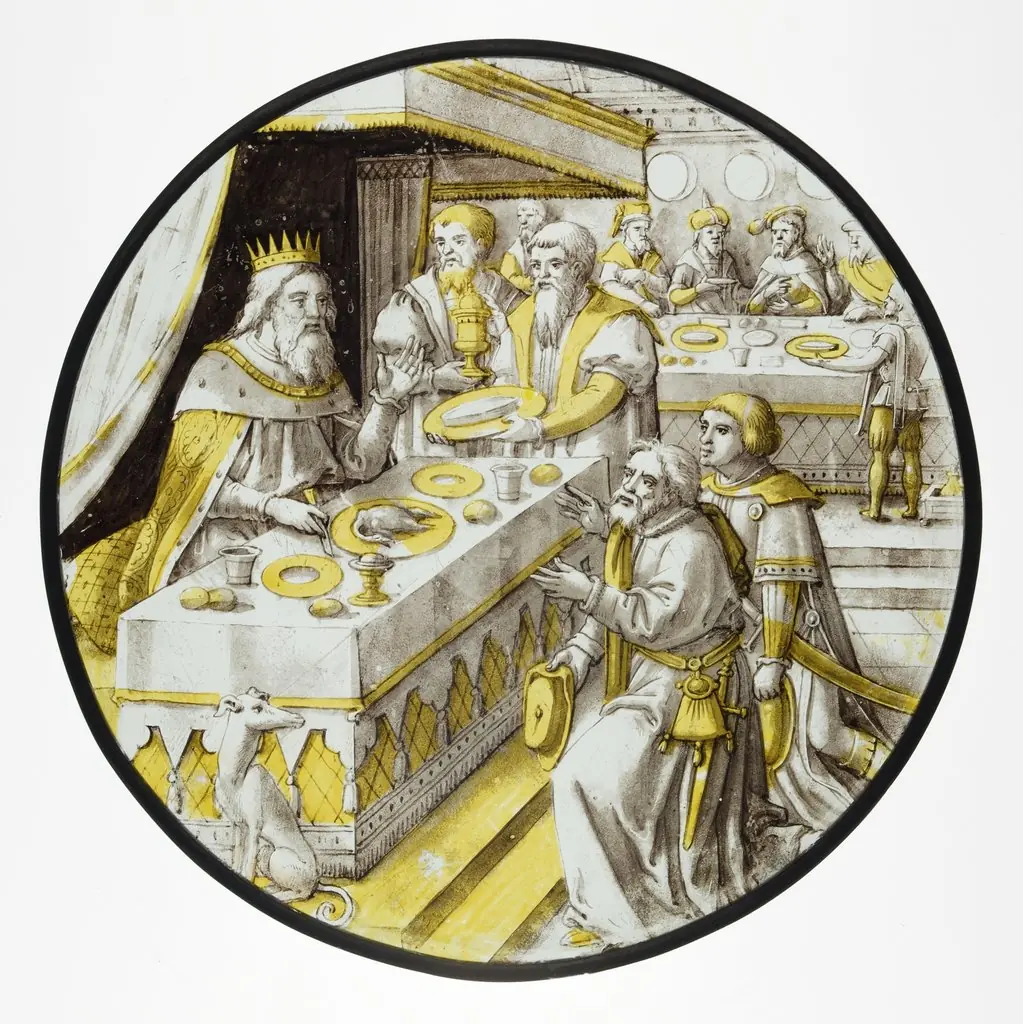 Roundel with Joseph Presenting his father, Jacob, to the Pharoah (from a Series of the History of Joshua)
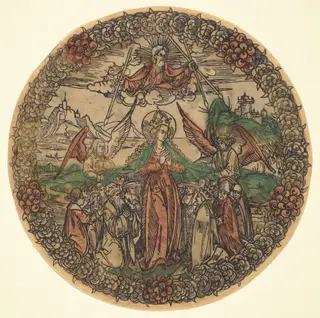 Madonna in a Wreath of Roses
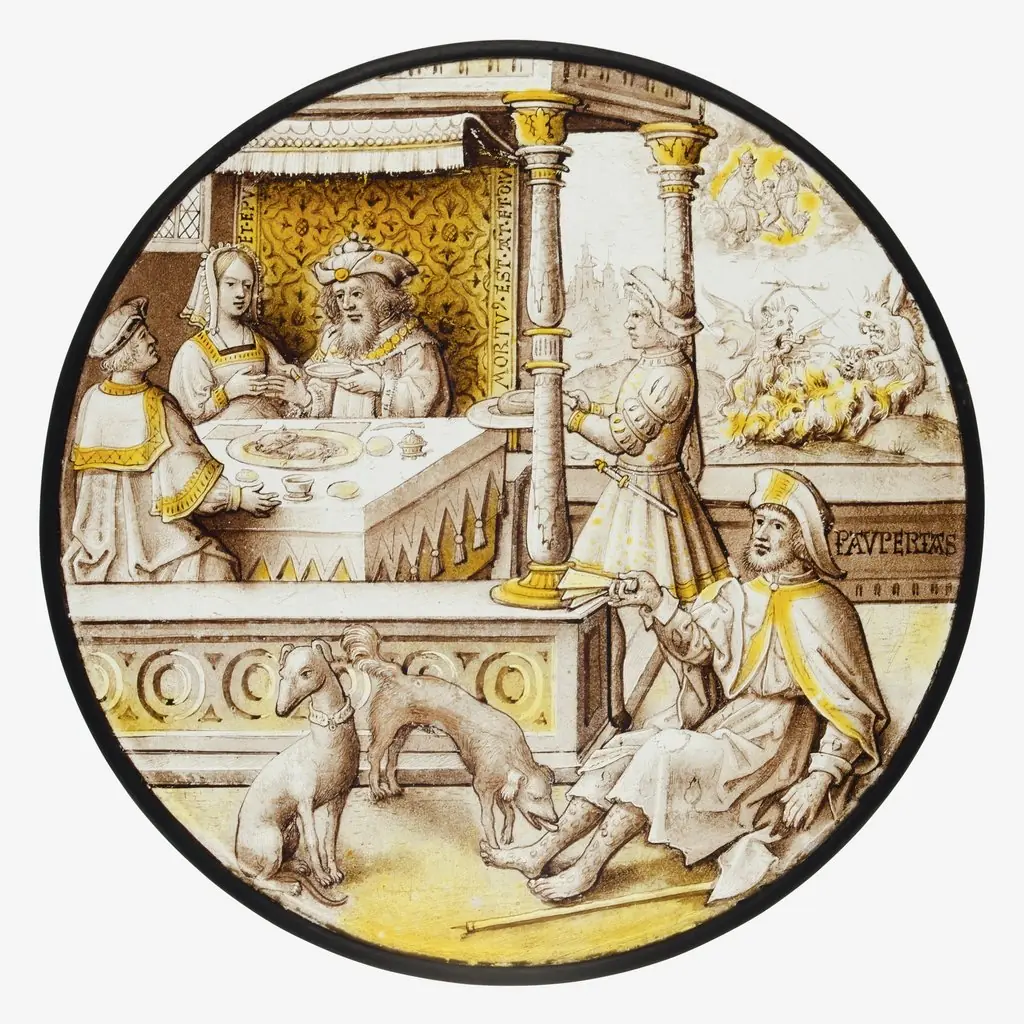 Roundel with Lazarus at the House of Dives
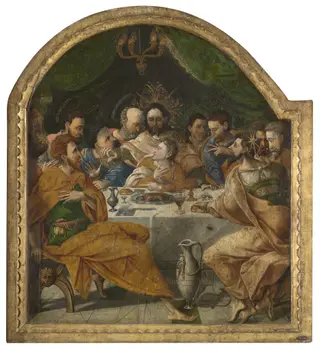 The Last Supper
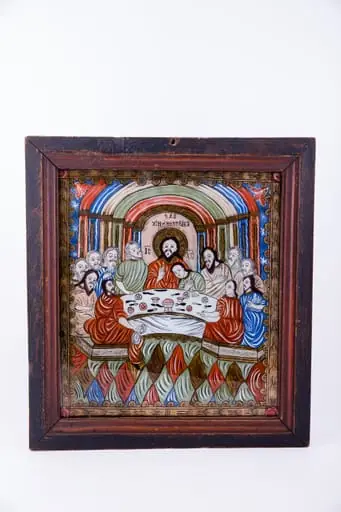 Scena Cinei celei de Taină se desfășoară într-un interior sugerat de elemente arhitectonice, coloane și șase arcade alternativ-cromatic pictate. În centrul icoanei este Mântuitorul Iisus Hristos binecuvântând mâncarea, la masă, alături de ucenici și apostoli. Cu brațul stâng îl ține lipit de piept pe Ioan cel iubit, Sfântul Apostol și Evanghelist Ioan, Teologul. Pe masă sunt așezate un potir pentru vin și tacâmuri și farfurioare mici și pâinici rotunde. Personajele au chipurile expresive, veșmintele personajelor și faldurile feței de masă, cât și draperiile sunt pictate cu măiestrie de pictor. Veșmintele sunt roșii, albastre, vernil și bej, cu liniuțe albe discrete. Cromatica este armonioasă și echilibrată, pornindu-se gradual dinspre exterior înspre interior, de la albastru spre roșu, ajungându-se la albul luminos al mesei celor dăruite. Compoziția este încadrată elemente de arhitectură, draperii, coloane, creându-se, astfel, intimitatea Cinei celei de Taină. Totul este concentric, strângându-se în jurul Potirului. De remarcat este alternanța romboidală din registrul inferior, policromatică. În registrul superior, sunt coloanele și arcadele policrome. Iuda Iscarioteanul este în partea stângă a mesei și se remarcă în mâna lui punga cu cei 30 de arginți, simbolul trădării și vicleniei. Pictura este specifică Țării Făgărașului și datorită compoziției echilibrate, simetrice și circulare. Icoana este pictată de Savu Moga, din Arpașu de Sus, Țara Făgărașului. Inscripția în chirilică se traduce ICXC Iisus Hristos Cina cea de Taină. Cromatica armonioasă este o caracteristică a icoanelor lui Savu Moga: roșu, albastru, vernil, gri, brun, alb, negru. Întreaga narațiune iconografică este încadrată într-un chenar geometrizant, ca de carte veche, asemenea unei dantelării cu colțișori.
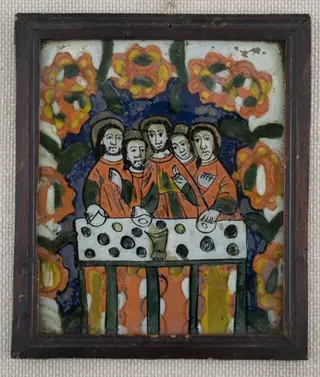 Tema iconografică este "Cina cea de taină", în cadrul căreia are loc instituirea celei mai importante taine a bisericii, Sfânta Euharistie. Este redată într-o manieră populară, naivă, cu un număr redus de personaje(datorită dimensiunilor reduse ale suportului, dar și tendinței de reducere la esențial) Grupul compact, format din Iisus având câte doi apostoli de fiecare parte este plasat central, în spatele unui mese înalte, dreptunghiulare, aflată în prim plan. Isus binecuvintează cu stânga, cu dreapta ia o pâine de pe masa unde se află un vas înalt, diform și mai multe pâini(azime) așezate deasupra unei învelitori albe. Este înveșmântat cu mantie roșie și chiton verde, la fel ca și apostolii, toți au nimburi aurite, trasate cu mâna liberă. Apostolul din stânga lui Isus, cu capul plecat pe umărul Lui, este apostolul Ioan, conform Evangheliilor. Câmpul este împărțit în două zone de un portal semicircular bogat drapat cu flori multicolore(roșu, alb, verde, galben): albastru ultramarin sub portal, alb în rest, creându-se perspectiva cromatică. Compoziția este echilibrată, desenul simplu, stângaci, paleta cromatică dominată de alb, roșu și albastru, culorile pale. Rama este alcătuită din patru stinghii profilate, culoare brun-roșcat, îmbinare oblică la colțuri. Dosul este din lemn subțire de brad.
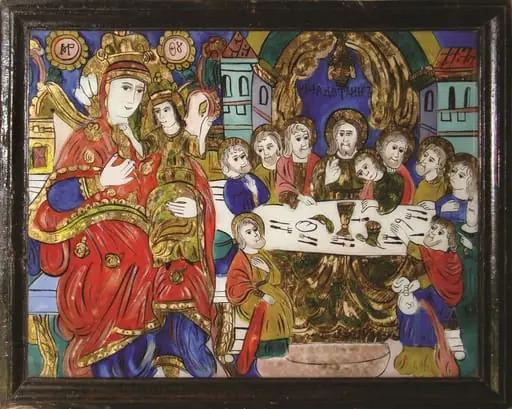 Maica Domnului cu Pruncul și Cina cea de taină
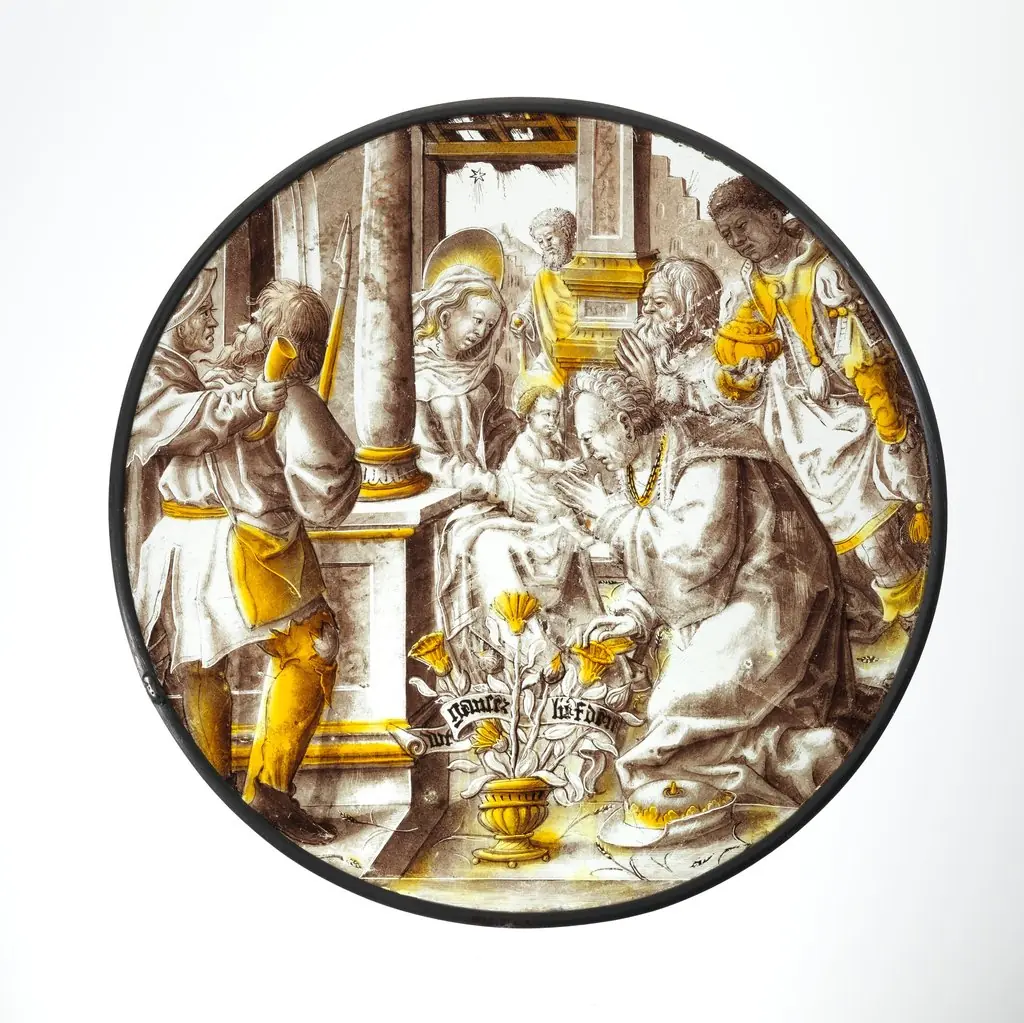 Roundel with Adoration of the Kings
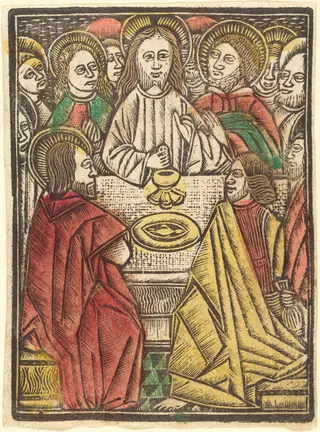 The Last Supper