Artwork
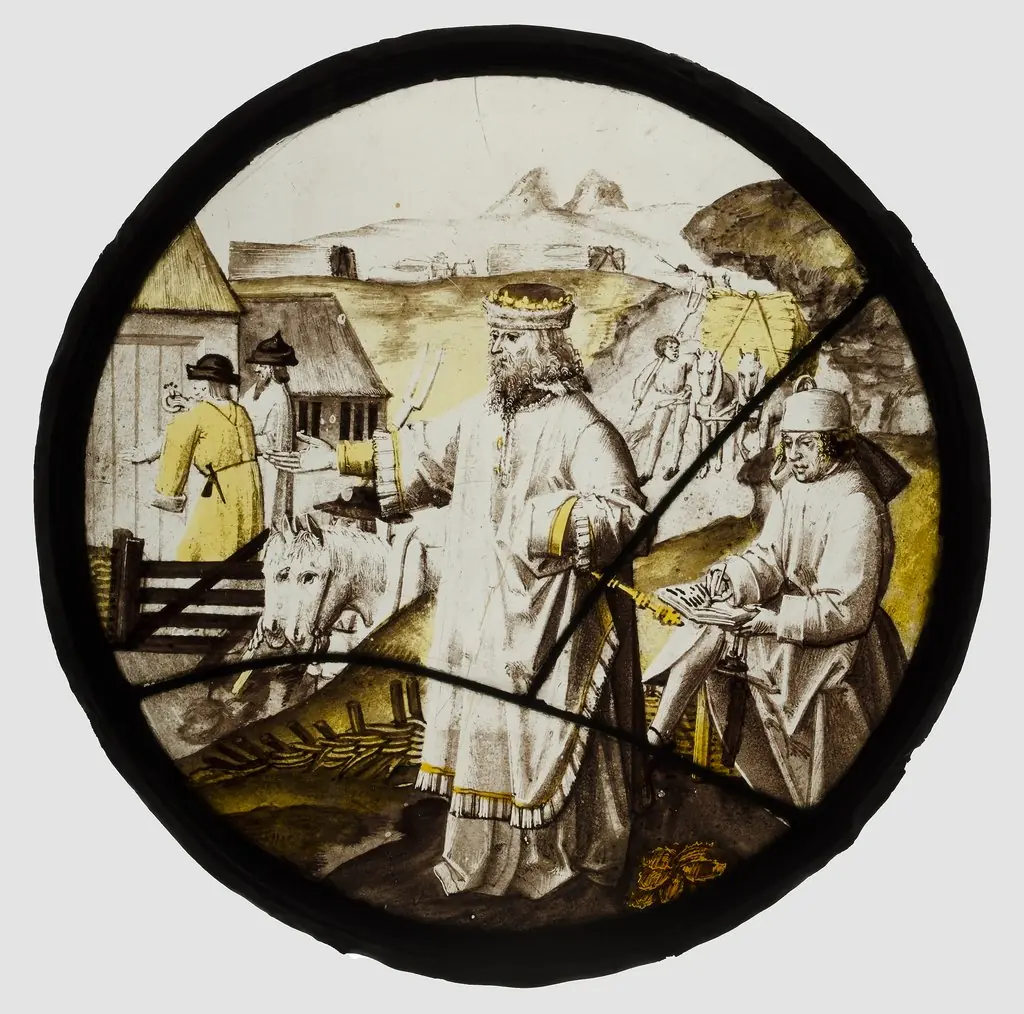
Roundel with Joseph Presenting his father, Jacob, to the Pharoah (from a Series of the History of Joshua)
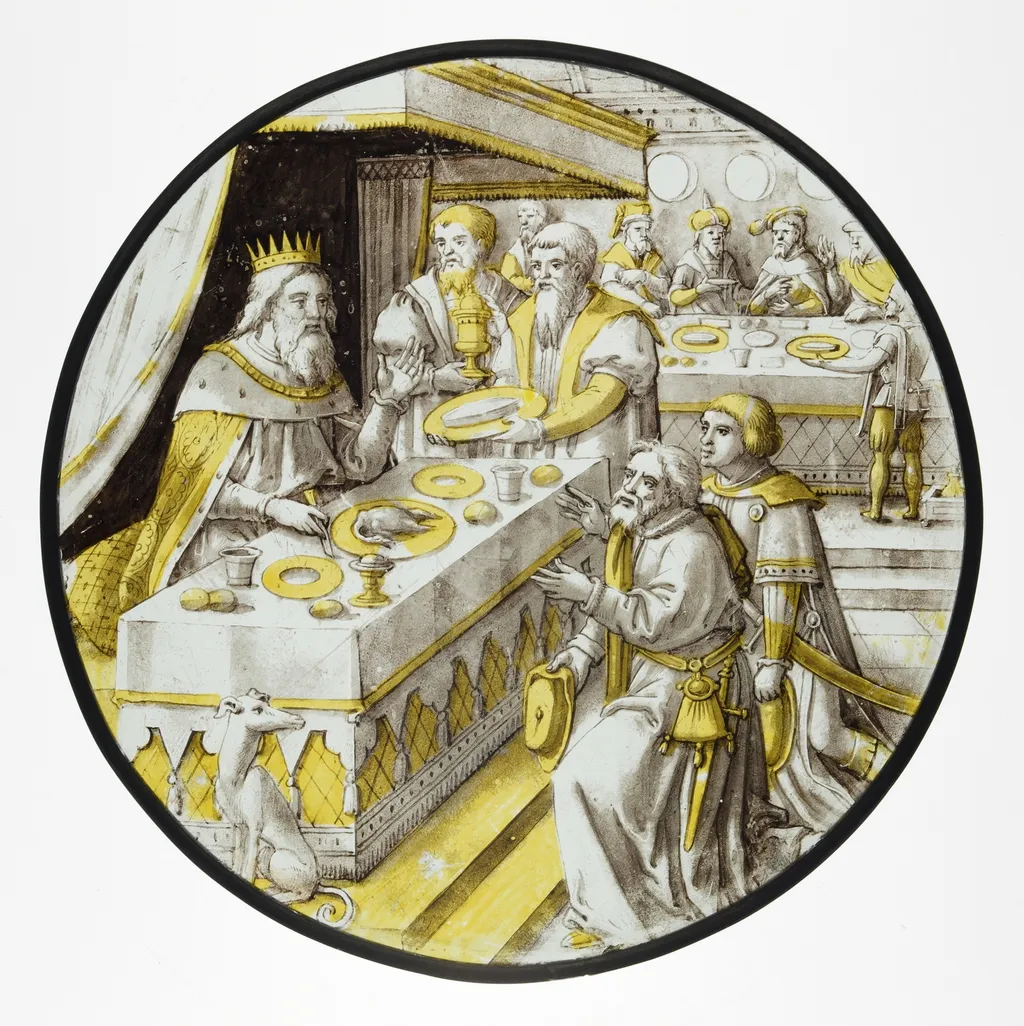
Roundel with Joseph Presenting his father, Jacob, to the Pharoah (from a Series of the History of Joshua) is an unspecified painting. It dates from 1522 and is held in the collection of the Metropolitan Museum of Art.
About this work
Technique & Style
The roundel is an oil painting executed on wood panel, reflecting early 16th-century Venetian practice of using compact wooden supports for small devotional works. Its formal composition emphasizes a clear narrative hierarchy, with Joseph presenting his father Jacob to Pharaoh rendered through crisp outlines and a restrained palette of earth tones, characteristic of the period’s history painting genre. The work’s stylistic handling of drapery and facial expression demonstrates a blend of narrative clarity and decorative patterning typical of workshop traditions of the 1520s.
History & Provenance
Its creation history is tied to a series depicting the History of Joshua, though no documented commission or early provenance is preserved.
The roundel is dated to 1522 on stylistic grounds and is recorded as part of an anonymous collection at the Metropolitan Museum of Art.
Its creation history is tied to a series depicting the History of Joshua, though no documented commission or early provenance is preserved. The work entered the Metropolitan Museum’s holdings through an anonymous gift or purchase that predates modern records, leaving its early ownership chain unknown.
The roundel is held by the Metropolitan Museum of Art, which is identified as both its collection and location.
No specific inventory or accession number is recorded in the available sources, and no exhibition history is documented for the work.
Legacy
The roundel's legacy stems from its role within a series depicting Joshua's history, influencing later narrative cycles in Renaissance art. Its composition informed subsequent interpretations of biblical storytelling, particularly in works emphasizing familial presentation before authority figures. The piece is held in the collection of the Metropolitan Museum of Art, ensuring continued scholarly attention to its artistic and historical significance.
Overview
The work is a circular painting, known as a roundel, portraying the biblical episode in which Joseph introduces his aged father Jacob before the Egyptian ruler. Set within an interior space, the composition includes a crowned figure, a bearded elder, and attendants, all arranged around a table laden with objects.
Subject & Meaning
The scene illustrates the moment of familial reunion and political negotiation central to the Genesis narrative. By emphasizing the respectful posture of Jacob and the regal bearing of the Pharaoh, the image underscores themes of providence, loyalty, and the elevation of a foreign family within Egyptian court life.
Context
Circular panels such as this were occasionally used in Renaissance and post‑Renaissance decorative schemes, allowing artists to explore narrative scenes within a confined, ornamental shape. The choice of a biblical subject aligns with the period’s interest in moralizing stories drawn from scripture.
Artist & collection

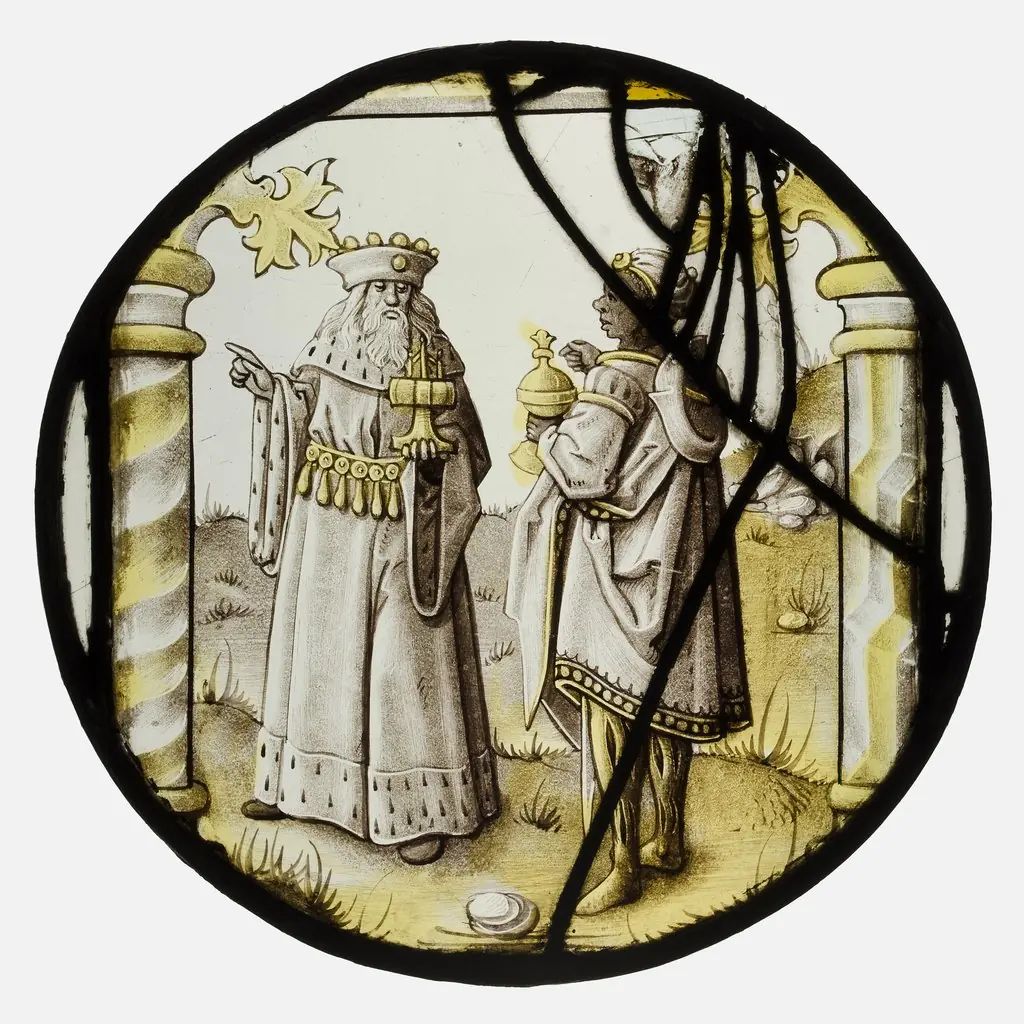 Roundel with two Kings from an Adoration Group
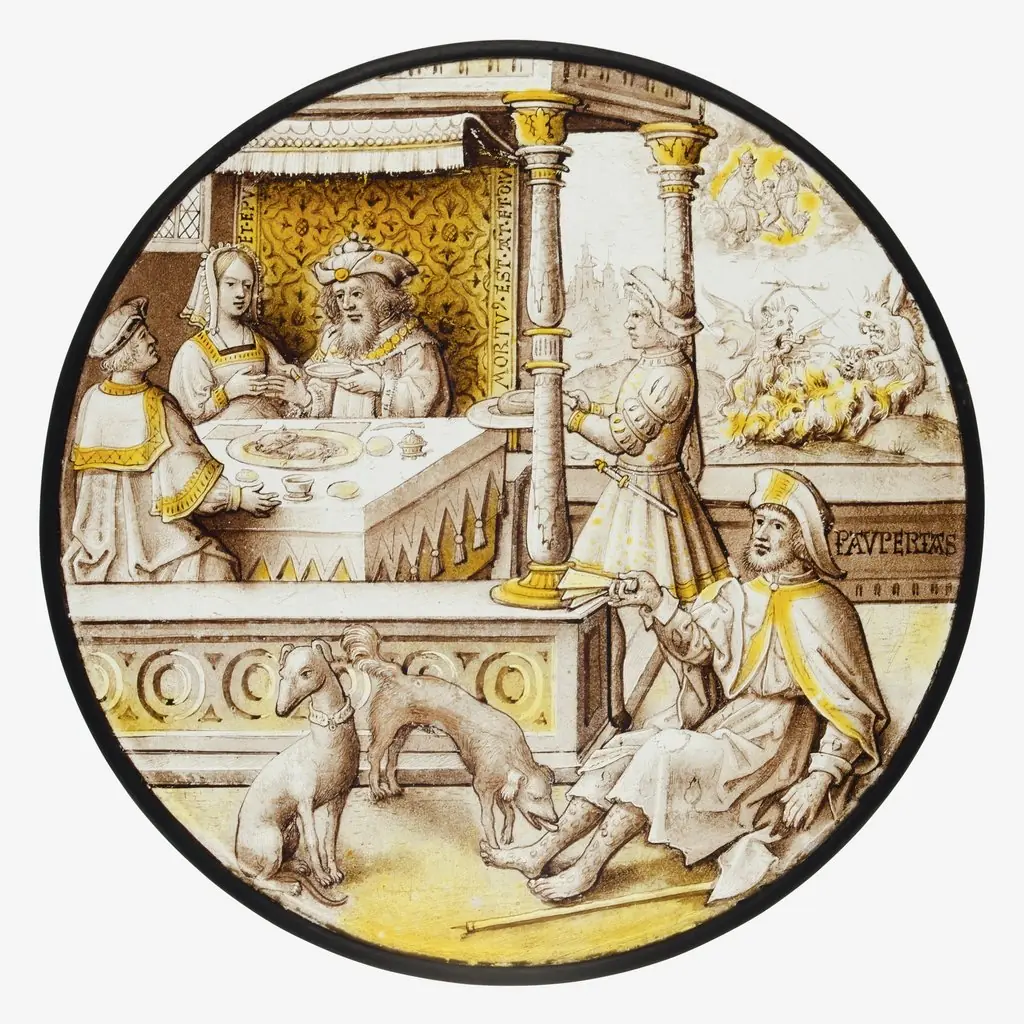 Roundel with Lazarus at the House of Dives
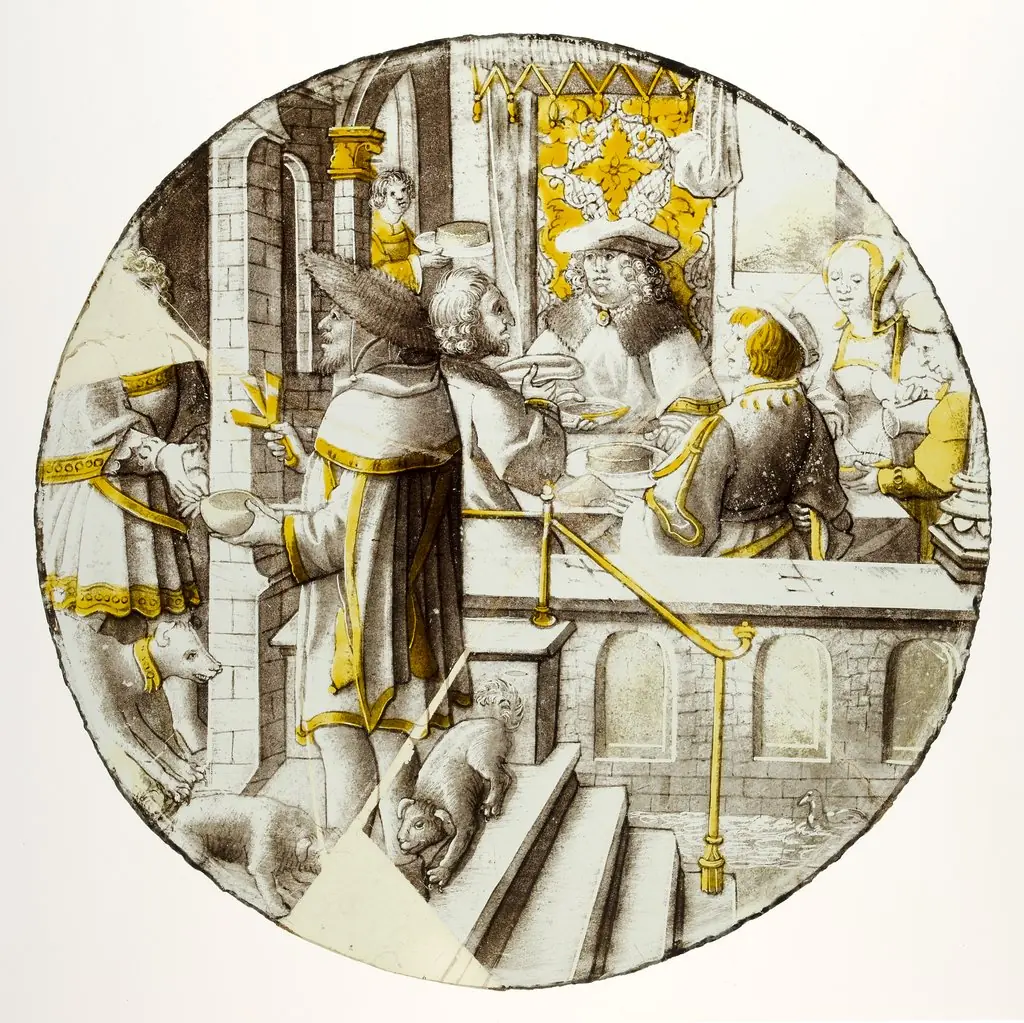 Roundel with Lazarus at the House of Dives
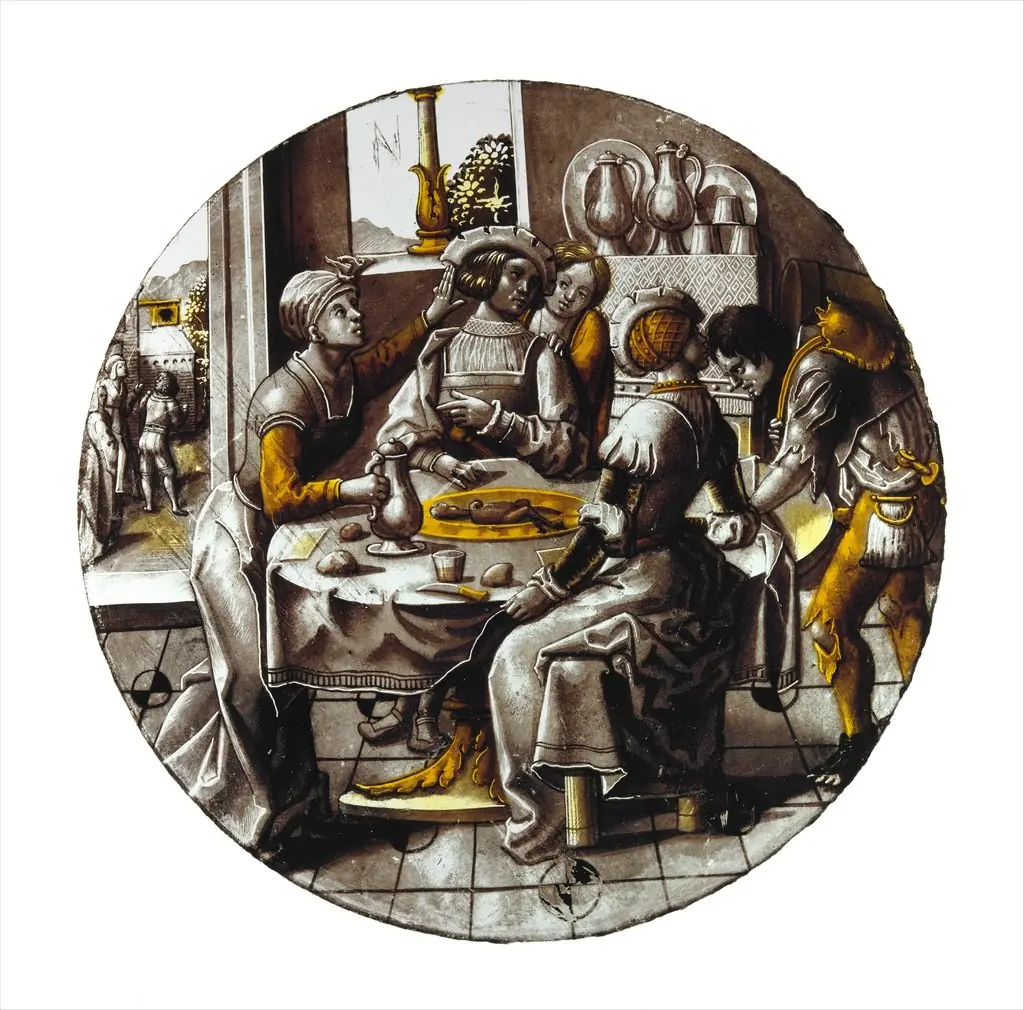 Roundel with Sorgheloos ("Carefree") with Easy Fortune
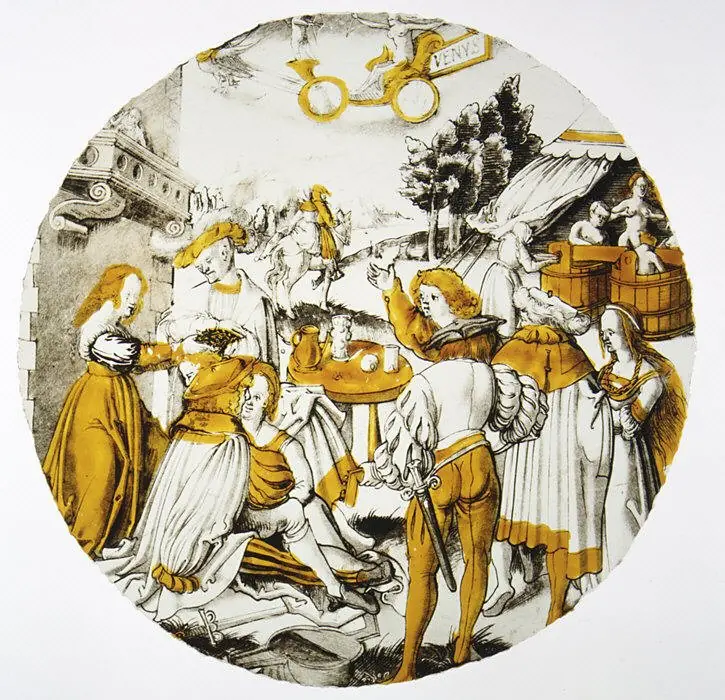 Roundel of The Planet Venus and Her Children
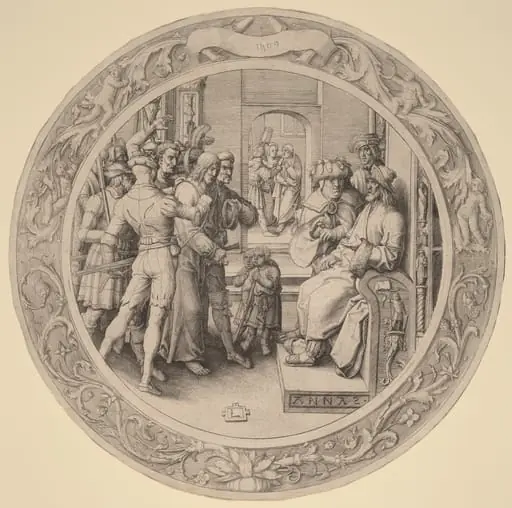 Christ before Annas
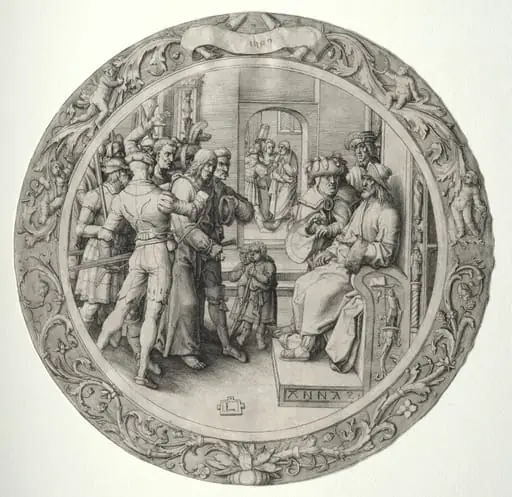 The Round Passion: Christ before the High Priest
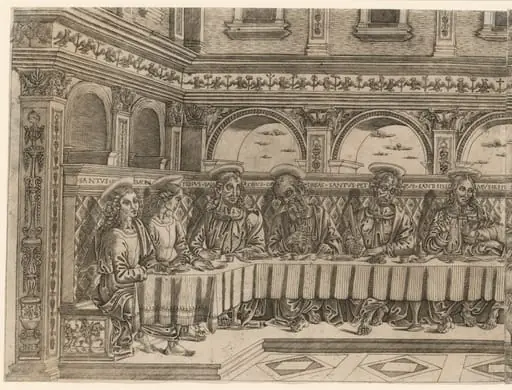 The Last Supper
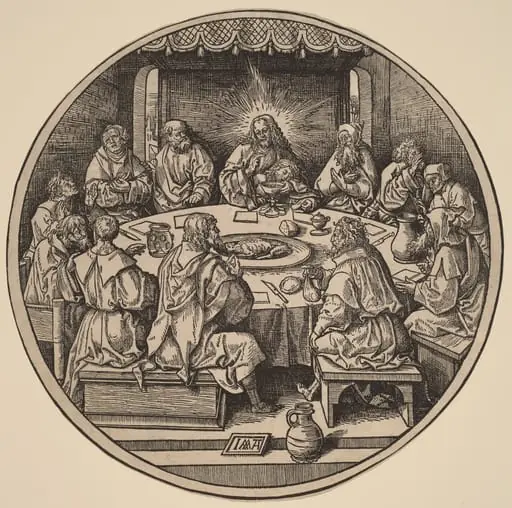 The Last Supper
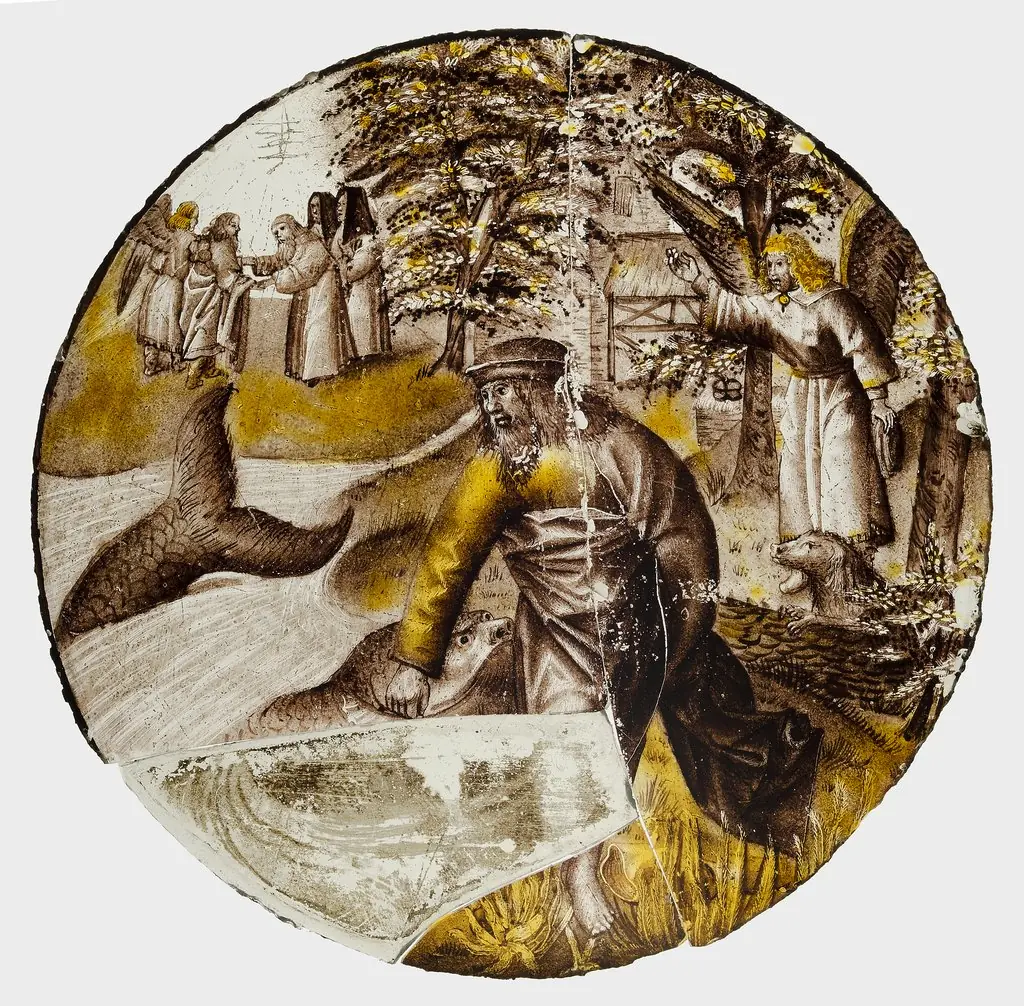 Roundel with Tobias Drawing the Fish from the Water