Artwork
Salome with the Head of Saint John the Baptist
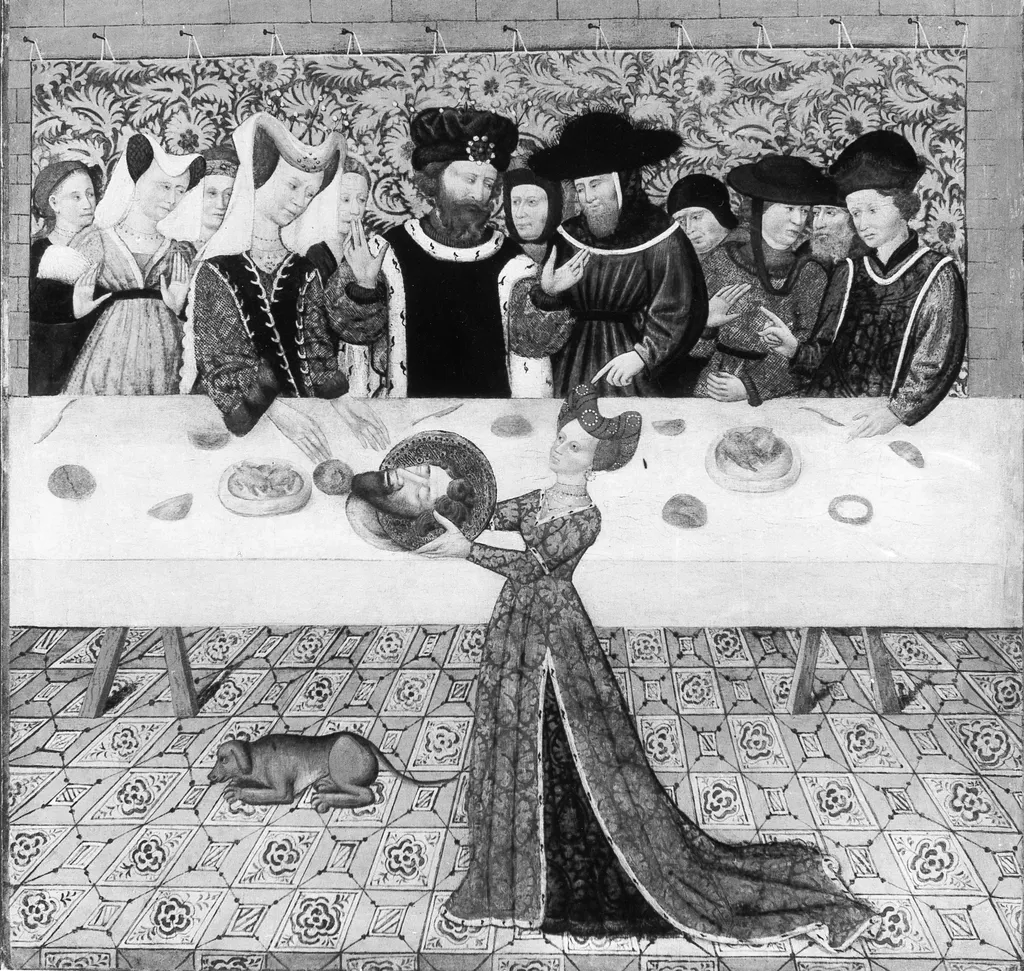
Salome with the Head of Saint John the Baptist is an unspecified painting. It dates from 1500 and is held in the collection of the Metropolitan Museum of Art.
About this work
Subject & Meaning
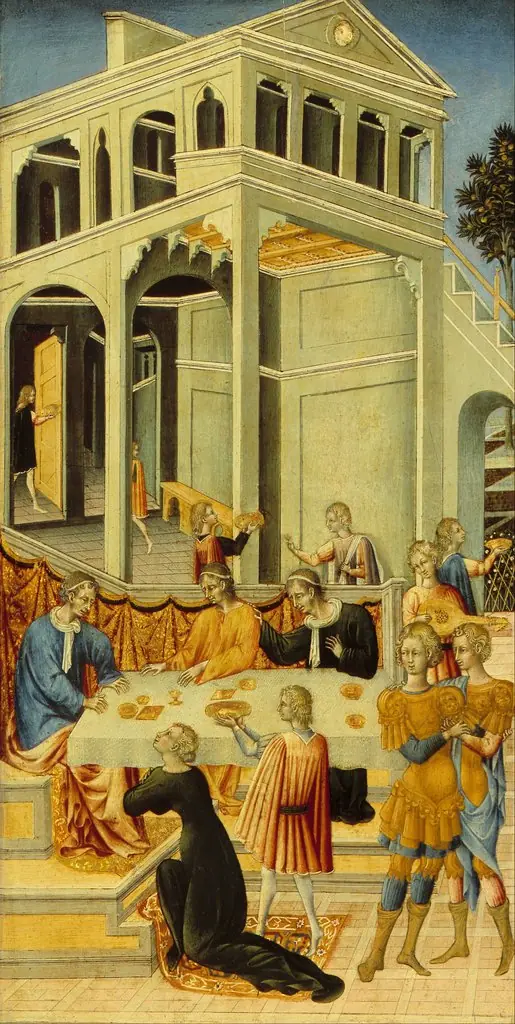
Depicted figures include Salome, John the Baptist's head, a man (likely Herod Antipas), a dog, and a dining room setting, referencing the feast of Herod.
The painting portrays the biblical narrative of Salome presenting the severed head of Saint John the Baptist on a tray. Depicted figures include Salome, John the Baptist's head, a man (likely Herod Antipas), a dog, and a dining room setting, referencing the feast of Herod. As a work of religious art created around 1500, the composition centers on John's martyrdom and Salome's role in it.
The dog may symbolize fidelity or moral decay, while the scene as a whole embodies themes of vindication and the cost of prophecy. The work's main subject is Salome with the head of John the Baptist, a common subject in Christian iconography.
History & Provenance
The painting was created around 1500 by a Spanish (Catalan) painter. It was formerly owned by Michael Friedsam and is now in the collection of the Metropolitan Museum of Art. No further details regarding a commission or extended provenance chain are recorded in the available sources.
Overview
This painting depicts a pivotal moment from a biblical narrative, focusing on the figure of Salome presenting the head of Saint John the Baptist. The composition centers on a woman holding a platter, upon which rests a severed head. In the background, a group of figures observes the scene from an elevated position, contributing to the somber atmosphere.
The setting includes a detailed tiled floor and domestic elements like bread and a cup on a nearby table, grounding the dramatic event.
Technique & Style
The artist employs strong visual contrasts to heighten the painting's dramatic impact. The interplay of light and shadow is particularly evident on the central figure's face and attire, emphasizing her form and expression. Her theatrical pose further contributes to the scene's intensity.
The detailed rendering of the tiled floor and the presence of a small, curled dog add textural richness and a touch of domesticity, contrasting with the macabre central subject.
Artist & collection

 Salome with the Head of John the Baptist
 Salome Dancing before Herod
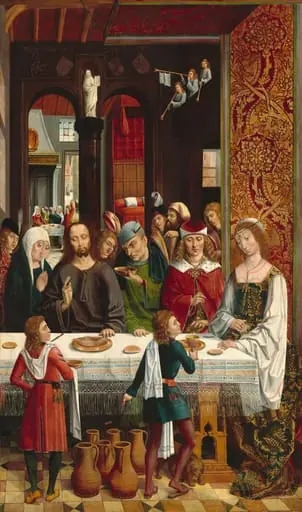 The Marriage at Cana
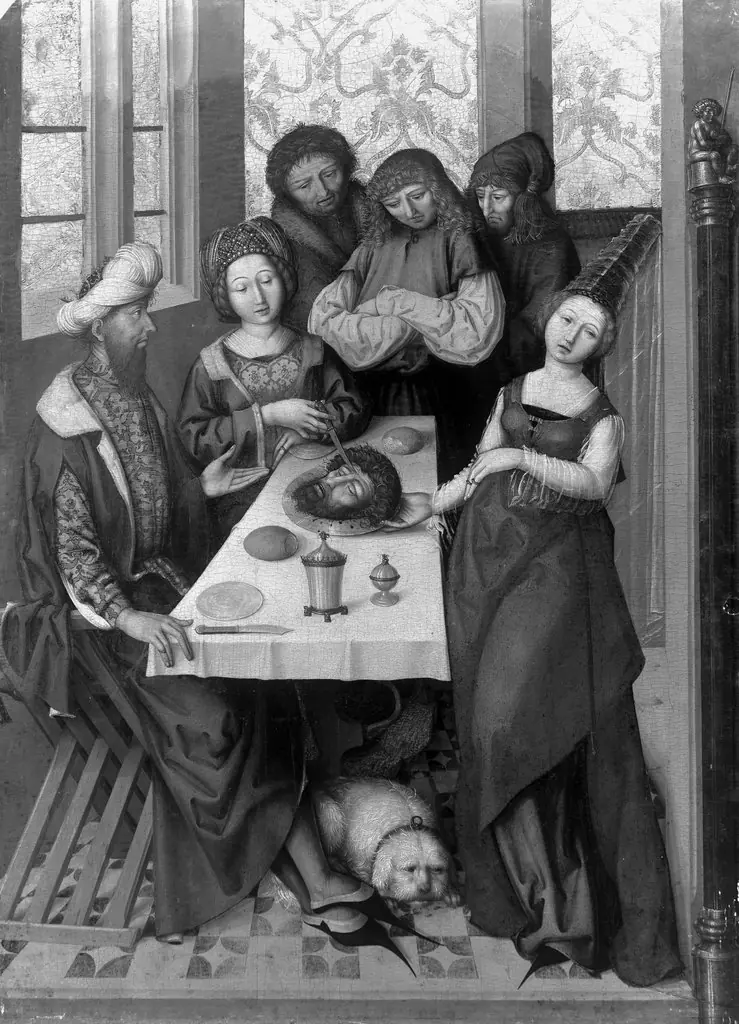 Herod's feast
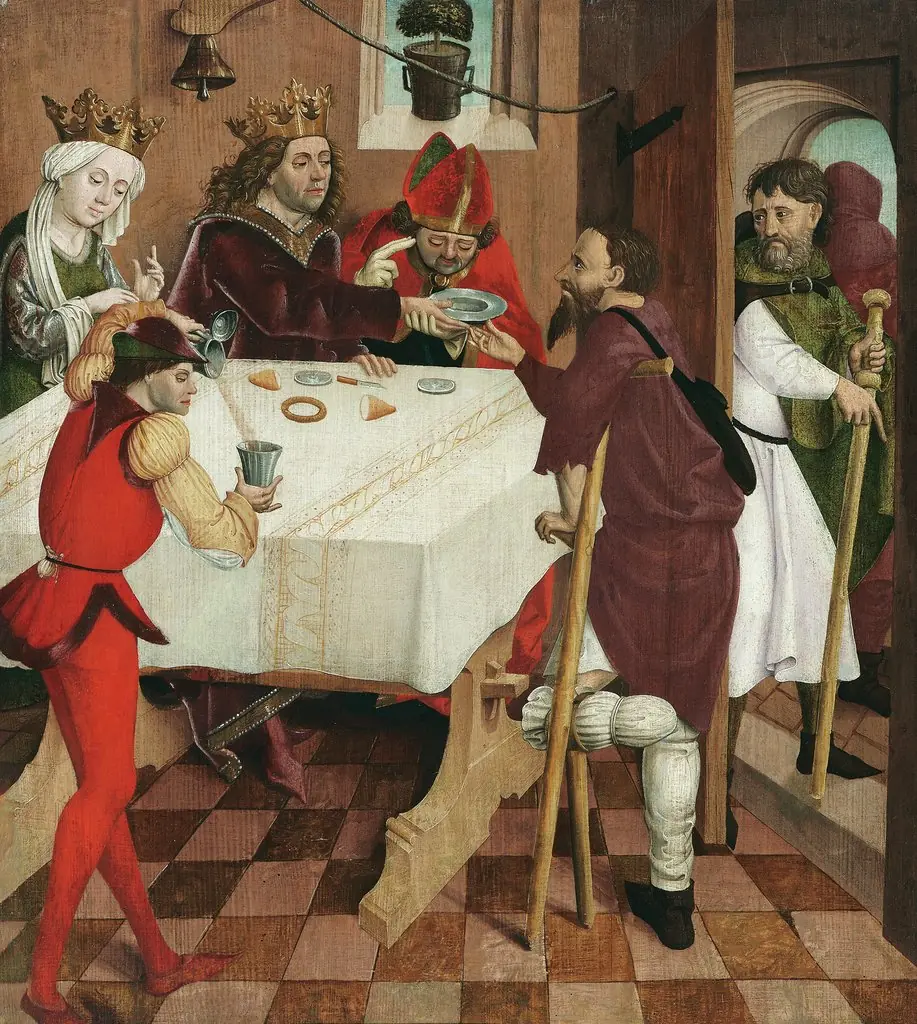 Charity of St. Oswald
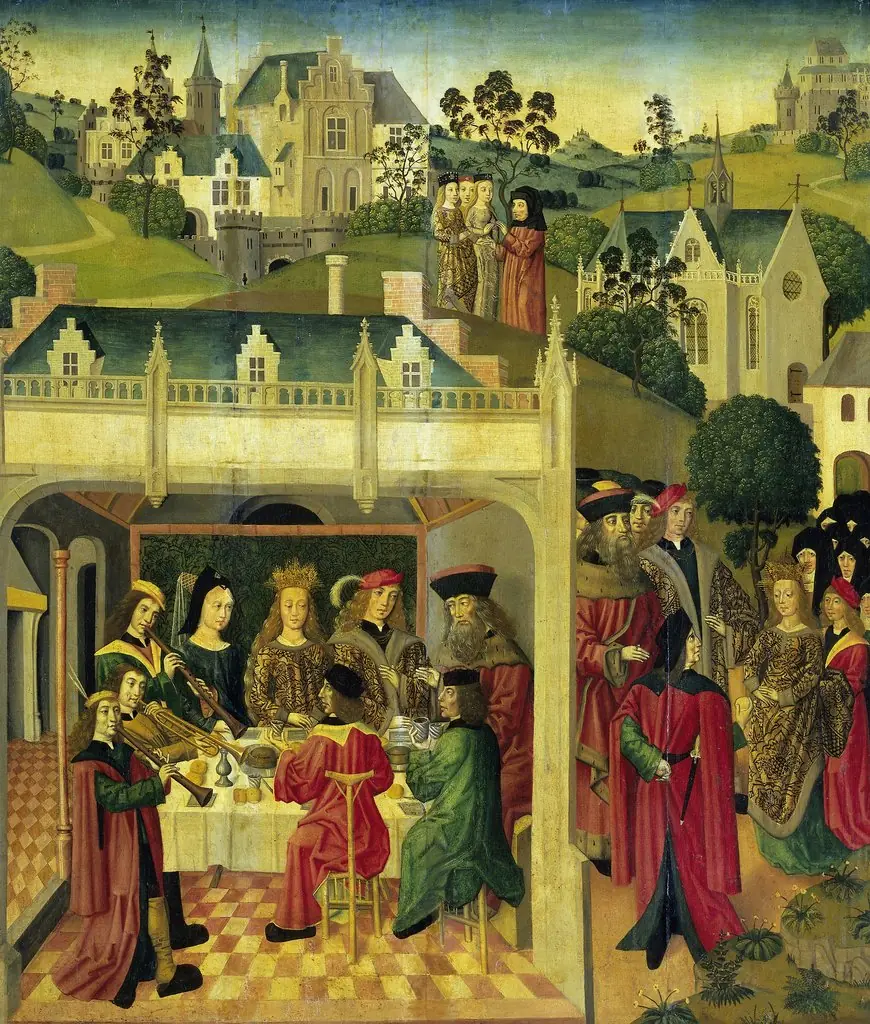 Inner left wing of an altarpiece with the wedding feast of St Elizabeth and Louis of Thuringia in the Wartburg
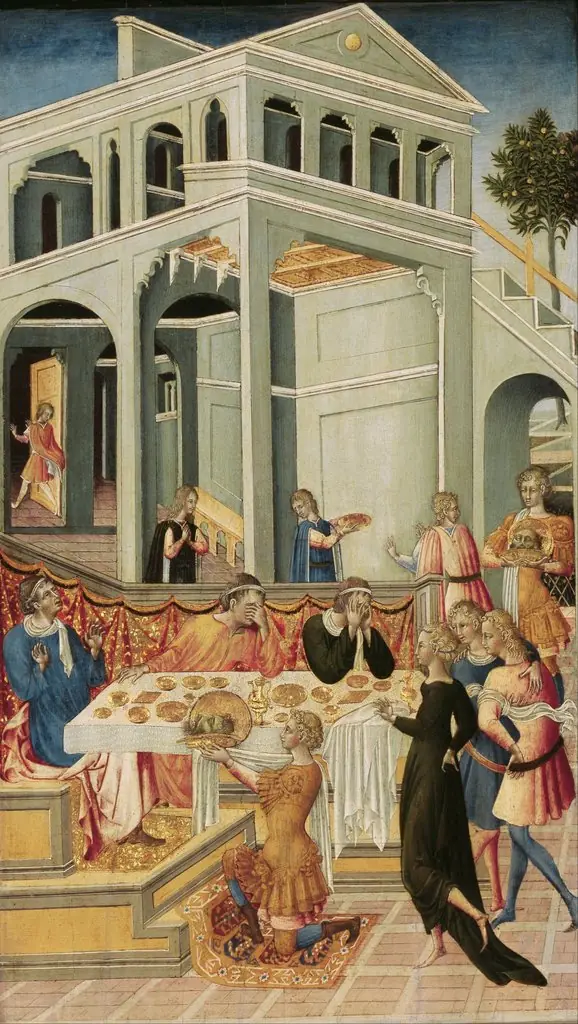 The Head of Saint John the Baptist Brought before Herod
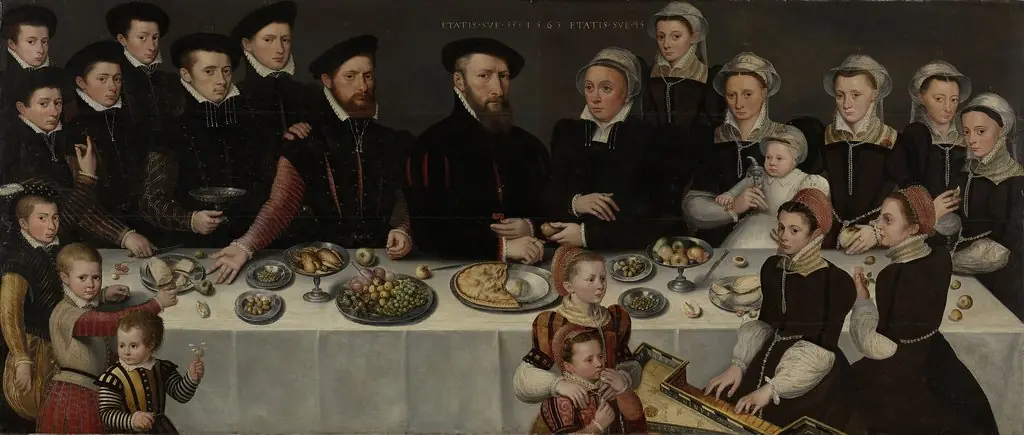 Portrait of Pierre de Moucheron (1508-1567) and Isabeau de Gerbier, their 18 children, son-in-law Allard de la Dale and first grandchild
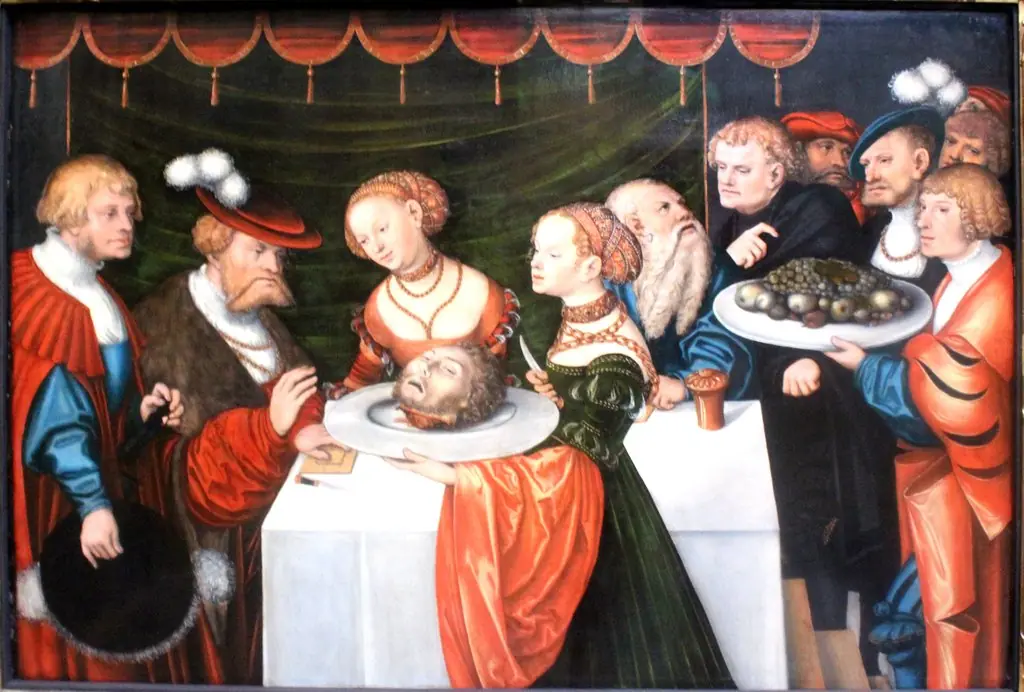
 Compared in the Renaissance Florence course