Artwork
Portrait of Pierre de Moucheron (1508-1567) and Isabeau de Gerbier, their 18 children, son-in-law Allard de la Dale and first grandchild
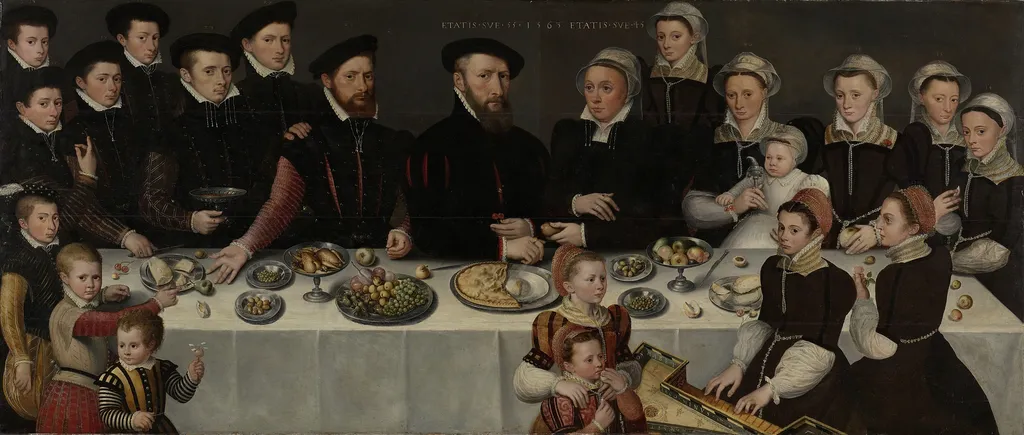
Portrait of Pierre de Moucheron (1508-1567) and Isabeau de Gerbier, their 18 children, son-in-law Allard de la Dale and first grandchild is an oil painting. It dates from 1563 and is held in the collection of the Rijksmuseum. The oil painting presents Pierre de Moucheron (1508‑1567) together with his wife Isabeau de Gerbier, surrounded by their extensive family.
About this work
Subject & Meaning
The portrait belongs to the tradition of civic and family group portraiture in the Netherlands, reflecting both personal identity and social standing.
The painting shows Pierre de Moucheron, his wife Isabeau de Gerbier, their eighteen children, their son-in-law Allard de la Dale and their first grandchild, forming a large family group portrait. It emphasizes lineage and wealth through the inclusion of multiple generations and marital connections. The work functions as a visual record of bourgeois status and dynastic continuity in the mid-sixteenth century.
Symbolic emphasis on fertility and familial cohesion is suggested by the numerous children and the presence of the grandchild. The portrait belongs to the tradition of civic and family group portraiture in the Netherlands, reflecting both personal identity and social standing.
The depiction combines realistic detail with compositional balance to celebrate the family's social position. The artist's use of oil paint on panel creates a durable record of the family's heritage. The painting is part of the Rijksmuseum collection in Amsterdam, where it is displayed as a key example of Dutch Renaissance portraiture.
Technique & Style
Created in 1563, this group portrait is executed in oil paint on a panel support. The work measures 108 cm in height and 246 cm in width, reflecting the substantial scale typical of large family gatherings from the Antwerp region. As a formal group portrait, the composition arranges Pierre de Moucheron, Isabeau de Gerbier, their eighteen children, a son-in-law, and a grandchild within a single visual field. The painting remains part of the Rijksmuseum collection, preserving the material integrity of the sixteenth-century panel.
History & Provenance
Created in 1563, this large group portrait was produced in Antwerp using oil paint on a wooden panel. The work measures 108 cm in height and 246 cm in width. While the specific patron who commissioned the piece is not explicitly named in the available records, the subject matter identifies the sitters as Pierre de Moucheron, his wife Isabeau de Gerbier, their eighteen children, their son-in-law Allard de la Dale, and their first grandchild.
The attribution of the painting remains uncertain; it is variously ascribed to an unknown artist or to Cornelis de Zeeuw. The artwork eventually entered the collection of the Rijksmuseum, where it is currently housed and displayed as a significant example of sixteenth-century portraiture.
The painting is held by the Rijksmuseum. Its dimensions are 108 cm in height and 246 cm in width. The work was created in Antwerp in 1563. No specific inventory or accession number is provided in the sources, and no exhibition history is documented in the given materials.
Overview
The oil painting presents Pierre de Moucheron (1508‑1567) together with his wife Isabeau de Gerbier, surrounded by their extensive family. Seated around a long banquet table, the composition includes their twelve children, the son‑in‑law Allard de la Dale, and the couple’s first grandchild. The work records a moment of domestic abundance, with foodstuffs and lively interaction among the figures.
Context
Pierre de Moucheron was a prominent merchant in the early modern period, and his marriage to Isabeau de Gerbier linked two influential families. The inclusion of Allard de la Dale, a son‑in‑law, reflects the practice of documenting marital alliances within such portraits, reinforcing social networks among the mercantile elite.
Legacy
The portrait offers scholars insight into domestic attire, interior furnishings, and the material culture of a prosperous 16th‑century household. Its detailed rendering of food items and tableware contributes to the study of contemporary consumption patterns and the visual representation of wealth.
Artist & collection

- Portrait of a Family
 Portrait of a Family
 Portrait of a Family
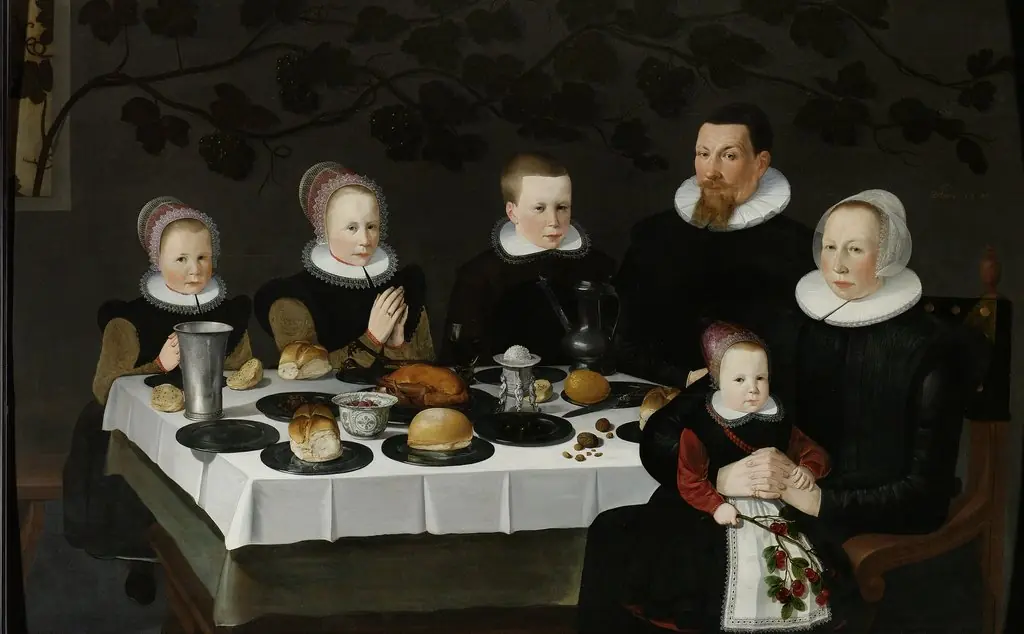 Family portrait
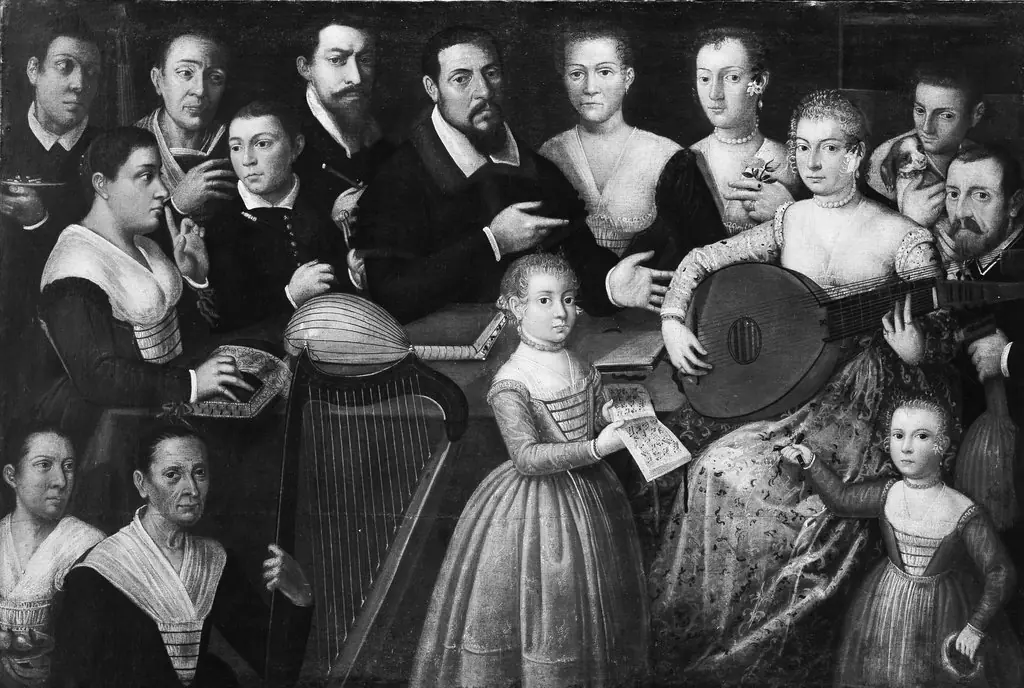 Portrait of a Family
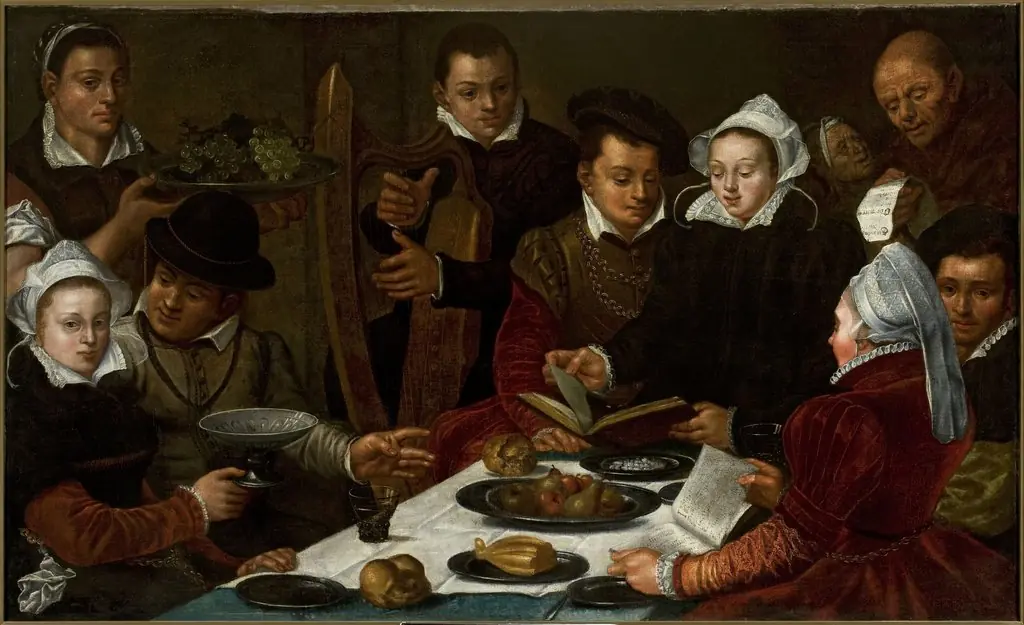 Company at the table
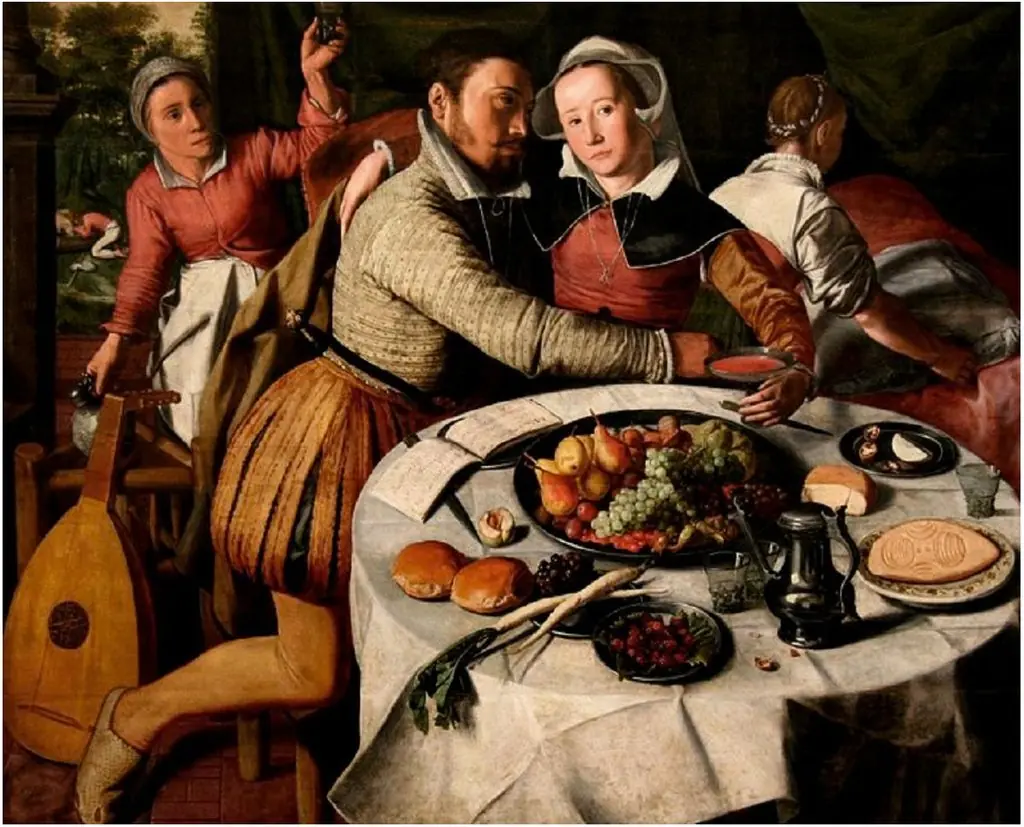 The prodigal son
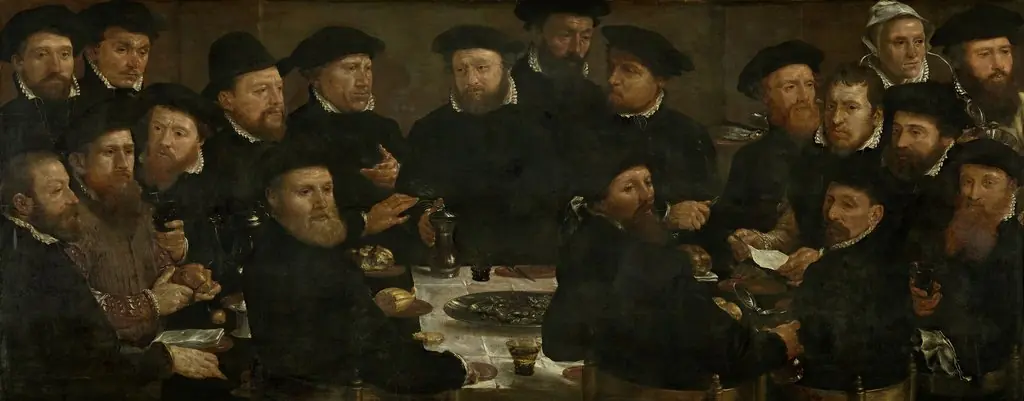 Meal of the Amsterdam militia
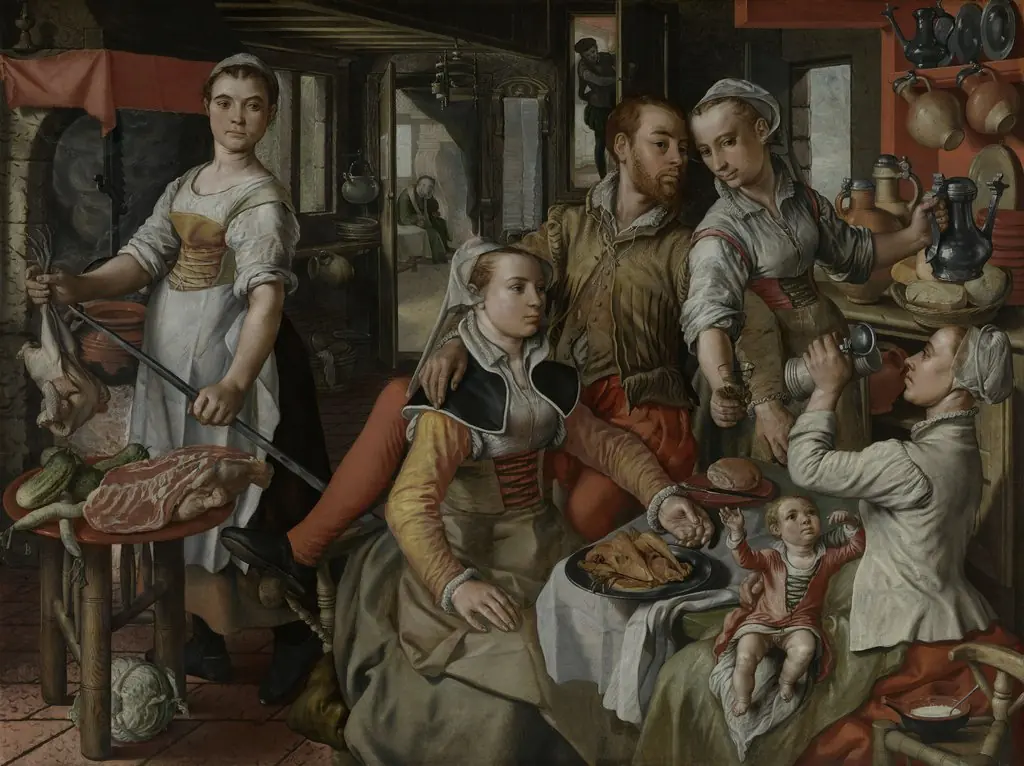 Brothel scene
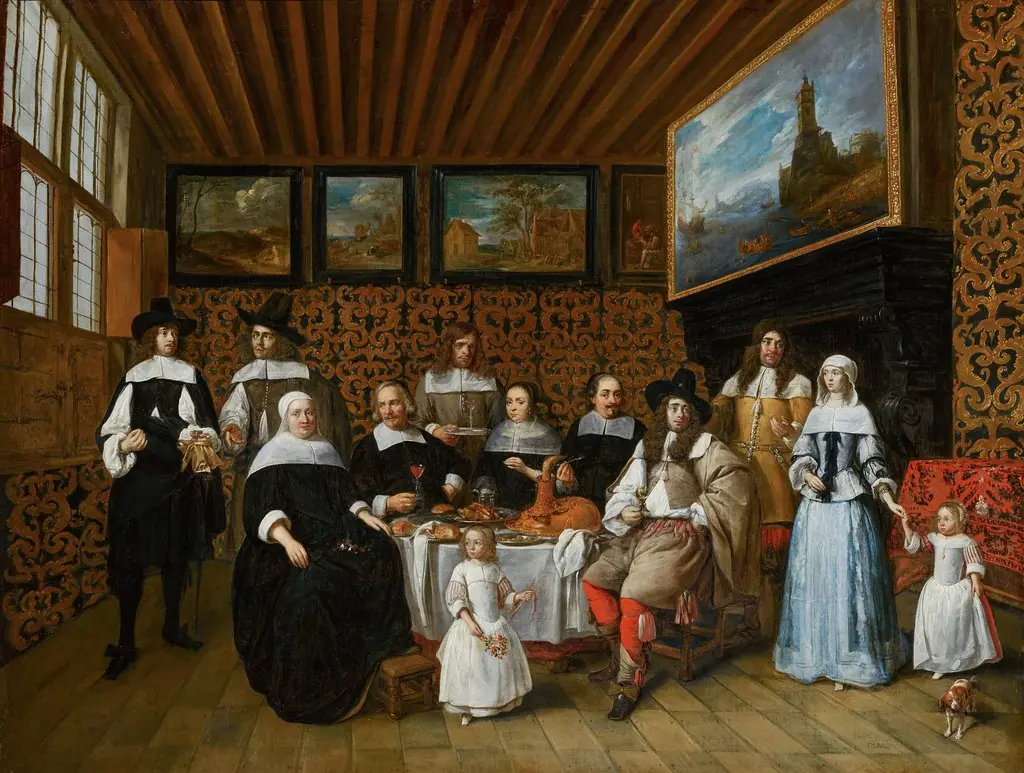 Family Portrait
 Banquet of Eighteen Guardsmen of Squad L, Amsterdam 1566, known as 'The Perch Eaters'
 Obstmarkt (September-Oktober)