Artwork
Salome Dancing before Herod
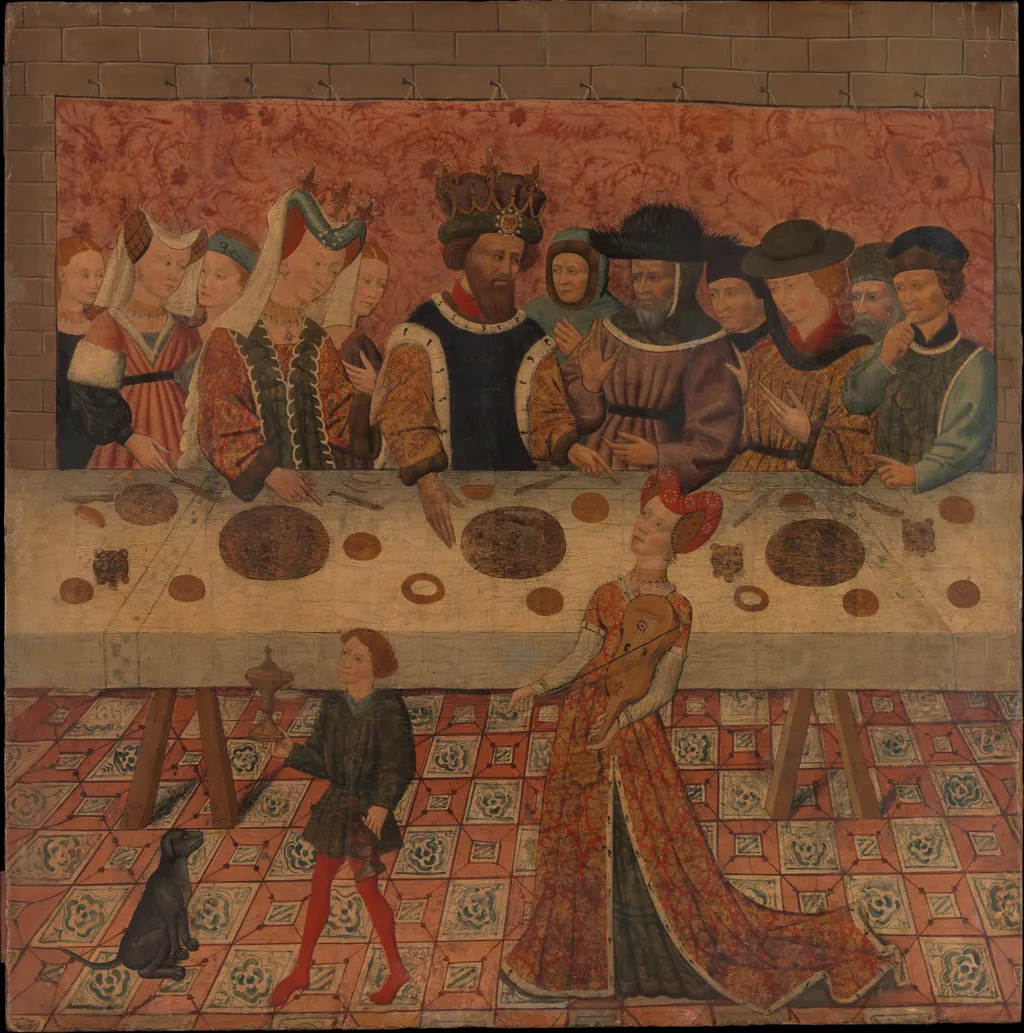
Salome Dancing before Herod is a tempera painting. It dates from 1500 and is held in the collection of the Metropolitan Museum of Art.
About this work
Subject & Meaning
Created around 1500 by a Spanish (Catalan) painter, the artwork uses tempera and gold leaf on wood to render this moment from the New Testament.
The painting depicts the biblical narrative of Salome dancing before Herod, a scene central to religious art. As a work of religious genre, the piece illustrates the interaction between Salome and a male figure representing Herod. Created around 1500 by a Spanish (Catalan) painter, the artwork uses tempera and gold leaf on wood to render this moment from the New Testament.
The composition focuses on the figures of Salome and Herod, capturing the dramatic tension of the event in which the dance precedes the execution of John the Baptist. The work served as a devotional object, reflecting the religious themes prevalent in fifteenth-century Spanish painting.
Technique & Style
Salome Dancing before Herod is a religious painting executed on a wood support using tempera and gold leaf. Created around 1500 by a Spanish (Catalan) painter, the work measures 87 cm in height and 85.7 cm in width. The artist employed gold leaf to enhance the devotional quality of the scene, a common technique in early Spanish religious art of the period.
Currently held in the Metropolitan Museum of Art as part of the Michael Friedsam collection, the piece retains its original wooden panel. Its formal composition reflects the conventions of fifteenth-century Spanish painting, characterized by the integration of tempera pigments with metallic accents on a rigid support.
History & Provenance
Salome Dancing before Herod was created around 1500 by a Spanish (Catalan) painter, employing tempera and gold leaf on a wooden panel. It is classified as a religious painting and measures approximately 87 by 85.7 cm. No documentation of a specific commission survives. The work was formerly owned by Manoel Fernandez and subsequently by Michael Friedsam before entering the collection of the Metropolitan Museum of Art.
Its documented exhibition history includes the Loan Exhibition of French Primitives and Objects of Art, The Michael Friedsam Collection, Spanish Painting, 5 Centuries of Spanish Art, Spanish Art: Fifteenth Century to Modern, Goya, Zurbarán, and Spanish Primitives, and 700 Years of Spanish Art.
Context
The work exemplifies early Spanish Renaissance painting, combining tempera, gold leaf, and wood to render the biblical scene of Salome before Herod. Its religious genre and formal qualities reflect the concerns of fifteenth-century Catalan artists, situating the piece within the broader tradition of Iberian sacred art. As part of the Michael Friedsam collection, the painting has featured in several exhibitions of Spanish primitives.
Legacy
Salome Dancing before Herod, painted circa 1500 in tempera and gold leaf on wood, is catalogued as a religious work by a Spanish (Catalan) master and belongs to the Michael Friedsam Collection at the Metropolitan Museum of Art. The painting has been featured in several museum exhibitions, including the Loan Exhibition of French Primitives and Objects of Art and the survey 700 Years of Spanish Art, and is studied as a representative example of early Iberian religious painting.
Overview
This painting on wood, titled "Salome Dancing before Herod," depicts a pivotal biblical narrative. The composition centers on a woman in a vibrant red hat performing for a group of richly robed men, including a crowned figure, seated at a table. The scene is set with opulent details, drawing the viewer into a moment of performance and significant dramatic tension. The artwork captures the essence of a story known for its powerful implications.
Artist & collection

- Salome with the Head of Saint John the Baptist
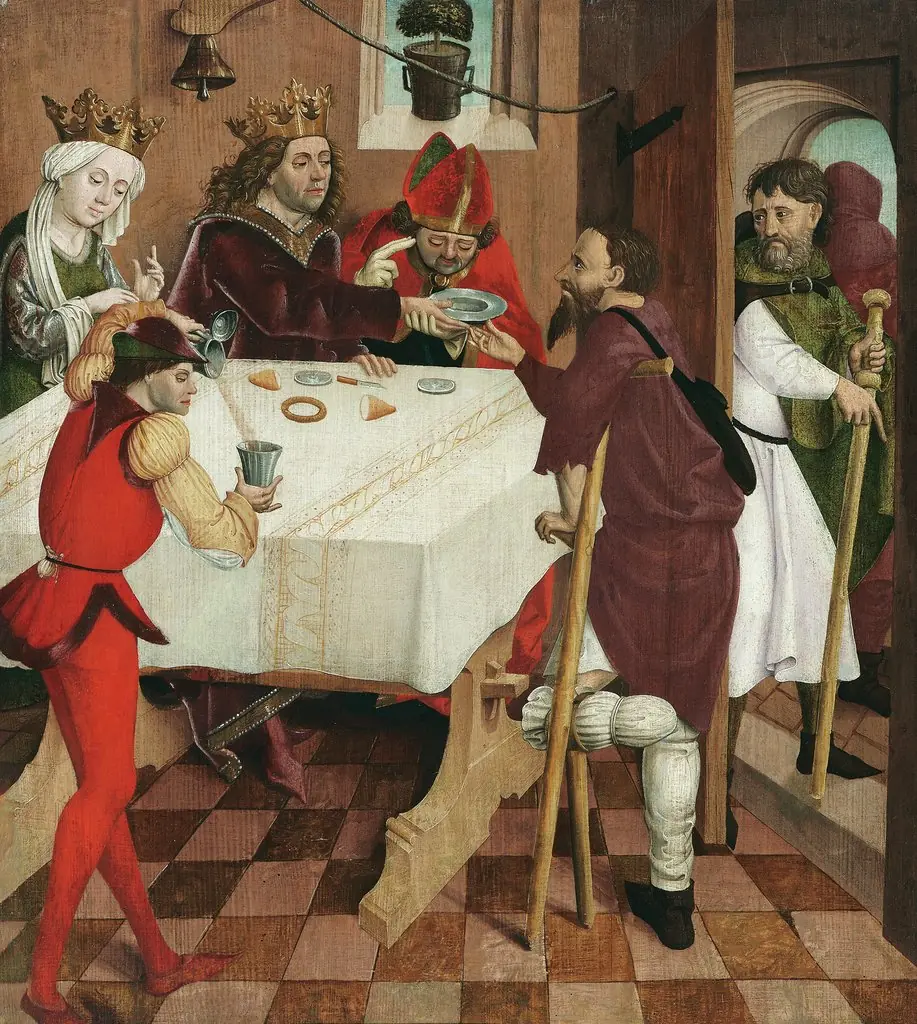 Charity of St. Oswald
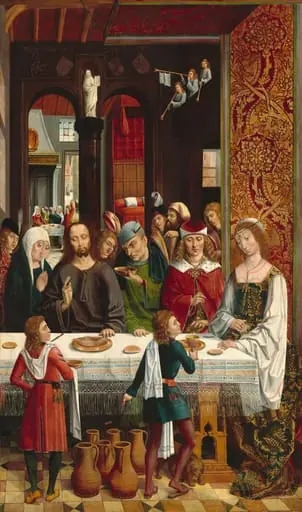 The Marriage at Cana
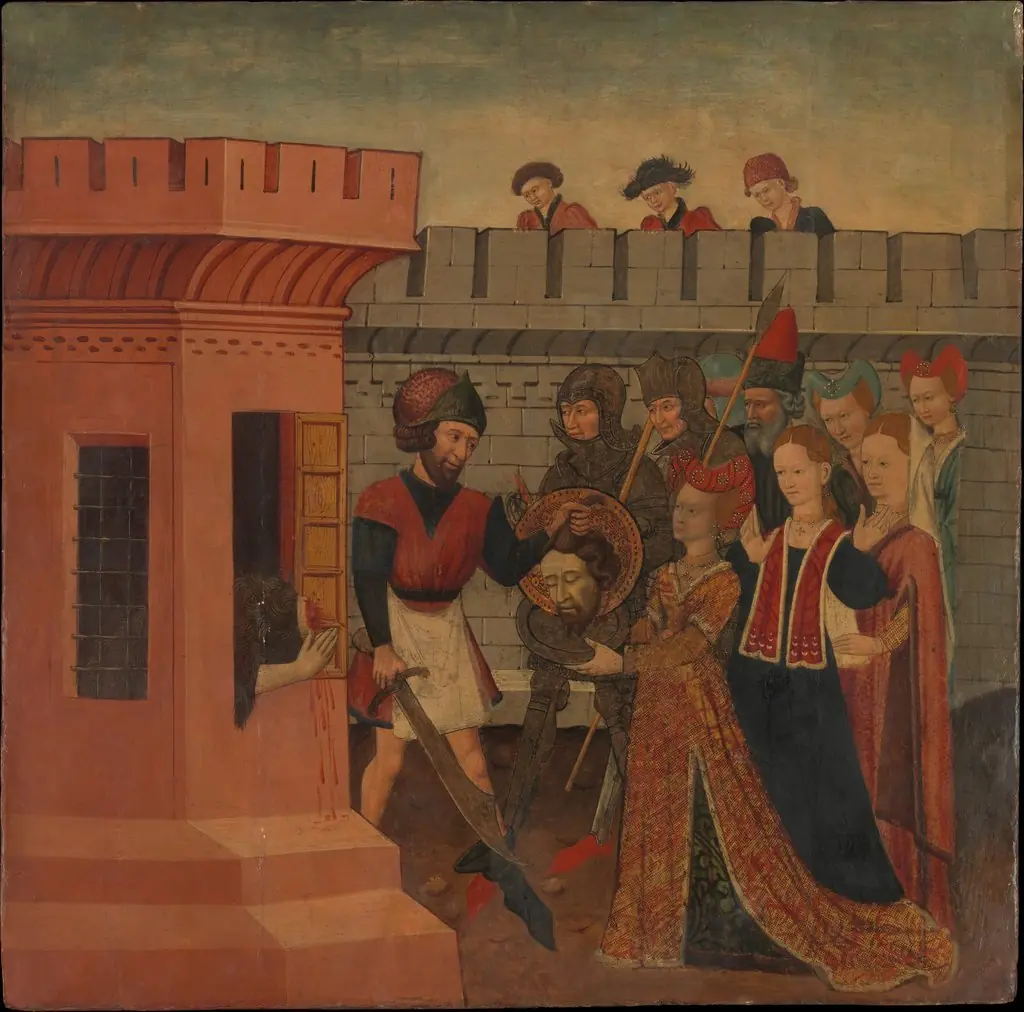 The Beheading of Saint John the Baptist
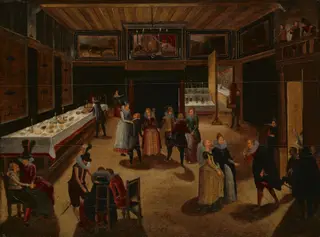 Evening Party
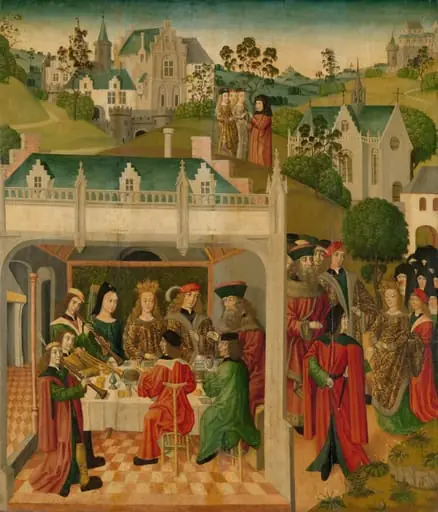 Wedding Feast of Saint Elizabeth of Hungary and Louis of Thuringia in the Wartburg, inner left wing of an altarpiece made for the Grote Kerk in Dordrecht
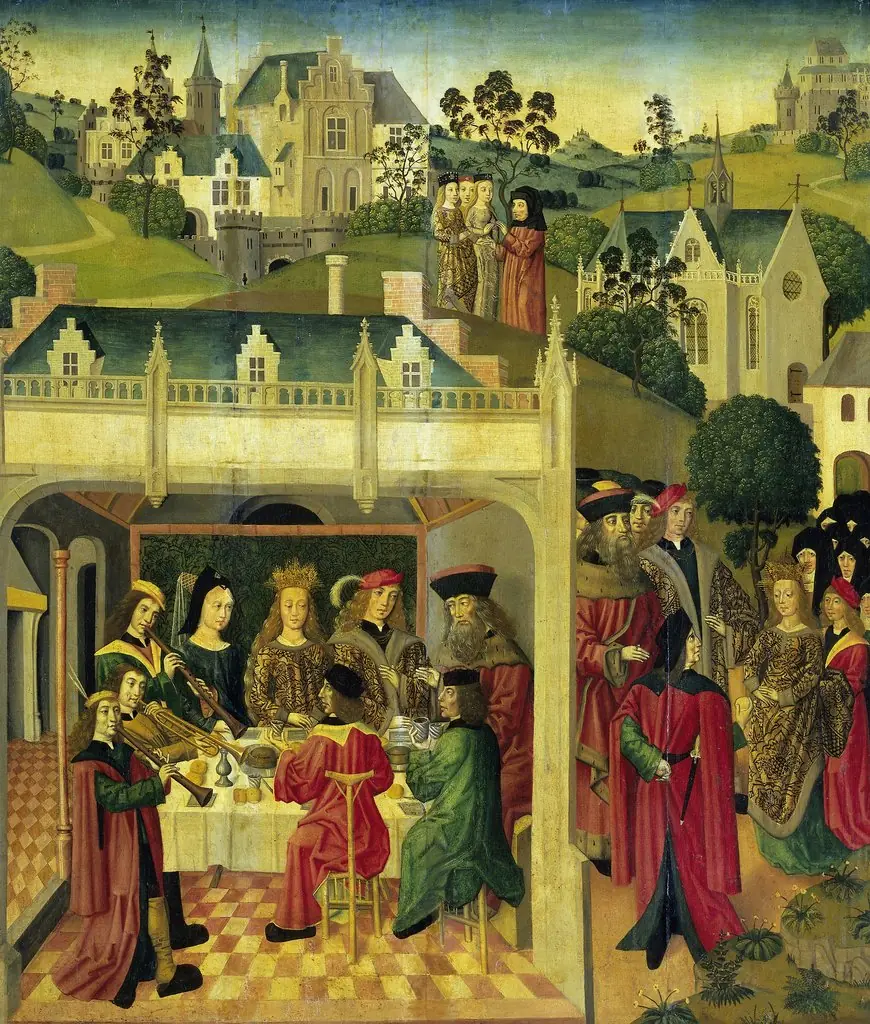 Inner left wing of an altarpiece with the wedding feast of St Elizabeth and Louis of Thuringia in the Wartburg
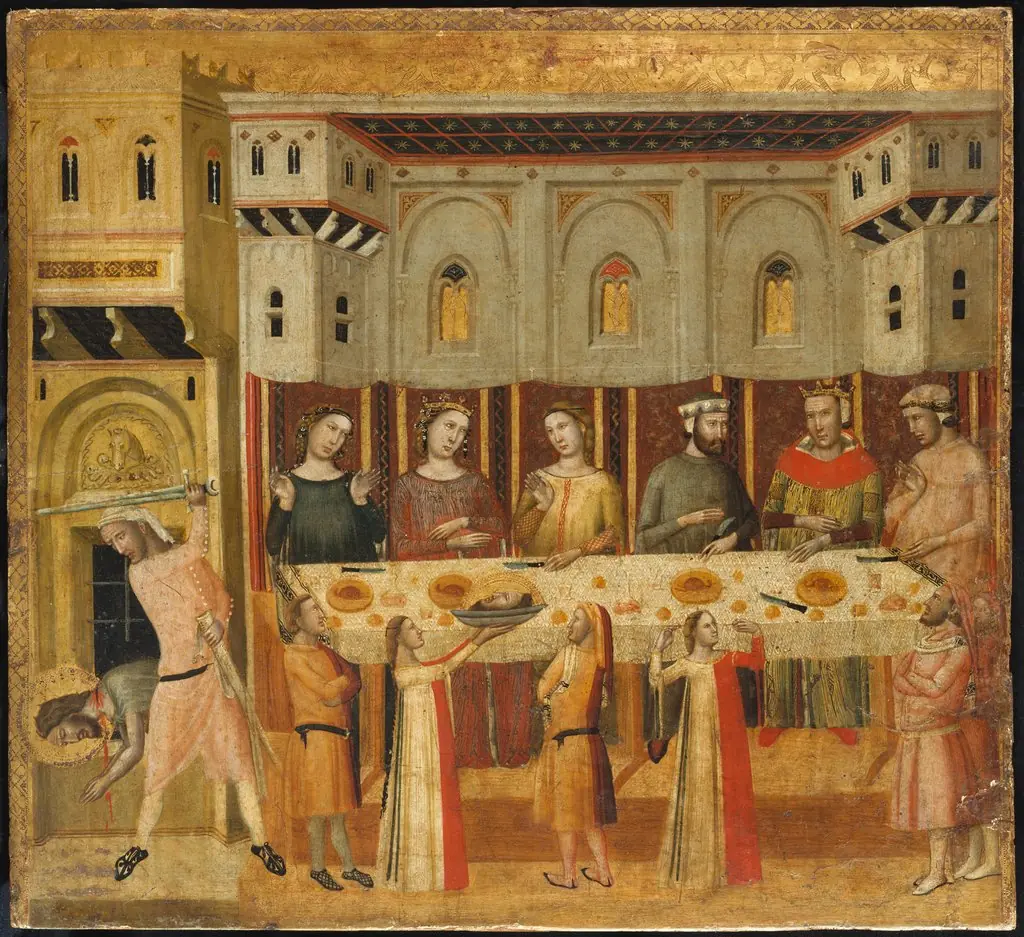 The Feast of Herod and the Beheading of the Baptist
 The Rich Man and Lazarus
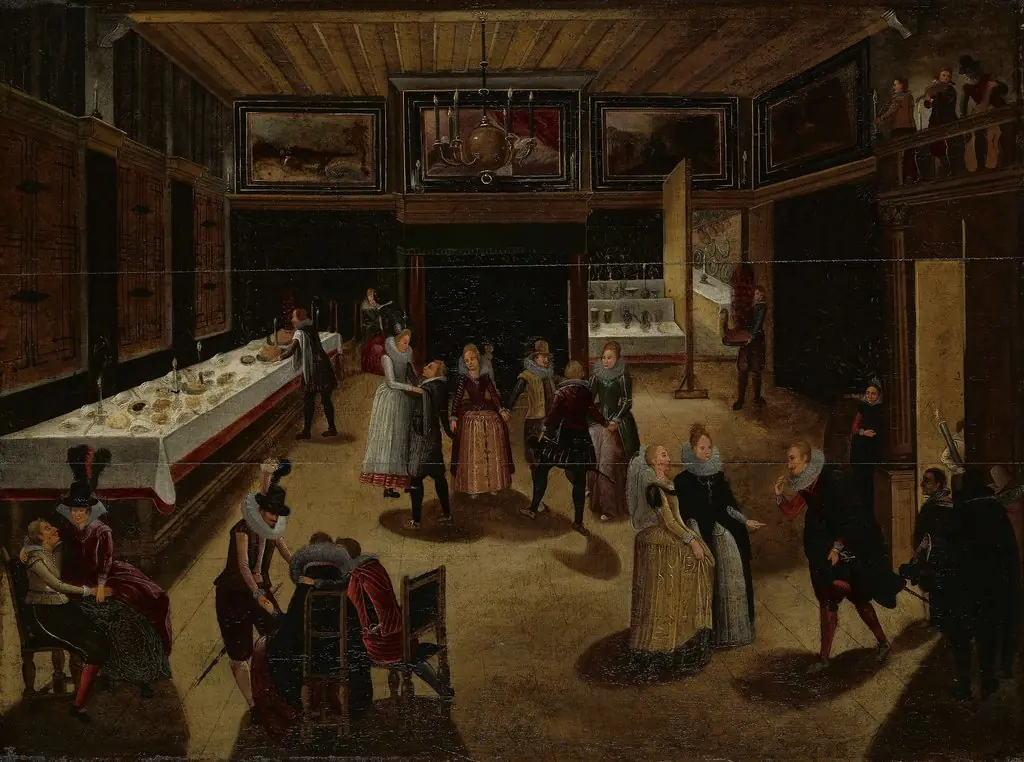 Evening Party
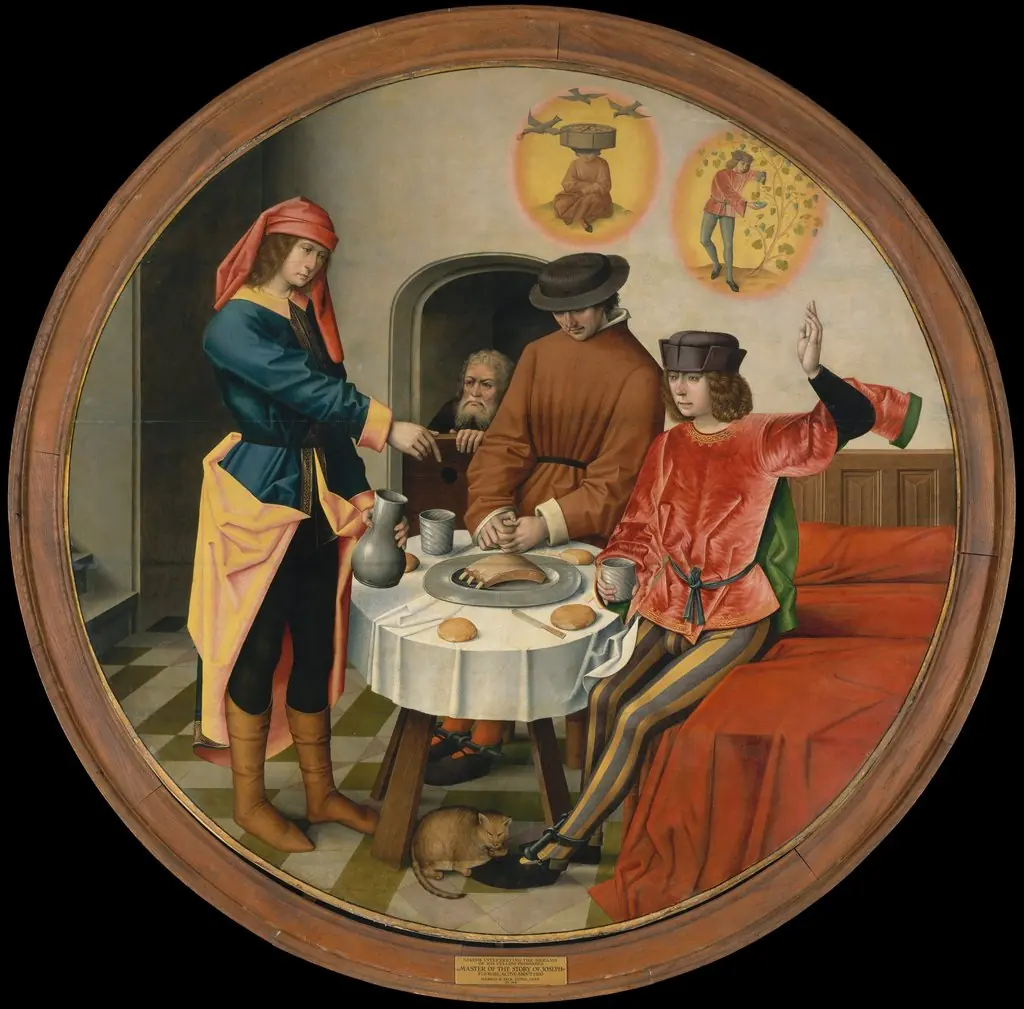 Joseph Interpreting the Dreams of His Fellow Prisoners
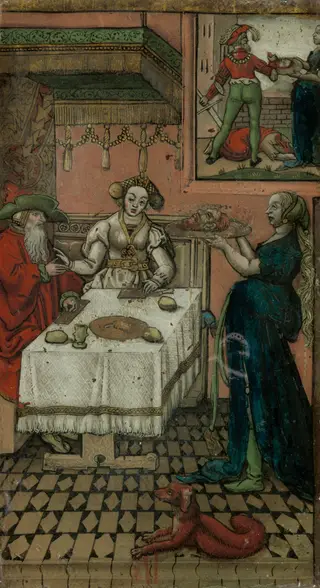 Salome with the Head of John the Baptist