Artwork
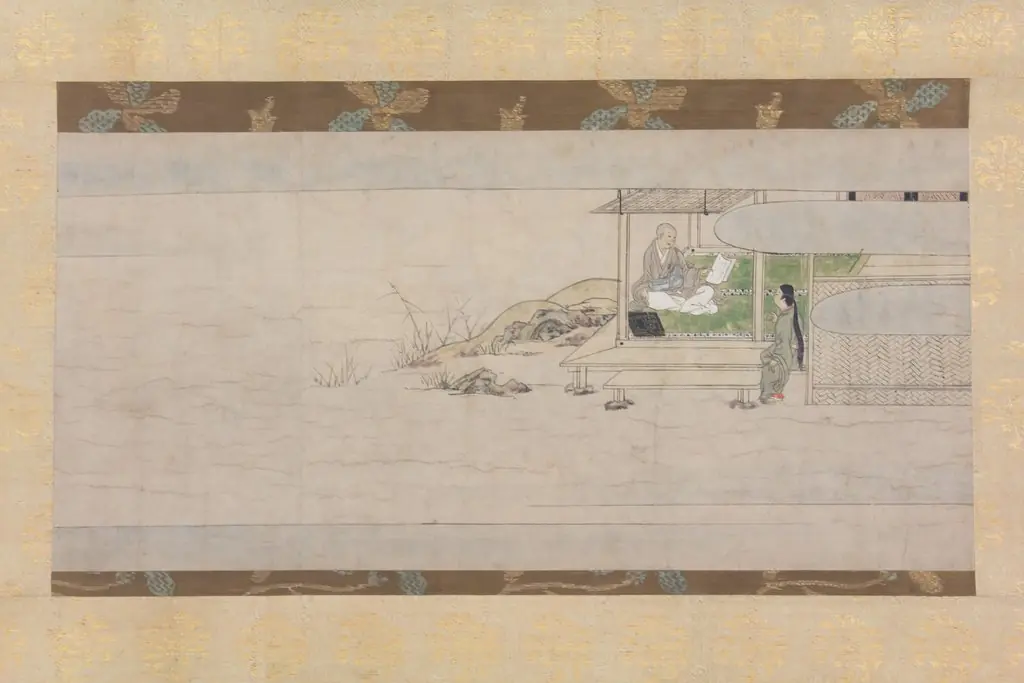
神於寺縁起絵巻断簡|Scene from The Illustrated Legends of Jin’ōji Temple
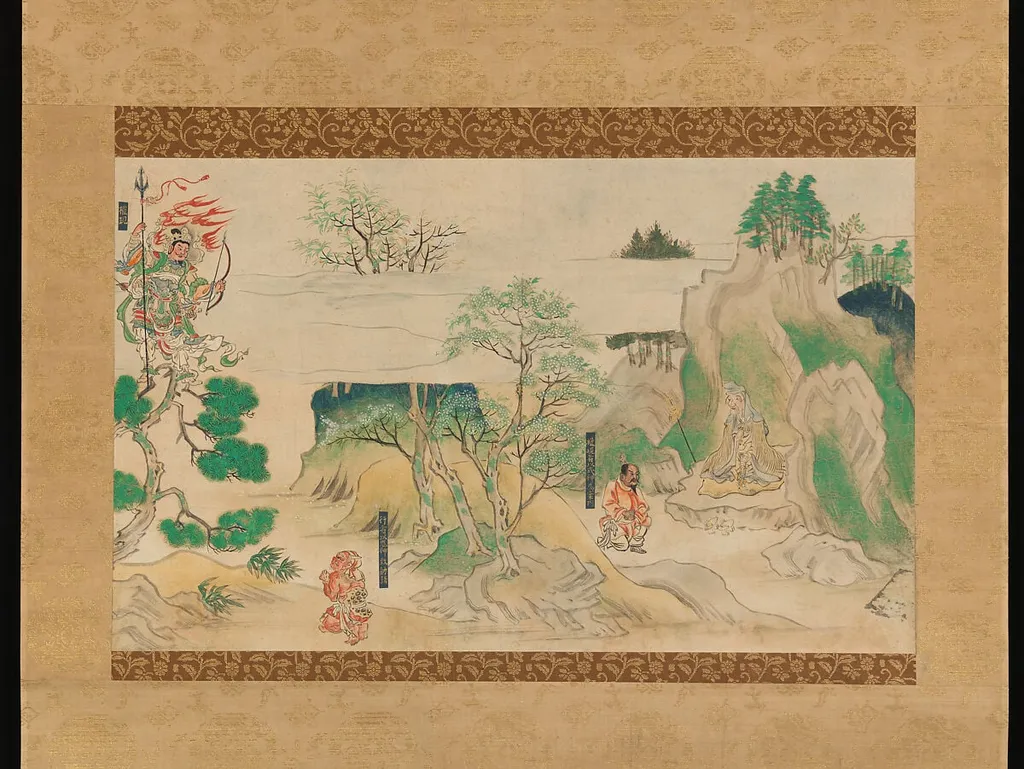
神於寺縁起絵巻断簡|Scene from The Illustrated Legends of Jin’ōji Temple is an ink painting. It dates from 1316 and is held in the collection of the Metropolitan Museum of Art.
About this work
Subject & Meaning
The figure’s presence functions symbolically as the story’s central character, embodying the human element within the temple’s legendary tableau.
The fragment illustrates a single male figure within a landscape setting drawn from the illustrated legends of Jin’ōji Temple. According to the catalog entry, the work is a handscroll fragment portraying a man, indicating that the composition focuses on a narrative protagonist from the temple’s mythic stories. The depiction aligns with the broader genre of landscape painting practiced in early 14th‑century Japan, where human activity is integrated into natural scenery to convey episodic religious narratives.
The figure’s presence functions symbolically as the story’s central character, embodying the human element within the temple’s legendary tableau.
Technique & Style
The fragment, once part of a handscroll, was later mounted as a hanging scroll; it is executed in ink with polychrome pigments on paper, constituting the medium and support. The work belongs to the landscape genre and portrays a solitary figure, reflecting the anonymous painter’s approach typical of early 14th‑century Japanese emaki. Its formal composition follows handscroll conventions while the hanging‑scroll format alters the viewing context, emphasizing vertical orientation.
As a museum‑held fragment in the Metropolitan Museum of Art, the piece survives only partially, with condition reported as intact but incomplete.
History & Provenance
The fragment is held by the Metropolitan Museum of Art, New York, where it is catalogued as part of the museum’s holdings. It entered the collection as an anonymous Japanese painting and remains accessioned within the department of Asian Art. The work has been exhibited publicly at least once, appearing in the museum’s galleries dedicated to Japanese Buddhist art as part of rotating displays of Kamakura-period painting.
Overview
This fragment, dated 1316, preserves a scene from the Illustrated Legends of Jin'ōji Temple, a narrative handscroll depicting the founding history of the temple. Executed in ink and color on paper, the work originally formed part of a continuous visual narrative that has since been dismembered; this specific section is now mounted as a hanging scroll. The composition captures two robed figures ascending a steep, winding mountain path, surrounded by gnarled pine trees and enveloped in swirling mist.
The artist employs dynamic brushwork to render the rugged terrain and atmospheric depth, characteristic of Japanese emaki (picture scroll) traditions from the Kamakura period. While the original handscroll likely spanned a significant length to cover the temple's entire legendary history, this surviving fragment offers a focused glimpse into the journey of the protagonists. The work stands as a rare surviving example of early 14th-century religious narrative painting, illustrating the artistic conventions used to visualize sacred geography and monastic pilgrimage in medieval Japan.
Its preservation as a detached fragment highlights the historical practice of repurposing damaged scrolls into individual hanging scrolls for display.
Artist & collection

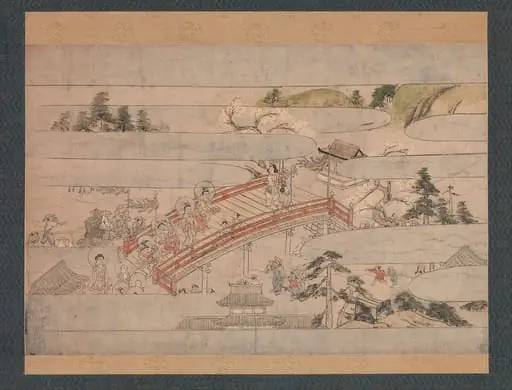 秋夜長物語絵巻断簡|The Final Scene from A Long Tale for an Autumn Night (Aki no yonaga monogatari)
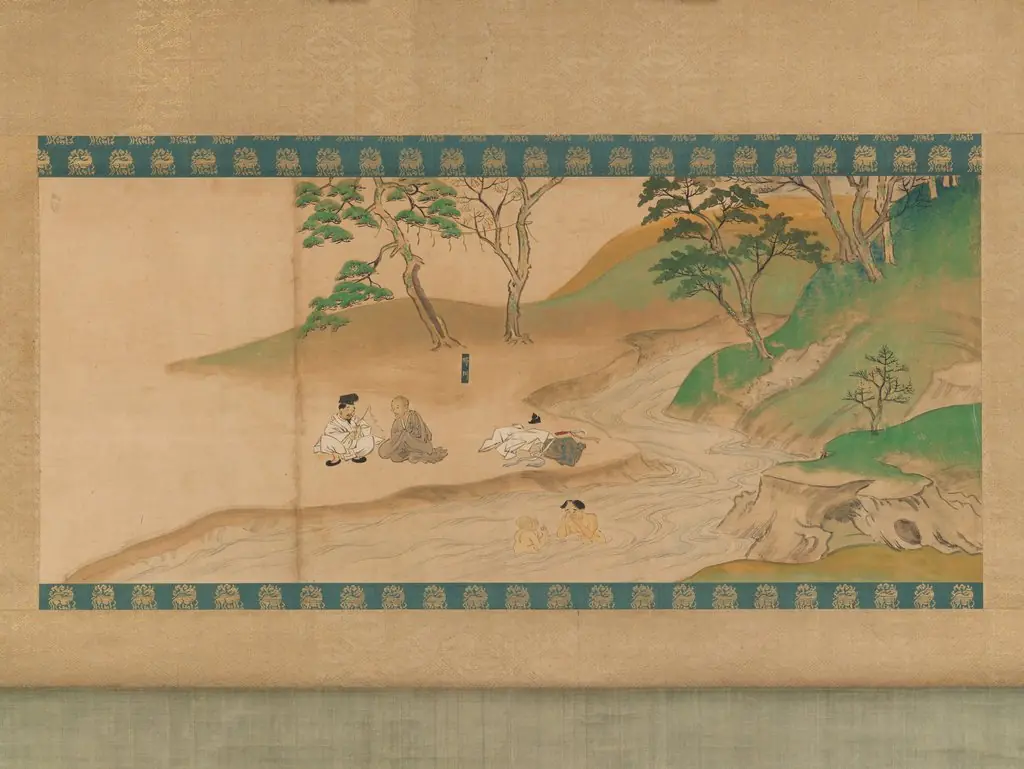 Section of Jin'o-ji Engi Emaki (Konin Shonin E-den)
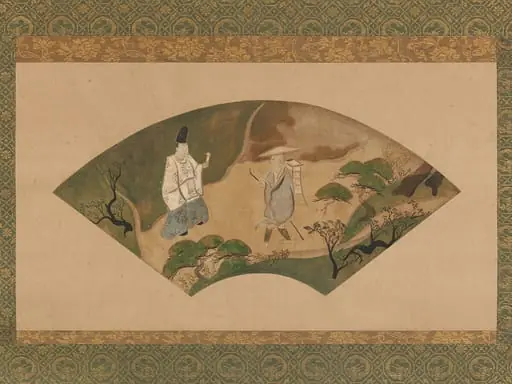 Untitled
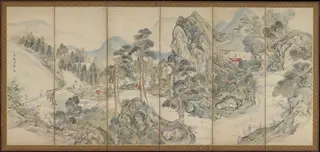 Orchid Pavilion Gathering; Autumn Harvest Festival
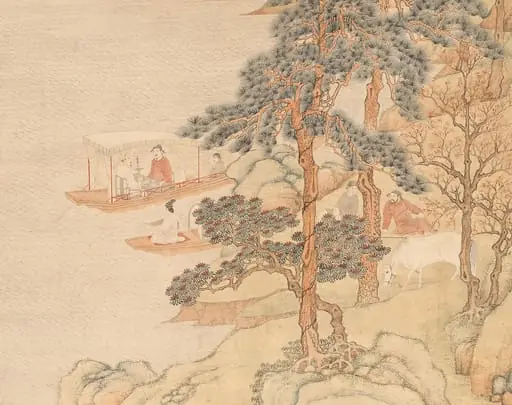 明 丁雲鵬 潯陽送客圖 軸|Song of the Lute
 Scene from A Long Tale for an Autumn Night
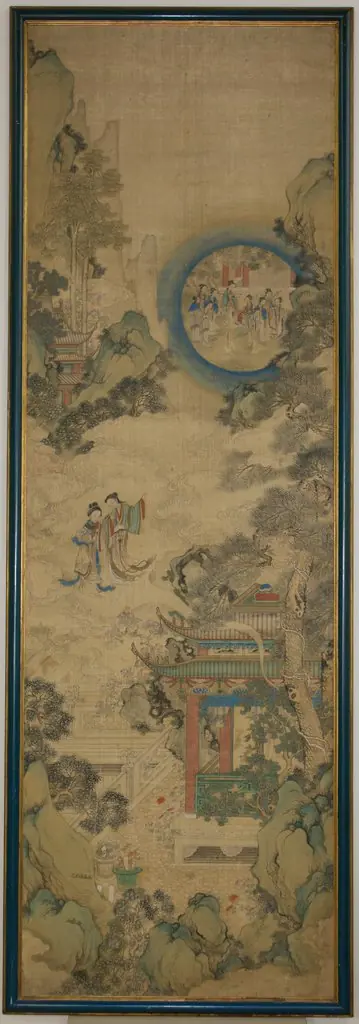 Three scenes from festivals of the twelve months
 Jinshan Island and West Lake