Artwork
白描印相図巻|Scroll of Mudras
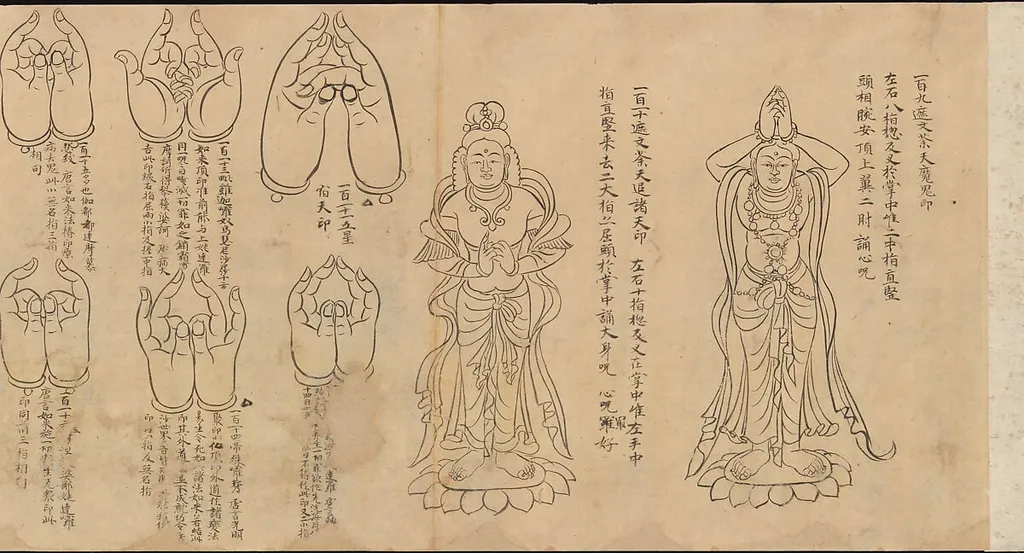
白描印相図巻|Scroll of Mudras is an ink painting. It dates from 1092 and is held in the collection of the Metropolitan Museum of Art. This handscroll, titled Scroll of Mudras, is an ink painting on paper.
About this work
Subject & Meaning
The artwork functions as a religious document, preserving the visual language of hand positions essential to Buddhist ritual and meditation.
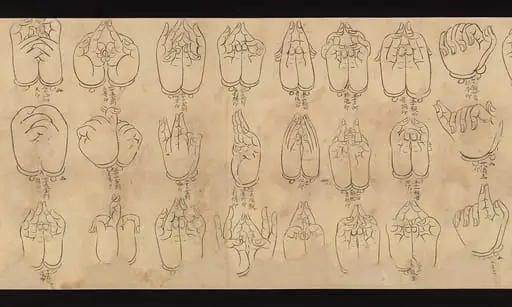
The Scroll of Mudras is a Japanese handscroll from the 11th to 12th century that depicts the Buddhist subject of hand gestures. As indicated by its title and classification within the religious genre, the work focuses exclusively on the iconography of the hand, illustrating various mudras used in Buddhist practice. The composition serves as a visual catalog of these specific gestures, which hold symbolic meaning within the faith, without depicting broader narrative scenes or other figures.
The artwork functions as a religious document, preserving the visual language of hand positions essential to Buddhist ritual and meditation.
Technique & Style
The Scroll of Mudras is executed in ink on paper as a continuous handscroll, a format typical of East Asian religious and narrative painting. The medium is undiluted ink applied in fine, uniform lines to delineate the hands and accompanying attributes, producing a monochromatic white-on-black effect characteristic of the hakubyo (line drawing) tradition. Formal qualities emphasize clarity and precision: the contours of the hands are rendered with controlled, unvarying strokes that define gesture and iconographic detail without tonal modulation or shading.
The scroll’s long, narrow format guides the viewer’s sequential viewing, while the absence of background or extraneous elements focuses attention on the ritual postures themselves.
History & Provenance
The Scroll of Mudras is a Japanese handscroll created between the 11th and 12th centuries by an anonymous artist. Executed in ink on paper, the work depicts Buddhist hand gestures within a religious context. The piece is currently held in the collection of the Metropolitan Museum of Art, where it was accessioned in 1975 under the catalog number 1975.268.1.
Specific details regarding the original commission, the identity of the patron, or the precise chain of ownership prior to its acquisition by the museum are not provided in the available records.
The Scroll of Mudras is held in the collection of the Metropolitan Museum of Art in New York. The work is cataloged under the accession number 1975.268.1. As an anonymous Japanese handscroll from the 11th to 12th century, it remains part of the museum's permanent holdings of East Asian paintings.
The source material does not provide a specific exhibition history or a list of past public displays for this object.
Overview
This handscroll, titled Scroll of Mudras, is an ink painting on paper. It presents a series of detailed drawings depicting various hand gestures. The work functions as a visual compendium, showcasing the precise forms of these significant poses without additional narrative elements or figures.
Artist & collection

- 白描印相図巻|Scroll of Mudras
 真言諸尊図像抄|Scroll from the Compendium of Iconographic Drawings (Zuzōshō)
 金剛界曼荼羅諸尊図像|Scroll of Deities of the Diamond World Mandala
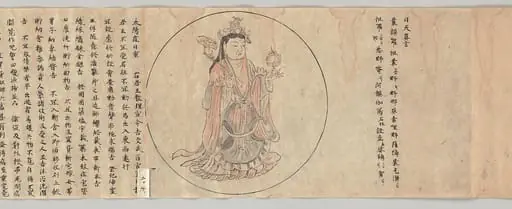 宗観筆 九曜秘暦図像 |Iconographic Drawings of the Secrets of the Nine Luminaries
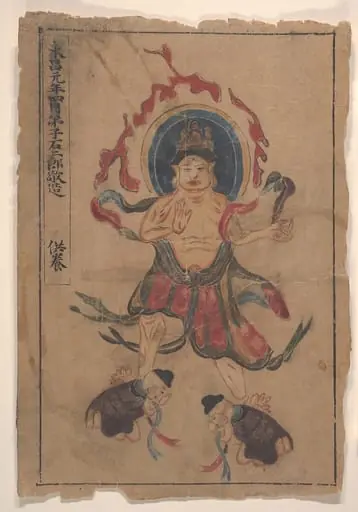 唐(?) 佚名 佛畫八幅 散頁|Eight Buddhist Paintings
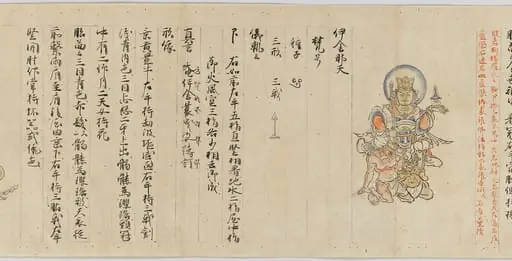 天部諸尊図像抄|Scroll 9 of Collected Iconography (Zuzōshō): Ten (Devas)
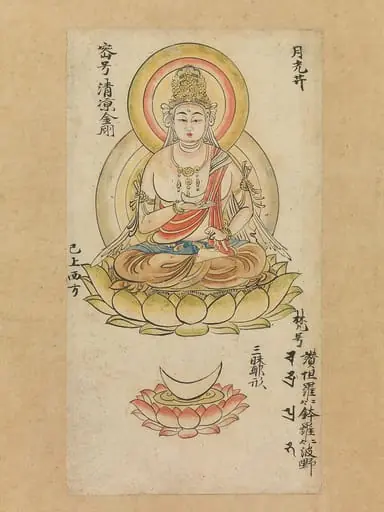 伝託磨為遠筆 月光菩薩像 「金胎仏画帖」断簡|Gakkō Bosatsu, from “Album of Buddhist Deities from the Diamond World and Womb World Mandalas” (“Kontai butsugajō”)
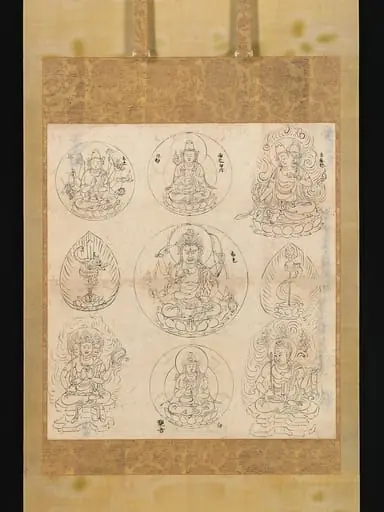 愛染曼荼羅図像 (Aizen mandara zuzō)|Iconographical Drawing of the Mandala of the Wisdom King Aizen
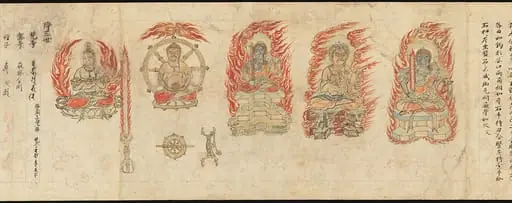 『図像抄』〈十巻抄〉明王部諸尊|Iconographic Drawings of the Five Kings of Wisdom (Myōō-bu shoson)
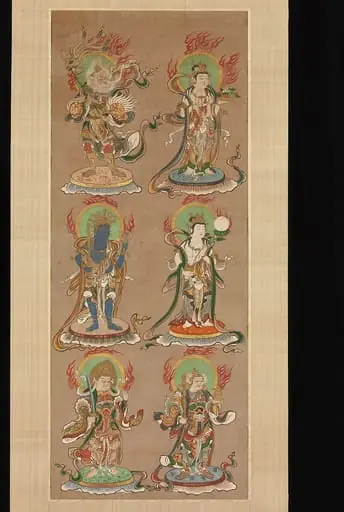 十二天像|Twelve Deva Kings (Jūniten)
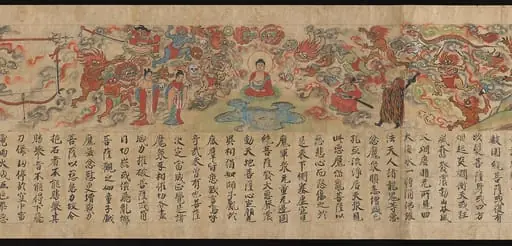 『過去現在絵因果経』 断簡 (松永本)|Scene from The Illustrated Sutra of Past and Present Karma (Kako genzai e-inga-kyō; Matsunaga Version)
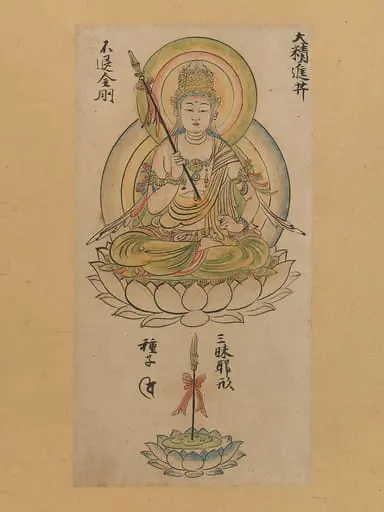 大精進菩薩図像 (「金胎仏画帖」より)|Daishōjin Bosatsu, from “Album of Buddhist Deities from the Diamond World and Womb World Mandalas”