Artwork
大精進菩薩図像 (「金胎仏画帖」より)|Daishōjin Bosatsu, from “Album of Buddhist Deities from the Diamond World and Womb World Mandalas”
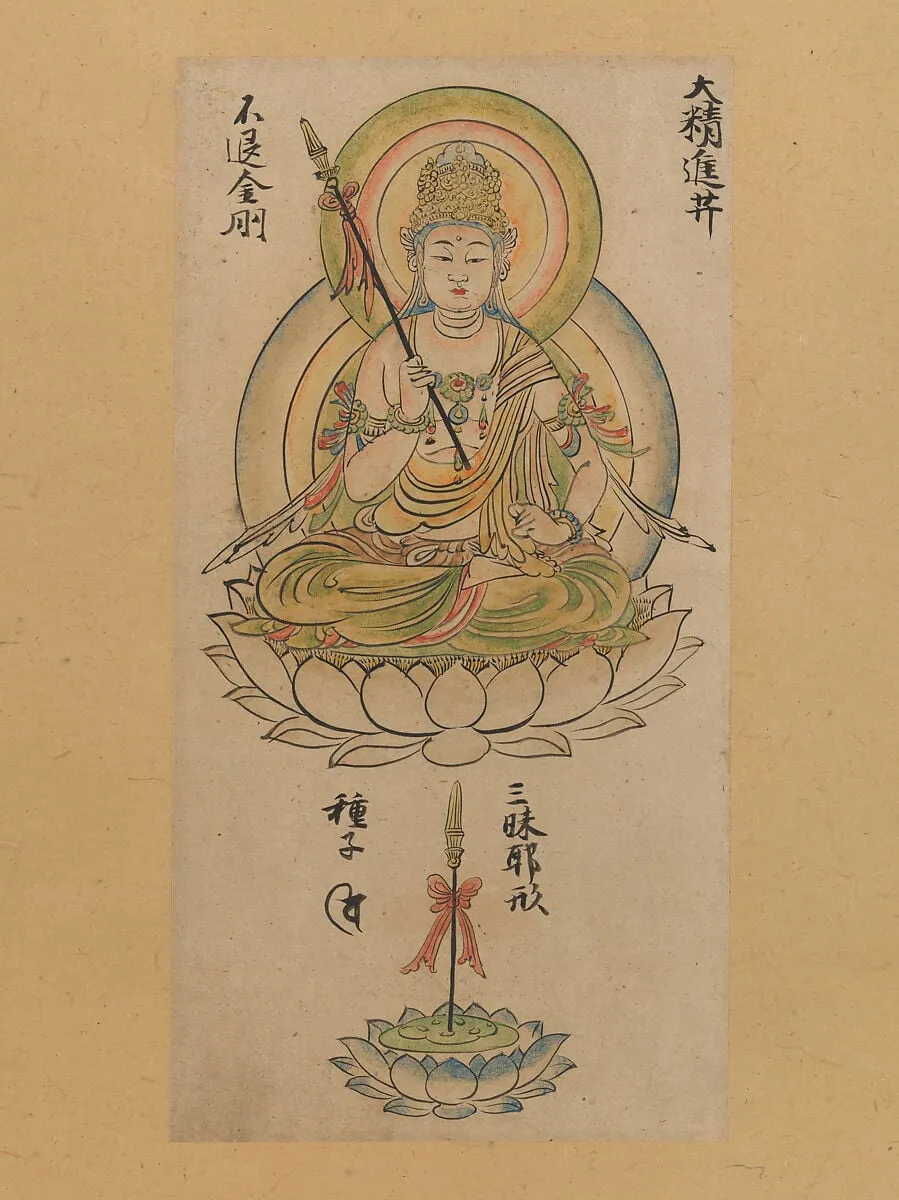
大精進菩薩図像 (「金胎仏画帖」より)|Daishōjin Bosatsu, from “Album of Buddhist Deities from the Diamond World and Womb World Mandalas” is an ink painting by the Joseon dynasty painting artist Takuma Tametō. It dates from 1142 and is held in the collection of the Metropolitan Museum of Art.
About this work
Technique & Style
Executed in 1142 by Takuma Tametō, the image survives as a fragment from a larger album, mounted as a hanging scroll on paper.
Executed in 1142 by Takuma Tametō, the image survives as a fragment from a larger album, mounted as a hanging scroll on paper. The technique combines fine mineral pigments and ink with gold applications, employing flat, decorative color fields and delicate line work to articulate the deity’s jewelry and attributes. Linear drapery folds and symmetrical posture reflect the refined, hieratic style of twelfth-century Japanese Buddhist painting, while the use of gold heightens the sacred aura and visually anchors the composition within the album’s mandala context.
History & Provenance
The album leaf depicting Daishōjin Bosatsu was painted in 1142 in Japan by the artist Takuma Tametō, executed in ink, color, and gold on paper. Originally part of a larger album of Buddhist deities associated with the Diamond World and Womb World mandalas, the work was subsequently remounted as an individual hanging scroll. It is now held in the Metropolitan Museum of Art among its holdings of Buddhist religious painting.
The sources do not document an intermediate ownership chain, a specific commissioner, an accession number, or exhibition history prior to its accession by the museum.
Overview
This hanging scroll, Daishōjin Bosatsu, created by Takuma Tametō in 1142, is a fragment from a larger album dedicated to Buddhist deities. Executed with ink, color, and gold on paper, it portrays a bodhisattva, a figure central to Buddhist practice. The work originally served a ritualistic purpose within a 12th-century context, designed to evoke the presence of the divine.
Subject & Meaning
The painting features Daishōjin Bosatsu, a golden-robed figure depicted seated serenely on a cloud. This bodhisattva, in Buddhist tradition, is an enlightened being who chooses to delay their own nirvana to assist others on their path to spiritual awakening. The deity holds a lotus and a jewel, symbols often associated with purity and wisdom, emphasizing their compassionate role.
Artist & collection
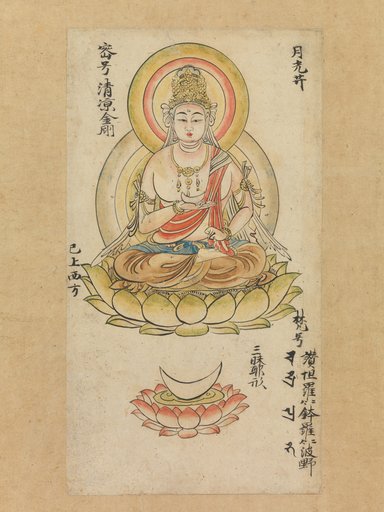

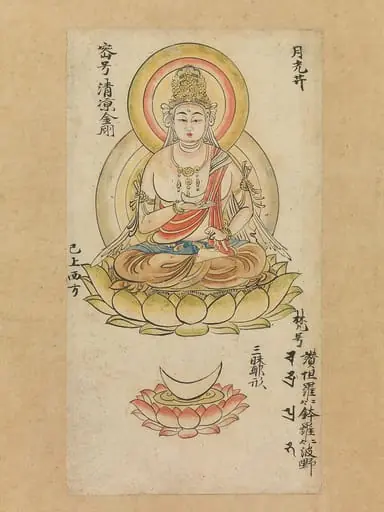
- 伝託磨為遠筆 月光菩薩像 「金胎仏画帖」断簡|Gakkō Bosatsu, from “Album of Buddhist Deities from the Diamond World and Womb World Mandalas” (“Kontai butsugajō”)
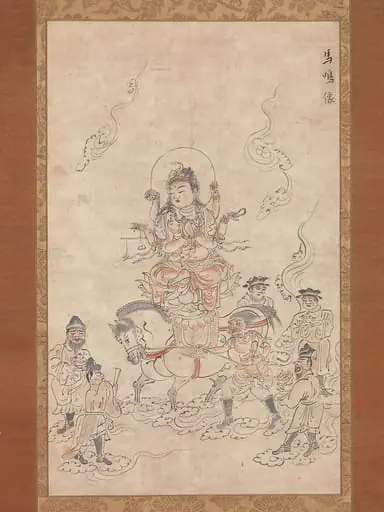 馬鳴菩薩図像|Iconographic Drawing of the Bodhisattva Memyō (Ashvaghosha)
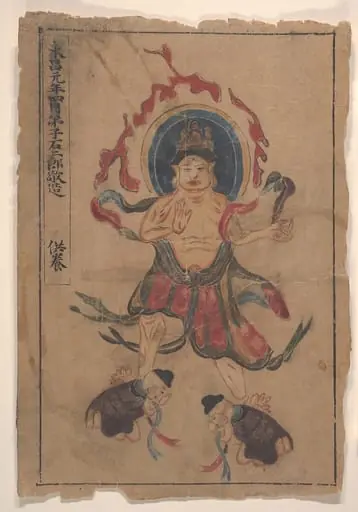 唐(?) 佚名 佛畫八幅 散頁|Eight Buddhist Paintings
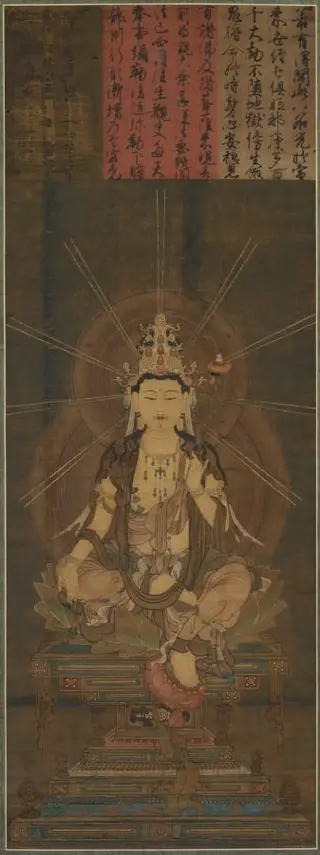 Miroku (Maitreya)
 五髻文殊菩薩像|The Bodhisattva Monju (Manjushri) with Five Topknots
 地蔵菩薩来迎図|Welcoming Descent of the Bodhisattva Jizō