Artwork
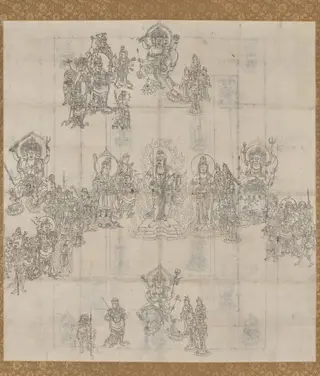
愛染曼荼羅図像 (Aizen mandara zuzō)|Iconographical Drawing of the Mandala of the Wisdom King Aizen
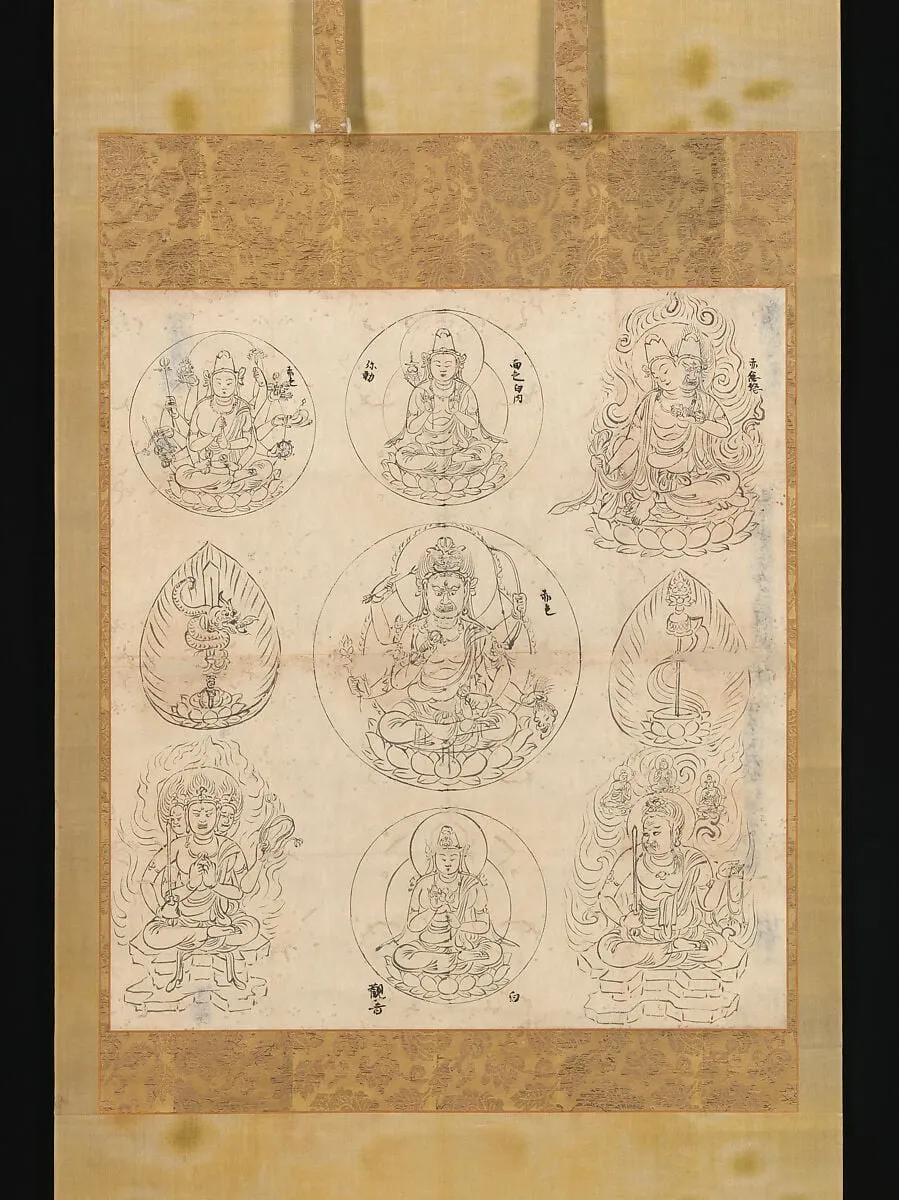
愛染曼荼羅図像 (Aizen mandara zuzō)|Iconographical Drawing of the Mandala of the Wisdom King Aizen is an ink painting. It dates from 2 and is held in the collection of the Metropolitan Museum of Art. This hanging scroll, titled Iconographical Drawing of the Mandala of the Wisdom King Aizen, is rendered in ink on paper.
- Accession no.
- 2015.300.3
- Credit line
- Mary Griggs Burke Collection, Gift of the Mary and Jackson Burke Foundation, 2015
About this work
Subject & Meaning
Created in Japan in 1107, this iconographical drawing serves as a religious representation of the mandala associated with this specific deity.
The work depicts the Wisdom King Aizen, a deity within the Buddhist pantheon, presented as a bodhisattva figure. Created in Japan in 1107, this iconographical drawing serves as a religious representation of the mandala associated with this specific deity. The imagery embodies core Buddhist theological concepts, visualizing the spiritual presence of Aizen for devotional purposes.
As a hanging scroll executed in ink on paper, the piece functions as a sacred diagram rather than a narrative scene, focusing on the formal depiction of the deity to facilitate religious contemplation. The subject matter is strictly confined to the representation of this Buddhist god and the associated mandala structure, reflecting the spiritual iconography of the period.
Technique & Style
Executed in 1107 (Kashō 2) by an anonymous Japanese artist, this religious work is a hanging scroll created with ink on paper. As an iconographical drawing of the Mandala of the Wisdom King Aizen, the piece employs a monochromatic palette, relying exclusively on ink application to define its sacred imagery. The medium supports the depiction of Buddhist deities and bodhisattvas within a formal composition characteristic of Heian-period religious art.
The use of paper as the primary support, combined with ink, indicates a technique focused on line and tonal variation rather than polychrome pigment. Currently held in the collection of the Metropolitan Museum of Art, the object's classification as a painting underscores its status as a finished devotional image rather than a preliminary sketch, despite its linear execution.
History & Provenance
The Iconographical Drawing of the Mandala of the Wisdom King Aizen was created in Japan during the Kashō 2 era, which corresponds to the year 1107. The work is attributed to an anonymous artist. Executed as a hanging scroll using ink on paper, the piece falls within the religious painting genre and depicts Buddhist subject matter, specifically bodhisattvas and deities. Currently, the artwork is held in the collection of the Metropolitan Museum of Art.
The Iconographical Drawing of the Mandala of the Wisdom King Aizen is held in the collection of the Metropolitan Museum of Art in New York. The work, created in Japan during the Kashō era (specifically 1107), is classified as a religious hanging scroll executed in ink on paper by an unknown artist. While the museum maintains the piece within its holdings, the provided sources do not contain specific inventory or accession numbers for this object.
Furthermore, the available documentation does not record any exhibition history, showing dates, or loan records for this particular mandala drawing.
Overview
This hanging scroll, titled Iconographical Drawing of the Mandala of the Wisdom King Aizen, is rendered in ink on paper. It depicts the fierce Buddhist deity Aizen, seated on a lotus, surrounded by various symbolic elements. Created in 1107, this work served as a practical guide for monastic practice rather than a decorative piece, illustrating a complex spiritual concept through precise visual language.
Artist & collection

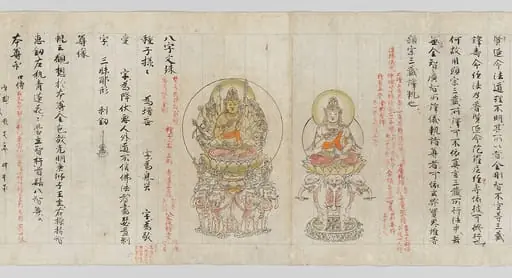
- 真言諸尊図像抄|Scroll from the Compendium of Iconographic Drawings (Zuzōshō)
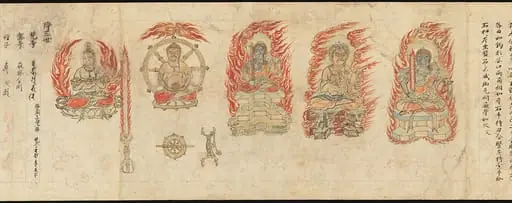 『図像抄』〈十巻抄〉明王部諸尊|Iconographic Drawings of the Five Kings of Wisdom (Myōō-bu shoson)
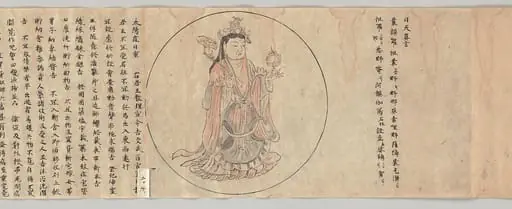 宗観筆 九曜秘暦図像 |Iconographic Drawings of the Secrets of the Nine Luminaries
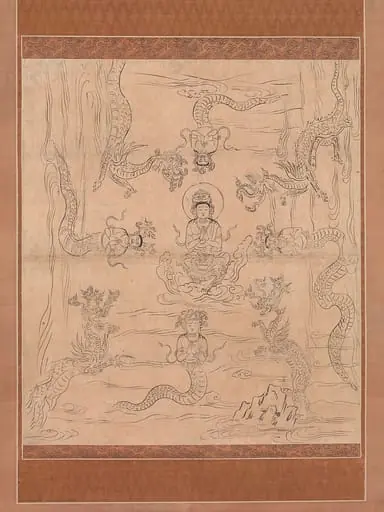 請雨経曼荼羅図像|Iconographic Drawing of a Rainmaking Mandala
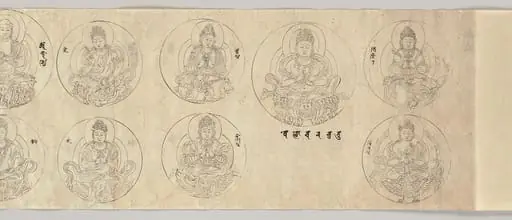 金剛界曼荼羅諸尊図像|Scroll of Deities of the Diamond World Mandala
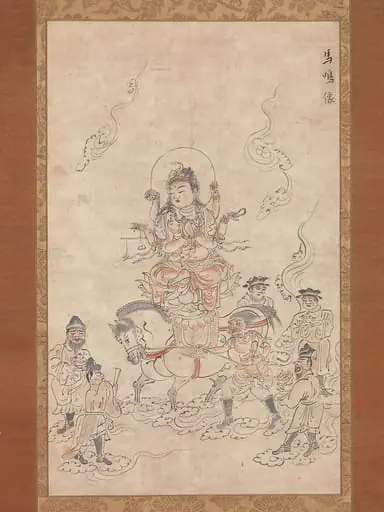 馬鳴菩薩図像|Iconographic Drawing of the Bodhisattva Memyō (Ashvaghosha)
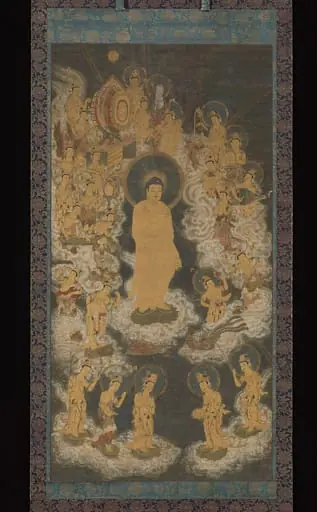 阿弥陀聖衆来迎図 |Welcoming Descent of Amida and Bodhisattvas
 Iconographical Sketch (Zuzō) for the "Benevolent Kings Sutra Mandala"
 Mandala of the Thirteen Buddhas (Jūsan butsu mandara)
 唐(?) 佚名 佛畫八幅 散頁|Eight Buddhist Paintings
 唐 法慧等 菩薩像二幅|Two Buddhist Paintings
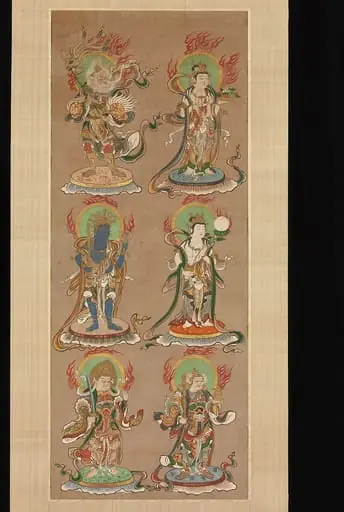 十二天像|Twelve Deva Kings (Jūniten)
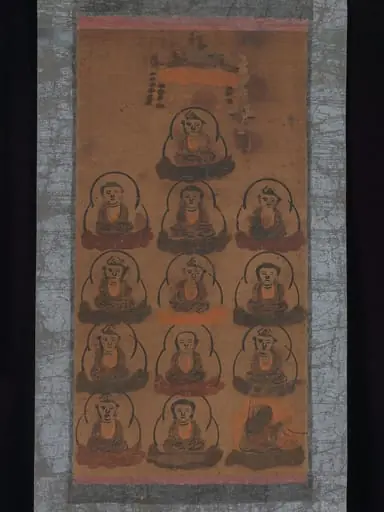 十三仏図大津絵|Ōtsu-e of Thirteen Buddhist Deities
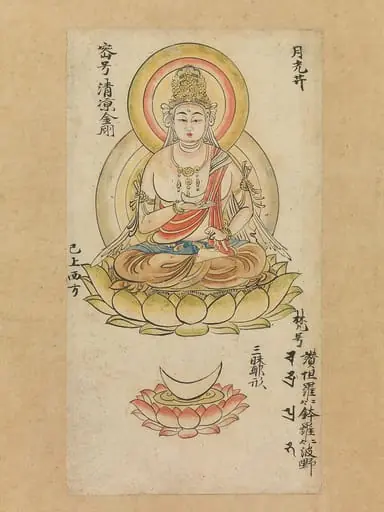 伝託磨為遠筆 月光菩薩像 「金胎仏画帖」断簡|Gakkō Bosatsu, from “Album of Buddhist Deities from the Diamond World and Womb World Mandalas” (“Kontai butsugajō”)
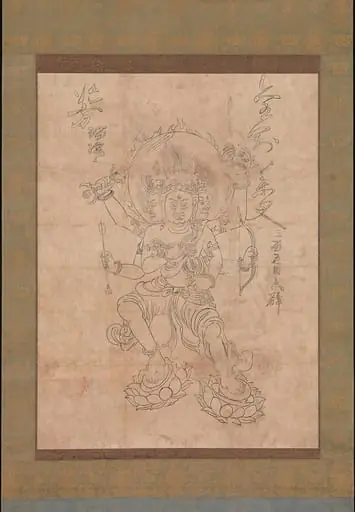 金剛夜叉明王|Kongōyasha Myōō
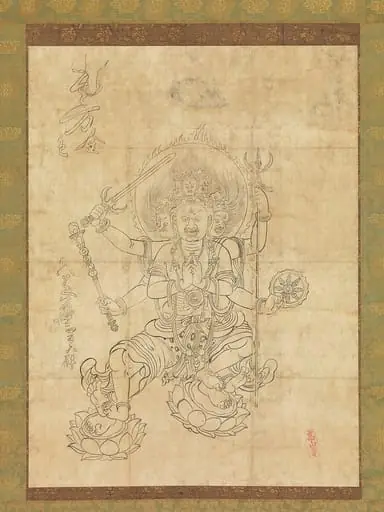 大威徳明王|Daiitoku Myōō
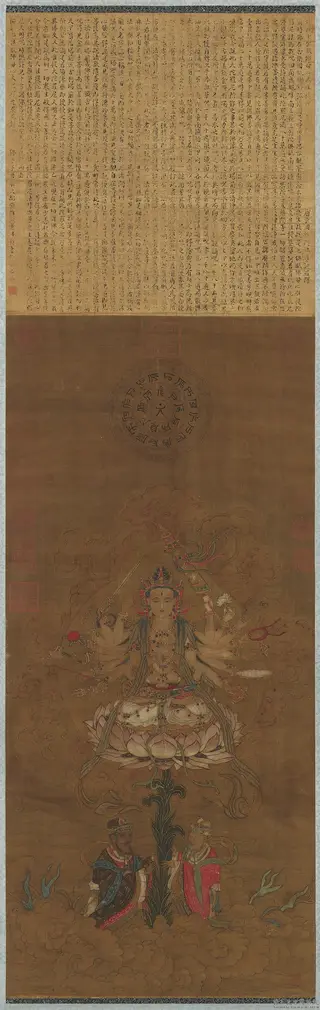 Cundi Bodhisattva
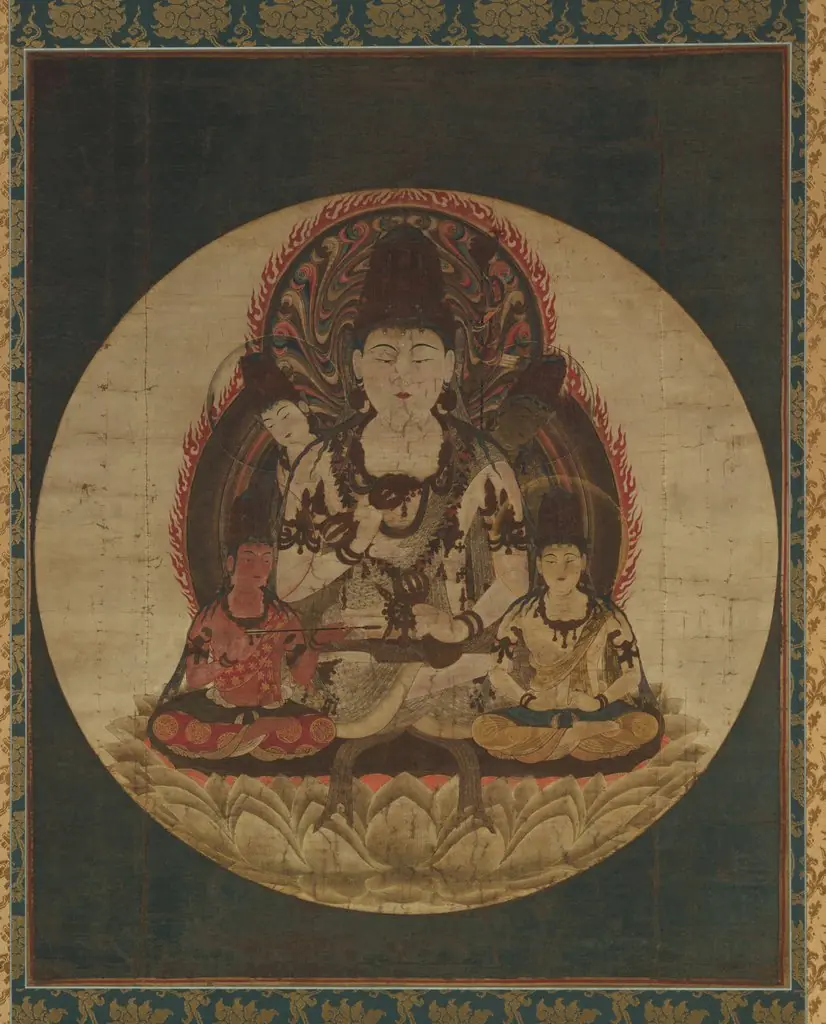 The Secret Five Bodhisattvas (Gohimitsu Bosatsu)