Artwork
十二天像|Twelve Deva Kings (Jūniten)
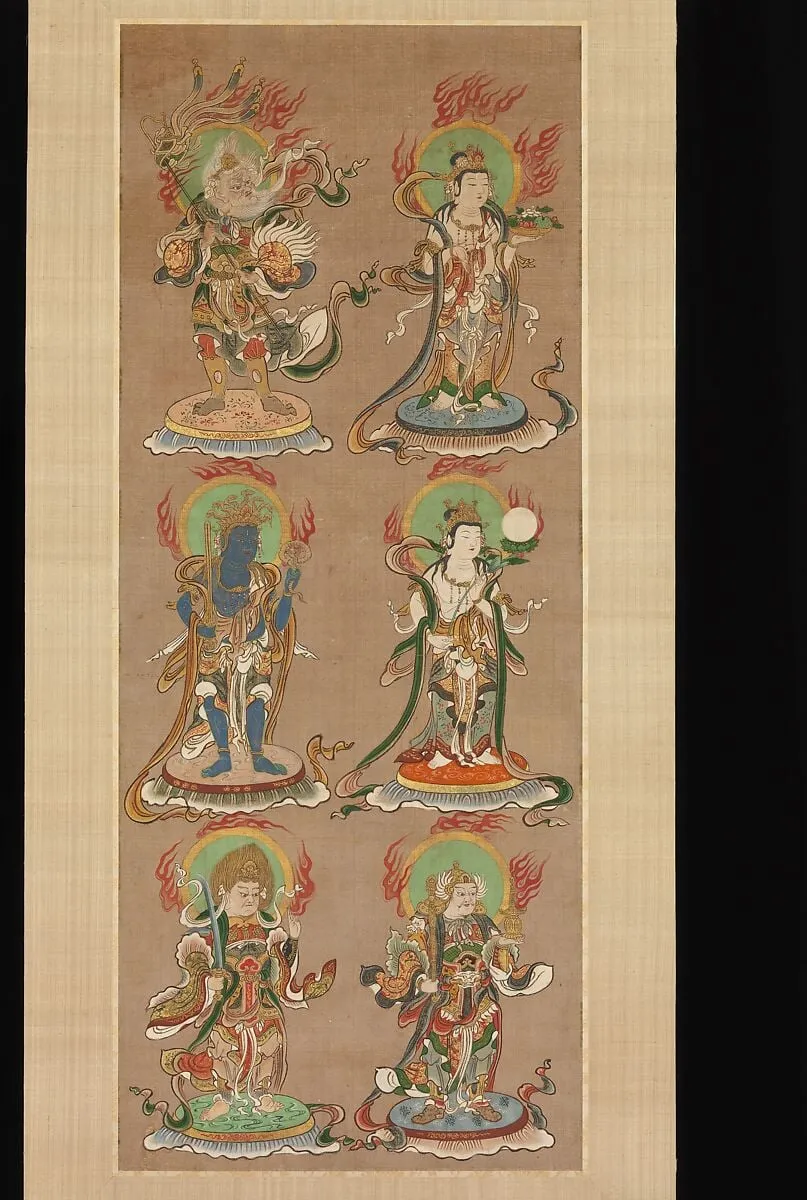
十二天像|Twelve Deva Kings (Jūniten) is an ink painting. It dates from 1549 and is held in the collection of the Metropolitan Museum of Art. The work consists of two silk paintings, each framed and executed with ink, mineral pigments, and gold leaf.
About this work
Technique & Style
Stylistically, the figures are depicted frontally with hieratic posture, their halos and jewelry rendered in meticulous gold detail against muted silk grounds.
The Twelve Deva Kings are executed in ink, mineral pigments, and gold on silk, arranged as a pair of framed hanging scrolls. The handling combines fine line drawing with flat, saturated color fields and delicate gold applications, typical of Muromachi-period religious iconography. Stylistically, the figures are depicted frontally with hieratic posture, their halos and jewelry rendered in meticulous gold detail against muted silk grounds.
The composition emphasizes symmetry and frontal symmetry, with each king positioned beneath a canopy-like arch to signify celestial sovereignty.
The materials, ink for contour and modeling, opaque pigments for drapery and flesh tones, and gold leaf/shell for highlights, are consistent with contemporary Buddhist painting practices in sixteenth-century Japan.
History & Provenance
The Twelve Deva Kings (Jūniten) pair of hanging scrolls is dated by inscription to 1549, indicating production in Japan during the sixteenth century.
The works entered the collection of the Metropolitan Museum of Art, where they are currently held. Their transfer into a public institution marks the final recorded stage of ownership documented for the pair.
The pair of framed paintings known as Twelve Deva Kings (Jūniten), dated to 1549, is held in the collection of the Metropolitan Museum of Art. The work, created in Japan using ink, color, and gold on silk, is attributed to an anonymous artist. While the specific inventory or accession number is not provided in the available records, the museum lists the piece within its holdings as a religious painting from the mid-sixteenth century. No exhibition history or specific display records are documented in the provided sources.
Overview
The work consists of two silk paintings, each framed and executed with ink, mineral pigments, and gold leaf. The compositions depict six figures arranged on elevated platforms or clouds, each surrounded by a luminous halo and subtle flames. The palette combines rich reds, blues, greens, and gold against a muted brown ground, creating a layered visual field that balances decorative detail with a sense of otherworldly presence.
Subject & Meaning
The six figures appear to be divine or semi‑divine beings, identifiable by their elaborate robes, haloed heads, and the objects they hold, swords, floral bouquets, and ceremonial bowls. Such attributes suggest a representation of celestial guardians or deities, likely intended to invoke protective or auspicious qualities within a religious or ritual context.
Artist & collection

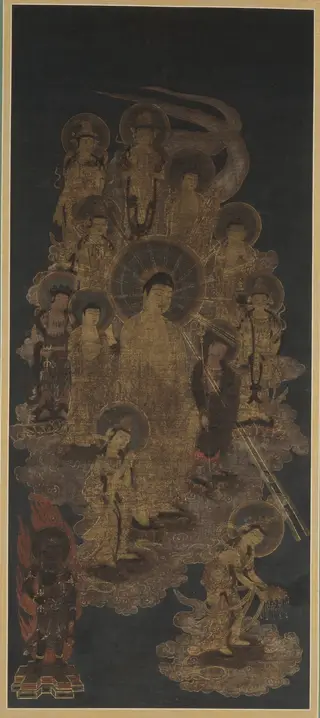 Thirteen Buddhas Welcoming the Dying Believer to the Western Pure Land
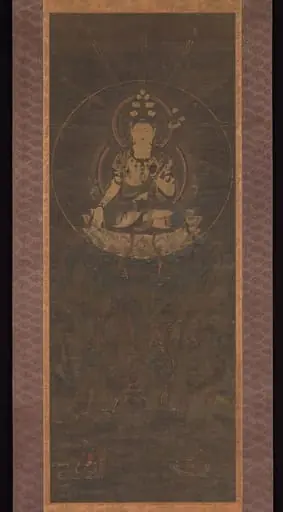 十一面観音影向図|Eleven-Headed Kannon on Mount Fudaraku
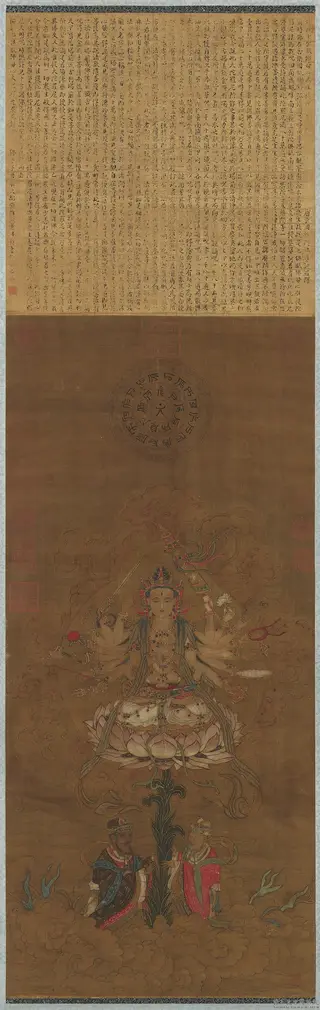 Cundi Bodhisattva
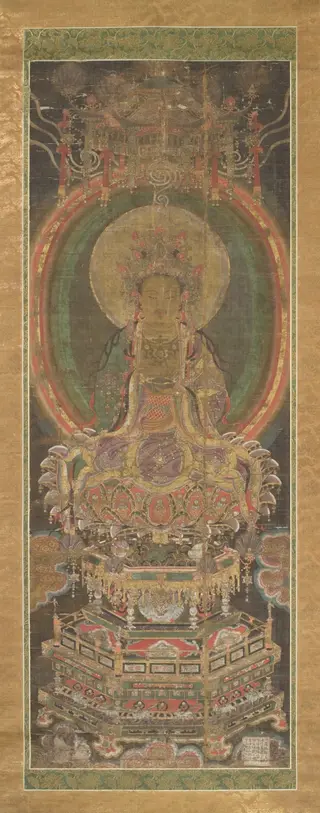 Avalokiteshvara (Guanyin), the Bodhisattva of Compassion
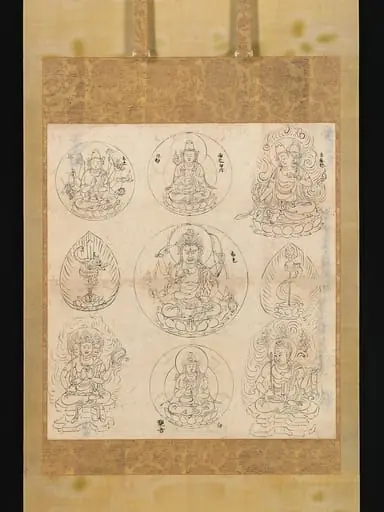 愛染曼荼羅図像 (Aizen mandara zuzō)|Iconographical Drawing of the Mandala of the Wisdom King Aizen
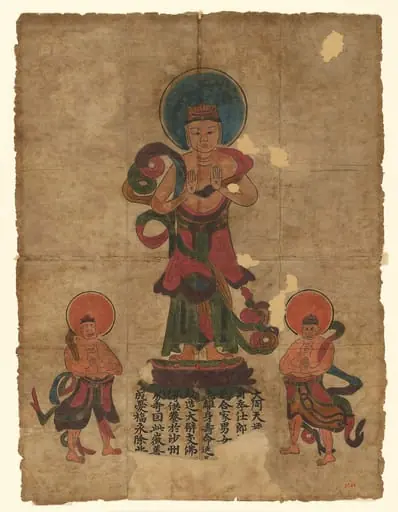 Untitled
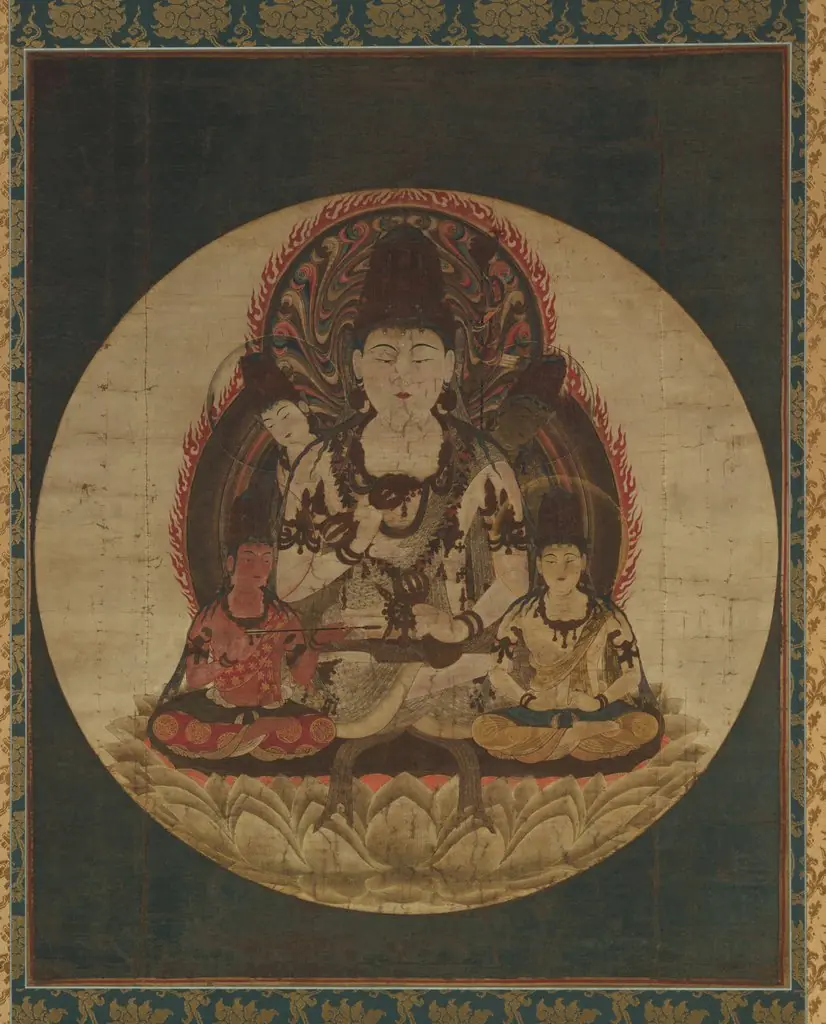 The Secret Five Bodhisattvas (Gohimitsu Bosatsu)
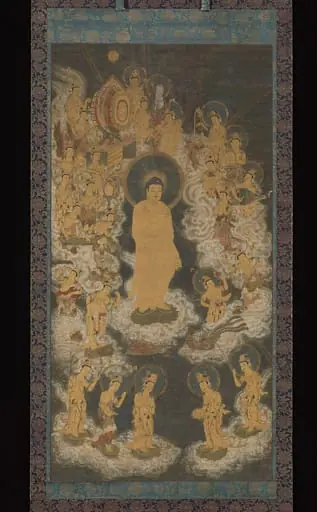 阿弥陀聖衆来迎図 |Welcoming Descent of Amida and Bodhisattvas
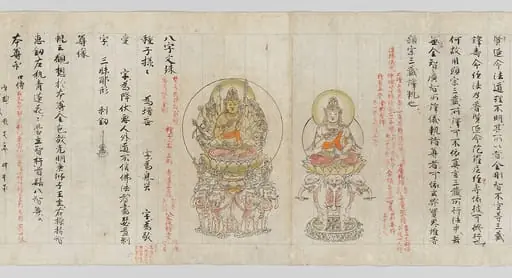 真言諸尊図像抄|Scroll from the Compendium of Iconographic Drawings (Zuzōshō)