Artwork
Seven Heroes or Warriors Killing Abhimanya, Son of Arjuna
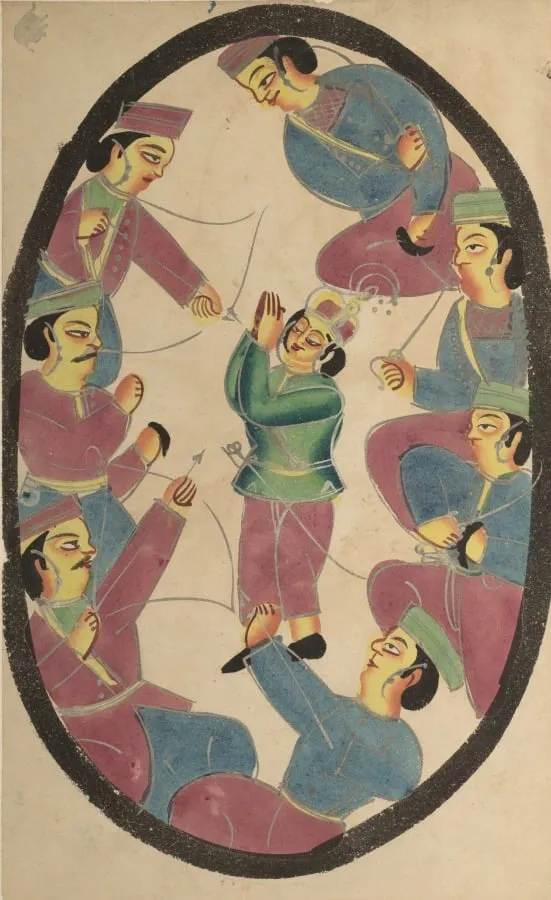
Seven Heroes or Warriors Killing Abhimanya, Son of Arjuna is an unspecified painting by the Bengal School artist Unknown. It dates from 1890 and is held in the collection of the Cleveland Museum of Art. The work portrays a young warrior, Abhimanyu, surrounded by seven attackers within the famed Chakravyuha formation.
- Accession no.
- 2003.144
About this work
Overview
The work portrays a young warrior, Abhimanyu, surrounded by seven attackers within the famed Chakravyuha formation. The scene captures the moment just before his death, emphasizing the dramatic tension of his entrapment in the circular battle array.
Subject & Meaning
Abhimanyu, son of the Pandava prince Arjuna and Subhadra, is a tragic figure from the Mahabharata. According to the epic, he learned only how to enter the Chakravyuha while still in utero and lacked knowledge of its exit, leading to his fatal stand against overwhelming foes.
Technique & Style
Executed in the Kalighat school of Kolkata, the painting employs bold, flat colors and swift brushwork characteristic of the genre’s commercial devotional prints. Anatomical precision is secondary to narrative clarity; the composition relies on stark outlines and exaggerated gestures to convey action.
History & Provenance
Originating from the Kalighat district, a 19th‑century hub where itinerant artists produced inexpensive, vividly colored images for pilgrims, the piece reflects the local tradition of mass‑produced religious art. Its provenance traces back to the bustling market stalls that supplied visual storytelling to devotees.
Context
Kalighat paintings emerged as a response to the demand for accessible visual narratives among the growing pilgrim population visiting the nearby shrine. Artists adapted mythological episodes, such as Abhimanyu’s demise, into compact, eye‑catching formats that could be quickly understood by a diverse audience.
Artist & collection









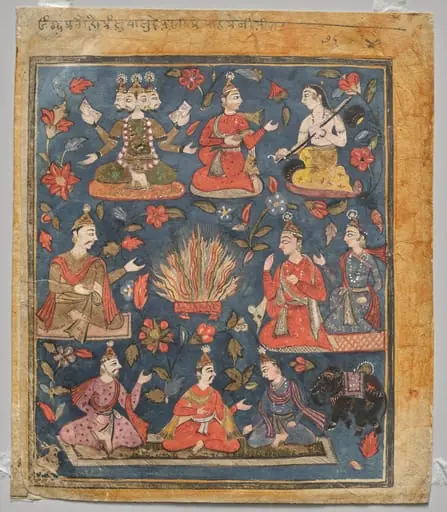 Sacrificial Fire, from the "Tula Ram" Bhagavata Purana
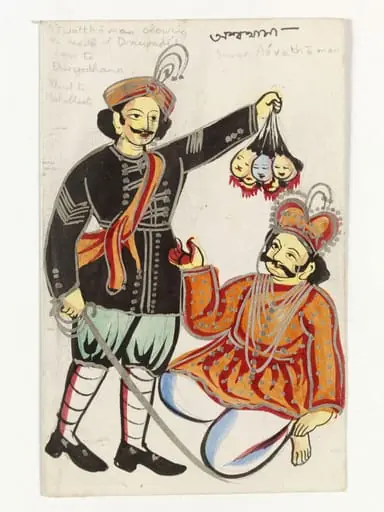 Aswatthaman and Duryodhana
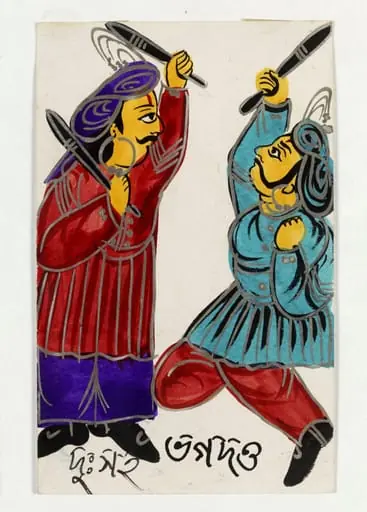 Duhshashana and Bhagadatta
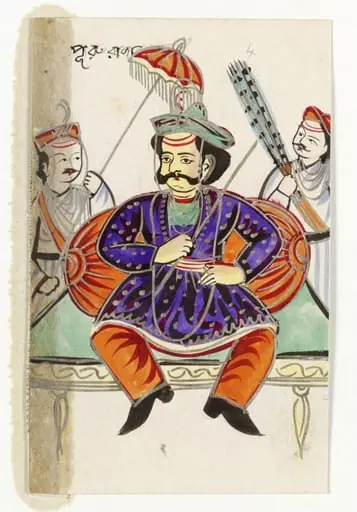 Pura Raja
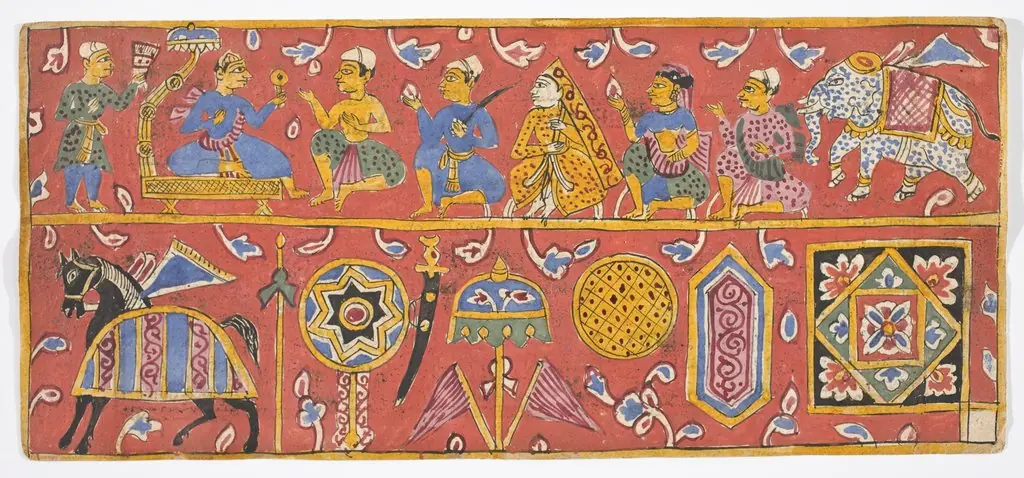 Tantric Manuscript "Sangrahani Sutra"
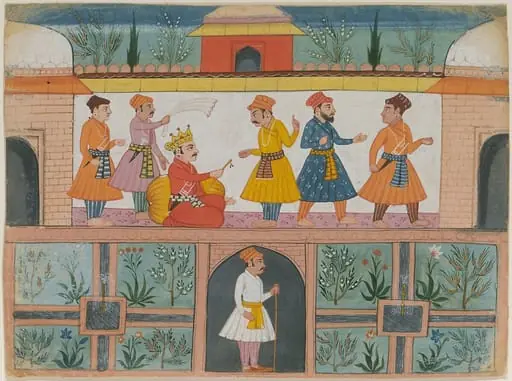 Untitled
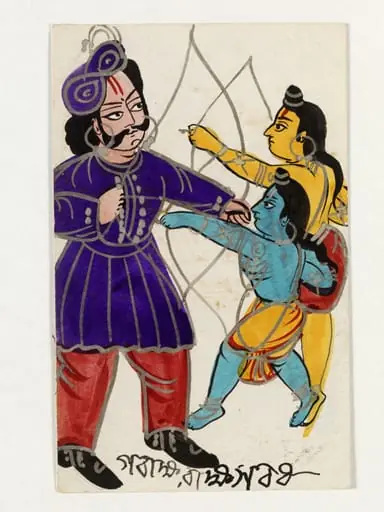 Rama, Lakshmana and Gavaksha
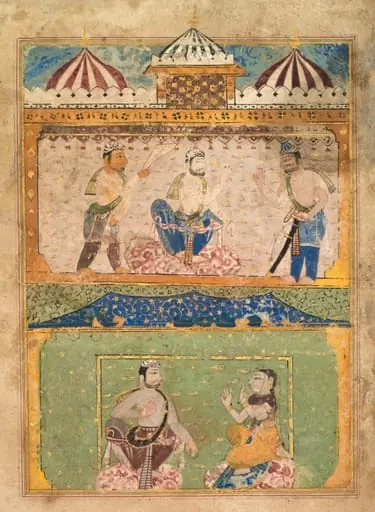 A traveler persuades Lorik to return home (top); Chanda objects (bottom), from a Chandayana (Story of Chanda)
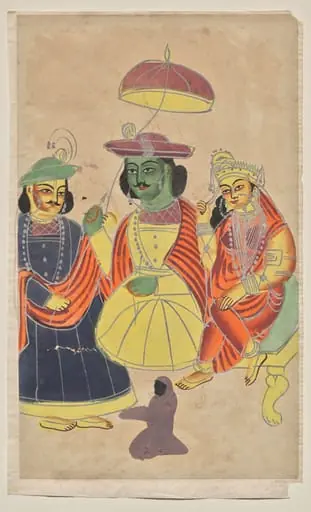 Rama and Sita enthroned with Lakshmana and Hanuman attending, from a Kalighat album
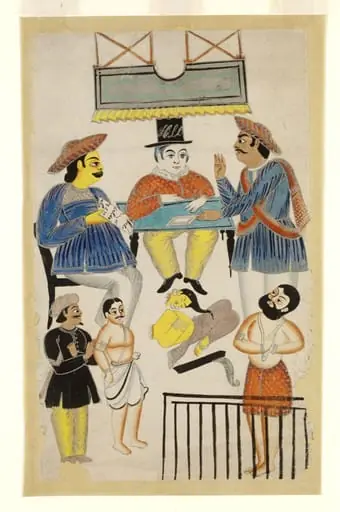 Madhavchandra Giri (the Mahant)