Artwork
Shiva as Bhairava
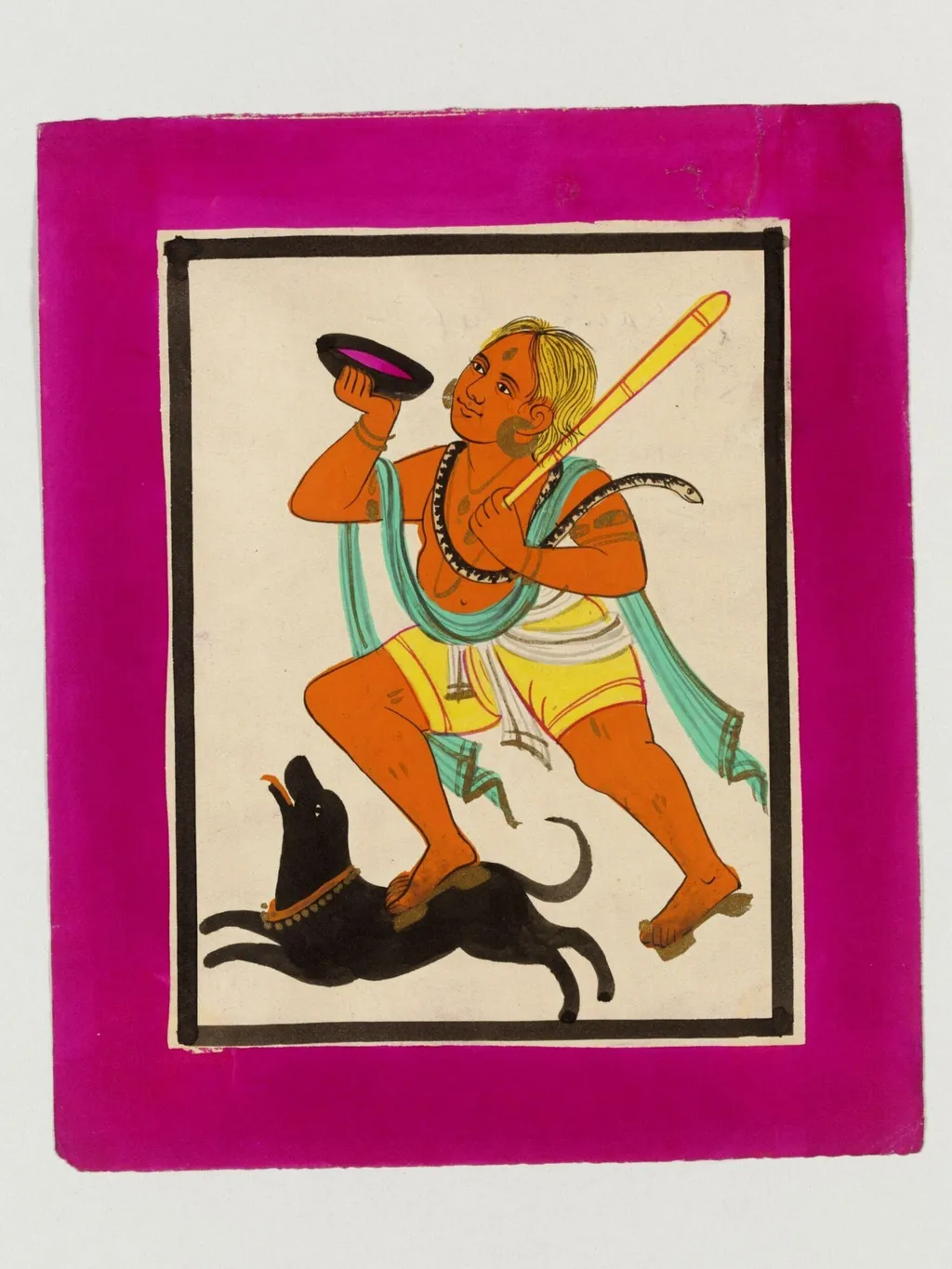
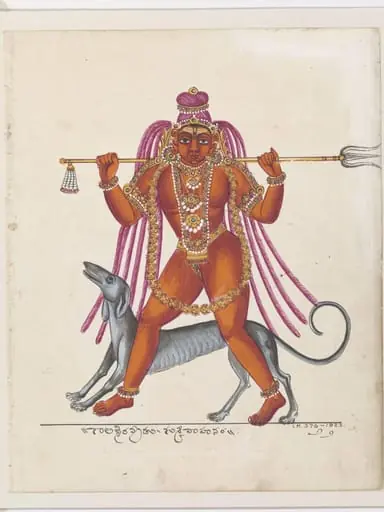
Shiva as Bhairava is a paint painting by Unknown. It dates from 1850 and is held in the collection of the Victoria and Albert Museum. This mid-nineteenth-century watercolour on paper portrays the Hindu deity Shiva in his fierce manifestation as Bhairava.
About this work
Overview
This mid-nineteenth-century watercolour on paper portrays the Hindu deity Shiva in his fierce manifestation as Bhairava. Measuring approximately 25 by 18 centimetres, the work employs vivid pigments and a spare background to isolate the figure, amplifying its dramatic presence within a devotional or narrative tradition.
Subject & Meaning
Bhairava embodies Shiva’s wrathful aspect, invoked to vanquish ignorance and malevolent forces. Here, the deity stands atop a black dog, a symbol of loyalty or the guardian of thresholds, while clutching a skull cup filled with blood and a staff. The third eye, matted hair, and ritual adornments underscore his divine authority and transformative power.
Technique & Style
Executed in opaque watercolour, the painting relies on saturated hues, teal, yellow, and pink, to define form and movement. Outlines remain crisp, while minimal shading flattens the composition, a stylistic trait common to popular Indian devotional art of the period. The dynamic posture and exaggerated gestures heighten the figure’s energetic intensity.
History & Provenance
The work entered the collection of John Lockwood Kipling, an educator and curator active in British India, between 1865 and 1893. It formed part of an album containing 196 mixed media pieces, predominantly bazaar lithographs. In 1917, Kipling’s son, Rudyard, donated the album to the institution where it now resides.
Context
Produced in 1850, the painting reflects the intersection of indigenous artistic conventions and colonial-era patronage. Such images circulated in urban markets, serving both local worshippers and European collectors drawn to India’s visual traditions. The depiction aligns with Puranic narratives while catering to nineteenth-century demand for portable devotional art.
Legacy
As part of a larger album, the painting contributes to the study of nineteenth-century Indian visual culture and colonial collecting practices. Its inclusion in institutional holdings has facilitated research into regional devotional iconography and the transmission of Hindu themes through popular art forms.
Artist & collection