Artwork
Tablou votiv al familiei lui Neagoe Basarab
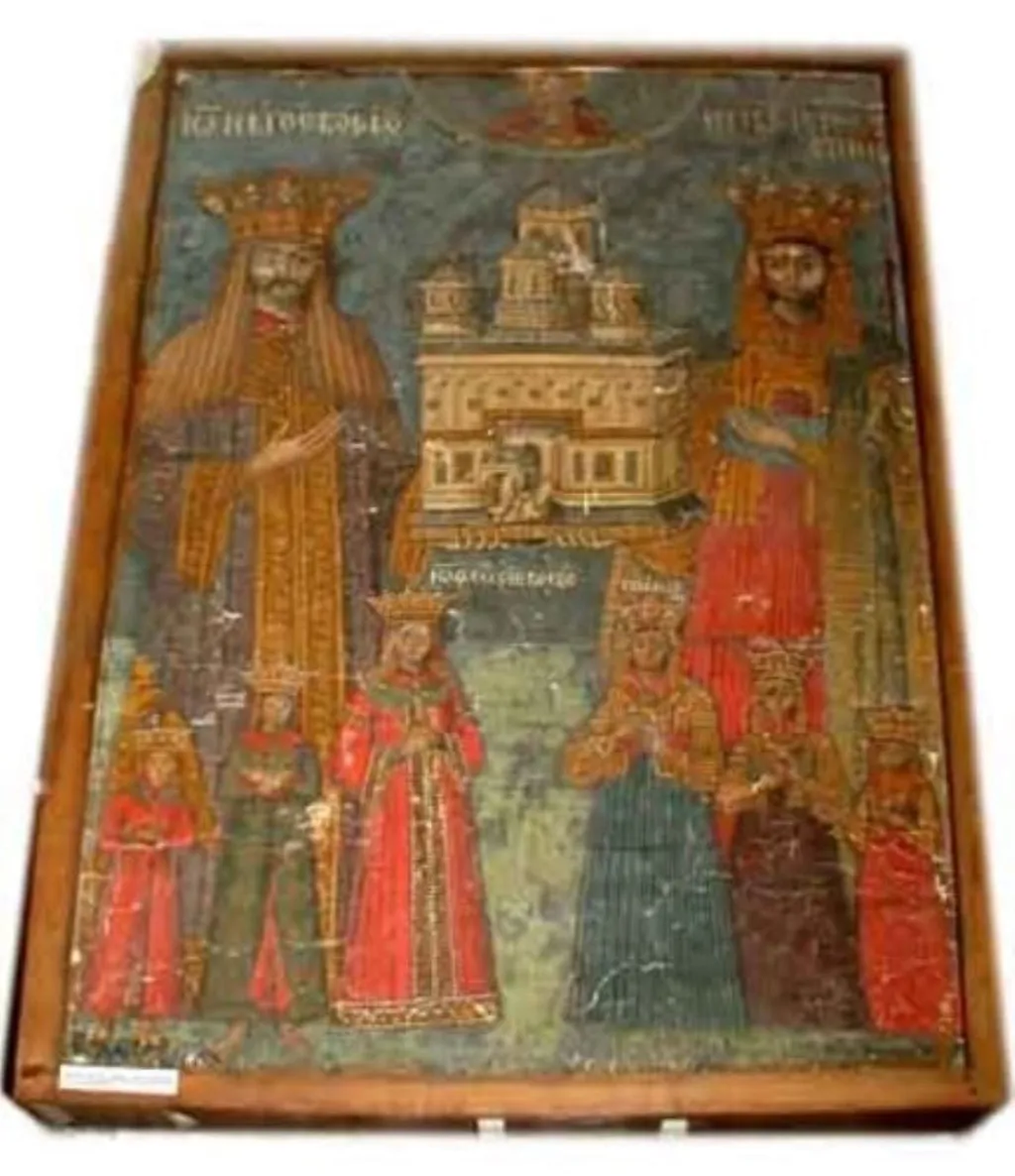
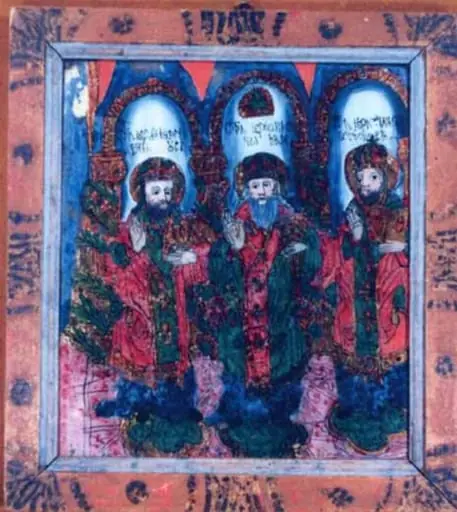
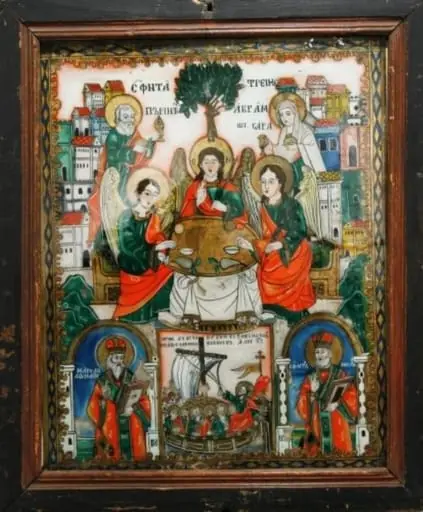
Tablou votiv al familiei lui Neagoe Basarab is an unspecified painting by Unknown. It dates from 1550 and is held in the collection of the National Museum of Romanian History. This votive painting, attributed to the family of Neagoe Basarab, presents a formal composition centered on a religious structure.
About this work
Overview
It is preserved at the Museum of Ethnography, where it serves as a visual record of Wallachian elite culture in the early 16th century.
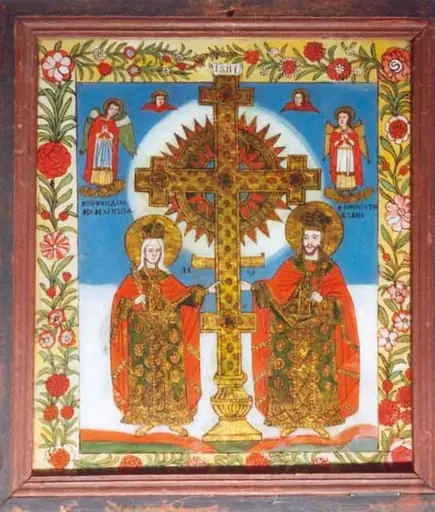
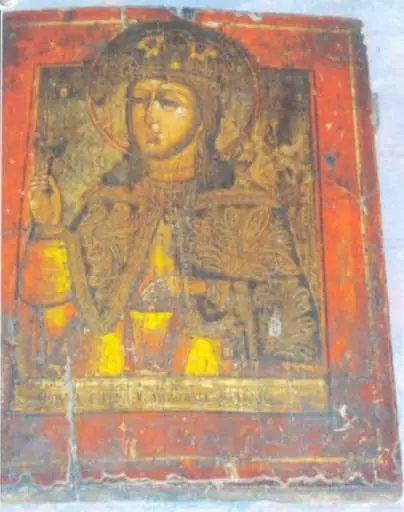
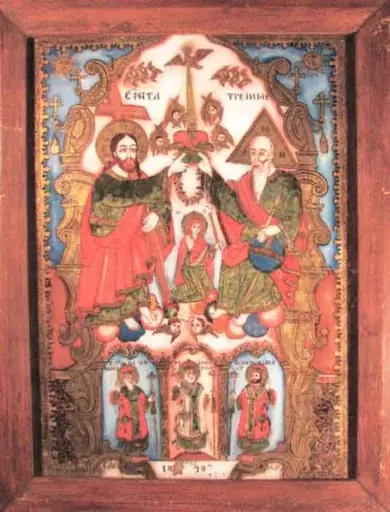
This votive painting, attributed to the family of Neagoe Basarab, presents a formal composition centered on a religious structure. The figures, dressed in regal attire and crowned, are arranged symmetrically around the building, emphasizing their elevated status. The work functions as a devotional offering, linking familial identity with spiritual patronage.
It is preserved at the Museum of Ethnography, where it serves as a visual record of Wallachian elite culture in the early 16th century.
Subject & Meaning
The painting portrays Neagoe Basarab and his wife, flanked by their children, all wearing crowns to signify divine favor and dynastic legitimacy. The central church or monastery represents their role as religious benefactors. The inclusion of offspring underscores continuity of rule and piety across generations.
This imagery merges secular authority with sacred duty, reinforcing the family’s claim to both political and spiritual leadership in their realm.
Technique & Style
Executed in tempera on wood, the painting employs flat, stylized forms typical of late Byzantine-influenced iconography. Figures are arranged hierarchically, with size and placement indicating importance rather than naturalistic space. Rich colors and gold accents highlight the royal figures and sacred architecture.
Details in clothing and crowns are rendered with precision, reflecting craftsmanship aligned with monastic artistic traditions of the period.
History & Provenance
Created in the early 1500s during Neagoe Basarab’s reign as Prince of Wallachia, the painting likely originated in a monastery he founded or supported. It was probably commissioned as a votive offering to express gratitude for divine protection or to secure spiritual intercession. The work remained within ecclesiastical or noble circles before entering the collection of the Museum of Ethnography, where it has been preserved as a cultural artifact.
Context
In early 16th-century Wallachia, rulers often used religious art to assert legitimacy and piety. Neagoe Basarab’s reign coincided with efforts to strengthen Orthodox identity amid Ottoman pressures. Votive paintings like this one were common among elites, serving as both personal devotion and public declarations of status.
The inclusion of the entire family reflects a broader trend of dynastic self-representation in Eastern European Christian courts.
Legacy
The painting endures as a rare visual document of Wallachian princely family life and religious patronage. It informs scholarly understanding of how rulers visually encoded power through sacred imagery. While not widely known outside regional art history, it remains a key example of how political authority and spiritual devotion were intertwined in medieval Romanian principalities.
Artist & collection