Artwork
藤原鎌足像|Fujiwara no Kamatari as a Shinto Deity
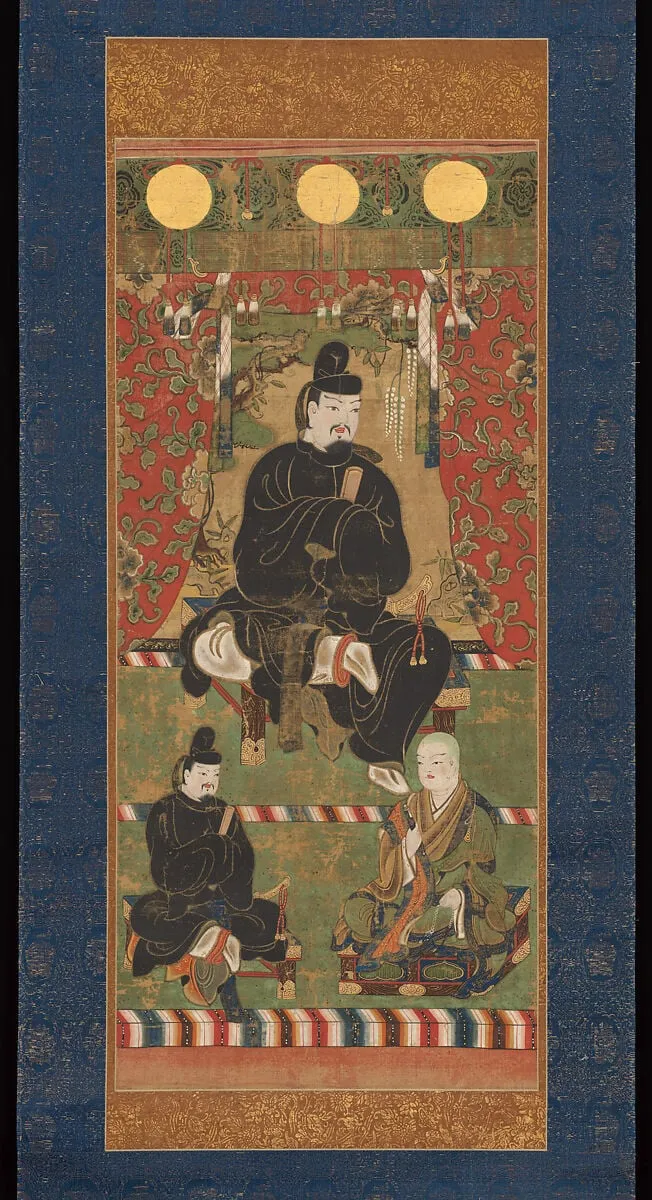
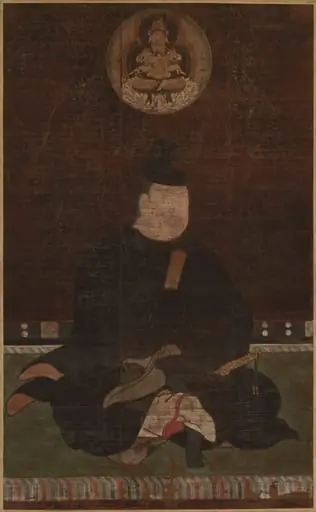
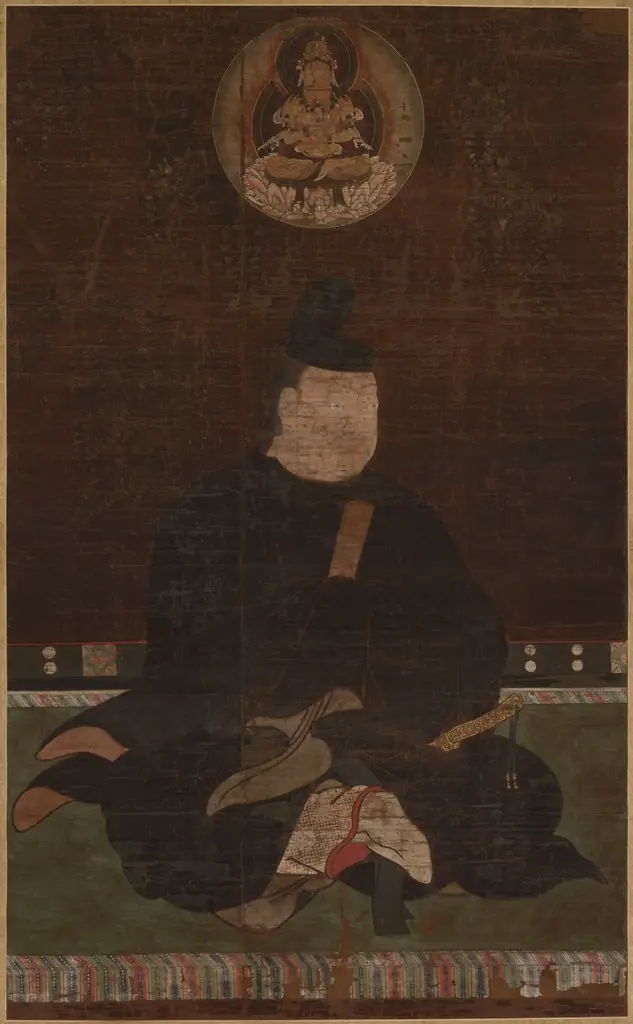
藤原鎌足像|Fujiwara no Kamatari as a Shinto Deity is a paint painting. It dates from 1350 and is held in the collection of the Metropolitan Museum of Art. This hanging scroll, titled "Fujiwara no Kamatari as a Shinto Deity," presents the influential 7th-century noble in a divine form.
About this work
Technique & Style
Stylistically, the piece depicts a male figure identified as a Shinto deity, adhering to the formal conventions of Japanese religious painting from the period.
Created in 1371, the Fujiwara no Kamatari as a Shinto Deity is executed as a hanging scroll utilizing color pigments applied to a silk support. The work is attributed to an anonymous Japanese painter and falls within the religious art genre. Stylistically, the piece depicts a male figure identified as a Shinto deity, adhering to the formal conventions of Japanese religious painting from the period.
The medium of color on silk is characteristic of the era's devotional artworks intended for display. The artwork is currently held in the collection of the Metropolitan Museum of Art, where it is classified as a painting. No specific details regarding the painting's current physical condition or handling history are provided in the available records.
History & Provenance
Created in 1371 in Japan, this hanging scroll painted in color on silk depicts Fujiwara no Kamatari as a Shinto deity. The work was executed by an anonymous artist, with no specific individual credited for its commission or production. While the exact circumstances of its original creation and early ownership history remain unrecorded in the available documentation, the painting eventually entered the collection of the Metropolitan Museum of Art.
It is currently housed within this institution, where it is classified as a religious painting. The work's inception date is firmly established as January 1, 1371, marking its origin in the late 14th century.
The work titled 藤原鎌足像|Fujiwara no Kamatari as a Shinto Deity, dated 1371, is a hanging scroll painted in color on silk and classified as a religious painting. It is housed in the collection of the Metropolitan Museum of Art in New York, where it is listed as part of the museum's holdings of Japanese religious art. The museum's catalog entry records the work's inception in 1371 and its creation in Japan, but does not publish an explicit accession number.
Exhibition records cited in the available documentation do not mention any prior displays, indicating that the painting has not been featured in documented exhibitions up to the present.
Context
The hanging scroll titled Fujiwara no Kamatari as a Shinto Deity, dated 1371 and executed in color on silk, exemplifies early Japanese religious painting. Classified as a religious genre work, it portrays a male Shinto deity, reflecting the syncretic artistic conventions of 14th‑century Japan. The piece is attributed to an anonymous painter and is held in the Metropolitan Museum of Art, indicating its significance within the museum's collection of Asian artworks.
Its composition and iconography illustrate the devotional practices and stylistic norms of the period, while the anonymous authorship underscores the collective workshop traditions of 14th‑century Japanese art.
Overview
This hanging scroll, titled "Fujiwara no Kamatari as a Shinto Deity," presents the influential 7th-century noble in a divine form. Executed with color on silk, the painting portrays Kamatari standing on a cloud, adorned in red robes and a tall black hat, holding a staff. The artwork merges historical representation with religious veneration, depicting him as a Shinto god.
Subject & Meaning
The central figure is Fujiwara no Kamatari, a prominent statesman from 7th-century Japan. Although a historical figure, this artwork elevates him to the status of a Shinto deity. This portrayal reflects a practice of deifying significant historical figures, integrating their legacy into the spiritual landscape and emphasizing their enduring influence beyond their mortal lives.
Artist & collection

 Fujiwara no Muchimaro
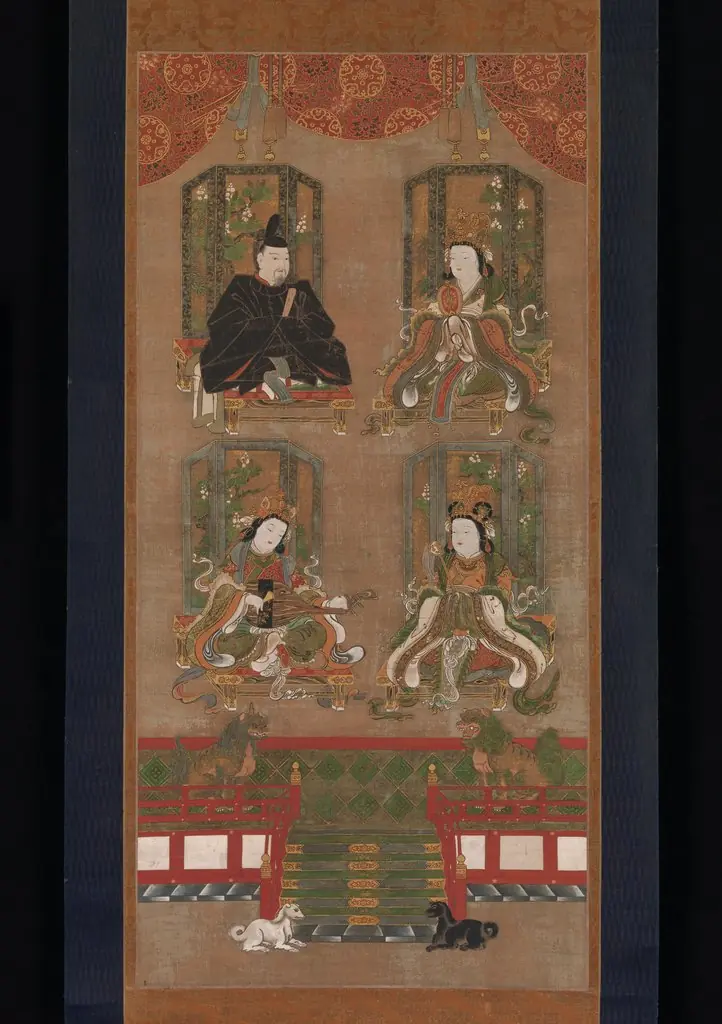 The Four Deities of Mount Kōya
 Guru Chökyi Wangchuk (1212-1270)
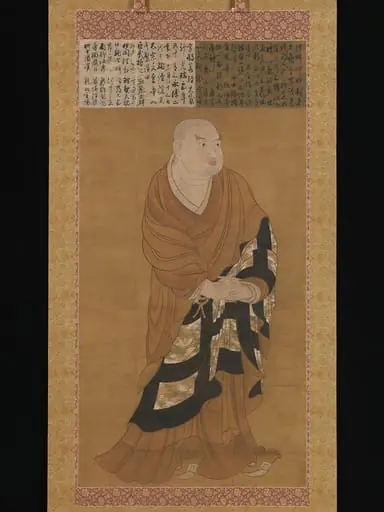 慈恩大師像|Portrait of Jion Daishi (Guiji)
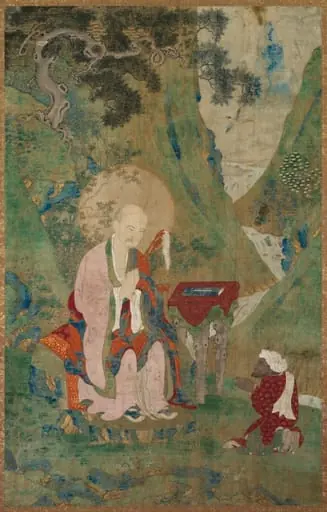 Lohan (Immortal)
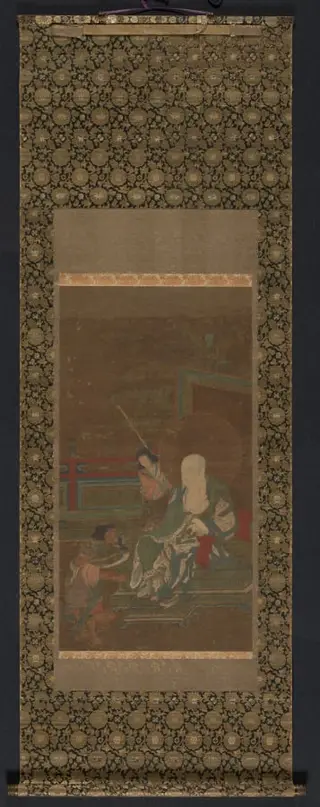 Seated Arhat with Two Attendants
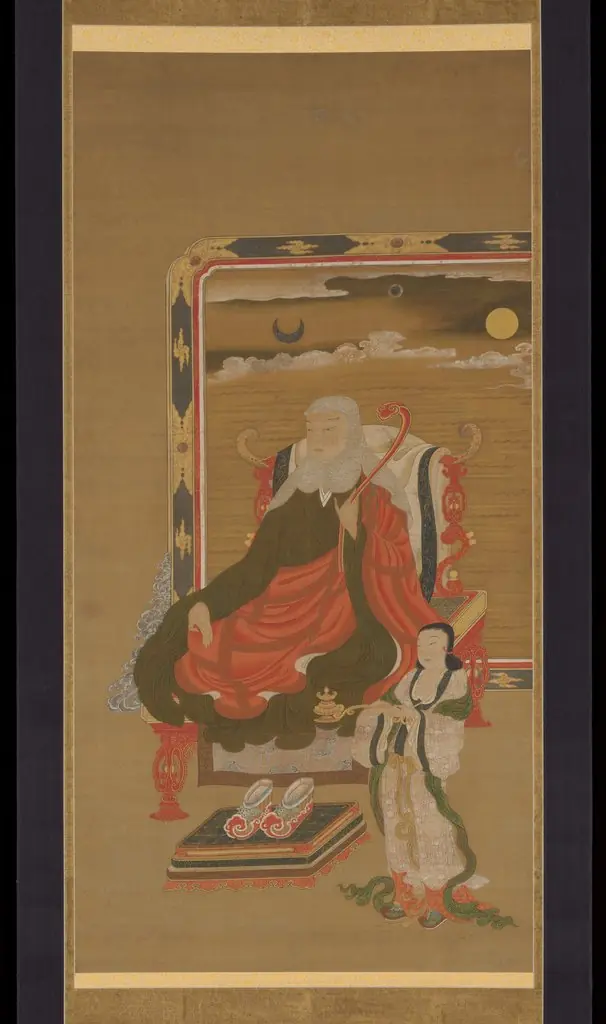 Portrait of Dengyō Daishi (Saichō)
 Untitled
 Daoist Official of Heaven with Seven Stars and Jade Maidens
 Untitled
 Buddha Amitābha with Two Attending Bodhisattvas
- Fujiwara no Muchimaro