Artwork
鑑真像 (Ganjin zō)|Portrait of Jianzhen
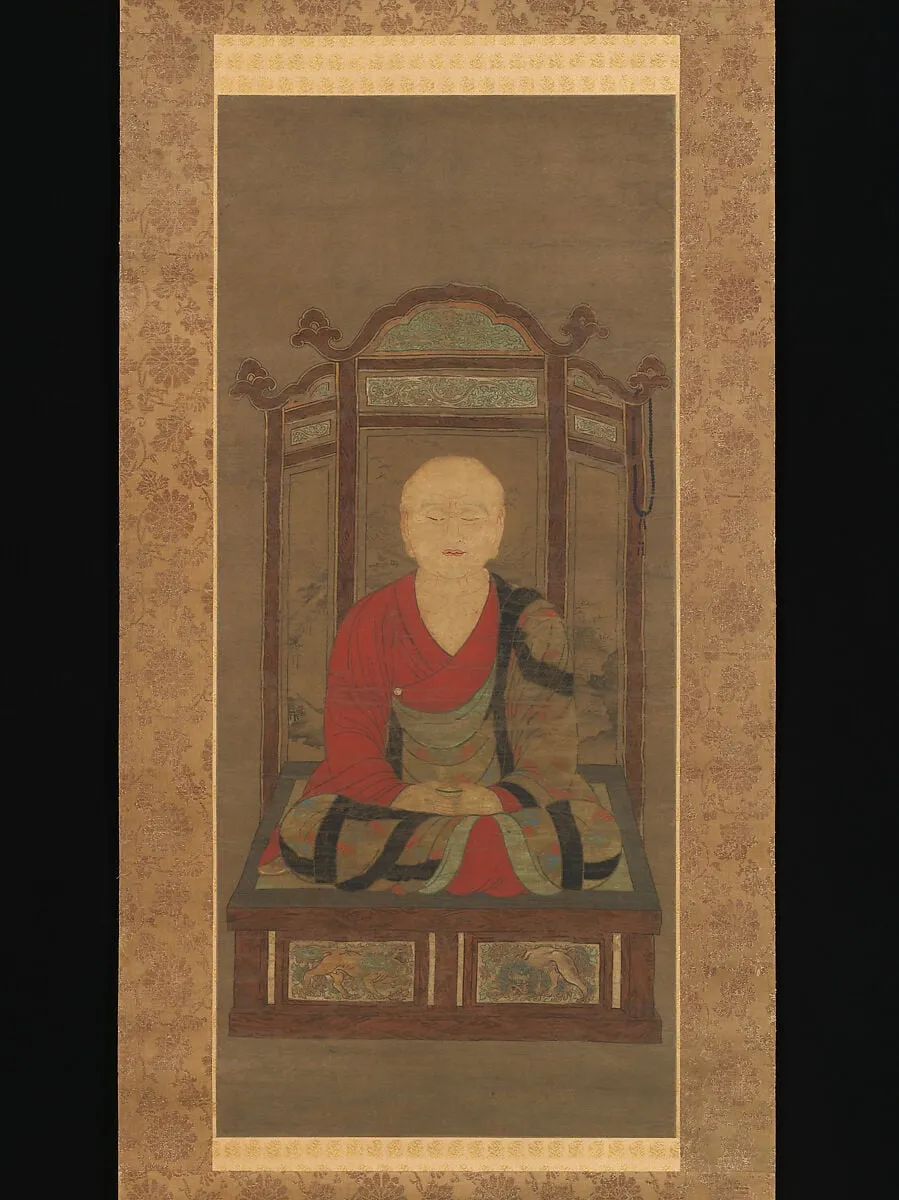
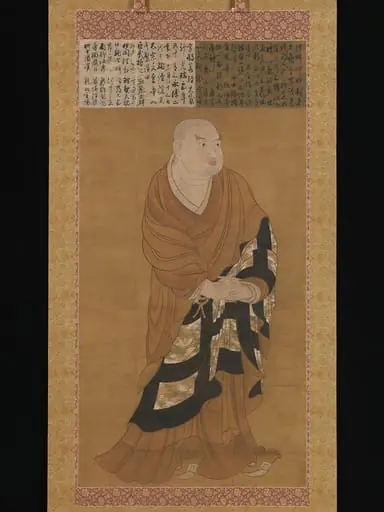
鑑真像 (Ganjin zō)|Portrait of Jianzhen is an ink painting. It dates from 1449 and is held in the collection of the Metropolitan Museum of Art. This hanging scroll, titled Portrait of Jianzhen (Ganjin zō), is an ink and color painting on silk.
- Accession no.
- 29.100.518
- Credit line
- H. O. Havemeyer Collection, Bequest of Mrs. H. O. Havemeyer, 1929
About this work
The monk is Jianzhen, a Chinese priest who traveled to Japan in the 8th century to share Buddhist teachings.
This is a portrait of a monk in black robes, sitting cross-legged on a woven mat. His hands rest in his lap, and his eyes are half-closed, as if lost in thought.
The monk is Jianzhen, a Chinese priest who traveled to Japan in the 8th century to share Buddhist teachings. This painting was made centuries later, showing how his legacy lived on. The artist used soft brushstrokes to give his face a calm, almost glowing look.
If you like portraits of historical figures, look up Japan in the app to find more.
Technique & Style
The Portrait of Jianzhen is executed as a hanging scroll in ink and color on silk, measuring 88.9 by 38.7 centimeters. Created in 1449 in Japan by an unknown painter, the work belongs to the portrait genre. The silk support and use of ink and color pigments reflect standard materials for Japanese portraiture of the period.
The formal qualities of the work center on its function as a depiction of a man, rendered in the conventional portrait format of a vertical hanging scroll, a format suited for ceremonial display and veneration. The relatively modest dimensions suggest an intimate scale appropriate for personal devotion or installation within a temple setting.
History & Provenance
The Portrait of Jianzhen (Ganjin zō) is a hanging scroll executed in ink and color on silk, dated to 1449. Created in Japan by an anonymous artist, the work is classified as a portrait genre painting. It entered the collection of the Metropolitan Museum of Art, where it is currently held.
The piece measures 88.9 cm in height and 38.7 cm in width. Specific details regarding the original commission, the identity of the patron, or the precise chain of ownership prior to its acquisition by the museum are not provided in the available records. The work remains attributed to an unknown painter, reflecting the common practice of the period where individual artistic signatures were often omitted from such religious or commemorative portraits.
Portrait of Jianzhen (鑑真像) is housed in the collection of the Metropolitan Museum of Art in New York. The work, an anonymous 15th‑century hanging scroll painted in ink and color on silk, is recorded in the museum’s catalogue with the date 1449. No specific accession or inventory number is listed in the available documentation.
The painting has not been noted in any published exhibition catalogues or major loan records within the sources consulted.
Overview
This hanging scroll, titled Portrait of Jianzhen (Ganjin zō), is an ink and color painting on silk. It depicts the Chinese Buddhist priest Jianzhen, seated cross-legged on a woven mat. The monk is shown in black robes, with his hands resting in his lap and his eyes gently closed, conveying a sense of deep contemplation. This work serves as a commemorative image of a significant historical figure.
Subject & Meaning
The subject of this painting is Jianzhen, a Chinese Buddhist monk who undertook a perilous journey to Japan in the 8th century to disseminate Buddhist teachings. His mission was instrumental in establishing the Ritsu school of Buddhism in Japan. This portrait, created many centuries after his lifetime, underscores his enduring influence and the reverence in which he was held, illustrating the lasting impact of his religious contributions.
Legacy
Created centuries after Jianzhen's death, this portrait attests to the lasting impact of his life and work. The painting itself functions as a testament to his enduring legacy, ensuring that his contributions to Japanese Buddhism remained recognized and celebrated across generations. It serves as a visual reminder of his historical significance and the reverence he commanded long after his passing.
Artist & collection

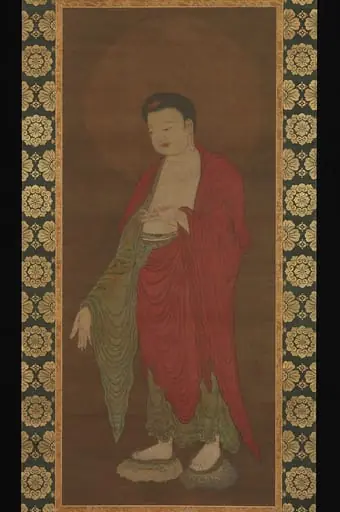 南宋 佚名 阿彌陀佛圖 軸|Buddha Amitabha Descending from his Pure Land
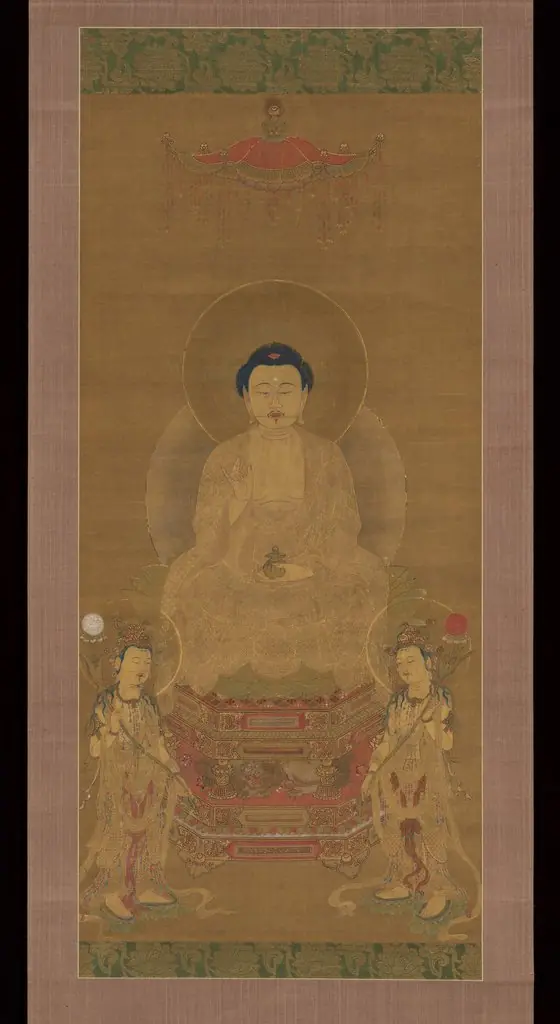 Triad of the Medicine Master Buddha Yakushi (Bhaisajya Buddha)
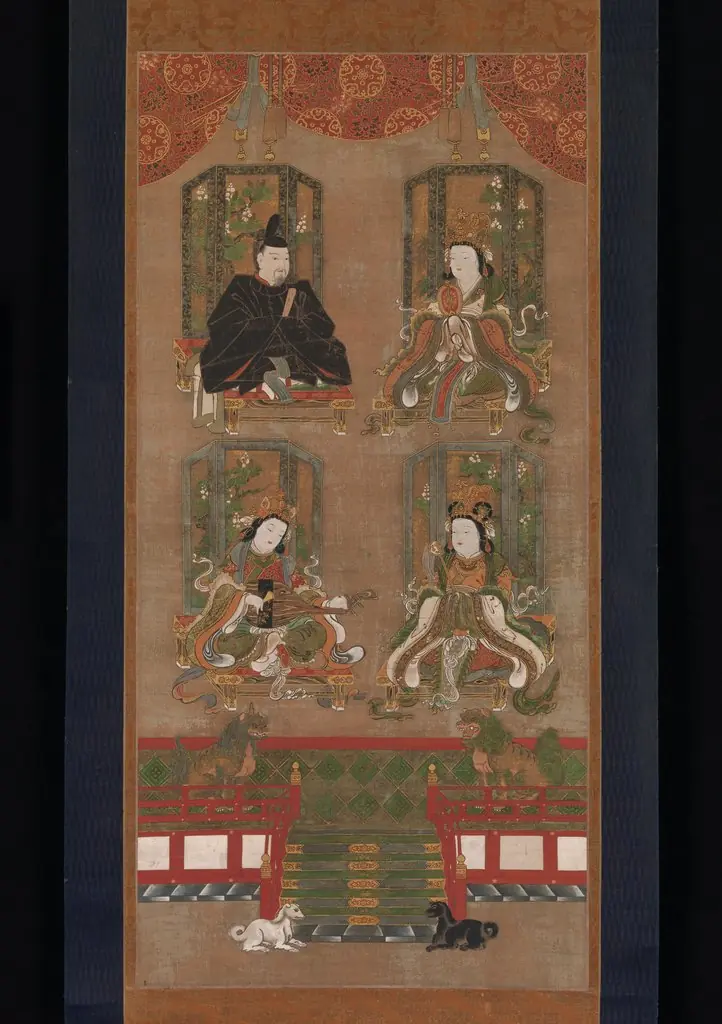 The Four Deities of Mount Kōya
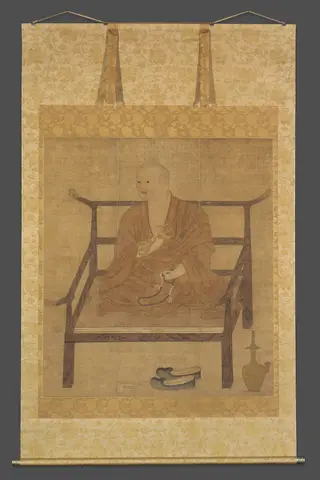 Portrait of Kobo Daishi (Kukai)
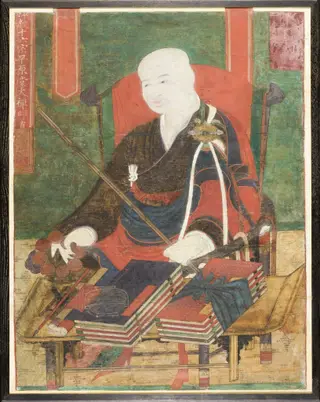 Portrait of Priest Pyeongwondang
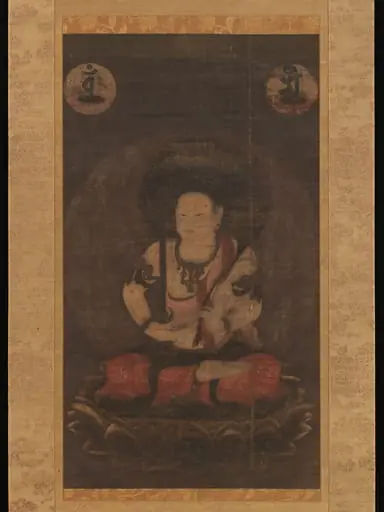 五髻文殊菩薩像|The Bodhisattva Monju (Manjushri) with Five Topknots
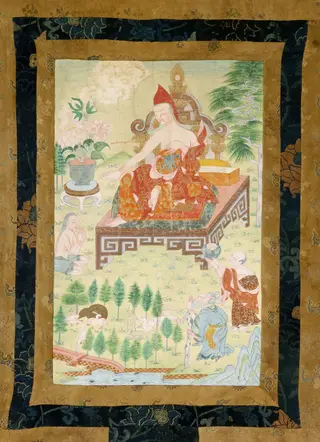 Guru Chökyi Wangchuk (1212-1270)
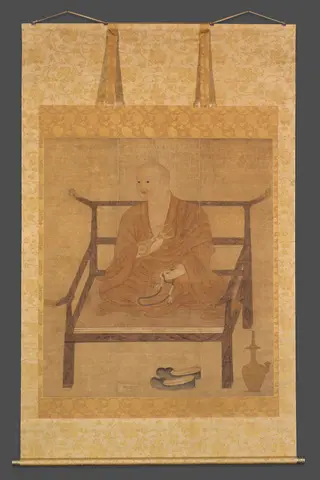 Portrait of Kobo Daishi (Kukai)
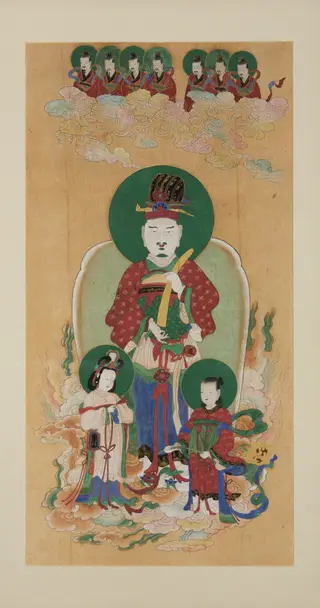 Daoist Official of Heaven with Seven Stars and Jade Maidens
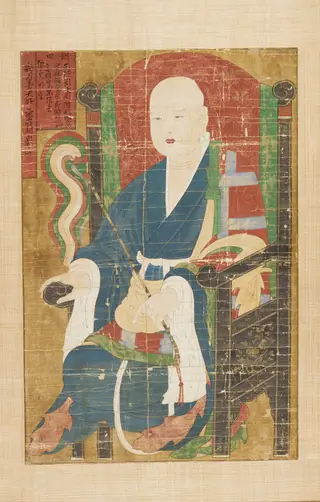 Portrait of Priest Sangwoldang Saebong