Artwork
十三仏図大津絵|Ōtsu-e of Thirteen Buddhist Deities
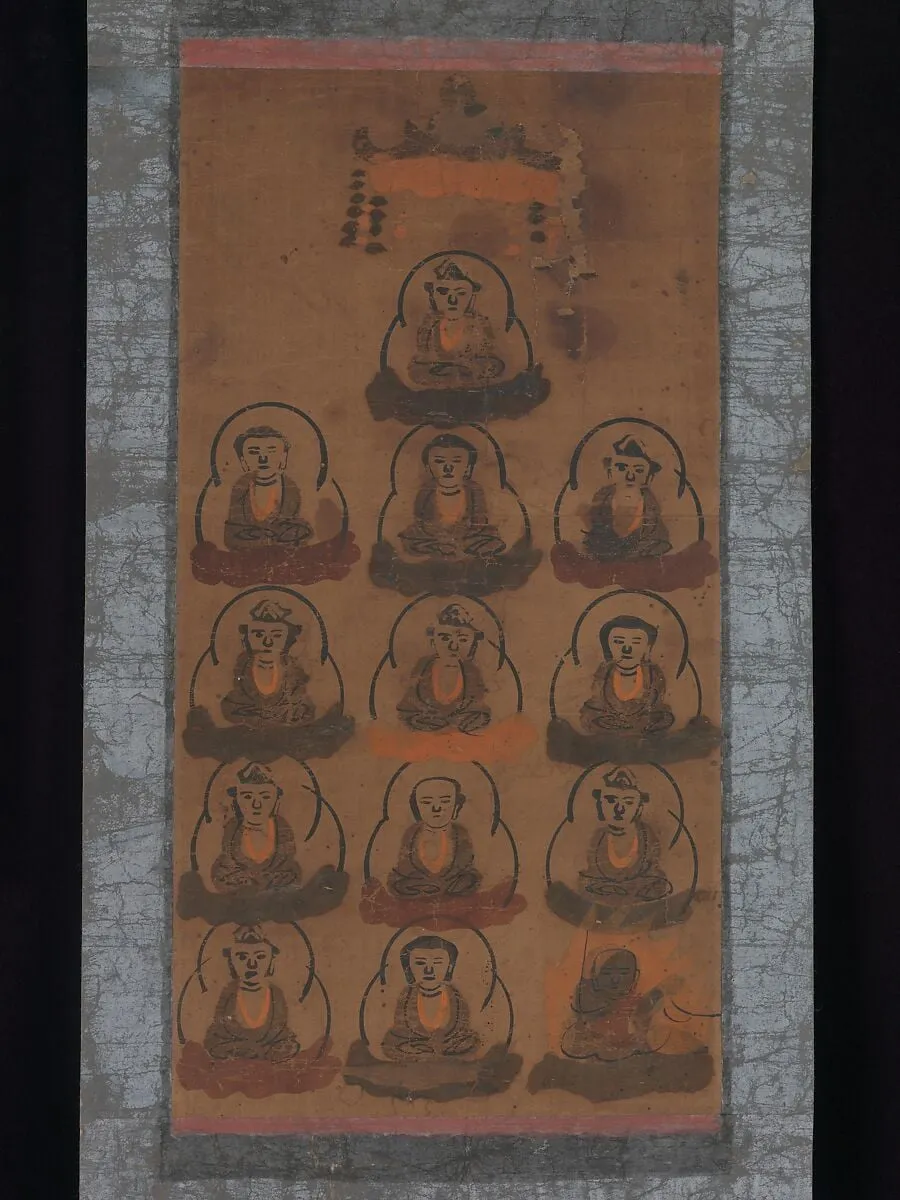
十三仏図大津絵|Ōtsu-e of Thirteen Buddhist Deities is an ink painting. It dates from 1657 and is held in the collection of the Metropolitan Museum of Art. This Ōtsu-e, titled "Thirteen Buddhist Deities," is a hanging scroll created using ink, color, and woodblock print on paper.
About this work
Technique & Style
The integration of printed outlines with colored ink layers demonstrates a specific method of production that balances efficiency with religious iconography.
The Ōtsu-e of Thirteen Buddhist Deities, created in 1657 by an unknown Japanese artist, is executed as a hanging scroll. The work combines ink and color applied over a woodblock print on a paper support. This hybrid technique integrates the mass-produced foundation of woodblock printing with the hand-applied refinement of painting, a characteristic approach for religious folk art of the period.
The medium of paper on a scroll format facilitates its function as a devotional object within Buddhist practice. Stylistically, the piece adheres to the Ōtsu-e tradition, depicting Buddhist deities with a direct, accessible visual language suited for a broad audience. The integration of printed outlines with colored ink layers demonstrates a specific method of production that balances efficiency with religious iconography.
History & Provenance
Created in 1657 in Japan, this hanging scroll depicting thirteen Buddhist deities is attributed to an anonymous artist. The work, executed in ink and color on paper with woodblock print elements, currently resides in the collection of the Metropolitan Museum of Art. While the specific circumstances of its original commission and the identity of the creator remain unknown, the piece is classified as a religious painting.
The museum's records establish its inception date as January 1, 1657, marking it as a mid-17th-century example of Ōtsu-e. No further details regarding its ownership history prior to entering the Metropolitan Museum's holdings are provided in the available documentation.
The work 十三仏図大津絵|Ōtsu-e of Thirteen Buddhist Deities, dated 1657, is housed in the collection of the Metropolitan Museum of Art in New York. The painting, an anonymous Japanese hanging scroll executed in ink, color, and woodblock print on paper, belongs to the religious genre of Buddhist deity imagery. Its precise accession or inventory number is not recorded in the available documentation. The sources indicate no further exhibition history for this piece.
Overview
This Ōtsu-e, titled "Thirteen Buddhist Deities," is a hanging scroll created using ink, color, and woodblock print on paper. It depicts thirteen figures arranged in a line, each adorned in vibrant robes and holding a distinct attribute such as a scroll, sword, or jewel. These works were a common form of popular art in Japan.
Subject & Meaning
The artwork features thirteen Buddhist deities, a common subject in Japanese religious art. These prints were not merely decorative; they served a practical function for their original owners. Travelers purchased them as protective talismans, believing they offered good fortune and could ward off malevolent influences during their journeys.
Context
These prints originated in Ōtsu, a town situated near Kyoto, where they were readily available at roadside stalls. Positioned along major travel routes, Ōtsu became a hub for the sale of these popular artworks. Their accessibility made them a common purchase for travelers seeking mementos or spiritual protection on their journeys.
Artist & collection

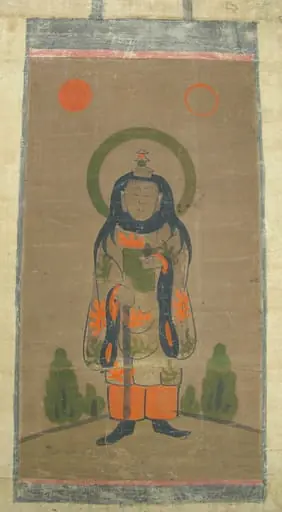
- 雨宝童子図大津絵|Ōtsu-e of Uhō Dōji
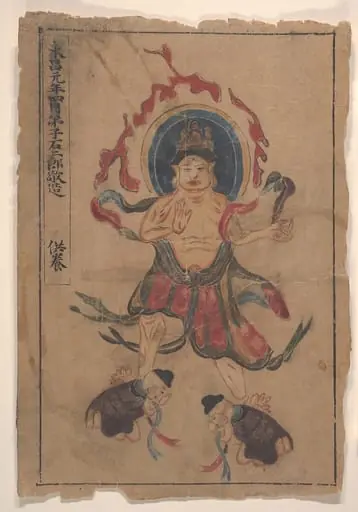 唐(?) 佚名 佛畫八幅 散頁|Eight Buddhist Paintings
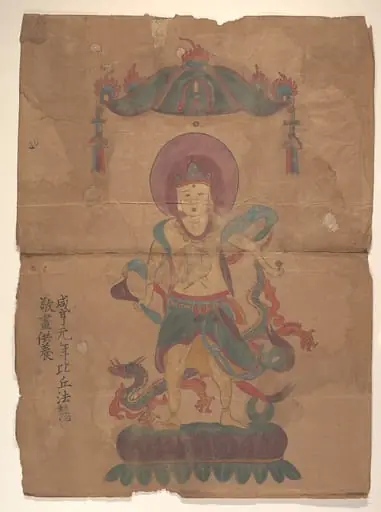 唐 法慧等 菩薩像二幅|Two Buddhist Paintings
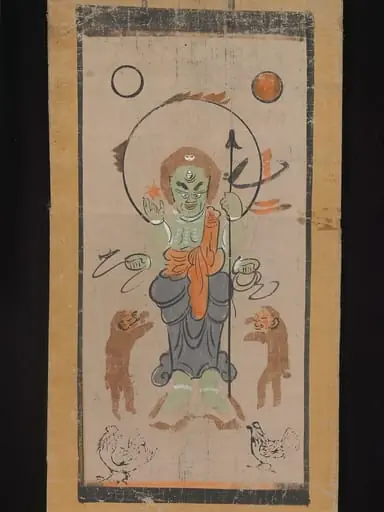 金剛夜叉図大津絵|Ōtsu-e of Shōmen Kongōyasha (Vajrayaksha)
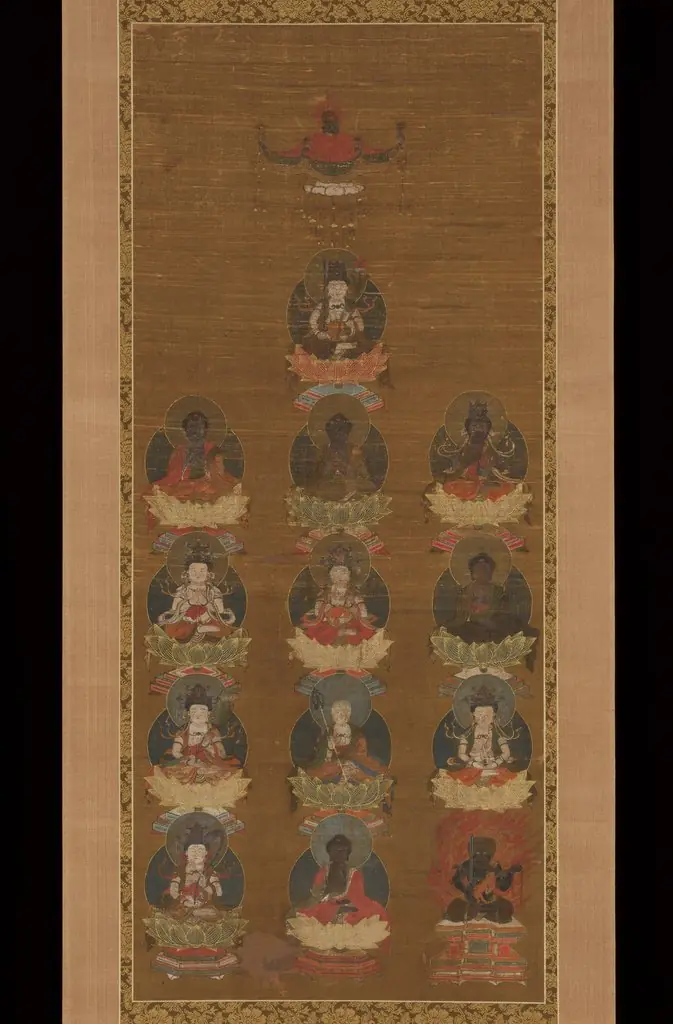 Mandala of the Thirteen Buddhas (Jūsan butsu mandara)
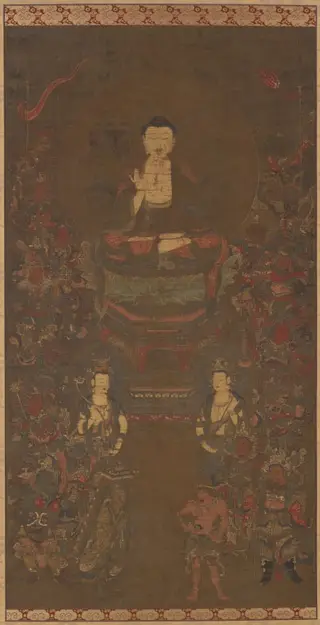 Shakyamuni with the Sixteen Benevolent Deities
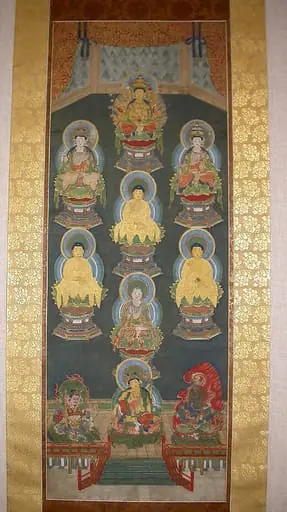 山王本地仏曼荼羅|Mandala of the Sannō Shrine Deities
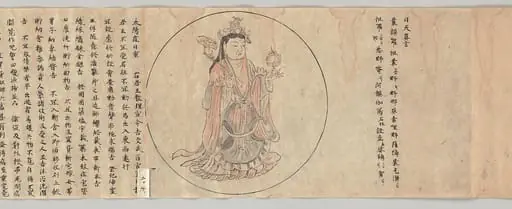 宗観筆 九曜秘暦図像 |Iconographic Drawings of the Secrets of the Nine Luminaries
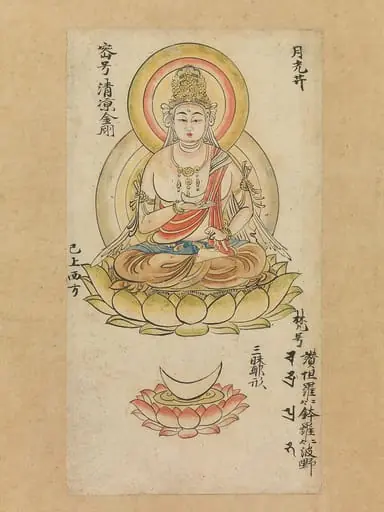 伝託磨為遠筆 月光菩薩像 「金胎仏画帖」断簡|Gakkō Bosatsu, from “Album of Buddhist Deities from the Diamond World and Womb World Mandalas” (“Kontai butsugajō”)