Artwork
The Goddess Ganga
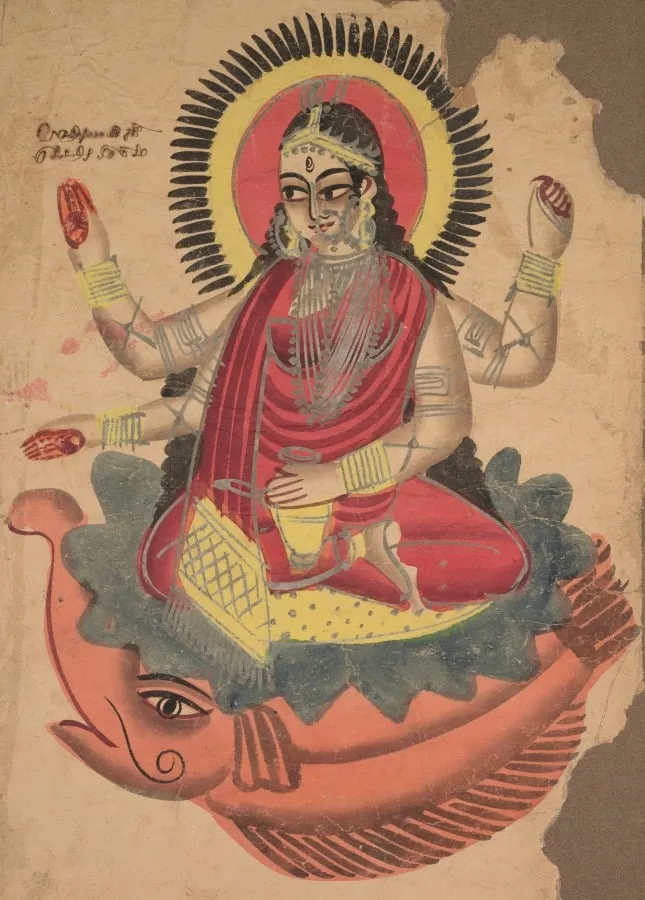
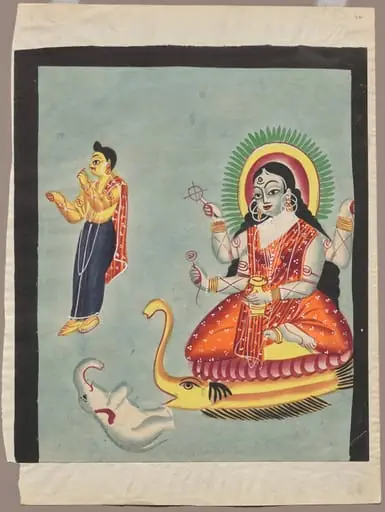
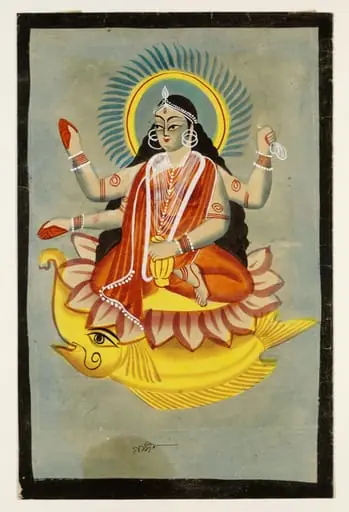
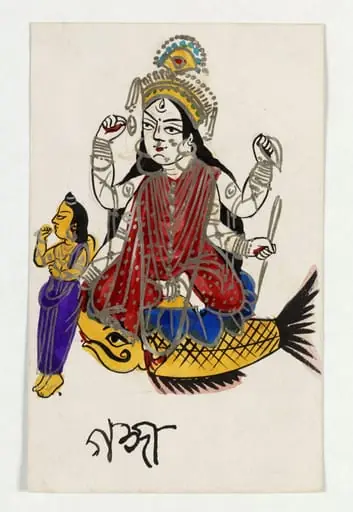
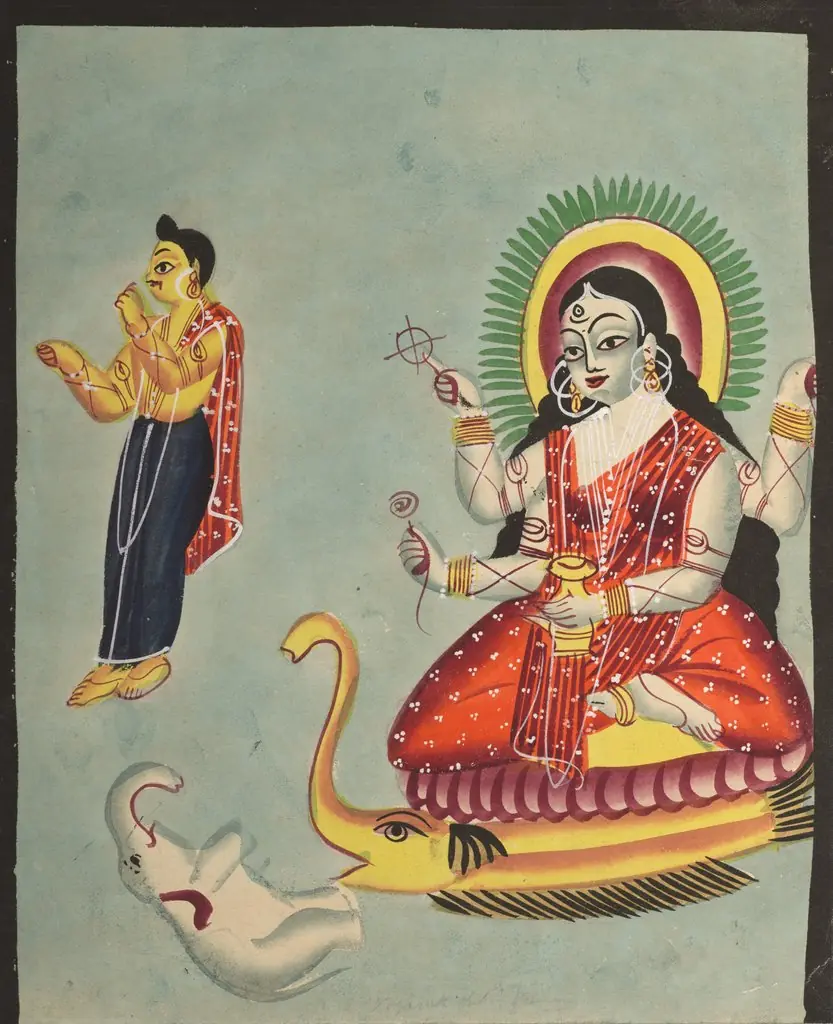
The Goddess Ganga is an unspecified painting by the Bengal School artist Unknown. It dates from 1890 and is held in the collection of the Cleveland Museum of Art. The work depicts a four‑armed female deity seated upon a red lotus that appears to float on water, with a small fish visible beneath.
- Accession no.
- 2003.158
About this work
Overview
The work depicts a four‑armed female deity seated upon a red lotus that appears to float on water, with a small fish visible beneath. She wears a vivid red garment trimmed in gold and a yellow, sun‑shaped headdress. In her hands she holds a red lotus, a yellow pot and other symbolic objects, while her face is rendered with minimal line work and her jewelry is sharply detailed.
Subject & Meaning
The figure represents the Hindu goddess Ganga, the personification of the sacred river. The lotus motifs and the aquatic setting emphasize her association with water, purity and fertility. The red lotus she presents is a common emblem of divine beauty, and the pot may allude to the river’s life‑giving nourishment.
Technique & Style
Executed in the Kalighat school’s characteristic flatness, the painting relies on bold, saturated reds, yellows and blacks against a sparse background that hints at waves or clouds. Brushwork is deliberately uneven, giving the edges a slightly ragged quality. The figure’s facial features are simplified to a few lines, while the jewelry is rendered with crisp, ornamental precision.
Context
Kalighat painting emerged in 19th‑century Bengal as a popular, commercial art form, blending folk traditions with influences from European printmaking. This piece follows that lineage, employing the genre’s narrative clarity and vivid palette while depicting a classical Hindu deity, thereby bridging devotional imagery with the accessible visual language of the Kalighat market.
Legacy
Works such as this illustrate how Kalighat artists adapted religious iconography for a broad audience, contributing to the visual vocabulary of modern Indian art. The painting’s straightforward composition and striking colors continue to inform contemporary reinterpretations of mythological subjects in both fine art and popular media.
Artist & collection