Artwork
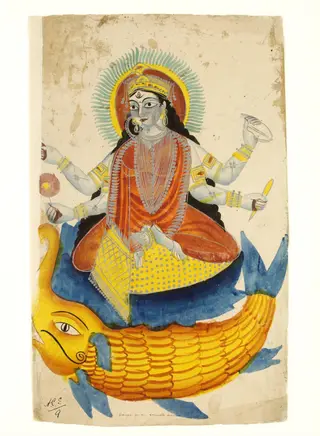
The Goddess Ganga, from a Kalighat album
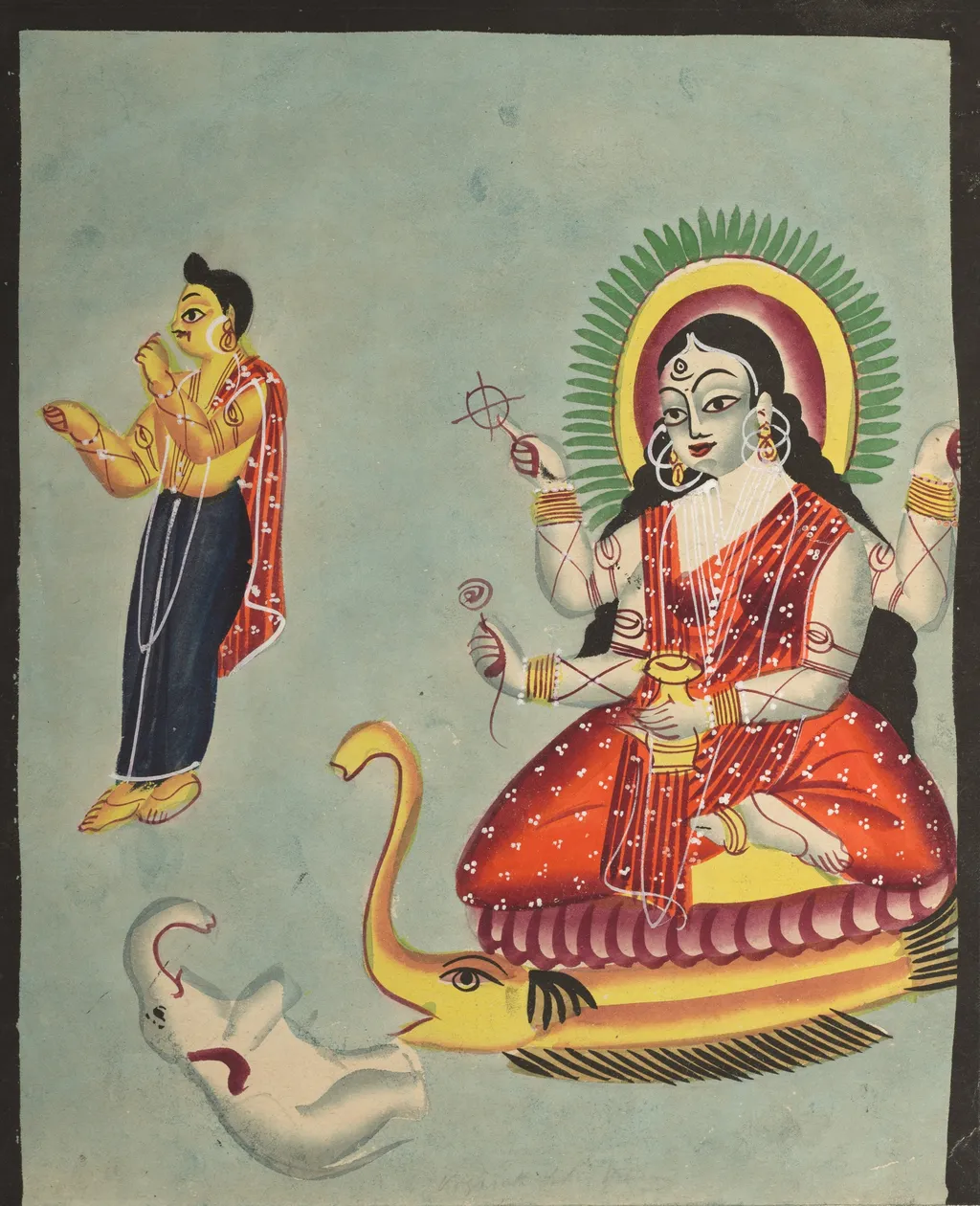
The Goddess Ganga, from a Kalighat album is an unspecified painting. It dates from 1896 and is held in the collection of the Cleveland Museum of Art. The work, titled The Goddess Ganga, is a painted sheet from a Kalighat album.
About this work
History & Provenance
The painting The Goddess Ganga, from a Kalighat album was created in Kolkata in 1890, attributed to an unknown artist active in the Kalighat tradition.
The painting The Goddess Ganga, from a Kalighat album was created in Kolkata in 1890, attributed to an unknown artist active in the Kalighat tradition. This dating aligns with the broader production period of Kalighat paintings, which flourished in the late 19th century.
The work entered the collection of the Cleveland Museum of Art, where it is currently housed under accession number 2003.127. No specific commissioning details or earlier ownership history are documented for this piece.
The painting The Goddess Ganga, from a Kalighat album, is held by the Cleveland Museum of Art in Cleveland, Ohio. It entered the collection with the accession number 2003.127 and was made in Kolkata, India, dating to 1890.
The work has been exhibited as part of the museum's Indian miniature paintings collection.
Legacy
The depiction of Goddess Ganga in Kalighat painting traditions contributed to the visual vocabulary of Bengal's popular religious art, influencing later folk renditions and print culture in the early 20th century. Its presence in a major institutional collection highlighted the historical significance of Bengali itinerant artist communities, inspiring scholarly attention to everyday devotional imagery as a form of cultural expression.
Overview
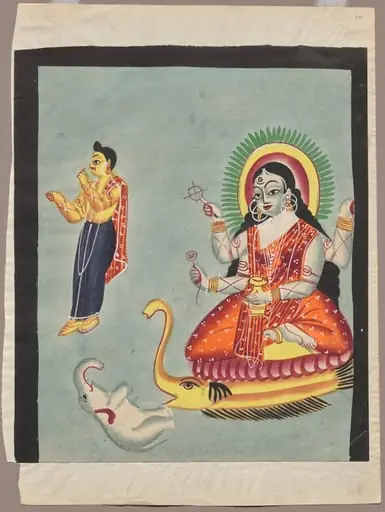
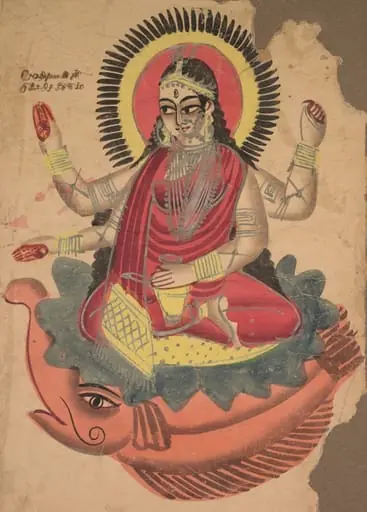
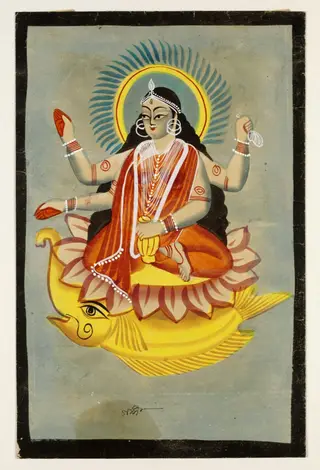
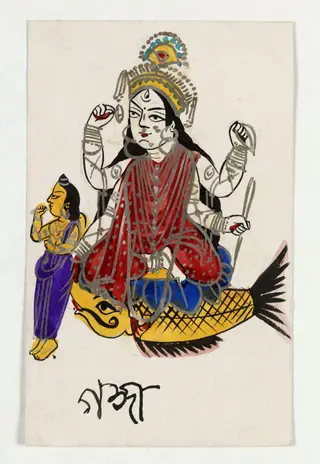
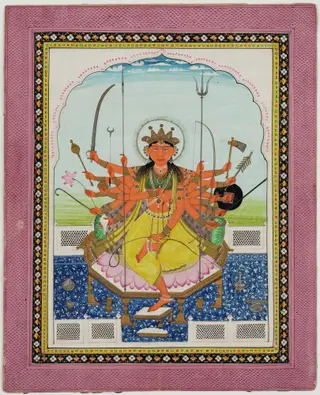
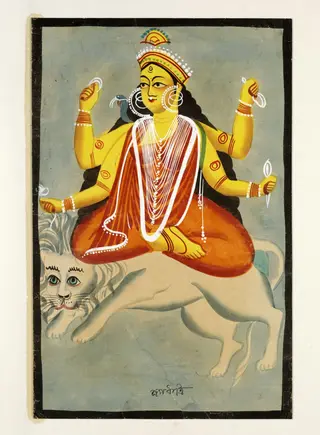
The work, titled The Goddess Ganga, is a painted sheet from a Kalighat album. It depicts a seated deity dressed in vivid red and gold garments, surrounded by a golden aureole edged with green foliage. The composition includes a swan‑like bird emerging from water below, bearing an infant, and a smaller attendant figure on the left holding a lotus.
Subject & Meaning
The central figure represents the river goddess Ganga, whose multiple arms convey a range of divine powers. The swan, traditionally associated with purity, underscores the goddess’s role as a purifier, while the infant it carries alludes to the life‑giving aspect of the river. The attendant with a lotus reinforces themes of spiritual rebirth and devotion.
Technique & Style
Executed in the characteristic Kalighat style, the painting employs bold outlines and flat areas of bright color, typical of the 19th‑century Bengal folk tradition. The use of gold leaf for the halo and the contrast of red, blue, and gold pigments create a striking visual hierarchy, while the simplified forms reflect the commercial, print‑like aesthetic of Kalighat albums.
Context
Kalighat paintings emerged as a response to the influx of European prints and the growing market for affordable religious imagery in colonial Bengal. Artists blended traditional iconography with contemporary visual vocabularies, creating works that were accessible to a broad audience while preserving devotional narratives.
Artist & collection