Artwork
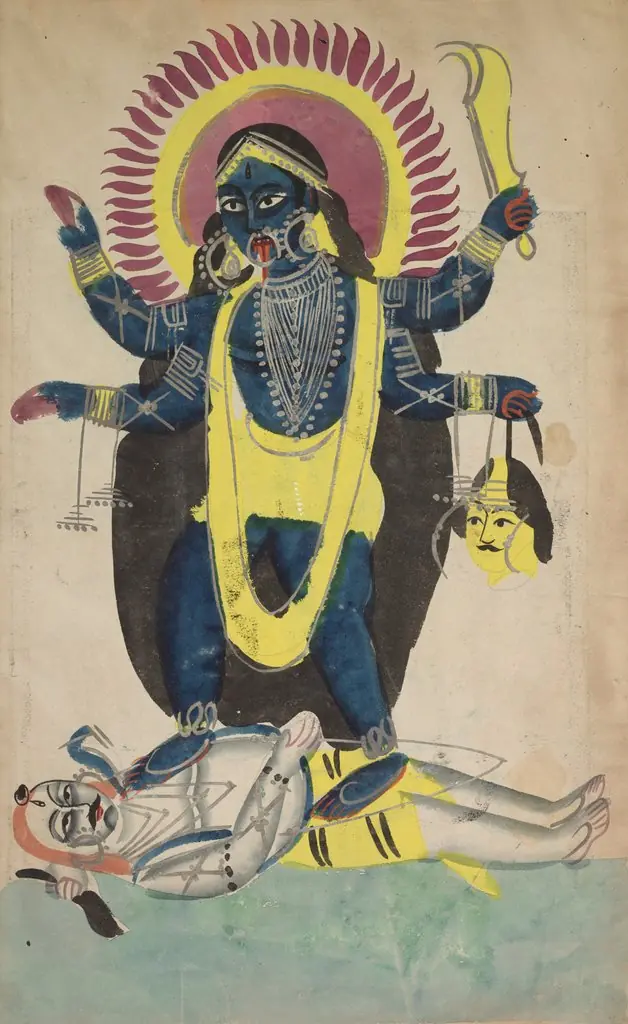
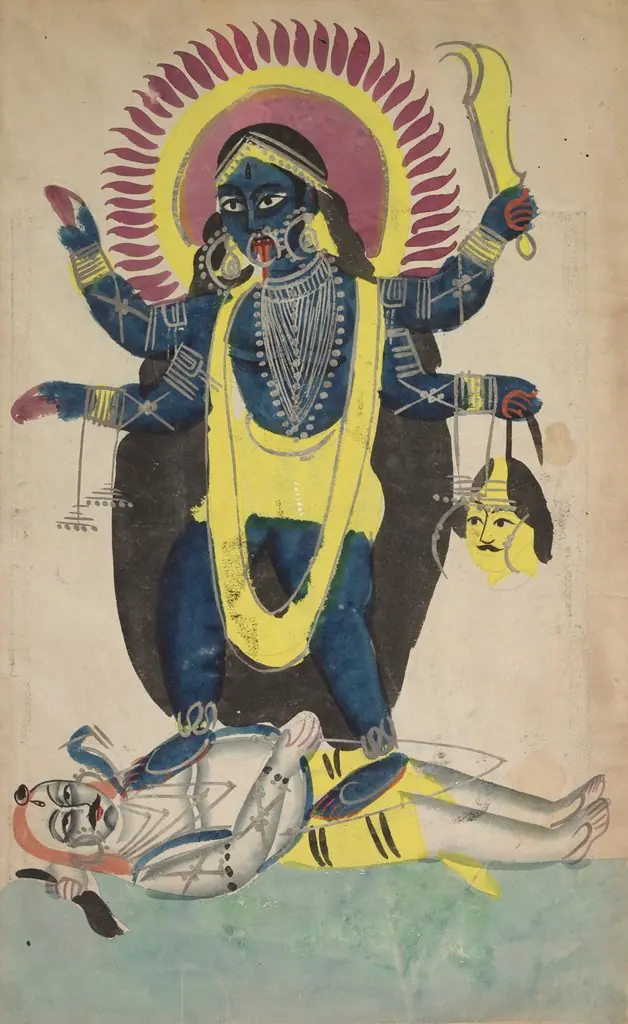
The Goddess Kali (recto), from a Kalighat album
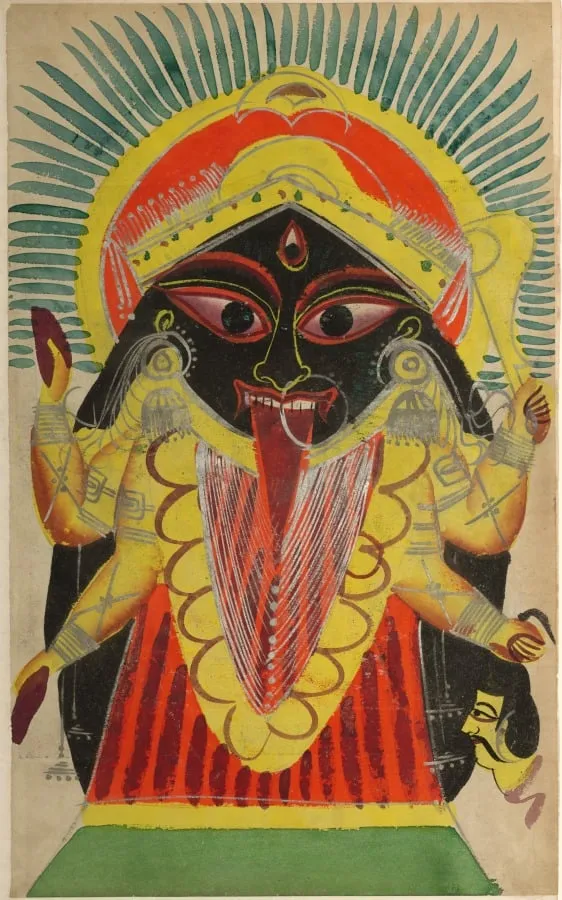
The Goddess Kali (recto), from a Kalighat album is an unspecified painting by the Impressionist artist Unknown. It dates from 1890 and is held in the collection of the Cleveland Museum of Art.
- Accession no.
- 2003.110.a
About this work
Overview
The work depicts the Hindu deity Kali, rendered with dark skin, four arms, a protruding tongue, and a stream of blood issuing from her mouth. In two of her hands she grasps a sword and a severed head, while the remaining pair form gestures associated with protection and benediction. The image is a portable reproduction of the figure venerated within the Kalighat shrine in Kolkata.
Subject & Meaning
Kali’s fierce expression and the blood‑stained mouth convey her role as a destroyer of evil, while the third eye on her forehead symbolizes transcendent insight. The sword represents the cutting of ignorance, the severed head a vanquished demon, and the hand mudras simultaneously convey a warning to foes and a blessing to devotees, embodying her dual nature as both terrifying and nurturing.
Technique & Style
Executed in the Kalighat school’s characteristic flat, bold outlines and limited palette, the painting employs a straightforward, graphic approach that facilitates rapid production. The composition is uncluttered, emphasizing the deity’s iconic attributes rather than elaborate background detail, a choice that made the image easily reproducible and suitable for small, affordable prints.
History & Provenance
Created in the nineteenth‑century environs of the Kalighat temple, the piece was intended for sale to pilgrims and visiting Europeans. As a souvenir, it served both local worshippers seeking a personal devotional object and colonial travelers desiring an exotic token of their Indian experience.
Legacy
The stark, fearsome portrayal of Kali resonated with Victorian sensibilities, feeding contemporary fascination with the ‘exotic’ and the grotesque. For British audiences, the image functioned as a striking curiosity, often displayed to provoke awe or discomfort, while for Indian devotees it reaffirmed the goddess’s protective power.
Artist & collection









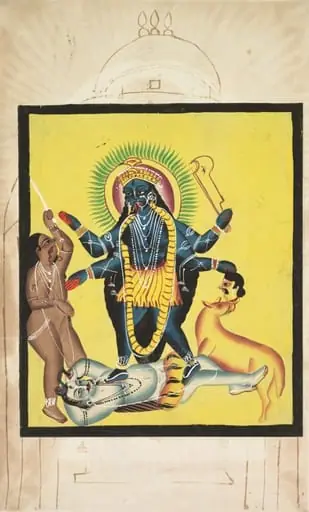
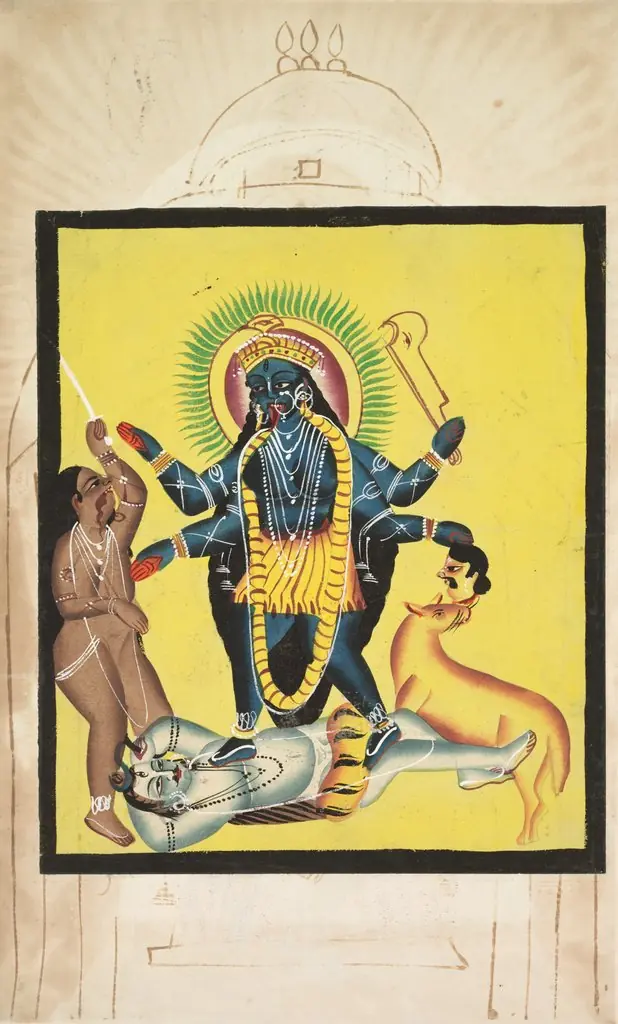
- Kali Standing on Shiva (verso), from a Kalighat album
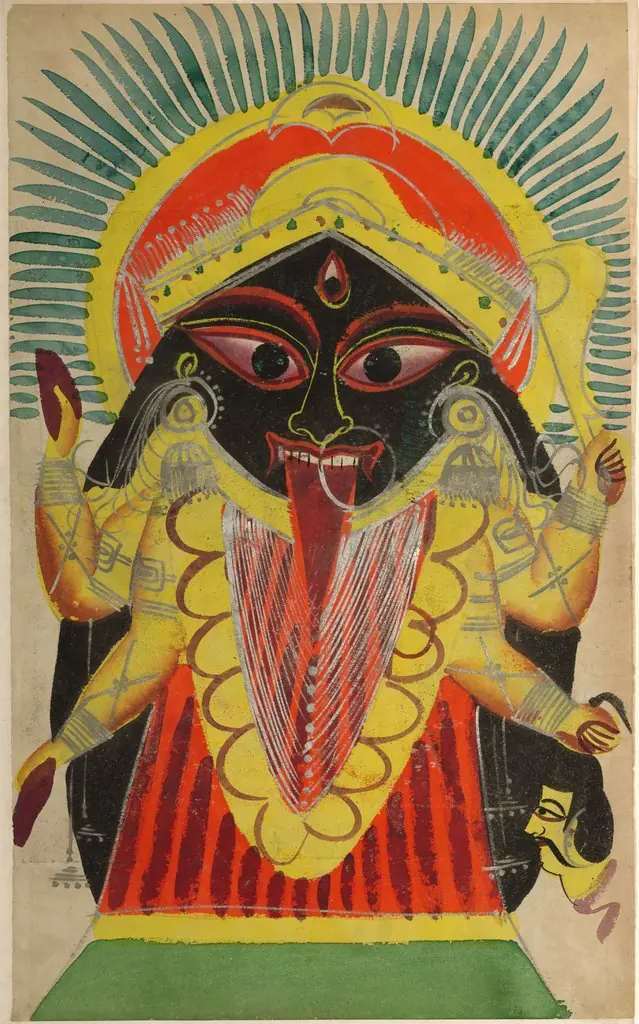 The Goddess Kali (recto), from a Kalighat album
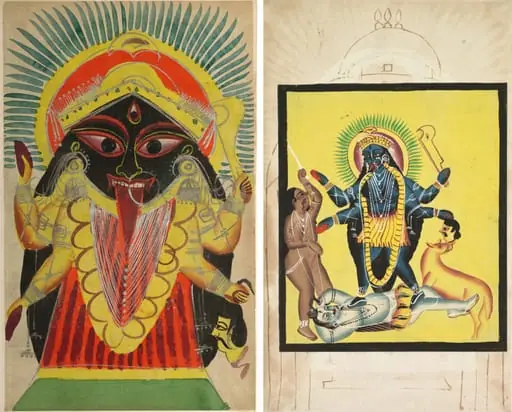 Leaf from a Kalighat album: The Goddess Kali (recto); Kali Standing on Shiva (verso)
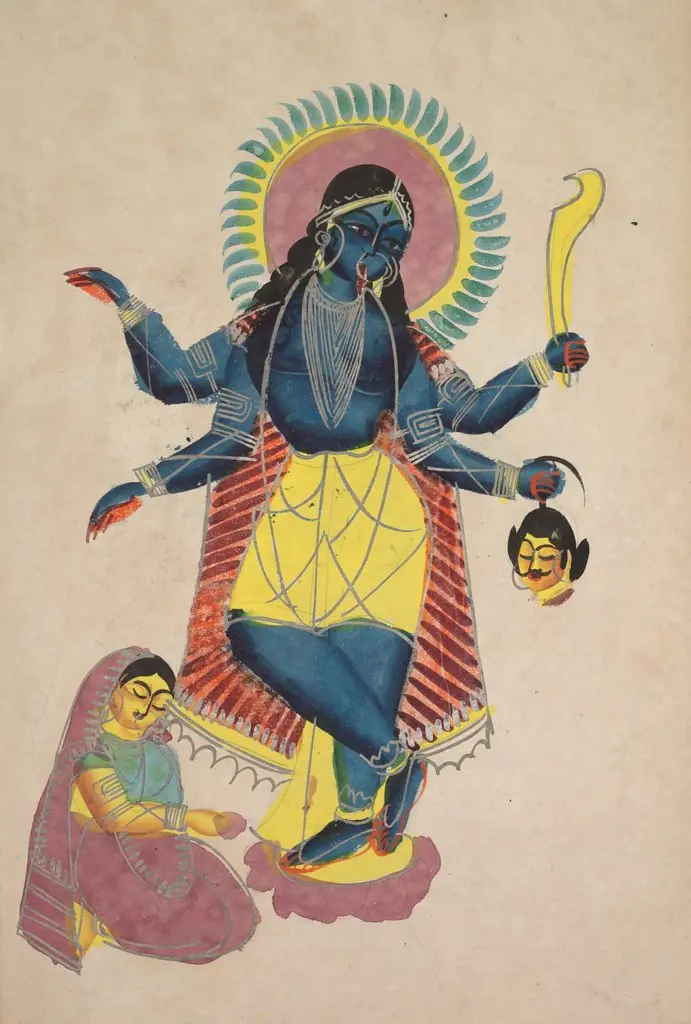 Krishna as Kali worshipped by Radha (recto), from a Kalighat album
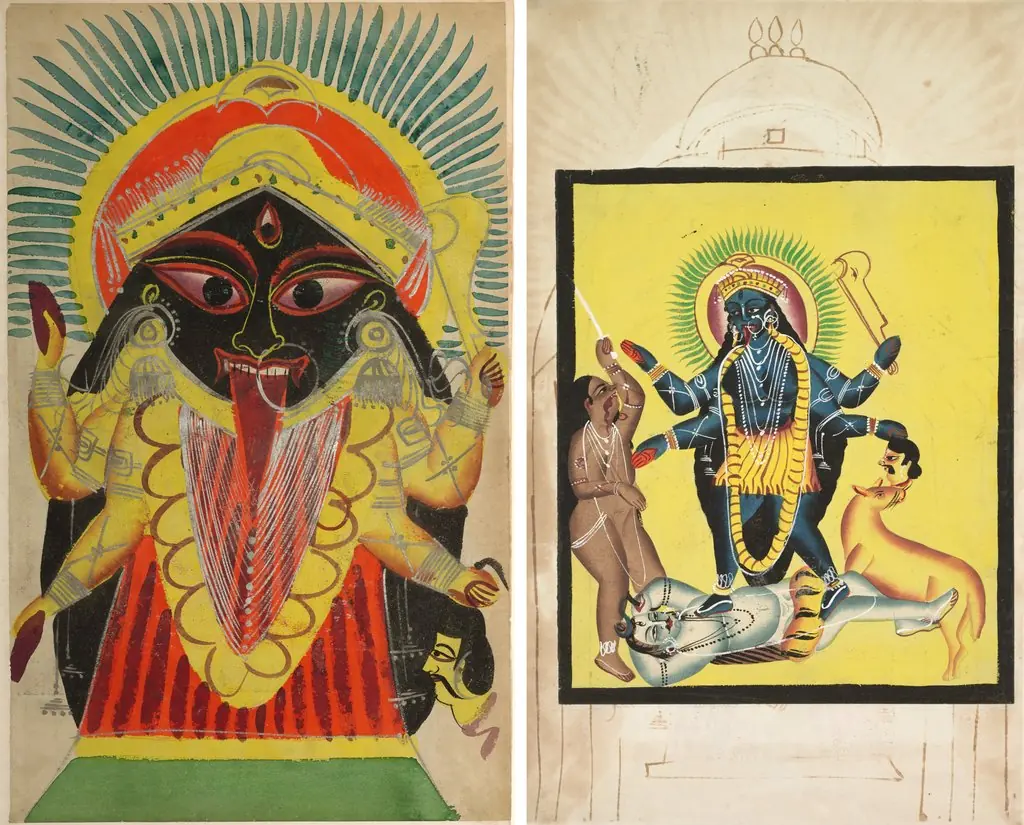 Leaf from a Kalighat album: The Goddess Kali (recto); Kali Standing on Shiva (verso)
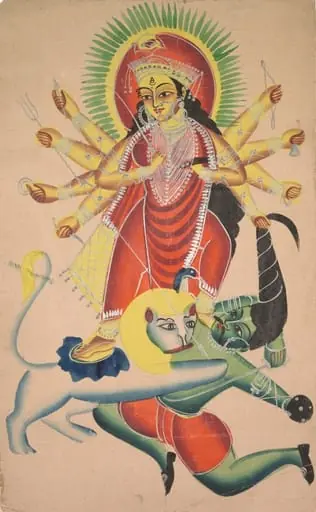 Durga Killing the Demon Mahisha
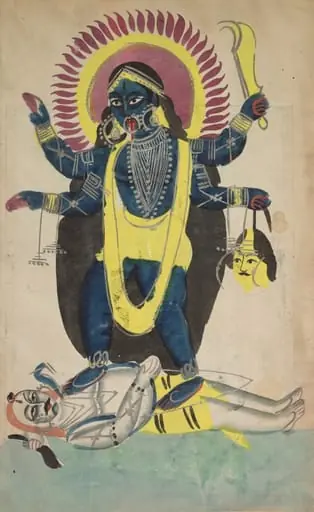 Kali Dancing on Shiva (recto), from a Kalighat album
 Leaf from a Kalighat album: Two Aspects of Kali
 Kali Standing on Shiva (verso), from a Kalighat album
 Kali Dancing on Shiva (recto), from a Kalighat album