Artwork
The Holy Family
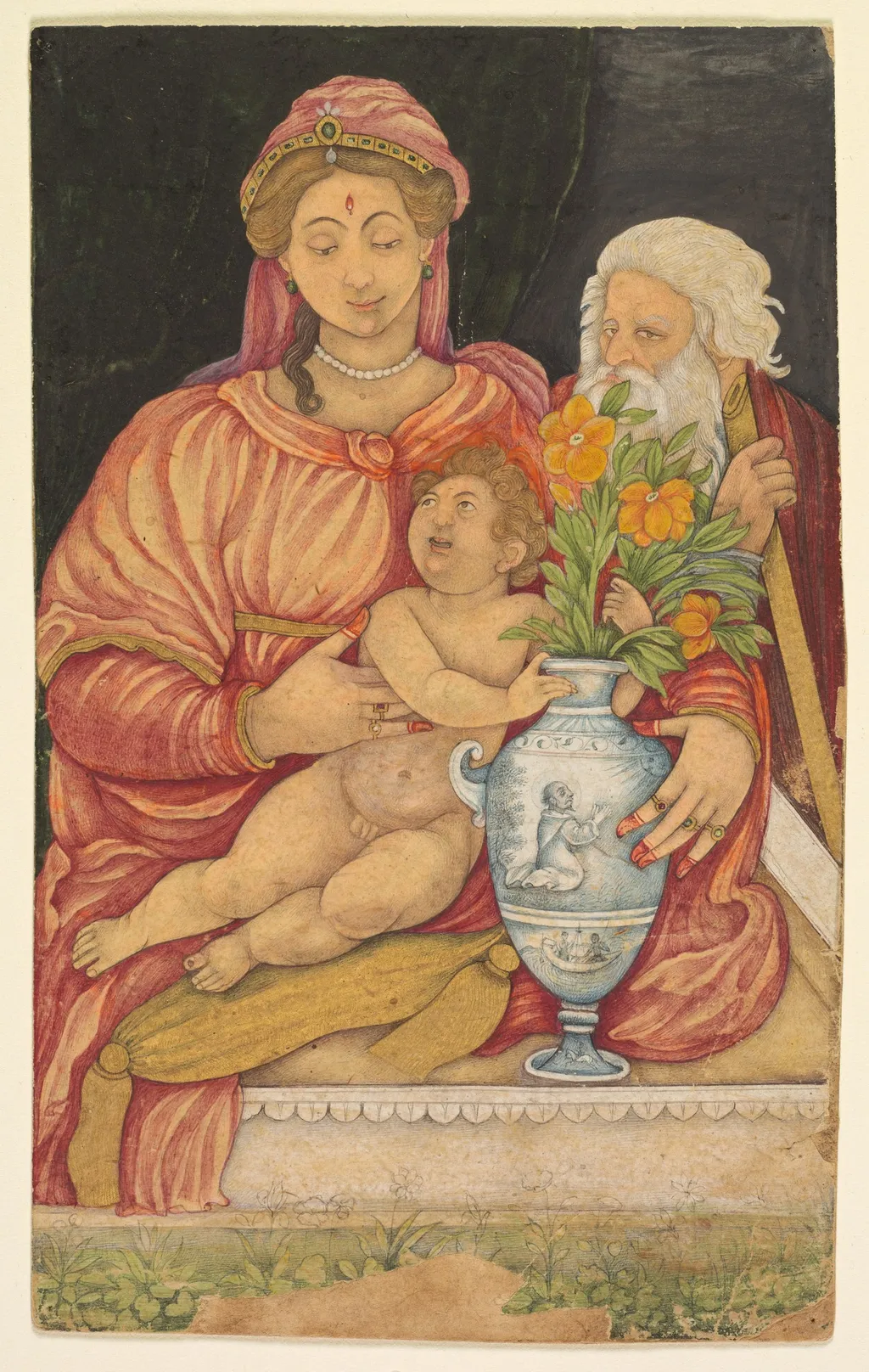
The Holy Family is an unspecified painting. It dates from 1612 and is held in the collection of the Cleveland Museum of Art.
About this work
History & Provenance
The inception date is firmly established as January 1, 1612, marking the beginning of its known history prior to its acquisition by the Cleveland institution.
Created in 1612, this religious painting depicts the Holy Family, featuring Mary, the Christ Child, and Joseph. The work is currently held in the collection of the Cleveland Museum of Art, where it is cataloged under the accession number 2013.312. While the specific circumstances of its commission and the identity of its creator remain unrecorded in the available documentation, the piece is formally attributed to an unknown artist.
The inception date is firmly established as January 1, 1612, marking the beginning of its known history prior to its acquisition by the Cleveland institution.
The Holy Family, dated 1612, is held in the collection of the Cleveland Museum of Art, where it is recorded under the inventory designation 2013.312. The work is classified as a religious painting depicting the Virgin Mary, the Christ Child, and Saint Joseph, with the Holy Family identified as its main subject. No prior exhibition history outside the Cleveland Museum of Art is documented in the available records.
Overview
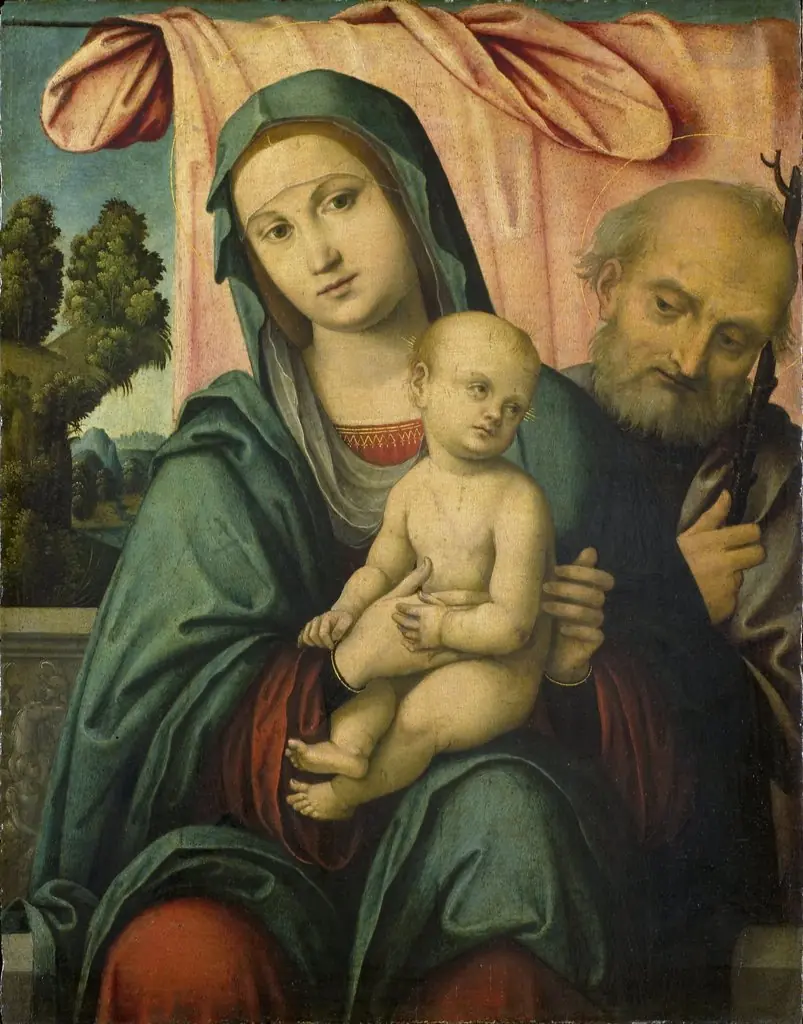
This painting, titled The Holy Family, depicts a serene domestic scene centered around a woman holding an infant and an older man alongside them. The composition conveys a sense of intimacy and quiet contemplation, drawing the viewer into the close interaction of the figures. The artist renders the scene with a gentle touch, emphasizing the familial bond and the tranquil atmosphere.
Subject & Meaning
The artwork portrays the traditional Christian subject of the Holy Family. A woman, likely the Virgin Mary, cradles a child, presumably the infant Jesus, on her lap. Beside them, an older, bearded man, representing Saint Joseph, holds a blue vase filled with vibrant orange flowers.
This arrangement suggests a moment of domestic tranquility and devotion, highlighting the foundational figures of Christian narrative within a tender setting.
Technique & Style
The artist employs a distinctive use of light and shadow, known as chiaroscuro, to model the forms and create depth. This technique is particularly evident in the soft shadows that define the woman's face, lending her expression a gentle quality. The strong contrast between illuminated areas and darker tones causes the figures to emerge prominently from the plain background, enhancing their three-dimensionality and emotional resonance.
Artist & collection

- The Holy Family
 The Holy Family
 Heilige Familie
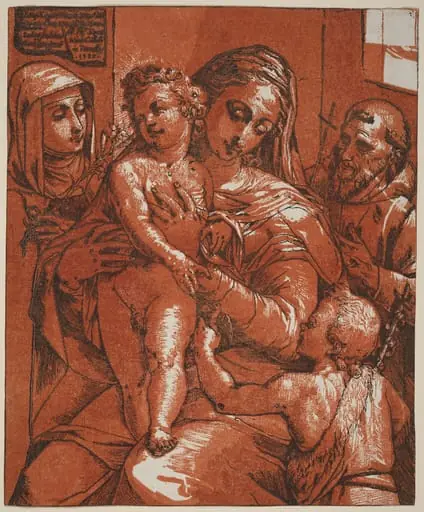 Madonna and Child Accompanied by Saints
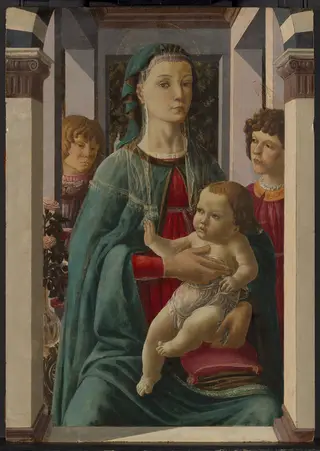 Virgin and Child with Two Angels
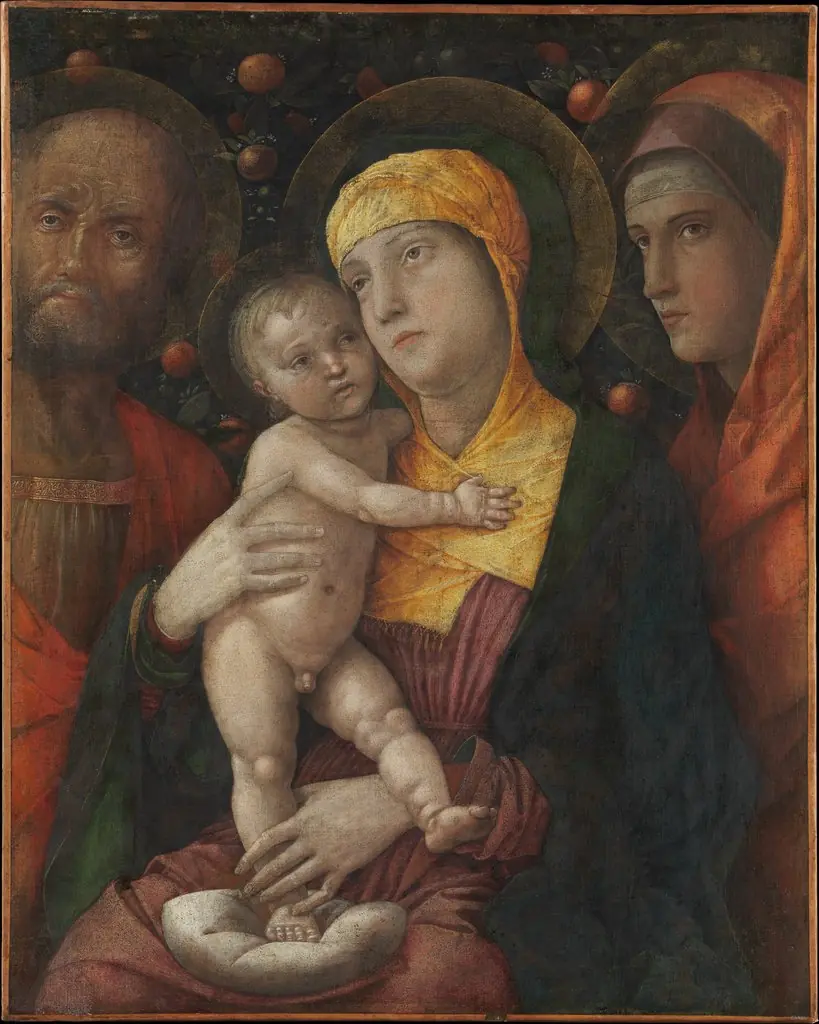 The Holy Family with Saint Mary Magdalen
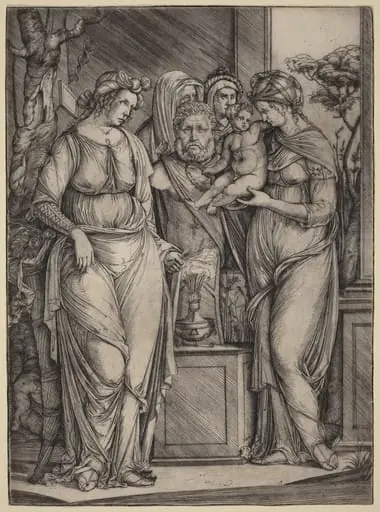 Large Sacrifice to Priapus
 Holy Family
 Virgin and Child
 Copy after the painting Virgin and Child and Meyer Family by Hans Holbein in Darmstadt
 Holy Family with St. Elizabeth and the Infant St. John the Baptist
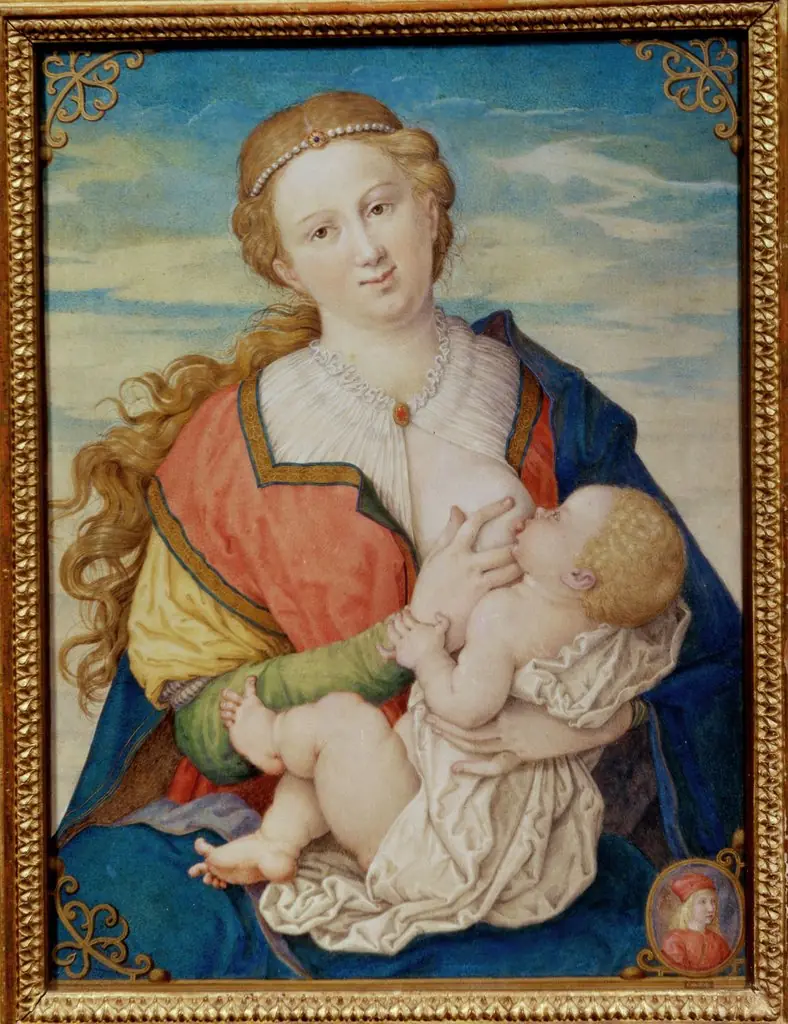 Maria mit Kind