Artwork
Heilige Familie
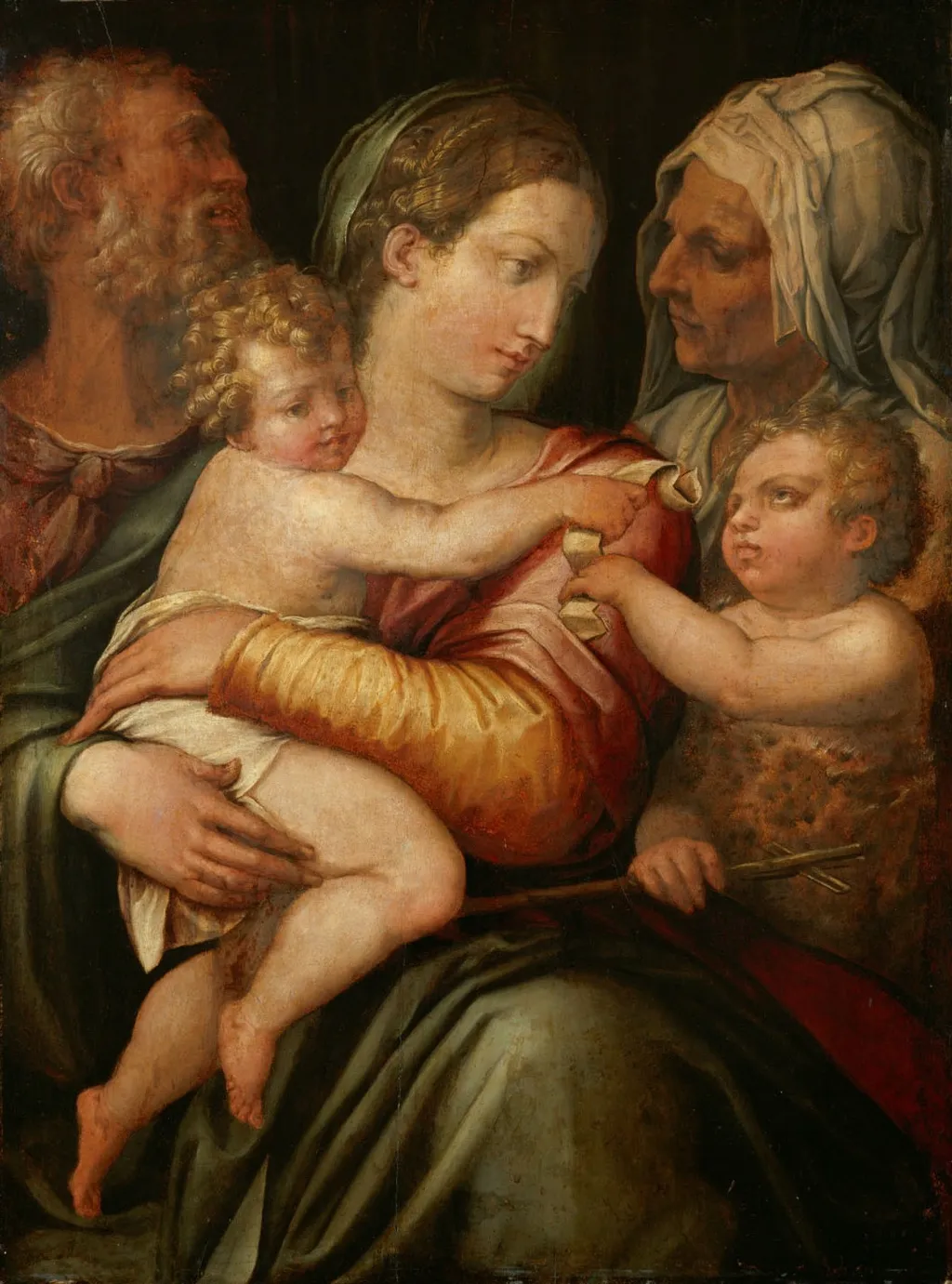
Heilige Familie is an unspecified painting by the Mannerist artist Giorgio Vasari. It dates from 1546 and is held in the collection of the Kunsthistorisches Museum.
About this work
Subject & Meaning
The painting shows Mary, Jesus, and Joseph together as the Holy Family, a common subject in Christian religious art that emphasizes the familial bond of the divine trio. It belongs to the religious genre and was created by Giorgio Vasari in 1546 for the Kunsthistorisches Museum, where it remains on display.
History & Provenance
This religious work, which depicts the Holy Family including Mary, the Christ Child, and Joseph, dates its inception to that specific year.
The painting Heilige Familie was created by the Italian artist Giorgio Vasari in 1546. This religious work, which depicts the Holy Family including Mary, the Christ Child, and Joseph, dates its inception to that specific year. The artwork is currently held in the collection of the Kunsthistorisches Museum, where it remains located.
The painting Heilige Familie by Giorgio Vasari is held in the collection of the Kunsthistorisches Museum. Created in 1546, this religious work depicting the Holy Family remains part of the museum's holdings. The provided sources do not contain specific inventory numbers or details regarding its exhibition history.
Context
The painting Heilige Familie by Giorgio Vasari, created in 1546, portrays Mary, Christ Child, and Joseph and is classified as religious art. It is housed in the Kunsthistorisches Museum, where it remains part of the collection today. Vasari's work fits within the broader context of Renaissance religious painting, reflecting his role as a 16th-century artist and historian who documented artistic practices of his time.
Legacy
The Holy Family painted by Giorgio Vasari in 1546 has been studied for its compositional balance and devotional clarity, influencing later Counter-Reformation religious imagery. Vasari's treatment of the figures informed contemporary and subsequent artists' depictions of familial holiness, as noted in scholarly surveys of 16th-century Tuscan painting. The work remains part of the collection at the Kunsthistorisches Museum, where it is cited as a reference point for the development of sacred domestic scenes in early modern art.
Overview
Giorgio Vasari’s Heilige Familie, executed in 1546, is a small‑scale religious composition now housed in Vienna’s Kunsthistorisches Museum. The work presents a close‑knit group of figures surrounding the infant Jesus, with the Virgin, Saint Joseph and an elder couple rendered in a restrained, intimate setting.
Technique & Style
Vasari employs a pronounced chiaroscuro, bathing Mary’s face in soft light against a deep, shadowed background. The contrast sharpens the contours of the figures and creates a three‑dimensional presence typical of Mannerist experimentation with light and form, while the rich red‑gold drapery adds a decorative flourish.
Artist & collection

Artist
Giorgio Vasari (30 July 1511 – 27 June 1574) was an Italian Renaissance painter, architect, art historian, and biographer known for his work Lives of the Most Excellent Painters, Sculptors, and Architects, considered…

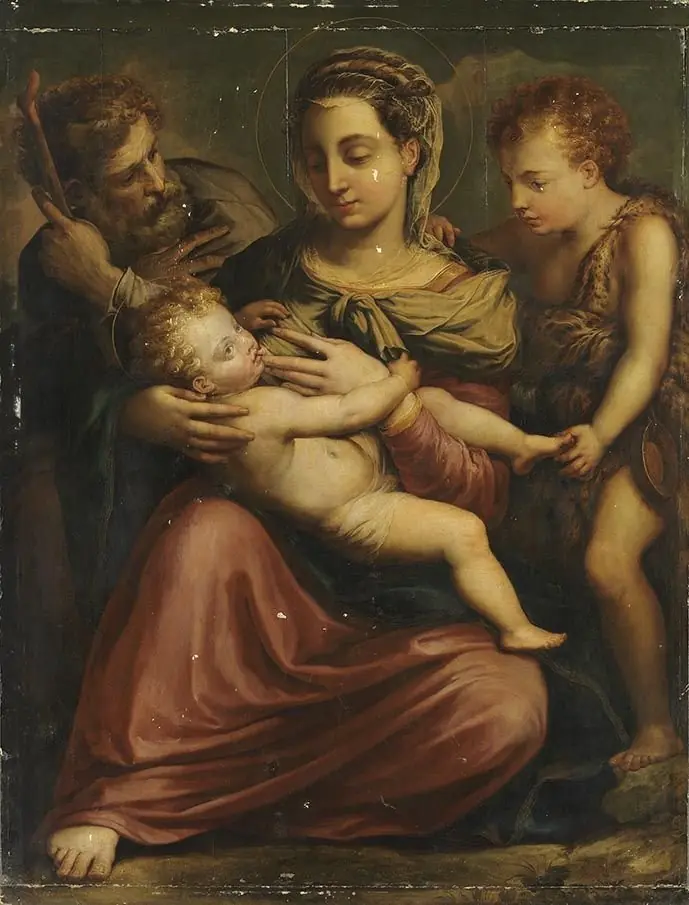
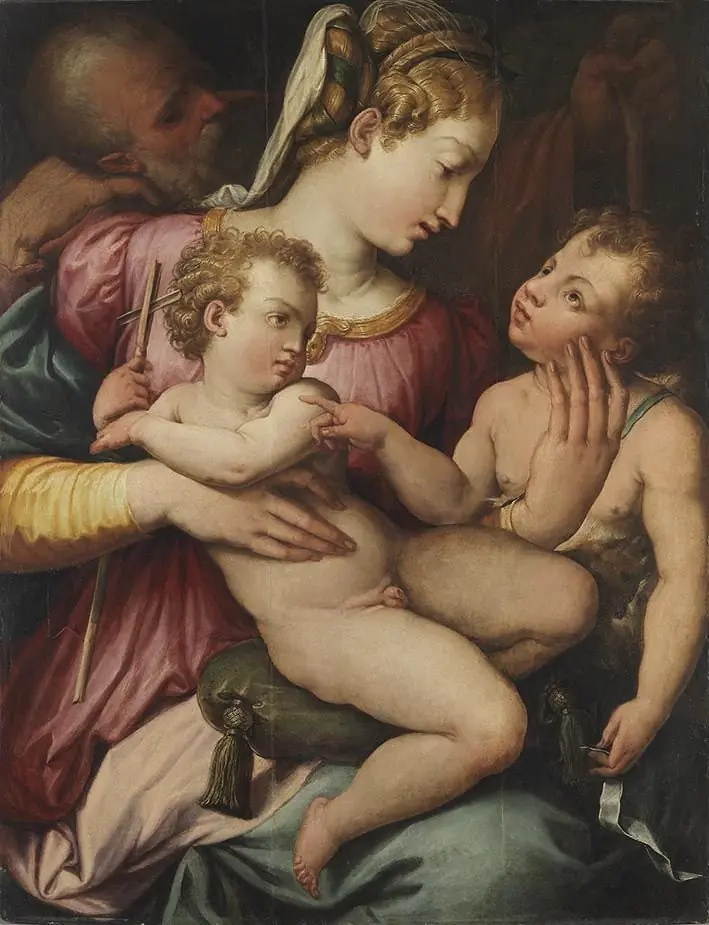
- The Holy Family
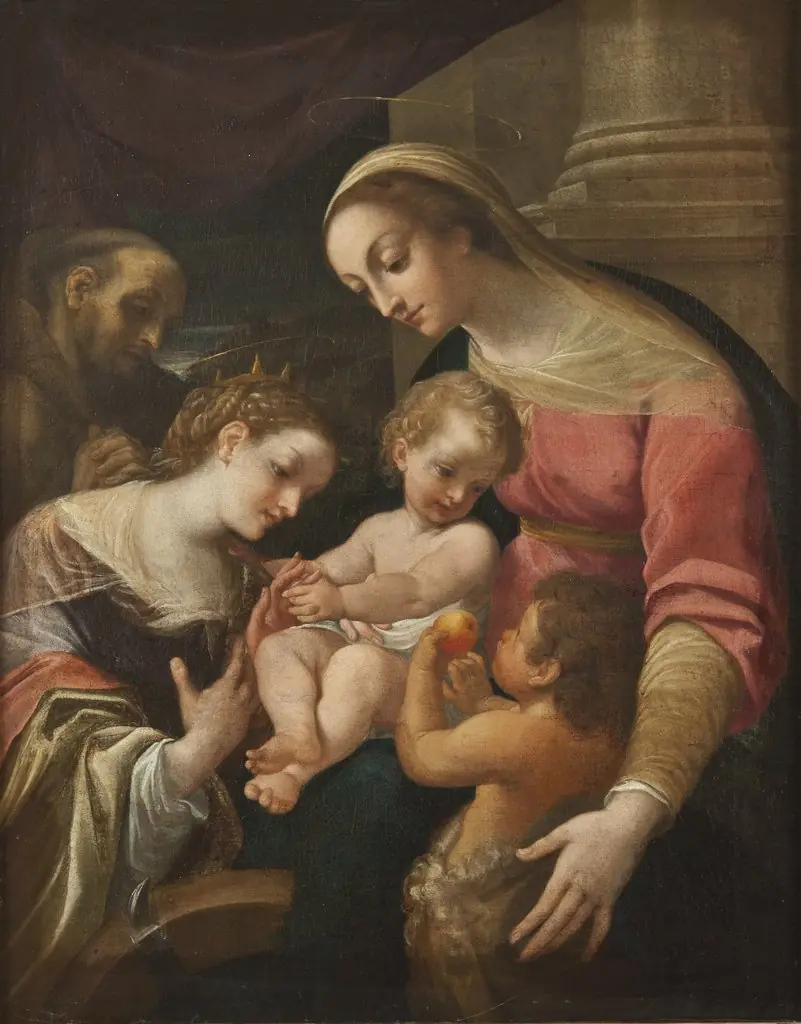 The Mystic Marriage of St Catherine
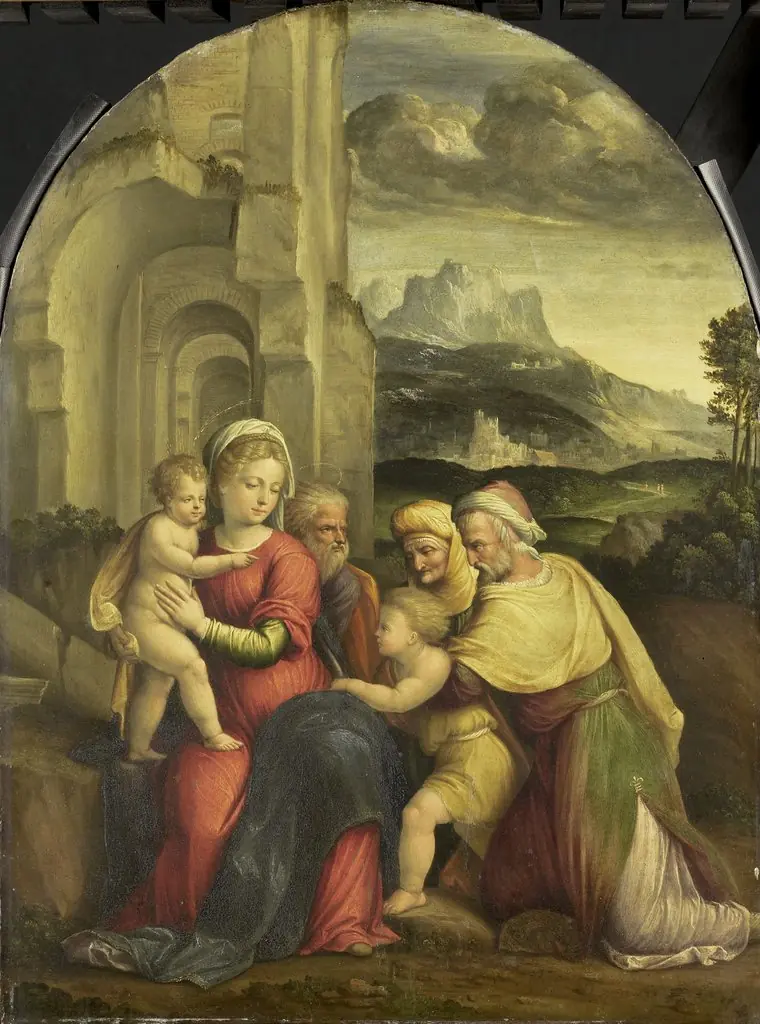 Holy Family
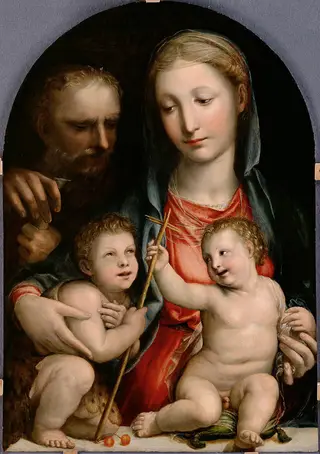 Holy Family with St. John the Baptist as child
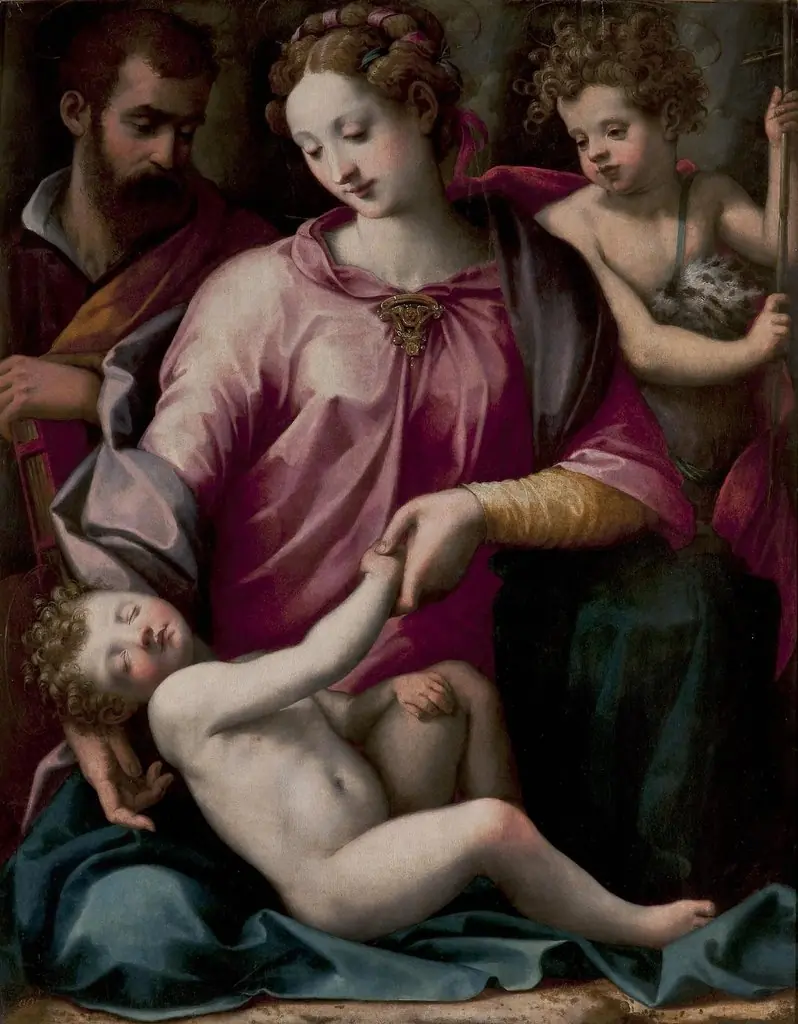 Holy Family with St John the Baptist
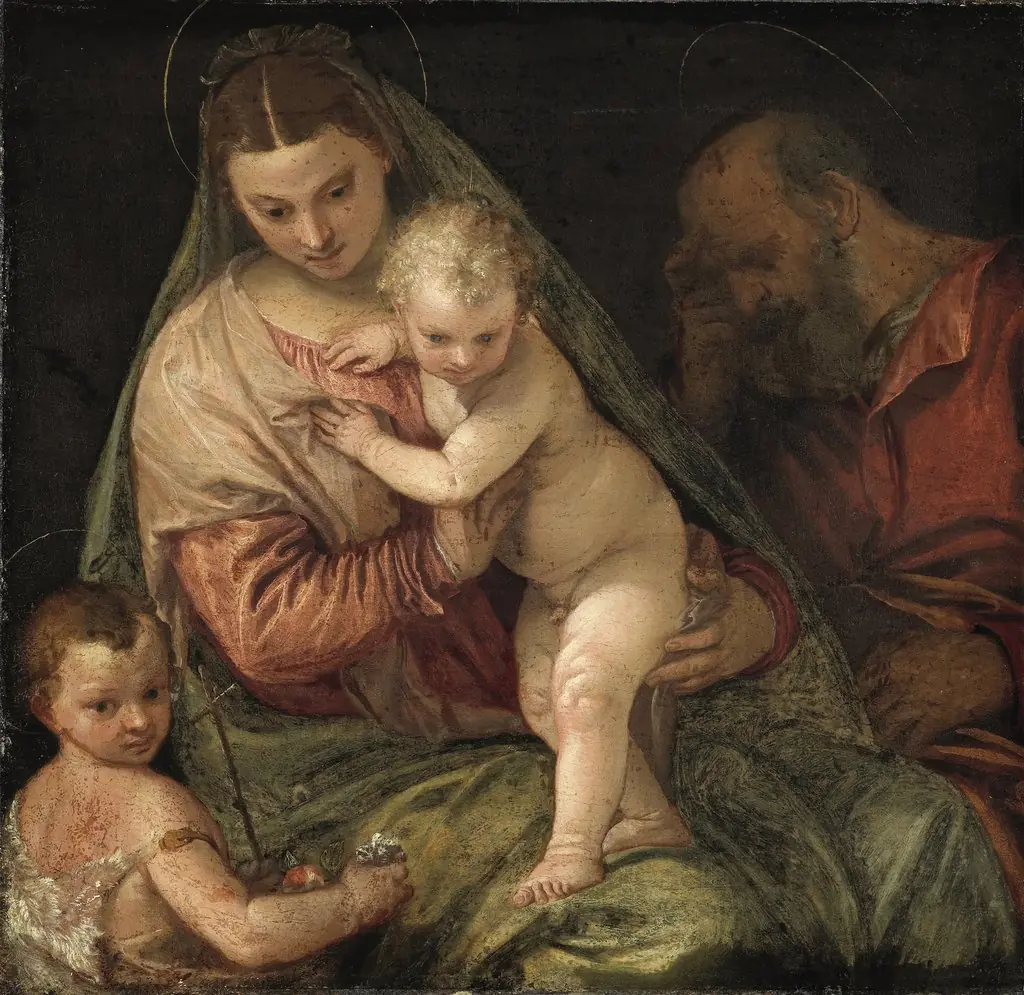 Holy Family with Young Saint John
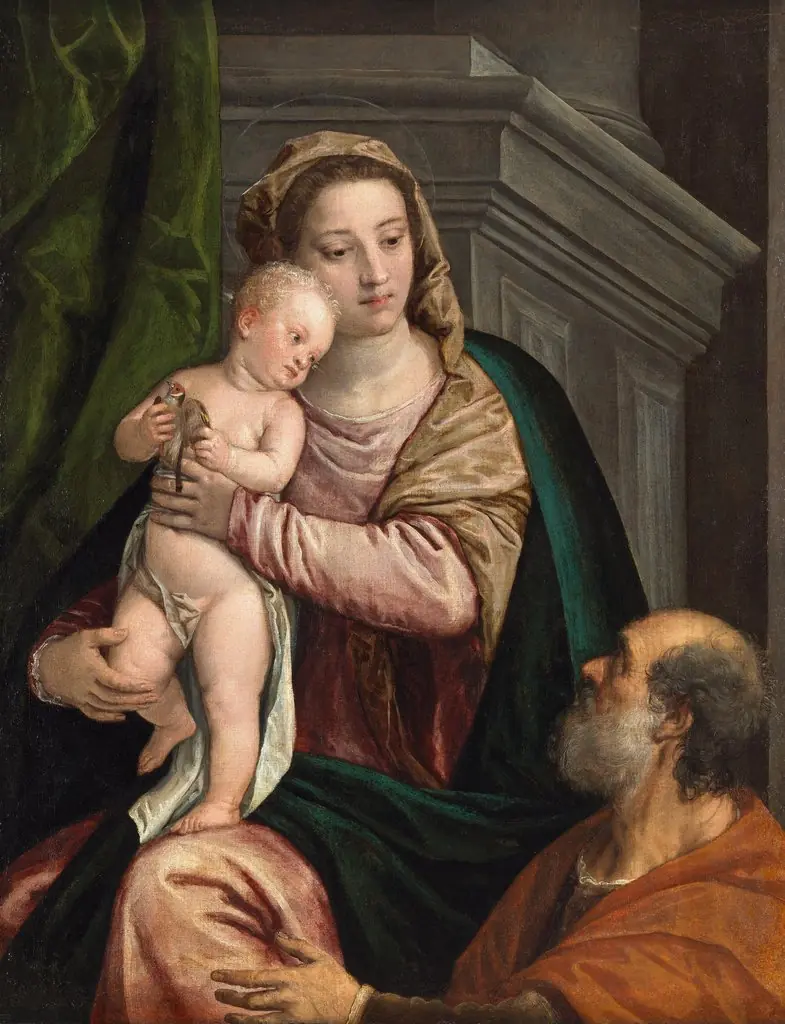 Die Heilige Familie
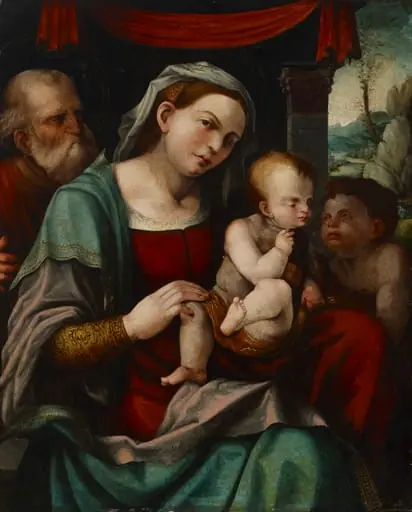 Pyhä perhe
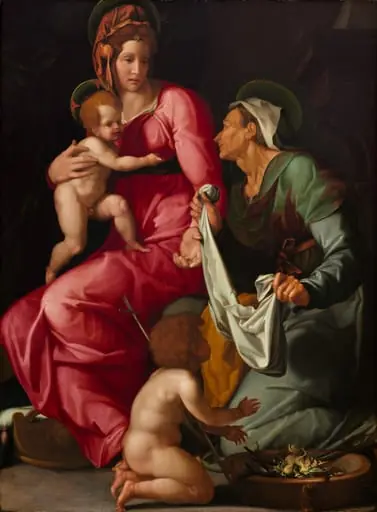 Madonna and Child with Saint Elizabeth and Saint John the Baptist
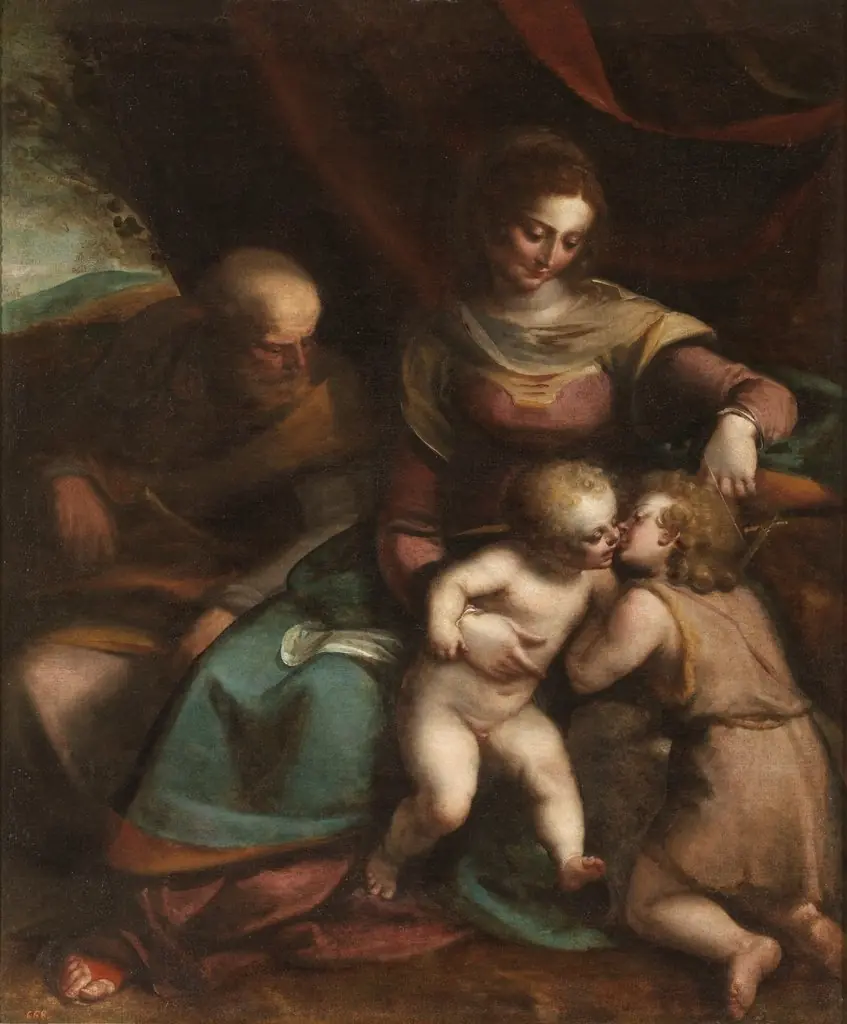 The Holy Family
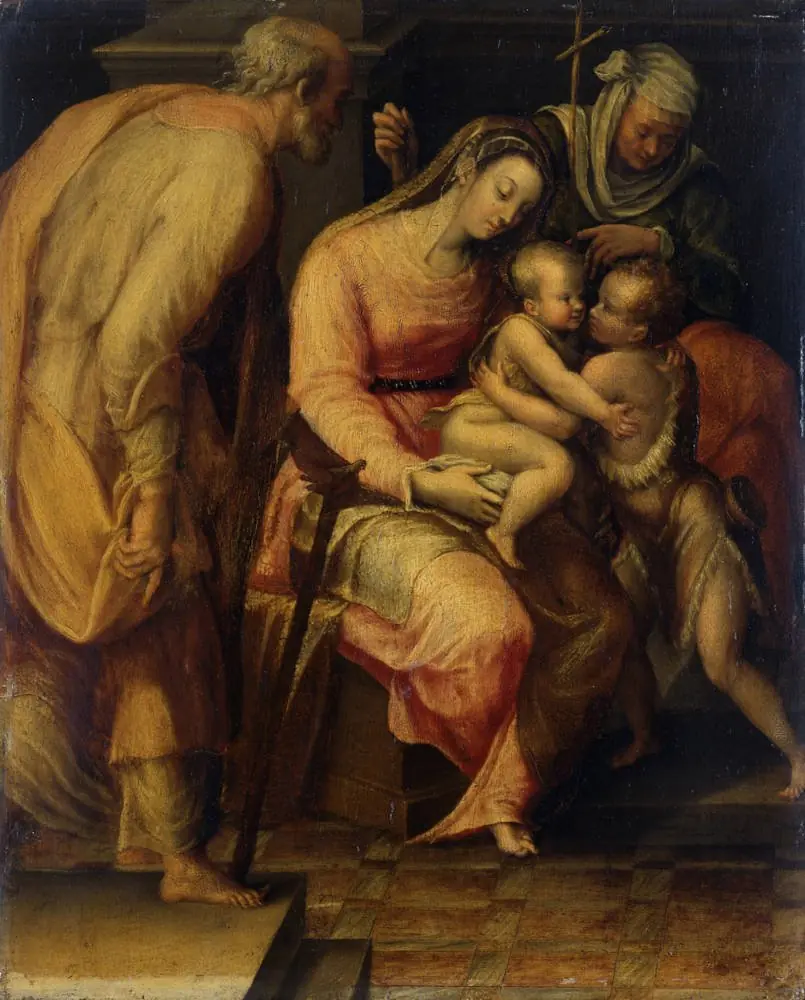 The Holy Family